🇺🇾 Uruguay Leads Green Revolution 🌿 Nearshore Insights | 🎙 The Nearshore Cafe Podcast
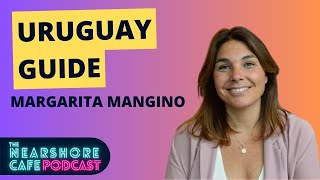
In this Nearshore Cafe Podcast episode, host Brian Samson interviews Margarita Mangino, a Uruguayan native, to explore Uruguay’s geography, culture, lifestyle, and business environment. They discuss Uruguay’s small size and plain terrain, its cattle‑rich landscape, and the iconic asado barbecue tradition, highlighting differences in punctuality and social etiquette. The conversation moves to Montevideo’s Rambla, summer beach preferences, and popular coastal destinations such as Punta del Este, Rocha, and the off‑grid nature reserve Cabo Polonio. They describe signature foods like the chivito sandwich and churrasco. Margarita explains Uruguay’s largely European (Spanish‑Italian) ethnic makeup and how recent Argentine immigration has diversified the culture. The dialogue then shifts to Uruguay’s reputation as the “Switzerland of Latin America,” emphasizing political and economic stability, strong banking reputation, high internet penetration, universal broadband in schools, the One Laptop per Child program that supplied half‑a‑million laptops, and leadership in renewable energy (90% of electricity from wind and other renewables). Finally, she notes Uruguay’s recent ranking in the Sustainable Travel Index, underscoring its commitment to sustainability. The episode blends cultural anecdotes with practical insights for businesses and investors considering Uruguay as a nearshore hub.
Chapters
Welcome to the Nearshore Cafe Podcast, home to the most interesting stories and people doing business in Latin America.
Welcome everyone to another episode of the Nearshore Cafe Podcast, where we bring to life doing business in Latin America. First, I want to give a thanks to our sponsor today. That's Nearshore Direct, gonearshoredirect.com. Great way to find talent from customer service, designers, and all things in between for growing US companies that's tapping into the LATAM labor market. I am very excited about our guest today, Margarita Mangino. Margarita, so happy to have you. Welcome to the show.
Thank you very much for having me. I'm so excited to be here.
Absolutely. Well, Margarita, as you know, we talk a lot about doing business in Latin America, but first I want to set the scene a little bit about Uruguay. It's an interesting country, kind of right between two very big and loud countries. Um, can you just give us a kind of a broad sense, like where it is on the map, um, about some of the major cities, things like that? And then we'll, we'll get into culture later, but just geography for a second. What is it? What is it like?
Okay. Uruguay is a very small country. We are 3 million and a half. It's like the size of San Diego for you to imagine in the comparison of the US. And we are like a small country just near Argentina and Brazil. I heard yesterday someone telling me like Uruguay is between Pelé and Maradona, right? And the subject here is very important. So I laughed a lot about that because it's kind of very true. But our territory is very plain. So we have more cows than people. That's another crazy—
More cows than people is an interesting fact. Yeah.
I don't remember the number exactly, but it is like a lot of cows per people.
Well, speaking of cows, I might just jump right into beef because for those that don't know, beef, red meat in Latin America is out of this world. I've had the good fortune to have beef in both Uruguay and Argentina. Tell us a little more about the beef in Uruguay and then maybe how it is similar or different from Argentina.
I don't know. We always have this rivalry. It's called rivalry with Argentina. We're always fighting about everything. Who invented the ceviche? Who has the best beef? Where Gardel was born, and you can name it, mate and a lot of other things. But they are always saying that we are their small, like sibling, right? We don't like it. And that's why we fight it back. And I don't know, we are very well known about our beef. And it's not that different with the Argentinian. Maybe there's different names and different ways of doing it. We call it, what we do, the asado.
Yeah.
Asado is like a barbecue for us. And it's like a very ingrained part of our culture. When the weather is good, not in winter. It's not so common. It's not that common, but when the weather is like good from September and on until maybe April, we all gather around an asado on Sundays, for example. And yeah, when we do things between friends, it's like, hey, let's do an asado, right? It's very, very common. Um, but we have really good beef. We export a lot and it, it, it only happened on the last years that we actually started to eat the good beef over here. Beef was always eaten abroad, right? But now you can find really good beef in the country too.
Yeah. Um, so the asado, um, you know, is, uh, I've experienced asado myself in Argentina and it's, it's like an all-day thing with friends and family and Sometimes even the first, yeah, the first few hours, it's just lighting the fire and getting that fire right. Can you talk a little more about the asado culture in Uruguay? And also, because maybe there's some overlap here, in Argentina, punctuality maybe is a little more open, right? If you say, hey, you know, we're having an asado at 2 PM, someone might come at 4, right? Or even punctuality in business. Can you talk about that a little bit in Uruguay? Is it a little bit more on track? Is it a little more loose and vague? You know, how does that work out?
Yeah, I don't know. When it's related to family, at least it's not so open. It's like, but we have, you have to, at least in my family, you have to let our parents know that you're going to be late, right? Because if not, everyone is waiting for you to eat. And it's like, hey, we won't sit at the table and serve the beef before everyone is present. We might, we always, the thing with the asado is that you start very early, first with the fire, but usually the asador is the responsible of setting the fire and he starts early before the people arrive, usually, right? It's different between friends. Friends, they have like, they have always the supporter that goes early to help them. The asador too, set the fire and everything, and they start drinking some beers before every— the other ones arrive. But in terms of that, and then you have like a lot of— you have the beef, that's the main course of the asado, but you have a lot of other things that are prepared, like melted cheese that we call provolone, or you have chorizo and Mojeca, chichulines. I don't know, a lot of other things, other parts of the cow actually that we eat, that we— it's like, it's served like, how is the word? Picadito. It's like, it's like a food finger. Like you eat like, like in the moment and you don't need to be seated on the table, but usually the beef is served with salads. And other, I don't know, potatoes or sweet potatoes or that kind of things that you can also do on the barbecue. And so we usually try to wait for all the people to be on the asado to serve the main beef. But it's like, that's the thing that makes it long because you start at— sometimes on Sundays, I can only eat at noon. I can't eat again. At night because it's so much that it's like, oh my God, I'm so full. It's like I have been all day long eating. And you can't stop eating because you're like finger-putting a lot of things in the moment, right? So it's kind of all the day. Yeah.
And speaking of, of dinner time, is that also traditionally later in the evening?
Yes. Yes. Yes. It is usually, I don't know, in school time, 8 PM, maybe 9 PM. In summer, it can be even later. Yeah. Yeah.
Yeah.
On summers and sometimes you can eat even at 11 PM. It doesn't matter. You, you try to stay as long as it, as you can on the beach and you see the sunset. Just then, bath time and everything, and it's really late to get dinner after that.
Yeah. Now, the summer season, I'll just share a little bit, but I'd love to hear your take. Montevideo was a fantastic place to experience the summer and the Rambla and everyone walking along. Can you give a little more background on what that's like, especially maybe a Sunday afternoon in the summer on the Rambla. What does that look like? Feel like?
Yeah, I have to tell you, I believe all Montevideanos, people from Montevideo, we hate summer here. It's like, it's hot and we have so many nice beaches more on the east of the, of Uruguay. That usually you have people that go to the beach in Montevideo, but most of the people escape from it. It's like the best of Montevideo actually is spring or autumn that you can go walk on the beach and it's beautiful. I love that part of the year. I'm actually, one last month I went to walk on the beach and it was like 30 degrees Fahrenheit, and it was like, oh my God, I hate it. I want spring. Because you have like a lot of sand and the beaches. It's actually what, what is very curious about Montevideo is that in Montevideo, it's not an ocean. It's actually a river. And it's a very wide river that actually Buenos Aires is across the river and you can You can't see it. It's not easy to see.
It's huge.
Yeah.
It's a huge river. Yeah.
And the water, as it's a river, is not very green. So you have sometimes that is more brown than green. That's why we don't actually love the experience of the beach here in Montevideo. If you go more on the east of the country, you start to grab the Atlantic Ocean and you have, there are so many nice places. Like Punta del Este is very well known. Around the world and it's beautiful. It's my place to go in summer. Actually, people hate it sometimes in January because it's very crowded because we have a lot of tourists from Argentina, Brazil that go over there. Yeah. I love the beaches over there. And also the good thing about Punta del Este is that we have usually summers that are windy, but because it's like a point that access the water. It depends on the day, on the wind. You have different beaches to go that will be better or not. So usually you go to one beach in the morning because it doesn't have wind, and then another one in the evening because it has wind. So you move with the wind. Yeah. The summer. But if you go even east, you have places in what we call Rocha. And there's a really amazing place called Cabo Polonio that is known as a reserve, nature reserve. And you can't access by car actually. There's no cars in the place. It's very— you have to cross with these trucks, big trucks around the dunes. And some of the houses over there doesn't even have electricity or water. So it's kind of, I love an experience that we had. We took the kids for a weekend and the hotel, the bed and breakfast, actually, you don't have like big hotels. There are hostels and bed and breakfast mostly. And they didn't have electricity. So it was night and we were on the deck of our room and watching the stars and It's beautiful because you don't have much light around. So what you see, it's amazing. And you go to a restaurant and it's lighted by candles. So it's amazing experience. And it's a really, really great place to go if you go to Uruguay. I would recommend it.
Absolutely. Thank you. I'd like to share my own personal experience on La Rambla. So this is probably maybe April, April in the year, but it was like a nice sunny, sunny day in April. So late autumn, right before winter. So it was maybe like 70 degrees Fahrenheit. So perfect. Sun is out. And it felt like the whole city was like walking on the Rambla, you know, on a Sunday afternoon. If they weren't out on the Sado somewhere, they were on the Rambla. And what I remember the most, Margarita, was, so I was walking with my wife and— I'm sorry, we'll cut that out. So my wife and I were walking on the Rambla, beautiful, gorgeous Sunday afternoon. And we saw all these couples, all these couples just taking their stroll. And they had usually like a guy, he had one arm around his girl, and the other arm was around the mate.
Mate. Yes, I know.
Yeah, the other arm was around the mate. And it was like one couple after the next, after the next, after the next. It was great. It was one of my favorite Uruguay experiences. And is that common, do you think?
It is totally common and it's beautiful. It's like everyone's doing sports or taking a walk around the Rambla. And I believe it's a big difference between Buenos Aires and Montevideo. Buenos Aires was built taking their back to the, to the river. Actually, it's like an inside city and ours was built around the river. We embrace it. And it's beautiful. I, even if I have to cross the city to a meeting or going somewhere, if even if it's the driving is longer, I will go through the Rambla because it's so beautiful to have that view that I will take the longer, just go through the Rambla. Amazing. Something that when we lived also, when we lived in Madrid, that is like an inside city too. It's like most things that we miss the most.
Yeah.
But it's really common to go. And if the weather is, I'm so envious sometimes that I'm going to meetings or somewhere and I see people running on the Rambla or walking and I was like, oh my God, I have to do it. I have to go back. Time to go.
It was awesome. We talked a lot about the meat as a centerpiece and some of the other side dishes. What else would you say that are very custom to Uruguay? Any other types of foods that you'd recommend?
Well, we have something that is called chivito. That is like, if anyone comes to Uruguay, we will say you have to grab a chivito. It's like, it's, it's our, it, and it's nothing more than a sandwich actually, but very well-crafted sandwich. Like it has like a special kind of bread and the meat is very easy to bite. And it's not like you will bite the sandwich and start fighting with the beef. It's like, it should be very tender. Right. And then it has, you have different versions, like a very basic one with lettuce and tomato, but then you have the, I don't know, the stronger one that has bacon and cheese and egg and a lot of— and it's called the Canadiense. I don't know why the Canadian chivito. This fun anecdote about the chivito, once I was with a Chilean couple that I was working with, and they came to Montevideo, and I took them to a bar that is very known for their chivito. And I said, okay, you should order a chivito. And they were like, okay. And she was like, hey, are you sure? Would it be that much to order a chivito? And it was like, no. And she was like struggling about it. And I was like, Oh my God, what do you think is a chivito? Because chivito for us is also an animal that is like a small, how do you say, cabra? Do you know cabra? What it is? Yeah. And, and it, it, and it was like, no, it's not an animal. It's like an actual sandwich. And we laughed because confuser. But I would say churrasco is one of the things that I— we will always recommend for people to eat, for sure.
I love it. Um, I also wanted to ask about, um, maybe like the ethnicities of Uruguay. Is it, um, primarily Spanish-Italian? Are there any other influences there?
We are 99% European. Yeah, so sometimes it's very boring. Like, it didn't have some— that much diversity like you see in, in other countries in Latin America and in the U.S. So sometimes when I see other ethnographies and events and everything, I become happy. It's like, oh my God, we are having people that come to live to Uruguay, right? And But we are mostly European. We are more Spanish than Italian. And that's the main reason why our personality is so different from the Argentinian, especially the Buenos Aires. They are much more Italian than we are. That's why they are louder. They have trouble with the mentality and that kind of things. We are more quiet. We are more humble. We are serious. We were also more gray at some point in Uruguay. It was like, oh my God, we are so gray, like plain and everything that it was kind of boring. That changed, that changed a lot in the last two decades, I believe. And it wasn't well seen to stand out, for example, if you have money or you had success in your business and So having good cars or having a big house wasn't well seen, but that changed a lot. And it changed a lot also because a lot of Argentinas came to live here after what's happening over there. And it shook the city, right? And the country on a lot of things. And I think it's really a, it was a good thing for us.
But yeah, Margaret, as you were talking, I could definitely relate. There's a little bit more of like a subduedness, I think, especially if you come from Argentina over to Uruguay. You're like, oh, okay. It feels like a little more quiet, a little safer, a little stable, a little more stable, a little more secure. More sane, more polite, more humble, everything that you were saying. And I wanted to ask maybe how that even connects to business. Sometimes Uruguay, I've heard, is called the Switzerland of Latin America with banking and so forth. Can you maybe talk about business culture and banking and what Uruguay might be recognized for?
Of course, Uruguay is recognized as a stable country in Latin America. And I was actually impressed the other day. I was talking with a guy from Honduras and he was saying to me that he wanted to come to live to Uruguay. And I was like, why? I was surprised. And he was like, you are among the countries more stable and beautiful to live in Latin America. And it's true. I live abroad and I came back, right? So, but I have roots with my family and friends and we are very European in that sense. We, for us, it's very important, the community around us and the support and having all the family and friends around us, but mostly what It is, we are like a country that is very stable in a lot of things. It's in terms of government, it doesn't matter if we change the, the, the, the, who is in the government. It doesn't change us. And we are very democratic. If the people voted for it, we will be fine about it. So yeah, it's kind of, it's, it's really nice to see. That when you have the comparison with a lot of other countries that are living other realities. We are really stable also in the economic side, and we were known for being the first country for women to vote in Latin America. So we were really advanced on a lot of social politics, and that's why we became known as the Switzerland of Latin America. At some point, we started to last— to last, no, to lose that, I don't know, differentiator. And one of the good things that I believe in the last 20 years, the government started to invest in a lot of other things that made us advanced and being well seen as a country. For example, in terms of We have a lot of abroad investors coming over from Finland, the US, a lot of big companies that are investing in Uruguay and open their operations here. And that became us like a first-class business center in Latin America. We have, for example, exceptional connectivity and internet penetration. 85% of our households have fixed broadband access. And for example, 75% of which have fiber optics. So it's, it's, it's very spread for, if you compare it for other countries. Also, we have, for example, 100% of our country's public schools have connectivity too. And we are the only country in the world that provides free laptops to all public and secondary students. Oh, wow.
I didn't know that.
We have distributed more than half a million free laptops to students and teachers in the past 5 years, for example. It's called a program called One Laptop per Child. And it was aimed to bridge the difference, the division that was, the digital division that we had in terms of the population that has less income. Right. Yeah. Also one of the leading countries in terms of wind energy production, among with Denmark, Ireland, and Germany, for example. And 90% of electricity is now generated from renewable sources.
So that's incredible.
Wow.
That's really, really, really world-leading statistics there.
Yeah, it is. And in the— I just yesterday posted something because we were recognized as in the Sustainable Travel Index. And we were among the 21st positions in the ranking and the other 19 countries were all European.
More from Brian

From BPO Agent to Client Experience Manager: Ana Rodriguez on Nicaragua's Nearshore Talent

From BPO Agent to Client Experience Manager: Ana Rodriguez on Nicaragua's Nearshore Talent

Building Sales Teams in Mexico: Mario Oliveros Figueroa on LATAM Talent & Cross-Border Selling

From Automation Engineer to Data Platform: Victor Fernandes on Brazil Tech Talent

H1B Crackdown & The Nearshore Shift: Robert Bouchard (H1B Guy) on LATAM Talent | 🎙 TNC

Nearshoring Yourself; step by step to building an expat life in Mexico |🎙 The Nearshore Cafe Podcast

Scaling high-performing teams in Costa Rica staffing legend Doug Firestone on growing to 225 LATAM

How to Scale in LATAM? Navigating Currency, Taxes, and Labor Laws | 🎙 The Nearshore Cafe Podcast



AI in LATAM: How to Break Into Mexico’s Tech Market |🎙The Nearshore Cafe Podcast