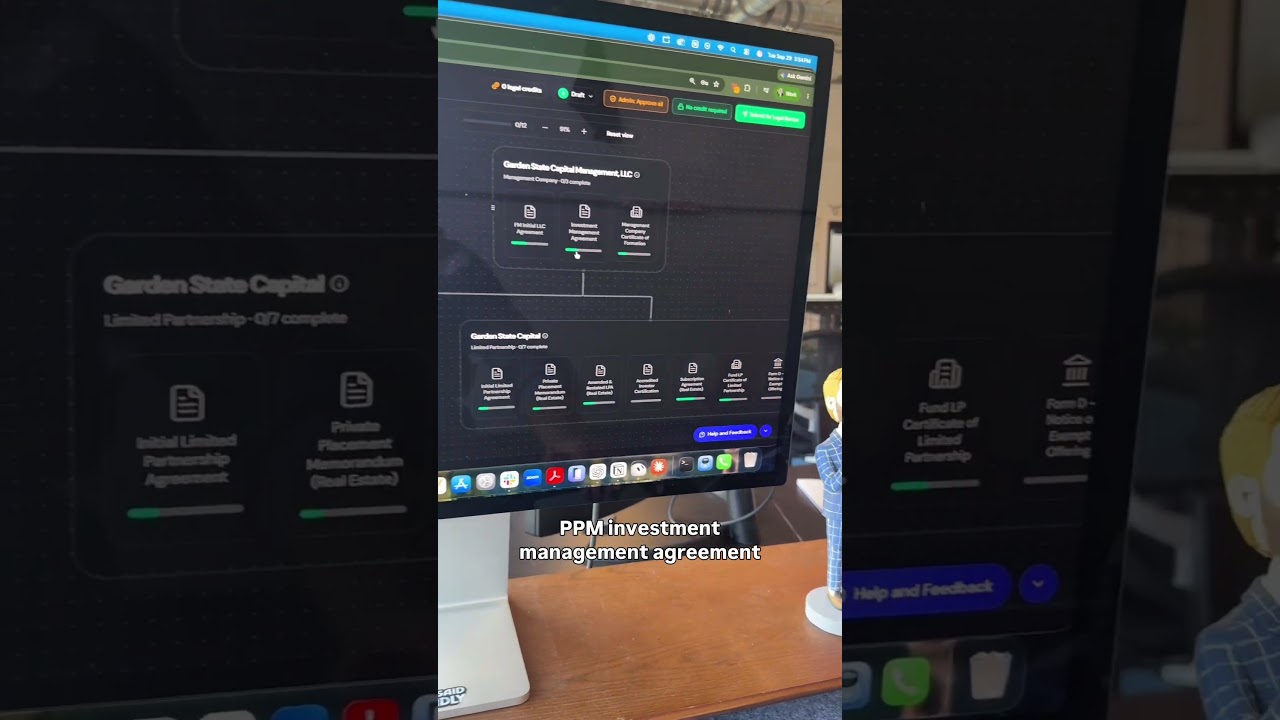
Bridger Pennington explains how investment funds work: limited partners (LPs) pool money, general partners (GPs) manage it, and they split profits 80/20. Whether it's hedge funds, private equity, or venture capital, the structure is identical. The Limited Partnership Agreement and Private Placement Memorandum govern the whole thing.
Chapters
So what is a fund? All a fund is, now there's words like private equity, hedge funds, venture capital funds. The one thing that bugs me about finance, high finance, is they make simple things very complex. This is not that complex. All a fund is just a pool of money. Okay? And you have managers, fund managers that manage this pool, and you have investors. So investors over here, investors put money into the pool. The pool of money, they go and make an investment. Let's say we buy some real estate. Whenever that real estate makes money, the money flows back to the pool of money and gets split, typically 20% to the fund managers and 80% to the investors. That's it. This is one of the oldest business models in the world. Let's go start a blacksmith shop. Let's get some investors in. We'll start doing blacksmiths like a big shop. And then once it gets returns, we'll split the returns. I'm Christopher Columbus. Let's go to the New World. Give me some money. We'll go to the New World. We'll get some gold. We'll split the returns. This is one of the oldest business models on earth. Now, so what makes a hedge fund or a private credit fund or a debt fund or a real estate fund? What makes those is what they invest into. So let's take a simple one, for example. Let's take a real estate fund. What's a real estate fund? A real estate fund is a pool of money. They buy and sell real estate. Ta-da! What's a private equity fund? Instead of buying real estate, they buy private equity or private ownership in private businesses. So, they're buying just privately held businesses. That's what private equity is. Same essential concept. What's a hedge fund? A hedge fund, instead of buying real estate or private businesses, they're buying public businesses or public securities, stocks, bonds, options, forex, crypto. That's all a hedge fund is. What's a debt or private credit fund? A private credit fund is a pool of money. Instead of doing these other things, they go and issue loans. They make loans to others. Whenever those loans make money, they split the returns. Venture capital, what's that? They invest into early-stage startups. It's not that crazy. These are actually all pretty similar businesses. And I know because we've launched 400 of them. I have ran 5 different funds. I've ran a private credit fund, wherever that is, right here. I ran a private credit fund. I've also ran a hedge fund, and I've also run a venture capital fund. I'm telling you from experience, I know how these funds run. We've raised and we manage over $640 million between these funds. This is how they run. Now, They don't— the technical term is not pool of money or fund manager investors. The technical terms are this right here. Okay? I'll zoom in on this so you can see it. Okay? And see my graph here. Instead of a pool of money, you see the pool here? It's called a limited partnership. That's an entity. Each one of these boxes represents an entity. That's an entity. That's the fund. Instead of investors, they're called limited partners or LPs. Limited partners put money into a limited partnership, and it's managed by fund managers over here. And they have 2 entities, typically your general partner and your management company. And they manage the limited partnership that goes and makes investments. Whenever the investments make money, it flows back to the limited partnership and gets split 80% here and 20% here. Not too crazy, right? This, by the way, this little structure, this is how 99% of all private capital in the world is raised, is through this little structure right here. Isn't that wild? And this is all governed by 2 documents here, 2 main documents at least, your LPA, your limited partnership agreement, and your PPM, your private placement memorandum. These 2 documents we lovingly call the Bible. They are all the bylaws, the codes of everything that's built inside of a fund.