Stop Scrambling for Capital & Start Scaling

Bridger Pennington, who raised $84 million in equity, walks founders through launching investment funds without traditional fundraising. He shares his three-phase capital-raising framework, the "know-like-trust" network strategy, and how his Fund Launch AI platform handles fund structures, legal docs, and pitch decks.
Chapters
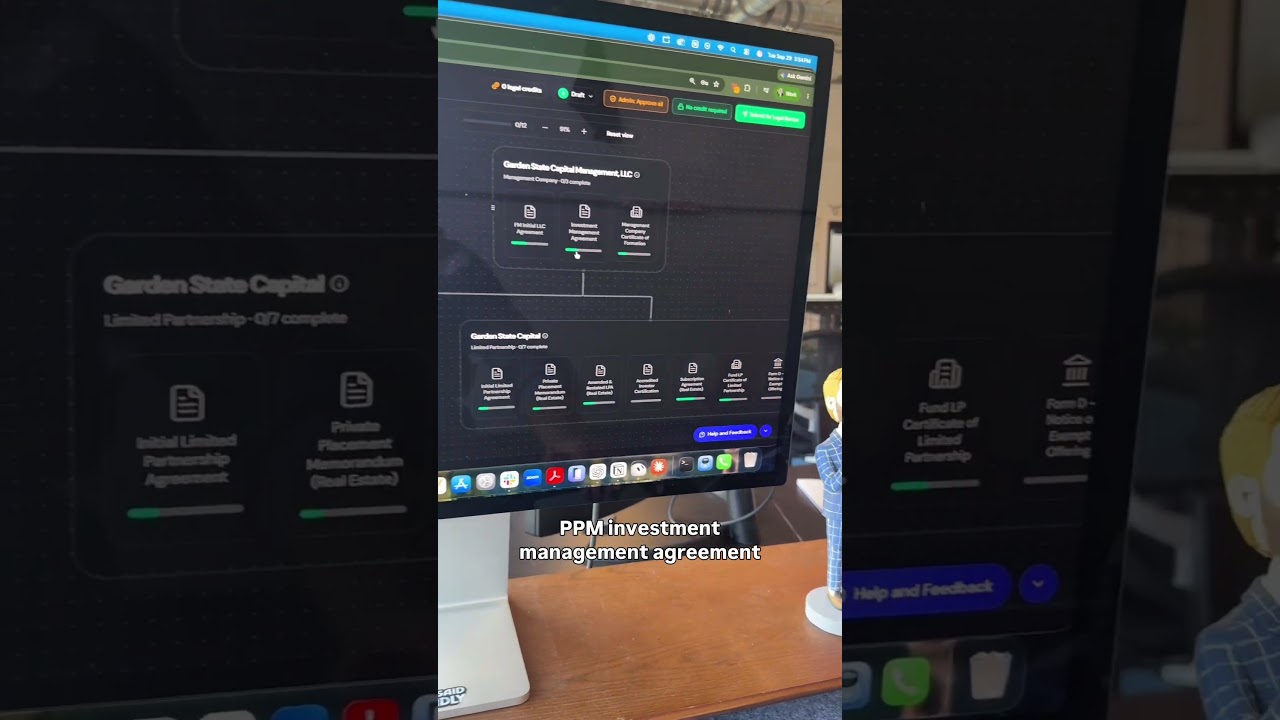
How to stop scrambling for capital and start scaling. Okay? We're going to talk all about cap raising and what we've done for this. Why am I qualified to speak on this? You're probably wondering, who is this guy? Why is he qualified to speak on this? Well, I've raised, me and my team have raised $84 million of equity. Maybe move my corner screen so they can see there. $84 million of equity. We have a portfolio of over $640 million of aggregate portfolio AUM between all of our portfolio companies. I've launched 5 different funds under 3 platforms. We've launched 17 portfolio funds and have partnered with them. We've launched with— we have hundreds of limited partners in our funds right now, which are investors. We've done over $47 million of revenue, primarily through Fund Launch. And we got named on Inc. 5000 fastest growing companies in America. So yes, I know a thing or two about raising capital and building businesses. In addition to this, I also did this by dropping out of college. I didn't go to some fancy Ivy League school. I did not work on Wall Street. I did not, you know, I don't live in some financial hub. I live in Utah, for crying out loud. I'm a flyover state for most people. Okay? And by the way, Utah is an amazing spot. This is my beautiful wife and 2 kids. We have 9 chickens. We live on an acre and a half and Just south of Salt Lake City, Utah, which is awesome. Utah is a great place to raise a family if you guys want to have a family and kids. And we've done this at a relatively young age. My business partner, Mason, just won Utah Businesses 20 in Their 20s. We got named on Utah Businesses Fast 50. So how did we do all this at a relatively young age in our career? But we've been doing this now for 7 years. We've been building Funnel Launch and building funds here. Through Funnel Launch, you guys, our community. We've launched over 400 funds and syndications. So congrats to y'all. You guys are doing incredible stuff. Our clients manage over $7.1 billion of reported client AUM. That's assets under management. This is a group, All In Ventures. They came, they paid us roughly $30,000 to help build out their venture capital fund. They actually went and successfully launched a Fund 1 at $20 million and now they're raising their Fund 2. These guys are awesome. Tom and Steven, these guys have done really well. They're in a, they're this See this background? You can't really see it very well. This is a huge incubator. It's near 2 universities. They have a few hundred students that come every day and work on their startups in this big place. They give them free internet, a place to work, some help with accounting and stuff for free. In exchange, the incubator takes a little percentage of their business. And then these guys, I believe, get first right of refusal to invest in the best companies that come out of this incubator. Isn't that pretty cool? Kind of a cool idea for an investment fund. These guys have crushed it. They've done really, really well. Huge congrats to them. Here's another group. This is Percy. He paid us roughly $25,000. We helped build and structure his fund together. He has over $100 million of AUM now, all in real estate. You can see just this is a few months ago. He just closed on another 229-unit apartment complex in Oklahoma last week and onboarding this to his fund. Now you might be wondering, You know, Bridger, what's in it for you? Why do you do this? Like I do live streams, I do stuff like this. I believe in helping others launch funds. I believe, and I'll share my story in a minute, but I was, you know, immensely blessed to have a family that was in the world of funds. So I learned what funds were. And by the way, we're going to do Q&A in a minute and you guys can ask me questions live, but I believe in democratising Wall Street. So number one, I want to just help more people understand high finance. So I do this for free. You guys can join webinars like this. My content online is all for free. What we do, the what's in it for Bridger? I help people build funds. So if you want to help implement and build a fund like Percy did or like all inventors did, okay? You can pay us a fee. It's a fee-for-service. We bring in lawyers, we bring in accountants, we bring in our software, we bring in our advisors, and we help incubate and build a fund with you. Okay? So So that's like what's in it for Bridger? That's what's in it for Bridger. So does that sound good? And today, I, you know, usually 1 to 3 people do this on a call like this. The rest of you guys just come and show up for free. And I just try to give as much as I can because I believe in giving free value first for anybody. I believe we need to help more people understand what funds are and high finance. And then we'll help a couple of you go and build your own funds. Okay? And a couple of you just do it on your own. That's totally fine as well. Okay? On our agenda, we're going to talk about building investment funds. We're going to talk about what private equity is, venture capital, hedge funds, real estate funds, private credit funds, how all these funds work. And we're going to talk specifically about raising capital today. Raising capital is going to be our big topic about how we again went and raised $84 million of equity in our funds, how we've raised $30 million this year in 2026. So I'm not going to share stuff that worked 5 years ago or 10 years ago. I'm going to share stuff that's working right now in today's market. Sound good? Okay? Capisce? Type a yes in the chat if that sounds like a good plan for today. Sound good? To just preface today's conversation, I asked a guy, I met this dude, I was like, you know, hey, what do you do for a living? And he's like, oh, I flip real estate. And I was like, oh, like, Like houses, right? You guys flip houses. And he's like, not quite. We flip skyscrapers. And I was like, oh. And he's like, yeah, it's pretty much the same thing. You buy a dilapidated skyscraper, we do value-add, we get new tenants in it, and we'll buy it for $60 million and we turn around and sell it for $95 million. And I was like, oh. That's a whole different game. What I want to talk about today is playing a much bigger game. This is the world of funds. And he's like, it's actually a very similar process to flipping a house. It's just way bigger. And the numbers are way bigger as well. This is the reason fund managers are the number one category of billionaires on the Forbes billionaire list. There's an old saying that most millionaires made their money through real estate. Right? You've probably heard that before. Most millionaires became millionaires through real estate. Well, guess what? Most billionaires became billionaires through investment funds, private equity, hedge funds, venture capital funds. Pretty crazy, right? Okay. And this is what we build through Fund Launch and Fund Launch AI. All right. So my goal for today is that you should consider launching an investment fund. We've helped people build funds in all these categories. And I'm actually going to go to the iPad in just 20 seconds here. Let me just show you the type of funds to get your brains going on what kind of funds we help people do. So we've had people build multifamily real estate funds, sports gambling funds, commercial real estate funds, short-term rental funds, long-short trading investing funds, African food supply chain funds, forex trading investing funds, crypto trading investing funds, real estate lending funds, almond nut farm acquisition funds, debt consolidation loans, seller finance funds, startup investing funds, business acquisition funds, single-family real estate funds, software industry roll-up funds, farming funds, shipping container arbitrage funds, Canadian funds, venture studio funds, competitor roll-up funds, hard money lending funds, And many, many more. If you have a good idea and money, capital is the only thing stopping you, you can bolt on a fund to scale. Okay? All a fund is is just a pool of money from investors. You pool money together and you invest that in a category. And once that category makes money back, you split the returns between you and your investors. So the guy doing flipping skyscrapers, he got a pool of money together. They'd buy a skyscraper. They'd buy it for $60 million. They renovate it, value add. They sell it for $92 million. They split the $32 million difference between themselves and the investors. Not a bad gig. Okay? It's one of the oldest business models on earth. And so we'll talk about that more today. Now, so we're talking about capital raising. Let me actually share— well, Let me give you a little background on how you can get into this industry and be part of this. I think this would be very, you know, I guess useful for y'all. So share my screen if you can. I started 6 businesses my first 2 years of college. So I left high school, went on a 2-year church mission to Taiwan. I spoke Mandarin Chinese. I come home, I'm in university college, and I start building businesses. I was super excited to build businesses. So I started all these types of businesses. I actually started 8. My first business was a Chinese tutoring business. I had about 6 other kids that tutored with me and we got clients in these Chinese immersion programs and we'd tutor middle school and high school and elementary kids in Chinese, okay? However, that was a cool business. I made a decent little bit of money, but it's very hard to scale that kind of business. And so I started trying other businesses. I did a funnel building business. We built funnels and online marketing businesses, online marketing agency. I did real estate wholesaling. We built a business to put a chip in a snowboard. That one never got off the ground because we couldn't develop the chip. But I did a sell your junk on eBay business. Okay? I was trying every type of business I could imagine. I was on YouTube or on other places trying to figure out business stuff. And then finally, my dad, you can put me full screen here, grabs me. And again, I grew up in a normal house in Utah. Nothing bad, but nothing great either. Just a normal house. My dad drove a car, a 300,000-mile— sorry, an old Ford Expedition with 300,000 miles on it. And he's like, go meet with my business partner. This guy can really help you out. So I said, sure, I'll go meet with whoever. So I drive up to this guy's house and I get his address and I go up and I pull up to this house and it's huge. This guy lives in a massive mansion. It's like it's in a cul-de-sac. It almost curves around the cul-de-sac. Wow. And I pull, it's like this beautiful white home. I pull up my car, I'm like, is this the right spot? Is this my dad's business partner? And as I get out of my car, I go walk up to the house. There's these huge doors. I knock on the door. I'm like a little nervous. Like, I don't know, is a butler going to come and, begone peasant, get out of here? I was kind of nervous. And I knock on the door. Thankfully, my dad's business partner shows up and he says, Bridger, come on in. You know, I walk into this guy's house and it's Immaculate. He's got a pool in the backyard. He's got cars in the garage, amazing, cool sports cars. He's got a basketball court in the basement in his house. And I'm like, wow, this is amazing. I come sit down and we start to chat. And I start asking about business and life. At the time, again, I'm in college. I've started a few businesses. And I finally asked him like, how did you get all of this? How did you do this? And he says, Bridger, you know, he goes, I was a lot like you in my 20s. I started a number of different businesses and all of them had okay success. But then he goes, then I figured out the secrets of the rich, of the ultra-rich. He goes, the ultra-wealthy families of the world, what do they do with their children? They send their children to the universities or whatever, and they hope their kids go work in the fund space. They try to get their kids into private equity, hedge funds, venture capital, real estate funds, or come back home and run the family office with us, which essentially is a fund. And he goes, at the time I didn't— this is my mentor again talking. He's like, I didn't even know what a fund was. But he's like, I'm going to— he's like, I set a goal. Like, I'm going to figure this out. And he's like, it took me about a few years, 5 or 6 years. But then he goes, we launched a real estate fund. Wow. And he goes, today, we're managing over $8 billion of real estate. Which to put that in perspective, you guys know Grant Cardone or Cardone Capital? Cardone Capital manages about $4 billion of real estate today. This guy, he was managing $8 billion. So twice as big as Cardone Capital. And I was enthralled. I was like, oh my gosh, this is impressive. I want to learn about funds. Can you teach me? And I said, hey, can you be my mentor? I'll I'll, you know, I'll be at your house at 6:00 AM. I'll bring you coffee. I'll take notes. I'll be a free assistant for you. Just teach me. And he said, Bridger, go talk to your dad. Your dad knows way more about this than I do. And I said, no, my dad's kind of broke. We live in a normal house. He drives a normal car. You live in a big house with fancy cars. I want to learn from you. And he said, Bridger, sorry to break it to you, but me and your dad make about the same amount of money. And my chin dropped to the floor. I was like, huh? And he's like, yeah, me and your dad are pretty much equal business partners in this business. I left the dude's house. I drive straight to my dad's house. I'm like, Dad, what the heck? Like what's going on? You're managing $8 billion of real estate. Like why can't I order a soda at Chipotle because it's too expensive? We go out to dinner, like nobody drinks soda. Like, you know, water's for everybody. Like We're always on a budget at our house. And he goes, he kind of laughs. He says, well, my business partner likes to kind of spend his money and I like to save my money and invest my money. But yeah, we're managing these big funds. Anyways, to make a long story short, I start to talk with my dad about investment funds. He got on the whiteboard and started to teach me about funds, how they're built, how they're put together, how the SEC works, how you raise capital, which we're going to talk about today. And I was enthralled with the world of investment funds. There's a funny thing in life. Once you start to learn about something, you start to recognize that thing around you. Even today, we're going to talk about funds today. You're going to start seeing where funds are involved in your life. They own a lot of the businesses that me and you use every day. And the same thing happened for me. And so, I was 22 years old. I was working a job. I was at school. And at the job I was working at, it was kind of a smaller company. They did a certain type of thing in finance. And they had an idea where we could fund or finance clients coming through this business. And we were like, hey, I was like, hey, we could put a fund together for this. And they loved the idea. We got on the whiteboards. We started planning it out. And I took it to my dad. My dad loved this idea. I'm like, I'm 22 years old. And I'm like, we could put together a small fund to finance the clients, give them short-term loans for these clients that were coming through this business that need funding. And we thought in the back end, we could get paid back pretty well. And we were, I was pretty excited. And my dad thought it was a good idea. We looked through all the numbers and I'm like, great, I'm going to set this thing up. We started putting together documents. My brother is an investment funds attorney. So, I tapped my brother. I'm like, brother, help me with this. He starts putting the docs together. And I was super excited. I set up this little teeny fund. I'm 22 years old and I'm like, crap, how am I going to raise money? No one believes in me. I have no track record. I'm in college still. Who would invest with me? And then I had a great idea. I was like, my dad would invest with me. Duh. My dad is apparently super rich and he doesn't spend any money on his kids or family or, you know, cars. We don't go on vacations. Like, he's got to have tons of money and he loves this idea. So, I remember it was a late Sunday night. I go drive to my dad's house. I said, Dad, how would you like to invest in our fund and be our first investor? And my dad kind of smiles and laughs. He says, Bridger, I have the money to invest. But if I invest in your fund, it will ruin the experience of you raising money on your own. If I invest in your fund, it'll be a crutch that you'll never be able to recover from. And he said no. And I kind of left with my tail between my legs a little bit. And he's like, but you can figure this out. I'll teach you how this kind of works, but I'm not going to invest. And so, I left his house and we got together on the whiteboard a few days later and he started to teach me how he would approach raising money. And I went out and I'll share that, what he just talked about in a second, but I'll wrap this story up with, I took those principles, went out. I talked to everybody I knew, former boss, a college professor, people that were in my network, like friends from high school. I just talked to anybody I knew. I raised a whopping $49,500, roughly $50 grand from like 7 investors. Each investor put in almost like $10 grand. So, you know, $5,000 to $10,000 each, like teeny checks. But it was enough to get started. We had launched our first little fund. And we got enough to get going, which was incredible. And so, we launched this teeny little micro fund. We get going and our first group of investors got a 64% return on their money, which was like amazing. I then dovetailed that into a second fund. I went and raised roughly, I think, $800,000 to $1 million. And we were rolling these short-term loans. I ran that fund for 3.5 years. Our cash-on-cash return to investor, that first one was 64%, next year was 47%. Wow. 3rd year was 36% cash-on-cash returns. And then we actually had a competitor come in and actually buy out our fund and buy out all of our investors. And I actually successfully exited that fund at, I think I was 26 years old, 25 years old. And then we helped people. We started making videos and content online of how do funds work, how they're put together. I started making— I have one of the top YouTube channels on finance and especially of investment funds. And we started to help more people build funds. And then people started to ask us, hey, can you help me build my fund? So I pulled in my brother and others to help people put together their own funds. And this just blew up. And that's where FundLaunch hit the Inc. 5000 of fast-growing companies in America. And then since then, I've launched 2 other funds. I launched a fund called Ugly Unicorn. It's in cryptocurrency. And then we launched another fund, FundLaunch Partners in GP Stakes. And both those funds combined, we've raised over $84 million of equity in those funds. And we're still on market raising Right now. So, that's kind of the preface for today's call. Let's now talk about capital raising. So, my dad sat me down and back to the story, I was like, how do I raise money? How do I do this? How do I find investors? How do I like put this together? And I want to get the right slide for me. Aha, here we go. So, I was like, Dad, how do I— like no one's going to believe in me. Maybe some of you guys are feeling that same way. Like how would I ever raise money? And my dad said, let me give you what I call the Lamborghini example. And I was like, Lamborghini example? He's like, all right. He's like, just go with me and I'll give you this example. Bridger, imagine we found this Lamborghini in Montana. It is for sale. There's a family that's selling it. Now we believe it's worth about $300,000. We could probably sell it next week for $300 grand on a fire sale. It's probably worth much more, but $300 grand, it would sell it pretty instantly. There's a family. There's a death in this family, a trust sale. The kids are like, just get rid of this car. We hate this car. For whatever reason, they've got like a vendetta against this car, meaning like dad was cheating on mom in the car or whatever. They're just like, we don't even want to look at this car. We're just going to fire sell it for $100,000. Okay? And but— You got to show up with cash on Saturday by 2 o'clock to buy this car. Okay? Just go with me. This is an example here. The car has been checked out by a mechanic. It's in perfect working order. We believe we could sell it next week for $300,000. There's a family in Montana that just had a death in the family. They want the car gone by Saturday at 2 o'clock with cash in hand for $100,000. You guys following? My dad gave me this example. I'll give it to you. He asked me the question. Could you find— Bridger, and I'm asking you, could you come up with $100 grand by Saturday to do this deal? And you can't use any of your own money. People in the chat, type in the chat yes or no. And do you feel like you could find $100 grand by Saturday at 2 o'clock to go get this car in Montana? And I remember thinking about this. I was like, man, I was like, I don't— I'm in college, you know? But I started thinking like, dude, if we do this, we're going to make a $200,000 like fee here. Even if I split the returns, maybe I get an investor that puts in $100,000 and we split it 50/50, he'll make $100,000 and I'll make $100,000. I'm like, dude, I'll make $100,000 this weekend. That's like life-changing money for a college student. I was like, bro. So, I really started to think about it. I was like, okay, do I have a former boss that I've worked for in the past or a college professor or maybe a coach that was like a youth? I played sports growing up. Like, you know, I started to think about like, is there a cousin? Is there an uncle? Is there a, you know, who in my network could I go talk? Could I go knock doors? You know, and I finally looked at my dad and I was like, you know what? I'm like, it's all checked out, right? Everything's verified. The one variable is, can you raise $100 grand? He's like, yes. I was like, you know what? I bet I wouldn't sleep for 2 days, but I bet I could find $100 grand. And he goes, well, why? And I said, well, the deal is so good. It's like, you know, obviously this is a fictional deal. But yeah, like if this was actually real, I bet I could come up with $100 grand. And we would make a $200 grand spread here. I'd give my investor some and me some. Dude, that would be amazing. Right? And I'm like, yeah, I bet I could find $100 grand. You know, anybody in the chat, you guys feel like you could find $100 grand? And I was like, but I'm like, obviously, this is a fictional example, right? And he goes, 2 points. Number one, this is my dad speaking. 3 minutes ago, you told me I'm too young, I'm inexperienced, I don't have a track record. And all of a sudden, you're telling me you could find $100,000 by Saturday. If you had a good enough deal to sell. Am I correct? And I was like, actually, yeah. And what did you notice? Like, if the deal was so good, did the investor care about your background or track record? Yes, a little bit. But like, the deal was so good. He says, Bridger, you know, typically a deal doesn't like to exist like this for a supercar, but it does happen in real estate. Or in a business. People have to get foreclosed on. They get— there's bankruptcies. Deals like this happen every single day. The problem with capital raising isn't, you know, how of a slick talker and great salesman you are. It's how good of a deal you have. Does that make sense? And he's like, the better the deal, because the way you would pitch this is you'd say, hey, I'm— put me full screen if you can. 22 years old. I know I don't have a track record, Mr. Investor, but look at the deal. Here's the letter from the mechanic. Here's the trust sale. Here's how we're going to insure it. Like, investor, poke holes in this. Here's the deal. You can look at it. You underwrite it. I'm just bringing you a deal. I've looked at it in every angle and I think it's a really good deal. What do you think? And the investor looks at it and goes, actually, you're kind of right. Man, this is pretty darn foolproof. Let's do, you know, let's do this or let's not do this. When you have a good enough deal, people look past those other things if you're new and starting out. Does that kind of make sense? So, I took this Lamborghini example. On my first fund, I had a really good deal. And the way I would pitch investors at 22 years old is I would roll in and say, hey, I've got a great opportunity today. Now, I know— I'd address it right up front. I know you believe I'm too young to be standing in front of you. I know you believe that I'm not the right fit or whatever reason, but let's just look at the deal together. And I'm like, you can just— you look at it with me. Here's the underlying assumptions. Here's the spreadsheet. Here's how the numbers will go in and out. Here's the risks associated with this investment. I'm putting in a significant amount of my net worth into this thing. What do you think? And they would ask questions, we'd talk about it, and what was crazy is people were like, you know what, yeah, let's try that out. That's a different approach to cap raising than most people think. Is this kind of making sense? Now, let me go down to my iPad here, and by the way, ask questions if you have them in the chat. We're live for a reason. I'd love to hear any questions if you have them. But let me share my iPad. Now let's go more advanced, okay? This is kind of a— that was kind of the simple version. Now, so that was when I first started raising money. And then now that we've gone out and like this year we've raised $30 million, $30 million is your— something like this, okay? And I'll tell you the real story around this. So here's— you guys can see that? Yeah, okay. So we got the iPad here, the iPad of truth and justice. Let's talk about capital raising, okay? So capital raising in 2026. So that was a few years ago, right? I was kind of raising my first dollars, raising on a deal. That really helps a lot, right? Let's talk about today. So we believe we've put together a pretty good investment strategy. And if I look— sorry, I'm going to share this. I'm going to zoom out for a second. If you can see all my crazy stuff on my iPad, but this is the Fund Launch Formula. OK? When we talk about building funds, we've built out a pretty impressive formula. We've helped hundreds of people launch their own funds. We do this every day. And we've identified a formula that we believe is very useful to build funds. Over on the left, you have the fund launch side. This is the legal formation and then this is the Post, like you've launched here and now you're managing your fund over here, okay? So it's kind of your journey starts here and goes this way. So let's go to the left side here. This is the fund launch side. When I'm trying to launch a fund, what am I doing? Well, I have a very good deal and strategy, right? What we're going to invest into. I'm going to put together a frame and structure for that deal and strategy on how that'll look and how that'll be put together. And then I'm going to go pressure test it with potential investors. I'm going to try to get verbal commitments if I can because I'm trying to get validation on if I should even do this thing or not. Does that kind of make sense? Now, the reason this is a wheel is because you're going to go talk to potential investors and they're going to give you some counsel on what to do. And you might even go tweak your deal change it a little bit. You might tweak your structure of how you're structuring the deal. And then you can come talk to them again. And you're going to keep doing this in a cycle until you feel like you have validation, right? Now, once we have validation, yes, this is a good product to take to market, people would like this product, I then will go to legal formation. And then I set up the lawyers and all the stuff. We do that with Funnel Launch AI. We help you guys build this together. And then we go launch the fund. We file your Form Ds with the SEC, and now you're live as a fund. We then go back, we close the money in capital markets. We then start buying assets, and we start building out our firm and firm management. Okay, that was like kind of a crash course in the Fund Launch Formula. So when we think about building funds, right, and what actually moves the needle when raising money, okay? Money loves speed. Money loves if we can move fast on something like this, okay? The problem that I see with a lot of people. Okay? I'm sorry. It's going to go black for a second. Give me a second. The problem— I'm switching computers here. Here we go. Here we go. There we go. The problem I see from a lot of people, myself included. I say this problem because I've done this. I'm like, okay, we're going to go raise money. Most people think, okay, I'm going to go hire someone else to raise money for me at $100 grand a year or whatever. The reality is the best salesperson of your fund is you, is the main investor of your fund. I'll tell you a story in a second about this. People are like, hey, I'll pay to pitch. These can sometimes work. I've paid for a few of these. You pay $10 grand or $20 grand. You go pitch a group of family offices or whatever. But sometimes these don't work so often. Go sponsor an event, right? I'm going to sponsor this event. I'll get in. I'm going to use expensive placement agents. I've done all of these, by the way. I want to get on CNBC or Fox News. You pay 10 grand, they'll put you on Fox with Friends or whatever. I'm going to build a beautiful website. Okay? These are all things that can help, but people can do all of these and still not raise money. Okay? Because I've done these things, I know these things do not work well. They all help a little bit, but they don't— they're not the core. They're not the root of the issue. Okay? People invest with others that they know, like, and trust, which sounds— you're like, Bridger, I came on this call today to tell me like people invest with others they know, like, and trust? And so my— what I tell people is expand the pool of people that know, like, and trust you. Okay? And this thing, this is what we did with Funnel Launch Partners. So let me go back to my iPad. It's gonna go black for a second here. Let me tell you exactly what we did to raise our fund. Okay? So, I'll tell you a little story here. Fund Launch Partners. So, Fund Launch Partners. Let's use blue here. Is that pulling up yet? You got it? Okay. So, Fund Launch Partners. We had built this business, Fund Launch. We had hundreds of people launching funds. We then built Fund Launch Partners to invest in the best funds that were coming out of Fund Launch. Pretty cool idea. We loved it. We're the fund guys. Okay? So this is like 3 years ago. We go out and we're like, okay, let's go. We're going to raise a $30 million fund. I've already, Bridger, me, I've already raised $24 million in my other thing that was, I think, harder to raise for. Our other partners, we bring in this really cool group of partners. My one partner, institutional background, deployed at AAA and Dow, was just amazing. My other partner was a 5-time CFO. Worked at a multi-billion-dollar investment fund. My other partner— anyways, we have 5 partners here. We start going out and raising money. Okay? And we all have people that know, like, and trust us. Okay? And so, I'll put a little bubble here in purple. This is kind of our area of influence. We start talking to people. We start raising money. But it's a first-time fund. And no one wants to be the first check-in. Sorry, I want to make sure you can see it. There we go. We do this for a few months and we raise— this kind of sounds bad. We raise a whopping, I think it was like $1.8 million, which sounds good, but we're trying to raise $30 million. And we're the fund people. This is like 2023, I think. Don't quote me on that. 2023, 2024. We're the fund guys and we go out. We— I like tap my social media market. Like, we do all the stuff. We raise a whopping $1.8 million. We're like, gosh. And one of our partners was kind of the main dude capital raising. The other 4 of us really weren't capital raising. We're like, okay, we got to step in and help with this. So, we go out. We're like, hey, we're all going to help. So, my— the main partner on this, his name is Lincoln. I'll put him right here. Lincoln. He was the main like CIO, main guy investing. And he's not like a natural capital raiser, but he's like, dude, we got to capital raise. I will go raise capital. So, he starts going to events, meeting people, and starts expanding our area of influence. And by the way, it helped a ton to have Lincoln raise capital. If I show you kind of how funds work, there's usually 3 main roles in a fund. Where's our little diagram here? Right here. There's usually 3 main roles in a fund. You have your expert investor, your fund manager, and your money raiser. Well, our money raiser guy was not raising money, to be frank. It just wasn't working. And so Lincoln, who was over here, was like, fine, I'll figure this out. So he starts helping raise money. And what we found was actually he, because he knew the product, he knew the investment strategy better than anybody else, even though he's not that, like he's not like a naturally outgoing person, not naturally like super well connected. He actually raised money better than our really good sales guy money raiser person. Isn't that interesting? That's kind of an aside there. Let me go back to drawing this out. Okay? So, Linga starts to raise money. We start to put this together and we go out. We've now raised, I think it was, we did another push. We were up to like $2. $2.5 million. Roughly, let's just call it $3 million. So, we're about 10% raised. And we are now 12 months into this, which guess what? The average time to raise a fund is about 18 to 24 months. Just FYI, a full-out fund. So, just give yourself a little slack. It takes time to raise money. It's hard. Raising money is hard. Okay? So, we do this. We're only at $3 million. I'm like, man, what are we going to do? But we found 1 or 2, and we had pretty much tapped our entire audience of people that know, like, and trusted us. And we're like, crap, what do we do here? We're the fund people. Like, this is a bad look, if I'm just being honest. And so we're like, what do we do here? Well, one of these investors that we found, I'll put it in, let's use a new color. Let's use green. One of these guys was an investor. He wanted to put in, of the $3 million, I think he was putting in like $500K. He was pretty well connected. We said, hey, do you want to be an advisor on our fund? And he's like, sure, I'll be an advisor with you guys. We gave him a little bit of equity. He also put a check in and we said, hey, part of that, you got to, you know, help us with our team, sit on our investment committee, join us as a partner. And also, if you can, help us raise money. And he said, okay, let me make some intros. So he made one intro for us. I'll put a circle here for our one intro. And what this intro was was a test. He wanted to see if we could close and do well with this. So what happened was Lincoln met with this test guy and we did really well. The test lead reported back to the advisor and said, hey, this Funnel Launch Partners Group is really good. I actually want to put money in. This is awesome. And our advisor was like, ooh, okay, that looks good on me. Maybe I'll do some more. So, he introduced us to another guy and another guy in his circle, and they had good rapport and they wanted to invest because people knew, liked— let's see, know, like, and trusted this advisor. So, we started tapping this advisor's pool of people that knew, liked, and trusted him. One of those guys, was like, hey, can I also be an advisor? I'm friends with this advisor. Can I? And we're like, sure, same deal. So, we gave him a deal, a new advisor over here. And he started doing the same thing. He started referring people that knew, liked, and trusted him. And those people started, you know, they're like, hey, I'll invest, I'll invest, I'll invest. In the next about 12 weeks, we raised and closed our entire fund. We had raised, we were again, we were at $3 million. We brought in this advisor, then this advisor. We were oversubscribed at, I'll put it in black here, $32 million we had raised, oversubscribed in our fund. We had spent, I don't know, 14 months Raising $3 million. We got some traction, we did some deals, we got an advisor and then another advisor, and ta-da, we were oversubscribed at $32 million. Okay, I'm just telling you, this is the real story. This is our Fund 1. Pretty cool, right? A lot of lessons in that. Bring on the right team and just people invest with people they know, like, and trust, okay? Now Fund 2. So we've been— we've deployed and we're actually doing— we've done most of our deals out of Fund 1. And we're like, hey, we got to start running Fund 2. So that was this year. Okay? Fund 2. So what did we do? We started the same process. We started soft circling, meaning we go to investors, hey, what was your appetite? Do you like Fund 1? Fund 1's got a few upsells. And then we got committed to a process. This is like, take notes on this. This was huge. One of our advisors, people like mentors to our fund, Let me draw it down here. I'm going to erase some stuff. One of our mentors to our fund gave us this excellent advice. Okay? He had gone out and raised approximately, so he was on market. This is, again, an advisor of ours. He was trying to raise about $750 million. Like that's a lot of money. He's like, I guess what he goes, I didn't raise that amount of money. He goes, we actually raised, I think it was $1.2 billion. And we raised that whole thing in about 4 weeks. And I was like, whoa, that's crazy. And he goes, let me tell you how we did it. Now, granted, I think these guys were on fund 6. So, they had a big pool of investors. They had Tracker. They had people that already liked them, but still, To raise $1.2 billion in 4 weeks is quite a story. And he's like, let me tell you how I did it. And so what he did, he's like, I committed to the process. Let me tell you about the process of how we did this. Process is everything in raising capital. And so, and this is the process we copied. So I'll tell you what we did on this process. He goes, you have to have deadlines and scarcity and urgency. You have to build in rapport. You want to be the pretty girl at the dance that everyone wants to dance with. Meaning you're the hot ticket in— you know, you're not begging, please put money in. That's like, why should I put money in? You're begging me to put money in. It's like, no, no, no. I will allow you. I'll maybe allow you to put money in my fund. Right, which everyone wants. You wanna be the hot ticket. Everyone's trying to put money in. You're like, oh, I don't even know if we can accept your money. But how do you do that when you got no investors? So he's like, let me talk you through our process of what we did, okay? So I'm gonna just draw it right here. Let me go one bit bigger. Alright, process. This is exactly what we did. So earlier this year, this is January to February, we started soft circling, like talking to investors, seeing the appetite. for this investment. Hey, would you guys be interested? It's not open yet. We're just kind of seeing where the interest levels are. Again, Funnel Launch Formula. We're trying to actually see if there was interest. Yep, I want to be involved. Great. We said, this is the plan. We're opening up the data room on March 1st. Okay? March 1st, data room goes live. What's a data room? Data room's all of our documents, reports, spreadsheets, is all in a big, essentially, on like a Google Drive that you can go access and do due diligence on us. Data room opens March 1st. You guys will have 1 month to submit indications of interest, and those are due March 28th. Now, what's an indication of interest? This is a 1-page document It's non-binding. All it says is, I'm interested in investing a certain dollar amount. Well, Bridger, why do you do that? Well, because last fund was oversubscribed. We actually had an investor, this is true, in our last fund, they tried to put in $5 million. We couldn't accept them. We actually cut their subscription down to, I think, $3.2 million. Roughly. Because we're oversubscribed. We're the pretty girl at the dance. We don't even know if we can accept the amount you want to invest. So what we're going to do, we're going to open our data room, send back a, just a, you know, we have a letter. You can just use our template of what allocation size you would like. Does that make sense? What would be your ideal allocation size? Does that make sense? And if you do it by March 28th, we can pretty much guarantee your allocation size. If you want to wait till later, what's happening is on April 1st, so the next month, April 1st, April 1st, we're going to be putting this out to our whole network. And we believe we're going to be oversubscribed in our fund. Okay? You guys following this? So, data room opened, we got IOIs in, okay? Our first close, we kind of said, hey, we're targeting $30 million on our first close. So we wanna see if you can come in. We got IOIs back, okay? For about, don't quote me on this, I think it was roughly like $15 million of IOIs, okay? So then what happened? April 1st, We then opened it up more, quote unquote, publicly to new people that weren't in Fund 1. And we said, hey, data room's now open. We're looking for IOIs on April 28th. We're trying to raise $30 million. We already have $15 million of interest in this fund. We believe it's gonna go fast. So then these guys all look at the data room. They then send in their indication of interest. We had up to $45 million of indications of interest. But again, these are non-binding. These are just pieces of paper that say, I'm interested in that amount. But we had $45 million. And then we tell everybody else, hey, we have $45 million of interest. You know, this fund is— we're probably going to be full here. So great. We got indication of interest. Now in May, Subscription docs go out. These are actually the signing docs, okay? You're actually signing to the fund. Subscription docs went out, I think, I don't know, it was like May 15th or something like that. Don't quote me on that date, roughly around there. And we said, hey, we can give you your allocation amount or we could give you a little bit less than your allocation amount. People started to sign subscription docs into our fund. And we held, I think, a first close June 15th. We had a few trickle-ins later and we closed $30 million on our first close. Ta-da! That's pretty cool. Now you're like, oh, that's not that magical, Bridger. Like, no, yes it is. We did it before without that. You're like, I could do that. I could get that result without this. The magic of this is you get baby steps in, indications of interest. You show that interest to others. It shows that you're the pretty girl at the dance. Everyone's asking us out. Everyone wants to date us. Everyone wants to get in this fund. This fund, it's going to fill up quick. You better get your docs signed because most investors want to wait. Most investors are like, hey, I'll wait till later. I don't want to invest this. Let me know. Like, this creates some level of urgency and scarcity to get into a fund. Is this making sense? This is what we learned from our— one of our mentors who closed. This is exactly what he did. To close, not exactly, but near close to close $1.2 billion. He did it faster than us. He did it in four weeks. Similar process, right? This has been incredible. And we're now we've done this close. We're now people. And guess what? A lot of people didn't come in on this close. So we had $45 million lined up. Only $30 million came in. We had a number of people. Ah, wait! I don't want to be involved. Whatever. He said, fine. It's it's filling up. And then once we closed $30 million, guess what we did? Hey, we just successfully did our first close. We said what we're saying we're going to do. We start deploying capital. And now we're keying up for a final close. And we're doing kind of the same thing. Hey, we're cueing for— and final close brings a lot of weight. We're doing a final close. Hey, this fund is closing up. We are projected to oversubscribe this fund. Now, are we or are we not? I don't know. Money's not signed yet, but we are positioning ourselves as the investment that people wanna be a part of. Okay, is that making sense? You guys following along? Put me full screen if you can. Okay, any questions on that? Pretty cool, right? That's kind of a unique, that's what's working right now for us. Now, we've approached and talked to all different types of investors. If you look at my little, sorry, back to my screen, share my screen. Who are we talking to? For most funds that are in your, you know, like if you're a fund 1, 2, or 3, you're mostly raising from high net worth individuals or family offices. We are, we have been talking to institutions for 24 months now. We have 1 or 2 that are, we might come in, but most institutions are going to wait till fund 3. You can talk to them, but again, most capital for a fund 1, 2, or 3 are going to come from this category right here. And guess what? It takes time and effort and some, you know, some help to get this put together. Okay? Is that making sense? Now let's talk more about capital raising in a second. I actually want to take your questions. I might bring up somebody live to talk about this. But for a second, if you guys indulge me, a couple of people were asking like, hey, how do you— how does this work for you guys in Fund Launch? Is it okay if I spend the next, I don't know, few minutes talking about what we do at Fund Launch and how we help people build funds? And then we'll do Q&A. I'll go back to the iPads from there. Does that sound good? Type a yes in the chat if that's cool with you guys. Actually, we've done no more giveaways. Let's do this. Type yes in the chat and I'm gonna pick 100, or sorry, 1 person for $100 on Amazon, okay? So type yes in the chat. I'm gonna pick somebody live. You can type yes in multiple times if you want. Does that sound good if I spend the next few minutes talking about what we do with Funnel Launch? I'll even share my screen so you guys know who I'm picking here, okay? Type yes in the chat. Yes. All right, here we go. Share my screen once it's up. Oh, it's black. All right, here we go. Okay, type yes in the chat for $100 to Amazon. All right, 5, 4, 3, 2, 1. Okay, I gotta stop it. There it is. Samuel Bryson, Samuel Bryson, my cursor was on you. Congrats, you got $100 to Amazon. Send an email to bridger@funlaunch.com. Say, hey, I won $100. We'll make sure to send you a gift card. Congrats, Samuel. Okay. So let's do this. I'm going to go back to my iPad here. Let me talk through how we've helped people build and launch their own funds. Okay? Now, this is what we've done historically. Real quick. So like Bridger, what's in it for you? Why do you do this? So I run my own funds. Through Fund Launch, we help other people build their funds. Now, to work with us, what happens Is someone comes and we follow, let me go back to this, the Fund Launch Formula. And we do this, oh man, I'm— here we go. We do this Fund Launch Formula with you. So, someone comes in, we work on your deal and strategy together. We work on framing and structuring your fund. And then we work on actually going and getting verbal capital commitments. By the way, pro tip for raising capital, because it's kind of scary to ask people for money. Don't. Don't ask people for money. One of the best pieces of advice I ever got was when you're raising capital, go ask people for advice. If you ask for advice, you'll generally get money. If you ask for money, you'll generally get advice. Now, what does that mean? If you go pitch people for money, oftentimes they're like, dude, that ruined the relationship. I don't like you anymore. I don't want to be here. But if you go just ask someone for their advice, you say, hey, I'm working on this new deal. I would love— do you have 10 minutes? You could just poke some holes in what I'm thinking about. What happens is people, they're like, sure. You know, people love to give advice. If they actually— they'll go, hey, are you actually raising money for this? And you're like, well, maybe. You know, they say, well, give me a call. If you raise money for this, I'd be very interested. And this preserves your relationships with maybe friends or family or people you know. You just go ask them for advice. And the people that want to be involved will self-select and tell you they want to put money in. Okay? Kind of a pro tip. But at Fund Launch, we help people do this with you. We help grab validation. We then help with the legal and formation piece. And then we help post-launch. So, once you've launched, you have to file your, you know, Form D, your ADV. What's an ADV? And there's a lot of things that happen when you launch a fund. You have to do blue sky filings, which is all regulation things. And then once you launch your fund, how do I manage the vendors, taxes, accounting, audit, legal, all that kind of stuff? We help people do inside of Fund Launch and Fund Launch AI. If I share, and at the core of this, so I'm going to draw this out. Someone comes in. How do we help people? They come into our ecosystem. I'll draw this little person here. They're happy. Hey, I'm coming in. We come work with them. We help design their fund with them. We give them access to our software, which I'll show you in a second, which helps build out, design your fund, put your fund together with you. We then work with you one-on-one. So, you join. We have a number of advisors. Inside of Fund Launch, so you work with these advisors. You can meet with someone that's really good at structuring, and most of our advisors actually run their own funds and deals right now. You work with someone that's good at like pitch decks and capital raising. You work with another advisor that's good at like accounting and you know the finances, and you work with these advisors to make. Something amazing for your fund. The whole goal of this is we take care of you. That's our whole mantra at Fund Launch. Like, we'll just take care of you. So, we have a software that helps do all of this. You work with advisors in here. You also get assigned an account manager, kind of an accountability coach that works with you, helps you with support. If the software is not working or something, they can help you. They can help you set up calls. And they help make this successful with you. Once you're ready, I'll go back to black here. Once you're ready, you then on the platform, I'll show you in a second, you hit submit for legal. We have real lawyers that step into the platform. They then work with you and design your documents with you. We file all your legal entities. We file your documents with the SEC and others to make sure you're structured the right way, and then you go and launch your fund. Just sweet. Now your fund is live. By the way, this whole process takes about, you know, usually if you go online in other places, it's, it's a, I don't know, to launch a fund is, we'll ChatGPT in a second, it's about $50K to $100K to do this, and it usually takes 6 months. We can do this in about 2 weeks. Get your entire fund launched. Once you're launched, you know, you're running, you can again go meet with these advisors and capital people to then go launch your fund. We throw events. So, we do events. Our next event's at our office in January. We have a community of all the other fund managers in here. You can ask questions. Sometimes our community members team up. They partner up together. Community, and then we also have a bunch of what we call service providers. So people that— these are groups like a tax group or an audit group or your accounting group to help you run your fund. And we help build out the whole ecosystem for this. Again, if you zoom out, the whole mantra here is we take care of you. You can see right there. Okay, is that kind of making sense? This is what we do at Fund Launch and how we help people do this. I'm gonna go back to my screen here to just show you for a second how this actually works in real time for what we're doing. So, uh, once it pulls up here, up here to Fund Launch AI, once you're in, you get access to this platform fully. So you can come and actually build— if you're building a real estate fund, a private credit fund, a venture capital fund, etc., we type in our prompt, help me build out a fund investing in multifamily. Once we're in, I'll just— I'm going to quickly go through this. This is a prebuilt fund I've already done. Let's let it load in here for a second. Once we're in here, this is actually our entire fund mapped. So, our software and AI helps you map your fund, think through fundraising with investors, your GP commit, your co-investment strategy, what you're going to do there. Helps you think through your terms and structure. Think about your fees and carry, for example, what kind of fund you're going to do. Now, if you change, for example, your management fee, You can kind of toggle and work on your fund. It also changes the other dependencies in your fund. You'll see, you know, 9 related fields also updated because you changed your management fee. So everything is codependent. As you go build out the structure of your fund, if you're going to do an open-end or closed-end fund, it helps walk you through this. Now, if you're sitting here like, I don't even know what a closed-end fund is, I can hit Get Insights, my agent bar on the left. teaches me what an open-ended and closed-ended fund are in context of all the 200 other data points inside of my account on this software. Isn't that pretty cool? So let's give it a second. It's going to find my sources. Hey, your fund is set to closed-ended and is scoring green. This is why. So this is how closed-ended funds work. It's going to teach me about closed-ended funds and I can just, maybe I don't get it, you know, and we're speeding up here. Why closed-ended funds is optimal for Garden State Capital. This is the name of my fund. I'm buying distressed B apartments. Most of the time for this type of fund, a closed-ended fund is going to make the most sense. Okay, so it's going to teach me what these are and I can ask it and work with it. I can say update it. This will work on all my stuff. It builds my pitch deck here. I have a working pitch deck for Garden State Capital. Here's my fund term, my target net IRR, my management fee. You notice I changed my management fee. Everything auto-updates here and then I can see my legal docs. Okay, my legal docs are already being generated and populated here. I can see Garden State Capital. It's a $25 million fund. And my PPMs, my LPAs are all put together inside of here, okay? I can also work with my advisors in here. So these are some of the advisors. Let's say I, you know, I want to work with Ben Julius. He currently manages over $250 million of real estate. I can actually book a one-on-one call with him on Monday. I can use credits that I have. So when you join, you'll get access to credits on platform that you can use to book with coaching calls. We also have office hours that are live multiple times a week. You can see this one is live right here. I do another call. We have Ben Reader going live tomorrow. Gabriel, who's good at Canadian funds and compliance, he's going live on Monday. You get the idea. We have services and events and community all inside of this. The software is the core, but the hub really is the human side of this. Alright, this quote is from Jeff Bezos. The more I've studied business, I love studying founders. I love studying people that actually built incredible businesses. Jeff Bezos has built an incredible business with Amazon, and they almost died multiple times. I mean, Amazon almost went out of business multiple times during the dot-com crash, then other eras. I mean, it's— anyways, I love this quote from him. This is it. And you might have to move my screen here. Oh yeah, move my little spot. He says this, outsized returns often come from betting against conventional wisdom, and conventional wisdom is usually right. Keep in mind, Given a 10% chance of a 100 times payoff, you should take that bet every time, but you're still gonna be wrong 9 times out of 10. We all know that if you swing for the fences, you're gonna strike out a lot, but you're also gonna hit some home runs. The difference between baseball and business, however, is that baseball has a tronched outcome distribution. So you follow on this for a second? He's like, if you have a 10% chance of a 100 times payoff, you should take that bet every time. But sometimes you'll— you're going to be wrong 9 times out of 10. However, in business, the difference between baseball and business, baseball has a tronched outcome of distribution. What does that mean? When you swing in baseball, no matter how well you connect with the ball, the most runs you can get is 4. In business, every once in a while you step up to the plate, you can score 100 runs. This long-tail distribution of returns is why it's so important to be bold. Yeah. Big winners pay for so many experiments. I love this quote because it's the concept of like literally swinging for the fences and you keep making experiments, you keep taking bets, and then eventually you're going to hit a single or a double or heck, you might hit a grand slam home run. I think right now with funds, this is exactly what it's like with investment funds. You know, if you're considering like, hey, should I do a fund? Should I not? This— what I'm telling you is to swing the bat. And you can do it for a pretty risk-free type of offer that I'm putting out today. This is a chance to go down a rabbit hole within a proven system with people that are going to hold your hand and take care of the process with you to increase your speed, to make something really cool happen, to swing the bat. And big winners pay for so many experiments. I think many entrepreneurs, myself included, you can put me full screen, never actually swing the bat. Many of us kind of half swing. Many, and I did this for so long, I kind of half swinged or I kind of half effort it. And there's a piece of making a full swing. One of the reasons Funnel Launch existed I actually went to an event. A guy on stage offered a program. It was $15,000 at the time. And I was like, oh my gosh, that's so much money. I don't know if we can do it. And me and Mason were kind of building businesses on the side, me and my partner. And he was like, we're doing this. And I was like, I don't know if we should do it. He's like, we're doing this. He's like, I will do it without you. And I was like, okay. And we didn't have money. We put it on a payment plan. And the actual payment plan was $500— or sorry, $5,000 down. It was $1,000 a month. And we put it on a credit card and we're like, all right, we'll see how we can do this. And what was so interesting, the moment we paid for something, we paid attention. And me and Mason were like, crap, we put money on the line. We got to make this thing work. And this whole mastermind was around online businesses and online marketing. And we then spent a year in this program. And we, during that process, we'd made a little bit of money. We could pay off our thing. And then we had this idea for Fund Launch. We're like, dude, we could build a business called Fund Launch. This is 2018, 2019. And we could help people build investment funds. We launched Fund Launch and our first little month, we actually did pretty well. The next month we did well. We then did a bigger launch. Our first year, like really year in business, we did about $2.5 million in revenue. During COVID by the way, COVID had just hit. The next year we did $4.5 million in revenue. Next year we did $9.5 million in revenue. And then we hit the Inc. 5000 of fast-growing companies in America. We totally disrupted this whole industry. And I remember looking back with Mason, it was like, we would have never done that unless we would have had our feet to the fire. We joined a program. It kind of felt like it was a jump to get into something like crazy. Let me pull up the Q&A. Let's answer some questions here. Oh, good question. What kind of funds does this help do? Let me share my screen for a second. And by the way, drop your questions to everyone. If you just type it to hosts and panelists only, I will see it. If you drop your questions to everyone, everyone will see it. So, what kind of funds have we helped people do? So, if you look at my screen here, we've helped people build multifamily real estate funds, sports gambling funds, commercial real estate funds, short-term rental funds, long-short trading investing funds, African food supply chain funds, forex trading investing funds, crypto trading funds. real estate lending funds, almond nut farm acquisition funds, debt consolidation loans, seller finance or sub-2 funds, startup investing funds, business acquisition funds, like going and buying a bunch of other businesses or competitors and rolling them together. If you're a business owner, we've helped people go and build out their empire in their business with a fund. Single-family real estate funds, software industry roll-up funds, farming funds, shipping container arbitrage funds. Canadian funds we help, venture studio funds, competitor roll-up funds, hard money lending funds, and many, many more. Okay? We've helped all of these types of funds and many more. I have pretty much seen every different type of fund. And by the way, most of them operate and run in very similar manners. That's why we can help these types of funds. There's really just a handful of things that change in each fund, but most of the core things actually stay the same. And when we go through— where's my screen here? When we go through and build it inside of our software platform, our proprietary software that we built from the ground floor, we can actually build out all those dependencies into your fund and actually score. And our AI helps us find what are the best practices for funds like this. And then we work with real humans and advisors, you can see here, to help build out your fund. For example, this is Jim Riggio. He actively manages his own hedge fund right now. On the side, he takes coaching calls inside of our community for fun. And he comes to our events, et cetera. And you can book with him if you're in hedge funds. We have other advisors. People like Dan Pearson actively runs his fund right now in real— in private equity specifically. He does a little bit of real estate, but mostly private equity. These are people that, you know, you have the software with you, but you have the human touch as well to make sure you're taken care of. And it's done the right way. To make sure it's compliant, set up the right way is of utmost importance. And we do it at a very cost-effective manner. It was kind of funny. I'll share my full screen. But pre-AI, it was kind of like, hey, you can either have it fast, cheap, or good, right? And it was like, pick 2 of the 3. With AI, you can kind of get things that are fast, Good and cheap, all 3. That's what we've built into our platform. Like, hey, it's pretty darn fast, it's pretty darn cheap, and it's pretty darn good. This is the first time in really human history that you could really have all 3 of those things in one. And this is supercharged by having AI as a core piece of this platform and process of how you're going to go build your documents and your entire fund with you. It's Inside of here. All right, let's pull up some questions here. Someone comes to you and says they need an example, they need $10 million of equity. How do you help them? Are there fees involved they need to pay? How much? So yeah, we— to give you a sense of what we do, I cannot go raise the money for you, okay? I'm not a broker-dealer, I'm not a registered investment advisor, uh, and furthermore, you don't want me to go raise money for you. It's your fund. So we help put together all the building blocks, the pieces with you to put you in an incredible spot to go raise money. We help you get the pitch deck, the data room, all your materials so that you look polished and good. When you step into that meeting room, you can go actually raise really good money. We have investor lists. We do cap-raising events and other things to put you in a good position, but ultimately it's your fund. And it's you got to ultimately raise the money. It's ultimately you got to understand your fund. It's your business. It's not Bridger's business; it's your business. But we serve as advisors to you on that business to help you build and launch it very successfully. When I go back to let's talk about capital raising for a second. This process here we go. You guys can see my yeah there we go. We got a little messy on the whiteboard here, didn't we? It's like dude if you just popped on this call right now, you're like what in the world did these guys talk about? Look at this. We were we just talked about building out your fund, people you know like and trust, fund two how we launched that anyways. You're like, what are we— you gotta watch the recording or the replay or whatever. But let me come back down to the Fund Launch Formula here, okay? This is so innovative. We actually trademarked this concept of the Fund Launch Formula and Fund Launch because this is a fully unique way to build a fund. The reason we can do this in such a cost-effective, fast manner is because we start here. Most people, when they want to build a fund, it's just in general, they're like, hey, I'm going to go call a lawyer. That's what they think. Like, hey, I'm going to go call a lawyer. It's like, that's cool. You can go call a lawyer. But guess what? Lawyers bill, I don't know, $850 an hour. And they will happily teach you about funds. They'll set a fund up for you. You know, they'll— you're like, hey, should I do an American or European waterfall? They go, oh, let me teach you about American and European waterfalls. And they bill you $850 an hour. I have friends and even a lawyer, sometimes they'll coach you. Hey, we can set up a fund. Yeah, we can set up your fund for $25,000. But then what happens is they start teaching you and helping you build your fund. They then— sometimes your fund will change as you go to market. You're like, hey, I want to tweak some things. And they go, great, we can tweak your fund. It's a change order. Every time there's a change order, they Oh, it's another $5,000. You're now up to $30,000. Oh, change order. Now you're up to $40,000. Hi, we have 2 funds that we've partnered with in Fund Launch Partners. They did not use Fund Launch. The first fund spent $150,000 setting up their first fund. The other group spent $125,000 on their fund. We actually have the documents because we are now partners with them. Like, this is the typical cost to build a fund. Right there. It's because most people do it this way. They go talk to a lawyer first. What we do is we use our proprietary software and coaches and advisors, and we build the fund strategy with you. We do this process over and over and over again. And the goal is to— I'll put it in blue again— build a fund that investors Want. That's the goal. That's what we're trying to do. Okay? Once we know we have a fund investors want, then we bring the lawyers onto the platform. And then we go set up your fund. And this part gets— is easy because lawyers just— once they have most of the cost over here of building a fund, why it was $150,000, Is because these guys kept asking questions and trying to figure it out and then tweaking and changing their fund. If they, like when I walk into a lawyer's office for a fund, I go, hey, I want X, Y, and Z with a drink and a side of fries. I know exactly what I want because I know funds really well. Our goal with you is to help you understand this space so well that when you get to the legal part, you know exactly what you want and your fund is built like Boom, bada bing. Does that make sense? This flips the process on its head and is why Fund Launch has been so successful as a company is because we do. And by the way, you have to know this stuff anyways. You need to understand your deal, your strategy, your market better than anybody else. That's why, by the way, you are your best capital raiser. I've seen people that are introverted, people that are not good at networking, people that are kind of quiet. Be some of the best capital raisers in the world or in their ecosystem, in their business. Why? Because they know their fund better than anybody else. They know what's going on in their fund. Does that kind of make sense? That's why Lincoln on our team, he wasn't like our capital raising guy. He ended up being the best capital raiser because he understood his fund better than anybody else. Does that make sense? When we talk about your fund, right? Right? What I— what we mean is we want you to build a strategic edge. We want to build your edge of your fund, meaning what makes your fund unique in your asset class, your strategy, your team, or your structure? What makes you different than the competition? And you can see this is the more built-out Fund Launch Formula. So here's the Fund Launch Formula with all of these. These are what I call sub-frameworks. So, when we talk about raising capital, there's 3 main pieces: getting in the room, converting the room, and then closing the room are our 3 main buckets. And we have subframeworks for each one of these. When I talk about building a good investment vehicle, I talk about how do we build and design your edge? How do we work on risk control return? How do we make sure you're building something that's actually applicable to your people? When we talk about team, I'm going to put this back down here. We talk about team. These are the 3 roles in every fund. Okay? You have your expert investor, your fund manager, money raiser. Now, this could be 1 person. This could be 2 people. This can be 10 people. But all 3 of these jobs need to be covered. We'll talk about this more when we work together. We talk about the waterfall structure. How do you get paid? How do closed-ended funds work and open-ended funds work? These are all stuff that we teach and we put together into our platform. How the actual structure of funds works, the GPLP structure, who you're going to raise money from, high net worth individuals, family offices, or institutions, and how you have to tailor each pitch to these types of investors. And then once you're going to legal, what type of fund are you going to run? A Reg D 506 or 506? A 3, a 3, or a 3 fund? Okay? Who do you register with? Right? What kind of— are there licenses you need? Which, by the way, a lot of people don't actually— can launch a fund without a license. Which is pretty cool. We use what's called an exempt reporting advisor where you can go and actually launch as an exempt reporting advisor in your fund. But every fund's a little different. And then post-launch, how do you actually manage your assets? How do you build out a great team, etc.? This is the kind of stuff we do in Fund Launch to help you create an excellent fund. Could you try to figure all this out on your own? Sorry, we went blank there. Could you try to figure all this out on your own? Sure. This takes, I don't know, 5 years to figure out. What we've done at Fund Launch essentially is organize this all for you, put amazing software at the centre of it with advisors and people that have done it before to hold your hand through the process where you can go play in one of the coolest, best industries on earth with an incredible fund vehicle and it's yours. You get to go build it and do it. Okay? I'll end on this note. Maybe I'll end. I usually, as you can tell, I like to talk. For the people that joined today, congrats, welcome in. For people that didn't join today, also congrats. You guys showed up to a call today, good job. We— I put out— my whole mantra is I put out as much free stuff as we can. We have over 1,200 free YouTube videos on our YouTube channel, 1,200. I'll even— look it, I'll pull my screen up here. We have a full program called Alt Street. That's a free course on building, on just teaching around funds. I teach everything pretty much for free. But again, if you want to keep learning, we have Fund Launch AI. Excuse me, let me just look up— if you look up Bridger Pennington on YouTube, this is our channel. You can see we're live right here. We have 138,000 subscribers, over You can see all of our videos, about 1,200 videos total inside of here. Okay? We try to help people immensely building funds and put this together. I believe more people need to understand and learn what funds are. Put me full screen if you can. More people need to build and launch and learn this space. This is the world of high finance. This is the world of the Ivy League elites, the people on Wall Street. And it frustrates me that Only they know about it. Only the special, smart, cool people on Wall Street know about this stuff. And I feel a deep calling and mission to help more people figure this game out, to democratize Wall Street. That's why we do so much for free. That's why today's call was for free. We try to help more people figure out this game. And yes, we make money by helping people implement that. But like the core mission is just to help democratize Wall Street. That's what we're doing. This is, and now in 2026, it's finally available where regular folks, and I say regular with a caveat, you still gotta be smart. You gotta know what you're doing. You gotta be involved. You gotta be directional. Like you gotta be, you know, like you guys are, pragmatic. You gotta be proactive. If you're one of those types of people, building a fund is one of the coolest, greatest business vehicles on earth. And I'm honoured to be someone to share it. I was lucky enough to have a dad and a brother who were in this space who taught me about this. I was able to launch my own fund, then my second fund, then my third one. I have an incredible team around me. This is not me. Kudos to my incredible team with me of people going out and raising funds, deploying capital. I have an incredible team with me. But that's the mission. That's what we're doing. You guys are amazing. Swing the bat. Don't wait. Dude, it's already October. This year is almost done. 2026 is almost done. It's going to be over like that. And you're going to go, what the heck just happened to that year? Because things move fast. You had summer and then birthdays and then anniversary and then you have Halloween and then we got Thanksgiving and then we got Christmas and the football season and then we got the playoffs. Like things just fill up your day and your life and years can go by. And I'm speaking from example 'cause I have done this. And I had to make a mental shift of like, I'm gonna be someone who takes action. I'm gonna move. I'm not gonna wait any longer. And even if I don't do it perfect the first time, that's fine. I'm gonna go, I'm gonna go, I'm kind of zigging and I'm gonna zag and then I'm gonna zig and I'm gonna zag. If you study any great entrepreneur in history, that's exactly what they did. Nobody had a perfect plan, 0 to 100 from day 1. Most people had the first 3 steps mapped out. And then as they did the first 3, the next 3 or 4 unveiled themselves to them. It's kind of like walking through fog. That's what entrepreneurship is like. You walk, you're like, I can see a little bit ahead. Yeah, let's go in this direction. We walk through fog, we see a few more things. Okay, now let's go in this direction. Let's go in this direction. And you are constantly course correcting your entire career. I mean, look at the biggest companies in the world today, like Apple. I mean, every quarter they're like, okay, we're gonna move this way a little bit or this way a little bit. Think about Nvidia right now. Think about Meta with Mark Zuckerberg. They just launched Muse and all these AI agents. They are zigging and zagging his whole career. And these are the biggest companies on earth. This is what being an entrepreneur is, but they take action. The core key is those people all take action. They move. They swing the bat. So whatever you're doing in life, I would recommend swinging the bat. It could be with us, with funds. It could be not. It could be something totally different. But my recommendation is start moving and shaking. Start doing stuff. Take action, and execution trumps ideas and thinking 100 times to 1. Just start moving, and you'll be so impressed with yourself, and you attract other people to you that also execute and move. All right, great call today. I don't see any other questions. Welcoming you guys that joined. Congrats on what you guys did. We'll leave this link live for a second. Oh, Peter, we got your right email. Great, we marked that down. Yeah, the links are gonna go away once I end this webinar. So this is the final chance to join. We have, it looks like one spot left open. 2 people have already joined. Congrats, welcome in. We have, I think, one person that emailed us and is pending, but it's not in yet. It's not in till it's in. Okay, so once I close this out, this is your final call to join. Welcoming you guys that have joined. This was a great webinar today. Share this with your friends if you can. Share our YouTube channel with others that are, if you're like, if you know people that are interested in this space, and we'll see you guys on the next time. Does that sound good? See y'all later. If you guys can, type thank you in the chat to my team and production to do all this together. It takes an army of people to like do something like this. So type a thanks in the chat if you can. Drop an emoji or something if you're still live out there. Thank you. Yeah, thank you guys, and we will talk soon. Y'all are amazing. See you guys later. Bye-bye. Good job, Jackie.
More from Bridger

The AI stack is trying to consolidate to a winner take all, do you think it'll stay fractionalized


Before you launch a fund, triple check your fund attorney actually filed everything.







Different view on housing affordability and the fed raising rates not lowering rates