Becoming Your Own Health Advocate in the Current Medical System
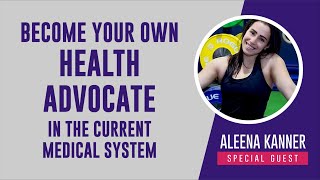
This is a YouTube video titled "Becoming Your Own Health Advocate in the Current Medical System" created on June 23, 2020. It features a conversational interview between Beverley Simpson, owner of B. Simpson Fitness and host of the PT Profit podcast, and guest Alina Kanner, a certified athletic trainer and health advocate. The discussion covers Alina's personal health journey, stress management, hormone and digestive health, and the integration of Western and Eastern medical approaches. Beverley Simpson leads the conversation, providing insights and engaging with Alina on topics relevant to fitness professionals and health advocates.
Hey, Coach. In today's episode, we're talking with Alina Kanner all about how to become your own health advocate in today's medical system. Hi, Coach Beverly Simpson here, owner of B. Simpson Fitness and the host of the PT Profit podcast. So if you like this video, do me a favor, go ahead, hit like subscribe, hit subscribe. And make sure you tap that bell so you can be notified for the next video. In today's video, we're talking with Alina Kanner. And in this particular episode, she talks about her own personal struggle, both with mental and physical health and how she had to become her own health advocate and how she can navigate both Western and eastern practices in on her journey to optimizing her health. And she really approaches her health from a holistic perspective. And in this episode, we go deep on how to navigate your hormones, how to manage stress, and how to really approach your health. And start to look at key signs from your clients on how to best support them and be there for them on their journey to optimizing their health. So without further ado, let's run that episode. Hello and welcome back to the PT Profit Podcast. I'm super excited for today's episode because we have a very special guest joining me. I'm super excited. It is really my pleasure and my privilege to introduce to you Ms. Alina Kanner. She is specializing in optimizing performance and longevity through mastering your own habits. And today's episode, we're going into how to manage stress, both mentally and physically, and how it relates into the digestive system and hormone regulation. So thank you so much, Alina, for joining me. I'm super excited that you're here. Hi.
Hi. Thank you so much for having me. I'm very excited to be here too.
I'm really excited. So first, before we dive in, I just would, we would love to hear from you. Can you just tell us a little bit about your story, who you are and how you got into this work?
Sure. So I actually started in athletics very, very young. I was a gymnast growing up, transitioned into bodybuilding, then transitioned into Olympic weightlifting. All pretty different, but they have similarities. I then at the same time, while I was bodybuilding and weightlifting, I was getting my master's in something called athletic training. So I'm a certified athletic trainer. I went to University of Arkansas and I worked with very high level athletes working to rehab their injuries. So I worked on the sidelines with these athletes and I really got to help them and be, you know, even on television, etcetera, While they're doing their sports. But I always felt that something was incomplete with myself and my athletic career. So after I graduated, I really dove deep into Olympic weightlifting, and I was at the brink of my career as an Olympic weightlifter. And I noticed that my body was doing some weird things. I had never experienced certain symptoms before that I was starting to experience, and I just didn't feel myself. And if you're ever in that position, you know your body and you know when you're off. And I was very off. So I took a step back from my weightlifting to figure out what was going on. And it's been about a year that I. Almost a year that I haven't been Olympic weightlifting. And I went through a couple of doctors, and I've learned so much about myself in this process, and I basically changed my entire perspective on the idea of health and also fitness. So that's really where my story begins and what has happened.
Oh, I can't wait. I'm sure we're going to dive. We're going to talk deep about this today, but I'm really curious, you know, when you're talking about going from being a competitor in Olympic weightlifting, what was the type of mental toll to all of a sudden go from not doing it to. Or go from doing it to not doing it?
Yeah. So because I was a gymnast, I think my mentality as an athlete, I've always had a very strong mental game. So I, towards the end of my career, I was competing on, like, one hour of sleep and winning the meets or I just. I just loved competing. And I had this very solid mindset when it came to competing and when it came to training as well. So I was training about 20 to 25 hours a week for Olympic weightlifting. Five times a week, about two to three hours a day. And it was kind of just something that I did. I didn't really think too much about it. It was part of my schedule. I was very regimented with my nutrition. I was just extremely regimented for a good five to six years and even before that of my life, because as a gymnast, you're very regimented as well. And then I went from doing this very regimented schedule to stopping and pretty much going through a bit of a depression, because now the one thing that I knew myself as, which is an athlete, was gone in the matter of a day. So it was really difficult. And when I look back on it now, I'm grateful for that because my mental game is a lot sharper right now because of going through that. And that was about last summer. I think that you have these twists and turns in your life to teach you lessons and to teach you different things about yourself and to know that you can handle it. So maybe when I was going through it then, I was kind of a mess, but now when I look at it, it's kind of something that I think I really needed to go through and plow through and push through to know that I can handle anything. So I really. I wasn't sleeping at that point too. So everything is worse when you don't sleep. And I think the combination of not doing my sport, lack of sleep, my hormones being all out of whack, not finding proper care at the right time, really just pushed me down this depression hole that I eventually got out of.
That's so good. You really hit on something that I.
It's.
It's a model that I live by. And I know that you personally hear me say it all the time, but you're either gonna get the success that you want or the lesson that you need. And so the fact that you can say that all these things that you've gone through and that you are grateful for them because it led you here, I think is just really powerful and something like. And a big takeaw. And so it does lead me to ask you this, because I am curious about it, is did you notice an impact on how you were training your clients as you were navigating this essentially an identity shift?
Yeah, actually, it's very interesting. So I was. I don't really coach Olympic weightlifting. I have one client that does Olympic weightlifting, and it's not that I can't. I definitely can. It's just not where my passion lies. My passion lies with strength training and movement as it relates to getting them strong in proper positioning. So when I trained my clients in general, I was already in this mindset of, I'm going to have them move, I'm going to have them move well, and then I'm going to load them up in these great movement patterns. But I myself wasn't doing that necessarily because I was doing Olympic weightlifting five times a week, which nothing wrong with that. It's a sport. But I wasn't training myself to optimize my abilities as a human. I was training myself for a sport. So when I had stopped training, I was already training my clients in this way. And now I took some time off and then decided, okay, I can't not do anything. So I added in some lifting, and I couldn't do anything explosive. I couldn't do any plyometrics. So I started doing a lot more co contractions, different things that I knew could help me as a human. I mean, I always had in the back of my mind that I was going to return to my sport. So I was programming around, returning to Olympic weightlifting and definitely programming for my weaknesses. But definitely my training itself shifted for myself. And then for my clients, I think I started doing more of these things on myself, that their training actually got way better and more specific because I now am experimenting on myself more so I can now put it into their programs. So that's a great question.
Thanks. Okay, so I'd love for you to just share a little bit more about. So if somebody was in your position now and didn't know it, can you just explain, go a little bit deeper on what are some of the symptoms? What do you mean by stress management, how it impacts mentally and physically. And talk a little bit more about the things you noticed in your digestive system and hormone balance and what were the things that, like, what were your biggest takeaways from that experience?
Okay, sure. So with stress, I like to give the analogy of a stress bucket. Some people have a really big bucket where they can handle a lot of stress. Some people have a teaspoon. You can always work to increase your capacity, because with anything, the body adapts to the stress we put on it. The concept is always like, you want the homeostasis in the body. So with the stressors, you have to kind of think about that when you're putting a lot of extra load on your body, or maybe you're not putting enough load on your body, because stress is not inherently a bad thing. It's just you need to learn how to manage your specific level of stress. And everybody is different, so different things you can think about. If you're a female, your menstrual cycle is a vital sign. And for me, that was one of the things that was definitely off. There's a ton of signs and symptoms that I had and that other people might have, but definitely thinking about your menstrual cycle as one of them is something that can help you understand where your body is at. So if your stress bucket's overloaded, it might take some of your menstrual cycle, and maybe you're not going to get a full period, or maybe your period is going to be a little funky. There's a lot of other things that can be impacted. So your stress bucket, your cortisol, it's basically built on the same backbone as the other Hormones, which it uses cholesterol. So if you are feeding too much into that stress hormone, that cortisol or cortisone, which is your inactive hormone of stress, of cortisol, then your other hormones might get depleted. And that's not. That's really what happened for me. But that's not always what can happen. Everybody is very different. And so I really like to make that clear because some people might have too low of a cortisol or some people might have too high, and that will impact the other hormones. So that's why I think it's very important to get tested. But we can go on to that after. So different markers that are really important to check. Obviously your period. And that's something as a female you see every single month. Like, we are so lucky as females to get that because men don't have that vital sign. And that's something that gives us a reading. And we can assess our bodies like that. So that's the first thing. The other things are that you might have to get through either serum blood or serum is blood. So serum blood work, urine or saliva. You can test things like your thyroid. So there's a lot of different thyroid values that you can test. And I think a lot of times doctors don't always test the right numbers or they just test the tsh. And TSH is thyroid stimulating hormone. And it's just an indicator of your thyroid status in the pituitary gland. But there are a lot of other markers to test, like T3 free, T4 free, T3 total, T4 total checking for antibodies, and then reverse T3. And I think a lot of times that gets forgotten about. So that's a really important thing when you're looking at your own health and you're assessing yourself to test. Then you have estrogen, which again, there are three different types of estrogen. But you don't always get all those types accurately. It just depends on the test you're doing. So estrogen, and then you have progesterone, also extremely important hormone. It prepares your body. It's progesterone. It's called. It's for pro gestation. Gestation. You're gonna have to edit that. Pro gestation, it prepares your endometrium for the potential of a pregnancy. And it's also a hormone that is known for icel. Progesterone is a hormone that. The calming hormone. So for me specifically, like, I was low in progesterone, so. And I being calm was very difficult during this time period. So you could tell Somebody who's low in progesterone, all they want to calm down, but maybe they're not able to. It also helps with anxiety. Other hormone testosterone, like that's considered a male hormone, but we as females have it, and it's really important in it. It's important for muscle mass, strengthening bones, just mental function, and just overall growth. So these are different hormones that you can get tested to find out what's going on, if you are feeling specific symptoms.
So something I want you to just. I want to ask real quick, because you mentioned how for females, the menstrual cycle can be a vital sign for us to use as an indicator to see something's off in our bodies, given that people start their menstrual cycle at different ages. Is there. And would you say. Is there a, you know, time, like a timetable from when someone starts menstruating to when they can start noticing and using it as an indicator? Because I know for me, I'll speak for my. From my experience, when I first got my period, it was a terrible experience, and it took a lot of time for things to just kind of regulate. So I'm curious, is there. Is. Is there a, you know, time frame that you would use or suggest?
That's an interesting question. I know sometimes when people first get it, their body is still trying to regulate, so that might be why yours felt like that. I'm not totally sure. It's. If it is specific, like, from person to person, it's gonna be different. I do know obesity plays a role in this because of maybe increased amounts of estrogen can relate to different symptoms through having a period or having an earlier period. I think that really the biggest thing, especially as people get older and they're still experiencing these symptoms, is to get tested. If. If. If it was like my daughter and she was 13 and having terrible periods, I would test her. Personally, I do think that, yeah, obesity definitely plays a role. And that's. That's one thing that I think is important.
I don't know.
You could edit that last time out.
No, it's fine. So there is one thing that you said, too, that I, you know, that I am actually curious about it. And also this is just from knowing you personally, so I'm gonna go ahead and bring it up. But one of the things that I really love about your work is the fact that you both work in a traditional Western medical. Medical experience, but you also incorporate a whole lot. A whole lot of. You also incorporate a more holistic approach, which also includes more of a Eastern style medic. And so when you are encouraging your clients and encouraging others to get tested and take a look at things, I noticed that you also brought up obesity and suggesting essentially that nutrition and movement that could play a huge component in health and in your wellness. So how do you navigate those two types of approaches?
Yeah, that's really interesting. I definitely have a more holistic view. I also do use, I personally am using Western medicine on myself and I will recommend my clients to see a doctor who is integrative. So integrative means a mixture of both. I think there's a time and place for Eastern medicine. I think there's also a time and place for Western medicine. And when you merge both, you're getting the best of both worlds. As for training and for people that come to me and are working with me, I will try and educate as best as I can on different, let's say somebody comes to me and they're having really strange symptoms. I do always refer out, I have connections that I use and will try and educate them to help them understand things from different perspectives. When it comes to orthopedic injuries, I definitely am more of a, let's say Eastern way of dealing with things. I don't know if that's really a term for it, but I am going to go on the. Let's figure out what's up with your movement. If your movement is off, maybe that's why you're having pain. I don't want to just jump to surgery. To me, surgery is the last option. And there also is time and place for surgery. Sometimes you need it. But a lot of times I really think orthopedic surgeries can be avoided with many things. Not just movement, nutrition. A lot of times people are just so inflamed because of what they're eating. If you change up what you're eating, you might not feel that low back pain that you constantly, constantly feel. So I just do my best to always educate my clients on all of these different topics, whether it's health, whether it's nutrition, whether it's fitness. And I go from there with people. And people seem to be loving my style.
Yeah, for sure. I'm totally into it. I love it. It's true. I love that. So, you know, we've also been kicking around this idea of stress management. I think that stress gets a bad reputation, especially when people hear the word stress or they hear cortisol, they think, oh, that's bad. I need to negate it, I need to negate it. So can you actually speak a little bit more, speak more about stress kind of as a whole, how and why it's good and what are the indicators that maybe you need more stress or less stress.
Sure. So cortisol is our stress hormone, technically one of them, and we actually need cortisol to survive. It's really how our body functions. It helps with mobilizing blood sugar, stress, inflammation, your immune system. There are so many reasons as to why we need cortisol. So I like to give the example of a tiger chasing a deer. So the deer is now in a fight or flight mode and it's running away from this tiger. It's running for its life. It's not going to just stop right then and there and start digesting the food it just ate. That would be life or death matter. So with that, that just tells us how important cortisol in survival is. However, the problem is when humans are constantly in a state of releasing cortisol and they're not able to get into their parasympathetic system and actually calm their system down and get into that rest and digest mode. So, for example, if you're eating lunch and you're doing a business meeting at the same time and you're getting frustrated with your business meeting, are you really digesting your food? I'm not sure. So that's why certain people that are very stressed out, maybe people that live in cities, I know living in New York City has brought my stressors out. Those types of people need to pay specific attention to when they're not in that parasympathetic mode. So that's where meditation comes in. And that's when, if you're having these symptoms, if you're feeling really anxious, or maybe you don't even know how anxious you are, maybe you have no idea because you're just so anxious all the time. I've been there, I know that feeling. But now that I'm so much more relaxed as a human, I can understand what it's like to be super stressed out. So I think just taking those times throughout your day to meditate, take a couple minutes, take a deep breath, practice breathing. Doing these things really gets us out of this high stress mode all the time. This cortisol releasing. The problem with people is a lot of times they just don't really know. So just take a listen to the clues around you. If your friends are telling you to calm down a lot, maybe you need to either get your hormones tested, because that could be a thing, or also just add some meditation into Your day, it's very beneficial.
You know something that you are talking about too, which I think is what most people miss, is that they think that the fight or flight experience that's happening in the brain with our autonomic nervous system is an adrenaline rush. Because when you are actually fighting for your life, typically you're also going to get that surge of adrenaline that you're not necessarily going to get when you're in a business meeting and your boss is being annoying or you don't agree with something that's happening. But most people miss that their body is still responding in terms of stress as fight or flight.
Yeah, totally.
So and then what's the opposite of that then? So you hear, oh, stress is bad, stress is bad. So when is stress good?
So there's actually something called the hold on, I actually need to find it. So stress can actually be really great for the human. I think people don't talk about this enough. Stress is needed, like we just said, for survival, but it's not always such a bad thing. It's a bad thing when you don't know how to manage it. A level of stress that is recoverable is something called a hormogenic effect. And this is where you're having exposure to something like a low dose toxin. And in this case it would be stress. And that could provide a beneficial response to that human. So that goes to show that you need stress. So you're not going to just be able to do the same thing in a workout every single week and think that you're going to add muscle. You're not. You can't just do ten pound bicep curls every week for eight weeks and think, now, okay, I'm stronger. No, you have to increase the load so that the body adapts to the stress put on it. It's the exact same thing with stress. The only way to get better at managing your stress is to get better at managing it and then slowly, incrementally get a little better. It's the exact same thing with building muscle. So when you're thinking about, okay, how do I get better at managing my stress? When you're in a really stressed out situation, use that to practice. So when I was going through my things last year, my best friend Megan, she used to say to me all the time, if I'd call her and very stressed out, she'd be like, this is practice, use it for practice. And I used to get really pissed off at that. But that is exactly how you get better at managing your stressors. You Take a break in the middle of a really high level stress that you feel like you're having, maybe you're having a panic. Whatever you're feeling, take a break, meditate for a few minutes, lower your stress right then and there and you'll get better at managing it. But like I said, stress is not bad if you're leaning into it just a little bit, enough to feel it and then letting yourself calm down from it and taking it as a learning experience. I really think that's where the gold, like the key is. So that's great.
So now if you're a trainer, right, and you are working with a client and maybe you suspect that your client is suffering, right, or you are wanting to talk to your client about potentially getting tested, what are some of the red flags or what are some of the signs that coaches could be looking for in order to suggest, you know, these tests? Because most people don't realize, like you said, that they might have, they might be struggling here.
So this is a really great question. I now have a lot of clients that because of my own symptoms, I notice that they're also struggling. I think females too, from what I see. I do work with a lot of females, but I do see that females are dealing with it more. It's also in the research, it shows that we are more prone to the specific autoimmune diseases, etc. So different things, different symptoms that may come up. One of the big ones is lack of sleep or not able to sleep through the night. And that could definitely be an age thing because of menopause or perimenopause symptoms. But just because it's common doesn't mean it's something that is great or normal. And there are things you can do to make it better. So lack of sleep, not being able to sleep through the night, irregular periods, which also could be a menopause, perimenopause situation. Really bad pms. That's a huge one. I have clients coming to me three weeks before they're getting their period, saying that their PMS has started, or two weeks before. Let's say that's not normal. That's not. Nobody wants to live like that. That's uncomfortable. Major anxiety, irritability, having things like breast tenderness, having really heavy periods, maybe having major digestive issues, like things they always used to be to digest or not digesting properly. Things like night sweats, major brain fog. These are things to look out for. And like I said earlier, I work with a doctor, so I have a great relationship where I can send my clients to her and then we can talk about it back and forth. And I think finding a doctor that does the right type of testing and finding other clinicians you can work with is really the key to getting your people better. Because that's all I want as a trainer working with these people. I see them two, three, four times a week. I want them to be their optimal self. I want them to feel good, and I want them to be happy. And you're not going to be happy if you're anxious for three weeks out of the month. It's just not how it works. So getting yourself set up with practitioners is a great way to also open up your networking experience as a trainer.
That's so good. You also were talking about some digestive stuff, symptoms. What would those include?
So there's a lot of different things you can have digestively that could go wrong a lot. What for me, specifically, when my thyroid was low, I had hypothyroid with a lot of my numbers were being low and I was having a lot of digestive issues because of a lot of things. So stress can impact your digestive system. Your gut may be that microbiome is kind of leaking and has some holes in it because of all the stress your body has been under. At least for me, that was what's going on. So there's a lot of things. You can have things like parasites, you can have things like sibo, small intestine bacterial overgrowth. You can have candida. There's a bunch of different things that could give you digestive symptoms. But if you are not able to digest things that are normally you normally can, there might be a problem. The other thing with that too, is just because you as a kid were able to digest pizza and bagels and ice cream and all this garbage doesn't mean as you go get older that your body's going to be okay digesting that. So for me, I've basically gone into. I was always eating high protein, but I went to more, less vegetables, way more protein, animal protein. And that has completely helped me and changed my gut. I also had some other things that I dealt with because I had my doctor telling, you know, I used antibiotics to treat certain things I had. And for me, it's been pretty big game changer. I'm not waking up bloated. I'm not having a lot of digestive issues that I was having because I was having pretty severe digestive issues for the last couple years. Another thing with digestion, if you are having these issues and you're still eating gluten and dairy. Cut it out and try. Just take a break and see what your body does. The best way to learn something is to experiment on yourself. So I did this. I did this with gluten, I did this with dairy. I did this with my blood sugar. I always experiment on myself. And you learn a lot that way. So try these things out and see how you feel. If you're having some symptoms.
Would you say symptoms like bloating, like painful bowel movements?
Yeah, yeah. Constipation, bloating, stomach cramping, like bloating. Like, you look kind of maybe like a month or two pregnant. I mean, maybe not a month, but a couple months pregnant, where, you know, or eating something and then 20 minutes later having a reaction to it. Like if you eat too much carbs, maybe 20, 30 minutes later, you might get really tired. That's a digestive symptom. The other thing with digestive symptoms in the gut is skin irritation. So whatever is on your skin is really that the connection is really into your gut. So just be aware of that. If you're having constant chronic eczema, that is actually a gut problem. Something else if you trail these things. So I cut out gluten, I cut out dairy. I was still having chronic chronic eczema. I then got tested. I got tested for parasites, got tested for sibo. All these other things that could still impact my skin, could still impact my gut. You have to run these tests to find anything out. Because if I never ran these tests, I'd just be at a loss. But a lot of times, some of these tests don't show everything that you're looking for. So it's really good to go to an integrative practitioner who knows the test, knows what they should come back as, and knows the best way to treat them. That individual.
I love that. And I also think that this is something that, in my personal opinion, this is something that a lot of western doctors often miss because things like you were saying, they will only test the tsh, and that range is so wide, they don't ever have. They don't have a reason. And I understand why that where that comes from. But they don't have a reason to go deeper, which is why I think it's just so imperative and important that you become your own health advocate for yourself. But also, if you could be that. That guiding light, that first line of defense for your client, that's going to help you build a relationship that will keep that client for life.
Totally. I Have clients that have come to me and friends too in pain. And I can tell that they're struggling. And I know because I've been there. And so when I recommend them, I'm recommending them to the top people because you want these people to feel better, you want them to be happy. I see these people a couple times a week. I just want the best for them. Definitely what you were saying about not testing, using accurate tests. If I were to have just done my thyroid and only gotten my tsh, I'm the perfect example. My TSH has never had a problem. I've always been fine. My TSH one time on one lab came back funky, but that was because of some other situation. But my TSH always comes back pretty normal. But my other number, my T3 comes back pretty low. So you can have just low T3 and maybe you just need T3. Maybe there are other. There's so many ways to treat the individual, but you have to go to somebody that is going to actually help the individual for their needs. It's the same with movement. I'm not going to treat somebody that comes in with knee pain the exact same for somebody that comes in with shoulder pain. But I am going to tell you I'm going to look at their hips, I'm going to look at their scapula, I'm going to look at their rib cage and I'm going to look at everything, despite what they're coming in for. Because it's a holistic approach. It's a whole body approach. So it's the same with medical care. And I think if you have that view, you're in the right mindset for how to treat people.
I think that's so good. Something else too. You're starting to talk about movement. So I think it's perfect. Transition is I think too, when we're starting to start talking about this and we're starting to talk about a holistic approach, I think and people start thinking, oh, I need to de stress my mental so I need to breathe, I need to meditate. I think there also starts to become this unspoken assumption that movement doesn't mean strength training or that you have to do a whole bunch of rehab or you have to do a whole bunch of small movement. Would you say that that's true and that that's important or would you talk or would you. Or do you think that this work is so that you can start strength training so that you can start doing your intensive work?
Yeah, yeah, that's a great question too. I Think a lot of people just think when we're saying like, de stress, oh, stop lifting. No, you can't stop lifting weights. Your body needs to strength train. And yeah, we need to move, we need to move properly, but we also need to do that in our lifting. So, yeah, I do breathing with my clients for about 10 to 15 minutes a session. Okay. Some of it's before, some of it's after I try and get their system in a good position before we start lifting weights. And then at the end of the session I get them into a good position to, to continue on with their day. The mid part of the session is a hard, not technically high intensity. It's high intensity, but it's not, it's something they can handle. The entire time their heart rate is going, they're moving, they're in all different positions, they're doing full body, range of motion and that portion is the most important because ultimately how do you get people more fit and how do you get people to feel better inside? They need to move and they need to lift loads and they need to move and do it often. So if I have people coming to me once a week, you bet they're working really hard during that session. I've had people tell me multiple times, like, I need to stop, I need to stop. And I'm like, alright, like, I'm not doing this for my health. I do my workout for my health. You need to stop, but I need you to keep going. So I think it's really important to know that just because I'm utilizing breathing techniques doesn't mean the workout is easy. It's actually really hard. And I actually think what I've noticed with myself and using different breathing techniques, you know, if I'm bench pressing, I'm inhaling maybe differently on the right than I am on the left to work on compression and expansion in my ribcage in different places. But when I'm doing that actually makes it a lot harder. So I used to be able to squat double body weight. Sure, I was strong, but my back hurt chronically and now I don't. Well, we're in a quarantine, so I can't squat nearly as much, but I'm doing tempo squats and I'm dying. So you can, you know, weight is relative and I think you can play around with tempo. You could play around with so many different things to make it hard for the individual and it should be hard.
I love that. And I love that too, what you're saying that if you are doing A movement and you're not, and you're doing it badly or you're moving in a way that could potentially injure yourself. It doesn't matter how heavy it is, it doesn't matter how intense it is. It matters that you're getting it right so that you can actually get stronger. And then it always tends to be the stuff that you need to do that is going to. Your body is going to feel it. Your body is going to say, oh, this is hard.
Yeah. I think that's really where intelligent training comes into place. Like, for example, last week I did. I did like a little experiment. I did 12 pound tricep extensions, and then a few days later I did the same with £6, but I did it tempo. And I focus a lot more on my technique with it. I was a lot more sore after the six pound ones. So it just dependent on how are you doing the movement. Like, if you're rushing, you're not getting the most out of it.
It's so true. And also something else that you mentioned that I just wanted to reiterate is that the importance of coaching is just so important. I mean, it is essential because so many people, like you were saying with your client is that they just want to rush through it, they just want to get it done, or they think it's not hard enough. Not really recognizing that there are things that they can be doing in their positioning and in their technique to intensify it or to actually hit the right things. And I think as coaches and trainers, we miss that and we think, oh, we can't, we don't, we can't talk to these clients or people about it. Not realizing that it's essential that your work is so valuable and it is so needed for the client.
Yeah. And to jump off that even more is like, okay, so if you're doing strength stuff with your clients, like, maybe that may be a little tempo. Maybe you as a trainer need to focus in on what they're doing, give them real feedback and make sure they're feeling things in the right places. But like the last 15 minutes of a workout with somebody, 15, 20 minutes, it depends on what the program is for that human. I'm not always so focused on their form, so I'll focus on their form. Let's say the first 30 minutes and then their conditioning portion. I'm going to let them kind of just run through their exercises because I want their heart rate going, I want them to be moving and I want them to not stop. So it's dependent it's dependent on where that person is, especially for, like, weight loss. Like, they got to be moving and. Yeah. So there's a time and place to correct the form, and I think it's really necessary. There's also a time and place to let them go and let the person learn, too. That human cannot learn if you are constantly cueing them and constantly correcting them. So that's also something that I've recently started thinking a lot about is letting people let people mess up. Let people mess up, let people do it wrong so that they can learn to do it better.
Oh, that's such a good point. And I'm so glad that you brought it up, because I know. I teach that too, you know, for my marketing class clients, is that if you're going to get success right off the bat, success is not the best teacher. It's your failures or the things that you perceive to be failures that's going to be your biggest teachers. That's going to show you what to do next, not your successes.
Yeah, totally. And it's with life, for sure.
And I think, too, that trainers and coaches, sometimes they make the cueing about themselves to show their client how small they are, as opposed to really helping and assessing the client.
Yeah. You know, and I think a lot of trainers make it a lot more complex than it needs to be. My clients, some of them are interested in, like, their airflow and why it matters. And I do have to explain why are we doing these breathing exercises. But when I'm teaching an rdl, I'm using a reference of, like, you're holding pancakes in your hands and you need to close the door with your butt. And people get it like that. In a second, they get it. I'm not gonna, you know, go through. I'm trying to use more external cues because that's what people are understanding. So you have to find a way to simplify things down so that they can understand. It's really all about connecting and communicating with that individual in front of you.
I love that. That's so good. So I definitely want to be mindful of your time because this has been an awesome episode. And I just wanted to just end with a little bit. If you could just tell us, you know, it's clear. It's clear that your work and your experience has influenced your work. And so I know that you want to share this with a whole bunch of other people. So can you just tell us a little bit about what's next for you and how you're using these experiences? To help coaches and to help clients.
Definitely. I am in the works of a course coming up. There will be different expert guests on it so that you can learn about your own body and you can learn about how hormones are maybe affecting you, but also learn how to train all in one course. So I'm in the works on that and I'm going to be putting out a wait list to see who's interested in signing up and to get the best of the best. So that's the next thing on the list. Of course. I excited to get back into the gym and start working with my clients and seeing where things take me.
I love that. Okay, so for my listeners who want to learn more about you, where's the best place I can send them?
So I'm active on Instagram and it's pretty simple. My name is Lena Kanner and I am posting there for upcoming things I'm doing. So I also have a website. It's my name also alinacanner.com and your podcast. I also have a podcast and the podcast is with me and my best friend who lives in Seattle. Her name is Megan. And we interview experts every week. We put episodes out and it's called Move youe Brain, Move youe Body Podcast. You can find us on Instagram vyourbb, or you can search on Apple or Spotify. We're on both and definitely take a listen and let us know what you think.
Okay. I love that. Thank you so much, Alina, for hanging out with us today. I really appreciate it.
Thank you for having me.
Bye.
Bye.
Thanks so much for hanging out with us today. If you like this episode, please be sure to hit like hit subscribe. Subscribe and tap that bell and I'll see you on the next video.










