The Difference Between CEOs and Leadership with Tomasha Suber
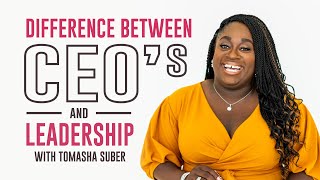
This is a YouTube video titled "The Difference Between CEOs and Leadership with Tomasha Suber" created on February 9, 2022. It features an in-depth English conversation between Beverley Simpson, founder of the PT Profit Formula and host of the PT Profit Podcast, and guest Tomasha Suber. The discussion centers on leadership roles within businesses, decision-making, personal development, and scaling businesses, with a focus on empowering entrepreneurs, especially women, to develop internal leadership intelligence and overcome barriers such as fear and scarcity mindset.
All businesses, in order to scale, need a leader, CEO and employees. Chances are you're fulfilling all three of those roles right now and you don't even know it, but you're gonna need a leader in order to scale. So let's find out the differences and determine where you are today. Let's get started. What's up, coach? I'm Beverly Simpson. I am the founder of the PT Profit Formula and the host of the PT Profit Podcast. And today I'm sitting down with Tamasha Saver, and we're talking all about the differences between leadership and CEO and employees, why you need all three, and to identify where you're at in the process and how you can amplify the roles and positions that you need inside of your business today. Whether you're starting at the beginning or you're trying to ramp up. If you haven't already, be sure to hit like, let me know in the comments down below what your biggest questions are. Takeaways. Hit subscribe if you haven't already and tap that bell to be notified when the next latest and greatest video comes out. So, without further ado, let's go ahead and roll that interview. Tamasha, thank you so much for joining me. Welcome. How are you today?
I am doing so good. I feel like. I feel like I'm like, pumped for this. I don't know what it is. I feel like my adrenaline is, like, naturally pumped. Let's go. I love it.
I love it. Honestly, it is a pleasure and a privilege to have you here and accomplish.
Before we can really fully say that we're prepared to do that for other people.
I mean, that honestly blew my mind when you just said that because it. Because I think about me and how I coach and how I learn. It's that wherever everyone is always looking for the best, the right way, what's the path. And that is a follower mindset. So how do you facilitate critical thinking in that way?
Oh, man. So I think so for me, when it comes to critical thinking, especially about yourself, when people first start working with me, I do a really big, I call it like a leader swat, right? Looking at your strengths, weaknesses, opportunities, and threats. And a lot of that leadership spot has to do with the person, right? So before we can try to, like, do all these things of building skills and building all these other technical things that have to do with leading others, how are you just doing with your own mind, your own thoughts, your stuff that you want to do that you dream about? How are you doing with that?
Right.
How clear Are you there? How confident are you there? Ask them those questions. And I encourage people to ask themselves a lot of those things, those questions, like, you know, what is it exactly that I'm trying to accomplish? At the root of it all, sometimes we go after these things that we see other people with. But, but why? I feel like why is like the best word out there. I want to go do X and Y. I want to go do. But why? I want to make six figures, I want to make a million. But why? And normally it's a lot more than that. Service level answer of I want freedom, I want time, I want to provide for my family. It's normally more than that. So, yeah, that's kind of where it is. I can go on and on about that.
Like, please, I love for you to like, really, like, go deep with us. Like, what, what are some of. Because those are definitely cookie cutter answers that A, I've said and B, I've heard. And so I'm curious, like, as you work deeper with your people, what have you discovered? What is what. What is the root cause of wanting to achieve?
Yeah, so what I've discovered is that a lot of people not only just want free freedom, but they want control. And especially me working with women, it goes a little bit farther than control. Women are looking for safety, right? Because if you think about it, a lot of what we do, especially if we have children or we have a husband or we have a partner or, you know, we have parents, a lot of the decisions that we make every single day, the first thing we say is like, well, I just got to make sure that this works. And what that means is, is it safe? Is this job going to be allowing me to be able to provide? Am I going to be able to do what I want do by if I do this, and how will I make sure that it goes exactly my way? So control and safety are normally at the foundation of what we're looking for.
Right.
You want to go work at a certain company. And why is that? Well, it's because they have good benefits. No, it's because you feel safe that they have good benefits. They're going to pay you. Right. So all these different things is like control, comfort, safety, I think are the top three things that a lot of people are looking for, but they don't really get down to the root of that.
And control's an illusion, really. I mean, how do you know when you're in control? You could lose your job tomorrow.
Exactly. Yeah. And that's it. And so I think we have to understand that leadership first starts with us and getting really clear on the things that we desire to have, the things that we desire to see and accomplish before we can really fully say that we're prepared to do that for other people.
I mean, that honestly blew my mind when you just said that, because it. Because I think about me and how I coach and how I learn. It's that where everyone is always looking for the best, the right way, what's the path? And that is a follower mindset. So how do you facilitate critical thinking in that way?
Oh, man. So I think that. So for me, when it comes to critical thinking, especially about yourself, when people first start working with me, I do a really big. I call it like a leader swat, right? Looking at your strengths, weaknesses, opportunities, and threats. And a lot of that leadership swat has to do with the person.
Right?
So before we can try to like, do all these things of building skills and building all these other technical things that have to do with leading others, how are you just doing with your own mind, your own thoughts, your stuff that you want to do, that you dream about? How are you doing with that?
Right?
How clear are you there? How confident are you there? Ask them those questions. And I encourage people to ask themselves a lot of those questions. Like, you know, what is it exactly that I'm trying to accomplish? At the root of it all, Sometimes we go after these things that we see other people with. But why? I feel like why is like the best word out there. I want to go do X and Y. I want to go do. But why? I want to make six figures. I want to make a million. But why? And normally it's a lot more than that. Service level answer of I want freedom, I want time, I want to provide for my family. It's normally more than that. So, yeah, that's kind of where it is. I can go on and on about that.
Like, please, I love for you to like, really, like, go deep with us. Like, what, what are some of. Because those are definitely cookie cutter answers that A, I've said and B, I've heard. And so I'm curious, like, as you work deeper with your people, what have you discovered? What is the root cause of wanting to achieve?
Yeah, so what I've discovered is that a lot of people not only just want freedom, but they want control. And especially me working with women, it goes a little bit further than control. Women are looking for safety.
Right?
Because if you think about it, a lot of what we do, especially if we have children or we have A husband or we have a partner or we have parents. A lot of the decisions that we make every single day, the first thing we say is like, well, I just got to make sure that this works. And what that means is, is it safe? Is this job going to be allowing me to be able to provide? Am I going to be able to do what I want to do if I do this? And how will I make sure that it goes exactly my way? So control and safety are normally at the foundation of what we're looking for, right? You want to go work at a certain company. And why is that? Well, it's because they have good benefits. No, it's because you feel safe that they have good benefits. They're going to pay you. Right. So all these different things is like, control, comfort, safety, I think are the top three things that a lot of people are looking for, but they don't really get down to the root of that.
And control is an illusion, really. I mean, how do you know when you're in control? You could lose your job tomorrow.
Exactly. Yeah. And that's the thing. It's like a lot of times people think having a day job, right. Or having that corporate job is the control, right? They think that, well, well, that's good. I feel safe here, especially when it comes to entrepreneurship.
Right.
I mean, I'm sure you know that. So thinking from inside of yourself, when it comes to like, really pulling yourself into leadership, and you think about, I need safety. So then how do you build that just even within yourself?
Right.
Some of it is the way that you talk to yourself, right? The things that you say in your head. Some of it is the way that you speak about your business to other people. The way that you show up, it could be even be in your. In your presence and your appearance. It could be just even in the tone by which you talk about things. So there's so many different aspects and ways that you can create safety.
Right.
In your business, you can create control. Even though I think control is kind of like balance, it's like really, what is it?
Right?
And, you know, having that comfort.
Right.
To do so, which is comfort to me is like permission. But, you know, it's a whole nother chat.
Yeah, yeah. Comfort. Yeah. Is feeling like approval. Permission and approval. But I think it goes back again to what you were saying. Is that from who? It has to come from you.
Exactly. Yeah. You don't. I think a lot of people, when it comes to the reason I love working on leadership, is where all of us are taught and we know that we can get training on how to manage people and like, and how to manage things and situations and all that, but really, I really want to work on people building an internal leadership intelligence, like this intelligence compass that you can give yourself permission to go in that direction. You are the compass of the business. Not someone else's metrics or statistics, not every single coach that you work with.
Right.
Or every person that you go and sit at a, you know, at a conference and listen to them talk at you.
Right.
We have to learn how to be the internal compass of our business, of our life. And if you don't have that already brewing, no matter how skilled your team is, no matter how intelligent the people that you put around you, you'll always feel like this person always uses analogy, like you're in the wizard of Oz without a yellow brick road, just out in the wilderness looking for Oz with no direction in sight. And so I think it's really important that we create a level of intelligence for ourselves as leaders. And that is our compass. That is our compass of permission, if you will.
I mean, that's brilliant. How does one start creating that?
Yeah. So I say you start creating it by number one. And I know it seems cliche, but I say this all the time, is being radically clear on what it is that you want and not allowing yourself or anyone to push you away from that. I think my success in the business and the speed of it has really come from me being really firm with my own leadership compass.
Right.
I know what I want and I know what I want it to look like. And I am relentless at going after that.
Right.
Even when my husband was scared and he wasn't quite sure what was going to happen, even when team members question and they're like, well, I mean, we've never done this before, but even when friends were like, you are nuts, you know, great, I'm nuts, but I know exactly what I see. And so I'm radically clear. But I'm okay as well with being radically different, with being the person that people are like, they might question me, you know what I mean? Like last year when I finally said out loud, I was creating this event called CEO Weekend, where I deal with high achieving women, they come and spend a weekend with me and we work on leadership. And I announced that in a midst of a global pandemic, and let me tell you, I probably faced so many questions and concerns, not just about the pandemic itself, but the idea, the ideation around it all that that was going to be like A group program for me, this is what it was going to do. This is what it's going to be like unlike anything you've ever heard. And I announced it and I literally sold it out in like 72 hours. You understand what I'm saying? That compass. If I had allowed myself to be easily swayed by the opinions of others, to be easily swayed by what is on the news, sometimes it's not even family and friends, it's what you're reading on the news, on social media, metrics of other professionals in your arena. If you find yourself swaying and you know, with obviously using common sense now, some things we should be doing. But if you find yourself swaying easily, I think you start there getting really firm and confident.
I love this and I'm curious because you know, for me, I think too, you know, I've talked about this a lot with some of my clients is the idea that evidence or experience can sometimes be a double edged sword because it's that, right. That's a fear that your mind is designed to keep you safe.
Right.
I feel like so many people, they, they get radically clear, they go test something and then they fall off. It's like falling off the bike and then they, you know, they bruise their knee. So then their mind goes, oh, careful about this bike because the next. Remember the last time that you got on the bike you fell off yourself. Right. So you know, I'm always like, we need to push that erase button. Erase it. Evidence is great or experience is great, but it's double edged. So how you move through somebody, especially at your level, when you're working with people at a high level, they've got tons of bruised knees.
Yeah.
How do you push through those blocks of self fear? Not even their around themselves fear.
Yeah. So I think that one of my really big pillars if I'm working one to one with someone, is really thinking about the fact that you first have to trust yourself before you can trust anyone.
Right.
Or before you can trust anyone with your idea or expect anyone to buy it. So I'm really big on making sure that. Let me say that again. You need to make sure that you first trust your idea, your decision, making your desires before you can have an ounce of expectation of someone else too.
Right.
And I think that's so important. And so why is it that that bruised knee. Because bruised knees are like ankles, knees, elbows, that's all going to be there. But why are you so fixated on that bruised knee? I think that another reframe of that is that that bruised knee is just evidence that you've tried. It's evidence that you've been doing the work. And it's an opportunity. It's a step up. Because now, you know at least one thing that doesn't work, right. You know, at least that maybe you didn't do that well at.
Right.
Or, you know, the things to avoid for some people, that bruised knee really is just a symbol of you stepping out on faith for yourself.
Right.
And you might get. You might have gotten that bruised knee because it was just messy action, you know. But what are the facts? The fact is, is that a bruised knee always does what it heals. That's it. And that's how I think about it. You got a bruise, great, Let it heal. We're moving on. We got one good knee left. Let's not mess that one up and let's keep going. You know what I mean? That's when I see that it's like everything in my brain, it heals. And so, you know, if the body was made to heal, that means we were made to try again.
I love that. I love that. And I'm also curious, you know, as someone steps into being radically clear on what it is that they want, how do you come up or move through the barriers that are often, you know, for whatever reason, tons of reasons, why we get these barriers of like, you're not worthy of that, or you don't deserve that, or what. Why you.
And.
Or those limitations of scarcity that I feel like we are. We live in. How do you break through those blocks?
Yeah. So I think for me is, like, when I think about working with people specifically in regards to that, I think one of the really big things that's downplayed, you know, now, right. In our generation or in our time is awareness. Just simply being aware of who you are, where you are, what you come with. You know, knowing your environment, knowing your mentality, your mindset, knowing the way that your emotions.
Right.
I want people to be fully aware of the things that they would struggle with or the things that present themselves as triggers or the things that are just them. And knowing that about yourself allows you knowing and acknowledging.
Right.
Being aware of it and acknowledging that allows you to be in such a much more powerful place. Because while you might get anxious or feel anxiety about doing a certain thing or taking a certain action, okay, great. We know that that's a fact, right? Then we can just prepare to address those things when they hit, or we can prepare on how we can avoid those things when they come. Avoid or either Work through. So it's not always that we necessarily are going to be able to skip hurdles. I think that's like a lie that kind of exists out in the world. Every single hurdle or challenge that you face emotionally or mentally in business or as a leader isn't going to be something that you can always skip. You got to probably work at what's going to be the best method for me to work through this and not always get over it. And so that's like also my approach too. I've invested a lot of time in, you know, developing things around mindset and fears.
Right.
And emotional awareness and intelligence. And so that's really, really important to me.
Yeah, Working, going through it. Not, you know, I've fallen to that trap.
Right.
You know, it's almost like I want to rob my lessons for. I want to rob my clients of their lessons to avoid pain. Right. That my children, go ahead, touch the stove, see what happens.
You know what that's like? I feel like that's like the. I think that's something everyone can relate to. It's like that stove, like touch the stove. And I would even say too, that this also applies to the way that you lead a team. If you always find yourself trying to avoid and skip over the challenges and then you get upset when your team does that or you teach them how to do that, and then we start having other problems. So that's why I say it's super important to start with you first because we will relay and teach those other things to people that work under us as well.
So it's powerful. Okay, so back to creating that internal sense of leadership. Right. The first you said step one is, you know, really getting radically clear on what it is that you want. Unapologetically, you never said that, but that is basically what it is felt.
Right?
So what's the net? What's next? Then what?
So after you get really clear with yourself on what it is that you want to do, I always say that. I know a lot of people talk about, you know, taking action. I think action is the third step. But that second step is making decision. And here's a really good point that I think a lot of people should, should really think of. Everyone always talks about, I want people who take action, I want people who know how to act. But when you really work with high achieving people, when you really think about what are the things that we always say, what is it that people say? I want to talk to the decision makers. Right, Decision making. Because decision making and action taking are Two separate things. And for some reason we blended them together. And in leadership, you really have to give yourself. I think sometimes, most times there needs to be a gap between you making a decision, knowing what it is that you need to do, how you're going to do it, or whatever that decision is, what you're going with, and then giving yourself a pause to determine step three, which is the action. And everyone wants to kind of just slide over decision making. They always say, well, I want to make sure I get good at my decisions. But are you allowing yourself to fully embrace the mode of being a decision maker? That's the hardest part. It's not even taking action. Most people struggle with getting to the action because they can't make a decision. You get what I mean?
I do. I'm like jumping out of my seat because I. You just nailed on the head is the number one thing that often gets missed in our industry. I feel like, because so many people, honestly, you know, for me, when I'm looking at the differences between the high achievers who are making money versus the, you know, people that are wanting to be there, how fast can you make a decision essentially and learn the lessons from the action? It's not motivating them to get action, it's this.
Yeah, yeah. And the decision and the reason a lot of people are slow at decision making, it kind of comes back to the first part, right? When you get radically clear. And then part of getting radically clear is you allowing yourself to trust that you know what you want to trust that you know what you're looking for. So if we have totally skipped again in developing in step one, right? And then you got to start making decisions, you'll get stuck right there. Because I find so many people, I've worked with so many intelligent and skilled people who are action takers, and they look like they're not, but they are. And you know where the struggle is. No one really pushed or taught them how to make a decision and do so confidently and expeditiously. Decisions aren't always meant to be super long. Well, if you're doing a million dollar deal, you might have to think about it, right? But some decisions, right, that we make in everyday life and everyday business, they're really not that difficult. But because we haven't worked on step one, because we haven't really worked on ourselves, we find ourselves taking four weeks to make a decision versus taking four hours.
Right?
That's super important.
And I'm also curious too. As you know, I'm, for me, you know, as I've grown as a coach. I have recognized the areas that I can be dogmatic in. And I'm, you know, because I feel like there's a paradox between everything works, but also do it this way. And so for me, and my growth has been about allowing, you know, and creating the space to facilitate breakthroughs for every person dependent on their, you know, what works best for them. And so I feel like. I feel like decision making can also be a personality type, essentially, like, it'll take, you know, not everyone's going to go for the hard sell, not everyone's going to go for the soft sell. It's this, it's a variant, it's a.
Variance, but in that, be okay with it being a variance. Here's the thing, especially in what we do, where we exist, right? With business, a lot of, you know, a lot of the people that we come from, it's like everyone wants to. Because of group programming and curriculum development. Everyone has this, this idea, this concept that if they can't flow through a curriculum the way that someone talked to them and do it that exact way, that they are wrong or outside of the boundary. And so then they find themselves stuck. They find themselves, you know, everyone's always talking about, you know, they need a performance coach or a mindset coach. And sometimes it comes down to you realizing that programming and curriculum, especially for people who are leading a business, it's there as a reference and as a guide. But it's not always the end all, be all. Sometimes that journey. What might look like eight ladders in that program might only be five for you. What looks like four ladders in that program might be seven for you. It looks different, right, based on personality, your approach, what you're willing to risk.
Right?
Because for some people making decisions, they're also weighing risk. Who's more risk averse and who's not. You know what I mean? Yeah. I mean, girl, we could go on, on and on.
Yes, I do. I mean, for me, you know, I'll just share with my audience, you know, I'll share publicly because I'm transparent. Is that for me, I'm really focusing on how I can make that shift between, like, investing 100,000, making it as easy and feel as good as investing 10,000 to do, right? I want to feel like, you know, I don't want to get my heart caught when I'm like, oh, I'll just invest 100k on that. I want it to feel as good and as easy as if I said I'm going to spend 10.
Yeah. And a part of that is like, again, kind of going back. And that's why I tell people everything that I do is built on each other. You got to really start thinking about. Here's a coachable moment right on the podcast. Think about what is it about the expenditure or your spending of money as it relates to business or personally? What is it about that 10,000 that makes you feel safe? And how can you now take that and relay that to 100,000? What do you need to see in relation to money and investments that makes you feel safe? And then how do we make sure that we're able to. Then we need to make sure that we have identifiable means of determining that safety. That's going to be a big piece for you. So don't just be like, oh, I need to. Like, I want to just all of a sudden feel that. I'm just going to keep saying it to myself in my head, because I know that's a lot of what people say now. If you keep saying affirmations, it'll happen sometimes that's not it. We are. We are humans, and we are designed to follow science. So science.
Right.
Some of it is, hey, what do I need to see? Like, what made me feel confident about that $10,000 investment, which was my biggest one ever? What made me feel confident and safe there? I'm looking for the same thing over this over here, this $100,000 one. Maybe at a different level, but what do I need to feel that and give you. Give you. Give yourself some identical points. There's a coachable moment.
I love that. It's such a powerful question that everyone can ask themselves, like, what is it that. That safety thing is such a huge piece of it that when you can start finding those markers. Right. And it's interesting, and I think it goes back to what you were talking about earlier in just terms of awareness, because we all get those gut feel. Yes, we'll get those feelings, but then we can't name it, and we can't really say why. What's causing that? And I think bringing that awareness is so important.
Yeah. Because what do people say to you? They say, you know, well, you know, just. You want to ask yourself or ask the coach or ask the person that you're buying from or ask what's going to be the return on this investment. And when people tell me that they really have a fear about investing, whether it's money or time or energy, because I feel like people only think about money as an investment. Money, time and energy. Are the same to me.
Right.
I don't ask myself this, and this is something I tell people all the time. I don't say, and I'm not going to encourage you to say, what's the return on my investment? Ask yourself first, what's the return on my inability? What is this costing me?
Right.
What is it making me enable to do? And what is that inability costing me right now? And does it cost more than that investment or the same over the next two to three years?
It's a powerful question.
Right.
Everyone wants to know the return on investment. What's the return on your inability? What's the return on your inability to move forward to get the result that you could pay for, to get the information that you need right now that will also help a lot of us just as leaders. Let's stop focusing so much on getting a return on the dollar.
Right.
The price, and look at the cost.
But also, to your point, which I feel like so many people miss this, is that because they think they have an abundance of time, but time we can never get back.
Absolutely. Yeah. You can never get it back. So you want to make it worth it.
Yeah. People don't value their time because they feel like they have, especially if they're at the beginning, they have so much of it to give. But value your time over money, you'll end up having most of it. You'll end up having more of both.
Yeah. Because the thing is, it's like I feel like I would always want to have more. People think that I'm crazy, but I always tell them I'd rather have more time than money because I feel like if I have more time, I probably could create a bunch more stuff that would give me more money than what I currently have if I have it to put in the right place. And I think if we just kind of like, again, we're talking about stuff that's going to help shift the narrative out here. But there's so many narratives I feel like are all like, just pushed on us. Do you agree? No.
1,000%. Yeah. It was funny. I don't know where I was having this conversation, but we're taught scarcity even from a young, young age. If you look at the games that kids used to play, like running around the chair and you have to sit on a chair and then one person doesn't have a chair. Right. It's like we're indoctrinated with these beliefs that there is limited resources and availability from a young, young age.
Yeah. And you gotta fight and you gotta fight for it. Yeah, yeah, you gotta be. It's like, because that's such a great example, you gotta fight for, you gotta be willing to push, bump somebody out of their chair. It's like, wait, what? You know what I mean. And then we find ourselves playing that cat and game, you know, professionally, you know, as professionals working in corporate or as entrepreneurial leaders or, you know, as community advocates. Like, we find ourselves playing that constant game of trying to push someone out of their seat. And it's like, can you just build your own chair?
Yeah, like there are number of chairs, chairs I haven't even seen before. Like, there's nothing that, just because someone else has a chair, there's nothing preventing you from creating your own chair.
Exactly. Just pull it up like it's okay.
Yeah, so. Yeah, I know. And it's, it's a shame, you know, it's a shame that. But you know, we're, we're working on changing that narrative. But it's.
Yes.
You know, it's, it's interesting because, you know, especially like when we're in this, when we're in our own context boxes to think everyone's talking about it, but when you're looking at it in like a 30,000 foot view, it's like this thing. You can't see me on the podcast, but it's like 1%.
Yeah, it's like so big. Yeah, it definitely is. We'll think like we're talking about something major and then like you'll go and ask, like I'll go and ask like my grandma about something and she's like, what, what's that? Like no one even knows that it exists or it's a problem.
Yeah, exactly. Exactly. And I think too that people are always looking for the right, the best, the net and forgetting that, you know, you know, a year ago TikTok didn't even exist and yet now we're all got a million strategies on how best to use it, you know?
Yeah, yeah. All it takes is like, you know, I feel like I tell people it's like all it takes is like one firm action and firm decision. A lot of times I feel like we're looking like we put so much pressure on ourselves. And it's something I really teach the women that I work with is like, stop trying to get it right with feeling like you got to make all these decisions. Sometimes I feel like we'll build ourselves up when we think about leadership and you know, in running a business and being at the higher level, you feel like the More decisions you make and the more that you're doing, the more successful you are. It only takes though, one really good decision in action to change the game for you, your business and your life. So let's make it more quality and not quantity. You know, quality decision and action taking. Not just a bunch of it all day. I just need to feel like, I just need to feel like I'm doing something and telling people what to do. And like that's where the micromanaging comes into play and all these different things.
Right.
And that still doesn't make you more successful. Just makes your plate heavier.
Yeah. This is when people fall into that trap of working in their business and not on their business.
Oh yeah, well, yeah, working in their business and on their team's nerves. That's that, listen, that's, that's one that you rarely hear people talk about. I tell you what, like if I hear so many things that sometimes I interview, I interview my clients, team members just to kind of get, you know, a grasp and a grip. Because that's one thing that I do quietly is like I'll come in and do trainings with just teams, leadership, teams. And it's amazing the amount of energy that people have to like give to unnecessary things. And then they keep saying that they need more time, I need more time. I'm looking for more freedom. And it's like, well, if you left, you know, your team alone, maybe, maybe you'd have that, you know, they'd be able to do the work. So it's always intriguing.
You know. So I'm curious, you know, just, you know, I'm going to shift the conversation a little bit, but I'm just curious, you know, in terms of the levels of people that you've worked with, right? You have worked from leaders that are like just starting small teams and then you've like worked with people and gotten them from seven to eight figures, you know, what are some of the biggest differences that you notice from people who are in, you know, struggling leaders that want to get to the eight figure level versus the people who are trying to get 1% better?
Oh, man. Yeah. One of the bigger differences I think as you when you get up to between like I would say, I'd say multiple six to seven and like the beginners, one of the bigger difference you start to see is that those higher level people, they really start to understand that they don't need to be really smart at everything. I always tell people, like working in corporate, the higher that I went, I felt like the more Dumb that my managers and directors would become in a sense like not necessarily being like dumb, but just like they didn't really have full understanding. And I, and I credit that to the fact that you don't necessarily. Between six and seven figures to eight, you don't necessarily need to get smarter at doing business. You need to get smarter at identifying the people who can help build and grow the business.
Right.
And I think that's a huge difference. You go from really thinking about always constantly having to develop and yourself, and you're focused on the development of others. How many leaders I meet that don't have a development plan for their team is shocking. I'm always in just utter disbelief, right. Because it's interesting to me how like we want to have these teams, we want to build these teams, we do all these things and we'll spend all this money to develop ourselves, right? $100,000, $50,000 for these group programs to get into these masterminds. And when I asked you the last time that you paid team to be developed on something that it didn't exist, that's where you start to see the difference. And you should start to see the differences. It's a lot less about you always investing into yourself in the business, but starting to invest into those people who run your business.
It's so good and so powerful.
Yeah, that's a huge, That's a, that's a huge one. You want another one? I think.
Well, one. Yeah, one's good.
You can give me another one. Cool. Okay, cool. One's good.
I love it. I love it. Right?
Yeah. And then I think the other part of it, I think on, on every scale, that's super key between like the lower level and getting to multiple six figures, right? Because I think that that's like we also have to talk to those people because those are the ones that turn into the high ones. Everyone wants to talk about that seven or eight figure people, but they were once down there. And I think the huge difference, and this might sound like really weird, is that I'm teaching them how to tell the truth. I think that a lot of times communication can seem very stifling to people. People are afraid to hurt people's feelings, right? You're afraid to say the wrong thing, you're afraid to come off the wrong way. But being authentic and telling the truth is super important. So you don't like something, it's not, it's not good, it's not up to par. That's not what you're about. That's not what you stand for. This isn't good for your business. We're not doing this X, Y and Z, whatever it might be. Tell the truth and stand in authentically.
Right.
Don't allow yourself again to be wavered by all the things that are going on. Like I work with someone and she says, you know, she, she was doing, she has a product based business and she primarily serves, she creates women's things. Well, a lot of her, her audience and her customers, they have husbands and the husbands were interested, interested in her products and we were talking about it and she had this whole thing where like she was going to try to come up with this, this men's line and she was getting stressed. And I said, but you don't want to serve men. Let's not take this company to 7, 8 figures with you creating stuff for men. And that's not what your business was built on. And that's not what you want to do just for the sake of. Well, so many people said their husbands want something great, let them buy the women's stuff and enjoy it. You know what I mean? Ah, absolutely. But that's, it's a simple example of, you know, tell the truth, be honest, more so with yourself and not necessarily other people and stick to your guns.
Yeah. And I think that when you are honest with yourself about what you want to do, that's what's going to help you combat when people come after you.
Right.
If they do. Right. Some. I'm just so off, you know, it's okay if you disagree with me, but I just know that this is my trip.
Yeah, absolutely. I've had so many people tell me, I mean, I use myself as a really good example. It's like people always tell me you got to have a group program in order to scale. You got to have all these things in order to scale. And I'm just like, you got to have a digital product and a freebie and all these things. And I'm like, I've created, you know, I got to multiple six figures without that, without freebie in sight. You know what I mean? Without a major group program. These are all things that I think we need to be paying attention to. It's like if I think I was there because I was honest with myself, I'm even more honest with myself now. I don't desire to sit and listen. I don't want to teach anybody for 12 months straight inside of a group program. Not in that way. I'm very honest about that. Like, it just doesn't appeal to me. But I'll create other things and other modalities that appeal to me because we're first responsible for pleasing ourselves and not people. And everyone has it backwards.
Oh my gosh. So true. So true. Okay, so I definitely want to be mindful of your time. I'm going to ask you this last question, which I think is something that I know I'm grappling with. So I would love to hear your insights on this. And so the question that I have that comes up a lot is how do you, how are you both discerning with your time and your resources? Like how do you determine what those markers are going to be for you?
Right.
And you know, being a good steward of your time, but also abundant and know that it coming and know that it's, that, you know, anything's possible. How do you navigate the nuances of that?
Oh yeah. So, you know, I think the first, so the first thing that I tell people to ask themselves, like, because the way that I, the way, the way that I go through it, I'll say that is I first asked myself, you know, what's my non negotiable here?
Right.
And if it's like a new offer that we were creating, which I don't do a lot of, like if it's something new we're creating or you know, a new deal that comes to play, like, you know, we're wanting to work with someone ever. Like, I know my non negotiables and I think, I think we all need to again get radically clear on those. What are your standards and non negotiable. So there's just certain stuff I'm not willing to do. And if I am willing to do it, it comes at a higher price. Like, you know, I'm not, I'm not willing to, you know, get off past six o' clock at night. Yeah. I'm not willing to miss when my husband's off early in the evenings on Monday, Tuesdays. Right. Like, there's certain things I'm not willing to do that are non negotiables in the business. And so I'm really clear on those first. And quite honestly, those typically help me to make decisions pretty quickly as to whether or not I can take something on. But outside of that, I asked myself too, it's like, how bad do I really want this thing? Like how high of on a priority list is this to me and what am I willing to sacrifice? So I got my non negotiables, what I'm willing to sacrifice and how high of A priority is this.
Right.
What's my involvement? Like, what's required of me? So I know I want this opportunity, but then what does that time investment look like for me?
Right.
And I think we all. I mean, those are, like, really key places to start at. When you think about how is it that I'm going to be able to make these decisions, especially when it comes to time and having that abundance. From the very jump, I was always really clear on what I didn't want to do. And it's almost like real estate. Everyone knows everything they want in a house. But, you know, the thing is, you got to make sure you also know what you want around it, because you can't move it. So the most important thing for me in business is to know what I don't want, and that allows me to get more of what I do.
It's so good.
Yeah.
So good. Yeah. You know, and I. I know I said last question, but it's kind of. It's kind of related. It's, you know, how do you measure performance? Performance of. You know, say you say yes and say you determine it. Like, how do you. Or say you say yes and you make the decision. Yes. How do you determine performance?
Oh, I mean, yeah, that's. That's like a deep one. It kind of depends on, like, what it is that. What it is that I'm doing, you know, But I always say I have, like, a. So if I'm taking on, like, say I'm taking on a consulting project or something like that, where I'm working with, like, the leader and their team, you know, I'm not, like, coaching them, but consulting that. That business. I'm always looking at, you know, making sure that. I always want to make sure that it's, like, the best benefit for, like, me and the business at the same time.
Right.
So not just me as a business entity, but then also me, like, as a person, I think. And I don't leave that piece out. I think a lot of times when we're in business, we're not really taught to think about ourselves. Like, let me just say that straight out. I don't think we ever get that opportunity to do that. And so I never neglect me. If you think about it like, I am the visionary of the business, right? And so I see leadership as also being a visionary. And I see the vision as like a pair of prescription glasses. You know what I mean? I will have my own vision, but if I put those glasses on Beverly, you'll be able to see, but it'll probably be weird. You might not be able to see 100% because it's not your vision, it's not your business. And I think a lot of times we have this crazy expectation, right, of being able to put glasses on someone else and them supporting it at that level or another business respecting you at that level. But they won't because they can't see.
Yeah. So good. It's so good. So true. Okay. Are so brilliant. And honestly, this has been such a gift. I'm so grateful. Thank you so much for sharing your insights and your perspective. I just think you're awesome and incredible. So for those of you who want to go deep because we could literally like I have like 700 million questions and could do like 100 more hours with you. For those of you who want to learn more about you, learn more about your work, where's the best place that I can send them places?
The best place for you to find me definitely is Instagram. That is my playground, you know. So definitely go to Amashasuber and come have we have a good time on Livestream. I'm more of a live teacher, but as well too. If you're a person who's looking to develop your leadership and really work on, especially for my women that are listening, I would definitely encourage you to check out CEO Weekend. It is the only retreat mind designed specifically for entrepreneurial leaders and it's an opportunity for you to come sit and also be served. So sit, learn and be served at the same time. Really working on how do we develop your leadership not just in the business, but in every facet of life and then as well outside of that, if you are a leader and you have a team that you have been building or either you have maybe had for at least a year, I would encourage you to consider, you know, contacting me in regards to doing leadership training and development. We have a two day training where I can come out on site or we can do it virtually. Really helping you to develop a micro leadership team. Because I don't believe that teams should just be operating by stance. Every single person on your team should be considered a leader. And there are certain things we have to do to foster that, train and develop that over time. So yeah, that's the way if you think about working with me.
I love that. I love that. Okay, so we'll definitely link all that up in the show notes.
Yeah, absolutely.
Okay, great. Thank you so much.
Thank you so much. I enjoyed it and I hope you all enjoyed it too.
Loved it. Thanks so much for hanging out with us today. If you haven't already, tap that bell to be notified when the next video comes out. Hit like and let me know in the comments below what your biggest takeaway or aha or question was from this interview and I'll catch you on the next one.
Sam.










