The Million Dollar Mindset with Jen Casey
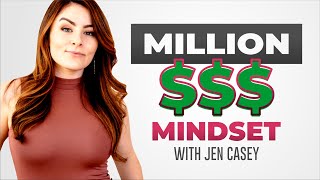
This is a YouTube video titled "The Million Dollar Mindset with Jen Casey" featuring a detailed conversation between Beverley Simpson and Jen Casey recorded in April 2022. The content is a podcast-style interview where Beverley Simpson, owner of PT Profit Formula, hosts Jen Casey, a millionaire business owner and brain-based business coach. They discuss topics related to pricing strategies, money mindset, value perception, and success in the fitness and coaching industries. The conversation explores personal experiences, challenges in setting prices, and the energetic and psychological aspects of entrepreneurship and coaching.
Ever feel like you're doing the same types of things as the multiple millionaires in the fitness space, yet you're not seeing the same type of results? Or how about why does it feel like the success is reserved for the few and somehow you're not in there? Well, in today's video, we're discussing what separates the people who struggle from the people who become millionaires and how you can do the same. You ready? Let's get started. What's up?
What's up, coach?
I'm Beverly Simpson. I am the owner of PT Profit Formula. So welcome to my channel. This is your first time around here. Please be sure to hit subscribe tap that bell to be notified when the next latest and greatest video comes out. And if you get a lot of value today, please be sure to hit that like button. Today I'm sitting down with multiple millionaire business owner Jen Casey, who is the the host of the CEO Psyche podcast, a personal friend and an amazing mentor as I'm in her podcast and you are going to hear today, really what separates the people who continue to struggle and never get to make it to that seven figure business owner level versus the people who seem to have it all and how you can cross those barriers by the end of this video. So let's go ahead and roll that interview. Jen, I'm so excited to have you on the show today. Thank you so much for coming to hang out with me.
Oh my God, today is going to be so fun. I feel it. I feel it in my bones. Me too.
It's so funny. Right before we hit record, we were talking about how we're both super awkward.
Right?
Hit record. Even though literally I get the pleasure and the privilege to talk to Jen every single day. And then now we're doing this formal podcast and. And it's like awkward.
Beverly, whenever I hit record on anything, if it's not live, I don't know what comes over me, but it's like I forget how to form sentences, how to like, I'm like studied actor. I should be able to do this thing. But it just, I don't know, my brain just goes into like total brain fart. Yeah.
Like performance mode. All right, so for those of you who do not know. Awesome. Hey, Jen, Casey, I'd love for you to just share a little bit about who you are, how you got started and who you serve.
Yeah. So I call myself a brain based business coach and I work with online coaches and course creators in a couple of different ways, but mainly to really help them rewire Their subconscious programming as well as step into a space where they are creating sales content and course content that feels really aligned to them and is driven by psychology and really informed in an integrity based way. But I actually got my start in the fitness and health world, just like many peeps. And yeah, 2011.
Wow. What year are we in? 10 years. So 10 years in the online space.
Yeah. I got my first taste of it in the network marketing space and I wasn't trying. Like I didn't necessarily want to be an entrepreneur and I didn't realize that I was on a path to build a business. I just saw so many of my actor friends struggling, many of them on Broadway one minute and then back behind a bar the next minute. And I did not want to work in a restaurant for the rest of my life and I really wanted to pursue a career in theater. And I said, okay, what else can I do to supplement that income so that I'm not having to constantly, you know, try to like get shifts covered and do this whole like stressful dance of like begging people to take my shift so I can go to the audition. That will be the audition. Like I just didn't want to that energy in my life. And so I randomly signed up with a network marketing health and fitness company and literally my life has never been the same.
I love it.
I love it.
Okay, so I asked Jen to come and hang out with us today because one of the things that just keeps coming up, it's so prevalent in the fitness space, specifically whether no matter where you are and what level you're at, is that we are always combating the preconceived notions of essentially money and money mindset and what is affordable, what's valuable, how do you measure your worth? And also right before we hit record, we were talking about or not necessarily measure your worth. Let me just cancel that and rephrase that because it's not the same. But measure the value of your offer. And also the, you know, we were talking about, why is it that so many people who have the same amount of time in a day, why does it seem like only the success is reserved for the few? So that's what we're going to be diving in today. And we're going to be talking a lot about the invisible components to what it takes to be a successful business owner and successful, you know, compared to what you get to decide what success means, but success for you. So I'd love for you to just dive in. Tell us.
Thanks. So I love this conversation around money. Mindset and really what it takes to shift your money mindset. I think that's a big key term, good marketing term that a lot of people get excited about. But what does that actually mean? And I think in the fitness space, it's really quite unique because when I was with a network marketing company, I was with Beachbody. You know, we would make a 30 to $50 commission and essentially be expected to coach somebody for life. And then if they bought recurring products, then we would make another couple bucks. But the money mindset in that industry was quite challenging because after I left, I started coaching a lot of people in that space, and they had one of the biggest challenges with actually charging for their time. And I also was a fitness instructor. I taught four classes a week. And I thought, this is the best thing ever. I'm getting paid 30 bucks to work out. Hell yeah. Like, not calculating how much time it took for me to prep the classes and learn the choreography and do all of the end drive there and the gas and do all of these other things. And after a while, I started to realize that I, you know, it was maybe not the best deal, but in the beginning it seemed like 30 bucks for. For an hour of my time was amazing. And I had worked in restaurants for many years and maybe you're making $20 tip, that would be the best tip ever, right? I worked at a CGI Friday, so the checks were not that large. So I sort of was in this mindset of just like, I have to keep hustling and my time is worth $30 an hour. And I remember when I started moving away from the fitness world, I realized that that was not my deep passion and that I actually just really loved building businesses and sort of the social media marketing and all of the content creation and the psychology of like helping people transform, that was what was exciting to me. And it was around 2014, 2015, when I had a friend reach out to me. We ran a law of attraction meetup group together. And she asked me, she said, I want you to be my business coach. And I said, okay. She's like, you're my social media coach. And I was like, no, I don't really do that.
Like, I'm in urban.
Like you could join my team. She's like, no, no, I don't want to be in regarding. I'm building my life coaching business and I want you to coach me. What do you charge? And I said, I'll do it for free. She said, no, no, no, I'm going to pay you. Like we're literally running a law of attraction meetup groups. She's like, there has to be an energetic exchange of money. Like, you're giving me your time. What, what do you charge? And I said, I don't know. She said, well, think about it and get back to me. And I remember I went into a Facebook group that was like a group coaching program that I was a part of at the time. And I posted in there and said, hey guys, so I have this person that wants to hire me. Do you think you should charge like $30 an hour for business coaching? And people were like, what the hell? No. What are you talking about, $30? They were like, you need to charge a minimum of $100 an hour. Like nobody's talking about packages or anything. And I was like, oh, $100 an hour? Like that scared the bejesus out of me. So I went back to my friend Helen and I said, Helen, I charge $100 an hour. And I don't think she was expecting that. I don't think she was, you know, she kind of set herself up for that. But she was ready to be in the up leveled energy. She invited that in. And so we used to. That was my first business coaching client and we would meet up at, you know, Starbucks and sit down together and we would, you know, design her content and map out some packages and things like that, whatever she needed help with. And so that was a huge shift for me. And I remember one day after we were at Starbucks doing some coaching, I went home and I was supposed to have a call with somebody who was on my network marketing team and working with Helen. She was like showing up and we were getting great results and she was signing clients and it was amazing. And then I go home and I was supposed to get on the call with somebody who wasn't paying me and she didn't do whatever the thing she was supposed to do from the pre. And I just like, I said, great, well we're not going to get on the call then. And you can let me know when, when you've completed those steps. And she still has not completed them to this day. Right? Like literally like seven years later, whatever. So, you know, it's. That was like a huge line in the sand for me where I realized that I was so done with dragging people and I had been indoctrinated in the network marketing space into this belief system that like there was somehow something wrong with me as a leader if I wasn't getting people to do the work, which is so freaking backwards. And I think messes with a lot of people in that space, messes with their head a little bit, and they start doubting themselves when in reality, like, I have no interest in convincing anybody to be an entrepreneur who's not meant to have their own business. And so when I actually got to step into the space of working with people who wanted to show up for the work and were interested in getting my help and excited about having these conversations, I feel like that was a huge energy, energetic shift in the way that I was showing up in my work and my business.
I love that, you know, and I. And I always, always feel bad because I'm always, like, you know, throwing shade over at my friends at Beachbody, but not real shade in terms of, like, you know, they're bad people or anything. But I think, you know, what happens, too, in that. In that space and in oftentimes in that. In the network. Network marketing space is that people who are not meant to. To run business or who don't care about the biomechanics and movement and fit and, like, you know, don't recognize or understand the type of responsibility they have when they're working with people. They're kind of forced. Not forced, but highly persuaded to move into that type of position, you know, so that's. That's powerful.
Mm.
Okay, great. So, you know, how. And what are some of the big shifts that you made and helped other people make when it. When it came to, you know, deciding their price on their. On their offer?
Yeah. So I'll kind of start with my own, like, offer kind of journey. I remember, like, I was maybe doing business coaching for a couple of months, and I was getting people amazing results, and I decided to really, really uplevel. So I put together a $3,000 package, and I gave myself, I think, 30 days to make my first sale. And it was crazy how things just started to manifest because I made a decision that I was going to be stepping into that energy, that I was going to step into the energy being the coach that could create that type of an experience. And I remember the day that I signed that first client, and I went for a walk, and I kept noticing this thought popping in my head. You got to make money. You got to make money. And I was like, what? No, I'm good. We're good. We just made $3,000. Like, we're good for right now. And then again, I'm walking, and the thought pops in my head, and I had never been consciously aware of how constant that thought was just playing on repeat in my head. And then all of a sudden, because it no longer resonated with my 3D reality, all of a sudden it kind of fell away and those neural pathways broke down and that thought was gone. But it was really fascinating to be sort of this observer of my own thought that something that had obviously been there for some time, but I hadn't recognized. And some people in the, you know, manifestation or, you know, subconscious mind space, it's like, oh, they get freaked out if they have a single negative thought. Yes, I have. I wanted to share that because while I had that thought playing in the background, I was also doing such intentional conscious work around my money mindset, around reprogramming new beliefs. And so, you know, while I hadn't maybe released some of the old ones, I was doing such an intentional job of creating new ones that it sort of worked in. It sort of worked itself out. But one thing that I love to talk about now when it comes to creating packages and, like, how to really approach that is, you know, I have so many clients that will come to me and say, you know, what should I charge? And I will never tell somebody what they should charge because it is such a personal thing. And I would never want to rob somebody of the ability and the opportunity for them to step into owning that. That number coming through for them without any outside, you know, whatever. So one. One little quick exercise that I take people through that I think is really powerful, is there maybe, let's say, like, oh, I want to create this one on one package. Okay, great. What should I charge? I'm like, okay, what is the absolute minimum, the absolute minimum that you would feel comfortable charging? So let's say the person's like, ooh, okay, $500. I'm like, okay, it's like, and what is the absolute maximum that you would feel comfortable charging? Like, $5,000. Okay, so then we can, like, literally go through. And I just have people like, we. I'll say numbers in between those 500, 5000, and have them do, like, a full body check of, like, how does that feel in your heart? How does that feel in your gut? How does it. How does. How are you breathing as I say those numbers, and so that you can get really intuitively aligned. And what's so funny about doing it this way and is when people originally say the minimum number before. Before I ask them that question, they'll be like, I'm thinking about charging, like, maybe $700 for my thing or maybe 1,000. And then I'm like, okay, what's your absolute minimum, you know, a thousand or five hundred or whatever. It's like so usually so close to the minimum that they want to charge. And so they start to realize that there's actually a higher energetic possibility that they could step into. Now what tends to come up when people say, okay, I see and can feel into the $5,000 one on one package, and I can feel the possibility of that. But like, I don't know. Then all the fear and doubt comes in. They're like, what? I don't think I could do that. Am I really good enough? What would I even give them for $5,000? Like, and then they start going in their heads of like, I'm gonna have to over deliver. I'm gonna have to do all this stuff for them. And so I was having this conversation with one of my friends, Stephanie, the other day. She was, she was saying that she wants to work with like seven figure people, but she wanted to charge like a thousand dollars or something. And. And I said, and she's like, well, other people who do what I do in this space, like, they charge like 400, 500. So how could I be somebody coming in charging like thousands upon thousands of dollars? And I said, well, instead of asking, can I charge people $10,000? Will people pay for that? I said, I want you to think about this instead. Ask what would it look like to create a $10,000 experience? And that question completely shifted everything for her. And all of a sudden the conversation changed from who am I to charge that to, oh my gosh, well, if I did a 10k experience, I could bring in a private chef and I could have this, like, really cool villa for them, and we could have live music for the experience, and we could do this and this and this. And like all of a sudden she was creating, and I'm like, well, shit, I want to go to that. That sounds amazing. Like, nobody's doing that because nobody's thinking about their pricing model through the lens of what type of an experience do I want to create for my customer, for my client? And I think that's such an empowering way to start thinking about what your current offers look like and what your next offers look like.
I think too, you know, as someone who's gone through that, you know, similar conversation, because, you know, as a master marketer, I'm always considering the other side because there's, you know, two sides to every story, right? So I know I've said to you before, no one's gonna pay $1,000 for a dessert, you know, or a Butterfinger. But then we started thinking about it and we're both in New York and we're like, well, wait a second, there's that Serendipity restaurant that has $1,000 ice cream on there and people travel all over the world to eat that dessert. Well, they did pre the blip. They did. But, you know, so if there's evidence of, of that transaction, whatever transaction that is for you, there's evidence of it everywhere. You just have to be open to looking for it. But I'm curious, as someone, or not, but rather, but. And as someone who's just gone through this, right, Is that there comes a moment where you, where you up level and you're like, all right, I'm going to double my price and I'm going to do it. But then they're also, if we haven't done the work to show up at that, then we start to do things like, you know, try and rob our clients of experiences or we start to, you know, over deliver. And I'm using that in quotations because you think, oh, no, if I don't do all of that, then I'm not going to be worth it. So how do you acknowledge it, recognize that behavior and shift it?
This is such a good question. So I know there are a lot of coaches out there that encourage their clients to increase their prices like every quarter. And I just think that's weird advice because it doesn't really, it's just generic advice because it doesn't really take into account the individual's experience with their clients, their alignment with their pricing. And it's just, you know, while, yes, money is energy, money is energy. So like, is there a misalignment energetically or not? So I think it is like you said, there, there is a piece to this where it is essential to, as you are increasing your prices, do an assessment. See, does this feel good to me? Is this aligned for the clients that I want to work with? Because I think one thing people will come up against is they have clients and maybe they're charging. One of my friends, she had been a massage therapist. She told me this story and she was charging $60. This was years ago, before she had an online business and she was so nervous to increase her prices, so she only increased them from $60 to $65. And she had been working with some of these people for five years and never increased her prices. And like, that doesn't even account for inflation. So when she told people were increasing to 65, like 90% of her clients had absolutely no problem with it. And there was, like, one or two people that were like, that's just going to be too much. Like, me and my husband come together and, like, we can't afford the extra $10. She was like, okay, like. And, you know, for her, I think that was like a moment of, well, screw you, because I barely increase it. And I should have doubled it, like, $60. I don't know where you find a $60 massage that. We don't have that in New York, really. So it just. It's just really funny, right? Like, there's always going to be people who resonate with your prices, and there's always going to be people who don't. Like, there are some people who I worked with who are not in an energetic place to sign up for some of my offers. And then there are other people who are like, oh, my God, I would have paid triple for this. So it's all a matter of perspective. And so if we are listening to what other people are saying about what we should and shouldn't charge, we are essentially buying into their money limitations instead of empowering ourselves to create something that is in energetic alignment. And, like, if somebody's on a call with you, that's like another piece too, right? Where especially when somebody increases their prices, there's that big fear of, how do I address this with my clients and tell them that I'm increasing my prices? How do I introduce that conversation? Or what if. What if I get on a call and somebody thinks my prices are too expensive? This happened to me. This was maybe my third Discovery call. When I started, I think my package was like, $3,000 or something. And I remember I got on the phone with this woman, and she asked me if I could give her the payment plan, but without any interest. And she said, you know, just like, think about it and let me know. And I said, I actually don't need to think about it. The answer is no, and let me tell you why. And I basically broke it down for her. And I said for a couple of reasons. I said, if I were to give you essentially a discount right out the gate, I would be communicating several things to you. One, that I don't stand in my power as a coach. And that would really throw off the entire energetic relationship of our entire coaching experience together. Two, I would be modeling what I would consider to be bad behavior to you to do that on a coaching call. And I always practice what I preach, so I'm not going to teach you something. And do something different. I said, three, I would basically be communicating to you that I don't believe I could help you get an roi and therefore I'm going to lower my prices to accommodate you. That's not how I work. I was like, and overall, it just, it's just not how I'm going to show up to do business. And I maybe said a couple other things. And she was like, wow, okay, that actually makes a lot of sense. She didn't end up signing up then. She did, however, a couple months later, end up signing up for my $2,000 coaching program, my group coaching program. And then about six months after that, she signed up for me, signed up with me for one on one @ my increased price point after I'd worked with, you know, a couple hundred people. And I remember getting on the phone with her, like that first call, and she said, you know, I just have to address this. I am so mortified that our very first call I tried to like, talk you down on price. She's like, I just didn't know what I didn't know. She said, I didn't realize how much of a beginner I was and that like, how much, like, she just thought it was going to be easier to be. Take her through a few steps and then she'll like, make money. And she was like, I didn't realize there was so much I didn't know that I didn't know and that I was literally starting from zero. And she didn't understand the value and the possibilities that were available to her with actually getting that support. So I share that with you guys because hopefully you realize that just because somebody maybe doesn't get your pricing, especially somebody who's not in the coaching world, they're not, you know, in this space. They don't understand, like the certifications that you've been through, the training that you've been through, the level of care that you put into what you're doing. People pay attention when they pay. That's just like one of those little catchphrases. But it's true. When people put down money, they have skin in the game. And I think we have this or I had this conversation with somebody even with I have a high level mastermind, that's a high ticket offer. And I said, if it was like a $300 mastermind, would you have even been interested signing up? And everyone was like, well, no. I'm like, okay, but no, no, no. But why? Like, because you would assume that it's not a high caliber person joining you would assume that we're doing very introductory, basic beginner work and on and on and on. So, you know, there is this perceived value around money that I don't know, that people fully acknowledge. Like, if you go to the store and you see two TVs that are exactly the same, or maybe you don't realize they're exactly the same one's 301 600. What's your initial assumption? That the $600 one has more bells and whistles? It's a better quality, nicer TV. Right. Like, the $300 one could just be on it, like, you know, just discounted accidentally. Right. But we have these preconceived notions about the quality and value of something based on its price. And so while there are some people who are able or interested in creating a business model that's, you know, a little bit more accessible, which is beautiful thing, right? That's like sort of this Walmart model of pricing things, making everything accessible. Like, there's also the people who are going to be like the luxury, the Nordstrom. And it's. There's no right or wrong. There's no better or worse. It's just about what feels really good for you. And what feels good for you today can change tomorrow. And you like permission to evolve and change your mind and create offers that solve different problems for different people at different levels in their journey.
I love that. So there's two things, right? Because I feel like there. It is a paradox in the sense that, like, you know, when we just go to your TV model, for example, is that people will have a perceived, you know, an unconscious, in my opinion, idea that like, the $600 one might be of higher value. But also at the same time, we're looking for the best. We're looking for the best rate for the. The value that we can get.
Right.
So it's an interesting nuanced conversation I feel like, to navigate when you're determining your own prices because you on. On an energetic level, since we also are talking about energy and we do talk about this inside of that awesome mastermind that she's talking about. And I can speak to that because I'm in that mastermind, right? So it's that. It's that there needs to also be an energetic match. Nobody wants to have that $10,000 experience in a $27 in a $27 offer. They might think that they do, but not really.
Mm. Right.
And so it's very, you know, because sometimes people will try, myself included. I'm guilty of this, like cram everything that they can, which will just lead to overwhelm and oftentimes overwhelm will lead to inaction. And if people don't take action, they're not going to get results. So it's an interesting, you know, it's an interesting conversation to have when you're determining your value or determining the value of the offer. Especially too because people don't really fully understand how valuable their services are because what's unconsciously easy to you is not for your client.
So true. I think too to kind of go back to the TV example, that's a good base example. But when we're talking about coaching, it's a little bit different, right? Like that was a good example for that purpose, but for like the bigger picture of coaching and mentoring. Anything that's education based, like a TV or like you go to a store, it's like you eat a piece of steak, it's $40, steak is gone. There's no ROI on that steak. Like you have the memory and the experience, that's it. But for coaching, it's like that's why people invest that tens of thousands of dollars into continuing education in college and universities and certifications because they understand or they see it through that lens of, you know, that this is going to be something that's going to advance me through like ongoing. So I think an interesting example other than the TV is to look at it through the lens of like engagement rings, which we're all a marketing campaign. A diamond is forever, right? Genius marketing campaign. But even talking to my fiance, like when he we watched, I think it was on Netflix, like the history of diamonds or something like that. They have like a whole series of different things. And like a diamond is created by pressure. And so today they have diamonds that are basically man made where they have machines that pressurize things and people don't want to buy those diamonds. They want the quote unquote, real diamonds. So it's like when we talk about like perceived value, I think that's an interesting example of like there's this identity attached to having something be a certain price point or have a certain like designer label or be a certain like whatever. So there's interestingly enough, I do think that there are circles of the coaching space where that actually is also the case where there is an element of the way in which a coaching program certification is branded. And therefore because of the identity level of that, the branding and the messaging is speaking to the identity level of the person that they then want to be a part of that so that they can, you know, walk around with Gucci, essentially on the Gucci of coaching on their, on their, you know, billboard for their business.
Yeah. Oh, my gosh. It's so true. It's so. I'm laughing at that diamond example because literally I, my husband had considered getting one of those diamonds. I was like, no. And it's too. I don't even. I lost my diamond. I lost my engagement ring. Oh, my gosh. You know.
Right. Like, that's a perfect example. Like, why did you not want a dime? It's actually a diamond. Right. It's the act. Like, if you looked at it under the microscope, it's exactly the same. But there's something about maybe, maybe it's like, oh, having something that's billions of years old that, you know, a diamond is forever, but can, like, only be cut by itself. Right. Like, I don't know. I have no idea why or how, but prior to that marketing campaign, people had all sorts of types of engagement rings there. You know, some of them had gemstones, but some of them didn't. And that was like, not a thing until, you know.
Yeah. Because you also hear. I think we've also been indoctrinated to believe that if it sounds too good to be true, it probably is. Right. So I feel like people will carry that. Right. And I've said this too, before, is no. 1, if you're right, outside the grocery store trying to sell filet mignon outside of the package in a, in a, in a truck outside the grocery store, people are going to go into the grocery store even though you're cheaper. And I'm saying cheaper in quotations.
Yeah.
And then, too, the other thing, too, that we're not talking about, which is important to remember, is that money is subjective in terms of what is expensive to us. Like, how do you know that? Expensive compared to What? Right. Like, $27 might be somebody's last few dollars in their, in their savings account or account for, or discretionary income. Or maybe someone's going to go and get a second job so that they can play pay for personal training, which has happened when I was working at Crunch.
Right.
So it's, it's not for us or for you to decide what is expensive and what is not.
Yeah. And that really speaks to, to, you know, honestly, like, where you live, you know, you and I both live in New York, and running a business is way more expensive. We pay tons more in taxes than, than the rest of the.
You know.
Like, there, there's a different cost of living here. And so, you know, what we might require to live a certain lifestyle in New York is going to be super different. If you live somewhere in the south or the Midwest, like, the. The cost of living is different. And, you know, when I was in a mastermind, that was something that came up quite a bit where, you know, so many people are on that trajectory of like, I need to make more money and more money and more money. And we all kind of stopped when we were having a deep convo. We were like, yeah, but why, like, why do you actually need it? Is your business, like, struggling? Like, are you running a profitable business? Okay, so then, like, where's that extra money going? And if you're going to be adding more revenue, like, does that mean bringing in another team member? Does that mean doing this and that? Like, are you basically going to break the whole model that's got you literally working two hours a day in. In, you know, crazy, amazing profit? Like, why, why do you need more? Right, so that was. That was a big question. And, and looking at the profit of the business and looking at, you know, the lifestyle that you want to live, that there were some people who, yeah, were like, I. I would like to be at 2 million or 3 million in revenue because these are my expenses and these are the things for where I live and for my family and my personal values of what I want to create and how I want to invest my money and what I want to do with the big vision of my business. And then there are other people who are like, I just want to hang out at home and make sourdough bread every single day. Like, you know.
Yeah, absolutely right. That was what I meant when I, when we first started is that success is not. It's different. We all get to decide what our level of success actually looks like. Like, for me, I think of, you know, I'm going to be in exercise clothes all day, every day. It doesn't matter to me how much money I'm making. But you. I will take all my revenue and travel the world and I'll go work on Turks and Caicos. Like, I want to travel. I want to have that type of freedom and, and live that. My luxury through my experiences. While some people want to have the Gucci bag or they want to wear, you know, a Neiman Marcus T shirt, totally fine. We just get to decide that for ourselves.
100%. Yeah. I actually had a really interesting conversation with a couple of my friends. They were like, we were together and they wanted to Go to all the, like, designer places. And I was like, the most bored. I'm like, these are not even nice bags. Like, I don't get it, you guys. Like, I'm really confused. Like, why do you guys like these bags? And they're like, well, you know, like, they're like investment pieces. And I was like, okay. I was like, well, that makes a little bit of sense. Like, you could buy it for 5,000, and then in, like, three years, it's either you sell it back for 5,000. I'm like, well, then that doesn't. That's not an investment piece. That's just, I guess, doesn't depreciate. But I was like, whatever. Anyway, we're having this whole conversation, and. And I was like, when did you guys decide? Like, I just thought that was interesting from an identity perspective. I was like, when did you guys decide that you wanted to have a Chanel bag? And they all had different stories originating from, like, childhood around, like, oh, like, the cool people had these bags. Or, like, oh, like, I never had this. So, like, I really wanted this. Or, like, oh, my mom always had these bags. And, like, we. This was like, something we would go and do together. And I was like, oh, okay. Because I'm like, for me, that was never something that was important to me. That was not anything that any of my friends ever had. And I live in New York City, so I'm like, I don't want a big, like, Chanel bag. Like, I'm like, I need a fanny pack. I was like, like, that is my life. I'm like, literally walking around with this fanny pack that I got in Italy. That's so cute. Cute, but it's kind of falling apart. And they're like, jen, you need. It's time for a new bag. And I'm like, no, it's so practical and useful. And I have my Metro card in the front zipper. I don't have to, like, mess around with anything and, like, try to dig through something. Like, I need fast, I need efficient. I need convenient. I need something that's not pulling on my shoulders, but, like, so for me, that fits my lifestyle, my personal values, my personal needs. And for them, you know, they're driving around in a car in Miami or la, so, like, yeah, having a nice bag. They're going out to fancy dinners, and, you know, their bag sitting next to them in the car. For me, I'm like, I don't want to put that bad a $5,000 bag on the subway. Like, that just doesn't that just doesn't make sense to me. But. Right. It's so identity driven in the way that we define, like, what is success for you and what do you want that to look like? And there is absolutely no right or wrong. But it is also interesting to begin to challenge some of the things that you believe that you want. So I'm using the bag example, but hopefully you guys see this is a much bigger picture conversation. Because even when I was in network marketing, it was like, oh, you should want these things. You should want to hit this rank. You should want to be doing this every month. And I remember stepping back at one point and realizing that I had climbed a mountain that I didn't, that I had no interest in climbing, simply because I was indoctrinated into these beliefs and told every day on these, you know, podcasts that they were doing, like, this is what you want to get to. This is what you want to do. It was like, okay, zombie. Like, this is what I want to get to, right? All that's like, dripping into my subconscious. But it was also because I hadn't really personally taken the time to revisit my new goals. And so I just sort of fell into what I saw other people doing and said, all right, I guess I'll give that a shot. So while especially in the online space and the coaching bubbles and fitness bubbles, like, there is. There are certain benchmarks that somehow have been created similar to what was in network marketing. Like, oh, the 10k month or the six figure business, right? There's these like, certain benchmarks. It's like, but do you actually want that? Like, is that actually what you want to create people, like, booked out client roster? Okay, but do you actually want to be on client calls all day? Is that something that aligns with your personal values? Like, people get all excited about that and like, I see people on Instagram being like, oh, love my schedule. And they have like eight calls. And I'm like, that, man. Like, I mean, I've done that in the past, right? But then I'm like, hell no, I am not doing that again. I cannot sit in front of the computer for that long. My eyeballs will just, well, and people.
To the energy exchange. It's not just an hour. I mean, when I have more than four calls in a day, I'm like, want to go to bed at 7pm and my husband's like, what's wrong with you? And I'm like, well, I just did calls all these days, all day. And he's like, you did four And I was like, yeah, but you don't understand. You're. It's like you, I'm not just showing up and standing there waiting, you know, I'm pouring into people. That is a different energetic exchange, you know. Okay, so I am curious though on your perspective because I'm, you know, you hear people talk about especially too, like, even outside of fitness industry, any industry or coaching industry is. You hear people talking about, you know, supply and demand and market.
Right?
You don't, you need, you need to be in the market. Like, what's the good market rate? Right? And I feel like I've heard one or two can't or one. It's a nuanced conversation. I'll hear someone say, there's someone at every price point. And then you'll also hear people say, like, okay, well maybe it's not the right offer or maybe we're overextended. Like, how can you tell? And how do you determine? How do you decide? How do you navigate that for yourself and your clients?
That is a very nuanced conversation and I think requires like, so anything that I say right now for anybody listening, like this is, these are just thoughts and ideas. These are not specific to your business because I don't have the context of your business. So, you know, I just like, I feel like sometimes people hear those conversations like, okay, I should do this with my money. It's like, oh, well, or my pricing. It's, it's nuanced and it really, really depends on, on where you are at. So you kind of asked a few things there. It's like, how do you, how do you know if it's the right pricing? So I think the first piece is like, I definitely can look at any industry and say, okay, there's definitely something at every price point. Like Tony Robbins, whenever people are like, am I charging too much? I'm like, listen, Tony Robbins charges a million dollars for a year of coaching. He has a two year wait list and he also takes 10% of your business revenue increases. So like, if that's the high end of the spectrum and then other people are doing coaching for free, like, where do you want to find yourself in the middle? And I think too, you know, one of the big things with figuring out where to, where to place yourself in the market, I think it's a lot of like the messaging work that you really help people with around really refining like how they uniquely solve a problem, really positioning their methodology as something unique and fresh, their teaching style and how they're going to Bring something new to the conversation. And then really like what we were just talking about around identity that, you know, really creating an excitement because you can look at, especially in the fitness industry, there's so many people who are offering online workouts, especially this last year. So why is it that the Tone it up girls, I mean, they obviously started a few years ago, but still, like, they specifically exploded off of YouTube. And it was because they had a really clear identity that they created for their community. And the community exploded and they had hashtags and they were like, rose, and they all wore pastels, and it was all about these beach vibes. And there was something that the mom sitting at home in the Midwest who, you know, she's like, I just had a baby. I don't feel like myself anymore. Wow, look at these cool young girls. Like, I would want to be friends with them. I want to be a part of this community so that I can step into that identity myself. And I think that's one piece where a lot of marketers, they focus so heavily and especially in the fitness space on the science of what they've learned of. Oh, you know, we were talking a bit about, like, the biomechanics and like, all of these, like, they almost get. Especially like when I used to coach, like, dietitians and fitness people, like, they would get into a space where their content would almost be over their avatar's head. So they would just be like, teaching as if it was from. In their content, as if it was from a textbook. And while they were doing a beautiful job educating, they were. Their content was almost speaking to other dietitians, other people at that level of the conversation. And they weren't really creating, they weren't incorporating these marketing fundamentals and these messaging fundamentals of really bringing their ideal client into the conversation and showing them who they would become if they stepped into making these changes, like who they were going to be, not just what they were going to have or what they were going to look like, who they were going to become after they moved through that transformation, you know, and I.
Did say it earlier, too, as part of what prompted the conversation or the question, which is that when we're in it and when we're doing this, you know, when we're trying to teach something that's close to us or easy to us, it is hard for us to see the other perspective in terms of your client's perspective. And it's hard to determine, you know, because one of the things people don't like to talk about, but it's so important, which is the cost and the consequence of not getting started and the consequence of not prioritizing your health. And for us, it's easy to say, well, that's just easy. You just work out and just eat.
Right, right.
But I live with someone who really battles with it and I get to see be. I get to see that other perspective every day. And I feel like so many of us are just stuck in our context boxes that it's hard for us to look outside what we're really serving. Because to us, we think, oh, you know, I'm, it's not valuable. But to them, you're saving them thousands of dollars. Thousands of dollars and misery. Yeah, right. We're talking about luxury and what success. For me, eating that steak and having that experience and have those, those memories is huge. I'll. I live in New York. I've spent laugh. We put seamless web through kids, through college. I didn't have anything that's like tangible from it, but it was worth it to me and I would spend it again because I have that memory of the experience, you know. Yeah.
Okay.
So I want to be mindful of your time, but I'm going to ask you a big question so you can. And also I'll leave this one to be the last one.
But.
As someone who has built a million dollar business and has worked and been around multiple millions and people who are at the beginning, people at the six figure mark, whatever, what are some of the biggest differences in money mindset that you have noticed at every level?
When I was at a Tony Robbins event, I was sitting down with my friend Catherine Zinkina, who runs Manifestation Babe, some of you guys might follow her. And I looked at her and I was like, can I ask you something? She said, yeah, what's up? I said, what are your beliefs about success? And she was like, oh my God, that's a really good question. Like, do you just like ask people that? I'm like, yeah, sometimes. She basically just listed up a bunch and it was just like, my success is inevitable. And it's like, it's interesting because I have a group of girlfriends who all have, you know, very multiple six, seven, multiple seven figure businesses and spending time with them versus like spending time with like people at home. I will say the. When I'm spending time with them, it's little things like we'll go out to eat and it's like, oh, should I get this or that? And they're like, we live in an end universe. Like get both. It's abundant. And you're like, oh yeah, I could like have the pancakes and the eggs, but it's simple shit like that where it's so subtle and, and you're just like, wow, yeah, I can live in the end, I can live in the end energy and, and that is very, very abundant. They also like, take time to really like. They, they believe in highly value in investing in themselves. They believe in and highly value dressing themselves in a way that feels very abundant and loving. That doesn't mean necessarily like buying a designer item. It's just like when you put your clothes on in the morning, do you feel like, great. You look in the mirror and go, wow, I'm empowered and ready to go today. They take that time and you know, someone might be listening to this and going, okay, well yeah, but they're six and seven figure entrepreneurs. So like, yeah, they do that. But they did that back then too. Because many of them I've known when we were all not making money and that was how we all met. Being at like Tony Robbins events together, all stumbling through, trying to figure it out together, alongside each other and you know, have grown alongside each other. And in the beginning it was always about, okay, if I want to, let's say, go to an event or have an experience. It wasn't like, oh, I can't afford that. It was like, what do I need to do to make that happen? And that could be selling something that could be, you know, picking up a bar shift, whatever it was. I would say all of them have a mindset of, I trust myself, I trust in my vision. Even when we didn't fully trust ourselves and we're just like, I don't know what I'm doing. There was still that inner vision driving us that we just allowed to lead us and then over time made these small incremental changes, these small decisions that moved us closer and closer to our goals. And so on some subconscious level there's a connection. I would say all of them are pretty spiritual and have this belief that my success is inevitable. That's, that's a really big one. And like money is abundant and there's more than enough. And you know, that there, that, that it's all, it's all available to us, that we can create whatever we want.
You know, I'll say for me, as someone who's also been, you know, in the trenches and going through these shifts, you know, incrementally, I'll say that my experience has been, you know, when I stopped, because it's always about Letting go. Not always, but often about letting go is when I stopped arguing for my limitations. Like instead of arguing for the yeah, buts or life is happening. You know, you see those cliches, like, life is happening for me, not to me. But then we don't recognize, you know, we don't notice in our language what we're doing, what we're saying. Yeah, but that's not possible for me. Yeah, but that's only true for blah, blah, blah. Once you can start acknowledging that and letting go of that, you'll up level.
Yep. I will say one of the other things that I think is really big is especially in that group of girls, they're all willing to ask for support. It's not always easy, it's not always natural or like comfortable rather. But we've all gotten so much freaking better over the years about being vulnerable around each other and going like, I want to burn my business to the ground today. And I'm freaking out and like, I just had this massive spiritual up level and like nothing in my business feels aligned today. And like, what the hell do I do? I'm kind of freaking out, you know, like, those are very normal conversations. And I think people, or at least we all did in the early days, assumed that like those things wouldn't happen as we like achieved certain things. Tears of success. And those conversations still happen. Those, like, we were just, weren't we just talking about that the other day?
The, you know, I've said it before is that I actually created and did everything I said that I wanted to do. And I hate it. I don't really. Clients, I love you. That's not what I'm saying. No, but like every time you get, it's, it's, it's, it's along those lines of the same thing of like every time, you know, we always.
Your question.
Clients are like, I'll be happy when, when I can fit into my favorite jeans again. I'll be happy. And then all of a sudden you do and you're like, nah, it's this letdown of, oh my gosh, I have dedicated my life and misery to achieving this. And then when I get there, nothing happened. Nothing's different.
Yes. So I, I remember when I had my first six figure launch in 2016. My friend Lauren was like, right there alongside with me. Like she was trying to figure out how to get her stuff profitable. And I remember she called me and she was like, can I ask you something? Do you feel any different? And I, it really took me back for a moment and I had a pause and I was like, actually don't. And that was such a moment of letdown. I don't know what I thought was going to happen, but I had put this idea of the six figure launch, I'm putting in quotation marks, like on this pedestal that like, when I hit this, like, then I'm going to feel worthy, then I'm going to feel successful, then I'm going to feel like I'm good enough. Like all of these things that I thought were going to be a catalyst from achieving a certain revenue. And in actuality I hit that and then it was like, oh, crap, like, now I have to fulfill on this now. Like all of these people gave me $2,000. Like, like $150,000. Like, holy crap. Like now we actually have to like help them. Like, oh my God. And like, because I was like, still in my process, there was like a lot of overwhelm because like that success happened very quickly, which I'm very grateful for, and gave me the opportunity to really step into an identity that I was ready for and that, you know, it all worked out exactly as it was supposed to. But I think a lot of times people like, oh, I want the six figure business now. I want the blah, blah, blah now. I want the big team now. And it's like, okay, but if you had that now, like, would you be able to emotionally handle the roller coaster of the stakes being even higher? Like, there's a mortal when there's more to lose, right? There's, there's more to gain, but there's also more to lose. Like, it's, it's, it can be something that shakes you a little bit if you're not, if you haven't done the inner work to, you know, work on healing any past traumas and really working on nervous system regulation and being able to, and having those tools to navigate the roller coaster that is often entrepreneurship.
Yes. So true. It's so true. This is why, you know, I'm always like, I've said it. We've heard it from our mentors too. Or they are like, you're going to get your lessons or your success and nothing that is given to you you can't handle. So whenever, well, no matter what's happening, nothing is going to happen to you that you can't handle. And when you live by that, it just changes the game for you, right? No, then you don't have to be afraid of the trolls and the haters that are coming, you know? Yeah, for sure.
A little Bit I'll just share really quickly one of the things that I. If no matter where you are right now in your business, if you're listening to this, start documenting everything that you're doing, even if you're like, yeah, but guys, I haven't even made my first dollar. Great. I want you to document that. The fact that I have a screenshot from 2011 showing that I made $0 for the first five months, yeah, that felt like absolute garbage when I was in those first five months. But now looking back, I can just kind of smile at that and reflected how far I've come. And I'm able to, like, use that in my content and talk about that on stage. And I have the screenshot. So I really wish that I took more pictures of things throughout the, like, lows, because those are going to be things that are like you were saying, you either get what you want or you get your lesson. Like, those are going to be the lessons that you not only get, but ones that you're going to be able to teach and share with other people as you move forward. And so for me, I sort of was able to reframe myself, reframe that thought. When things wouldn't go the way that I wanted to, it was like, okay, well, this sucks, but I'm going to be able to tell this story on stage one day. So let me take as many pictures as possible. Like, let me video this and let me, you know, and I wish I did more of that earlier on.
That's such great insight. I love that.
I love that.
And it also helps you, you know, keep your perspective. You know what, how you feel is really important that you process that. But it's, you know, perspective can go a long way too. Like, I know for me, when I get to, like, every time I get to that next level, you know, Jen said, why do you keep pushing the goalpost out without celebrating?
Right?
It's not that pushing the goalpost is bad, but it's like, okay, I hit that, but that didn't really matter. Let's do something else, right? And if you miss that step, you're gonna miss. You're gonna keep getting those lessons that you over and over, over and over. Oh, okay. So I want to be mindful of your time. Honestly, I could talk to you all day long. So thank you so much for hanging out with me today. So for those of you who want to hang out with Jen and learn more about her, where can I send them?
You guys can find me literally anywhere at agencasey. That's site handles all the places and the CEO Psyche podcast.
Cool. All right, we'll link all of that up in the show notes. Yay.
This is so fun. Thank you so much for having me.
Pleasure. Thank you.
Bye.
Thanks so much for hanging out with us today. Please be sure, if you haven't already, tap that bell to be notified when the next video comes out. Hit subscribe and be sure to leave me in the comments. Your biggest takeaway and I'll catch you in the next video.
Sam.










