The Truth About Core Training with Jill Zimmerman
Beverley Simpson talks with physical therapist Jill Zimmerman about what core training actually does. They cover the pelvic floor, the diaphragm, breathing mechanics, and why most people get core work wrong.
What's up, Coach? In today's video, we're talking about the truth about core training for yourself and for your clients. So are you ready? Let's get started. What's up, Coach? Welcome back to the channel. I'm Beverly Simpson. I'm the owner of B. Simpson Fitness and the founder of the pt, profit, formula and podcast. In today's video, I'm sitting down with Jill Zimmerman. She's a doctor of physical therapy and a personal trainer for over 15 years. And I'm super pumped to get this interview out to you because we're going to be talking all about core training. So if you haven't already, be sure to hit subscribe like this video and tap that bell so that you can be notified when the next awesome video comes out. And please be sure to share with us and in the comments what specifically you like or want to learn more. About today's video. We go deep in discussing what the core actually is, things that we could be thinking about when we are training our clients and how to help our clients actually engage and strengthen the core. And these are things that you can also be thinking about for yourself. So without further ado, let's go ahead and roll that video. Welcome. Jill, thank you so much for joining me here on the podcast today. How are you doing?
I'm great. Thanks so much for having me. I'm excited to be here.
It's my pleasure and privilege. So can you just go ahead and just start us off by sharing with us a little bit about who you are, who you serve, and how you got there?
Yeah. So my name is Jill Zimmerman. I am a physical therapist, and I have blended my PT training with a personal training model. So we actually have a business here called Perfectly Fit in Charleston, South Carolina, and we sort of do that combined model. So I didn't always do that. I kind of started out as a more traditional pt, but found as I experienced sort of, you know, the field and the people I was and the people I was working for, that I wanted to sort of leave that realm and sort of do something that I think makes a much bigger impact in terms of treating the whole body as a whole. So that's kind of what I focus on now, is sort of troubleshooting and figuring out problems that people have been experiencing with their body for longer periods of time that they may have seen other professionals for and just aren't getting to where they want to be. And so I sort of take those people and look a little bit deeper to find the root cause of what might be contributing to whatever their pain issue is or their movement limitation or just whatever it is that their functional goal may be. So that's sort of a lot of. And that's a broad. That's broad. Right. So I see people with everything, but I'm especially focused more recently and sort of really understanding how the core works, how the pelvic floor and breathing are responsible for how that core works, and helping people really understand how important that is for the way that the rest of their body functions. So that's sort of something that I'm digging a little bit deeper into. And what I found is that you can pretty much help any issue in the body if you understand those concepts. So. So that's kind of who I'm serving now, I guess.
Yeah. And I love that. And I'm really excited to get into this content specifically with you today because from my experience, what I've noticed just in my own. In my own profession and experience as a trainer is that people tend to not really think about core training and diastasis specifically. They only think about it and associate it with moms. And the reason why is because you've got that mom. You know, the uterus is growing, and the impact on the core in terms of the positioning is a drastic, clear change. But what most people don't realize is that that type of impact happens on all types of people. You don't have to be a mom and that you. You could be a man and suffer from the same type of things that a mom would experience.
Right, right. I mean, there's several myths that kind of go along with that. Right. So there's the whole, like, you know, diastasis, which is a separating of the fascia, the sort of thinning of the fascia in between the rectus abdominis muscles. So the. That, you know, that that only applies to mothers and not anybody else when that's completely not true. I mean, my husband actually has one that, you know, because he doesn't, you know, symmetrically fire his core muscles, and he has a difficult time connecting with those deep muscles. So that, you know, that's something that you see with everybody. You know, one of the other. The other myths is that, you know, just core training is only for aesthetics, you know, and so that's a myth that definitely needs to be debunked. And the exercise that people do to develop a nice aesthetic core can actually cause more bulging in their abdominal wall, more. More forward pressure, more sort of like that poochie look, if not done correctly. So that's another one. And then the other thing is that, like, you know, core training from like a more of like a rehab perspective is like, only for people with back pain, you know, like, you only do dead bugs if you have back pain. You only do, you know, like, you only want to get those transverse abdominis muscles. Only people with back pain need those muscles, you know, so it's sort of like getting out of that idea, just saying, you know what? Like, this is something that everybody needs to focus on. And it's not about aesthetics and it's not about moms. It's about function for everybody. It's about your mom, my mom, your dad, you know, your brother, sister, your children, you know, like, teaching them how to sort of, like, hold themselves and move in a way that creates more strength and power in their entire body and a behavioral change that they can take with them for the rest of their lives. And that's sort of for everybody. I mean, it's never too late to make those type of changes. So.
Yeah, right. I'm super excited to get into this, especially the myths, because I'll say, too. You know, as a trainer back in the day, I used to have this, you know, really dogmatic approach in how I train. And it was kind of this, like, oh, if you do core training, that means that you're not a really smart trainer, because all smart trainers know that you shouldn't train the core. But that's like one of. That's just. That's just dogma, essentially. Not true. So I'm excited.
Like, you don't even have to think about it like that. Like, that's not how. That's actually not how I think about the core. I don't think about, like, planks. I don't think about, like, you know, just core focused. When I talk about the core, I'm talking about, like, how are we integrating that core with the entire system of the entire body and how that moves? Right. So basically what I say all the time, I'm like a broken record, is that, like, every exercise is a core exercise if you know how to create positioning, your positioning in your body to make that happen, basically, so we can step away from core training, is like sit ups and crunches and Russian twists and all that kind of stuff and start looking at it through a different lens in terms of what does core training really mean and how does it apply functionally to everybody with exercises they want to do.
Exactly.
Yes. Okay.
So I'm definitely wanting to start there and also, but just for the record, Side note, it's really amazing to watch my children grow and develop because my eldest, Gwendolyn, she has a massive diastasis as she learning. And I know that that's normal in kids, but then when I look at how Abby moves, she doesn't. It's just so interesting. I love it. So can you dive in a little deeper to tell us a little more about what it is that you are specifically tell talking about when you're referring to core training, what the core is and just kind of, you know, where you start, essentially?
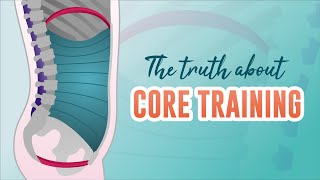
Yeah. So I guess what I find is that people don't fully understand the core system. Right. So people think that the core is like your abs. Right. Even if people do know that there's a more to it than that, they're still sort of stuck in this like, ab thing, you know. So when we talk about the core, we're not talking about just the abdominals, though those are nice, but we're talking about sort of a core canister or pressurized canister. Right. So on the top of the canister, we have the diaphragm. On the bottom we have the pelvic floor muscles. And then wrapping all the way around, we have the abdominals. So there's four layers of abdominals. You have the transverse abdominis, which is your deepest layer, your internal oblique, your external oblique, and then your rectus abdominis on the top. And the rectus is the one that most people train the most. So that's the muscle that's responsible for like your crunches and your sit ups and all your sort of like front loaded exercises. The problem with that is that often if those are over trained and the deeper muscles are under trained, there's an imbalance in the system. Okay. And that can result in diastasis, it can result in doming, it can result in pressure going in places we don't want it to go, such as downward into the pelvic floor. It can result in compensation patterns of the psoas kicking in, so your deep hip flexor muscle kicking on to help stabilize an imbalanced system. So whenever you have muscles in one area that are becoming more dominant than another, there's always like an equal and opposite reaction, Right. So it's like everything goes back to the sort of biomechanics and physics in terms of how do we keep a body in, in equilibrium. And so my way of thinking with the core is like, it's definitely not about aesthetics. It's like, how do we make this entire system work so that it's not fighting itself to maintain equilibrium. How do we make it stack and really strong so that, you know that all the extremities can work the way they want to without feeling dysfunction? So that's kind of what I'm looking at with that. To go deeper into it, you want to look more outside of the abs. Like I said, the top and the bottom of that core canister is the diaphragm, which is your muscle that you breathe with, and your pelvic floor muscles, which help support the core from the bottom up. And those muscles are extremely important for, obviously, bowel and bladder control, but also, you know, to keep your organs inside your body. But also, those muscles attach to your pelvis, and they help to stabilize your pelvis and your spine, just like all the other muscles that attach to your pelvis and your spine. So we learn in PT school and with, you know, some training that the transverse abdominis, those deep abdominal layers, help to stabilize the spine. Right. Well, so does the pelvic floor. Okay? So we need to stop thinking that it's just. Just abs. It has to be more the entire picture. Okay? So. And this is not, again, this is not just for women who have had children, okay? There are many people with pelvic floors that are not doing what they're supposed to do when they're supposed to do it, who have never had babies. Okay? I know people who have, when they were children, they've leaked jumping on a trampoline ever since they were young kids. Okay? So people remember that. And that's obviously not something that resulted from being pregnant. So we have to understand that pelvic floor function, though it is implicated from having a baby, it is not something that is not a requirement. Okay? So it's something that you need to consider on absolutely everybody when you're trying to understand how to get the entire core package to work together. And that's important. You know, if you're struggling with somebody trying to get their core to connect, start thinking more about the diaphragm and the pelvic floor. So if we go back to the diaphragm, we need to talk about breathing, which is incredibly important for core function. You see people all the time who are holding their breath when they're doing a core exercise or anything that's straining in any way, and that's because they're not able to coordinate contracting their abdominals and letting their diaphragm contract and relax at the same time. Okay? Just one thing to really consider and think about and learn how to train in a client or learn how to do yourself.
It's so important. I mean, breathing is one of those underrated and underestimated components to what we do every single day, because we've just done it on automation since birth. And so we don't think that putting attention to that actually matters because it's something we just do naturally. And I'm putting that in quotations, not recognizing that it does have such an impact on our core. Now, something that I'm curious about that you said, because you talked a lot about the pelvic floor, which I now recognize, and I'll be honest, I was a trainer for, you know, six, five years before I had babies. And pelvic floor wasn't even brought up in my training until I had children. So I'm curious as to, you know, how does someone get someone who's not a mom interested in their pelvic floor? Like, if you're training males, for example, they have pelvic floors, they are not often talk, you know, how do you get them to start thinking about it or start, you know, how do you recognize symptoms that they could potentially, you know, do well?
So men. Men and male pelvic floor anatomy and female pelvic floor anatomy are very different. So men certainly do not have as many issues with pelvic floor than their women do. And because of that, they're able to generate better pressure from the bottom of that core canister than women are typically just based on the fact that literally they don't have holes down there that are creating leaks of pressure. Okay. So if you just think about it like that, it's leaking pressure out of the bottom because there's. There's more holes down there than a woman than there is in a male. And so there's just a disconnection of the entire system because of that. And so where was I going with this? So men have had a much easier time contracting, so it's a little bit more difficult to. I don't tend to have to bring it up with men as much as I do with women. I have to bring up breathing with men, and because I talk about the breathing, they're going to have sort of a relationship with their pelvic floor because of that. Because the way that the breathe, the diaphragm, and the pelvic floor work together, they're going to automatically sort of kick that in for the most part. Women, however, that can be totally off balance. Right. And sometimes women don't know it. Right. So, like, I always scream for it. You know, I ask about pregnancy, if you had any children, you know, what kind of delivery you had, all that kind of stuff. But it doesn't always come up in that. So sometimes it comes up as, like, chronic, you know, si joint pain. You know, I just always. I've just always had this SI joint or this sciatica that kind of comes and goes. You know, maybe it seems to go with somebody's cycle, okay, because the pelvic floor can kind of, I'm going to say, shut on and off just for language, but, like, it can basically, like, be more stimulated or not, depending on your cycle. So those type of things can make a big difference. Leaking is sort of, like the obvious one. But some people honestly, like, don't even know that leaking is a symptom of a pelvic floor problem. Like, they just don't even put it together. Like, they're just like, yeah, I guess that is my pelvic floor, isn't it? And to be fair and honest, a lot of people don't even know where their pelvic floor is. So there's a lot of education that just goes along with it. You know, even people that just have had chronic, you know, hip impingement, labral tears, things like that. The pelvic floor muscles work so intricately with the muscles that sort of stabilize the hip that there's a lot of dysfunctions that can come in that area. So even if you're not having your stereotypical pelvic floor issues, say you're just like a runner and you just always get, like, hip impingement and you're a female, that's something that I would want to look at is where is there an imbalance with the way that that pelvic floor is connecting, especially on one side versus the other? And because you're looking for stabilization around hip from that pelvic floor, and if you're not getting it from the pelvic floor, like I said, the other muscles that attach around to that hip have to sort of work double duty to stabilize and maneuver that hip. So that's sort of why we see these compensation patterns that result from dysfunctional muscles such as the pelvic floor. So just a couple examples.
I love that you bring that up. Because hip impingement and hip pain and hips symptoms don't typically get associated with pelvic floor dysfunction. People will automatically go to, oh, we need to strengthen the glute. Not recognizing that you got a whole slew of other muscles to pay attention to.
Sure, absolutely. And I think that just from a PT perspective, I see a lot of, like, mismanagement of people with hip problems. They don't. People. You know, you're right. It's sort of like, strengthen your glute or stretch your psoas. And then other than that, we're kind of like, what else do you do, you know? Yeah, like send out a prayer, you know. So it's like, I think it's really important to, like, really understand the anatomy of the pelvis and the hip and how those two structures work together and how people absorb forces and pressure when their foot hits the ground and how it goes through their foot all the way up into their pelvis and just how the entire system works together. So. But yeah, you're absolutely right. Hips are a big confused area for some. A lot of people.
So you did. I loved the way that you talked about how, you know, men typically don't have to deal with the pelvic floor or they don't have to put a lot of attention or as much attention to it the way women do, because just based on our anatomy. So I'm. Since they don't have as, you know, as big of an opportunity, I guess, to leak pressure through the pelvic floor, where does their pressure typically go?
So they're able to generate a little bit more pressure from the bottom up. So sometimes they'll create more forward pressure. So I'll actually see quite a few men with diastasis. Several, actually, and fit men, too. You kind of can run the gamut. You know, you can have really fit men with diastasis. You can have sort of your rotund belly, overweight dad who, like, put, you know, does a little crunch, a little sit up, and you can see this alien baby kind of come out of their. The middle of their stomach. So that tends to be a little bit more of where their pressure goes, is forwards. So you'll actually see. You'll actually see sort of inverse relationships happen with people. Right. So some people who have a really strong connected pelvic floor end up with a little bit more diastasis if they're still having trouble managing their core pressure. And people who have really worked hard to close that diastasis but haven't addressed the pelvic floor can actually end up with prolapse symptoms or damage to their pelvic floor because of that. So there's a really strong lesson to be learned there and disclaimer that if you're working to close a diastasis, for example, and you have not addressed your pelvic floor strength, you could be putting yourself in a very vulnerable situation. So we need to find balance of all the pressures and where it goes. Okay. And where the pressure should go is a little bit more into the ribcage and the thorax so that we're not creating so much downward and forward pressure into our abdominal and pelvic floor area. So teaching people how to breathe properly and expand their rib cage is how you're really going to help somebody generate that core, the correct amount of core pressure that they need. And there's a lot of discussion right now going on about breathing, and you can go down, like, the deepest rabbit hole ever in terms of breathing. But from what I found that works best for me and the clients that I teach is that if you just honestly keep it as simple as possible, you can get incredible results without having to, like, torture yourself of, like, really trying to figure it all out. Like, just learn enough to, like, help somebody understand what I'm talking about in terms of, like, connecting better with their. With their core and knowing how to breathe while they maintain that core pressure. Because a lot of people belly breathe, and that ends up being part of the problem. We can go into that if we.
Want to know that there's no lungs in the belly. You know, I don't know if I've ever told you this, but I had a singer's background, so I did musical theater. So I had learned how to diaphragmatically breathe from the ages of, you know, since I was a kid, breathing was. You know, we always were focusing on breathing. But what was interesting and what was different is that there was a huge. As a singer, because you are using your air, there was a huge effort or attention put towards keeping that ribcage expanded even though you were exhaling.
So it was, you know, because you.
Were trying to keep that canister open. And so your switch is completely, completely counterintuitive to what you're supposed to be doing.
Right.
And so as I'm exhaling, I'm trying to stay expanded, which is why I think is part of my personal. For those of you who are familiar, I'm a wide isa. Yeah, I'm really wide in the rib cage. And I think that part of it is because I was constantly trying to train my body to stay wide.
Yeah, that's interesting. No one's. Actually. I keep. I. Whenever I run into singers, I try to understand, like, what their breathing training was. And no one's explained it like that, so that's really actually pretty Interesting. Now I know. Thank you.
But I remember because, you know, when I was in school, you know, you'd also take Pilates class, or you'd take. You know, you have to do a movement, and they'd be, like, talking about it in the exact opposite. No, no, no. You need to come completely, exhale fully, let your air go. Let those ribcage come together. The singer, you're like, no, you're not supposed to do that. So it was really just a confusing time in terms of your breath, but I now realize the impact in terms.
Of my movement and my core strength. Right. That's so interesting. That's really interesting. And that totally makes sense why you're wide. I am. Yeah.
You know, I'm curious, too. You started to go into some symptoms that trainers could start paying attention to. What are some red flags that you start that you would tell someone to key into, to start paying attention to and to focus on core training?
You know, it's kind of difficult because a lot of times when you're training somebody, you know, they have their clothes on so you can't see their abs very well. But sometimes, you know, if you're curious, you could ask your client if they could. If they're a female, if they could just kind of tuck their shirt underneath their sports bra so you can just see what their abdominal wall is doing while they move. It's similar to, like, hey, let's take your shoes off so I can see what your feet are doing. You know, it's. It's sort of. Sometimes it can go a long way in terms of helping somebody move better. Not. Not just to, like, you know, to move better, but to feel better and get more out of the exercise in general. So when you are able to look at their stomach, what you want to see is are they able to maintain, like, flatness sort of across their abdominal wall, or do they sort of kind of create, like, more of a mound or a dome in the middle of their stomach as it sort of flattens off over the sides? Okay. And so that doming, even if it's not a separation or a diastasis, but that doming is sort of an indication that we're getting a little bit more activation of that rectus abdominis and the external obliques probably, versus the internal obliques and the transverse abdominis. So being able to balance that system out. Okay. You can also look for breath holding. Okay. So people will, like I said mentioned before, hold their breath the minute you tell them to take a breath. I want you to breathe, go ahead and take a big breath in. They completely lose the form of the exercise when they take that breath in. That's an indication that they cannot breathe and hold core control at the same time, which is a problem. Right. Because it's a core exercise. Right. And you need to be able to breathe and maintain the position that you're trying to, to strengthen it. Okay. So, you know, you can look at general postures. Posture can be cues that somebody's not activating their core as much as they should. So if they're, you know, in a strong anterior tilt while they're, you know, coming in and out of a lunge or a squat, you know, you're kind of thinking maybe they're not. They don't have established abdominal control during that movement. Right. So they're relying a little bit more on their hip flexors or hip flexors and their back extensors to control the position of their spine versus their abdominal wall. So things like that can be cues. None of these are really like red flags. Like, nothing is dangerous about this. It's just more like, what can you notice that's cueing you in to, like, maybe we need to dial in a little bit more on this. Anytime somebody mentions, like, pressure, and people aren't going to mention this unless you ask them about it, but pressure on their pelvic floor, sort of like pressure feeling, bulging feeling, those are leaning more towards red flags. Leaking is obviously a red flag that something is off in that pressure system, and it is extremely common. So nothing to be embarrassed about there. It's just a symptom that's indicates an indicator light of something bigger that's going on in the system. You know, it's not really the pelvic floor's fault. It's the entire system not working together. Yeah.
And you also said something that's a really, you know, important thing to note, which is that people aren't going to tell you.
Right.
So even if you do an assessment and even if you say, oh, you know, you ask, like, do you have any injuries? Anything I should know about? You want to be specific and actually ask them, like, hey, are you leaking?
Do you have pain?
Is there pressure here? Because oftentimes, like, I know for me, in my experience, they'll say to me later, oh, yeah, that happens. I just never told you because that's not something I need to think about.
Yeah. Or people just don't think it's related. They're just like, I just didn't think it had anything to do with that, you know, so you do have to kind of. And, you know, if you don't, you. You might not want to do it on the very first appointment with somebody, but if you start to establish a relationship with somebody and you're really trying to help them and you're really trying to figure some things out, these are questions that are important because I'm telling you, the question that you don't ask, that's usually the one that's going to give you exactly what you need to figure out what's. What's going on. It happens to me all the time. Something will come up weeks after working with somebody, and I'm like, why didn't.
You tell me that on day one?
You know, and it's like, really shame on me for not really picking up on the fact that I needed to ask that particular question, you know?
For sure, for sure. And we live and we learn, and that's how we learn.
Yeah. And then you figure it out on one person, and then you start thinking about it for the next person, you know, so, yeah, symptoms are also going.
To show up in different ways.
Different.
Like some person will come up with hip pain and some person will have the traditional low back pain.
Right? Exactly, exactly. And like I said, it's just. It can be just a pressure issue. You know, like I said, sometimes it's really not the pelvic floor's fault. It's just the pelvic floor can only do so much, Right. Like, if you're generating too much pressure down for years, the muscle is going to give out. Like, it's going to get tired. Right. And that's what you see with leaking a lot is not so much like a pelvic floor that's just tired. Right. It is straining so hard to hold up against that pressure. So got to think about it that way.
Which is such a good point, and which is why I also think it gets associated with age. Because, well, aside from the fact there's not a lot of revenue that is spent on women's health specifically, and so we can't really differentiate between what is causation and what is correlation. But typically, pelvic floor symptoms get associated with age. And they say that's just for older people, but that's just not entirely. That's just not true. We just see it more in the older population because they've just had more years of extensive leaking pressure into the pelvic floor.
Yeah, yeah. There's a lot of band aids that are being done for women's health issues. Right now that, that, you know, but. And there's a lot of things like that. Like a lot of things are just blamed on age because you have less muscle mass as you get older, you lose a little bit of strength. You know, there's a lot of, you know, dysfunctions, we'll say in the body that are blamed on just getting older. However, that that doesn't mean that you can't still work on them and manage them. Right. And like I said, there are children who leak on trampolines. You know, they distinctly remember, oh, I did that as a kid. I remember it. I never wanted to go on a trampoline because I would always pee myself a little bit, you know, so it's not an age thing, it's a system not pressure system, not working together thing. And as you go, you're right as you get older and the years tack on and you're just pushing up against that pressure and you haven't changed the way that your body's moving or connecting or managing pressure that that is going to cause more strain as the years go on on those tissues. And that's just again physics and just tension on muscles over time.
So you actually brought up children in antrampolines and that just kind of jogged my memory or my thought process to ask you and, and wonder if, you know, bedwetting when you're a kid and you get into like a, you know, as you get into older stages of bedwetting, is that also a symptom of pelvic floor and pressure stuff or not?
Yeah, I mean, I'm not like a professional on bedwetting. I don't, I haven't researched enough on what is behind bedwetting. One of the things I actually did come across was that a client actually told me was that constipation can be a cause of bedwetting. And I think it's just like this extra added pressure forward from like an impacted bowel kind of onto the bladder. Yeah, exactly. So honestly, I don't know research at all. I don't really want to comment on it because I don't know enough about like what is behind bedwetting. Mine is still not night trained, so I'm trying. Well, maybe I'll cross that bridge when I get frustrated enough to like start really researching it.
Oh, for sure, for sure. I just was curious because it kind of just made me think about, you know, pressure management and what happens at any.
Yeah, yeah. I just don't know in kids versus adults in terms of like urinary urgency and things like that, if it's the same mechanism behind it or if it's something different, I just haven't. I haven't looked into it enough.
Yeah, for sure.
Okay, cool.
And so then the other thing I wanted to ask too, is something that I really love about your work specifically is as a physical therapist, you are incorporating a lot of fitness into your work, and you're talking about the importance of sharpening that saw and getting stronger and really kind of bridging the gap between the two professions. And can you speak a little bit as to why you don't find that as often? Why is it that there's so many clinicians that are like, no, don't strength train.
You have to just rehab because they don't know how. So honestly, it can be that simple. Okay. So many PTs who went to PT school don't have a training background. There are several that do and they're. And I love that. I think that if you're a trainer and then go to PT school, that is a phenomenal background to have because you can really combine your skills and incorporate them. But I think that it's sort of this. This driven thing, and I don't know why, but PTs are very focused on, you know, rehab and being very delicate, and they don't think that the body is capable of doing, putting a lot of strain and stress on it. And they kind of stick to these little itty bitty sort of rehab exercises, which you really do need to do. If you have somebody who has, like, an acute injury, you need to be not putting a ton of load on it, because that would be extremely dangerous if you had somebody who, you know, had like this acute disc bulge or something like that. But when you have somebody who's. And this is sort of where I specialize is people who have had just sort of like, underlying issues that have been going on for a long time. Oftentimes what they need is more full body integration. Okay. Because the PT that's just been doing shoulder exercises for a shoulder impingement is not understanding that that shoulder is not moving well because it's attached to a thorax that's not moving well because the thorax, the person doesn't know how to breathe well and manage their core pressure and there. Or they don't articulate well through their pelvis and their hips. And so when they go to throw a ball or pick their kids up, they don't have that whole body strength from the bottom up to support the action of whatever they're trying to do with their shoulders. So it's extremely important to look at how the entire body works together in integrated movement patterns. Okay. So I think that integrated movement patterns are sort of something that pts don't understand as well as trainers do. From what I've experienced from working with trainers and learning from trainers is that they really get it. Like, they understand how the body moves. They play around with exercises, they feel their body. They see what adding this does to. Oh, let me see if I add this band, like, can I get my glute to work? PTs don't bother with that. They go off of a lot of the times, what they learned in school, what the books told them, and they don't explore as much, I think, as trainers tend to. And this is obviously my generalized opinion. There are obviously incredible pts out there who are doing great stuff and they do everything I just said. But I think in general, there's this misunderstanding of integrated movement patterns and also a fear and a. And just the fact that they don't know how to put load on. I didn't know how to lift weights. Like, I had to get Katie St. Clair to physically take me to the gym and show me how to, like, do a front squat. Like, I didn't even know how to set it up. Like, and that's just my background. And I think that there's a lot of PTs who fall into a similar type of background. So I think it's. And when I started putting load on my body, a lot of the pain issues that I had been experiencing for years, because I'm a very active person and I'm. I'm going to move and I'm going to do what I want to do, but it would, you know, it would set me back with neck pain for weeks if I went wakeboarding, you know. So when I started putting load on my body and really just getting a whole body stronger, a lot of these little aches and pains started going away without really having to do my, like, traditional PT rehab exercises on them. So I found it extremely valuable. And now I like to integrate sort of an approach that looks at it from both perspectives.
Yeah, I love that. How did you get into pt?
Yeah, I get this question all the time. So I have, like, a weird, like, boring story. Like, I am, like, I was like, an average high school athlete, you know, never actually had, like, a major injury. Like, a lot of people get into PT because they, like, had tore their ACL or, you know, something like that. Had to go through PT themselves. Never had it, never experienced pt, never Been, I think I just went to college and I, you know, I was very active and I liked movement and I liked health and education and I wanted to like, do something where I could interact with people and I wanted to like work with people and help people. And I kind of went in between being a physician's assistant and being a pt and you had to take organic chemistry to become a physician. Physician's assistant. So I decided to be a PT instead because chemistry chem 1 and 2 were like my worst sciences. So I was like, not going there. So I was like, great. PT school it is. So I went to PT school like immediately after I graduated college. I was a kinesiology major. Like literally two weeks later. I started PT school for like three years straight and then kind of went from there. And I actually was. I really wanted to do neuro pt. I wanted to work with people who had had sort of life changing neurological injuries. You know, I worked on the spinal, spinal cord injury floor at a rehab hospital for a while and I really liked it, but it really affected me sort of like emotionally and mentally. It was really challenging and it was really hard. Demanding work physically too. And so I ended up going more into like an ortho route, which I never thought I would do. But it's really been a good direction for me because especially now, blending what I'm doing and having my own business, I have a lot more flexibility in my schedule versus being sort of like tied down to a hospital setting. So it's just been really nice to sort of try to take control of a career path and not have it be exactly what you thought it was going to be at the beginning.
Yes. I mean, isn't that true? What led you. Was there anything specific that led you to learning more about fitness?
Honestly, it had to do with. Yeah. So like after I had my child, I had some pelvic floor issues and I had a diastasis and I worked. I did Sarah Duvall's Core Exercise Solutions and I went through all her programming and I became certified in what she does. And I, I was working towards my really, you know, selfishly trying to get my own body back together. But I was realizing that I had this like fear of sort of pushing it and bringing it to the next level. You know, like, I would go to the gym and Katie Claire would see me there and I would be doing like my stupid, like rehabby exercises and she'd be like, can you? She would literally like yell at me from the cause. I'd be like 40 minutes into it and I'm still like doing breathwork and like, you know, doing these ridiculous things. And she's like, can you go lift some heavy weights, please? And that's when I was like, I know she's right, but I don't know what to do. Like I thought taking like an eight pound dumbbell and doing like a bent over row was like lifting heavy. Like I didn't know what to do. And so that's when I actually asked for help, which is not always easy. And I asked Katie to help me, you know, and so that's really when I started going like, this is going to be worth a shot. Let me try this. And when I did, I recognized that all of the little hurdles, the little like leftover things that I couldn't quite clear up with my body cleared up when I started getting stronger and getting more into fitness. And so that's when I was like hooked. And I was like, now this makes sense. This is what everybody needs. You know, I'm really going to embrace this and start to, you know, do it with everybody that I see.
So good. You bring up so many good points. Like I just kind of drive two main points that I, that I really heard. And what you were saying is that one is that. And I've noticed this a lot in the people that are the most successful ask for help themselves. Right. I mean, I'm never going to ask somebody to do something that I won't do or practice myself. And I know that that really challenging. So I just think that's also really important. And something too that you brought up a lot, which is another reason why I think coaching and asking for help is so important, is that so many people look to these really standardized. This is what the book said, this is what the school, you know, what school said. Just not recognizing that everybody's so different in how we move and how we compensate. And things are going to come up when you start implementing that's not going to be the same as what it said in the book. So what do you do?
You know? Right? Absolutely. And that's, and that's the thing. It's every. Everybody's different. And I come across this all the time. You know, people look at, look through Instagram and they're like, I tried this exercise and it's just, I don't know if I'm just not doing it right. And I'm like, well, maybe it's just not like appropriate for you. Like maybe that's not exactly what you need, you know. And so everybody's different. And everybody, you know, not everybody needs breathing. You know, everybody needs sort of like a. Like a very, you know, an approach that works for them. And I like what you said about, like, asking for help. I think that that's not something that comes naturally to me, but what I've found over the last few years since I've been working on, is that it's extremely empowering in a way, because when you ask for help, you get somebody to teach you something. Right. So you get to learn from them. Like when I asked you for help to help me with my business, to help kind of get my foot off the ground and reach more people. And, you know, that was extremely educational for me because I learned so much from you, and I learned that what you. I can learn a little bit of what you do and use it myself, and that's a very empowering thing to not be afraid of. Like, well, I just don't know anything about marketing. Like, I can't. Extremely educational for me because I learned so much from you, and I learned that what you. I can learn a little bit of what you do and use it myself. And that's a very empowering thing to not be afraid of. Like, well, I just don't know anything about marketing. Like, I can. I can't do what I want to do. I can't meet my goals because I don't know how to do this, you know? So asking somebody for help is the first step into, like, understanding it and being more comfortable with something so that you can start to, like, peck away at your goals a little bit and not be. Not come up with more excuses not to do something. Yes. Which is what I tend to do. It's like, I just don't know, you know?
No, I relate.
So that's been very.
Yeah, I mean, I relate. Justin. I think a lot of people that listen to this podcast relate because we are leaders in our industry, and it's hard as a leader to recognize and say, oh, I need help with this, or I could use some assistant or a new perspective, a new way to look at it. But when you can do that, you just become more powerful to your client. Because if a client comes to me and says something that I don't know anything about, but I've built a network of people around me that can help me, then I'm going to be more valuable to my client because now I can point them in the right direction instead of trying to pretending to be everything to them. An amateur clinician, a nutritionist, you know, everything more Powerful.
Yeah. I can't tell you how much clients appreciate that. That's been a model that I've sort of embraced. And people, I mean, the amount of, like, trust and you become like, their buddy. Like, they're like, okay, who do I see for this? Like, people are asking me, like, who I see for a dentist? I'm like, all right, let me, like, find you the best dentist around town. You know, it's like they trust your opinion, and that's how you create really good relationships with people. And really good relationships is what's going to create a lasting business model for you in terms of this type of business where you're really interacting with people and trying to help them be, you know, healthy and well, long term. So, yeah, yeah, I completely agree with that.
Well, I definitely want to be super mindful of your time and just. Thank you so much. This has been such an informative podcast. People are really going to love this. I know it. So for those of you who want to hang out more, more with Jill, where should I send them?
Well, probably my Instagram. Jill Zimmerman with 1N at the end. PT, you can find me there. You can message me through there if you want to contact me. That's probably the best place. I also have, like, a general website on perfectly fitcharleston.com if you want to check out more about my model business model. And then you can also contact me obviously through that as well.
Okay, awesome. So of course we're gonna link all of that up in the show note. So for those of you who want to go follow her, she. She puts out incredible content, so you definitely want to make sure you're following her. So thank you so much for hanging.
Out with me today. I really appreciate it. Thank you.
Thanks so much for hanging out with us today. If you like this video, chances are your friends will too. So be sure to share it with your friends and tag us on your social media channels. If you haven't already. Be sure to hit subscribe, hit like and tap that bell to be notified when the next video comes. I'll catch you on the next video.
Sam.










