The Truth About the Study of Self with Nick Demos
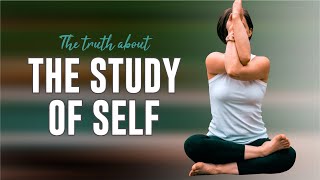
This is a YouTube video titled "The Truth About the Study of Self with Nick Demos" created on January 20, 2021. It features an in-depth interview between Beverley Simpson, a fitness business owner and podcast host, and Nick Damas, a Tony Award-winning Broadway producer and meditation teacher. The conversation explores topics such as self-study, yoga, breathwork, meditation, trauma healing, and how these spiritual and personal development practices integrate into business growth, especially for heart-centered entrepreneurs and coaches. Beverley Simpson leads the discussion, sharing her own experiences and engaging with Nick on the practical and transformative aspects of these disciplines.
What's up, coach? In this video, I'm talking with Nick Damas all about the truth about self study and how and why it is important for your fitness business growth. Are you ready? Let's get started. What's up, coach? Thank you so much for hanging out with me today. I'm Beverly Simpson, the owner of B. Simpson Fitness and the founder of the PT Profit formula and PT Profit podcast. Today is a replay of the podcast that I did with my dear friend Tony and Oliver, award winning producer Nick Demas. So if you like this video, go ahead, hit like hit subscribe and tap that bell to be notified when the next latest and greatest video comes out. Today this is an interview. I sat down with him talking all about the truth about self sufficient study. Are you ready? Let's roll that interview. Nick, I am super pumped for this episode. Thank you so much for hanging out with me today. How are you?
I am beyond excited to be here. I just adore you. And so this is so fun. It's just fun to hang and chat with a friend.
I love it. I love it so much. I mean, we're sitting here, we've been just chit chatting in the green room for like 20 minutes and we're like, no, we got to hit record. We got to hit record.
When Regis Philbin had his talk show with Kathie Lee and or Kelly, he used to say, save it, save it for the camera. Save it for the camera. Like, he would not talk to either one of them before they went on because he wanted it to be like all live. Isn't that interesting?
That is so interesting. That's amazing. Aw, Regis.
Aw, Reggie.
Yeah. Okay, so for my audience who has never met you before, I would love for you to please share a little bit about who you are, who you help, who you serve and how you got there.
Oh, gosh, of course. So I am a storyteller at heart. I tell stories and help heart centered entrepreneurs tell their stories so they can connect with their audience, they can convert to sales. They can create massive impact in their communities. And I'm obsessed with it, obsessed with helping them. But my background is actually an interesting mix. I am a Broadway producer and director. I was an actor, dancer originally. So my very first jobs were as a dancer. But I'm also a yoga and meditation teacher. And I really created the business that I have now because I wanted to bring those worlds together. I felt like I was living in this very sort of parallel universe existence. I had my theater, Broadway and filmmaking career on one side and then I was also teaching yoga and meditation, which honestly was sort of a side hustle, but not really because I would fly all over the world to do it. So it became like I felt like I was competing with myself for my own jobs, for my own business because I had two businesses going on. And I decided a couple years ago to blow it up and piece it all back together.
That's amazing. And he's being modest. He's actually Tony Award winning again, Broadway person. So he is being super modest. Okay, so now I'd love to just dive a little deeper into what caused you to blow it all up.
Okay, so I am speaking of the Tonys. I am at the Tony Awards and there's this great still Beverly from cbs. The moment that it is announced that the show that I produce called Memphis, I was on the team. There's a producing team that we won. There is this moment where everyone is standing up and there's joy and everyone's so excited and screaming and there's a photo of my face and it is a absolute blank expression. Not joy, not even sadness. And I remember the moment so clearly. That's what's so strange about them capturing that moment is I remember it so clearly because in my head I remember just being relieved that my investors were going to make their money back, that I, I finally got here. Finally. I was 30, in my 30s, and I was like my whole entire life I've worked to win a Tony. But I also had the moment of this is it. This is what this feels like. This is not what this is supposed to feel like. And as I'm walking up to the stage to accept the award, that's what was in my head. This is it, huh? Oh my gosh. It was like an out of body experience. But in that moment, I had the realization that my life had to change.
That's so powerful. And it's powerful for so many reasons because I can relate once, you know, as someone who was a former actress, that's what brought me to New York, is I was trying to go for Broadway. So, you know, even from a young age. And I'm laughing at this 30 because it's the same thing I've been saying I was too late and too old since I was 16. And it's because that theater community has that feeling of like, hey, you got to be a professional dancer by, you know, five. I'm clearly exaggerating, but, you know, it has that feeling. So I just, you know, constantly drive, drive, drive. I've got that masculine energy of Just drive, drive, drive. And so many people that I work with, I know have this. Are similar. We're always hustling. We're always working to that point where you finally arrive, and it's like, well, okay, So I made 15k a month. What does that even mean?
Nothing. It means I'm burnt out. That means I'm exhausted. It means that I have depleted my system. I'm in fight or flight at all times. I'm in the sympathetic and not in the parasympathetic nervous system. That's what it all meant. And that was the other part. Right? I was exhausted.
Yeah.
And that really began a huge journey for me, physically, mentally, and emotionally.
Okay. Yeah. So then what happened?
So then I, you know, I had been a yoga teacher already. I had been through the gym. I found yoga through the gym, actually. I would peek in through the windows, and the old dancer in me, because I'd been a professional dancer. I was like, oh, that movement, you know, I hadn't really connected to my body in that way in so long. So I was like, looking through the windows and like, okay, I'm gonna try that. So I had already been practicing and then teaching, but I really dug in after that to more of the spiritual, emotional aspects of yoga. And I went and studied with the teacher. I even lived with them for a while and read a lot of books, did a lot of practices, and really examined all the darker parts of myself, not just the light stuff, because I think yoga can also get the namaste kind of reputation, light and love. And I had to dig and really look at the darker parts of myself. The parts of myself that had, you know, I had suffered from childhood abuse, and I. And that was actually part of this story in the sense that I was always trying to prove myself. The drive came from this, like, I've got to be the best. Also looking at, like, the best little boy in the world, because I was a little gay boy, you know, and in the world of. Particularly then. This was the 80s, particularly back then. I was a kid in the 80s, but it was not cool to be gay.
Yeah. Yeah.
Not cool. And so I had to look at some of those darker parts of the self and heal them. And that really began to transform the way in which I did business. I began to explore both my artists by directing a film about Alzheimer's and then directing two documentaries, one about body image that is still in production, and one about fibromyalgia, which is a chronic pain syndrome. And through that, realizing that, oh, Broadway in the Classic sense is no longer feeding my soul in the way that I want to be fed. Now, that didn't mean I like burn the boats, you know, I didn't burn, you know, people say, ah, burn the ship. No, I kept my production company going. I just changed the shape and the way in which it was managed. It has my name on it and I no longer do the day to day operations of it. So go figure. And I began to build clients and began to work with people as a meditation teacher, as a coach, which then led to storytelling, interestingly. And what happened was, is that it sort of all fused together, all of these different parts of me into one business. And when that happened, that's when things started to sort of take off for this part of my business.
I love that. Okay, so I've got so many questions, so I'll start, you know, at the beginning. So first is, you know, I, I want to go into the yoga because you talked about yoga and my experience from yoga is from a fitness perspective. You know, I'm used to like come from the gym and you have like crush yoga or like hot sweaty yoga and everything is still like.
And.
You know, that has been like my experience because go into yoga to either stretch or they're like, I want to work out, you know. And the gym culture is trying to figure out how they're going to take yoga and make it and work for their model. Right. But what I'm hearing from you is that there's a spiritual component. Like there is a spiritual component to yoga, right?
Yeah, there is a deep spiritual component to yoga. Asana. What we know is gym yoga or yoga in the west is only one of the eight, what they call the eight limbed path. Only one eighth of yoga. The other seven eighths primarily deal with the mental, emotional and spiritual aspects. When you really dig in, you move into breath, work pranayama. You also work prachahara, which is turning off the senses. There's also ways of being. I guess that's the best that I like to liken it sort of to the commandments, you know, the thou shalt. Thou shalt. Not the commandments, but in a more lifestyle form. Yoga is spiritual in the sense that it is the science of self realization. It is not a religion. So anybody out there that's like, but I'm Christian, I can't. Or I'm Jewish, I can't. It is, it is a, It's a co. It will. What am I trying to say here? It will co. Exist. There's the word It'll coexist with any religion so that it's really a practice of learning the self.
Oh, can you talk more about it? I'm so intrigued. I want to learn more about this. And so it's going to lead me to my next question is how are you incorporating this in your business for your heart centered entrepreneurs?
Okay, so the first thing to understand is that I have a daily practice. And in this daily practice, I do some of the asana, what you would know physically as yoga, and then I do some breath work and I meditate. The reason that I do this, it's called a sadhana, which means loosely translated as practice, or another way of looking at it, is song of the self. And you do this practice every single day. Come rain, come shine, sickness, health, it's like a marriage. Every single day, you're committed. And the reason for that, and you do this in the morning and you do it before your coffee, before a sugary pastry, before anything. So you know where your energy level is. Because really you're looking at your energy and the energy in the body, physically, mentally, mentally, again, emotionally, and again spiritually. So when I know where my baseline is, we all tend to live on this land of the roller coaster. High, high, high, low, low, low, high, high, high, low, low, low. That. I mean, our, our society is built upon it. Look at the media like they take us on these adventures, right? Highs and lows. And if you find stability in the mind, body, spirit, nothing can affect you because you know where your baseline is. So when you know when your baseline is, when stuff starts coming at you, life is how you react, not how you act, right? When stuff comes at you and you already know where your baseline is, you're like, okay, cool, that's where I'm at. But today I'm on my mat and I'm really anxious. So now I'm already aware that I have anxiety today I'm already aware that I'm anxious. So when something comes at me, I can use these tools of breathing, of coming into a calmer state of being, because what we're doing is creating state dependency so that I don't overreact. You don't automatically go into that fight or flight. You learn to come into the parasympathetic by these practices and then you automatically do them. Your body automatically goes into these states, stays in the state, or rather than shifting into another state in a reaction. Does that make sense?
Yeah, for sure. And I know that, you know, trainers deal a lot with the autonomic nervous system. And understanding parasympathetic and, and also, you know, that fight or flight system. And I feel like what 10 what people tend to know and what they tend to teach is something that they know very closely. And I feel like trainers and coaches don't recognize or they think they're in a parasympathetic state. Not recogn saying that they actually aren't.
Yeah, yeah. I think that the calmness that one feels, no matter what is happening around you, that's how you know. And right now we're in pandemic and riots and this and that and you know, and how are you? Where are you today? Ask yourself that the practice, the reason for a yoga practice that's beyond physical and the physical is super important. Let me say this, I want to be really clear to all those trainers out there, to anybody who's like, but I need my physical. Yes, you do. You absolutely do. The original practices of yoga, the asana, what we know is yoga was created so that you could burn off energy, so that you could sit, meditate. You know all those people that say, I can't meditate. Of course not. You have too much pent up energy. Go do some yoga, go run, go train, then sit, then sit. Then you'll be able to calm the system. It was created for kids, it's created for young boys who had too much energy. That's why like all of the, all the postures are named after animals. Oh, wow.
I didn't really, I didn't realize that. But honestly, even hearing you say that, I was like, oh, that's what I do for my kids when they're, when I know when we're having trouble sleeping, I just have them go run around. Yeah, they need more.
Turn off that energy and then you'll be able to sit. And so the physical part is important and we work from the gross to the subtle. I didn't come to the practice and say, oh, I'm enlightened and I'm going to sit and meditate for two hours. No, it doesn't happen like that. I came for, I came from the gym. Thank, thankfully. Thank you, Jim. Thank you trainer. My trainer was like, yeah, go try that, go try that. The dancer and you is going to really enjoy it.
So, you know, I feel like I know this. I noticed this pattern in business and in fitness and really just kind of with life is that the stuff that is the, the hardest to do is often the simplest. And so I'm curious, you know, how long has it taken you to build the Habit of being in the practice. And then how long does it take you to get into this parasympathetic state?
What day is it today?
It is the Tuesday. Tuesday the 12th.
Yeah, it's taken me till Tuesday the 12th. We call it a practice for a reason. Yeah, right. Like one day, it's like I'm in it. I sit, I'm like, oh, shanti, shanti, shanti, chanti. I am one with the universe. Right. I am the unicorn that is pooping rainbows. Right. That's one day. And then the next day I'm like, I'm fidgeting and I can't. And I'm like, upset. And that's why it's a practice. That's why I get to learn where I'm at today. As I was saying. So that when I step off of the mat or step or get off the meditation cushion, I'm aware of my. You know what? I'm aware of what's going on inside of me. So in terms of creating a practice, yes, I have had a long term practice. I have had a steady practice for 12 years now. But it didn't, didn't really happen like overnight. I, like I said, I went and studied with a teacher and that teacher gave me the practice and he said, you will do this until I tell you not to do it anymore. And so I had to commit to it. And I had to do the same thing every single day until he told me otherwise. And it was a commitment. And it started, like, pretty short. And that's what I would say to everyone out there. This is not, this does not need to be long. In fact, don't make it long because if you try to make it too long, you won't do it.
Yeah, the same thing we tell our clients all the time, right?
I mean, you, all you trainers out there know this. You know this, all you coaches, because this is exactly how you train and coach your clients. So do the same thing for yourself with a meditation practice or a breathwork practice. Short but consistent. Every day.
Did you ever miss a day?
Yes, I have definitely missed a day.
You have missed a day.
Okay, I have missed a day.
When you were working with your teacher, did you miss, like, how long did you go without missing a day?
Oh, I can't go longer than two days now. And I'll tell you why. I've realized that meditation is my medication. That's only a D and a C difference because it's the stabilizer. And so am I addicted? Maybe there are a lot worse things yeah, Yeah. I don't like going longer than two days without the practice because I feel unsteady. I feel like something's not quite right. And, you know, I liken it to when I was a dancer or even going to the. I don't like to not go to the gym for longer than two days. Right.
Yeah.
It becomes a part of your life. It's a lifestyle, just like being at the gym is. It's. We all know people can come once a week and. Sure. Are they going to get a benefit? Yeah. But they're not going to get the same benefit if they come regularly with you, if they show up and commit and do the work. And it's exactly the same. It's exactly the same.
So, you know, I'm curious. It's kind of a segue, because I will get to, you know, how you're incorporating it in the business. And I do want to talk a little bit more about breathwork because I keep hearing people talk about it, like. And I'm putting it in quotes, you know, you can't hear. You can't see breath. I'm doing my breath work, and I'm like, well, what does that even mean? So I do want to talk about that, but I am curious in terms of, you know, because I know that coaches have a lot, really hard time building these types of habits of commitment with their clients. So how have you been facilitating that with your clients for your practice, and how did your teacher do it for you?
Yeah, so I think, naturally, I am a very disciplined person. I'm not gonna lie. I came from the world of ballet, and that is a very disciplined life. I was a professional, you said at 5. I was a professional at 16, so.
Yeah, exactly.
So my career was over as a dancer at 26. Right. So by choice. But I think that. So naturally, I'm very disciplined. I mean, I was so instilled in me. So for me, I didn't really need that. I actually needed somebody to say, it's okay if you miss a day, you.
Know, and it's fun. You know, my trainers have a lot of, you know, sports background. They know the discipline. So when they work with someone who's not disciplined, disciplined is a challenge.
Yeah, it is for me, too, because I'm always like, just do it.
Why do we have all these feelings about it? Just.
You know, I have a membership program that is for meditation and breath work, and it's a monthly group. And we have accountability. We have accountability within the group itself, and we also have accountability partners to Help each other and encourage each other. Not in a you're not doing it kind of way, but in a. Okay, let's really encourage each other to stay on the path and the course, because we know it works. Those that, you know, the testimonials come back. Those that. That do it, see the results. Just like. It's just like. I mean, I can't stress anymore how much it's like training.
Yes, yes.
So true.
Okay, can you share with us what is breath work, actually?
Okay, so there are many different forms of breath work. I want to make that super clear. I teach a very traditional, classic form of breathwork that's over 2,000 years old because there's lots of iterations of it. Now when you hear breath work, you're going to. You can go to a breathwork class and. And what one person teaches will be completely different from what somebody else teaches. So you have to find what resonates for you. What I teach is called pranayama. Prana means energy, and ayama in Sanskrit means extension of. So extending your energy or your vital life force. And essentially, you manipulate the breath. You sit and you take deep, cleansing breaths. And with pranayama, you also do holds, so you may breathe in for three counts, pause and hold for three counts, and then exhale for three counts. So what we're doing is learning to manage the nervous system. Because when you can control the nervous system, you can control your thoughts, ultimately your reactions, like I was saying. And when you can control that, you can control your thought. When you can control your thought, you can control pretty much everything that's happening in your life. The practice of pranayama, of putting yourself in uncomfortable breathing positions, holding the breath, and or extending the energy trains you. It's like a training trains you for when things come your way. What's the first thing that most of us do? We hold our breath. So it trains you to deepen the breath, which then takes you out of that fight or flight state. That's really its primary purpose. People now use it for transcendental experience, because if you do a ton of it, you know, you get a little spacey and emotions start to come up and feelings start to come up, and so consequently, people now use it. Sometimes you'll hear about breathwork being transcendental breathwork of taking you out of the self into a state of being that allows emotions, feelings, and experiences to happen.
Do we want that?
It depends on who you are, Right? Depends on who you are. I tend to teach the slower version, and I'll tell You why? And again, this is no judgment on anybody who teaches that that way. For me, I want my client to have long lasting change. It's like doing a one time, huge crazy workout. Yes. You hurt those muscles. Yes. You, you know, but there's nothing like the steadiness of building the muscle properly.
Yeah. You know, and we're also in the age of just quick fix, quick correct, fastest, quickest, most way possible. People are always looking for the shortcuts. Looks for the shortcuts.
Oh, totally. Yeah.
So when you can take the time to be present, it's going to have a profound effect.
Correct. That's everything. That's everything.
Okay.
So.
When now I've been hearing things like two people talking about recently, you know, with this new invention now of clubhouse. And people are just, I don't know if you guys have heard of that. Right. Which is such an interesting experience. Well, I'll do a whole other podcast on that. But you know, how these people have time to just like sit and talk for eight hours is beyond me. But some of the things that people been talking about like as it pertains to breath work is like shaking, like they talk about, like body shaking. What is that all about? Is that, pardon, that related?
Yeah. So that's a bit of what I was talking about in terms of the transcendental experience that you do so much of the breath activity that your body begins to shake, you may feel numbness. It's an experience now. Yes. Because you're doing so much breath, you're shifting your system that you're reacts, your body reacts. Just like if you do a super heavy workout, you begin to shake.
Got it.
Right, got it.
So you, you can do that with your breath.
You can do that just with your breath.
And so now you mentioned that you had used this tool, the breathing tool, to heal some of your past trauma.
Correct.
Right. So how do you do that? How does that work?
So because I work with a teacher, I wanted that to be super clear. I didn't on my own go and go to a breath work class and boom, suddenly I was cured of my trauma. No, again, I did it slowly and over time. And what happens is, yes, emotions begin to come up from the breath work, from the practices. But because I was with a trainer, essentially they worked with me and helped me work through the emotions that were coming up because of the breath work. And we did a little bit and then a little bit more and then a little bit more and a little bit more. Just like you lift a weight, you don't start with £75. Right, right, right, right.
So what are some of the. You know, you're starting to allude to it, but I'm curious, you know, what are some of the dangers of going in, you know, trying to, like, go to YouTube and be like, how do I do breath work?
Too much, too fast. And honestly, it can cause some. If you're not careful. The ancient texts. Let me. Let me say this. The ancient Hatha Yoga text, which are, like I said, 2000 years old, and that's from when they were actually written. Right. It was passed down orally for years and years and years, Guru to student to guru, guru to student who became the guru to the new student. You know what I meant? The texts say a little, because it can send you into space if you're not careful. You can have a psychotic break if you're not careful. Which is why I sometimes get a little scared when I hear of people doing transcendental work.
Yeah. Because they're getting too much too fast.
Too much too fast. So I just say, be careful when you go. I'm not saying don't go. Because I've been to those breathwork classes. I've been to them and I've had great experiences that. That form of breath work. But what I will say is, be careful. Be careful. You also know your nervous system, right? If you have a nervous system that is super sensitive, highly sensitive, hold back a bit. If you have trauma in your past, hold back a bit. We all have traumas, but I mean, I'm talking some major traumas.
Big traumas is. Big T traumas.
Big T traumas.
Yeah. You know, it's interesting, and this is a fun fact about me, is that I can't remember my childhood. No. Like, I think, you know, my sisters will be like, oh, remember when we did this? And I'm like, no, don't. I have no idea. I just have not held on to those memories. And I can't tell you what my earliest memory is. Like, I really couldn't. So because of that, I'm very nervous to do this kind of work because I actually have zero idea what's going to come up.
Yeah.
And people tell me all the time, oh, well, dad, do you have, like, big trauma? No, I don't think so.
Yeah.
But there's a reason.
Yeah. Well, I'll tell you this. The work really did. I did have repressed trauma. And I. I was in a hotel room. I'll tell you this story. I've never told this story before. I was in A hotel room, and I was taking a shower and I had been doing all of these practices, right? And all of a sudden I'm in the shower in the hotel room and the water was hitting my head. And all of a sudden all of the memories started flooding back of, of the trauma, of the child, of the childhood abuse. And thankfully, because I had trained, because I had really, I took some deep breaths, I grabbed the side, I grabbed my towel, I wrapped myself, I started taking huge breaths and I sat down on the bed and the memories just started flooding back. But I was able to process them because I had worked to get there. Now imagine if I hadn't done that. If I didn't know how to breathe, I probably would have knocked myself out.
Yeah, yeah, yeah, yeah.
It's amazing.
And you know, you, you talk about training too, and working with your teacher. Do you think that there is value in having the one on one like that you had, or do you think this is something that can be learned in a, like with the collective?
I think it's both. I think it depends on who you are and what your experience is and what you need and where you're at. I couldn't have just jumped into being with a one on one teacher. I had to be ready for it. I did a whole bunch of yoga, I had done some pranayama, I've done some meditation before. I needed to be ready to really dig into that work. And I had some therapy too. Let's not say that I didn't go through therapy, but let me be very clear about that. I think that's super important for everyone to understand. So I think that there's value at different stages of your life in terms of what's really right for you and in terms.
And also in terms of your training. Once you now have mastered the practice, and when I say master the practice, I mean mastered the habit, is there still value in continuing with your teacher.
Or did you now your teacher is your teacher until they say you're. They're no longer your teacher in the tradition that I come from.
Oh, really?
And they let you go?
Oh, they do. They say you are now.
They say you are now. You are now done. And generally speaking, if you stay long enough, like I did, they initiate you to be a teacher. And they say now it's your turn to go. To go past the lineage.
The student becomes the guru.
Correct. And so now I am the guru and now I have students.
Oh, that's. And now it's your responsibility to guru then.
Correct. And to. And this is why I have such a affinity for and a respect for the more traditional teachings.
So interesting. Now how have you been able to translate this work, this ancient spiritual work, you know, and kind of bring it to you, hear people say, you know, the 3D world, you know, the world that is fast paced, the New York lifestyle, essentially. How have you been able to bring this into your business?
So it's in every part of my business. That sounds strange, but first of all, it's about a way of being right. So the fact that I show up a certain way in my business every day, that's already bringing it to the business. Just by being. You're bringing it to the business. Then as I said, I have the membership in my storytelling course. That's, you know, for entrepreneurs and coaches. We do some practices, we meditate, we have a, we do some breath work because your stories come from where they come from you. So when you, the more you know yourself, the more you're going to be willing and open to share your stories with the world. So we do some of these practices even in my coursework and then with my one on one clients, that's where I really dig in. As you can imagine. Like the personal trainer model, right? We really dig in one on one and will go deeper with the practices. There's a certain layer you were asking sort of how to, how to like manage that. Right. You give the student what they're ready for. So if you are doing a group, it's only a certain level of knowledge. The knowledge is to be protected. Right. Because if you give somebody more knowledge than they're ready for, it may run off somewhere. So depending on where you're at, I will then tailor it. But when in a group, it's a certain amount and then with I go much deeper, one on one. I see.
So now when you say, you know, spiritual entrepreneurs, can you clarify what that means? And what I mean by that is like, have they built their businesses teaching people how to practice ancient wisdom?
So I have a lot of spiritual entrepreneurs. I just draw them. You know, you're like, who do I attract? Why do I attract these people? This is who I attract. Okay. And I have a lot of, you know, and I have a lot of creatives and I have a lot of coaches. And spiritual is sort of like this very generic word, right? Yes, I actually generally say heart centered because basically what I want is good people. Yeah, for me you're a spiritual entrepreneur if you're a good person. So come be a good person and come join us. That's how I feel.
Yeah, well, I feel like too spiritual is taking on a whole new connotation, like new age. And it's. Yeah, you know, it's a different thing.
And I do have some of those clients. You know, it's interesting. Like I said, it's interesting who I attract because I do have everything from a psychic medium to, you know, a breath work teacher and facilitator to a Reiki master. But then I also have, you know, more traditional online coaches who teach Instagram, you know what I'm saying? So it's a, it's a, it's a real variety of people.
So the reason I asked is because, you know, I feel like there is a difference between bringing spiritual into your own practice because as you said, it's a way of being. And so when you can really tap into your, you know, your sense of self, essentially.
Yeah.
Whatever that means to you. But having a deep connection to, like, who you are.
That's exactly how I think of spirituality. It goes back to the yoga, I think, because of my yoga sort of lineage. It's the science of self realization. So consequently, spirituality to me is knowing and understanding the self on a deep level.
And I'm gonna tell you, you know, when people ask me, and I've asked myself this a million times, is what are the differences from the people that are doing the exact same tactics, they're doing the exact same strategy. They could take the exact same piece of copy as somebody else and put it on their stuff. But the difference between the ones that continue to struggle versus the ones that actually get to that next level level are the ones that are so self.
Assured, you are so dead on right with that. It's like they know themselves and so consequently, they can share themselves.
So when people come to me and say, oh, so and so stole my stuff or I saw your stuff, like, I never panic about that because I'm like, I wrote it, it came from me.
I don't care. Good luck, Joy. Hope it works for you. It's not gonna. Because it came from me.
From me, exactly. Energetically, there's going to be a misalignment. You're only gonna get so far.
I think the interesting thing that you bring that up is that is exactly what all the work I do now is with people. When I say story, what I've come to learn is what I is help people understand their story so they can share their stories.
Yes. Because, you know, even from the beginning of time, story is how you shift perspective. Everything we learn was through story.
It's how people connect. It's how people connect to you. And the more skilled at it you become, the faster they know, like, and trust you, which we know is vital to your business, Especially now, when everything's so fast and furious. Yeah, yeah. Is this person for me? No. Swipe left, right.
Mute. Keep going.
Exactly.
Yeah, it's true. It's true. Right? And then I. You know, trainers deal with this all the time. Nobody is reinventing the squat biomechanics. Like, a squat is a squat is a squat. It's going to look different on everybody. You know, a whole bunch of nuances, cues, resonating. Like.
What'S different is you.
Yes.
You're what's different. And so the more that you can own it and tap into it and share it in an effective way, the more people are going to be drawn to you, and the more clients you'll get and the more money you make, honey. Money, honey. Which I have no problem with, as you know, Beverly. I have no problem making money. I'm not one of those spiritual renunciates. I have no problem making money, honey.
I mean, it's so true. You can't help people.
You can't.
You can't help people.
That was the hardest lesson for me, Beverly, to learn. I wanted to give because I also had those parallel paths kind of bringing this full circle. I had those parallel paths going on, you know, and yoga and the meditation. That was always like, my give back to the community. I'm giving back. That's what I used to say. That's my give back. And what would happen was I would give and give and give, and nobody was taking it because they weren't actually using it, because they weren't investing. They weren't paying for it. Raise your prices.
Yes, exactly. That energetic. We talk about this all the time. That energetic exchange. We've been. Think about it in terms of. Let's take the woo out of it for a second. So all my people that are like, I'm not woo, but think about it this way. Your girlfriend takes you out to lunch, you instinctively want to return the favor. That's what's happening here. So anyway, we segue, bringing it full circle. Circle. But it's true. It's important. Right? So that's why I was asking, because I feel like you could. You could be working on yourself spiritually, getting really, you know, a sense of self, and watch how it impacts your business.
Oh, it's. Everything's your business, and you don't need to call it Spirituality, you really don't. You can call it personal development, you can call it whatever the heck you want to call it, but really getting in touch and owning and understanding how you tick and how you're presenting yourself in the world, it shifts everything. Because that's, you know, speaking of energy, like, attracts. So you're going to attract that back. Yeah.
You know, it's interesting, too, is that. And I did an episode on this earlier, but people say, oh, you need to get into alignment. Right. And for a long time, I'd be like, what does that even mean? That's like. Doesn't even, like. That's like, not tangible. That's like, how do you know if you're in alignment? Right. But you know, when you have a deep sense of self where what you are talking about in that sense of, like, it doesn't matter what's happening outside. I'm not affected by it.
Yeah, because you're always going to be in misalignment. You don't. You can't be in alignment without misalignment. So it's just like in the body, when you're trying to get somebody to align. It depends on what your body is. What is your body doing? Your body's not the same as my body, Beverly, So. So consequently, my alignment's gonna be different than your alignment.
Yeah.
How's that soapbox drop?
Well, yes, exactly. And we talk about this, too, on this side all the time. What makes you think that Sally's diet's gonna work for you? We're all different. Different.
And it's exactly the same spiritually. Now I'm using quotation marks in the air.
Yeah, yeah, yeah. Right. And I feel like people have different interpretations of what that means, you know, spiritual existence. Right. But for our purposes, we're really just talking about getting to know yourself.
Yeah.
Getting to know yourself, which so many people don't do.
And I get it on one hand because, you know, you're running a business, you have a family, you have. You have so many responsibilities that we oftentimes will put ourselves last, especially those of us that are coaches or trainers, because we have. We put all of them before us. But the reality is that if you put you first, you're actually going to be better for everyone, which is so cliche. And you've heard this for 500,000 times, but it's cliche for a reason, because it's actually true.
Well. And you can't pour from an NC cup. I mean, I have so many coaches that are also parents. I mean, they're really, like, at the end of their field gauge.
Oh, I bet right now I can't even. I did. It's artistic.
Anyway. All that to say, right? You know, the only way I can get through stuff like that is because I have to have a sense of self. I have to.
Yeah.
Otherwise, you know, I'm not. Otherwise I'm not giving to my clients the very best. If I can't pour from a full cup, your clients can't be present. You can't be present for your clients.
And that's what the practice does. Going back to this idea of having a practice.
Yeah. Okay, cool. So I want to be mindful of your time. Honestly, I could chat to you for, like, 1200 years. So for those of you who are hanging out here and want to learn more about, you know, starting your own practice or going down getting a little bit more information about this, where should I send them?
Okay, you can come find me at the T H E Nickdemas on Instagram on the grams. That's the grams on the grams on Facebook. And my website is just theenickdemus.com.
Okay, cool. So I'm going to link all of that up. I'm going to send them your way because, honestly, you are brilliant and it has been such a pleasure to have you. Thank you so much, so much for hanging out with me.
Oh, thank you for having me. It's so fun.
So fun. Thanks so much for hanging out with me today, coach. If you liked this video, chances are your friends will, too. So be sure to share this video. And if you haven't already hit subscribe, hit like and tap that bell to be notified when the next video comes out. And I'll see you on the next one.
Sa.










