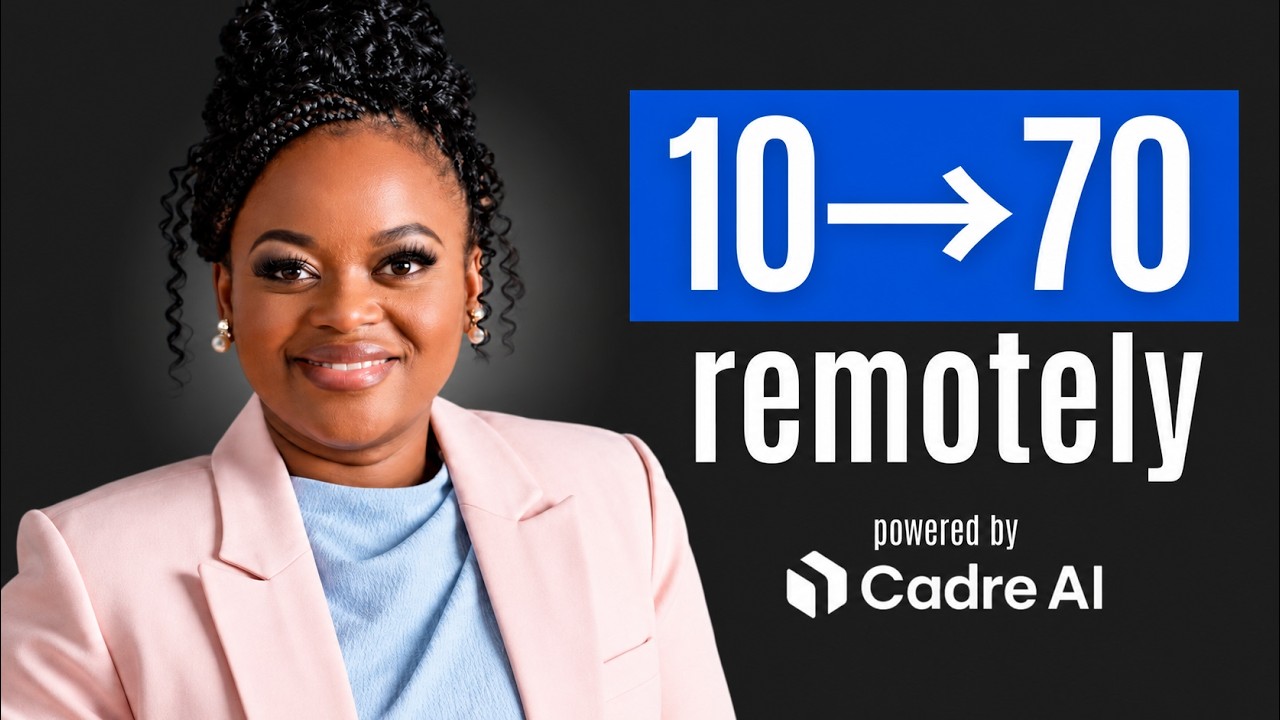
In this interview, the Global Head of Operations at Flutterwave recounts joining the fintech startup in January 2020, just before the COVID‑19 pandemic hit Lagos. Previously employed at large, structured firms like PwC and Swiss Re, she moved from a traditional corporate background into a fast‑moving startup aiming to build a continent‑wide payment infrastructure. The pandemic forced her to return to the US, meaning she had to lead and scale the operations function remotely. She describes the challenges of coordinating with partners across African countries that had differing levels of technological readiness, dealing with severe time‑zone constraints (working at 1‑2 am US time to align with African partners), and rapidly expanding the team from about 10 to 70 employees without a shared physical office. The experience pushed her to be highly intentional about culture, communication, and vision‑setting, especially for younger staff learning remotely. Overall, the conversation highlights the agility, problem‑solving, and leadership mindset required to build a global fintech operation under pandemic conditions.
I want to talk a little bit about your time at Flutterwave. Tell us what happened there.
So, Flutterwave was a great experience, right? It was my first time in a startup. A lot of my previous experiences were in more structured organizations that have been around forever, you know, PwC, Swiss Re. And when I joined Flutterwave, it was really this exciting opportunity to do something that was keenly connected to the continent and had real impacts on African lives, right? Um, however, the timing was a bit tough because, um, I joined in January 2020, and I was going to move to Lagos for a year as I got this role as the Global Head of Operations. And so it was really important to be on the ground, understand the culture, the partners, you know, build a team and all of that. And as I was moving, in fact, I was, I think, in transit in Amsterdam or something when they announced that the first cases of COVID were in Lagos. And so, I mean, I kept going, but I ended up spending about a couple of weeks there, you know, and then I came back to the US because, you know, in my mind, it was just like, this is probably going to be a couple months. And, you know, I'm not situated yet. Doesn't make sense to stay in a hotel while there's a pandemic, right? Wow. I came back thinking, well, just a couple months and I'll be back. And I was probably one of the few people that came back before they shut everything down. And so, it was a very, very, very— it was an incredible time because, you know, here I am in this completely new role, right, having to build a team, having to build this operational infrastructure for this startup who, in many ways was pioneering a lot of the fintech world on the continent, right? Nobody had done what Flutterwave was doing before. And, you know, things that were really, really interesting is because we've built this massive payment infrastructure on the continent and we work very closely with a lot of partners across different countries, different level of tech maturity. And some of them were just not ready for, you you know, the country shutting down and the whole COVID thing. So having to adjust was really— I would say it was terrible, but really great at the same time from like a learning perspective, from becoming agile, from solving problems constantly. You know, we've had instances where you could only— people were available until like 10 AM. And so I would start my day at like 1 AM or 2 AM here and then just make sure that, You know, we had concluded all of our business dealings with some of these partners. And then I'd say, from a leadership perspective, it really, really pushed me because when you're building a team that's going from 10 to 70, and you're miles and miles away, and everything is remote, you really become very intentional about the way in which you build the culture, the way in which you communicate to the team, making sure that nobody is, you know, unclear about the vision, and especially the younger generation, people who are just starting their careers. I mean, you think about the way we learn when we start our careers, it's by being with people and observing how they work and how they move during meetings. And these guys were just at home, completely lost, right?
Right.
So it had to be very, very intentional. We had to really spend time with Finding opportunities to build those bonds and build a culture of communication and open doors, right? So, it was a very interesting time.
So, you're in a new startup company, in a new role, responsible for global operations during a global pandemic, and you have to build a team. I mean, it seems pretty simple to me, right? Holy moly! So, how did you, how did you even operate? Because you were not only dealing with restrictions in the US where you were, but you were dealing with restrictions throughout the entire globe.
Yeah. Yeah. And so, I mean, part of it is you have to adjust, right? The whole entire world had to adjust, and we certainly had to do the same. I would start my day, like I said, in the middle of the night, right? Because I wanted to be present with the team. I wanted to be part of these approval processes in the beginning. we were forming the team and putting in place the processes. And so I would start very, you know, like 1 AM or 2 AM so that it's beginning of the day for them. We had probably a few dozen partners. And like I said, some were working to some capacity, some were not. And so in terms of the way in which we moved money around the world, we had to really adjust. And we had to become extremely clever and very, very efficient, right? And so you know, in working with our own internal engineering team to figure it out. Like, we need the reports. We need those reports to be, you know, clean, good to go as quickly as possible because we've got to be able to move things around. We've got to move money. And so, that's what I'm saying. So, it was terrible and awful, but at the same time, it was also super exciting because you just have to, like— you wake up and there's, like, 10 different problems that you've never even thought of before, and you just kind of have to, like, figure it out and resolve it and work with the team and coming up with new ideas. And it really, really shaped me in terms of the way in which nothing scares me anymore, but just being able to resolve a lot of these issues.