Behind-the-Scenes Leadership That Builds Billion-Dollar Companies (Podcast 504)
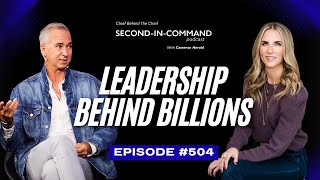
This is a transcript of Podcast 504 of the Second In Command podcast (host Cameron Herold) featuring Caitlin Fagan, COO of Intermatrix Systems (IMS). Key points: Caitlin describes her background (former CEO of a digital agency, EOS implementer, EO member), her EO and EOS experiences shaping her leadership and operations skills, and IMS’s mission as a personal‑development training company focused on emotional, cognitive, and nervous‑system training. IMS reports having trained over 84,000 people and runs a rigorous train‑the‑trainer/apprentice track (described as roughly a ~2000‑hour program) producing distributed trainers and community cohorts; Caitlin outlines IMS’s emphasis on future‑focused, repeatable systems, culture that balances compassion with performance, plans to build AI (a 'pocket AI trainer'), and the practical/intentional ways she and IMS CEO Joey (named in the transcript) manage both a professional yin/yang and a romantic engagement. The conversation also covers boundaries between vulnerability and performance, how EOS tools (level 10, rocks, scorecard) helped scale IMS, and the role of community and trainers in client retention and impact.
Questions this video answers
August 27, 2025.
Over 84,000 people.
Described in the transcript as roughly a 2000‑hour program.
She describes being COO for about six years and having been with the company about seven years (references in the interview).
Chapters
First of all, I said this to you before we started. It is not for the faint of heart. I would, I. If anybody was like, should I, should I, you know, date and ultimately marry my CEO, I'd be like, probably not. Probably not. Yeah.
All right. Our guest today is Intermatrix Systems COO Caitlin Fagan. Caitlin is the Chief Operating Officer of Intermatrix, a transformational training company that has helped over 84,000 people create lives better than they thought possible. She has a background as the CEO of a digital agency and she's also the founder of a sister startup. Caitlin brings a rare mix of strategic vision, tech savvy innovation, and people centered leadership into her role as a coo. She's driven by a deep passion to leave things better than she found them. And she's obsessed with optimizing systems and standing for her team and clients in ways that help them unlock their full potential. She's also a former EOS integrator, EOS implementer, and she's an EO member from the Entrepreneurs Organization in the Denver chapter. Her true business success means building a culture where people are not only performing at their best, but living meaningful, fulfilling lives. She's living one not only as the CEO of this company, she's also now engaged to the CEO of Intermatrix. And she's going to talk a little bit about how to navigate that kind of relationship inside of the business world. You'll love this episode. You can also watch all of our Second Command podcasts on our Second Command podcast YouTube channel or listen to it anywhere that you listen to podcasts like Apple and Spotify. Please share this episode and we'll see you on the inside. So, Caitlin, welcome to the Second in Command podcast.
Thanks so much for having me. I'm delighted to be here.
Yeah, I'm looking forward to this interview. I mean, just before we started, you mentioned that you were part of the EO world, which is probably one of the biggest things I would even credit. My success in business was the first mastermind I ever got involved in, really was EO. And in fact, when I was the COO for 1-800-got- Junk, Brian, who is the founder of 1-800-got- Junk, he and I met in an EO forum and he watched me build two EO qualifying companies and then I joined him as his COO. So can you kind of talk to us about when you got involved in eo, what EO the Entrepreneurs Organization is, and maybe even how that helped you become a better entrepreneur, but also really now in your role as COO for the last six years, how it's helped you become a better operator.
Yeah, absolutely. EO is so fantastic and the Colorado chapter has been so wonderful and just full of amazing entrepreneurs that really just supported me, you know, for a long time. So nothing but great things to say. Previous to my current role, I actually worked in tech and the founder of that company was in eo. So I actually started. Started in the. What do they call the second. The. The kind of COO position in eo. They have like a forum for that. Gosh, it's totally evading me right now. Key Exec. Thank you. Yeah, right. That's a great name for it. So I started in Key Exec and then the founder of the comp. The EO company and I, we did a startup. So I was in EOS for a long time. But, um, his or my other company that we were. I was CEO for was an EO company. So I really kind of got many of the benefits from. From each areas. And then my EOS company became E.O. an E.O. company. So it was. I was in a couple of forums throughout the years and really to your point and what you just said, like the support, the kind of behind the scenes, just knowledge, not to mention the network was. Was really instrumental in helping me to grow both businesses.
Nice. I've got a couple really good friends of mine that are from the. The Denver chapter. One Lee Prosenjak. I don't know if you know Lee.
Yeah, I do. Yep. He's not been in Colorado for years.
Yeah, he's down in Bahamas I think now.
Yeah. And his business is so interesting. It's in Cherry Creek, the dance studio. And I always am like, wow, what a. What a great business. He's a cool guy.
Great. He and I met back in 2007. We were at the Entrepreneurial Master's Program EMP in Boston. I actually host an event there now for COOs. I run a group called the COO alliance, all for key execs and we meet at the same place, Endicott House in Boston, where Lee and I met 17 years ago. So, yeah, great guy. One of the things that I pulled out of forum in EO was the power of vulnerability. That vulnerability builds trust and then trust allows you to go more vulnerable and kind of that vulnerability, trust circle. And it's a strong concept to be able to bring into the business world, but it's also a little bit scary to be vulnerable in the business world with your leadership team and with even some of your direct reports. Can you speak to how you've learned to be vulnerable and how you've learned to be more real and how that's helped you. And I know this is a blind question, so I'm not sure if it is, but I'm running with my gut that it probably has worked well for you.
Absolutely. It's interesting because I feel like I'm kind of reminiscing about sort of previous roles or sort of how I came up, which is the point of the podcast. But, you know, as I mentioned, I worked in technology, and as I'm sure you can imagine, you don't generally lead with your emotions in tech, especially for developers and things like that. It's not, you know, you're not sitting around talking about your feelings. But actually, EO was one of the first places, you know, with those shares and inside forum and that level of confidentiality and just like the top 10 and bottom 10 that you're sharing, where I was like, oh, you can actually be a real person and lead a company. You don't have to be, you know, perfect or you don't have to know all the answers. And that was kind of the first time where I saw these people that I was really, you know, I really respected and we're building these amazing big companies that I sort of was like, oh, and they also, you know, struggle or they also have doubt or questions. So that was kind of the first time where I, I sort of was like, I got it is you can actually be a human and run a company. You don't have to be perfect all the way around. So that was really useful. And then now in. In my current company, Intermatrix Systems, you know, we're a personal development company and we, we do talk about our feelings a lot. That, that's, that's definitely one of that initial kind of knowledge around, oh, hey, these are actually people running businesses and you don't have to be perfect. Kind of helped me to become more vulnerable. And then now, you know, we have an entire training system around what you're feeling, what you're thinking, and how that truly dictates the outcomes in your life. And so through that, you know, I've just become so much more thoughtful about it is. It's like I used to fight against, like, feeling anxiety or feeling like, you know, I, I need to catch up. I need to figure this out. I used to, like, really sort of like, you know, push that down and so I could lead. And what I've learned is you can't just push it down. You have to. You have to acknowledge and ultimately use it or shift it into something so that you can be a human and lead a company. Lead. Lead other people.
I love that you got to really feel the feels. But there's also something that I think it's recognizing that our employees are really going through life, right? They're really going through that human condition. And it's to really sometimes even feel their feelings, to truly kind of empathize with them. Can you speak to that?
Yeah. I mean, a company, this is not a hot take, is a living, breathing being with other humans inside that have lives and dreams and kids and problems and hopes and all of that. And I think it's a really big miss for people to expect their employees to just come in and leave whatever's happening for them at the door. I think that in order to really optimize and get a team working, you have to be aware that they have lives, and you have to be aware of what they're feeling and doing so that you can support them, to align and to get them on track for kind of their best selves. That's honestly my favorite part of the job is, you know, it's so easy at the end of the day, if I were to tell you, like, oh, I. I literally remove obstacles and so that people can do their best work. And those obstacles might be, you know, a kid that's sick or, you know, they're fighting with. With a family member or something like that. Like, this idea that we just leave our personal lives at the doors is a really big mistake because we only have one life or we only have one nervous system. So I think it's really important and necessary to support the whole human, the whole employee, so that, I mean, ultimately they can do their best work.
I think I know where you're going to go with this one, but how do you support someone who, you know, is really feeling the feelings with all of their stuff that's happening personally, but they're not. I'm not saying moving past it, but, like, they're letting it interfere with too much of the day. You know, like, at some point we need to also get some shit done. You know, we can't just be wallowing in how hard everything is and feeling it all for, like, at some point we also got to put on our big boy or big girl pants and get some work done and still go through with that. So how do you balance that? I find that hard.
And that's the trick, right, is you want to be as compassionate as possible, but at the end of the day, we have companies to run and I think that, you know, making sure that the culture of the company is super crystal clear, you know, here at ims, like we are a performance culture and we do our best to, you know, really live those principles. And so I'm of the, of the idea, you know, hey, you have, you have things to get done, you have, you know, responsibilities, you have a scorecard. Like you, you literally know what you're up to. And sure, if, if somebody is struggling for a time, there are, there are ways in which to support or to give a little leeway or give a little space. But um, yeah, to your point, you have to stand for somebody for their highest. You have to stand for somebody and expect them and know that they are capable of getting their jobs done regardless of what's happening. And I mean that's, that's a unique way in which to, to support people. And, and it's not always easy because especially when people are really struggling. But I think the culture of the business kind of helps with that and, and dictate, dictates, you know, that outcome of like, hey, we're all here. You committ, you committed to this outcome, to this, you know, project, to this deadline. How can I support you to get that done? How can I support you to make that happen regardless of what's, what's going on for you? And that.
Yeah, yeah, it's, I'm laughing about, about a guy who used to be in our EO forum 28 years ago and we gave him the nickname Groundhog. We finally kicked him out of the forum because after seven months, every month coming to the forum with the same problem and not doing anything about it, after seven months of us giving him our experience share and listening to him and giving him more experiences, he just, it was like Groundhog Day. It was like the same story. We're finally like, dude, if you're not going to take responsibility for stuff and grow from this, we can't, we can't just keep supporting you if you're not going to do anything about it. You're just, you know, you're not grow. So you mentioned EOs. I'm going to ask you about Intermatrix in a second, but you mentioned EOS and the Entrepreneurial Operating System by Gino Wickman, Book Traction. I think you were an EOS implementer. Can you speak to how EOS has helped you scale Intermatrix and what it is that you like about the EOS system?
Yeah. Oh my gosh. EOS is literally just such a comprehensive, awesome system. I started learning about it, I don't know, 15 years ago at this point back in agency life, we hired an Inter or an implementer, excuse me, lots of terms. And it literally changed the course of our business back then. And so when I came to Intermatrix Systems, you know, I really, I think I was hired as sort of a change maker. You know, they had, they'd gotten to a certain point in the business and we're doing amazing, like growing each year, but they didn't have necessarily the systems in place to really scale for that next level or to that next level. So fortunately I had, I don't know, eight years of EOS experience with an actual implementer. And so I was able to just bring, you know, the tools from, you know, as simple as the level 10 to rocks to the scorecard. I mean, these tools that truly help to run a business. And it's so funny because these are just like, it seems obvious, right? Like when you see these tools in eos, you're like, oh yeah, I really need this. And it's also so interesting to me how few businesses use them. You know, how few. Whether it's EOS and there's, there's many systems like this, but just the framework around, you know, here's setting, setting goals or setting benchmarks, setting, you know, one, three, five year plans. I think so often in a business they're just like trying to get through the day. They're like, we're just trying to serve the customers we have today. And that's where, that's what we're doing as opposed to kind of that forward thought. And so EOS really is just a framework for, for growth and forward thinking and, and it, it really supported the business I was in, where I learned it. And then also IMs for sure over the years.
You know, it's interesting as well. I think there's something about having a framework like EOS or like scaling up or Metronome or Next level that, that it almost at times doesn't even matter what the framework is. The, one of the reasons why it's so powerful is because it's from someone else. And it's kind of like when you and I were growing up, you thought your parents were idiots. I thought my parents were idiots. I probably would have thought your parents were pretty smart. You probably would have thought my parents were smart. So you would have listened to my mom's advice, but not your own. And I probably do, you know what I mean? So we'd listen to uncle or aunt so and so, but we won't listen to our own parents. And I feel like it's like if the leadership team creates a system and tries to roll it out, the team. Yeah. Butts us forever. But if we take Uncle Gino's system, they hint Uncle Gino's really smoke, right? Yeah. So I think there's something about that that just seems to work. So it's almost like it doesn't even matter what the system is. We just need a system or a set of systems to put into our business. Is that kind of like what IMs, what InterMatrix is then, for the person? Is it a set of systems that you think can help guide people? So talk to us a little bit about what the business of IMS is.
I love that, the way you just explained that. I'm going to take that. Yes, absolutely. It's like a business operating system for the, for the person. For sure. Yeah. Intermatrix Systems is a personal development training system for, for high achievers. And essentially I say, like, that's really smart speak, but we just support people to be fulfilled and happy. When you understand that you. Each of us has a unique, what we call inner matri. Uh, we all feel emotions, uh, we all think thoughts. Our nervous system all does a similar thing. And when you understand sort of how to train, align and rewire those things, you can truly point yourself to get any outcome in life that you want. And, you know, it's so compelling because I'm out there, you're out there with just a lot of people running businesses and the level of anxiety and not just in business, but gosh, the world out there is, is a little wild these days and people are just sort of like becoming so like pod people. You know, we're just, we're just like kind of bracing for life as opposed to really being, you know, aware of what's happening for us. And this brace, this like, anxiety, this nervousness, this push is, is, is like kind of an epidemic of, of unfulfilled lives or, or people just not really reaching their potential. And you know, I had this feeling like 10 years ago, like, is this, is this a, you know, I achieved a certain level of success? I'd sort of like, okay, I kind of get how this life things work, but is this, is this what we, what we're doing for the rest of our life? And so I actually started with IMS as a client because I was just looking for like, hey, is there a way that I can be less an Is there a way that I can, you know, align myself? I was looking to be a better leader at the time. The side effect was I became a happier person, but I was like, I need to nail this anxiety because I can't keep bringing this to my team. And so I just learned, oh, my gosh, yes, there is a way. There's A plus B equals C. When you can, you know, align your emotion in a certain way, that really is sort of the. The overview of the thoughts you think. You know, when you feel angry, you think certain type of thoughts. When you feel anxious, you definitely think a certain type of thought. But when you feel calm or peaceful or inspired, passionate, that, you know, sort of triggers different thoughts in the. In. In the mind. And so when I sort of learned that equation, I was like, this is crazy. This is amazing. And so it was just such a wonderful kind of next step was to actually from. From being a client in this business to come into the actual business. Everyone needs this. Every business owner, every employee. Like, if you can learn to really be aware of what you're feeling and then shift that to point you in the outcome to. Towards the outcome, you want, like, no brainer, right? We should all do it.
It's interesting. I was thinking back. I've done some work with different psychedelics for some resets. I've done some stuff with ketamine. I've done some stuff with mdma, with psilocybin, even with lsd, with. In clinical settings with ayahuasca. And it's really interesting how some of these psychedelic experiences can do a reset for a person where if you're struggling with PTSD and anxiety and depression and you do an MDMA session, you just go, wow, the world's really beautiful. And you just see this beauty and you feel this energy, or, you know, you wake up in the morning and you're like, oh, it's a hard world that we're in, or, wow, it's a really exciting world that we're in. Like, it's just like, there's so many opportunities to go and decide to do stuff, but it is kind of flipping that switch with people. Can you, can you walk through some of the IMS systems? Like, what would the top, you know, one or two things be that you do with clients and, and, and how does it make you different from, you know, other coaching sessions that are out there or other resources or systems that are out there?
Yeah, absolutely. You know, I think that a lot of people have experience with coaches, right? Like, they have, they have an Executive coach or they have, you know, a coach at the gym or something. So people are most familiar with that. I would say the biggest difference with IMs and coaches are wonderful and, and 100, like keep going to them. But usually coaches are like, hey, this is what worked for me, right? They're sort of like, this is, this is the thing that I've seen. This is what I do things of that nature. What IMS says is we, we truly have like a repeatable system and process. It's been sort of tried and true, tested for at this point. Over 84,000 people or something like that have been through our training methods. And it's truly, you know, it's not theory anymore. It's not like, oh, this worked for one person or five people or a hundred people. It's like, here's what you do to, you know, for instance, like, if, if I'm feeling anxious, I keep going back to that. You can tell that's a good one for me. If I'm feeling anxious about this podcast or something, I know that I know an exercise. I know, you know, a couple of steps that I can do that anytime I need it. I'm going to go back to that same step. So, so to answer your question, it's, it's truly a system around personal development as opposed to, I talked to this person and they give me like a few things to think about or a few things to, to to work on. It's like, oh no, I have these tools and techni. I can just go back to myself time and time again. I'm self. It's. I'm self reliant. And the other biggest difference I would say with IMs is we're just very future focused. I think a lot of other modalities are like, hey, here's why you feel this way. Here's, you know, what happened in your past. That's like creating these feelings of anxiety. Past doesn't really matter. In our system of training, we're very future focused. Hey, how do you want to feel? What's the outcome you want? And let's get to work on creating that. And that can be really compelling and really useful, especially when people have been like in their, you know, talking about their childhood forever and not getting a shift.
Now some of, some of where this work comes in. Are you similar to landmark in a way? Are you similar to any of the other? Sure, I guess. Transformational groups that are out there or transformational systems out there. Can you speak to that kind of content?
Yeah, I mean, I Can't really speak to what landmark is. I have, I'm not familiar with it, but sure, in that same, in that same category, the, the difference or sort of what IMS does that's I think unique is we really take the, the whole inner matrix, that's our term for it. But you know, a lot of different modalities will speak to like mindset, like big on the mindset training and the, the mental strategies and techniques or you know, some, some modalities like focus truly on just the emotions and like, hey, what are, how do we. Emotional intelligence. And so we really marry all of it together. The emotions, the thought strategies, your nervous system, the nerve. There's tons of modalities that speak, you know, just to the nervous system. We really marry all of them because truly you need to, you need to have, you need to have tabs and all three of them to make lasting, lasting change.
So I, I was on a podcast about a year ago speaking about when company culture goes too far, when, when a culture becomes culty and, and how to get close to that edge because I do it by design. I've always believed that, you know, a culture is part of what makes a business really powerful and if you can embrace some of what makes a cult a cult, you know, without going too far. But there's been some, some comments around groups like this, that culture, you know, or it can be culty. How, how have you guys tried to, to walk that line? And, and are you cognizant of that line?
Absolutely. I think anytime you get, you know, a group of people really passionate about something and it's something that not everyone understands, there's always going to be sort of naysayers but, or, or people that are like is that culty? Is that, is that too much? I think the thing for us, and especially in our culture that we really really, you know, stress or we really hold important is this level of, of you know, just kind of self reliance and sure, we're here and there's a support system and there, there are things in, in, in, in intact to, to make sure that people can come and get what they need. But I think this idea of self reliance and this idea of like we never tell you, you know, what to think or what to want or what to, you know, what you want to. Our training is really just like this, how, how to think, how to sort of position yourself to get, to get there. So I think that, and, and then truly name it for yourself. What is it that you want? What is it that's important to you and that helps with that self reliance piece. And yeah, I'm not sure I'm totally answering your question there, but that's, that's, that's what comes to mind.
It works. So something else that you seem to have embedded into your program as well is there's a little bit of the training and then you also have, it looks like a team of distributed facilitators or guides who have gone through the programs before. And then you even have communities. What's the purpose of each of those stages? Can you walk us through that?
The stages of training of IMs, because.
You'Ve got tools that you're teaching people and then you've got different coaches around the world that they could be working with and then you even have different communities around the world that they could engage with.
Yeah, absolutely. So at the end of the day or at the beginning of the day, the vision for IMS is, is to support as many people as possible to get out of a place of suffering and to, you know, create lives better than they could ever have thought possible. And our founder and CEO, Joey Climb, he developed our systems of training, the curriculum. You know, he's really in the trenches still with personal clients and has really developed a system. When he kind of got clear on like, hey, I want to, I want to help 10 million people. I want to support 10 million people, or, you know, millions of people inside this, he was like, I'm one guy. And so that, that may not, that may be not super scalable. So he was like, how do we get this training and curriculum and more people's hands and two more people in the world? So he developed what we called the train, the trainer track. And it is not just a weekend program. We call them apprentices who are in training to become trainers. But man, they go through the ringer. It's something like a 2000 hour program where they, yeah, it's, it's definitely pretty intense where they learn the curriculum. They understand because we're supporting people in some of the most, you know, intimate parts of their life. And you can't just stick somebody in there with no, with no training. So they go through this process. And to your point, yeah, we have trainers all over the world that then teach our foundational training, which we call the Power series. And they have communities that they've set up because training is more fun with friends. And it's definitely been such a cool thing to see some of my closest friends. Before I came into the company, I actually met at programs and doing training because it's, like, pretty cool and fun when somebody's up to bettering themselves and creating a better life, to, like, find other people that are in that same boat. It's a little like eo like when you're sort of in the trenches with somebody, you just. There's a level of camaraderie and closeness that you. That you build. Same thing when. When you're working on yourself and. And building a better life. So I'm so grateful to the trainers of these people that, that, you know, come to a program or, you know, do training for a couple of years and they're like, you know, I'd like to do this. I'd like to share this with others. So they then go through the program and we've got, I don't know, something like close to a hundred apprentices and trainers out there, you know, supporting others and, and. And doing more.
Yeah, I love that. I love that he's actually. Or that you and the company have actually put some systems in place to help drive towards that goal. It drives me crazy when I hear entrepreneurs out there going, oh, we're going to support 10 million X or we're going to roll this out to a billion. I'm like, no, you're not. Like, you're not. You're not going to roll this out to a billion people when there's only 8 billion people on the planet. Like, you're hallucinating, maybe that. Like, you're not like. So when there's only 8 billion people on the planet, like, you're hallucinating, maybe the. Like, you're not. Like, so unless you actually put a system in place and a network of people in place that can then make that happen, you're not like, you. You. I even like the fact that you've said that we've trained 84,000 people versus some people, like, oh, we've reached, you know, 100 million now. Maybe your YouTube videos reached 100 million, like, on a feed, but they didn't fucking watch it. They didn't sign up your list. They didn't show up and pay to be in a program. Like, those are very, very different data sets. Is that why the. Was the community something that came from a desire to have people stay in the program longer or be deeper? Or was it. What's the idea with the community side? Because they get. I love the whole apprentices and those coaches. What's the idea for the communities?
Yeah, same idea. It really was kind of a natural progression that sort of happened when we started programs and things of that nature. Like I mentioned, people just love to be around other people that they're like, yeah, it's cool that you're also working on yourself. And so we noticed that we're like, people are making real friends here. We should really, you know, support that and support that, that aspect of it. To your point. Yes, to, to maintain that stickiness. You know, we want people to come back and to look forward to training. But also, you know, when you are on a, on a journey of personal mastery, things don't always go great because life is happening. Right. Like, it's all well and good to, like, understand the tools and techniques of, of shifting, you know, your emotion or your mindset, but when life happens outside of that, it's sometimes a little harder to, to maintain that. So the community really is that aspect of like, hey, let's train alongside together. Let's, let's do life with people that are on a similar trajectory and have a similar, you know, zeal for life and outcomes in mind together. So those communities, they were kind of just like a, like an interest side effect that then we were like, oh, these are working. We should really. Yeah, we should develop and support this community aspect so that people get even more. Yeah. More value.
I want to ask what you're thinking about in terms of AI and how that, and, you know, tech is going to change or, you know, add to your, your business and your model. Are you guys thinking of that as a company right now? And how are you planning to bring that into the business?
Absolutely. Gosh, we'd be a little behind if we weren't thinking about it. Right. I want to have like a pocket AI trainer at some point. You know, we're not even that far away. We can, we can do it now. Yeah, it's like it's coming where we just kind of feed everything into an AI that then can just kind of support you on the go whenever. I mean, it's, it's not far off and it's not far off for us as well either. But yes, absolutely, AI is so interesting. And also we'll see, we'll see how it goes. But we use AI right now really kind of ancillarily, like content and copy and things of that nature. But we are definitely looking to build out like an AI trainer that has everything ready to go.
Yeah, I've just launched in beta the AI avatar version of me. So if you go to, like the COO alliance website and then you go to the resources tab, you'll see the, you know, the meet AI Cameron, where you can ask the video version of me and the audio version of me, no questions. And it has all six of my books, thousands of videos. It's all been uploaded. It's kind of creepy. Not loving the video because I'd had some surgery done. I have those little scars. So they're removing some of the scar from the video, but. And it's version one. I worked with Delphi to create it all, but I really see something happening over the next couple years where in a way, I think coaching is almost gone. There's no way that someone's going to pay me what they pay me now to get my advice when they can pay an avatar version of me or the best in the world to teach us. But yeah, it's going to be interesting to see how it both empowers our companies and also creates a gazillion more clients for you that are being destroyed emotionally because they have no connections with people. So I think you're onto something. I want to flip the switch a little bit. I want to ask you about what it's really like running a business when you're the COO and there's a CEO involved and you have that, you know, that yin and yang relationship, you're not only the integrator to a visionary or the COO to the CEO, you're also engaged. So you guys got. You've been with the company for about seven years, and then at some point through that relationship, started dating and now you're engaged. What's it like working with a partner in a business? And how do you separate business from. Not business from pleasure? How do you separate business from personal? How do you have a life outside of business? Or how do you prevent business from coming into every conversation?
Yeah, well, first of all, I said this to you before we started. It is not for the faint of heart. If anybody was like, should I. Should I date and ultimately marry my CEO? I'd be like, probably not. Probably not. Yeah. I wouldn't lead with that for sure. But honestly, for. For us, it's been such a just like power, kind of like superpower for each of us. And at the end of the day, it's probably the only way I would get married is if somebody I was working with that closely, really, I. I just never would have found somebody as passionate or ambitious to grow something and, and make a difference in the world. And it. It works that we're both building the same thing like that. That definitely is. Is a key factor in it. But, you know, it, it's not, I'm not going to say it hasn't had its challenges, especially since, you know, there's, there's just a dynamic. There's a business dynamic where we truly are yin and yang, and then there's a personal dynamic where like, like, you know, I also want to be in charge sometimes.
Yeah.
In that, in that personal dynamic. But we've really, we've really, you know, I would say over the last, you know, six, we've been together a long time now. We've really nailed it. We've learned to sort of stay in our lanes in, in business and honestly and personal as well. We know what each, each other are truly good at and we let the person do that. We let, but we let the person do what they're good at and don't, don't get in the way of that.
I want you to speak to another component of that and this is that when we have a personal relationship with someone that we like. When I was scaling 1-800-got junk. I was the COO. My best friend was the CEO. He'd been the best man at my wedding three months prior to me starting to work with him. So we were already best friends. So there was the ultimate amount of trust and respect for each other and love for each other before I even, you know, started as his second in command. So he could really rely on me, he could really trust me. That's got to be the same with, with, with you and, and Joey is that Joey can really rely on you and really trust you and you the same. You really know that he has, you know, there's no hidden agenda and they can really drive us over the edge because, because we're, you know, 24 hours a day. So how do you, how do you balance that? What do you have a specific. Like, do you, do you kind of cut the, the, the, the, the, the, the, the business off at dinner time or do you slice through something when you're at the office and you don't let the personal come into the workforce? What's a system? Or. I'm sure that you guys have some tools that you allow yourself or help yourself with that. Can you tell us what those are?
Yeah, I don't know if you'll love my answer because we are so both just very committed to the business. So we don't have any like, you know, oh, we only Talk work for 15 minutes and then we're done, or we only do it at the house or something like that. But I would say that generally speaking we are pretty good at like, just seasons. Seasons throughout the year. So we do live programs. We know each quarter a year in advance, sort of what our travel schedule is, what our work schedule is, and when we're in what I call a program run. When we're like, out in the public and we're, We're. We're running programs, we're doing stuff. We're pretty much all work all the time. And, you know, our dinners are strategy and we're. We're talking about the future. And that's, you know, for a couple of weeks each quarter. It's, you know, three to five weeks each quarter, sometimes a little bit less. And then on the other side of that, you know, we'll go on holiday or we'll, you know, go on a date night. And it's not that we don't talk about work, but our, Our focus is a little more on sort of the personal and the relationship. I would call them seasons each quarter as opposed to like, oh, from, you know, 5 to 11pm there's no work talk. It's more, you know, we've got our focus on. On this right now. And then when we're not necessarily traveling or working as much, we. We kind of focus more on the personal or the relationship. Not quite as much, but when.
It's almost like the intentionality behind a meeting. You can have a certain meeting that's about finance. So you talk about finance, you don't talk about marketing, you don't talk about starting, you talk about. About finance. And then there's intentionality behind. Like if it's a date night, you're not going to sit and talk about work. But if you're just having dinner together on a general Tuesday, you might talk because there's no intentionality. We're just eating some food.
Sure. Yeah. That's so true. Absolutely. And you mentioned you worked with your best friend. It's. I know that some people really fall on one side or the other. Right. Like, I. I have a girlfriend. She's. She's very successful. She works in marketing. And she is like, I am not friends with my colleagues. Like, I go to work and they know me, they know professional, and, you know, it's one way to do it. I have always, you know, developed close relationships with the people I work with just because I. It's set. My work is such a huge part of. Of. Of my life. And, and, you know, not to say that if you're not close with your people that it's not a huge part, but I'VE always gone the way it's similar it sounds to what you just mentioned of like, yeah, you really want to get to know the person so you know what they're can count on them for where they're going to get maybe a little off track or, or not be able to kind of, you know, where they're going to shake a little bit. And I think when you have sort of a close relationship, certainly, you know, I do that with Joey. I know him very, very well. But even just with our team members, you know, our, my team in the office, like, we're all very friendly and friends and I think that to your point, and I think what you were just explaining that really gives you like an inside track to, hey, here's how far we can go together and here's what we can, we can expect from each other and that's cool to work with.
Well, I think there's been a couple of really, really distinct inflection points in business where people have become more open and, and connected and really getting to know each other personally. The first is when social media really started. So Facebook, the Facebook started in 2007, you know, really for the next couple of years is when people started to put themselves out there. And then almost from like, like 2009 onwards, it was like, fuck it, we're all open, we're all sharing stuff on Instagram and Facebook and here's who we are. And some people really embraced that and others got kind of nervous with it. But that was the first. And then the second was Covid, right, Where all of a sudden everyone was working from home and it's like, hey, you know, here I am in my Airbnb or my home office, or my dog's running past me in the background, or my laundry's on the kitchen table. It's like, fuck it, we're all just humans. I feel like those were the really two big inflection points where anyone who's trying to pretend that they have a business side and a personal side is missing the point. Now I think that the horse is out of the barn. All right, I want you to go Back to the 21 year old Kate and give yourself some advice. What advice would you give the younger you? What would you tell the younger you that you know to be true today?
Oh, man, I love that question. You know what it's like at 21, what I wish I had done is realized that we all should be our. To work to be our truest self. Like, don't work to be what you think you're meant to be or what you think somebody else needs you to be just every day, like, hey, how can I actually figure out who I am and what I want, truly, so that I can contribute to this world and to, you know, give back? In a way, I think I spent so much time, like, just trying to be, you know, successful or trying to be a good leader. And it was coming from this place of, like, I needed to be something, as opposed to like, hey, who am I? Who. Who this that I am? And then leading from there or creating from there or making decisions from there, as opposed to what I thought I was meant to be. Like, figure out who you are and then be that person all out.
I love that. My mom used to say, be yourself. Everyone else is already taken.
That's right. It makes it easier for everyone if you're just yourself.
Right? Caitlin Fagan, the COO for InterMatrix system, thanks very much for sharing with us on the Second Command podcast.
Thanks so much, Cameron. Great to be here.
Appreciate it.
More from Cameron





Flutterwave Former Global Head of Operations Awa Kone | When Growth Outruns Operations (Podcast 611)





