Cure For Cancer Might Be Closer Than You Think! | Raquel Izumi, COO Vincerx (Podcast 316)
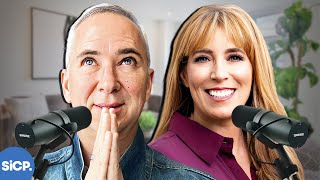
Podcast interview (Nov 22, 2023) with Raquel Izumi, COO and co‑founder of Vincerex, a biotech focused on next‑generation bioconjugation for oncology (antibody‑drug conjugates and small‑molecule drug conjugates) intended to improve tumor targeting and reduce off‑target toxicity. The conversation covers her scientific background (PhD in microbiology & immunology), the company’s SPAC listing around end of 2021, clinical progress (two INDs filed within a year), leadership lessons from building multiple companies with the same CEO, the human challenges of running a public biotech (including a one‑third workforce reduction during a market crash), and ongoing efforts to grow as an outward‑facing leader.
Questions this video answers
Around the end of 2021 (via a SPAC).
PhD in Microbiology and Immunology from UCLA.
Two INDs filed in less than a year.
About one third of the company's employees.
Chapters
The people that work in this business are extremely passionate about what we do. The thing about cancer, it's not a question of if it's going to touch your life, it's a question of one. Yeah, especially the longer we live, because cancer is usually brought on by longer living. That's just a fact of life. And so everybody that I've ever worked with has a real passion for what we do, and we're very fortunate. This is my second company that I founded, and I've worked in this industry for over 20 years, that I've had people that have gone from company to company to company and are still with me today because we have that shared vision, we have that shared passion, and we're very. And it's humbling to have these folks still working with me after all these years.
All right, so this is the very first that I can remember out of about 300 podcast episodes. We just had, I think, our first PhD on the podcast. And I didn't know, and I'll bet you don't know what PhD stands for. So it's an acronym for something I'd like you to write down before you listen to the podcast and before our guest reveals it. What do you think PhD stands for? So, Raquel Izumi is the second in command, the CEO for Vincerex, which is a pharmaceutical biotech company. They are a publicly traded company. They've had to go through some crazy growth. Took the company public about two years ago, had to go through a reduction in force when the stock market crashed as well. She's also done three companies with her CEO, so they've been in this kind of CEO COO role three different times. She's going to talk about what she's done in all of her careers and learning business, coming out of the science kind of field and the biotech field, and how she's had to learn all of the leadership to actually be a CEO of a great company. So I think you'll enjoy the episode. Great energy, great insights, and you'll finally learn, and don't Google it, what PhD stands for. So, Raquel, welcome to the Second in Command podcast.
Thank you so much for inviting me. I really appreciate this opportunity.
Yeah, I'm looking forward to learning from you. Looking forward to learning a little bit more about the company as well. And by the way, is it Vincerex? How do you pronounce Vincerex Pharma?
Vincerex.
Vincerex. Okay, so before we dive in, I want to know about Vincerex Pharma and certainly Your role as a CEO and everything else. But I need to ask you, I saw a PhD beside your name and I can't think of in the first 300 guests if we've had any PhDs on the podcast. Maybe one or two. But what the heck does PhD stand for?
Yeah, interesting. Very few people have ever asked me that. It actually stands for a doctorate in philosophy. So regardless what you get your PhD and it's a doctorate in philosophy, it's basically the highest academic degree that you can get.
So if you're, if you've got like your PhD in economics or your PhD in mathematics or whatever, it's still a doctorate of philosophy.
Yes. In that subject.
In that subject. That's super cool. It's like I, I've never known. I mean, I could never spell PhD when I was in college. I was like, I was definitely not the smart student and there's no way I could write a PhD thesis because my essays were like as short as I could get them to be and usually paying someone to write them for me.
So. Yeah, well, we, we used to joke in graduate school that it just did for piled higher and deeper. So that puts it in context.
That works as well, I'm sure, I'm sure. Well, it did for all of us was pile higher and deeper to try to get a C minus average as well. So tell us about Vincerex. What's the brand do? What do you focus on day to day?
So we're a biotech company that's focused on next generation bioconjugation. So we have some really elegant science behind this that our chief scientific officer and our chief development officer have been working on for decades, the bioconjugation. And since I think you have a lot of different listeners, that's just the act of where we're taking a very potent antibodies anti cancer molecule and we're linking it to something that's going to target it directly to the tumor cells. We're an oncology company. We're here to hopefully cure cancer. Our platform is designed to try to just hit the target cells, which are the cancer cells, and reduce off target effects. We're trying to reduce side effects to the healthy tissue. We've got small molecule drug conjugates, so that targeting agent is considered a small, small molecule and that's for solid tumors. And then we have what's called antibody drug conjugates. And that's where you have a big antibody that's designed specifically for something that's expressed on the surface of the cell. The Tumor cell to take that very potent cancer anti cancer agent directly to the tumor cell where it gets internalized and then it's released inside the tumor cell to kill the cell from inside out, basically. And then the potent chemistry that we have to kill that tumor cell is designed in a way that even if it gets released, let's say the tumor cell dies. And now you might have some of this anti cancer drug floating around. It can't get into the healthy tissue. So there's been quite a lot of movement in the antibody drug conjugate space. There's been several approvals that a lot of patients are benefiting from, but we still see a lot of toxicities with these agents. So the promise was that we were going to have better efficacy and less toxicity. And that's what we feel our next generation EDCs are going to deliver on.
This is crazy. All right. So one of the cool things I think about your business is that you have core purpose deeply built into the day to day. I mean, it's literally like helping to solve or cure cancer. You can't kind of get to a core purpose that's much bigger than that. Where, you know, if you're a. I built a junk removal business like 1-800-got-JUNK. It's hard to get people excited about hauling junk. Right. So we had to kind of invent something in a way to get people excited. Is that one of the reasons why it's easy to attract or maybe I'm assuming, but is it easy to attract smart people to come and work for you? Because the core purpose of the day to day is so strong?
Absolutely. The people that work in this business are extremely passionate about what we do. The thing about cancer, it's not a question of if it's going to touch your life. It's a question of one especially the longer we live. Because cancer is usually brought on by longer living. That's just a fact of life. And so everybody that I've ever worked with has a real passion for what we do. And we're very fortunate. This is my second company that I founded and I've worked in this industry for over 20 years that I've had people that have gone from company to company to company and are still with me today because we have that shared vision, we have that shared passion, and we're very. And it's in. It's humbling to have these folks still working with me after all these years.
Why do you think they follow you from company to company?
One is because we have a shared vision. And passion. And two, I think it's, it's respect and it's leadership. It's a great industry to be in, but you still have to have that leadership quality that inspires people and wants to make people work with you. I like to lead by example. So one of the things that anybody who's ever worked with knows this for a fact. I would never ask of others what I'm not willing to do for myself. And that's a fact. In fact, I've been a clinical trial participant. I've been participating in clinical trials since I started at my career at Amgen many, many years ago. And the last one that I participated in was the phase three COVID vaccine trials. So everybody who works with me knows that I'm passionate about what I do and I'm willing to participate in all aspects of it.
But I think from the science perspective, the medical perspective, it's obvious that it's going to attract really smart, great people. But even from like if you're in marketing or you're in finance or you're in operations roles, the fact that you can work as a payroll clerk for a company helping to solve cancer, that's just freaking cool.
It's huge. And that's one of the things that I've tell anybody I've ever worked with. This drug development is absolutely a team sport. It is not one person who gets a drug approved. It is everybody. And honestly I've told people, many people have heard me say this, it's like, doesn't matter to me if you're the ones cleaning the janitorial surface. Everything that we do is important, everybody's contributing and it takes all of us working together to get that drug across the finish line and on the shelf so that doctors can prescribe it to patients.
So that kind of touches the question that I've always been curious about. And it feels like it must be so hard to be in a company like this where it's almost like you're chasing to get to the end of the rainbow. You know, when we were five year olds, we're on our bicycle and we're going to get to the end of that darn rainbow. And you never get there so often in pharma in this kind of space, we're trying to find that cure, we're trying to find that thing and it could be like a 10 year thing where we just keep trying to get to the end of the rainbow. How do you keep people excited and engaged and optimistic and trying where we're not quite there yet?
That's an excellent question. I actually feel very fortunate. I've been responsible for being part of the team that got two very important drugs approved, which are Ibrutinib and Incalabrutinib. And it's true, exactly what you said. I'd been working for a while before I had the opportunity to work on Ibrutinib. And once I started working on Ibrutinib and saw the promise, the early promise of that drug, all I could say was I've been waiting my whole life to work on a drug like this. And I think once you've worked on really good drugs like that, you start to really understand what are the minimum thresholds for drugs in order to hopefully work on that next blockbuster. And that really feeds into the story of Inseris. So after Ibrutinib is a drug that Dr. Ahmed Hamdi and I work to help develop and get to patients, we then co founded a company called Acerda around another very similar class of drug, which is Acalabrutinib. And that drug also did amazing. And because it did so well, it got sold. And so we were in a position where we were looking to see what was going to happen next. And Ahmed came to me one afternoon and said, you know, we just have to start a new company. We didn't quite achieve the vision that we had aspired to with Assertive. And that's because we were hoping that Assertive would have a pipeline that we could develop internally and continue to produce drugs that were going to help patients. But the first drug was so good that it got snapped up. And that's kind of what happens in our industry. And my comment to him was, well, we really have a problem because, you know, first we worked on ibrutinib, then we worked on Acalabrutinib. Absolutely paradigm shifting drugs that are saving lives every day. I said, whatever I do next has to be at that same level because there's no way I'm leaving this industry on a dot that's just not going to happen. And so I said, it's like winning three gold medals and you know, that's not easy to do. And he's absolutely agreed with me. I couldn't agree more. So it took a while for us to spend a lot. I mean, we kissed a lot of frogs before we found a technology that we were built. We were willing to build another company around.
And that's really. It really does take a long time to get to the night before. You're the overnight success story too, right?
Regardless, Exactly. We're definitely putting in the time before the successes came.
How are you funded?
So we actually went public through a spac.
Okay, when did you do that?
So we did that. Well, we're two years old, so the end of 2021.
What's that process like?
So that I was brand new to that process and it was a little hair raising because it was. SPACs are still pretty new and they were, they were new then, but it was exciting too. Absolutely exciting. And you know, if you were to say to me, you know, what do you wish you would have known then? That looking back on it, there's no way we could have known back then what was going to happen in the biotech stock market. There was absolutely no crystal ball that would have seen that coming. But at that time, I mean, if we'd have known, we wouldn't have gone public. Right. I think that's sort of a no brainer. But given at that time, that was the right thing for the company and I'm glad we did it. So.
And for anybody who's listening that doesn't know, SPAC is a special purpose acquisition company. So it's a company that you set up for the purpose of acquiring a company to take it public. It makes the path of going public easier than doing an IPO or direct listing. What were the, what were some of the challenges and lessons from doing that that I mean, all companies can learn from or a lot of others?
I think it's not that much different from an ipo. The difference is that it's almost like a reverse merger into a company that's established. So it's all the same challenges. We actually had a very complicated system in our case because we were working with the SPAC and we were trying to get the merger agreement with the spac. But at the same time we were doing this in parallel. We were on licensing our technology, which it's public. We licensed our technology from Bayer in Germany. So imagine trying to land two big fish at the same time and they literally have to land almost simultaneously in order for us to close. So let me tell you, it was an absolute roller coaster, nail biting experience. But we stuck with it. And I think what was important is that all three signs were interested in making it happen. So whenever, when all three sides are interested in making it happen, it will happen. It's just, you know, you gotta stick, you gotta stick to it and see it all the way through.
Staying focused. The I'm curious, did Covid make it easier or do you think it's starting to make it easier for companies to take products to market in the biotech and in the.
Well, I can tell you it was not easy when we were trying to do this, even with COVID And you.
Know what I mean by that, is that it seemed like we were able to produce these Covid drugs faster than any other drug in history. Has that changed the overall process for other things, or is the process still as bad as it was? It is.
It's worse. So I think it's so interesting that you brought up Covid because I think one of the most amazing things to me is how incredible that process was. The science that literally helped us save the world, but it was in a detriment to everything else. So I know specifically companies that were trying to manufacture biologic drugs that were short on filters because they were all going to the COVID vaccine production and they were trying to make drugs for their own. And that's just one example. Then it was the pressure, like trying to run clinical trials, almost impossible because of all the regulations on trying to get patients in. I mean, so the slowdown in our industry, both from suppliers, vendors that we worked with, trying to get patients in, it has been felt a shockwave. I mean, we're only just now coming out of it and it's 2023.
That makes sense. So you've mentioned kind of just slightly in passing that that you've done a couple of businesses with this CEO who's a doctor, I think you said.
Yes.
So is that how this works? That you have a physician and a business person that kind of merged to make these things happen or.
So Ahmed and I just started working together many years ago. I think the first company we actually really met at was pdl and then he, he went on to become the cmo. He was the chief medical officer at pharmacyclics, where he hired me to help him with clinical development. The one of the reasons that we work so well, I think, is because I'm the scientist and he's the physician. Both of those subjects are really, really important for the development of drugs. Got to have the scientific rationale for what you're doing and then also the medical rationale because you're putting this in the people, right? So I think that's one of the reasons that partnership works really well. The other reason is, you know, when you work with somebody long enough, you develop, you know, the communication styles, the respect and so on and so forth that you need to, to be able to go forward through all these roller coaster rides that I'm telling you about. And the other thing is, it's just very complimentary skill set. Very complimentary skill set.
Where does the scientist in you get the business skills? Because it's not, it's not, it doesn't come in school.
Yeah. It's just, I would just, I. Some of those things I think are just more innate than anything. I mean, I, I've never went for an mba. I once audited an economics class in college just out of interest, and I was like, oh my goodness, I could never do this. I just know that personally. At home I run all the finances.
So.
So, and my husband, who's also a scientist does it. So it doesn't, certainly doesn't come with being a scientist. So I think it just, for me, me probably it was just innate.
Just innate. And then some of the, like the management, the marketing, that kind of stuff just, you just learn over time or does it just come so.
Exactly. I've been very fortunate. I've worked at small startups and I've worked at big pharmaceutical companies and anytime, whether it was compulsatory to take the classes or whether they were offered as enrichment, I took them all. So management training, leadership courses. There was one company I worked at that had a Toastmaster group that met at lunch. I showed up for those. So any opportunity that I had to enhance my soft skills, I always took it.
It's interesting, you just touched on something that one of our COO alliance members mentioned recently and I was talking about how do we work harder and better at training the leaders and managers in our company and they said we just need to hire people that like to learn. I'm like, oh yes. Like that makes, like, it's just, it does make it so much easier. And you were that person. You. Yeah, you were like a training session about X. I'll do that, like. And do you look for that today at all? Is that part of what you look for in others? Does that become part of your interviewing, hiring model at all?
Actually, no, but maybe I'll add it to the list.
It's interesting, right? Because it's so, it's, you know, we've heard the saying, you can't push rope. If you have somebody that wants to learn, they're going to want to be better at situational leadership, coaching, delegation, because they'll just say yes to learning the content and soft skills of leadership is where, where we need to all get better.
Couldn't agree more. And I, I mean I'm don't make it necessarily part of my interviews but certainly, as a company, Vincerex is very invested in our team members, and we do try to offer those opportunities when we can to our team members, because it's so important.
What do you. What about the. The relationship with the CEO? Because I know you built a couple of companies together. What do you think makes that relationship work and that. That kind of business dynamic work? Because it's got to be like a personal marriage. Right. There's got to be ups and downs through a business relationship, too.
Absolutely. And it's even more than that. He's. He's Egyptian, I'm Colombian. Those are two very volatile personalities, but we have a lot of respect. And so I think that the reason it works is we're willing to. And we. I mean, I think in front of the team, it probably looks like we argue, but it's testing each other, pushing each other so that we come up with the best solution. But at the end of the day, there's only one captain to the ship. And so I think one of the reasons that Ahmed and I work so well together is he's the CEO. I'm second in command. I will voice my opinions, he will hear them, he will take them into consideration. But once he makes a decision, I may not have agreed with that decision. But as long as we've reached consensus on the decision, which is very important. Consensus, meaning you might not agree with it, but it doesn't violate your moral or ethics, he knows that I will immediately get in line and that decision will be executed on. And I think that's important.
Yeah, that's critical because you actually. The trust gets so high that you can both stay in your own swim lanes, and you can both just run a lot faster that way as well. Some of the biggest highs and lows of your role, biggest highs and lows of building this company over the last two years.
So when we, you know, obviously high, we get funded. We start out, we're doing great. Absolute low market crashes, absolute high. The people we work with are amazing. We have an incredible team. We have an incredible platform. Our science is beautiful and elegant, and we're executing. We've managed to file two inds investigational new drug applications. Those are the applications you file to the FDA so you can actually start clinical trials on these really innovative drugs. Two of those filed in less than a year. And so I'm very excited about that. We're just starting to put these drugs into patients, and this is where the magic happens. I'm looking forward to the next few years as these drugs Go through clinical trials.
How about some of the struggles?
The struggles. The market crashed.
And walk me through that. What, what happened?
Yeah, we had to do a reduction in force. And that was very difficult. And that was one of the most painful moments of my life. And the reason being because, like I said, a lot of people had worked with me at a lot of other companies before. Right. So that's very. For myself, for Ahmed. And we sat there and, you know, we just looked across the table at each other and we said, we have to save the company and it's important to reduce our spend. That's the way that we're going to be able to get this company to the point where we are today, where we're filing these investigational new drug applications and starting clinical trials. And then we had to conserve cash and to do that, we had to reduce. And that was difficult. But the other thing I said as we looked across the table, I said, you know, if we're not willing to make these hard decisions when they have to be made, then we have no right to be in these roles. So it's the challenge of the role, but it's the one you have to be willing to accept, otherwise you should not do this.
How many employees did you have before that reduction in force and how many did you have to let go?
Yeah, so it was about a third of our force that we had to let go.
Yeah, that's painful, for sure. And as you mentioned, some of them are some of the, the, the people that you've worked with in the past as well. When you did that, were there some lessons that you learned from, from having to do that reduction in force as well? Like the whole cut, deep cut once and how to get through it and how to manage the fallout and the, the worry and, you know, Survivor Guilds and all that stuff?
Yeah, absolutely. All of those things that you just said is what you go through. We're still here. And that was. So it was. Had to be done. We have not had any reductions in force since then, and we hope not to. And now we're in a, in a position. Like I said, we filed two inds. And now we get these drugs into patients and get ready to show how wonderful hopefully our data is going to be as we go forward.
What's the distraction like running a public company versus being able to stay focused on the day to day, or is it just, is it just part of the day to day now?
It. Well, one of the things that I think is kind of funny is once I realized or Started working on these SEC filings. They were absolutely mind numbing. And so the joke with my general counselor, between me and him is that he was like I said to him, I would have, I'd rather have another C section than another one of these. But it's part of the job. You just do it. You get used to doing them. We have a great team. They do a lot of that heavy lifting now that we're this deep into the company and it allows me to put focus on other things, which is the program, you know, basically the program leader for these drugs. So I'm the one kind of steering the ship to getting these submissions in. So I mean it's great that we have the wonderful team that I have that I can rely on to get a lot of that other stuff done.
Yeah, focus on the key stuff. So I know a lot of employees when they join a public company, they're joining with the excitement of options and you know, some upside and then all of a sudden the market crashes and their options are like, well, shit, that's going to take some time to get back to. How do you, how do you keep the employees focused on what matters and try to disconnect them a little bit from that? The market conditions?
What we're trying to do is get drugs to patients that are going to make a difference. And when that is your number one reason? That is my reason for getting out of bed every morning. I know that that's the way the rest of my team feels as well. And when that is your priority, the rest of the stuff is just noise.
It is completely just noise. It's hard to remember that, hard to keep people focused on that at times. But yeah, it is at times just noise. All right, so you were a leader or engaged in growing as a leader when you were with these companies that were offering up the, the training and offering up the learning. How do you continue to grow as a leader?
Today a big part of it is start a new company from scratch and co publish. I mean it's now I'm just living it. So I think at this level, I've not been at this level before and so I'm learning a lot, especially from the public side. So this is what I call hands on training. But absolutely, as I mentioned earlier, our company does offer executive coaching and other things to continue for us to continue to grow.
So are there any areas that you're specifically working on? Any things that are like a specific skill that you can actually name or call out or an area that something you're trying to work on or develop?
Yes, I think that we're doing it right now. I've always been very happy being second in man behind the scenes, letting Ahmed be the front man and be out there. And so now this is my time to start to get out there as well. And so I'm learning, this is learning experience and this is definitely a big growth experience for me as well.
Yeah, it's interesting how of our, of all of our members in the COO alliance, we've got members from 17 countries that all play that second in command role. I'd say about 25 or 30% of them are outward facing business development, sales, marketing, you know, talking, speaking with and then the other 80% are very like inward facing, you know, process engineering, operations. In fact, when I was the second in command for 1, 800 got junk, I was a very outward facing COO. Right. It was, it was grow, it was recruiting, it was marketing and their new COO who's taken them from the hundred million when I left to 450 million now in the last 10 years, he's never spoken to the media, he's never done a stage interview. He's really very inward facing. So there's just, even though it's the same company, the stage that they were at required something different. Does it feel awkward to you because you come off quite natural and excited.
And yeah, it's very awkward for me. But like I said, I see this as a growth opportunity. My team, when they proposed that I should do this, I was at first, no, but there's a lot of women in my company and they absolutely encouraged me to do this because I am female. And they said it would be really great to see you out there so that you can inspire other women. And that's, that kind of hit my cord. And I said okay, I, I totally understand that. And so I will do this. It's out of my comfort zone but I'm going to do that and maybe if I do it enough, I'll get comfortable doing it someday. That's the growth part.
Well, it's interesting and I don't know if it's only because it's 2023 or if it's just the era that we are now in with business. 40% of our CEO alliance members are women. You know, we're, our minimum qualifying size is 5 million in funding or 5 million in revenue. Our average size company is about 40 million. But when 40% of our members globally are women in that second in command role and then if you think about, like, who is the kind of. Who is at the pinnacle of a second in command. It was Sheryl Sandberg being CEO at Facebook for 15 years. I think there's something about this COO role where women are excelling. And I'm glad you're a voice. And I don't know what percentage of our guests. I'll bet you were in about the 35 to 40% of our guests are women as well.
Great, that's good to hear.
Yeah. You're not, you're not leading the way, but you're certainly, you're certainly there with everybody else. That's solid as well. So I'm glad you're doing it and you're good at it.
Yeah, thank you.
Keep doing it. And you've got the doctor of philosophy behind you as well. And what was the subject matter, by the way? What was your Ph.D. in?
Microbiology and immunology from UCLA.
Microbiology and immunology. Okay. I was going to school with a guy. I went to the only university that accepted me in Ottawa, Canada, and he was doing his PhD, as he put it, in ice. I'm like, in ice? Like in really?
Like, it wasn't an acronym. It really was ice.
Yeah, it was like literally something about glacial ice or something. I'm like, oh, good luck with you. I don't know what you can do.
He's probably doing well now with the global warming situation.
Yeah, I'm sure. Right. It'd be really curious to see what he's doing. He's probably doing something that is pretty cool. Jokes on me. All right, so let's give the 21 year old Raquel some advice. What advice would you like to have known at 21 that you know to be true today?
I guess I would just say no matter how hard it gets, it's going to be fine. Just get up and keep going. No matter, because it's going to get hard. Like at 21, I had a good.
Right? Yeah, 21. We all had it. Good, man.
Yeah, no, it was good. No matter how hard it gets, don't lose faith. Don't lose hope.
I love it.
Keep going. Just keep going.
Raquel Azumi, the COO for Vincerex. Thank you so much for sharing with us on the Second In Command podcast. Very appreciative of your time today.
Thank you so much for the opportunity. I really appreciate it.
That was great. I make it a point to spend at least 15 minutes quietly with myself every morning, and that's how I start my day. I want to make sure that I'm okay with myself first and foremost. And it has had dramatic effects on my mental state to where I'm not coming into the office every morning and stressed out, and I'm like, oh, my God.
More from Cameron





Flutterwave Former Global Head of Operations Awa Kone | When Growth Outruns Operations (Podcast 611)





