Dan Martell’s Martell Media COO Tod Melnyk Building a High-Performance Team | (Podcast 405)
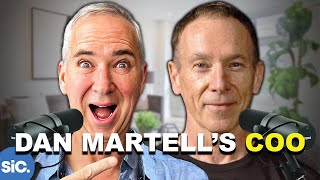
This is a transcript of a YouTube podcast (Second in Command) where Cameron Herold interviews Tod Melnyk, Dan Martell’s COO at Martell Media. Tod explains how he joined (interview/test-project process), his background (Labatt brewery leadership, entrepreneurial ventures), and operational responsibilities: hiring, assessments (predictive index + cognitive tests), paid test projects (up to 10 hours, paid $30/hr), 90-day planning, and weekly one-on-ones with Dan (45 minutes; vision, people, money/results). He outlines Martell Media’s model (media engine producing free content; revenue engine selling coaching and programs), core values (Be the example; Build the people; Simple scales), hiring for culture/growth mindset (many Gen Z hires), approach to automation and systems, and community/charity work (King’s Club, at-risk youth).
Chapters
Find people that already done what you want to do and never be afraid to ask questions and ask for help when you need it. It's good to ask questions, you know, when you're doing well, you want to continue. But when you're struggling, if, if you could ask those questions and find somebody who has done it, I mean, you're going to be light years ahead. So to have the confidence to ask for help when you need it, you.
Are going to love this episode with Todd Melnick. Todd is the second in command to Dan Martell with Martell Media. Dan Martell is blowing up today. He just got Tony Robbins event with thousands and thousands of people in the audience. But Todd Melnick is the brains behind the operational side of Martell Media. So he's running their YouTube channel, their social media strategy, the book kind of all of the brand and all of the, I guess learning that Dan Martell is putting out into the world. Todd is the one who's responsible for monetizing that and running the business and the back end of things. He's got an incredible industry, he's an armor entrepreneur, he's an athlete, he worked in the beer industry, he ran m microbreweries, worked in the exotic car and European car space and then somehow connected over an unbelievable interview process and Dan Martell brought Todd in to run the business. I had the privilege of meeting at Hiking with Todd at a couple of the early Tuesday morning founders hikes in Kelowna bc. You're going to love this episode. We actually filmed it inside of Martell Media in the actual studio. We'll love to have you watch this both on our Second in Command podcast YouTube channel. Listen to it on the Apple podcast and then also share this one with your friends, your family online. Hope you love it. See you on the inside. So we're sitting here with Todd Malnick who is the second in command to Dan Martel with Martell Media and I'm actually sitting in the Martell Media offices with you, which is the first time I've actually done over 400 episodes. First time I've ever done it in a guest's office. So amazing to be here. Cool to actually get to sit and talk to you and learn from you. I have been very inspired by watching Dan over the last couple of years. I've known Dan for 12 years and you are running his company for him. You're the president, the CEO, coo, second in command, general manager to the Martell Media brand and business. How did you get involved with it and kind of Walk us through what that part of Dan's business world is today. We'll start there.
Yeah. I mean, how I got involved with it was about seven, eight months ago, I guess, and Dan decided to go pro in terms of a studio and building that out and the brand and he was looking for somebody to run the business. And I went through the interview process that we do for everybody and we have quite an extensive interview process and went through all that and was fortunate enough to sort of land the role.
Did you know him before?
I followed Dan's content for quite some time, loved what he did. I didn't know him, but I loved know from a far what I saw, what he, what he stood about. So that was, that was really intriguing. And then when he was looking for somebody to run the business, you know, I, I have run. I have been number two before. So it's always like, okay, well what is that going to look like? Because there's always a dynamic for that. But in terms of what he was looking for, for, you know, operationally and systems and, you know, some EOS stuff and all that, that's sort of my. That's how I geek out. So.
So talk a little bit about Marcel Media in a second. Let's go backwards a little bit then, into your careers. You've been in number two before. You've been in the US world, which is GM Wickman's entrepreneurial operating system. What were you doing before this that Dan would have selected you? Because he's not. He wouldn't have just picked the first person coming off the street. So he saw some stuff. What were you doing before?
So majority of my life I was in the beer business. So I started off with Labatt Breweries and I was there for 18 years. So I started off as a sales rep and I worked my way up to regional director managing a business unit. So I was basically the general manager, sales, marketing, operations, all that kind of stuff. And I had moved all the way through different parts of Canada. I was moving every two years as I was rising through the organization. So I did that for 18 years and then they wanted me to move again, which at the time I didn't want to move again. And when you're at that level, your career is basically that.
Where do you go?
That's kind of it. And so I've always been very entrepreneurial. So I started investing in craft breweries. And so I did that for 10 years and built some businesses and then sold them. And then after that I went into a small partnership helping we Serviced. Specialized in servicing European cars and I did that and I was the operations person for that. So. Yeah, so I think my, my background is large companies, but also very entrepreneurial and built teams and systems in both of those types of worlds.
That's starting to make sense now because when you were saying you Labat's For 18 years, Canada's biggest brewery, or Labat's and Molson certainly in the one top two, that didn't make any sense to me. Why you would pull somebody out of a big corporate brewery kind of business. Doesn't make any connection. But yeah, managing people, managing teams, probably good leadership development, general manager skills, probably P and L responsibilities.
Exactly.
All that makes sense. But then you made the entrepreneurial leap, it sounds like.
Right.
Was that intriguing to him then too? Like with the craft brewery side of things and.
Yeah, yeah, exactly. I mean, I think in our world here, we're obviously Dan's very entrepreneurial and so am I. So I think that that played a key part. And when you can build, I think both, you can build business and teams in both of those cultures and environments. I think that's pretty attractive. So I think that was definitely part of it.
Why did you say yes to him or to this opportunity? This was eight months ago.
Yes.
So it was starting to become what we know of it today, that was starting to have a trajectory. His book, Buy Back youk Time was out.
Yeah. For me it was the. What's the purpose of our company? So our purpose of the company here is to inspire people to be their best versions of themselves and share their transformation to the world. So that, that excites me. When you actually can watch people grow, whether that's personally business wise fitness mindset, that excites me. So that was probably the biggest thing. And then, yeah, I mean, just watching Dan and what he stands for and sort of the full spectrum, I thought it was just a great opportunity to learn and bring what I think I can do really well and build a company together.
What was the interview process like to hire a second command? What do you recall what it was like that you went.
So we do the same interview process for every single role that we do here. So it starts with you send in a resume and then you send in a one minute video. And the one minute video is describe your favorite nonfiction book and why and then why you would be a good fit for the role. And so it's one minute. So you don't want to go over one minute. But it's kind of intended to see if people can follow sort of instructions. Right. So that starts with that and then after that it's a 15 minute chat with somebody just on culture fit. Get a sense of sort of who you are, bar, you know, fill it out. And then from there we do assessments. We do a behavioral assessment and a cognitive assessment.
Okay.
And depending on what roller is, there's certain scores that you want to hit, particularly on the cognitive. Cognitive assessment. So that's another step. And then from There it's a 45 minute interview with say, the interviewing manager. In my case, that was with. With Dan and another person named Jason who was helping him roll recruit.
Right.
And then you do after that, it's a test project. So those are going to move forward. You typically take two or three people and you can give them a test project. And depending on what the role is, it's specific to that role in my case was what would I do in the first 90 days?
Okay, so you need to submit your 90 day plan.
So I submitted the 90 day plan and then I come back and I presented to Dan and Jason.
Okay.
So I had 45 minutes to present and then they would ask me questions. And then a couple of days later, in my case, I got the job offer. And then how long did the whole.
Process take from the first resume coming through to the video and the screen?
Not that long. In my case, it's probably about 12 weeks.
That's long. Three months.
I'd say two. Two months. It was probably two months.
Yeah. Well, yeah, you can lose good people in that time. You can, because they can get poached pretty quickly. But it's not too long. I'm curious. I was going to ask you. I'll ask you in a second about the behavioral and the, the second assessment, the cognitive assessment. But I want to ask about the 90 days. What was your 90 day plan and how did it change from when you actually showed up?
What I did is I laid it out sort of. I'm a very visual person and Dan's visual person as well too. So some of the, you know, I'm always about, well, I always do my homework. So it always amazes me when I'm interviewing people and they, and they haven't done their homework. It just, I don't really understand that. But in my case, I did all the homework I possibly could to understand.
Him in his language.
Well, what, what was interesting about the test project is that I get, I got access to anybody here at the studio, whoever was working here, so I could talk to them. I could ask for Information. So I spent about four hours just doing one on one, 15 minute chats with people. And for me it was more about finding out about the culture, how decisions are being made, you know, what, what's any obstacles, all that kind of stuff. So if you have that information. And then I kind of knew a little bit what my 90 day plan was going to look like.
Sure.
And where I had to focus. Was it exactly right? You know, probably not, but it was, it was close enough.
Was there anything specific in that 90 day plan that you think Dan saw or like.
Well, he'll tell you the story. So it's quite interesting. So I was up. There was two of us, I think, presenting at the same day. So one person went first, I was the last person to go in. And so I'm up and I again, my first. It was a visual is basically of here's what I'm going to do, the 90 days. And then I broke it down into detail. 30 days specifically, like by function areas, all that kind of stuff. And I'm going through it. I'm not reading off the slide, I'm just talking. And then they're, you know, Dan and Jason are asking me questions and so, you know, that was it, that was the end of the presentation. And then after I got hired, we're talking and Dan and I, and he's like, you know, you had me at the first slide. I'm like, oh. He goes, yeah. He goes, it was visual. It laid out exactly what you were going to do. And I know you had the detail there, but that's what I want to see. You had me at the first slide. And he goes, and the rest I was, we're just playing good cop.
See, I had to respond to it all. You know, Dan was at the founder site here in Florida last Tuesday. He does these founder sites every week. And you were on that as well. But I heard him saying something about when he does these test projects for all hires, it can be up to 10 hours of work that they do. They tell you spend about 10 hours on it or do they expect that it'll probably take you 10 hours worth of work on it. So we just like a quick 15 minute project.
It's a. Yeah, yeah. So we say you can take up to 10 hours and we pay people to do that.
Oh, you do?
Yeah. So the test projects are, I mean, twofold. One is we get to see, you know, what they're like, their thinking process and stuff and they get to see what we're like.
What do you think I'm like 50 bucks an hour.
30 bucks an hour.
Okay, so you're paying 30 bucks an hour, do some work, and you're paying them for it.
Yeah.
That's really interesting.
Yeah, and it's. Yeah, it's really good. I mean, again, depending on what role it is. But we're not necessarily looking for the right answers because you're not going to have all the right answers.
But it was more the approach.
Exactly.
All right, go back to the behavioral testing and the cognitive testing. Is that what it was? Behavioral?
Yeah. So the behavioral assessment is really a. You know, it's. I can't remember how many questions, but let's call it 50 Questions. It's random questions.
And then is there a group that it's tied to? Is that like this?
So it's predictive index.
Predictive index. All right.
Yeah. And so people will fill that one out first and. And then once they've done that, they'll do the cognitive assessment. And so the behavioral one is really good because if you're hiring somebody, and I think it's like 12 different categories that your personality will come back with. So if I'm a analyzer or something, it'll spit out what. What I like to do, how I like to run things, and then how you could work with me. So Todd likes this. So if you're going to approach Todd with something, maybe come at this angle. Right. Or you like it this way, this is how I can start working with you. So it's a really good indicator on how you could coach somebody and how you can communicate.
Had you used those before at all in your kind of roles and leading you in the interview process?
We've always done assessments, particularly when I was in the labat breweries and then became interbrew and mbef. There was always some sort of assessments.
Around that in the interview. Or do they use it after.
More around coaching.
More around coaching. Right. Yeah, that's where I've used it as well. Do you like it in the interview process and do you see any risk or threats to using it in the interview process? Does it bias people or is it just a really good tool?
I think it's a really good tool because you're just, you know, it's a benchmark, like for us is one of our values here is be the example. And so that's always about growing and pushing yourself to be the best you possibly can. That's, you know, personally in business. So you want to start with a. A benchmark. If you're building a High performance team. You don't want anybody to come in. That's not that. And so it's a really good benchmark for say, you know what? Yeah. This person, I'm not really concerned about, you know, what they are in terms of behavioral. It's good for me to understand that from a coaching standpoint.
Sure.
But it gives me a benchmark to know that, hey, you're gonna, you're, you're gonna, you're smart enough.
Yeah. To fit in.
To fit in.
When, when I was walking in the front door and you were starting a little bit of the tour of Martel Media, you showed me on the wall kind of the sign Martel Media of the core values around it and said, we'll probably talk about that later. I want to talk about core values because you just mentioned one of them. Can you tell us what the core values are for Martel Media? I'm sorry for putting on the spot, but I'm pretty sure you actually know them. And then how do you bring the core values into the organization from like the front part of the interview to, you know, day to day?
Yeah, sure. So we have three core values here. Martel, Mina. So the one is, the first one is to be the example. And again is if you think about our purpose, which is to inspire people to be their best versions of themselves, then we better make sure that we're doing that. So that's about a growth mindset. Always pushing yourself to the next level. That's about being the example and it doesn't mean being perfect. You can't get to the next level without making mistakes. Right. So you need to try stuff, but always push yourself.
Always be growing too.
So that's number one. The second one is build the people. Because the people will build the business. So let's build the people. And my job, where I spend most of my time, not only, you know, here, here, but also learning how to get better, is about building leaders. So if I build leaders, they're going to build leaders and they're going to build the company. So that's really, really important and that's.
Building a skill set, but also the confidence of the leaders too. Right. I see you really working well with that.
Yeah. Like you, you know, we have, if you saw, we have lots of young people in, you know, unlike the adult in the room is sort of there. They called me like Todd. Father is one of my nicknames. But yeah, you know, it's, it's. I always share the story about being confident in, in your own skin and Took me a very long time to really, you know, to, to understand that and be comfortable with that. And I still work on that every single day. But confidence is key, for sure. And then the third one is simple scales. So anybody can, you know, complex the out of the business. We're always trying to find ways that how do we solve problems in an elegant way that's not going to complicate.
Yes.
And that's sometimes really hard to do. So we're, we'll try and break something. We'll throw something out to see if it breaks. Yes, it's easy to throw people at it, but is there a way that we can automate it? What does that look like? So the more that we can be, you know, scale and make it simple, that's what we work on every single day.
I'd love that you've kept your core values to three. I've said to all companies, maximum of four or five, so you're even better. I love that they're short, easy to understand phrases which I force people to do. The only time I've ever let a client have a single word as a core value. Their fifth core value was simplified. I'm like, ah, it's so perfect. Well, there's funny story, simply simple scales. Simple scales is similar.
So a funny story. So we're doing our, you know, our mission, our purpose and we're, and we're trying to come up with our values. So we get the three and it was simple scales. And we're like, well, let's just stop right there because that's simple scales. We don't need 10. And those three are really easy to communicate and people understand them. Yeah.
They don't need any explanation. And you'll fire people if they're not living them.
Absolutely.
Which is core.
Right.
It's not like an aspirational value. The other time I've seen simple really brought into the organization in a kind of clear way. I was being mentored by the CEO at Starbucks for 18 months. I was at their head office in Seattle for one of our meetings. And I walked around the corner in this massive like 2 foot high lettered saying on one of the walls said grow big, act small. And I was like, wow. Like a company like Starbucks with 13,000 locations is thinking like entrepreneurial, small and not over complicating and orbiting the giant hairball. So I got that right.
Yeah.
Tell me again, how are you living the core values, bringing them into the organization and forcing them? Can you give me some stuff, some.
Systems around that Yeah, I mean, I communicate the core values all the time and I use it as a feedback mechanism to myself is if I went out of this room and I asked somebody, do you know what our, you know, core values are? And they kind of stumble. Well, that's a feedback mechanism to me going, I haven't communicated enough.
Right. Not talking about them.
So what we do is we typically, we'll talk about them. So every two weeks we do a studio sync. And so we get the entire team together and I lead that. And we have an hour session and we, I always start with, okay, this is our purpose. This is our three values over and over again. And then how we support that is at the end of the sync, we'll recognize people and we'll say, okay, you know, Cameron, you, I want to recognize you for this is this. And this supports. Be the example, right? And we give somebody a little bit know, we give, we do these hot sauces or cards or something like that. So we always reinforce people's behaviors to those, to those values.
I love it. Yeah, it's culty. It is very culture and culty. I like it. I'm obsessed about cult.
And we. And I spend, I mean, in inter. Back to interviewing process. I spend so much time trying to basically push people away.
Okay, speak to me about in the interview process and even in the, in the job posting process of pushing people away. Right. And then how do you interview for core values? What do you do at Martel Media to interview and know whether people already live the core values that you're expecting to live when they come here?
We had a couple people, we had one person. They, they. They were here for about a month and they, and they quit. And so we're finding out why they quit. And so one of the reasons that they quit is they didn't, they. They didn't appreciate the swearing. So I swear, Dan swears. It's not like I swear at people, but it's just, you know, it's just the way we kind of roll, right? So we're like, well, that's, that's kind of interesting. And we're not going to change, you know, who we are. But what we decided to do is we created a video that actually describes and it's Dan and says, you know, if you want to apply for a job here, this is what, you know, if you don't like this, if you don't like this, if you don't like this, then don't apply. But if you want to be pushed, if you want to grow if you want to be that, then we're probably a great fit for you.
Got it.
And so that's like right up front, right?
Yep. Unpolarizing. Yeah.
Very polarizing.
I did that in the job posting one time. I said, you know, you'll be working for. And I use the actual full word, but I said an effing. You know, add manic bipolar CEO like you'd be working for an effing, blah, blah, blah. And I'm like, oops, there's my first F bomb. And I hear people replying going like, I would never work for you. You swore. I'm like, delete other people. Like, I love that you swore. I'm like, oh, you're interesting. Who are you? I don't like that. I do. But culturally, you may as well throw that in their face.
Yeah, yeah.
I want to talk about the young people for a second. It's very omnipresent. I mean, it's, you walk into like, I see I'm older, but I'm not dead yet. I'm only, you know, still Gen X. And I'm at the first year of Gen X. I'm really not that old, but I walked into the office here and you can obviously see it's young. And it's not Gen Y young, it's Gen Z. Yes. You've got a lot of under 25 year olds working here. They don't have the experience yet. Or do they? Are you hiring them based on mindset and capacity and do they just have like tech stack experience or are they used to using social media? Like, what is it you're seeing?
You know, again, it depends on the role, but we do have a very young crew here and for, for me and for us, it starts with the culture. Fit first. Like if I can find somebody who fits the culture and they're, you know, they're not arrogant, they're not cocky. Maybe they don't have a lot of experience, but they're willing to learn like they really want it.
Yeah. Growth mindset.
I will pour into that.
So you're, you're really living the hire for attitude, train for skill.
Yes.
Do you look for skill as well or do you look for skill in some roles?
Yeah, in some roles, definitely. Any skill. I mean, if you're a video editor, let's say in a particular ye. We want, we want some skill now. We want skill and, and do we need all the skill? No, but we definitely want skill and.
Culture and growth mindset and go learn all this online all night long. Learning more tools.
Right. Because for us, it's like, if we want to grow and be the example and showcase what we're doing. And yes, we're all smart people and we push one another, but we also. Every one of us, including myself, has to go outside of this place and bring in new knowledge, too, because that's the only way that we're going to continue to grow.
But either I haven't been in many physical offices recently, or you are cognizantly hiring people younger than his average.
I mean, it's just working out that way, I think. But, yeah, I mean, just. I think because of, you know, who Dan is, and. And people want to, you know, probably aspire to be some of that, for sure. So there's some young kids for that. But I just find when you've got. When you have kids like that and. And they just. They want it so bad. I go back to my. I know that I wanted a bad guy.
I've met a lot of them. And culturally, they stand out over the normal human head and shoulders. Like, you can see it real fast. Culturally, I watch it, like, unless you're training them or teaching them, and you can't even train that stuff. Like, they asked Herb Keller from Southwest Airlines, how do you get all your employees to be so happy? He said, we hire happy people.
Right.
Like, you've hired the right culture, fit people, for sure. Is there any downside to this? Do you. Do you notice any lags or mistakes? Or do you just embrace growth because you have that growth mindset?
I think, for me, is what I tend to forget sometimes is, is that how young they are? So I could be talking about a calendar. Okay. Like, how do you prioritize your time? They'd be like, I've never done that.
Right, Right.
Okay, well, yeah, you've read the book or something like that. But I may have to spend some time with them, showing what time blocking is sure. Or how to start structure your day, because they've never done that before.
The last time they had a calendar was their high school teacher gave it to them.
Exactly right. So it's like, oh, wow, you're like 20 years old and you've never done that. Okay. I need to spend a little bit of time with that. And they'll. They'll learn themselves, too. Right. It's just. It's that culture that everybody is pushing one another. Like, we're all. We all embrace everybody's authenticity, but we all know what we want to do and why we're here to do it. And so if somebody is not doing well, they're typically going to go, hey, what are you doing? Like, can you show me how to do that? Because I want to learn how to do that.
All right, so we've been talking a little bit about kind of the culture and you getting involved in the organizations and core values and some of what we're seeing behind the scenes. What does Martel Media do? Let's talk a little bit about the company and then I want to talk more operationally about that. So what does Martel Media itself do? What's the business that you're running?
Yeah, so we, I would say we have two engines to the company. So we have the media side and the revenue side. So the media side is producing content all around dan.
Okay, so YouTube, Instagram.
Yeah. And we give away all that content for free on, across all our different platforms. All the stuff that you just mentioned. And then the other part is the revenue team. There's a revenue and that is all the coaching side of the business and that. So because of all the content that we produce, the, the, the book, buy back your time, people want to work with Dan in, in some way. And there's different ways that we do that. It could be one on one coaching with Dan which is, you know, he does maybe six to eight clients a year. There's a wait list for that, there's half day VIPs and then the majority of our clients is in group coaching.
And the group coaching elite group coaching. I'm actually applying to that. He's got by my numbers, I'm going to guess 1400 full time paying clients and about 250 show up for every call. Am I close?
You're right on the calls.
Yeah.
I'd say 250 ish for sure. And you're a little bit high. You know we're probably closer. About a thousand on.
Yeah, so, so about a thousand. So he's doing like 8 to 10 million dollars a year in group coaching. That's a pretty reasonable revenue business.
Yeah, we're, we're higher than, than that on, on the revenue. With everything all in.
Yeah, with everything. Oh yeah. You had the 101 coaching days. Oh absolutely. Jet set mastermind. Like. Oh yeah, you're. This is the real deal on the revenue side.
Yeah.
What's the growth? What's the plan? What are you focusing on for Martel Media? Is it bigger or bigger? Bigger. Group coaching. Is it the fitness side of the group coaching?
Well, we look at it in two ways in terms of growth. One is what, you know, in five years, what is our revenue? What, what, what's the revenue target we want and what's the number of followers that we want? And so we match those two. They're not sort of, you know, linear, but we look at those two and then we look at sort of what we want to do in terms of a brand standpoint. Like how, where do we want Dan's brand to be positioned? How does he want his brand to position in five years? What does that look like? And ultimately this company is. It only can get so big because it is in. Around Dan. However, where we are, where we want to go. There's. There's lots of Runway there yet.
Yeah, there's lots of Runway for sure. You're deciding what the number is going to be in your reverse engineering it, Right. You're picking a number, reverse engineering that. You're also monetizing lots of different things around his time. So, like he's flying all over the world on this jet now that he bought a year ago, you're monetizing those flights. Right. How does he decide what to monetize and what to say no to?
I think it's really about how he wants to spend his time. That's really what it comes down to.
So he likes one on one coaching. He'll monetize some of that. He likes the half days. He'll monetize some of that.
Exactly right. And he has, he has, you know, goals at how he wants to spend his time. And one of the goals that he has is, is, for example, is around At Risk youth.
Yeah.
So he go back to, like, if it's important to you, where is it in my calendar.
Yeah.
Okay. If I want to spend 50% of my time on At Risk Youth, what are we going to do with it? Like, okay, how do we get that going? Okay, so he, it's really about how he wants to spend his time.
How do you say no to Dan or not now? Because I think one of our roles as COO is we need to be the brakes to their gas, but not the parking brake. Or we need to be the leash to their dragon, but not choke them. Right. How do you say no and when you say no or what or not now?
Well, I think it's. It starts with making sure that we're on the same page of where we're going and what our priorities are. If for some reason, an example, this is what he'll say to me. You know, he'll say to me, I feel like I'm Walking, not running.
Okay.
Which means we're not going fast enough.
Yeah.
All right. So then I'm like, okay, well, let's go through the priorities and let's. This is what we agreed on. If something's changed, then here's what I think. I'm going to give my solutions, and then we'll have an outcome of what that looks like.
So let me talk about the walking and not running then for a second and ask a question. You're not doing any marketing or advertising. From what I've seen, it's 100% content being pushed out and speaking events or podcast interviews he's on. But there's this. Is it close to or is a zero? Approximately Ad budget, Marketing spend. Budget.
We don't have any. Our marketing is this. Is this.
Why is that?
It's intentional, right? Because I think it. It builds. It's simple. We're building a brand. Dan is a brand. And I think if we do it organically, it's sustainable, it's real, it's authentic, and we can push. We can try different things. Like, we're not in a rush.
Well, but you're not running.
If he feels like, well, it could be example. When I say that is like, you know, maybe there's a project that we have or something that it's not, you know, an example would be At Risk Youth. Okay. So Dan looks and says, this is. I. I'm passionate about this. I want to spend my time on this. Okay, we like, what are we going to do about that? So all of a sudden, we start a King's club program.
Yeah, I saw that the other day. Going to high schools.
Right. So we have two. We have Kings Club and we have outreach at At Risk Youth, where Dan goes and talks. Could be going to a prison or whatever it is. And so we started this King's Club when we had six people. Kids come. We talked to a friend of ours. She got one of her sons to come in, bring some friends. We started with six people, and we. And Dan just went up there and we just started seeing what that would look like. And now we had, you know, 40 kids last time, and we want to double that every time we get together.
So there's no revenue around that.
There's no revenue.
It's just.
He wants. It's just. Yeah, it's give back because that's, you know, obviously where he's been.
So he wants the content that comes off of that.
Yeah. So we want buyer, everybody, especially youth, to be, you know, around your mindset. Around, you know, a lot of them want to get into business. What does that look like? So share all the business examples. Fitness, service, you know, giving back. So it's great to be wealthy and rich, but how about giving back to the community? What does that look like?
So is that where he kind of decides on how much is on revenue? Like even him starting the group fitness program or group fitness coaching now? It's kind of an offset on what he could be doing on the business side with entrepreneurs. So does he make a decision based on, okay, I'll give up some revenue opportunities or I'll, I'll use up some of my time here? How. How do you and he make those decisions?
We have three programs right now. So we have a mindset program, we have a fitness program and a business program.
Mindset Fitness and business, which is elite, right? Okay.
Okay. And so what's the mindset program? So we just launched that. And so that is a program that Dan drops a video every Sing Monday that's around Mindset.
Okay.
It's a program that we want to get everybody, no matter who you are, to. To get to understand about mindset.
Okay.
You could be 12 years old and you want to learn about mindset.
So is it a free content?
No, it's really approachable. It's. It's $500 for a year or 50, 49 for a monthly subscription. Yeah.
Is he going to do anything global like India right now? If you can do a dollar a month in India, you've got 100 million people lined up at your door. There's so many people there for a dollar.
I mean, we haven't talked specifically different countries, but I mean, do we look at. We don't look at ourselves. We want to be the best in Kelowna or the best in Canada. We want to be the best in the world.
So it is best in the world, period.
Anything that we do, Is he going to do anything?
Or is there any discussion at this stage around AI? Are you looking at AI?
We are looking at AI looking at.
AI like the Heygen kind of AI avatar versions of Dan pushing content out, or are you looking at AI internally in the business? In terms of tools to build the business?
Yeah, right now it's tools to.
Tools to build the business business. Do you, do you do much in terms of automation? You talked about that with some systems like we try to automate. How do you approach automation and optimization of systems?
It's. I mean, that's the first question that we. Anytime we're doing something, it's like, can we automate that?
Well, first is, can we stop doing it at all?
Yeah.
Then can we?
Yeah, but if it's brand new, it's like, okay, yeah, I could put, I could put a person on there.
And you asked early on, can we automate right from the start, Is that a mindset that you hire for? Do you train people on that? Did you come from that? Because you and I are roughly the same age. Yeah. You've done it as gray at Harris. I, I'm from that older school where we didn't automate because we didn't have that. And I wasn't working inside a company, you know, 17 years. So how do you approach automation?
Well, I think it was back to our values. It's simple scale. I mean, I, I love building teams and all that, but it's also. You can get such complexity.
Sure.
And so I rather, I always look at, okay, if I can get, you know, six people, but they're really, really good people versus, you know, 20 people. That's, you know, that would be ideal. And then I just, Yeah, I just. Because of the world is you can automate anything these days. It's like, why wouldn't you ask that question?
Yeah. Right. You think about systems the same way that Dan does with, you know, when he rolls a system out, he sort of branded and he kind of draws diagrams. Do you think the same way?
Yeah, I'm very much a visual draw a diagram person as well, too. Yeah, I mean, he, he would be more so, for sure. But yeah.
Talk a little bit about what you've done in your career to get here, because you've done a lot, I mean, for sure, working inside of a major organization like Labat and, and you mentioned the parent companies and regionally with them. So you've gained a lot of leadership skills and then working in the European car business and working the microbrewery business. What were some of the skills that you've picked up that you still use to this day?
Yeah, I mean, I was thinking about it the other day. I remember when being back in LABAT days and there would be different consultants that would come in. And one of the frameworks that I was taught way back then, it was really like business planning and sort of thinking. And the first thing he taught, I was really young at the time, but it was show up, show up on time, show up on time, dress to play. It was just the starting thing that he, he would start all those things. And there was a framework of building business plans and thinking. So is always asking questions about why. Like understand, like yeah, some. Here's an observation. But why is that?
It's like what we're now calling first principles thinking.
Right. So if you can always drill down. And so I always go to. Okay, well why is that? 7 why is that? And so I was teaching, you know, people here is like just tell me something I don't know. Especially when you're, you're involved in a particular function or role. I don't know all the details but you do. I can read a number but I want you to really share something with me that I don't know. And so I have a, that's a practice that I learned way back when and I always bring that forward to everything I do. And then I've always been fortunate enough to have some really good mentors and leadership as I was, you know, started off young when I was in Labad I was moving every two years and I was super young and so having people that I looked up to and it was quite interesting because I'm taking. I didn't even know what my leadership style was back then. Right. I. I didn't. Right. So I'm taking these pieces but I don't even know how it works for me. I, I was pretty one dimensional and so I think over the time as you become more confident and just having those people around you that can sort of give you some good feedback. So I think just circling yourself with really good people.
I had a friend that worked with, with that as a GM back in Ontario back in the 90s and I think his leadership style was beer and golf.
Well, yeah, I mean what when I, I remember when I first started, I think the first all I did was hand out T shirts and drink beer.
Yeah.
I think my parents were asking me so that was your first day? I'm like, I don't really know. This is what I did.
So I really wanted to work for Labat. My, my neighbor was, was a big Labat guy. I was really. And those are the days when I went to work for Proctor and Gamble was one of those big kind, amiable brands but they had a pretty good training program that you should be all mo programmed. Where do you think we need to help leaders and management teams today? Not, not technology, not kind of like automation tools. But what were the two or three things that you think every manager or leadership team member needs to be good at?
I think one of the things that it took me a while to really understand is you're not doing it for yourself. Like you're doing it for. If I have a team here, I'm pouring into them.
Hmm.
It's not about me. And I remember back in the day it was all about me. Like what can I do to get to the next level. Right. But I didn't really think about how am I growing them. Because if I do my job and and lead them and make them better leaders, I'm going to get what I want.
Right, right.
So I think really understanding that. I mean it's.
Doesn'T these fine sir for someone younger for sure. But important.
Yeah, yeah. I think that's a huge thing.
Talking about time management.
Yeah.
I think systems just an example.
No, I mean I've always had. I've always been very disciplined. So I've always had, you know, systems in place and I would follow. I've always been very consistent. So I think having that discipline is really important and just being consistent.
There's two other questions I want to ask about. One is around this saying that Dan has. It's like if it's important to you, show me your bank account and show me your calendar. You mentioned that earlier. Can you explain what he means by that and then how do you use that in the business or do you.
Use example is family's really important to me? Okay, well show me your calendar and how much time you're spending with your family. Well, it doesn't look like there's a lot of time in there. So obviously it's not important to you or you know, I don't know, whatever else could be important in terms of money thing. Well how much money you're spending against it. When we're. When I'm leading people and coaching people, it's no difference. Like okay, well you could be really good at say going to the gym or whatever on the fitness side but show me what your work, you know, calendar looks like.
I'm trying to get better at this.
Right.
When are you practicing?
I'm coaching you or we're doing leadership training here weekly. What are you doing for yourself? Where is that in your calendar wonder? Oh, I just kind of do it. Well does it happen all the time?
No. Do you look to hire people that are self driven learners? I think that was tied to one of your port.
Yeah, that's definitely be the example. Yeah. Yeah.
Well I just have to build a better human or something. Is that part of it?
Build the people.
Build the people.
Yeah.
So you're looking for people that are already self driven learners growing on their own. How do you spot that? What do you ask, what do you look for?
They just say stuff. You can just tell, like if I can ask you, I don't know, I can ask a question would be, you know, what has been your greatest challenge in your life and what have you learned from there?
Okay.
Like that's a great way people can, you know, they're really self aware. They, they, they take an initiative to grow and stuff like that.
Or they're externalizing blame.
Right. The other thing too is like, what have you done to prepare for this interview? Oh, I, I, I, I didn't do anything. Or I looked at a couple YouTube videos. Really. That's how you prepare that that's not going to go really well. Right. So that kind of stuff gives me indication of if you're coming. I just did an interview today actually and first time he was doing, presented me a test project and it was going to be for a revenue team. He brought a flip, I brought one of our whiteboards out. He had cue cards, he had a full presentation. It was unbelievable.
Yeah, right.
I'm like, that's, that's next level. He was dialed. He was prepared. Yeah, exactly. And I thought it was fantastic. And he's like, I don't know, 20 years old. I love that he wants to work here.
If you are coming into Martell Media today and you had to change some things, like you saw some things coming down the pipe that were either threats or risks to the organization, how would you tell a leader like Dan? Dan's very driven ID high I in disk. He's a quick start and he's a big personality. How do you tell someone like that, no, what's your system for that?
I always go back to branded reputation. So if I saw something that was gonna jeopardize that, that's how I would frame it and that's what we'd have the discussion around.
So you sit down and show him his brand or what he's doing that's going to impact his brand, his business. Right.
And he's very any and he'd be the same way because anything that we do is we, we want to be mindful of that. Right. So if I saw something on that side, I'd be like, hey, like this is what's going on. This is how I think it can impact this. Let's have a discussion around that.
And I want, I want you to expand on that because I know where you're saying this and I don't want to. Well, maybe I'll lead you. Do you do that in front of the team where you do that privately with a leader like Dan. Private.
Yeah, so, so Dan and I. But he's, you know, he's very open to feedback.
Right. But, but yeah, defend their space that they have no.
Like. So we, you know, how do we. You asked me the question earlier about is, you know, priorities and how do I, you know, put the brakes on or whatever that happens to be is like we talk all the time. We have our formal one on ones that we do weekly, but we're talking all the time. And when we go on our one on ones, he has a list. I have a list.
What is your one on one meeting with Dan? What's the, what's the kind of agenda? How long does it run for? How often do you run it?
So we do it typically weekly when he's, when he's here and then it's 45 minutes and he has a list. I have a list. But it's basically based on three things. So vision, people, money and results. Right. And he'll have a list of stuff under those buckets. I'll have a list under those things.
Questions, follow ups.
Exactly. Here's, you know, I may have, here's a project that I'm working under vision or something like that. Here's, you know, here's where I am at it. Or here's some questions I have. I'm not going to just come with questions. I'm going to have, here's, here's my, here's my options. 1, 2, 3 options. Here's what I think and then we're going to discuss it and then here's what the outcome looks like and away I go.
And you said that when he's here, what if he's not here? Do you do it over phone? Do you skip a week?
We'll skip a week. But, but we're always texting or talking or whatever.
Do you try to avoid much of that, like back and forth throughout the week, like quick questions or do you just ask them or do you wait and say I'll add that to my list and talk to them on Monday or.
Yeah, I will never, I'll never ask questions about. I'll just make a list.
Right. And then I talk to him.
Yeah, it could be just something that on the fly he may have a question about something or whatever, but it's not. Yeah, yeah.
I was the same when we were building one 800 jug. Half the time I'd get into the 101. I'm like, that's dumb. Shouldn't Ask that that solved itself. Oh, this one's still applicable.
Yeah.
Nothing but now, you said you did a one on one with Dan on scooters recently.
We did, yeah. Yeah, it was great.
How the hell do you pay attention? Zipping along the road in Cologne on your scooters and you like chatting with each together and.
Yeah, we do a lot of meetings on scooters.
You said you're building out a scooter meeting model.
Exactly, yeah. We got the whole framework going on, but yeah, so we. We jumped on scooters. I think it was. I know it was a Monday or something like that. So we had a one on one booked. And so we jumped on the scooters and we'll just chat back and forth about whatever it is. And then we got to one of the beaches and we pulled to a park bench.
Yeah.
And then we sat down and then he pulled out his list. I had my list.
I love it.
And we went back and forth. And the funny thing about that story was we're sitting on the bench and family comes by and the guy stops and he says, are you Dan? And. And he's like, yeah, I'm Dan. And he's like, I was just telling my wife, I just finished reading your book and I was telling my wife that you actually lived here.
Right.
And so we're, you know, so we introduced the stuff and we're like, yeah, what you read in the book, we're just doing it right now.
I just got stopped in the hallway two hours ago in your building by some random guy who knew me from eight years ago. Oh, there you go. This is like a small town of like. Now I. One of my guests that I want to get on the sentiment wearing podcast soon is the COO of lime scooters. Lime scooters all over the world. I'm obsessed with live scooters. I have so much damn fun on these stupid things like Zip and Rallis. Yeah, I want to do a meeting on those one day. Maybe I'll do a podcast interview with somebody where I actually like. We both have the Bluetooth mics and we just zip around.
That's really kind of what we're setting up.
Maybe I'll see if I can get the lime scooter guy and I'll interview him on a scooter for 45.
That's what you should do.
That would be badass. I want you to go back to Todd Melnick and give him some Advice. When he's 22 years old, 21 years old, he's just starting up in his career. What advice would you tell the younger you, the one who's just going to come into Martell Media with no experience?
Number one would be find people that already done what you wanted want to do and just ask. Never be afraid to ask questions and ask for help when you need it. It's good to ask questions, you know, when you're doing well, you want to continue. But when you're struggling, if, if you could ask those questions and find somebody who has done it, I mean, you're going to be light years ahead. So to have the confidence to ask for help when you need it, I love it. Yeah.
We've got Todd Melnick, the General Manager, President, CEO, second in command, the 2IC to Dan Martell and Martell Media. Thanks very much for sharing with us on the Second Command podcast.
Awesome. Pleasure.
Appreciate it. We had to make a decision.
Which way are you going to go?
You're going to do the safe thing. The league that guaranteed games, guaranteed opponents, guaranteed, you know, you'll sell it out easy, comfortable, safe. Or do we go all in on, on this banana ball thing? Because we realize very quickly we cannot do both. That is not the future.
More from Cameron





Flutterwave Former Global Head of Operations Awa Kone | When Growth Outruns Operations (Podcast 611)





