Double Your Company Size in 24 Months | Nelson Elder Care Law, COO, Kim Roberson (Podcast 335)
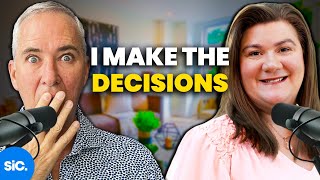
This is a transcript excerpt of Podcast 335 (YouTube) featuring Cameron Herold interviewing Kim Roberson, COO of Nelson Elder Care Law. Topics covered: Kim's career path from HR into COO (joined Jan 2022; director July 2022; COO April 2023); company history and services (founded by Cindy Nelson in 2014; three business units — estate planning, Medicaid, probate); rapid growth (doubled from ~18–19 to 41 employees during Kim's tenure; first remote employee started ~90 days ago); operational practices (using EOS for ~18 months with implementer Chad Sennis; leadership/management team recently formed with mostly external hires; monthly same-page meetings and weekly Level 10s); client/referral sources (majority from past clients/referrals); common client issues (average assisted living/nursing cost cited ~$8,000/month; Medicaid planning/crisis services).
Questions this video answers
January 2022.
Promoted to Director in July 2022; promoted to COO in April 2023.
Currently 41 employees; doubled from about 18–19 when Kim started.
2014 (founded by Cindy Nelson).
About 18 months using EOS; implementer: Chad Sennis.
Chapters
I would say probably one of the biggest challenges for myself. His name is on the door, but I'm the one making the decision. And so that's a challenge. And it's a challenge for the team, I think, as well, especially the ones that have been here for a while, because you go from someone reporting to the owner to now he's in that visionary seat and not the one that's integrating everything. And so that's been a challenge.
Today's guest is Kim Roberson. She's the COO for Nelson Elder Care Law. Her CEO is a member of the Genius Network, so it's great to have her on board. She's also a COO alliance member. She'll be sharing with us some of her growth lessons of having been a COO over the last two years. And through some of the massive growth that they've had in the organization, they've just doubled in size as well. She's also gone through a fairly rapid transition in her role. She started working kind of in an operations support role, then moved into a director role and then into a COO role all over the period of two years as the company has doubled in headcount, up to 40 employees. And she's also having to deal with a lot of management change. They've just put in place their first management team and all of the four people on the management team are all brand new in the last 60 to 90 days. So she's going to be sharing with us some of the lessons and growth that she's had in that role and with those experiences as well. Hope you enjoy today's episode. So, Kim, welcome to the Second In Command podcast.
Thanks, Cameron. Thanks for having me. I'm excited to be here.
Yeah, nice to have you on the show and also nice to have another COO alliance member joining with us on on the podcast as well. Why don't you start off, Kim, with just explaining what Nelson Elder Care is? Because it's a law law practice, really.
Yeah, absolutely it is. We are similar to an estate planning firm where we differ as we're helping people prepare for while they're still here. Estate planning is more focused on after someone has passed, but we're focused on how we can help someone prepare for the curveballs of life, as we call it, because we're all going to face them. It really just depends on what it is and when it happens. But the reality is, the more prepared we are for those things, the more peace of mind we have, not just for us, but for our loved ones as well.
And is it around estate? Is it around the transfer of wealth? Is that kind of the focus of it? Or is it, what, what else do you cover? Or what do you cover?
Yeah, so besides, we have three business units is really kind of how I could put it. So we have general estate planning, Medicaid and probate. And so those are the three business units that, and services that we provide.
Okay. And my, my dad just passed away 11 months ago and what an absolute extraordinary pain in the ass. I mean, the loss, loss of him was one part.
Yeah.
But the, the pain in the ass factor of going through the liquidating of assets and probate, it's, it's a disaster.
Yeah. And that's really what we, you know, try to help people understand. And there's just, you know, we don't know what we don't know. Right. So really helping people to understand that like you said, the nightmare of probate, it is you are at the mercy of the court and you don't have access to those funds or even you're not able to take care of the things you need to take care of because you are waiting on the court process. And so we really try to help people to understand the importance of planning ahead.
And I think it's, I think as you're pointing out, it is important to do it planning ahead because there isn't. You're not dealing with the grief, you're not dealing with the loss. You are also the person that ideally is setting up the estate for others after you. So instead of letting them deal with all your crap, you're dealing with it for them. What are some of the common mistakes that you see that people make or don't deal with in advance?
I would think probably the biggest thing that we hear, most people think, oh, I've got a will, I'm taken care of. That's just not always the case. And I think that a lot of people get into trouble of really being able to make sure that their assets are protected just by thinking just something as simple as that.
And is it tax planning? Is it the liquidation of assets planning? Is it how to be able to transfer wealth, you know, in the most tax advantageous way? What are some of the specific things that you look for that the company looks for?
We really help people. So if we think about how people are planning ahead, so it's thinking about most people are going to need at some point in their life some type of long term care. And a lot of times people are not aware of the cost, you know, average of $8,000 a month for assisted living or nursing home care. And so that will take away someone's assets and hard earned money really quickly. And so it's very rewarding to be able to help people understand that pre planning stage. But on the flip side of things, we do have those people who have not planned ahead for whatever reason. And that's where our crisis services come in. And we're able to help those people who have just gotten a diagnosis and they're going to need long term care immediately and they're wondering how in the world they're going to pay for it without losing everything they worked their whole life for.
And how do they do that? What are some of the things that you help them uncover? Or are there a couple of tricks and tips that, I mean, we don't want to plan for this, but how have you been able to help some people?
The Medicaid process and obviously it's different by state, but a lot of times people who are especially in a nursing home or are told that there are no options for them or especially from a Medicaid standpoint, that you know they're not going to be approved and that's just simply not the case. A lot of times the nursing homes, they're going to obviously make more money if it's self pay and not coming out through Medicaid. So they're not as much of an advocate for that as we are. And so yeah, it's really nice to be able to when we have those people call in and they truly are at one of the worst times in their life that we're able to give them that peace of mind and get them in the direction that they need. Not like I said, not just for them, but for their family members too.
How do your clients find you?
I would say, you know, our biggest referral source or past clients. And so that has. We have been in business. The September will be nine years. And so as we are growing and you know, focus shifts as far as the growth goes, that will obviously look a little bit different. But historically speaking, that's where most of our clients come from is some type of referral source.
What was the genesis of Nelson Elder Care Law? What was the starting point? Kind of where did it come from?
Super cool story. So Cindy Nelson, she started the firm back in 2014 and she has a super cool story. So she had been in the corporate world pretty much all of her career and was at a point where she really felt like she wanted to do something where she had purpose and something she felt was meaningful. And so in her 50s, she went back to school and became an attorney. And while she was in school, this particular area of the legal field was what she really became passionate about. She knew from the beginning, like, this is why I was to go back to school and do this. And so from the beginning and even today, it truly is about how we help families. And I think that that's what keeps us moving forward. At the end of the day, if we're taking care of the families, everything else works out.
Where were you before this? Because you've been with Nelson Elder for almost two years now. Where were you before?
So started my career in retail management. So I worked for Bath and Body Works for eight years. So that's kind of where I started my leadership experience. And then from there became a mom. And retail hours just were not something that worked for me any longer. And so worked for a couple of staffing companies for a while doing recruiting for different clients throughout the company. And then, like I said, most of my background has been on the HR side of things, specifically on the recruiting side.
What was it about Nelson Eldercare that attracted you and what was it, do you think that that Cindy saw in you to bring you on board?
I think that when I was looking for my position here, I wasn't just looking for the right position or the right next opportunity. I was really looking for the right culture and really a place to make a home, so to speak. And I really felt like that from the very first interview that I had and honestly can say almost two years in, if feel the same or not, if not more.
So what specifically did that look like? What did you notice? What did you feel?
Just the focus of treating the employees the way that we treat families. So I'm a big believer in the employees are your internal customers or clients. And if you are starting there taking care of them, then it's felt out to the external customers and clients. And I really felt that connection with Cindy the first time that I met her, that it was genuine with the employees as well as the clients. Clients.
That's interesting. Now you said that you also started off your career in hr. What were some of the lessons that you brought from the HR world into where you are today?
Yeah, that's. That's a good question. I think that there's been, you know, being an hr, you could write a book for all the stories that you collect along the way. But I would say probably some of the biggest lessons that I've taken away from that HR side of things is really just getting to know the people and making sure that you are uncovering what the needs are so that when you are finding people for whatever position, it is that you are aligned with what they're looking for and how that meets with the business goals.
How do you find that?
Yeah, I think it's about just being able to connect with people. So we all have different strengths and different areas. Mine is finding the right people. That is something that I'm passionate about, and I think that it's one of those things where I'm okay to say I'm good at it, because that is definitely what I'm passionate about. And not just finding the right people, but then helping to develop them, wherever that may be. It may not be inside the firm. It may be that they grow outside of the firm, but how can I help them get to where they want to be? That's really where my passion lies.
I love it. Okay, so what was it, do you think, that Cindy saw in you? Why did she bring you on? And did you start as the coo, or did you start in another role and move into the CEO?
I started in a support role in hr, so came on as kind of like the hiring manager, supporting the director of People and Culture. And then that was January of 2022. In July, I moved into the director position, and then In April of 2023, I moved into the COO position.
So those are pretty big jumps. Pretty quickly. What's the size of the organization, how many people? And why do you think she was helping you make those jumps? Or what was it that you did that helped you make those jumps?
I think that I'm very. I'm very focused on my. How I can help the company grow. And I made that very clear, I think, up front. And so I'm very driven and ambitious to not just get to the next level, but me getting to the next level, how does that help move the company forward? I have that drive and desire to do better all the time. And so I just, you know, I think it started in the interview. So Cindy is actually the founder. Her son, Josh Nelson, is our CEO visionary. And so in July, when I got promoted to that director role is when he and I started working very closely together.
So he saw it, and he kind of. Or you were putting yourself to be seen. How many employees in the company today?
Currently we have 41. So we have doubled in size since I've been here. So we were like 18 or 19 employees when I started.
That's a real business. You got 40 employees. Are you all location based as well? Pretty much.
We just had our first remote employee start 90 days ago.
Okay, I'm going to talk about that in a second as well then. So 40 employees, real company, you've got a management team then that kind of reports into you. What do you focus on day to day and at that size, are you following the traction the EOS systems?
Yeah, we are. We've been on eos for about 18 months now. One of probably the most challenging things that I'm currently dealing with in the day to day is I have a leadership team that has all been here less than 90 days and I'm also new in my role and so definitely navigating through that process.
Yeah, there's a, there's a model called the forming, norming, storming, performing model. And if you've seen it, but you are definitely in the forming and storming stage. You know where, where, so how's it going? What are you learning from it?
You know what, it's going great. I think that it took us a while to really determine what we needed to move forward. So example, we had someone in a sales and marketing director position and we realized quickly that we did not need to have sales and marketing together. They needed to be split. And so it's just really been a learning process, especially as we've grown and as we think about where we're headed, you know, it's definitely a lot of learning.
Are the, are the people that are each in the manager roles, are they first time managers as well?
Mostly they are not. They're not.
Okay, good. That makes it a little easier.
Absolutely. Yeah. I really focused on trying to have a team that has strengths in those areas that really, especially as I'm new in my role, some of the things that maybe I'm not as good at, where can we balance each other? And so I think that's one of the things that's really going to make a difference with this team.
Did you have to go out and recruit and hire each of those managers as well then? Are those all external hires or were some of them internal hires that were promoted?
They were external, yes.
So all external hires. And what is it, four or five people on the management team?
Um, so three. Four including myself and I've including CEO.
Okay, so. So it's a team where you have those kind of idiosyncrasies and the, the different personalities. What is it you focused on in the first 90 days with them to turn it into a team? And what do you think you have Left to turn them into, you know, a, a team or. I mean we're always growing, so it's not like it's a criticism either.
Yeah, I think that the most important thing for us and some of the things, lessons I've learned from previous, maybe things that didn't work out with people that we had on the team, really not moving too fast. It's great when I know and I can see immediately how much value that these people are going to add. And it would be quick for me to say, yes, let's, let's do it. Like, I know you're going to do great things, but not really fair to not give them everything they need to be successful. So I can't forget that they've got to have that full onboarding. They've got to really get grounded in the culture and who we are before we can really let them do it on their own.
Yeah, it's going to be interesting to see how you guys make that transition and when you get to know the performing stage, right, the, the, the performing, storming, norming, when you're kind of, it's all working and then the performing stage. Are you positioned yourself as a company for good, for growth again? Like you said, you just doubled in the last 12 months. Are you doubling again or is there still, still good growth coming?
Yeah, we are so running on eos. We have, you know, our three year plan that we're looking at, which would be an additional two locations within the metro Atlanta area with the EOS system.
I know a bunch of our listeners will be familiar with eos and then a lot of them will have no idea what the heck EOS is. Based on the book Traction by Gina Wickman. What is it that you like about the EOS systems and what systems are you, are you kind of getting the most benefit from? How do you use them?
Yeah, no, great question. I think that EOS has really helped us to focus on the right things. So it truly is about if you have a business, you have a system that you run on. And so you need to have one system, not many, so that you can make that traction. And so we have really focused on making sure that the team embraces eos. We did a great job as a leadership team last year, really getting on board with it. And this year has really been when we have started rolling it out more to the team and those level 10 meetings are happening and they're really getting to the root, causing the issues that we really have to be able to move us forward. So I think that what I feel is most effective with it in the business is that it helps us focus on the right issues so that we are able to make that traction and move forward.
Did you work with an EOS implementer or did you self implement?
We do, we work with, we still work with an implementer. Chad Sennis. Yes.
I think it's really interesting when you work with an implementer, it allows the CEO and the CEO to sit at the table as peers with the leadership team and allows you to. Do you find it allows you to really participate in the meeting more than other meetings where you have to run them?
Oh, absolutely. It's definitely healthy for the team that we're able to really all be a part of the issues that we're talking about and really getting to discuss and solve some of those issues. Those issues, yeah.
It feels to me like it's, it's almost one of the most understated benefits of, of the, the EOS model is working with the implementer that allows you to sit at the table. I, I don't even think they sell it that much. I think they explain all the systems, but they don't tell you the benefit of you not having to stand in front of the room constantly. Right. Just participate.
Yeah, for sure.
So you've talked about, about, you know, your, your firm providing some of the advice to clients about some of the curveballs of life. What are some of the curveballs of business that you've had to deal with as COO and in scaling the company?
Yeah, I think some of the big things that we talked about even before, before I moved into this role was really what are the curveballs that could happen so that I'm prepared for stepping into this role. One of them being what if we had a recession? You know, thinking about those things. That is definitely a curveball that we would need to, you know, really think about if, you know, I think we don't like to think about those things, but those are the things that we focus on with our families that we also, to your point, have to think about in the business so that we are prepared for those things.
Do you have a set meeting structure in place then where you sit and talk about the potential things that might be coming on the calendar, like that. Strategic thought.
Yeah. So with eos, we use the same page meeting. So Josh and myself meet monthly for half day outside of the office to really make sure that we are on the same page. And those are just really a great time to talk about those scenarios.
Yeah, I think those are really Powerful. I used to call them date night, when the CEO and CEO could get out of the office and just get on the same page or just talk through stuff. When do you think you'll migrate the. I know you called it the leadership team. I typically call the. When you're a smaller company, earlier stage, I call it a management team until you have a leadership team in place that's really seasoned. But when, when do you think you'll get your leadership team involved in those kind of monthly or weekly discussions around strategy?
I think that obviously we have the. The weekly level 10 meetings, but to your point, I think it has to be more planned for that strategic planning type of things. And so I really want to focus on this next 90 days making sure, because literally every single one of them are less than 60 days in. So director of sales, director of marketing and production are all less than 60 days.
Did each of them have some direct reports when they came in as well?
Yes.
What was your. Did you give them like a first 90 day plan that they were to follow or how did that work?
Yes. So they all do have, you know, that training plan, but they also have onboarding goals. So at 30 days, you know, we meet with the leadership team and there's something that they present to us, whether it be, you know, their assessment of, you know, this process. So it's really just kind of easing them into what that role looks like. But also by the time we get to that 60 and 90 day, there's more of the plan being put in place. And then at 90 days, we're getting ready to start executing what that looks like. So it's really just being very, very locked in on making sure those touch points are happening so that, you know, we're in a good place when they are past that 90 days.
Yeah, I find it's often dangerous when you bring in these outside executives and they start making, you know, big strategic decisions too early or people people decisions too early. Are you having to throttle them back at all or did you have fairly good understanding with them coming in?
Well, we definitely, all of them are very eager to jump in. And like you said it, we have learned from experience things that did not work. And that's something that I have been through before. You know, giving someone the ability to make decisions too quickly can definitely be costly to the business.
They don't really have all the insights yet. Right. No matter how seasoned. Like you could hire the most seasoned senior outside executive to come into a company. But they don't know the culture. They don't know the idiosyncrasies, they don't know the people yet. They, they don't have enough information to make a lot of those decisions of firing someone or hiring someone or integrating a new system too early. So, yeah, I think it's important to just keep slowing them down and just kind of getting to. It's more about getting to know each other and like each other and respect each other and understand stuff more. More than it is about getting stuff done. Right?
Absolutely. Yeah. Just sets the whole foundation of what the future is going to look like as a team.
Now, I imagine that in the nine years that you've been or the company's been going for nine years, but in the, in the year and a half to two years that you've been there, it's been really easy working with the CEO.
Oh, absolutely. Just a cakewalk.
It's kind of like it's almost our business marriage. Right. Like getting, you know, working with the CEO and CEO. So what are, what have been some of the. The stumbling blocks along the way and how have you. You work through them and what are some of the lessons, you know, of, of. Of that relationship?
I would definitely say the, the good, always the bad, a hundred percent. So we have a very great working relationship and it's all built on trust. So I am never going to question if he is going to be honest with me about, you know, my performance or something I could have done better. And he knows the same about me. So that's why it works so well. We're not afraid to say, okay, that's stupid. Why did you do that? You know, and just having that ability to do so really makes it successful. I would say probably one of the biggest challenges for myself, his name is on the door, but I'm the one making the decision. And so that's a challenge. And it's a challenge for the team, I think, as well, especially the ones that have been here for a while, because you go from someone reporting to the owner to now he's in that visionary seat and not the one that's integrating everything. And so that's been a challenge.
Has it been communication? What's gotten you through that?
Absolutely. So he is very passionate about what we do, as most CEOs are. And sometimes that may not get communicated in the best way because his passion, you know, really, he's a typical visionary. You know, it's all of these ideas and all of, like, the stuff that he sees ahead, and sometimes that just doesn't come out to the way the team can understand. And so my job is to say, okay, wait, that's a great idea. Let's talk about how we can get there. And so I think that's something that's really helping us as I'm moving into this role.
And he has been. Has he been with the company for the whole nine years that his mom started it or when did he join?
He has been six years. So he's been with the firm six years.
So long enough that he does have a little bit of, you know, he's been there longer. Seniority, more understanding, of course. But he's young as well. He's probably around the same age as you are.
Yeah, I think he's 37.
Where is he learning? Is he in plugged into a Mastermind again? I know that you're a member of, of the CEO.
Yeah, he's in Genius Network.
Okay, so he's in Genius Network. So he's plugged into a Mastermind community. You're plugged into a mastermind community. What do you think the big benefits for you have been of being a member of the CEO Alliance? And what do you think he benefits from being a member of the Genius Network? Like, what's the kind of the benefits of these communities masterminding and learning?
Yeah, I think for, you know, him being part of Genius, he's built some great relationships. But he's also, because of the growth that he's had personally from being part of that group, he knew that me getting hooked up with CEO alliance would do the same for me. And so that is honestly, once I. I was really not even that focused on moving into this role. But I read your book and I was like, wait a minute, like I'm already there. Like, this is something I want to do. And so that really helped me to kind of just come out and say to him, like, hey, I think this is something I want to do. Let's talk about how we get there. And then one of the things I would say just being so I just joined back in April, I believe March or April. And so I was able to go to the April event out in Arizona. Was absolutely phenomenal. So looking forward to September. But it truly is like these accountability groups that we have, the monthly one on one connections. I've had a couple of those. And so it truly is like, regardless of the business, regardless of the size, we truly are all going through the same thing. And it's so nice to be able to just connect with people to talk about those things outside of your CEO or your team. Because you feel like you have your own community that can really help you through that.
And it's nice to disconnect from the day to day of our business to be able to work. As Stephen Covey said, you know, working, you were sharpening the saw, right? We're beginning with the end in mind. We're not so working in the business. We're working on the business, as Michael Gerber used to say. So what about your day to day? What do you focus on day to day in your business now? And by the way, you mentioned my book, did you read the Second in Command? Is that how you learned about the CO alliance was through the book?
I did read the book, but Josh had also.
Genius network.
Exactly. So it was kind of a combination. My day to day will look different than it currently does. So one of the other challenges I think I've had transitioning to this role is backfilling my role that I was in and so being able to balance making sure that we found the right person to fill my seat that I was previously in while bringing on a brand new leadership team. And transitioning to my role definitely is a little bit of a different day to day than what the future will look like. So pretty excited about being able to move into a different day to day.
It sounds like you're pretty, pretty comfortable with the kind of ambiguity and change. Is that something you've always been kind of accustomed to or is that a learned skill now?
Oh, it's definitely a learned skill. It's something that I think I still work on, but I think it is definitely something I've gotten better at over the years.
It feels like entrepreneurs tend to be good at that just because of the nature of the role, but it tends to be a learned skill, I think, for the coos. All right, let's go back to the 22 year old Kim Roberson. Let's give her some advice. What advice do you wish you'd known when you were 22 that you know.
Today, man, I would say believe in yourself. Listen to your gut. Don't question yourself because you do have good ideas. Don't, you know, wait for someone else to say that was a good idea. But truly believe in yourself because you do deserve to be at the table. Whether you think you do or not.
I love it. While you're at the table. Kim Roberson, the COO for Nelson Elder Care Law. Thanks very much for sharing with us on the Second Command podcast.
I always say just be Gandhi. Be the change you want to see in the world right if you want people to be open and honest, you got to be open and honest, okay? You want people to be accountable, you better be accountable. You know, you want people to care, you better care. Right? And they have to sense that it's not self centric. You've got to stay true to yourself, okay? And.
More from Cameron





Flutterwave Former Global Head of Operations Awa Kone | When Growth Outruns Operations (Podcast 611)





