Embrace Cultural Transformation | General Partner of Mighty Capital, Jennifer Vancini (Podcast 200)
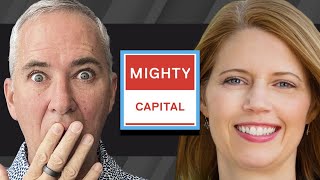
Podcast interview (June 18, 2023) with Jennifer Vancini, founding general partner of Mighty Capital. Vancini explains Mighty Capital's thesis—leveraging a large product-management network (Products that Count; ~300k PMs) to source and accelerate early growth B2B software and regulated-data startups (70% B2B SaaS, 30% regulated sectors like healthcare AI, fintech, blockchain). Firm founded in 2017; closed a second fund and planning a third; current fund limited to US investments. They review ~4,000 opportunities/year, focus ~70% on Series A, use board seats/observer roles, quarterly portfolio reviews, and operational support (hiring, fundraising prep, LP dinners). Vancini highlights firm culture (conscious leadership, growth mindset), team composition (three GPs, 6–10 venture partners, associates, new CFO), and selection criteria (product-market fit, team, capital efficiency).
Questions this video answers
2017
About 70% Series A, remainder Series B and adjacent early-growth rounds
Approximately 70% B2B tech software and 30% regulated/high-growth sectors (healthcare AI, fintech, blockchain)
About 300,000 product managers
About 4,000
Chapters
Culture everywhere is everything. It's really super important. So at our first LP meeting we asked our LPs, what kind of culture do you want us to have at Mighty Capital? How do you want to be involved in that? I was surprised how much they dove into that and how important it was to them as well. Understand why we're doing this, how we work with each other, having this growth mindset, challenging each other.
Our guest today is founding general partner of Mighty Capital, Jennifer Pacini. Jennifer has been investing for 10 plus years. Before becoming a full time investor, she held executive roles in corporate and strategic business development, specifically in the high growth, security and mobile sectors with companies such as Telefonica, Symbion, Nokia and Certicom, which she helped take public in Canada. Jennifer serves on private and nonprofit boards and is currently the Vice Chair of a Dean's Advisory Council at the University of British Columbia in Vancouver where she completed her mba. Jennifer, welcome to the Second Clan podcast.
Yeah, thank you Cameron. I'm really pleased to be here and looking forward to the discussion today.
Yeah, this is going to be really interesting and you're the second person from a VC firm that I've had on the podcast and I think we've done almost 200 episodes now. And the only other one that I can remember having is from Backstage Capital, a group out of the US that they only invest in women owned businesses and predominantly I think minority owned businesses as well. But tell us a little bit about your firm and what your role is in the firm as well and kind of how you fit because people maybe aren't really sure how VC firms act.
Yeah, I'm happy to lay that out. It is a little bit different with some similarities. I'm one of the original founders of Mighty Capital. We have three channel partners and venture capital firms are a partnership structure. But I was with it from day one and our managing partner SC Moadi came to me with an opportunity. We had been co investing together SC and our other third partner, Alan Kramer. We all had a lot of opportunities but she had actively grown this huge network of product managers called Products Account and always thought there's an opportunity to invest in these companies, let's try it out, let's build a fund and do it that way and invest that way. She laid out a really great vision for something that would be differentiating which was really key to me to get great deal flow and to help portfolio companies move along towards a profitable exit. So Mighty Capital was founded in 2017 to test that thesis with their first fund and we Found it was very successful and went on to raise our second fund, which we closed last year. We'll start raising our third fund this year and we focus really on early growth stage companies. So a lot of series A, some series B, about 70% of it would be B2B tech software plays companies like Amplitude if invested in digitalocean ascern and about 30% in high growth opportunity. More regulated spaces where data's super important. So healthcare with an AI focus or personalized medicine. Fintech and Blockchain which has a unique set of assets at this moment in time. So we invest at those stages and we make an investment. We really look at how we can add value by leveraging this huge network of some 300,000 product managers to help our companies sell to those enterprises. You know, with PM's hire, people need partners that can lead to acquisition and that we've definitely found over the last five years. The journey of product just continues to accelerate in terms of its access to the C suite, with chief Product officers now growing into these strategy roles, just as The CMO did 10, 15 years ago. So it was a bit of a mouthful about, you know, mighty capital and where we're focused.
Yeah, I need to ask about this whole 300,000 product managers. I mean, that was really the first data point that came out. Is it just like a LinkedIn group? Is it an actual organization or an association? Is it a paid membership?
Yeah, it's a not for profit. I love that you compared it to LinkedIn because every venture capitalist will say, I have a fantastic network. Okay. Yes. We all have our LinkedIn Rolodex.
Right.
We wanted to go beyond that. This is really a living, organic ecosystem of companies and product managers. And it started out as a place for them to go and learn how to improve their craft. Product management is a really tough, really critical role, especially in we're in this age of product now and things change so quickly. The best products are winning, by and large. You know, Zoom is always a case in point. They wanted a critical time when some mega players had really not broken that inflection point. Right. For video communications. Yeah. So it's a very active organization, not for profit. And Mighty Capital is the exclusive venture capital sponsor. So we're sponsor of the organization and we work very closely with that team, even though they're two separate organizations, to be able to average out benefit. Right. For our portfolio of companies. And early on we found, yes, it's a great source of deal flow and we're increasing that as we sponsor product Awards and CPO Mastermind circles and other fantastic programs that they put on. We're also finding on the incoming side we're winning deals. In the last year, about 80% of the deals we've been in have been upgraded or maybe deal terms have been extended in a closed round, for example, because the CEO wanted to leverage that value.
That's incredible. I mean just even like if it was $100 a year, that's a $30 million company just in and of itself as the product management business. Like it's, it's huge.
And yeah, Amplitude, which went public last year, said we were the best value per dollar invested in their companies.
And so what is that product management group called Products that Count. It's interesting, the core focuses on growing something called the COO alliance, which is really the only network of its kind in the world. For second in command. And then I also just launched a course called invest in your leaders. And just taking a look at something like products account that would be a natural fit for me to actually speak with them. Let's go back into the VC world. What was it that attracted you into this space? And I guess starting Mighty Capital.
Yeah, I've always loved investing. You know, my profile says 10 years. And I think back though, when I was in high school, I marched myself down to Dean Witter and opened the stock account. If anyone remembers Dean Witter, which I think is now Morgan Stanley. Part of Morgan Stanley.
Mine was, mine was Richardson Greenshields.
Okay, there you go. Yeah, I was probably about 20, in San Antonio, Texas, went down, found a broker, he helped me open an account. He was really gracious knowing I was never going to make him a ton of money and started buying stocks. You know, pre Internet, you know, we got the Wall Street Journal. But I've always been interested in investing. My first degree was in finance and I ended up spending 20 plus years in operator roles in the technology industry, in the high growth security industry, then the high growth mobile industry really culminating in a strategic business development, corporate development, executive roles, which is very similar to investing. So when I decided, you know, know to focus on it full time, it was because I'd been doing some angel investing. But going back to my background, my fundamentals, if you actually want to make money at it, which I did, you got to build a diversified portfolio, you got to invest the time in it. So I just love that and I love working with startups. I've always worked in startups or the entrepreneurial, entrepreneurial side of a large corporation trying to transform right so just love working with the teams and seeing the growth. I love the technology. I have always, I mean, I worked in cryptography before that even money. And it was, you know, super challenging technically for me, I'm not a cryptographer. And then I built a mobile networking product. You know, not an engineer, even though I studied it a bit. So I just really love the innovation growth. And then of course, you know, the opportunity to make money and diversify my own family's net worth out of public markets, real estate, other things. Super cool. It's definitely a profession that one develops. When you go into the venture capital.
World, you don't have to look for companies to invest in. You're spending 99% of your time saying no to 99% of the deals that want you to invest. Right. Sales and marketing on a VC firm or in your group is finding capital, isn't it? If you're selling, you're looking for capital.
We do two things. We do both. We're fundraising kind of always, you know, LP relationships. And when you're an emerging fund, those first couple funds, people really have to put their trust in you and get the vision. Then you have a performance track record and we've got a great performance track record. So when we go to raise the next fund, we've got that to lean on. Currently, that performance only comes from the quality of your investments. So, yeah, we look at 4,000 things a year. We've put standard operating procedures in place for how we do that. So we can manage that pipeline from that to screening to deep meetings to due diligence to the investment and then the ongoing management of those portfolio companies. We do get a lot of incoming deal opportunities, but we've increased over the years our outbound efforts where we look at an investment thesis for a particular space. Cybersecurity. It's an easy one to wrap our head around.
Sure.
Market map it. Look at, you know, companies coming up that should be raising a Series A. Series B, leverage our networks to reach out to them. A, increases the hit rate from 1% and B, it's within the framework of this is an appealing market that fits for Mighty Capital's thesis and we can see potential, great outcomes.
So, and is that where the Series B rounds that you're going out prospecting for or are you looking for that after angel investing, going for a Series A?
Yeah, we're about 70% Series A. And then a little bit before and a little bit after because of that value add we discussed with products account, even early on, we were able to write that smaller check in the later round. Because normally new funds, smaller funds are relegated to precede and seed. But we really like that risk return profile being able to get into slightly later early growth rounds where there's already product market fit, customer traction.
Been coaching companies now for 15 years since leaving 1-800-God Junk. I coached, you know, the CEO of Sprint was a client. I coached the second in command at Sprint. So I coached at very high level. I get called by these companies that are so early stage and it's not the right zone for me. So that makes sense. You're looking for ones that already have product market fit and then are looking to really grow. And that's where you're looking to get in.
That's where we are able to get in. Our earliest bet was on the blockchain company, a company called Icon, which actually is a developer store. It's developer tools for companies wanting to add blockchain into their products. So probably our riskiest, but it also may be the highest earner at the end of the day. And we wanted to learn about that market. So yeah, that's where we fall. We would always look at the same things no matter what stage of company's at the team and why are they uniquely qualified to solve a big and hard problem? So there better be a big and hard problem in a big market. Then the business, you know, the traction, the business model, the go to market, how are they really getting leverage? What are the margins? What's their funding history and funding plan? What's a fair amount of capital for them to raise to get to certain metrics? Then what does the exit opportunity look like? Is it an acquisitive space? What are the comps? Does it have to be an ipo? And then the last thing I mentioned, the fit with mighty capital and you know why US cap table.
Right. That's interesting that you talk about the whole does it need to IPO or not? That's intriguing because you're right. Like you can get a huge return pre IPO in an acquisition, like 20.
IPOs in the last year. And it's been fantastic. Right? So but just understanding what does the founder expect the outcome to look like and if they start from the end and work backwards, do they have a strategy to get there and does that make sense? And honestly most of the companies we meet with even very early will say this is an IPO opportunity. Well, statistically it's impossible and it's become more and more difficult. Sometimes that's their ambition, sometimes they think that's what the VCs want to hear. Doesn't matter to me. I don't care if they do an IPO or have a fantastic M and A, as long as they understand what the path is to an exit in terms of what they need to achieve to get there.
Is it a flag at all in a good way or a bad way, when the founder is already so focused on an exit, or do you need one that is focusing on that now?
It really depends on the stage of the company. We just want to hear their thinking behind it and to understand that they understand as investors. And this is what everybody should know before they pitch a venture capitalist. We want to know how we're going to make money for our investors. Occasionally we will have somebody come in who says, I might not ever want to exit this business. And they're really just building a great lifestyle company as we would call it, which means it's, you know, yours and your families and you just keep growing and, and you're not really thinking about how you're going to return capital to your investors.
You talked about looking for investments that fit mighty capital. What does the fit mean? Is it a culture thing? Is it an aptitude? Is it a speed? Is it the types of businesses? Is it everything?
Yeah, it's many things. I mean, we have what we call our contrarian thesis and every VC should have a contrarian thesis because that's where you find the opportunity is that the best products win. And we're in the age of product. So fit with mighty capital is how can we bring value to this company? You know, first and foremost leveraging the product's account network. Like is that company selling directly to product managers? Well, that's, you know, when we rank it 1 out of 5, that would be a 5 out of 5. Like Amplitude sells directly to product managers or are they leveraging? Do they need to make the product manager their champion to get that enterprise sale? It could even be outside of that. We have deep expertise in different areas across our GPS and our venture partners. Right. So how else can we help this company? Some of it is culture fit. We believe very much in conscious leadership, growth, mindsets, coachability. And are we aligned in our thinking about an exit? Not that we can crystal ball it all the time, but when we build a portfolio construction, we need a mix of investments for that diversification and for where we're at, where we sit in the market. We don't want to to go for those decacorns every single time. How does this fit within the portfolio which the entrepreneur doesn't always know, that's not their decision, that's ours. Right? Yeah.
Are you familiar with the C100?
I have before Mighty Capital Family Office Fund has invested in Canadian companies. I've had some great success with that. Our current fund can only invest in US companies, but as we scope out our next fund, we've got our eye to Canada, partly because we do have some proprietary deal flow. With my experiences there connected to C100, UBC and the creative Destruction Lab, you might be familiar with Canada. I mean, Toronto is a fantastic hub for AI and machine learning and BC has that as well as life sciences and anything climate related. Alberta also quite strong, growing in its strength and that. So there's definitely a lot of opportunity.
Canada's becoming, I mean, what they call it, the PayPal mafia. Right. So the whole group coming out of Canada. I coached the founder of Influitive and eloqua for about two years as well. Yeah, strong, strong business. And the C100? Yeah, I got introduced to them about 10 years ago. I spoke at a couple of conferences that they had called Metabridge up in Kelowna. I learned that there were more VCs in the Bay Area from Canada than there were VCs in Canada. That can't be true anymore, is it?
It might be. There's definitely. It's growing in Canada. The funds are still larger down here. One of the things we look at really closely is the investor syndicate. So we like to see sometimes a VC from the East Coast, a VC from the west coast. The strategic, I think, you know, Canadian VCs often look at that as well. And how can their portfolio companies tap into. Always tap into the US market or the European market to leverage growth. Right?
Yeah, I don't think it can be true anymore. I just think that the Canadian scene has gotten so strong now with some of the brands getting so big. Right. Like we've got Shopify and EAS and there's been enough money now that's starting to circle in that group. So it's clear to see. Yeah, that was the term I was looking for. Flywheel, Jim Collins. So if we're to look at the team that you're building inside of Mighty Capital, how many people work inside of the VC firm?
That's one thing to keep in mind. Starting from the ground up. Building a VC firm is like building a startup. Okay. And it's not about let's get together and raise a fund and go spend it. Although there is some of that out there. It's how do we build a firm with legacy and lasting, the lasting ability to keep going. Scaling up the team has been important from day one. We have three general partners, although one of them is moving into an emeritus status, will continue to be with us. Ellen, who founded Bridgebank, was one of the first board members of Silicon Valley Bank. We have at any given time six to ten venture partners, including three of whom are actively on our board bench at the moment. We have a couple of associates that one principal, a senior associates are going to be hiring another senior associate. So that team is always growing. I guess you could call them affiliates. A CFO we've brought on recently who's starting this week, and we really mix up the back office with best of breed externally, with internal management of that. One of the ways we build and manage this is we're big on standard operating procedures. How do you move through the pipeline? How do you do an investment thesis? How do you do a due diligence so that we can train people very quickly, make sure we're consistent, that if myself or our managing partner, Asima Wadi, gets hit by a bus, somebody knows what to do. And there's no single point of failure as they learn how to become great investors by working with us and the portfolio companies, those opportunities will be available. So it's been a constant growth and, you know, trying to do it in a way that's efficient because we're stewards of our LPs money and when they pay us fees, we want to use them very judiciously. So we continue to have great performance metrics.
Is that one of the harder parts of starting a VC firm is starting a company.
It's something people didn't expect, right? But yes, it's a lot of work and it's operational and it's not the fun work, it's not the glamorous work. And I've certainly had friends who have gone off and started a fund and then they're like, oh, geez. You know, just like any entrepreneur starts their business, they're like, oh, I gotta find an office and get a photocopier and bring in Trinet or some payroll provider and file a bunch of paperwork.
And yeah, I hired my first person over in the Philippines right now and they started talking about all the different comp and the payroll tax stuff. I'm like, yeah, can I just pay you over there to deal with that for me? I don't want to learn this. They're like, yeah, okay, good, take it. Yeah. That is interesting because it's like, it's like a dentist or a doctor, a lawyer who decides to go off and start a firm and like a lawyer.
Lawyer'S office, an accounting office. Very similar. Yeah. You still have to have your foundations to actually run a business.
What's changing in the VC world?
It's always a dynamic world. As much as it change, it also stays the same. I mean investing is for the long run. So we believe very much in sticking to the fundamentals for valuation sensitive or at least reasonable. For example, we look for companies that are capital efficient, cost efficient. There's always that invest belong on. You can't always predict the waves when things are going to go up and down. So invest in good businesses, good products, good teams, good markets that should stay the same. We've definitely seen in the last, I don't know, five to 10 years, just the mega fund aspect and so there's a fragmentation which I think is healthy in the industry. Different types of VC firms, different types of startups. The mega funds have their own dynamic pile on lots of cash. They have to invest a lot of money, have to return a lot to the LPs tend to have a high number of failures and some great successes. That model works for them. We're more on the try to make everything, everything a star. So we have like opposite metrics. Maybe three challenged portfolio companies out of now keep making investments. 20 something portfolio companies. We've had a number of stars and a number of rising stars. We don't believe you have to have a huge degree of failure. But we're also not writing $100 million checks. So it's a very different thing. So I think there are different kinds of VC firms that fit for different kinds of companies investing that fit for different kinds of LPs and what they're looking for when they diversify their finances. So a lot of good fragmentation to meet different needs. We've definitely seen last few years the big emphasis on ESG and diversity and inclusion. I think that's true and a lot of that we mentioned flywheel effect. I think a lot of that has to do with time and flywheel. We're seeing so many more diverse teams come in to present and some of it is demographic in age to be honest. So people are entering their 30s and 40s. It's a lot more diverse than it was 10 years ago. People entering their 30s and 40s that want to go start a company and and have that kick at the can. Right. So you have that impact and then you have the second time around CEO impact. It's so much easier to get funded if you have a successful exit in your background. So as more underrepresented people, you know, have successful exits.
Is kind of 25 years old now, so we've got a bit of that history for a lot of them. Right?
Yeah. NBC firms have definitely gotten more diverse. We have two out of three of our gps are women. A lot of our venture partners are in a very much diverse mix. And we actually have to explain to people, no, we're not an impact fund. We're about making money first, foremost.
Yeah. You said something that really just hit me. You said that everyone like you really focus on all of your companies being a star, all the investors. So what does Mighty Capital do to support them and help them and grow them to. And I'm not even going to lead you with the questions, what do you do to help them be successful? Because I think you should.
Yeah, Themselves, Right. Because they're the ones running their company. But a number of things. So after we make an investment, within weeks we sit down with them and have a meeting to say, okay, what are your objectives over the next six months, 12 months, what do you need? Like what kind of introductions to who are you hiring do you need to finish this investment round? So we actually come up with concrete action items right off the bat. We usually schedule them to do a podcast that products account within the first month or two. We invite them to our monthly LP dinners, which are zoom events now. Right. To talk to our LPs about what they're doing. And that's been very successful for some of them to form a new partnership with somebody that one of our LPs may have. One of our companies just signed. Neiman Marcus is a customer after an LP dinner. Somebody had a great contact there. So very concrete things to help them out. We take board seats or board observer seats, whatever is appropriate on a large number of our deals. And that's. They want us there so that we can hear on a regular basis what their needs are, what their challenges are, what the opportunities are. We help them with their next fundraise, like preparing for that, like what should it be, how much? Come and pitch us and we'll give you feedback. So those are some examples of what we do to help them. But you know, we've, we've definitely mapped. We've correlated their engagement level with the products account network and there's what looks like, you know, we expect to be their success trajectory. So it's been very strong.
But I love that you started with some of the operational things and plans and getting fairly tactical even with some of it. Because I think a lot of VC firms tend to migrate very quickly to helping them with the next round or financial issues or tech issues. But they forget about like these are businesses that don't know how to hire people yet. They don't know how to build a team yet. Or maybe they have a team of 20, 30 people, but it's not the right team. They don't know how to build a leadership team. They don't know how to grow. They like, they don't understand how to run meetings. Like they don't really know how to run a company yet. Right.
Sometimes we have to tell them, how do you run? Now most of them are kind of past those learning phases. But you know, a board meeting should include like, set your board calendar for the year, set the agenda, thinking about having your council there, get the slides out early, cover these things.
I was coaching the CEO of Sprint and the second in command of Sprint for 18 months. I was sitting with Marcelo Claret in his boardroom at Sprint Footprint and he was asking for advice on operational things. I'm like, I've never run a telco, I've never been inside of it. He goes, no, but you're going to run companies. These are businesses that you're investing in. That if I think that's why you're getting success, is because you are focusing on that stuff. I think so many VC firms could have much, much greater folks or greater results if they actually help them build those foundations. I think you're doing great stuff there.
And we don't have to prioritize it. We can't White Glove service absolutely everybody all the time. And so we do quarterly reviews of the portfolio, rank them on, you know, how's their cash, how's their leadership, how's the execution. And we look at, you know, what their long run potential is going to be and sometimes we do have to prioritize, got to focus on the winners, sort of be there for the, you know, the more challenged ones to help where we can, but we can't. It's so easy to like put all the burden of the struggling ones on your shoulders and like dive into that. But you can't do that, right?
No, I learned that back at a company called College Pro Painters, which is where I first started out in business 35 years ago from Greg Clark, founder. And he said you give your brain to your best horses. And when you, when you're, you know, your A players are race Horses. Your B players are workhorses. The C players. You go to the glue factory and we end up giving all of our time to the C players and we miss out on the A players gotta.
Portion out the right amount of resources, you know, and even though the challenge ones will do whatever we can to recover or get something back for the investment, we don't totally ignore them. Of course that's the shift in that has to happen as your girls.
So you mentioned the board observer seat. Can you explain what that role is? Because I don't think a lot of people have heard of that. They'll hear board of advisors, board of directors, board seats, but they, I don't know if they hear that term board.
Of observer say most companies have them now. So it's not a voting liable boards, you know, full board seat. Something we negotiate in maybe half of our deals as part of the terms that we want to board observer seat. So that means we attend the board meetings, we get the board materials, we get the information rights. It really is what it sounds like. It's to observe. I would say by and large we're treated as openly as a board member in terms of the information flow. Not in, you know, in some cases we'll be asked to leave the room or whatever, but for the most part we're treated that way. But we don't necessarily have the legal governance obligation. But by being there and you know, getting the updates, we're able to help. Right.
That's what I was wondering is then do you do kind of the skip level meeting? You kind of skip over the board and you give them advice of what you've seen. Is that part of. Or they can come to you sometimes.
Yeah, depends on the situation. I often have one on one with the CEO or with other board members to talk about, well, how are we going to manage this next fundraise or you know, this issue. So building rapport with the other board members, which is really the other investors for the most part. And whoever's independent is part of the job of being the observer.
Now, without giving away your entire hiring criteria to work at Mighty Capital, if somebody wants to go work for a VC firm or for you guys, what does your firm look for in terms of less on the skill side? Because I think that's probably already a given. But maybe on the behavioral traits, what do you look for?
Definitely grit is really important. Adaptability, growth, mindset, hustle, good interpersonal skills, the ability to understand where an entrepreneur is coming from, yet think like what we need as an Investor what's important to us. So definitely those, those sorts of criteria, they're not easy jobs. You know, for entry level, it's. It's similar to 20 years ago when everyone wanted to go work for Goldman Sachs on Wall Street. A lot of fantastic candidates for very few slots that want to get in on the inside. This is, you know, the younger people sort of more entry level.
Is this kind of the new investment banker track, like, because that was what it was when I was growing up in university in the mid-80s. Everyone wanted to go work on Wall street, be an investment banker. It does seem like now people would rather work for a VC firm and they don't want to go work for the big bank.
Yeah, I agree. Or it's at least on par. Or if it's not one of those, they want to go be a CEO of a company right out of the gate.
Well, entrepreneurship was not cool until around 97 or 98. Right. With the rise of the first.com era, I remember I had to do a call. Kimbal Must was one of my employees in 1993. So I was a reference for Elon and Kimball in their very first round of funding for Zip2. And they only wanted to raise $600,000. And they wouldn't back Elon because he'd never done anything. He dropped out of aeronautics engineering. So they wanted to back Kimball based on this College Pro Painters experience. And Kimball wanted me to call. He called it a merchant bank at the time. And I'm like, I don't know what a merchant bank is. And I think it was Kleiner. And I had a call with this guy and explained College Pro Painters. And I didn't understand what the Internet was because it was only 95. But like, if anyone had said, do you want to work for a merchant bank or a venture capital firm? I'd be like, no, that sounds like a horrible job. And now it'd be like, yeah, I want in.
Yeah. So we do see a lot of that. And people come from one of two directions. Either they've been an operator in the startup, usually tech world. So Ben, on the operational side, having to build businesses and functionally, maybe they were sales, maybe they were product, you know, whatever. Or they come from the investment world and they bring that set of skills, which is fantastic to have a mix of both. Right. The analytical spreadsheet skills are sometimes underutilized in some VC firms. Not universally, but so many people come from the operator side. You do need that analytical side as well. And I know myself and my Partners, we look for those complementary skills amongst ourselves and where to focus.
You're definitely a quant. I mean, you can smell it right from the pictures of you. You're definitely a quant. As a second command and as growing this VC firm, where do you focus in terms of your growth? What are you working on?
I'm definitely more analytical. So looking at the numbers, the contracts, I work a lot more with the portfolio companies and involved in the deal screening so early part of analysis, heavy on due diligence as well. You make it a point to not have all partners on any one diligence because you have to have a kind of a conscientious objector to, you know, really ask the questions after you get asked to the people you get attached to. The vision and the idea and bias is a huge challenge in groupthinking. Right? We have those complimentary abilities, but we make sure we all have to tie us together. Conscious leadership is one of our commitments. We love books and coaches and that sort of thing. And it filters down to our venture partners, our associates. We're talking about how modeling that for our portfolio companies and our CEOs who should have conscious leadership. Culture everywhere is everything. It's really super important. But for us, at our first LP meeting, we asked our LPs, what kind of culture do you want us to have at Mighty Capital and how do you want to be involved in that? I was surprised how much they dove into that and how important it was to them as well. Like, understand why we're doing this, how we work with each other, having this growth mindset, challenging each other.
We always talk about our home runs. Have you guys had any big misses that you just. You missed? Like the company's been a home run and you missed on the investment side.
I told you, I used to obsess with following companies we didn't invest in to see what happened to them. I stopped spending a lot of extra time on that because I didn't honestly didn't find many. No, I can't.
I told the founder of Uber in the summer of 2008, Garrett camp, six months before he hired Travis. I told him it was the stupidest idea I'd ever heard. And of the five people sitting with him at Burning man, only Tim put money in. The other four said no, and I was out.
Regret.
Yeah, exactly.
Oh, well, I really do. I made one. I'll tell a funny story. Before even being a venture investor, I made one bet on the stock market and this would have been 2009 or 10 or maybe even earlier I shorted Apple. That was actually might have been pre iPhone. It was that long ago and it probably my bias having worked for Symbian and Nokia and some of the arrogance huge back then. Yeah, they were number one. We had huge market share in smartphones, hundreds of millions of devices. Nokia was one of the owners of Symbian who I worked for building an open os. This was definitely a case of the early guys who paved the way, got creamed and we knew that was coming. You know we were yelling over the pond, don't ignore the Americans. It's so hard to build a smartphone. But that's what happens with innovation. Like you can be a success today doesn't mean you will be tomorrow. Got to keep the product. The best product wins, right?
Well we've and we've heard the story that the early bird get the worm but my dad always said the early cat gets the bird. Sometimes you want to be second or third. All right, let's go back to the 22 year old Jennifer. What advice would you give yourself? You're just graduating college, you're heading out on your career. What do you wish you'd known back then that you know to be true today?
I think early on I'm past this now but it would have been like.
Ask for more sooner more responsibility or.
More responsibility, more title. I think things have changed. There was less fake it till you make it back then. Not that I advocate always doing that. You know I think my mindset then was I had to already be operating at a certain level to then ask for the salary and the title. But no. And you have to balance that with not seeming like crazy and arrogant.
Yeah, that's changed because. Because for sure when I was growing up that you just never would have marched into the CEO's office and asked or you certainly wouldn't have asked for equity.
No way. No. You kind of waited for it to come to you, but I think don't wait. Be more of a self starter. I mentioned going to Dean Witter. I bought an oil stock. No, I should have bought tech stock. What was I thinking? Right? I was in Texas Times.
Yeah. My, my dad would not let me buy Apple stock around 1987 or 88 and he made me put money into a mining company, a junior speculative mining company. I'm the same. I would. Jennifer Vancini, the founding general partner of Mighty Capital, thanks so much for sharing with us on the Second Command podcast. Really appreciate it.
It's really powerful to be willing to do the work and to get comfortable being uncomfortable because that's where the growth song is going to be. Final piece. When it feels like the world's shitting on, you ask, why is this happening?
Or.
And keep asking it, because it always reveals itself in time.
More from Cameron





Flutterwave Former Global Head of Operations Awa Kone | When Growth Outruns Operations (Podcast 611)





