FAN FAVORITE - Inside Rippling: Scaling Billions Without Bureaucracy | Matt MacInnis (Podcast 555)
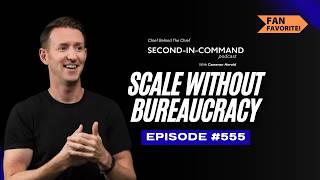
Matt MacInnis, COO of Rippling, explains how the company scales without bureaucracy by adding processes only when pain becomes intolerable and deliberately under-hiring to suppress politics. He describes Rippling's unified employee-data platform that creates network effects with each new integration, and shares his approach to hiring co-founders based on trust rather than traditional searches.
Chapters
One thing that's super clear to me, you know, whether it's about a founder looking for a co founder, you know, they call it founder dating, you know, or whether it's about a CEO who thinks he or she wants a coo, you can't manufacture trust. No, it's an inconvenient truth that if you think you need someone in one of these roles, you know, co founder or coo, if no one of that level of trust is available to you in the world, then you need to face that reality as opposed to deny it and make a decision about bringing somebody in anyway. I think that's like true on the CEO side and it's true on the COO side.
Matt McGinness is the chief Operating Officer at Rippling, where he oversees business operations. From 2009 to 2018, he was the co founder and CEO of Inkling, a mobile learning platform that provides the on job training for companies including McDonald's and Whole Foods. Inkling was named as one of the fast Company's most innovative companies and raised over 100 million in funding before being acquired in 2018. Before Inkling, Matt spent eight years at Apple growing the use of products and education in the sciences. He holds an electrical and computer engineering degree from Harvard. So he is actually one of the smart guys. Because when I went to university I couldn't spell Harvard. Matt, welcome to the Second in Command podcast.
Thanks. Look, the only thing that I learned, I learned two things by studying engineering at Harvard. One, it's like studying fine arts at mit. It's not worth much. And. And number two, I learned that I wasn't a very good engineer, which is why I went into marketing.
Can you just give us a quick background on exactly what Rippling is?
Rippling is an all in one HR and IT platform. The way that I would look at it is basically any business, you know, up to 1 or 2,000 employees has this massive hidden pain that they manually shuttle data from, you know, their HR system to their payroll system, to Dropbox and Slack. There's this original sin of all of these systems not talking to each other. And Rippling is the one and only system that makes all of those systems talk. And we're eliminating the administrative burden of running a company, getting rid of all the busy work which our customers would love not to have to do.
Why did you get involved in the company?
I joined Rippling for three reasons. One, I know Parker very well and it is not just rare, but effectively never that you're presented with the opportunity to get on a Rocket ship growth company and build it with one of your best friends in the world, that just doesn't happen. And so the fact that I was offered that opportunity was pretty special in its own right. The second is that I know Parker pretty well and believe that my skills are very complimentary to his. And so it was a sort of hand in glove fit in terms of what I know myself to be good at. And then third, as I, you know, had invested in the seed round of the company and had participated in the series A and gotten to know what was really special about Rippling, I came to understand that it had what I'll call a unique structural advantage in the market. That the way this company was approaching the problem of data in businesses, or, you know, employee data in particular, was just the right amount of different, in a way that clicked for my brain. And so those three reasons, right, the uniqueness of building a company with your best friend, the confidence that your skills match precisely with what the company needs, and a conviction around the business model that it was really differentiated those three
things on the skills, not on the skills side, but on the actual product itself and the company itself. And saying you got a chance to jump on a rocket ship, what was it specifically that you saw at that early stage that made you feel like it was.
I went after Parker. I have this email he printed and framed for posterity where I wrote him a pretty long screed about how he was up, that he was doing it wrong, he was going after too many things at once. He didn't know who his buyer was. And. And I think I rolled in a wheelbarrow full of investor tropes and accused him of all of them. And it was the first time of many subsequently that where Parker came back with, like, respectfully, I disagree with almost everything you just said. And my initial reaction to that email was like, whatever. But, you know, I kind of came back to it a few times in Reddit and I thought, geez, you know, number one, Parker seems to just have a clarity of thought and a contrarian perspective on this market that I couldn't compete with. And number two, I think he might be right. And I began to wrap my head around how, you know, by breaking some of these rules, and we can talk about what those rules were if you want, but he actually was the narrative violation. You know, everybody says it's this way, and then this one company comes along and does it that way, and that's the winner in the category. I believe that, you know, when I got to know the business and got to understand, for example, that the system is architected from its very first line of code to be a database for other systems to access data. Whereas everyone else in the space started with a payroll system that they then glommed a bunch of database like features onto. You can't get around that. And that's what started to catalyze excitement for me about the company.
Are you still able to have those kinds of healthy debates that you. This was before you started the company, but are you guys still able to do that? And how do you navigate that? That's a huge lesson because I think the CE really needs us to be the one who tells them the truth and tells them what's really when so often people don't want to say it.
Yeah, well, I mean, so there's a few things I think are true about my circumstances with respect to this CEO. Yeah, I think Parker and I would probably each lay down on the railroad tracks for the other in the sense that, you know, we have a lot of life history, our families are close, and we trust each other. And so I routinely say things to Parker that he disagrees with. And I would say that over the last year, we've navigated to a point where I have a clearer sense of where I ought to defer to Parker's instincts. And I think he too has developed a sense of where he ought to defer to me. And I think one thing that's super clear to me, you know, whether it's about a founder looking for a co founder, you know, they call it founder dating, you know, or whether it's about a CEO who thinks he or she wants a coo, you can't manufacture trust.
Nope.
And it's an inconvenient truth that if you think you need someone in one of these roles, you know, co founder or coo, if no one of that level of trust is available to you in the world, then you need to face that reality as opposed to deny it and make a decision about bringing somebody in anyway. I think that's like true on the CEO side and it's true on the COO side.
How do you think a company, if you're hiring an outside coo, would go about assessing whether that level of trust can be there? Or do you just work real hard on the interview process and then give the trust to the other person and let them throw it away? If they throw it away?
I mean, the first question is whether a COO is. Is it a special case of executive?
I think it's a very Special case. What do you think?
It's a special case in a few ways. One, it's a special case because the COO tends to be second in command, hence the name of your podcast, and tends to have an outsized influence over the culture and direction of the business. But also the COO gig is a special case in that the cost of failure is so much higher. The success rate of executive hiring in general, people say, is roughly 50%. It depends on how you define success. But I think it's directionally true that like 50, 40%, 30% of executive hires just don't work out. They don't last a year. Particularly if you go through the traditional method of running a search. And it's an absolute, total travesty of a method for bringing executives into a business. Because the odds, right, that like, of the seven people who happen to be looking for a CMO or VPNG or whatever job, you know, of those people who happen to be available to you in the market today, that one of them must be a successful hire for you.
It's crazy, right?
But you pay somebody $100,000 plus some chunk of equity to run that search for you, they are going to make sure you pick someone and move on.
You were an entrepreneur, so are you more of an entrepreneurial COO as well?
I am. Without question, I am subordinate to Parker in the organization. At the end of the day, the CEO makes the decision, and that's absolutely crystal clear. I would say it's fair to describe us as co pilots. He's the captain and I'm the co pilot. And there's a lot of the left hand only knows so much about what the right hand is doing and vice versa because we're able to execute autonomously. And so I have an earned sense of how to build a company, and so does he. And so I don't need to rely on him for insight into how to build a company from this stage. You know, we've both been here before.
How often do you debate him in front of the board or in front of the other leadership team members? Or do you do that privately versus publicly?
Sometimes the very act of debate with the CEO, where another member of the team is capable of representing the other position in an effective way is, in its own right, cathartic. So many times I have seen all members of the management team wither in the face of a strong CEO opinion. And maybe sometimes that's good because it brings, you know, it eliminates indecision. But in this context, at rippling, there are Cases where it is particularly important for me to voice the opinion I've heard others sheepishly share with me but not feel comfortable challenging Parker. I challenge him maybe just on their behalf in front of them so that at a minimum there's the catharsis of knowing that your perspective was effectively voiced and that it was given an opportunity to be heard by the group or by Parker or whatever. So I do think that that's an important role I play is to debate Parker in front of the team, particularly the board is an easy one for me. With the board I definitely defer to Parker in a group setting because I don't think it's productive. I don't think there's a catharsis needed at the end of the day I can take that to him in private anytime I want and we can change course. The board war is not going to tell us to do anything.
I almost treated the board like parents arguing in front of their kids. The CEO and COO at a board meeting should almost be completely as a force. And you never argue in front of the children but you definitely. You lock yourselves in the bedroom or go for a walk and have the full on debate and then for sure
I don't want to be locked in a bedroom with Parker, but I the board setting is different. I will say though that we have pretty light touch board, right? We have Kleiner Perkins, they have a one seat in. In one observer and then Parker and our co founder Persona. So it's pretty light touch.
You mentioned earlier about the flywheel and really identifying what the flywheel, that's the call the concept from Jim Collins in his first book or second book. Good to great. Walk us through kind of what you see as your flywheel then for rippling.
The key to a good flywheel is when an incremental customer on the platform benefits every other customer. So the most obvious example of this is something like Facebook where more of your friends signed up the more it was useful to you and usually the feedback loop is not quite so like crazy. You take Salesforce as an example. Salesforce has an incredibly strong flywheel in the form of their ecosystem. Initially when Salesforce started they were a cloud based CRM and they fought for years and years and years to get over the fear that it people in particular had that putting their data into a multi tenant cloud solution was putting their customer data at risk and there was a chance that somebody else was going to see it. But when you know they started it wasn't obvious that there was a very strong flywheel there because people wanted their data segregated. And you know what could I possibly benefit from some other company putting their customer data in too? But what happened over time was that people started to build integrations to the Salesforce cloud. And as they built integrations, more and more product capabilities came to life. For Rippling. We have a pretty similar dynamic. There's never been a single system of record of employee data in all of these small and medium enterprises. In the Large Enterprises, the 100,000 person companies that implement Workday, the problem there is, well, they're implementing workday for their HRS and they're implementing ADP for payroll. It's this giant pile of different systems that are all getting integrated by the IT department. But for small and medium businesses, they can't afford to do that. They don't have an army of IT people. And then there's no off the shelf solution. So Rippling comes in and we provide you with a place to put your employee data. Now, why would it be beneficial for some other company to come in and put their employee data in? I don't want to see their employee data. I don't want them to see my employee data. That actually seems like a terrible idea. But the reality is that companies are beginning to build integrations to Rippling because there's such an awesome set of APIs and interfaces for them to be able to access that data to do cool things. The more people bring their employee data to Rippling, the more developers are going to have an incentive to build integrations to our platform. And that flywheel is, once it gets going, it's unassailable. And I would argue that we've already got it going.
That's interesting. Yeah. And once you're really clear on what that flywheel is and stay focused on it, that's where scale and the growth really happens. How do you avoid the corporate, the bureaucracy, the waste? Do you have systems to look at that or to watch for that, or do you just try to run fast?
There's corporate bureaucracy and there are politics, and these are two really different things. So bureaucracy. Bureaucracy is, I would say, if I were to define the term, it's process that slows us down. And the worst kind of bureaucracy is the overwrought process or the unnecessary process. Those things are first cousins. Overwrought process is one that just, you know, jesus, why do I have to do this much stuff to get this task done? And so I would say that the way that we tackle that at Rippling as we've grown is that we have not implemented process at all until something is very clearly broken. You have to feel the pain of the lack of process before you implement the process.
Do you have any process or decision for hiring and for allowing people to hire? How do you allow those people to get hired into the organization so you don't have people building their little fiefdoms or adding people, just throwing bodies at it.
Back to the same thing as is a comment I made earlier about process. Don't hire more people until the pain is intolerable.
So you really wait until the pain is intolerable to allow it to be.
Oh, yeah, man. Because, like, this principle holds across the board. Don't develop process until you really need it. Don't hire people until you really need them. The amount of energy that you spend trying to get something right in advance, let's call it, you know, a thousand units of energy spent trying to figure out the future and make a decision. Okay? And 50% of those decisions were correct, and 50% were incorrect and needed to be redone. All right, so let's say 500 of those units now were well spent. 500 were wasted. And let's say instead of, you know, spending those thousand units up front, thinking and thinking and spending and spending and meeting and meeting and talking and talking and building and building and trying to get to a decision, you just said, I'm going to go wait for this to get super difficult, but in the process, I'm going to gather a ton of, like, recon. Then I'm going to make a decision immediately in the moment about what I should do. I maybe spend a hundred units of energy on that, and I get a right answer 98% of the time, way smarter.
Is that a cultural norm that you set within the organization?
Sure. And it comes from Parker. And, you know, I am, I think, sort of predisposed to agree with the approacher. Takes it to an extreme where, like, he's 99th percentile. I'm like, 90th in terms of proclivity to be sort of impulsive and reactive to the situation. We resist the temptation to engage in deliberation for the sake of debate. And you were asking me about process, and we also talked about politics.
Yeah.
I think the other thing to remember about politics is, like, in a business, if you give people a ton of free space to worry about their, you know, how I'm doing, what's that other guy doing? Is he gonna be more important than me? You inevitably get politics. The antidote to that is if you don't over hire. And in fact, if you just barely underhire and everyone is just go, go, go all the time on what needs to get done, you don't have much in the way of politics because people don't have time for that shit. They're too busy trying to deliver the result. But if you've ever been in a high growth company, you know that politics tend to fall by the wayside because it's really just about results. And if you've never been in a high growth company, you're not allowed to argue with me.
Interesting. You're right. Politics do tend to creep in when growth slows down at times. Questioner. But the exit that you had any lessons on or from that exit that you could bring forward to that you
can share with us, I would say that single largest kind of existential learning from the entire journey from starting a company and getting funded by Sequoia and feeling like we were, you know, predestined success, to pivoting multiple times, doing multiple rounds of layoffs, disappointing many, many people, ultimately building a business to profitability with tens of millions in revenue. And then as a founder and CEO, having gone through that whole experience coming out the other end, yeah, I got a check and I'm very grateful for that, but didn't get rich. You know, it wasn't sort of the giant multibillion dollar outcome that you assume is your only option when you're a 20 something starting a company in Silicon Valley. It tore my ego apart. And you know, if anything, you know, you go through high school, you get good grades, you graduate valedictorian, you go to Harvard, you study engineering, you realize you're not a good engineer, right? And what I had to learn the very, very hardest way is that number one, no amount of energy on my part can guarantee an outcome. And number two, life is a team sport. And I had these. In the academic world, we're trained, we're conditioned to believe that your grade that you get of your own effort at the end of the semester, you know, is under your control and that that conditions you with that sort of pattern in life that like your effort is correlated with your result. But it's, you know, there's just way too many externalities and too much dependence on other people, right? So for me, when I got to the end of that experience, I had been beaten to a pulp. I'm so much better a human being. I'm so much more at ease with who I am. I'm so much more at ease with the pursuit of the sport. Of business today than I was for the vast majority of the time that I was a CEO of my own company.
Last few quick questions before we wrap. How do you do the layoffs? Right. The big rounds of layoffs. Right.
For a period there, I actually maybe still am a go to guy on layoffs. I know Sequoia tends to have the person to whom they send their founders when layoffs are necessary and I've been on the receiving end of that email a few times. Layoffs are. There's a few rules I should say. It's advice about advice. Okay, I'm getting super meta. My advice about advice is that if you hear someone you trust give you a piece of advice and you get it, this roughly the same advice from two other people. Just take it. Just take it? Yeah, just take it. I mean just a hundred percent of the time, just take the advice. And on layoffs, if you go and talk to people who have conducted them successfully in the past, you're guaranteed to get the same advice over and over again. The minute you make a decision to do layoffs, execute them aggressively. And what I mean is go quickly because people are going to know you're going to do them and make sure you cut more than you think you need to cut. Otherwise you're going to regret it because you're going to be back to the trough for a second round later which is ten times as demoralizing as the first two is that you know when you do layoffs man, you have to execute with absolute precision. There is no margin for error. You can't the paperwork, you can't the messaging, you can't outsource the problem. Layoffs are one of those cases where there is a right answer and deviation from the right answer is less is just is worse. Relatively few times in business where that's true where there's a right answer to something and so if it's available to
you, don't be Are you part of the C100 at all?
I'm familiar with C100. I've done events with them. I don't spend a lot of time on it but I loosely affiliated how's that?
Just great group where there's more VCs from Canada living in the Bay Area than there are VCs in Canada.
In Canada? Well I mean Canadians kind of run Silicon Valley as far as I can tell. Every time you turn around there's another
Canadian in a last question on one on one meetings. I've got an idea that you probably have a great way that you run your one on ones for your team. How do you run your one on one meetings?
I have a user manual, first of all, which is a document that's based on an essay from Elad Gill and he captured it in his book the High Growth Handbook. I highly recommend, highly recommend that all executives, but in particular CEOs in, you know, in any sort of growth company do take the time to articulate your user manual. Because every time a new employee joins, every time a new executive, anybody's going to have to work with you. You can hand in the user manual and say, hey, here's a cheat sheet on how to work effectively with me. And oh, cool.
Yeah, just manual for you.
For me? Yeah, it's the user manual for Matt McGinnis. It's just like, here are my strengths, here are my foibles, here are the things that bug me, here are the things that I appreciate.
What.
One of the things that I put in there is my one on one sort of how I like to run one on ones. And then I sort of stick with it and I sort of don't, I have to be perfectly honest, like what I like to do with one on ones. I like to have a document where I keep a backlog, like a running backlog of what I want to discuss with somebody. And so people with whom I have one on ones regularly is usually like a bunch of items that have come up over the course of the week that aren't urgent. But we should talk about that. I just sort of toss in there and it serves as the agenda when we do get together and then we keep notes in those documents. And I'll say that like, I'm not militaristic about its use. And so certain employees, most of my employees use it some. It just doesn't work for us and we do a different way. So I'm, I would say I'm pretty flexible with it. You know, I will say one thing that's important to me as a leader is that I have to check in on the individual, how they're doing, which is, serves as the foundation to our relationship. Then I like to check in on us and then on top of that we can talk about the tasks that have to get done.
Great. Would you share your manual, your Matt McGinnis manual?
Yeah, of course. I'd be happy to.
I would love to read it. Would you have permission to share it with our listener as well?
Yeah, I think so.
It could be one of your legacy moves. It's a really powerful idea that I haven't heard in and I've heard a whole lot of stuff in business, but this is a really cool one.
Yeah, no, I'm happy to share it.
All right, if we were to go back to the 20ish year old, 23 or whatever year old self graduating from Harvard and you wanted to give yourself some advice, what would you tell yourself back then?
There's a lot, but I'll say the highest order bit for me at least. And I think it's true of every human. I would try to convince myself that my the authentic version of me is the best available version and that I should accept whatever comes from that with grace. I shouldn't try to be someone else. I shouldn't look to outside benchmarks to frame up what I need to become. I should look within for the answer. And I think if I'm good at this and not good at that, I suspend all my time on this and let that go. Even if I think I'm supposed to be good at that.
I like to say it's the best available version of you.
Yeah, it is. Because there's anything other than your authentic self is a less good version. And so stick. Stick with what's authentic.
Matt McGinnis, the chief operating Officer from Rippling, thanks so much for sharing with us on the Second in Command podcast. It's amazing.
My pleasure, Cameron. Thanks for having me.
More from Cameron





Flutterwave Former Global Head of Operations Awa Kone | When Growth Outruns Operations (Podcast 611)





