FAN FAVORITE - Kajabi: Scaling Through Product & Execution | Sean Kim (Podcast 572)
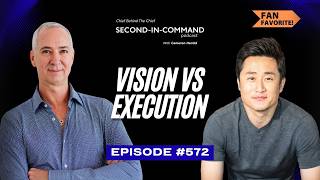
Sean Kim, President and Chief Product Officer of Kajabi, explains how he brought Amazon's customer obsession and impact calculators to TikTok and now to Kajabi, a creator platform with 60,000 customers and $1.7 billion in annual revenue. He prioritizes ruthlessly, avoids feature creep, and uses data to decide where to invest.
Chapters
And when I came in, of course, you know, there's so many people that are happy, people that are not happy. There's no situation where everyone's happy. Just have to be very clear about the changes that are coming, when it's going to come, what's going to change, and then just kind of over-communicate that. You can't please everyone. There's always some people that just don't want to change, and they'll leave on their own, or you have to get them out.
Our guest today is the President and Chief Product Officer of Kajabi, Sean Kim. Kajabi is the leading platform for knowledge entrepreneurs and creators. Previously, Sean was the head of product at TikTok, where he set the strategic direction and led teams responsible for developing and growing the company's product. Prior to TikTok, Sean was the global head of product at Amazon Prime, where he played an instrumental role in driving customer retention for Prime membership. Sean, welcome to the Second Command Podcast.
Thank you for having me. I'm glad to be here.
Um, there was someone who used to be at Amazon Prime, Anna. Apparently she was like the the head of Amazon Prime at one time. Do you know who that might have been? She ended up going on Bulletproof.
Yeah, I do know her. Yes. That's right.
Yeah. She was one of the very early guests on the podcast a bunch of years ago. I helped recruit her away from Amazon to go to work for Bulletproof Coffee. Ah, love it. Tell me about that as a, you know, part of your, your career and going from, um, from Amazon. What was that like? What kind of skills did you pull from there? And then we'll go into a little bit about TikTok, and then I really want to focus around what you're doing with Kajabi.
Amazon was, uh, I mean, what, you know, one of the best companies I've ever worked for in the past. Yeah, I really learned what it meant to be customer obsessed and ensuring that customers were first and foremost, the most important reason why you make any decisions in business. Throughout that experience, I've been able to see how a company can really make a difference and have positive impact in the customers' lives. Revenue was not part of this discussion in the beginning. It's always like, hey, what's the best way to ensure you're providing the most amazing customer experience? And the work backwards from there. That was very different thinking prior to joining Amazon. Like that was not how any of the companies I worked at, you know, approached business. It was, it was, it was just a really amazing experience. I think one of the reasons why I got excited about joining Amazon was way back in the day when they launched the Fire tablet, I remember seeing a commercial about it. and I saw a customer clicking a button and having the chat agent appear on the screen to then onboard the customer, walk through how to use the product and answer any questions. And I thought to myself, like, wow, like the companies that I was at before would never launch that. That's just not scalable, right? That's, it's an amazing experience, but that's just not scalable, right? That was like kind of a moment when I realized this is a amazing company that I've all worked for. And since then, I know there was, it was, uh, I had an amazing time. I learned a lot about how to run a subscription business, how to go and market with devices, very metrics-driven approach, working with some of the best leaders in the world. So it was just an overall amazing experience.
Um, so why would you have left Amazon to go to probably more of a startup in TikTok, right?
I wasn't going to leave. I mean, I had built such great trust with my leadership and, you know, got promoted and so on. And so it wasn't something any proactive to us. Someone had reached out from TikTok and said, hey, we have this really amazing opportunity. It was actually initially for a head of marketing role. And I was like, oh my, marketing? I don't even know what TikTok is. So I downloaded the app, opened it, and started playing with it. And I was like, I saw a bunch of kids dancing and lip syncing. I thought like, why the fuck would you introduce this stuff? I did not understand the utility or value behind it. What are you solving?
Right?
So that's kind of like how I've trained to think being at Amazon is like solve a big meaty customer problem. I just did not understand it. I don't think this is the right company for me. And then a few days later, the founder, Alex Su, called me and was like, hey, let's talk about this opportunity and what do you like, dislike? And I'm like, well, first of all, I'm not a marketer, I'm, you know, I'm a product. And he's like, well, we can make it happen. And so let's just come to LA, have a conversation with me. So I flew down, met with him, and he said, Sean, like the content, you know, this is something that we're going to work on, but we have figured out something that no other company has figured out yet, or they're not very good at it. Which is discovery. That was the magic word for me. It's like discovery. Uh, it means like, yeah, so we, we got discovery down, which means that we can help people discover where to travel, what to eat, what books to read, what movies to watch, uh, what's the latest fashion trend. I mean, the possibilities are endless. And that's when I got really excited about it. I was like, Wow. I mean, if you figure that out, there's a lot of different ways we can go approach this. And then he also mentioned like short-form video is the way people will consume information in the future. Guaranteed.
Yep.
So, so, so I heard that, I was like, hey, this is super exciting. And of course, the natural question I came up with is like, hey, so are you going to launch e-commerce? And he was like, check this out. And he opens this version of the app. This, by the way, 3 years ago that had e-commerce enabled already. And there was someone in the video that was, you know, just walking and you could click on her clothes and immediately show that, you know, show that product and be able to purchase it right there on the spot. I was like, oh wow, this is cool. So, uh, so that got me really, really excited and like now I thought like, well then, place to travel, what do you eat? I know what movies to watch. Like you enable that last mile experience within that app. You enable the commerce for any bit.
So how many people were at TikTok when you joined and what was that culture shift like moving from an Amazon to, to there then?
Yeah. I mean, so I'm trying to think of when I joined, I think maybe at the LA office or maybe, uh, over 100. Okay. Not, not a lot.
That's about the same size as where, like, you know, in the Amazon warehouse bathroom.
Would fit there, but not fit there. Yeah.
Yeah. It's completely different culture.
Completely different culture. Very stern up. I mean, we, you know, I remember walking in to the office. By the way, this is a rental office called Spaces. Walked in and I asked, hey, where do I sit? And we're all over the IT guy just looking around. And just like clearing some computers from this like desk area, said, just sit here. Right? So I was like, okay, well, all right. I'm definitely going to start up, right? So they didn't have anything set up for me to set up. I just kind of like sat down and then he brought me a logger and so on. So like, wow, this is a super startup, you know, experience. But I loved it. It was like this one massive room with like everybody and I could see what everybody at the same time. It's a lot of collaboration and and a lot of excitement at the company. Culture-wise, yeah, I mean, like, uh, it was super, um, everyone was super scrappy, like working late. Obviously we had to work with our counterparts in China as well. So it was, uh, you know, at the time, like it was not a well-known company. One of the things I'm kind of proud of that I brought from Amazon was doc writing. So writing documents for product strategy and, you know, business strategy overall. And because it was pretty much just all PowerPoint, I was like, no, we're going to do docs going forward. And brought that to the company there and then, uh, continue to push that for like everything, like, uh, across different teams as well as at ByteDance. So that's like now accepted way of doing business there.
So walk us through what that means. What is the doc writing culture? Is it kind of like submit a one-pager with what you're going to be doing and why, like the who, what, when, why, and how, or what is it?
Yeah, I mean, it kind of depends on the purpose of the doc, but product strategy, for instance, will have what is the customer problem you're trying to solve for, how big of a problem is it, you know, how many people have this problem, for instance. And then we'll have a solution in the doc along with what are the risks that come with that solution, what's the cost to the business, what is the MVP approach, phased approach, phase 1, 2, 3, timeline for that. What are some asks from leadership team? So it goes into detail and that helps us ensure that we're making the best decision about what we're going to make.
I've created something similar called the decision filter where I look at the cost of inaction and the cost, like what's the benefit of doing it? What's the ROI against our people, time, and money? But I need to go in and take a look at the Amazon Doc process a little deeper. I like it. Was there any pushback against that change of culture when you were bringing something in and how did you? Kind of socialize that when you were bringing that system into TikTok?
Uh, yeah, I think there's some pushback from certain people, but, uh, generally it was like widely adopted, accepted. I think the founder of ByteDance, Jimmy, really had a lot of, basically had a fascination for Amazon. He talked about Amazon all the time and said, look how successful they've been, if they were there now, look how they set up their leadership principles, really admired that company. So, so he. you know, when actually when I met with him, he would ask about Amazon, say, how, how do you work there and how do they operate? So on. And so when I brought the doc culture and I wrote some pointers down in terms of how docs should be structured and what should include, this docs, you know, how, how you should write, he, I remember he actually took that shared across the company.
So that makes a lot of sense because they were already really bought into that whole culture. That wasn't something that they were gonna be pushing back against. They were trying to bring more of that in. What do you think some of the skills were that you pulled in out of TikTok that you carried with you over to Kajabi today then?
TikTok, man, they work fast. They're fast. Fast, fast, fast. You know, so it's interesting like how fast they are. So one of the things I brought in from there was definitely the sense of urgency and being able to test something quickly. Fail fast, right? And then move on. And if there's something that works really well, then just like immediately double down, just like boom, like put the resources behind, shift resources immediately however you see fit to make sure that you double down on success. When it comes to competitors, like they really do no rock about competitors. Like anytime they feel like there's a competitor that's getting any kind of traction, they will they will make sure that they are not getting traction. Whether it's like, uh, outspending them or, you know, uh, building products around whatever made that competitor successful, building similar products, right? And they had the reach and the deep pockets to make sure that they were the, the leader in that space.
So it's interesting, you often hear people talking about the competitors to either obsess about them or to ignore them, right? Andy Grove is like, only the paranoid survive. Was TikTok playing with both thighs? Were they looking at what the competitors were doing and then also really driving ahead with their own vision as well? Or were they obsessed in one direction more than the other, do you think?
They did both. Like every business review, there was a full section on everything my competitors are doing. We had information about their DAU retention. We had the latest product releases. Uh, we estimated their product release adoption at Google data, like I was like, wow, how'd you get this, all this information? But yeah, there's a whole section dedicated. And then we go into our, our 4 metrics and what are we doing. It was definitely for something that we look at very often.
Okay. So then you flip over from TikTok over to Kajabi. How many years has Kajabi been in business? Certainly a fantastic brand. Is it 5 years old, 10 years old?
A little over 10 years old. Yeah.
Okay. So a little over 10 years old. It was more of a, you know, is it a mature company? How many employees were there when you got there?
Um, so when I got here, we had, I think like, you know, including employees in the Philippines, I think we're at like a little over 300. Okay. Um, and it hasn't changed a lot. Like we haven't gone crazy and hired a ton of people. We're very cautious and responsible about how we've been hiring.
It also feels like the kind of platform that you've probably hit scale now that you don't need to add a whole bunch of people either, if you can stay cautious and stay focused. Is that true?
Yeah, I would say like everyone on our teams are stacked and working at max capacity, which is the way it should be, right? So I think like, uh, there's always room for more work and room for people to get, you know, work would come in, but I think we're, we are very cautious about how we hire. We want to make sure that the current person is like completely stacked before we hire the next person and then make sure that that next person has like lots of work ahead of them.
So, all right. So you're the first guest in about 245 guests that I've had on this podcast that has mentioned that. In terms of stacking and people working at max capacity. And I've always believed that as well, that it's kind of like, you know, the athlete that finishes the whatever race that they're in or event that they're in, there's, they always have more fuel in the tank at the end of the race, right? You rarely see the marathoner collapse at the finish line and fucking get hauled off to the hospital and win at the same time. So how do you know if people are operating at that max capacity and how do you get people to wrap their heads around the fact that we need to get more done with less people faster, right? We need more efficient.
Nader Walid. Agree with me, but so like my team will tell me directly and be like, hey, like I'm busy. Like I could see from like their roadmap and all the initiatives that we have going on. And we're very transparent about all the work that is on a plate for all engineers and all the PMs. And just having been a PM, I know what it takes to have like, multiple complex initiatives going on, working with like, you know, hundreds of engineers. So, you know, when someone says we're busy, we have this roadmap view and we can say, yeah, you're pretty busy. And say like, I need to be able to have another PO, for instance, so that I can move faster. And we do that estimation and say, okay, if you have another PM, you can get this done in half the time, whatever, like, or launch this faster, whatever, right? So, so I think that's where we do that calculation and say, okay, let's do a little bit of juggling.
And I like that you do go back to the roadmap. So you're looking at exactly what's on their plate specifically, what they're working on over the next, how long? Month, 3 months, week, month?
We can project out what we want to build for the rest of the year. And so we just see like all of 2023, of course it will, you know, won't be exactly what we expect. Like some things won't work, we can pivot quickly. Some things will work really well, we double down. We have a pretty robust planning process where we think through what are the core immediate customer problems we could solve for, what takes the most time for customers, where's the most friction, what helps customers become more successful, reach their audience, you know, so we ask these questions to ourselves and then come up with these product strategies. And we typically, typically the immediate the problem, the more complex the solution easily, uh, and, and requires a lot more engineers. So, so we have this really good robust design process and they'll be able to predict out the impact of the initiative. So we have like an impact estimation calculator based on like the improvement to like conversion, activation, retention, and when you launch it to see incremental customers will save or retain or whatever it may be. And so we have the impact calculator, we have high-level estimations from engineering so that we can like, and we know exactly how many engineers are on the certain teams that can estimate out like what we can launch within a quarter, half year, rest of the year.
And what's the impact calculator?
Yeah, so is that, that's something I actually brought from Amazon as well. Uh, but the impact calculator can forecast essentially how many customers we could acquire as well as convert and retain, uh, based on historical data about some, you know, products we've launched in the past in a certain location, for instance, within the app, wherever it might be. And then we look at that and say, hey, this is how a certain product has improved retention, and this is how many people we can influence. So if we launched a product in this space, we estimate that we can improve retention by 1%, 2%. If we launch it in January, we can predict out how many people will save. We have different versions of this impact calculator. Depending on where the product is launched, whether it's like in the front door or the back door, you know, the subscription service. We work with the FinOps team, kind of build that out, model it out, and then we got pretty good at predicting impact for products. So Amazon Watch explained like, man, we were able to predict down to like 5 bits in terms of how many prime numbers you would save. Wow. We got really good at it.
So you also mentioned something about the hiring more and being cautious with hiring people. It feels like when companies are smaller, kind of in the 50 to 100 range, and they really have their first management or leadership team that doesn't really have the skills yet, that their answer to every problem is hire more people. How do you prevent that from happening? How do you grow their skills so they understand that it's not always hiring more people, that maybe it's, you know, becoming more optimized or automated or saying no more? How do you grow those people so that they understand that?
Throughout my career, Like we've been really good at ruthlessly prioritizing initiatives so we don't stretch ourselves thin and we focus our efforts on the most impactful initiatives. So someone says like, hey, I'm really busy. What's going on? What are you working on? I have these 5 initiatives. I'm like, well, how important are these 5? They will stop, think and say, if you didn't do these 2, we won't have it. It's like nothing, not really. Then don't do it, right? Just focus on these 3. And then of these 3, which one is most impactful? Which one, you know, have the highest impact with the lowest amount of engineering work required, right? So I think we kind of do this exercise and we prioritize the time and effort put into ensure that people are focused on the most impactful things.
And that is kind of when coaching meets alignment, right? When you're just trying to align their efforts with what the results are going to be or whatever your outputs you're looking for. Um, tell us a little bit about Kajabi. What— so, because I'm sure there's a few people out there haven't heard, even though you've got a fairly big user base.
Yeah, so Kajabi is the easiest way to build an online business around what you know. So we are an all-in-one solution that helps creators market, publish, or sell their digital content such as podcasts, video courses, newsletters, even coaching, a live coaching. Uh, we have around 60,000 customers and they have made $4.1 billion to date with an annual run rate of $1.7 billion. So they're doing quite well. We have a few creators that have made over $100 million. Uh, so these are pretty big, legit businesses that, you know, we've been able to scale with. Creators that joined in 2022 have earned 20% more than those that have joined in 2021, 2020. So their, you know, product and services have been getting better to make it easier to reach their audience, retain them, and earn money. So yeah, the company has been around for about a little over 10 years and they do quite well.
What was the reason for you to join Kajabi? What was the reason for you to flip from TikTok over to Kajabi? And I want to focus more on not why you left TikTok, but what was it that got you to join Kajabi?
So when I was at TikTok, I definitely grew fond of the creators I would work with and grew a lot of admiration for the work that goes into becoming a creator. Kind of having worked with a lot of the creators I've met at TikTok, and one of the things that kept coming up was not being able to prioritize properly as a creator. And, you know, because when you become a creator, in the beginning it's more about social credit, like all likes, comments, shares, views, and followers and follower count. But then you realize you're putting in like 4 hours a day, 6 hours a day, 8 hours a day to creating content. And then you realize, well, I gotta monetize my time, right? I can't be like just doing this for likes and followers. So we got a lot of feedback on TikTok about helping them monetize. And we've tried a lot of different things. We launched a billion-dollar creator fund. We launched tipping on profile page, gifting videos, livestream gifting. A lot of different things to try and help creators build a living, you know, earn like meaningful income. But I would say that it wasn't incredibly successful. You couldn't quit your day job and do it full time. You had to rely on brand deals, and brand deals are not always consistent, and you can't really decide exactly what you want to create. Then, you know, the recession, those brand deals kind of dried out. I've talked to my team at times and say, who's doing really well? Who's doing Creator One's issue really, really well? Let's look at some of the competitors. Let's look at some of the startups. We looked at competitors, they weren't doing very well either. So we looked at startups. Sure enough, Kajabi came up. Kajabi, the numbers at the time were like, oh yeah, $3.5 billion made to date, 50-something thousand creators. I'm like, what? How is that even possible? So I started researching the business and met with some of the people. And, um, hey, I put one to you, let's just go copy it up, figure out what they're doing off of that to, uh, TikTok creators. And then we did the research, realized, yeah, I can't really— you can't really copy what they're offering. You can't, uh, you know, those social media companies cannot, you know, provide their creators all the email addresses and about— be able to just own that audience and take them off platform and allow them to you know, control their business end to end, right? So both, uh, it would keep them all on platform, you know, because of bad revenue and so on. But, you know, meeting with the Kajabi team, meeting with the leadership team, came to realize, wow, you guys have an amazing business. This is, uh, such an awesome thing you're doing for, for creators in terms of empowering them to build meaningful businesses. And coincidentally, I actually got a job at the time. I thought to myself, like, this is, uh, But once I like Call of Duty, to really help people build incredible businesses and change people's lives. And I hear time and time again, people like Joy Kajabi build a business and they have complete personal freedom. They're able to retire and able to pay for their kids' education, college, their family, like literally changing people's lives.
Yeah, it's interesting.
Yeah, and that's why I thought like, okay, this is the time to Enjoyed.
So you said something that I'd never actually considered before, which is intriguing, that you actually do give them the contact information for their clients, their course users or whatever, and they are able to take that and monetize it off the platform and you don't care about it or worry about that. I guess, is that because they're paying a monthly fee and you know that if they can monetize it elsewhere, that yours is lead gen for them, they're going to keep paying for, or?
Well, so Kajabi offers, you know, we offer the, um, since it's an all-in-one solution, we offer our customers ability to build landing pages, funnels, collect email, nurture them to becoming a paid customer. Uh, and for the courses or podcasts or coaching, whatever it might be, these customers are signing up to be part of the mailing list for our customers. Yeah. So, so that's essentially how their business runs is like, hey, join my mailing list so I can give you a preview of what type of content I offer. And then they eventually become, you know, become a payment.
Okay. So one of the things that seems to happen when companies get to be your size, especially when they're a SaaS business, is that there's almost like feature creep or past features even, like just other, other markets you can get into, other services you can start bundling in, and then it becomes this big, huge, massive thing that no one's using or just gets complicated, right? Like Confusionsoft or, um, how do you as a company say no to the opportunities of what you could be bundling and building in? Like you're not creating, you're not, you're not a funnel software now. You're not trying to to compete with, you know, email marketing services like, you know, like how do you say no to all the things you could be and say yes and stay focused on the things that you are?
We talk to customers on a regular basis. I required our team to do that as well. We have a lot of survey data. We also have, of course, have our own internal metrics in terms of what's been most successful in terms of helping our customers. Become successful and what is the product that's most utilized and has the best chance of helping customers to see. We shift a lot of our focus as well as resources to ensure that we're constantly improving that product and then thinking about how we can get this to the next level. So, hey, what can we do to make sure that we're saving them even more time, removing even more friction points? Are the way. So when we have this conversation with customers, we talk through the, what are the steps you're taking to actually build this business off of this product? And they said, here's where I spend most of my time, X, Y, and Z. And say, okay, well, how do I make that 10 hours into like 5 minutes, right? So that's, that's essentially how, where we're kind of shifting that time. And then we ship a lot of the resources and partners back. Doesn't give us a lot of room to do other things.
So I understand that the, at the leadership team level, how you say that and how you make those decisions to stay focused and to say no. How do you say no to the employees who are coming to you with the ideas? And how do you say no to the customers that are coming to you with ideas where it's like, it's either a great idea, but no, or it's a great idea, but not now, um, without killing their spirit and energy, you know, like it's kind of like Gen Y, Z, they all want their 9th place participation ribbons.
I hope to have come to the same conclusion on their own. And that's through the, you know, the product strategy doc. We say, well, you know, let's do the work and figure out how impactful this thing's gonna be. And they'll go through and do the customer problem validation and how many people have the problem and impact calculator, realize like, well, it's not very impactful. So they'll come to the same conclusion, hopefully. And come to me and say, hey, this isn't going to be very impactful. You know, if I spend these 8 hours a day working on this, I'll have way more impact. And then this is something that's a nice to have. This other thing's a nice to have, it could go later.
I like that. And is that again, the tool that you were using at Amazon, or is that kind of impact calculator a tool that is from Kajabi? Oh yeah.
So I, we first built that at Amazon. and then I brought it to TikTok and I also brought it to Kajabi. So it's just, uh, and it just gets more accurate over time. So the first version of this, like, we won't have enough data to feed it, but like over time we have, we'll have launched a lot of products, we'll have estimations in terms of what would've been versus actuals and say, oh no, okay, now we know. After we feed more data into this calculator, this gets more and more accurate over time.
Okay. So I understand why you joined them and how the fit is. Why do you think they came and picked you? I mean, they've got a good team, they've got some good employees, they've got product market fit already, and now they're bringing this guy in from another company over top of all this existing team. So why did they pick you? And then how did you enter into the company without upsetting everybody that's there that didn't get your job or that now reports to you? Hmm.
Yeah, I think like they wanted to become a more product-driven organization, seeing how while it's discussable to Comcast, but, uh, in the process of that, that the company has launched, I think they went to them and actually said, hey, what are you doing in TikTok to make it so successful? How, how was it so successful within such a short time? And so I think like that definitely did help for sure. I think like also my background at Amazon with Amazon Prime being a subscription business, that also was a big factor as well. So I think like just my product experience was, was I think probably core to decision-making in terms of getting me in the door. So yeah, when I was, you know, when I came in, of course, not, you know, there's going to be people that are happy, people that are not happy. There's no one, no situation where everyone's happy. And, uh, you know, I just have to be very clear about the changes that are coming, when it's going to come, what's going to change, and then just try to over-communicate that. And you can't please everyone. There's always some people that just don't want to change. And, uh, you know, and they'll leave on their own or you'll get them out.
Okay. And then how about you and the CEO? So you've got a, was it a founding CEO or was it a hired gun CEO that you're then working with?
So I was the CFO slash COO prior to me joining. And then he recently became the CDO. And okay, they hired the SVP and CTO.
Okay. So how did the two of you kind of divide and conquer and split up roles and responsibilities? And then how do you keep those communication channels clean with everybody else in the organization as well as to who goes to who?
Yeah. Yeah. So I report to Hod and we divvied up the responses based on what we're really good at. I was, you know, really good at product and not a Oversee engineering and so on. So I had product engineering as well as design. And then we also put customer service on my team. With customer service, we can really help influence some of our product better launch because they have, they're very close to the customer. We get the voice of customer on a regular basis. We made a lot of adjustments in terms of being more transparent and surfacing that voice of customer information to all teams. At Kajabi. So we have monthly meetings down to see what are customers saying, where are most tickets coming from, what are the issues that can also help prioritize our roadmap. The adjustments have been made with our customer service team, product and sharing team, and design team. And then the people that report to Andrew are like marketing, FinOps, accounting, legal, and so on.
I like it. All right, how about your skill set? I mean, you're clearly, you know, involved in an organization that's still scaling, still growing, it's got huge upside in front of it. And I think every day, you know, in our jobs, it's kind of like, this is the biggest thing we've ever done, right? So where are you focusing on growing your skill sets right now as a leader?
I definitely want to continue growing in terms of being inspirational. I think like I would say I'm fairly demanding in terms of like, you know, what expectations and, you know, driving urgency and timelines. But I think like there's also being inspirational, and that's a firm quality to have.
Wow.
Is that something I want to work on as well? Learning more about the legal components as well. I mean, I get fascinated about legal. It's so unique. And usually me and legal have a love-hate relationship. You know, like I love them, they hate me. So, you know, it's just understanding all the nuances and what's possible. And it's just one of those areas that just like I'm continually trying to learn more about. That's cool.
I like it. All right. I want to go back to the 21, 22-year-old Sean Kim. You know, you're just getting started in your career. What advice would you give yourself that maybe you know to be true today, but you wish you'd known back then?
I would say spend the time to figure out what you're passionate about. And because, you know, some, I think you lose it over time and they'd be like, hey, this job pays better, or this is like the hot thing to work on. To start a space or go to the company. But I think that if you, you know, if you just focus on what you're really passionate about, like, and not to care about the money and all those things you're having, okay, I think all that will come later and all that will follow. But I think that's something that's really, really important.
It's funny, I love that because one of the things I've noticed the whole time we're talking, anybody who's kind of watching this video on YouTube, if you're listening, you can't see it, but when you're watching, you can. Behind you is all of these design things. You know, you like, everything is kind of designed and I kept, I kept looking at stuff like a plant in your chair. I don't know what that is behind you on the desk. Something made out of wood, like, um, your guitar in the background. You clearly have a love for design and the fact that you oversee product and design just kind of makes sense as well. So you're clearly in a niche that you love. Sean Kim, President and Chief Product Officer for Kajabi. Thanks very much for sharing with us on the Second Command Podcast.
Yeah, thank you for having me.
Really appreciate it.
More from Cameron





Flutterwave Former Global Head of Operations Awa Kone | When Growth Outruns Operations (Podcast 611)





