Grindr’s $2 Billion IPO: Rebuilding Culture & Tech | Rick Marini (Podcast 571)
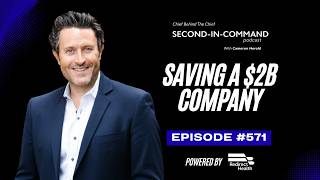
Rick Marini, former Grindr CEO, rebuilt the app after a 2020 private-equity acquisition by firing 70% of staff and giving equity to everyone. Revenue and EBITDA doubled, the app rating jumped from 1.8 to 4.6, and Grindr went public at a $2 billion valuation.
Chapters
The younger generation is missing out on massive opportunities for mentorship. I don't know that they even realize that they're missing it. I think they're happy to be at home working in their pajamas, especially like with AI. A lot of those people who are coding, you know, at home or doing whatever, I mean, they could be disrupted and they haven't learned all the skills they could have from having mentors. There is a lot of value to be in the same room together.
Where I learned it was from my now 22-year-old son, who 2 years ago was offered a role for a company. As an intern and they said it'll be over Zoom. And he was like, what the fuck am I going to learn over Zoom as an intern? That's useless. Like, I'm not going to learn anything. All right. It's time to meet Rick Marina. He's a 5-time founder with over 25 years of building and investing in tech companies. He's currently the co-founder and managing partner of Catapult Capital, which is a private equity firm focused on consumer tech. And in 2020, Catapult teamed up to buy Grindr for $600 million. Rick stepped in as CEO and rebuilt the entire team and every system and absolutely crushed it. Revenue and EBITDA both jumped by over 80% in just 2.5 years. App ratings skyrocketed from 2 stars to 4.6. Employee approval on Glassdoor went from 18% to 93%. And in November of 2022, they took Grindr public on the New York Stock Exchange at over $2 billion in market cap. So this is a success story, and he's going to talk to you about how they did it. Rick is also the co-founder and president and CEO of Rails, a self-custodial crypto perpetual exchange that just raised $20 million from top investors like Slow Ventures and Kraken. He's going to talk to you about all of his success, what he's learned as being an investor, what he's learned of being a CEO, and also 3 other C-level roles that he's had in his career. You're going to love this episode. Please share this with your team and like and subscribe to the podcast. We'll see you on the inside. Before we continue, today's episode is supported by our trusted gold partner, Redirect Health. If you've ever felt like you're overspending on healthcare and your employees can't even afford to use it, then listen up. Redirect Health offers healthcare benefits that finally make health insurance optional. It's a 24-hour online primary care and Rx membership that protects your business by guiding employees before problems happen. That means you're not overpaying for coverage that you don't need. It's like your mom is your doctor. You'll always know the healthcare you need where to get it, and when it makes sense to use the insurance so that you can pay the least. Redirect Health: protection for business and guidance for people. Go check out redirectcoo.com. That's redirectcoo.com. And if you're talking to them, let them know that Cameron at the CEO Alliance recommended you go there as well. So, Rick, welcome to the Second in Command Podcast.
Cameron, a pleasure to be here. Thank you.
Yeah, really looking forward to this. I have been kind of enamored with the brand or one of the brands that you helped build. And I don't know if enamored is the right term, but always in awe of Grindr. You got— you were the CEO of Grindr at one point. You're also the president and CEO of Rails, and now you're the co-founder of a private equity firm, Catapult Capital. I really want to sit and listen to you and learn from you, and I'm not entirely sure where to start. So why don't we just let you kind of ramble to start us off? Because I gave you the purpose of the podcast and then I've got a bunch of questions that we can dive in from there.
That sounds dangerous because I can, I can say a lot here. So you gave me a lot of rope there.
Yeah.
So let's see. So by way of background, you know, I grew up in New Hampshire, went to school at UNH and then business school at Harvard Business School. And I look at my career as I'm an entrepreneur. I'm a tech entrepreneur first. I've been an angel investor in 60 companies and more recently in private equity. But, you know, it's been 26 years here in Silicon Valley starting 5 companies and, and then running Grindr, which I didn't start. But, you know, we can get into the details on that. That was quite a journey and chapter in my career.
When, when you kind of came out of the MBA program, that was a different era than it is today. What are your thoughts about Um, and I know a bunch of people that are even going through the Harvard OPM program, which is different from the, the MBA program. What are your thoughts on those kinds of programs today?
So Harvard Business School, I came out in class in 1999, so it was, uh, internet 1.0, and going to HBS changed my life and in many ways, but one of them because I met James Currier. I met James, who was my co-founder of our first company, Tickle, and I didn't go into HBS with the intention necessarily of becoming an entrepreneur and moving to Silicon Valley. I'm, you know, I'm from the Northeast and I thought I would, I would stay there. But it, it was a life-changing experience for me to make a career shift. The internet was red hot and it felt like if you're going to go for it, you know, now is the time. So we were able to raise a small amount of, of money in the Boston area and then eventually in March of 2000, raise our first and only institutional round from August Capital and make the, make the trek out to Silicon Valley. Now, but to go back on your question, I'd say if someone knows exactly what they want to do and they're already in that track and they're doing it, it's hard to, to remove yourself from that and go to business school because you got to think about it a couple of ways. One, the financial flip of paying out hundreds of thousands of dollars for that 2 years and missing out on hundreds of thousand dollars of income. It's a big flip. And also, if you know exactly what you want to do, you're missing out on 2 years of going deeper in that area. But if you are looking for, for a career change to potentially meet maybe a co-founder like I did, I think going to a top business program gives you, you know, lots of new opportunities.
Yeah, I remember, and I wish I could remember his name now. It's going back too long ago, but it was back '99. Our CFO that we brought into ubarter.com in Seattle was a former Harvard Business School MBA, and he brought in a level of strategy and insight and decision-making and kind of rigor that we didn't have as this entrepreneurial leadership team that I think I really respected back then. I'm just, I guess, more curious where the ability to learn now is, is so much more ubiquitous. I'm curious whether those programs are a fit, but thank you. I appreciate that. So in, in, in working with Grindr, let's start with Grindr and then we'll kind of roll out from there. You guys, you and a couple partners acquired Grindr. And then is my understanding. And then you came in as the COO to scale that and, and I'm not sure if turn that around is the right term. Can you kind of give us some of that story?
Yeah, it's funny. It, it is kind of a turnaround of an already healthy company. So that's why it's funny because we did, it was a heavy lift, but it was a great company. So the story of Grindr, it was, uh, started by a guy named Joel Simkhai, uh, just now probably 16 years ago. And, uh, it had been acquired by a Chinese company called Kunlin and they owned it for a few years, but then, CFIUS, the Committee for Foreign Investment in the U.S., forced the sale. And people know CFIUS now because of TikTok recently. And we were able to come in with another private equity firm and buy the company for about $600 million. And it was such a big deal for us that the three of us, my two partners, we ran it, right? So Jeff was CEO, Gary CFO, and I was COO. And we came into a company that in many ways looked healthy, doing about $100 million of revenue and $45 million of EBITDA. But then it had some funny things like the, the star rating out of 5 was like a 1.8 and the management rating was like 19%. You got to remember a star, 1 star is basically zero. So how is a company doing $100 million with, with basically, you know, a 1-star rating? And how does the management team have a job with 19% on Glassdoor? So when we came in, we realized The company was broken from a management perspective, but the community loved this product and wanted this product to succeed. So we were able to come in and in many ways do a serial process. We came in, we assessed the talent. It unfortunately was far below where we even thought it was through our diligence process and had to, unfortunately fire about 70% of the people and really reset the talent and reset the culture. And then we could fix the degrading tech stack. And then finally, by the, the second second year, um, we could really focus on the product and generate revenue. But in doing all of that, within 3 years, we doubled the revenue to $200 million, doubled EBITDA to $93 million, and then ultimately, uh, took it public on the New York Stock Exchange for a market cap of $2 billion.
Yeah, what— congrats, by the way, huge, huge success in doing that. You actually led right into the question I was going to ask, is what did you do in the first early days, and I was going to say the first 90 days. So it sounds like the talent assessment was really the number one and firing the 70% of the people. How soon after kind of stepping in, the three of you, did you start to make decisions versus kind of the assessment and getting a lay of the land and getting to know the people and getting people to know, like, and trust you? Did you come in guns a-blazing or did you come in a little bit more strategic, or was it a bit of both situationally?
It, it was a bit of both. And let me give you some examples. So on day one, we came in and you have three straight guys that are the new owners and the new, you know, management team, C-suite of a company that in the LGBTQ space is iconic, right? So we wanna be respectful of our employees and of the users that we serve. And we don't want to come in heavy-handed because the Chinese frankly did that. It was a black box. Only 5 people had equity and they ruled by fear. They literally would scream at people, you're lucky to have a job. These are the stories that we heard during diligence, and it is 180 degrees from the way that we operate. We want to operate with transparency and hopefully inspire people to do great work. So on day 1, we made the decision to come into that meeting and introduce ourselves and, and, and just, and own it and say, We're 3 straight guys who understand consumer tech, but we don't, you know, we don't come from gay dating. We're gonna rely on each of you to help us, um, at every level of, of the company. Everyone is going to get equity. We are gonna be transparent. Uh, the culture is gonna do a 180 and, um, we will, we wanna earn your trust. Like we, you, we, you don't know us, but we are gonna earn your trust. And, and what we're trying to do was bring down the walls. Right? So people wouldn't feel like, oh, what do these guys know about, you know, the gay dating space? We're saying we don't know, but we know how to run companies and we're going to rely on you and you're going to get equity. So we did all of those things to try to earn their trust. And also when you say to someone, let me earn your trust, people, people kind of get on board with you and they're like, okay, this person wants to be a true partner here and they're not just telling me what to do. So I think that was the important strategic move that we made on day one. And then just as we got to know the business more and the employee base more, we could then kind of assess, you know, who is gonna make it and who is, you know, not gonna be with us going forward.
I love that whole, we want to earn your trust. It reminds me of a, a movie called Taps that I saw years ago, and it was one of the dads talking to a military cadet who was like the president of the cadets. And he said, they're gonna respect your title, but they have to respect the man. And it's kind of, you've gotta earn their trust. They'll, they'll respect the title of COO, but they're not necessarily gonna go through brick walls for you. Were there some specific things that you did to earn their trust? And, and do you think you would've done anything differently in that first 90 days, or did you do it pretty well?
Well, I think, you know, we had, we wanted to make sure that we had people at every level of the, level of the organization that represented the community. We wanted to be respectful of the community and make sure that we were continuing to do things that serve them well. We weren't trying to cut programs, um, or, you know, cut projects serving the community. So that was one thing. Everybody got equity. We said everybody would get equity. Everybody got equity commensurate with their level in the organization. I think, I think that was important. And, um, and they saw us working hard. Um, as an example, I had 7 different departments under me as COO, and we can talk about COO wearing lots of hats. I had 7, uh, 7 departments, and one of them was customer service. And what happened is on Day 1, I get a call from the outsourced customer service group that we used to, to, to go through all the pictures. So we needed moderation on the pictures and they said, congrats, you're the new owner. If you want us to continue, we want $1 million. It was like being held hostage. And I was like, I don't even know you. What are you talking about? And they, they thought they had leverage over us because if we, if we weren't able to moderate pictures, those photos are not going on Grindr. People are going to be upset. So I was like, pump the brakes here, guys. And they said, if we don't get it, we We are, we are done. So I said, I can't pay you that. So what happened is we had to moderate the photos internally. So I was the first one to raise my hand and say, okay, I'm going to spend all weekend moderating photos and I need everyone else who is on board with me to do it. And we had most of the company doing it with us, but I was the first to raise my hand to say, roll up the sleeves, let's do it. Let me fast forward 2 and a half years later to a proud moment for me. We're on the floor of the New York Stock Exchange, and my head of marketing, Alex, comes up to me and he says, Rick, on day one, 2 and a half years ago, you said all of these things were going to happen. And here we are. Everyone is here from the company. Every single one of them is a stockholder. Every single thing that you said on day one, I can say as of today, you guys achieved. And I was so proud of that because when you make a commitment to people and they make a commitment back to you, you want to take it all the way. And fortunately, we got there.
I love it. Okay, so you were part of the team doing the diligence process of acquiring Grindr. What lessons do you have from that process? What do companies miss? What do they spend too much time on or too much money on? Can you give us any insights there?
Well, I think from a private equity standpoint, not a venture capital standpoint, but private equity, You know, you're looking at things like free cash flow because, you know, part of our, of our structure was that we bought it for $600 million, but we put $200 million of debt on the company. So you need to make sure you've got strong, stable cash flow to service your debt requirements. We wanted to look at, you know, the subscriber base and make sure that that was, that was also a stable subscriber base and understand, you know, what what the retention cohorts look like, and how do we grow it from here? And then another area that we want to look at was like growth opportunities, right? So what we saw is that Grindr had not applied any of the, the tools that, that Tinder used for them to, to really grow quickly. And Grindr really at that point just had two different levels of membership. You could pay $40 or $20 and you got access to more, more, more profiles or less profiles, but there was no way to monetize it above that. So something simple like, well, let's add the ability to be on the top of the grid, almost like a Google AdWords. And, you know, hey, you want to meet someone right now, you pay $10, you get on the top of the grid. Things like that where, you know, you can start to create whales and people saying, I am happy to spend $10 more because I want to meet someone right now, you know, opening up those new revenue opportunities. And really it was that third one. Once we had everything fixed, the people, the tech on the product innovation, we could add things like that. And a lot, a lot of that innovation honestly was fast following what was successful at Tinder and other matchmaking sites.
Interesting. Go back to talking about resetting the culture for a second. What did, what did that mean to you? What does resetting the culture mean? So I think you said you had a positive 17% NPS, which is, is pretty darn low.
Yeah, the Glassdoor rating was, it was around, yeah, 17, 18% for the prior management. I'm proud to tell you when we left it was 93%, which you're never going to get to 100. There's always going to be some, someone, you know, that's not happy. But we took it from like 18% to 93%. And it starts with making culture a priority. And it is a priority for us. I think in order to attract and retain great talent, management has to care about culture. And there are, there are many different cultures that can work. The culture that we wanted was one built on trust and transparency and hard work and rewarding, rewarding performance and really having everyone, you know, on the same team together. Aligned with high yet attainable goals and knowing that we are all going to benefit together. We're all shareholders of this company. And when you do all of that and you bring the right people together, you know, A players attract A players, B players attract C players. So you want to stack the team with A players. And when you're in a culture like that where you have smart, hardworking, high-integrity people that care about the users and care about the service, and in Grindr it was a very mission-driven company. When you bring all that together, again, you attract and retain great talent. People don't want to leave a situation like that. And, and we were able to, you know, do a, a pretty big heavy lift turnaround and, and, and get there and get, you know, get the New York Stock Exchange in 2.5 years.
Love it. Okay. I got a couple questions I want to kind of double-click on. The first is around A-players. You know, so many companies say they have A-players, and I heard recently that, you know, you don't even know you have an A-player until you're actually sitting in front of one, and then it becomes glaringly obvious who a real A-player is. I think most people have Bs and think they're As. What's the difference between an A player and a B player? And how do you know it's really, truly an A player, at least for the comp that you're willing to pay?
So the way that I hire at my level and not every, you know, some companies are going to have lower level folks and I get that. But at my level, what I'm trying to find are people who are experts in their area that, that are experienced, that I can trust. That again have integrity, that work hard, where we can set these, these high yet attainable goals. We're aligned, and my job is actually to support them, to make sure that they achieve those goals, because if they achieve those goals, we're going to succeed as a company, right? So I'm looking for people that I can put in place that don't want to be micromanaged, because I'm not interested in that. I want to find A-players that know what to do, and I found many of those in my career, and I've been lucky to continue to work with many of those throughout different companies. Those These are the people that I'm looking to find, experts with high integrity who work hard, who don't want to be micromanaged, who know exactly what they need to do. And my job is to support them.
And they've done it before, you know, obviously, or—
That's the experience part.
Yeah, the experience part. So do you work with executive search firms ever? Do you have internal recruiting bonuses for employees to just cast a huge wide net, or is it kind of everything?
And yes, it's both. And the recruiting firms are only used really for specific purposes. So we, yes, we do use those, but not that often. I'd much rather bring in someone from the network. And we did have bonuses and I think they might have been different for an engineer versus another type of employee that we would provide to employees because it's— I love being able to work with people that, hey, I've worked with them before, or someone that, you know, maybe that works for you that say, hey, I worked with this person, the last company, they were a rock star, they fit our culture, they would be additive here. We need them. Great. Let's bring them in. They've already been vetted and, and, you know, they're going to be a fit. I'll take those hires all day long.
Yeah, I like that.
Great.
So you mentioned 3 times equity. Are you— you're clearly— we're a fan of it with Grindr. Are you a fan of it for all companies? Do you have— are you a fan of equity versus other kinds of performance-based comp, or is it just for executives? Can you speak to that?
You know, I'm here in Silicon Valley, I'm in San Francisco. Equity is a lifeblood of Silicon Valley and it's what I've, you know, been, you know, been doing in starting, you know, 5 companies here. It is a way to align everyone with the ultimate exit, right? Everybody's gonna make money at the exit. So when possible, I think equity is a great incentive for everyone to feel like an owner. So I prefer to do that if possible. In addition, In addition though, there are certain roles that are going to be, you know, have equity but also might be performance-driven, especially those that are more tangible, like maybe sales, where you're going to have, you know, a chunk of your comp, you know, commission-based. For companies that are highly profitable, if you're ever in that, you know, that coveted position, then yeah, sure, you could, you know, you could take X percentage of your profits. And we did that at Tickle, at my first company, and we would hand out these small bonus checks. We might have, you know, a small bonus pool, and then we would chop it up based on performance. And then we would hand those out to everyone, you know, once a quarter at the staff meeting. And it could be a small check, but it felt really good. People loved it. So when you're in a position to do that and not recycle it all back into growth, I think that's a strong motivator too.
I remember when performance-based comp first kind of got socialized. It was kind of from the '90, '95 to 2000 run-up of the first internet wave where we gave out equity in lieu of compensation. And then when the market crashed from kind of March to October, we had to give out equity and perform, you know, and comp, because all of a sudden everybody's options were underwater, mine included. So now it was like, hey, wait a sec, that whole equity in lieu of compensation thing didn't work out so well. Now I want equity and I want comp and I want a big title. Did we roll back the amount of equity or did it just become so socialized that now you know, in the last 25 years, it's just so normal that we have to give it out as well?
Well, I think, I think you would find, you know, kind of normal bands of equity. I think, you know, Silicon Valley has been doing this long enough that you kind of know what a founder is going to get compared to like what a lower-level, entry-level employee is going to get. And, you know, obviously those are very different, you know, equity numbers. But I still think that it's motivating for everyone, including that, that new associate coming in that finally has a little piece of, of the company. And, and then when they're working, you know, maybe those weekend hours or later at night, they can feel like an owner. I think, I think it's important. And maybe that equity is not going to change their life at the lower level. But I just, I really do believe it mentally aligns people.
Yeah, agreed. Can you speak to what you look at when, when you with Catapult are investing in companies right now? Do you do— and obviously, I mean, you would do some kind of a talent assessment when you're looking at that second in command, the COO. What do you look for? How do you know if you have the right COO in place?
Yeah, I want someone and, well, I want someone, whether I'm investing in the company, buying the company, or if I'm in the role, it's all going to kind of look the same, which is, are they complementary to the CEO? And, and what I mean by that is, you know, you CEOs typically are the big vision. They might be the spokesman or the face of the company. They've got to rally the troops. They've got to, you know, often are in charge of fundraising and, and PR and, you know, investor relations, all that stuff. The COO needs to be complementary and really focused on execution. And that's, that's where that's, you know, that's been my skill set. You've got the vision and then you've got the execution and you need to bring them together because vision without execution goes nowhere. Execution without vision, well, also goes nowhere, right? So you need both CEOs. You know, for me, I mentioned I had 7 departments at Grindr under me, and it's because I had a career at that point of roughly 20-plus years where I managed all of these areas. I ran all of these areas. So I had, you know, I had experience there. And again, the hope is that you bring in someone that has even more expertise than you, but had experience there. So I want a CEO that's, you know, that's, that's multifaceted, that is complementary to the CEO, and also that has a mutually respectful relationship with that CEO. Right. You want the yin and yang. You want it symbiotic. You want them to be like lockstep. And I've been blessed in my career to work with two guys that I consider my best friends that were my CEO and I was their CEO. There's still two of my best friends today, and one of them was who I worked with at Grindr, Jeff Bonfort, who was our CEO and I was COO, and then James Currier at Tickle, my first company. When you find those people that you trust and you respect and you want to work with every day, and fortunately they're also my, you know, two of my best friends personally, it is, it is a wonderful situation. It's hard to find.
But when you see that, you know, something special is there, you know, it's there.
Yeah.
I love that you're using the yin and yang example. That's literally the, the, the image on the front cover of my book, The Second in Command, that came out a couple years ago. And I just talk about that yin and yang partnership. So when, when you've got the right yin or the right yang in place to the CEO and you've got that right team in place, do you see that it is a different relationship from the other C-level roles with the CEO at all?
It is. It is. You are, uh, I think most COOs are kind of, let's call it the right-hand man or woman. And the other C-suite are very important, very important. But often the COO is the consigliere. They're, they're the person who is understanding the vision and needs to translate that into execution across the org where the CFO— and I've been a CFO before, my background is actually in finance early in my career— the CFO, you know, they need to get the books right and manage accounting and regulatory and, you know, other. But they don't necessarily have to have of the vision across the org and maybe the CMO has their, the COO just tends to go horizontal and not vertical. And the COO, you know, is, is also horizontal. So those are the two that are really looking across the org and, and you've gotta be able to translate the CEO's vision into execution across.
Yeah, I like you talking about that too. Thomas Edison said vision without execution is hallucination. And, um, yeah, it's just so critically true. I've run an organization for the last 10 years called the COO Alliance. I have a large global network members. It's kinda like YPO, but we have all COOs from 17 countries are members. And one of the things that we've noticed is every COO is completely different because they're matching the CEO. In some cases, finance reports to them. In some cases it doesn't. In some cases marketing does. Some, like, So it's, it's just such a weird role that, uh, it even speaks to why Harvard wrote that article years ago, the HBR article. I don't know if you've ever seen it, the misunderstood role of the COO, because it is such a, a complicated and, and unique role. So you've played a couple of other C-level roles, like you said, CFO, CTO, CMO, I think were the three. What were the, the big differences that you saw in doing those and what were the big learnings or lessons that you brought forward from in those roles?
Yeah. Yeah, not CTO. I don't want to take credit for being technical. All the engineers that have ever worked for me would be like, no, no, no, that's not, that's not, you're not a CTO.
It's the hardest of all of them. Like from a tech, like, yeah, you just, you can't fake that one.
Yeah, no, I've been a CFO, I've been a CMO, I have been a CEO, and I have been a COO. Okay. So what I take from that is I think a great, and let me say, I think I was, when I was CEO, I think I was a good CEO. I think I'm a great COO. And I don't mean to be arrogant to say I'm great. I actually mean it the opposite to say I was a good CEO. Good, not great. So I think, you know, what makes me a good, or I hope a great COO, is the experience that I had in the other roles that I can bring to this broader role. So in being a CFO, you learn, you know, the financial discipline and the accounting and what it takes to keep that company going and managing cash flow and the balance balance sheet and helping, you know, help, helping drive that financial success. The CMO allows you to understand growth and, you know, how do we grow this company, you know, within a budget? What are the levers and getting close to product, right? The CEO, obviously we know, you know, has to have the vision. The COO, I think, brings it all together. And, you know, at Grindr, Gary, our CFO and my partner at Catapult, you know, I, you know, we both, you know, technically reported into Jeff. We were all partners. We all ran it together. but I didn't need to, to, to, you know, get into that area because Gary had it. But I have it all. I have it all here. I've done that before. So I think for someone who's aspiring to be a COO, if you can gain some experience in various areas that you can bring to, you know, to the role, I think it's important. But you really have to be able to execute. You've got to keep the trains on time. You've got to inspire people. You've got to understand the CEO's vision, and you have to be a really good communicator of that as well across the org. There's different ways. I mean, you can be someone who is like, you know, yelling and strict. You can be someone who, you know, who embraces everyone, you know, whatever your style is. But you have to be able to communicate that vision across the org and believe in it. I mean, again, this goes back to having the trust and mutual respect with your CEO.
Yeah, it's interesting. There was a book that came out years ago called Traction by Gino Wickman, and it talks about the entrepreneurial operating system. And he said the integrator, this which tends to be the second in command for a smaller company, is the tiebreaker for all the decisions. And I disagreed. I said the real COO is there to get the leadership team to argue and fight and debate and look at the facts and figures and restrainers and drivers and then come together as a team and make a decision, but not to be that tiebreaker. They really have to be good at the people side of the business. If you were to give advice to somebody who was a COO today, today, and I know this is a very broad world of them, would there be any advice that you would try to impart to them in, in kind of your lens from the, the, the private equity side or even from the Bay Area side?
Well, I think it's partnering with the right CEO in the right company, of course. And I know that sounds obvious, but you know, who you work with has a huge impact on your happiness personally. And your success professionally. So if you are with a CEO right now and you don't have that relationship, you don't have that trust, that mutual respect, if they don't have that for you, you know, and if you're really good, there's going to be another CEO out there that you're going to, you know, really unlock that success with. So I would say finding your kind of CEO soulmate is, is incredibly important. So, you know, if you're really good at what you do, go find someone that respects your skill set and what you bring. And then the other is, you know, understanding kind of where you fit in best. Are you a startup CEO, COO that's super hands-on? Are you a, you know, mid-stage or later stage, which is a different role? You may not be as hands-on, but you've got to have, you know, kind of a lot of experience to be able to, to, to make decisions quickly. And, you know, in Grindr, you know, I mentioned I had several departments, but I could be having a conversation with legal deal and then HR and then marketing and then privacy and then customer service and others in one day. And you're continually like context shifting and being able to bring that experience to make those decisions quickly and that they believe, yeah, you know, you have that experience and you're, you know, you're going to be helpful here. So I think, you know, the right CEO and knowing which kind of company is the right one for me and where do I bring the most value.
That was exactly my next question was how did you oversee 7 business areas and, you know, keep any sanity or have any kind of life. Can you speak to that? This is how you manage them effectively, didn't get sucked into the day-to-day, or what percentage, and even what percentage of your time were you working on projects versus growing people and aligning people?
Yeah, so the way that I did it was, um, to what I have said earlier about hiring the right people. I had 7 people who, um, they didn't all start there. We brought in 6 out of 7, I think. I think only one of them might have been there, but we brought in the right people who again, they knew exactly what to do. They had been experienced. I trusted them. We built up this, this mutual trust and respect and they knew exactly what they needed to achieve because we had, you know, aligned on goals. And then, you know, I would have check-ins with them. But there are definitely times where maybe something is heating up on the legal side that I have to prioritize, or maybe on the recruiting side, I've got to help close someone. So really it's about get the right people in place. You know, daily or, or, you know, check-ins maybe other every other day to make sure everything is aligned. You need anything from me and I'm always available. If you need something, call me. But I trust you. I know you know what you're doing. And then prioritizing within that 7, what, what needs my attention today?
Okay. Right now there's this whole, if the rate of change outside your business is greater than the rate of change inside your business, you're out of business, right? With, with the way AI is coming in. And I haven't seen anything like this ever in terms of how fast it's affecting businesses. Can you speak to advice you would give companies or you're giving any of your portfolio companies today? If you're the COO, how much time do you spend in and around AI? Do you put everything else aside? Do you spend 20% of your time? Do you avoid it like the plague and keep focused? Can you speak to all of the, is it all, all of the above?
Well, I think the short answer is it depends on the company. Yeah. Now I invest in tech companies, so, you know, any tech company is going to be impacted by AI, right? So for the companies that I'm part of, it's absolutely a part of every conversation. And here in Silicon Valley for the last 2 years, it's been every conversation, AI. And so, So for— so, but you listen, there are companies that are going to be minimally affected by AI right now. And, and maybe it gets to them eventually. And there's companies that are being impacted today in, in a meaningful way. I mean, the, you know, I'd go back to, you know, the late '90s, everything started to become an internet company, right? There was a dot-com all of a sudden on many businesses. And then we had mobile, right? Everything shifted to, to your phone and being able to access the world's information whether it was, you know, information, shopping, you know, whatever it is on your phone. And this is like the third big revolution that we've had in 25, 30 years. And, and, you know, understand that, yeah, AI is going to change the way that many people do work. I think right now it is an incredibly powerful early tool, early in that it's going to get better and better. We're seeing some, you know, really amazing things it can do. And we don't even know where it's all going to go. And a lot of, you know, a lot of discussion and speculation out here on where it all goes. If your company is being impacted by AI, you need to get ahead of that and figure out both defensively, how do I not get behind? And offensively, how do I get ahead of everyone else? Absolutely. So kind of depends on the company and the industry, but you know, for the companies I'm invested in, yeah, absolutely. They're mostly in Silicon Valley. So this is like everything we're talking about lately.
2 more, 2 more questions for you before we wrap. One is just related to the whole back to the office trend or buzz. I'm curious if you have any thoughts around that.
Ooh. So at Grindr, because we were, we bought it during COVID and everybody was at home anyway, we just hired the best talent no matter where they were. Okay, at that time. And that served us pretty well in, in, you know, in fix-it phase, right? When, when you get to like, hey, we're back on track and we want to grow this thing, I think that there are, are massive advantages of all being in the same room together, having those epiphanies together on the whiteboard in the discussion. You don't know where it's going to go, but you're together. I think the younger generation is missing out on massive opportunities for mentorship and they don't— I don't know that they even realize that they're missing it. I think they're happy to be at home working in their pajamas, but especially like with AI, a lot of those people who are coding, you know, at home or doing whatever, I mean, they could be disrupted and they haven't learned all the skills they could have from having mentors. And so The short answer would be there is a lot of value to be in the same room together.
I'm 1,000% with you on this one, and I don't think it— I'm certainly not a Luddite. I've built internet companies, I've run tech, I've been running my own business forever. But where I learned it was from my now 22-year-old son, who 2 years ago was offered a role for a company as an intern. He was already running his own business in Montreal, and he wanted to intern at a digital marketing agency, and they said it'll be over Zoom.
Zoom.
And he was like, what the fuck am I gonna learn over Zoom as an intern? I'm, I'm gonna be like, what, 2 half-hour calls a week? That's useless. Like, I'm not gonna learn anything. So he said no. And he chose to intern for a company for free for 4 months. And they allowed him to come to the office every day and sit in on meetings. And he said like, that's where he learned was being in an office environment. Like, I can't imagine onboarding and integrating any level of team member over Zoom. And I was with you, like, it felt good to hire remote. I've got people that work for me in Brazil and Italy and everywhere else. But man, when we were together 3 weeks ago in Vancouver, I just felt something special from the whole team being together versus this, you know, whole distributed team.
So, well, let me tell you, I've got 2 comments on that. I love his perspective and I think that's the right perspective because the thing that I always tell if young people say, hey, what's your advice? I say 3 things. Number 1, 1, exercise good judgment. Number 2, work harder than anyone around you. And number 3, have a positive attitude. None of those things cost you any money. They're just decisions you need to make. And are you willing to do all 3? Many people only do 2, but they won't do 3. He exercised good judgment there. But in addition, he's— he wants to show he's going to be the hard worker, not when he's on Zoom for half an hour, but in the office doing what he can as an intern to contribute. And the positive attitude, people discount that. It goes so far. Your bosses, your coworkers, mentors, when they see someone working hard with a good attitude, doors open, right? So like, that is so important. And then my second point—
well, and they're not going to— they're not going to see that over Zoom.
They're not. They're not. So this is the good judgment that he has. Here's another anecdote from someone I talked to recently. They said, Their nephew just came out of UPenn, great program, you know, a top program. He's been working for a company for the last year remote, and now they want him to go back in the office and he's really pushing back. So again, this smart kid, great school, he's an engineer and he doesn't want to go back. And one of the reasons is social skills. So now my buddy is trying to teach his nephew, I kid you not professional skills of how you, you know, how you interact in the workplace because he's used to doing all this remotely and like, wow, like what a simple thing that, that, you know, that the younger generation is missing. And then all of a sudden they're thrust to go back in and they, they're not sure how to interact with, with bosses and mentors and colleagues. So it is something that I think is a, you know, it's, it's a real negative that came out of COVID And I think we got to get back in the office or we're going to have a generation that missed out on all that mentorship and social skills.
Well, amazingly, I'm not seeing Gen Z pushing back on it. I'm seeing Gen Y and Gen X pushing back. I'm seeing the millennials and Gen X saying, I don't want to come back to the office because they kind of like the whole work from home gig now where, you know, you can work when you're motivated, you can go play pickleball, you can come back and work when you're motivated. Walk the dog. And, and I, I think that's the group that I'm seeing doesn't wanna come back to work. Gen Z, it feels like they'd rather go to an office and maybe 4-day work weeks. But, but they wanna be in a, they, they wanna be in a company.
They wanna be around the, the socialization, I think is, but I'm okay with a 4-week, a 4-day work week because, you know, for certain people like engineers, I know they wanna get in the zone and they just wanna crank with no disruption. Totally get that. But if you're in the, if you're in the office 4 days those epiphanies can come in those 4 days, that mentorship. I am totally good with that. But I will say the difference is Gen X, and I'm Gen X, and I think you might be as well. Like, we did all that. I worked 100-hour work weeks early in my career. I did all that. I got the mentorship, and now I'm more of a coach than a player. So I've already got those benefits. I don't want to see that the younger generation— and maybe they are in the office, and I'm glad they are— I don't want to see them miss out that opportunity.
Same, same.
All right.
Last question. If we were to go back to the younger Rick and give you some advice, what advice would you give the 21 or 22-year-old starting in your career? Maybe advice that you know to be true today?
Well, I gave you 3 pieces of it already. Use good judgment, work hard, and have a good attitude. And those have been with me.
But how would advice for you yourself— like, where do you think that maybe you stumbled and tripped that you could have been better?
Well, oh, I was going to go with what actually helped in my success, which is take risks and bet on yourself. Okay. Before business school, I didn't— I hadn't gone into HBS with the expectation to be an entrepreneur. I met James Currier first year of school.
James Currier, the tennis player James Currier, or a different—
different one? That would be pretty cool. But no, James. James is a venture capitalist out here in Silicon Valley. And Didn't expect to be an entrepreneur, but James, who was thought of as one of the smartest guys there, which is a very high bar, you know, he had said, I want to do this with you. So I felt kind of empowered, like out of all the people here, he's choosing me to go down this journey with him as an entrepreneur. And I bet on James and I partially bet on myself and it changed my life. We moved from Boston to Silicon Valley to San Francisco and and that was 26 years ago and I'm still here and I love it. And so it was bet on yourself and it's gonna be okay.
I love it. Rick Mariani, the co-founder and managing partner of Catapult Capital, former CEO of Grindr and dad heading off to France to go skiing in 4 feet of fresh pow with his kids. Thanks for sharing with us on the Second Command Podcast. Really appreciate the time today.
Thanks, Cameron. It's been great.
Appreciate it.
More from Cameron





Flutterwave Former Global Head of Operations Awa Kone | When Growth Outruns Operations (Podcast 611)





