How This COO Built the AI‑Driven Car Subscription Revolution | Karmo (Podcast 510)
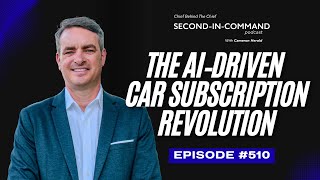
Podcast interview (Cameron Herold with Andrew Rickett) about Carmo — an Australian car-subscription company — and Andrew’s transition from founder/CEO of Motopool to COO after Motopool was acquired by Carmo. The conversation defines the vehicle-subscription product (all-inclusive, flexible monthly access with ability to pause or change vehicles), describes the acquisition/integration process (kept tight to a few leaders, merged duplicate state hubs within ~10 weeks, preserved both brands initially), and covers operational scale (growth to >10,000 vehicles, >$40M ARR cited, large debt facilities/partnerships secured). The episode also discusses Carmo’s tech-first approach, specific AI use-cases (self-serve service booking, reminders, automation), fleet purchasing/secondary-market challenges, recruitment, and leadership lessons from the merger.
Questions this video answers
He said 'So 2019 was when Carmo started' (transcript).
He said Motopool was acquired by Carmo 'about nine months ago' (transcript).
Quoted figures: 'over 40 million in annual recurring revenue', 'fleet of more than 10,000 vehicles', and partnerships backed by '$140 million in debt facilities' (transcript).
Volkswagen Financial Services and Toyota Financial Services (transcript).
Five major cities/states: Melbourne, Sydney, Brisbane, Perth and Adelaide (serving ~80–85% of the population) (transcript).
Chapters
Were you friendly before the acquisition? If you kind of roll the camera backwards two years, were you, you know, friendly as, as competitors or were you adversarial? And did you hate each other and then like, how do you. Yeah, how do you see you weren't.
We certainly didn't hate each other, but no, we didn't really. We didn't really have much of a relationship. Nick phoned me one day around something based out of Sydney and I just thought, I'm just simply not going to tell you the answer, Nick. And he just laughed. He said, fair enough. I thought I'd try.
All right. Our guest today is Carmo's coo, Andrew Rickett. Carmo is based in Australia and Andrew is the Chief Operating officer at Carmo, Australia's largest car subscription provider. They have a strong managerial background and a hands on experience across business setup, implementation and performance development. And Andrew brings over a decade of experience in the automotive and mobility industries. Prior to his role as the COO at Carmo, he was actually the CEO of a company called Motopool, which was a leading car subscription company that was acquired by Carmo about nine months ago. He played a pivotal role in the successful acquisition integration, helping Carmo scale to over 40 million in annual recurring revenue in a fleet of more than 10,000 vehicles and partnerships backed by $140 million in debt facilities. You're going to love this actual podcast. You'll like to be able to watch this one inside of our YouTube channel. You're going to learn lots about the integration of an organization when it gets acquired, what it's like to actually work through that acquisition period, and lots around the leadership side of things too. We'll see you on the inside. This will be a great episode to share. So, Andrew, welcome to the Second in Command podcast.
Thank you. Thanks, Cameron. Great to be with you and looking forward to the session.
Me as well. And just before we went live, we were both kind of laughing about this, that people on our teams set us up to do a call at a strange time. It's 10pm Right now. We both happen to be in Australia. You're based in Australia, your company's based in Australia. And I guess my team didn't realize when we were booking the podcast that I was going to be in Australia at the same time. So yeah, welcome to the 10pm Show.
Yeah, it is funny because, you know, navigating Daros is often difficult across time zones, but when you're, when you're in the same one, it should be relatively straightforward.
Yeah. Now you Guys are pretty used to it being in Australia. You guys are pretty used to working with North American time zones. But as your company is predominantly based in Australia currently. Correct?
Yeah, correct. So we're very much domestic Australia. We've been growing since. So 2019 was when Carmo started and we've been growing since then in the domestic market to have coverage in the five major states where 80 to 85% of the population is. And later years, as we talk through, we'll talk about some of the opportunities that we see potentially to grow the brand into different markets.
Amazing. Well, this, Canadian, I think this is my 10th time in Australia right now, so. Love the country. I've been all over. I've been as far out as Perth and as far up as, as Airlie beach and Queens, but I've never been down to, to Hobart in Tasmania. That's kind of the one I've still got to do.
You must go. It's, it's very different to the places you've just talked about. It's, you know, it's very green and it's probably the wettest part of the country, but it's very different in its, in its landscape and environment. So yeah, it's a, it's a very good, you know, being that our country is so vast, it's, it's very good to see some different, different states.
Yeah, you're kind of like Canada that way. We just got this. There's all the different climates and all the different geographies. Now are you operating with Carmel? Are you only in Australia currently? Are you operating in any other markets yet? And then where is your expansion going to take you?
Yeah, so very much so domestically at the moment in Australia. That's, that's, that's our mainstay and why we focused getting our business right, getting our model right to potentially look at new markets. The vehicle subscription market or industry has really maybe over a decade ago in Europe and the US started and there's some particularly strong players in Europe out of Germany. And you know, there's certainly places where vehicle subscription is part of the mainstay of a customer thought process and selection for vehicle access. So, you know, as we develop, we'll certainly assess different markets to see if there's an opportunity to expand the Carmo brand into new places.
And what does vehicle subscription mean? Is it. This isn't like an Uber style model? This isn't like a Turo style model, is it? Is it more like a customer pays a monthly fee or they just pay a fee when they use a vehicle.
Yeah, it's a great question because it's still very much, and certainly in Australian market, it's still very much an emerging segment in the automotive space. And I think the best way to think about it is it's a smarter, more flexible way to get access to a car instead of buying traditional models of buying and leasing. It's not that. So you have access to a range of vehicles. You pay one simple monthly fee that covers pretty much everything by your fuel usage and any tolls that you might incur. Insurance, registration, servicing, maintenance, roadside assistance is all covered. And then the great flexibility around vehicle subscription is you can stop at any point in time. So if you're, you know, if you're a good example, Cameron, you know, you're, you're here in Australia for a number of months, you can stop your subscription in, in, in Canada and not pay so you, then they can pick it up when you get back and re go and, or if your lifestyle changes, you can change vehicles easily. So you can essentially look at the, you know, the offering that we have and say, okay, I started off in a small hatchback and that was great for my time when I was living central CBD and running around locally. But now I live, I've got married, I've got two kids and a dog and I need a large suv. You literally pay the increased subscription rate. You drive in, you drive out in the new vehicle and carry on with your journey. And you don't have any of the hassles of dealing with trade ins, selling your car privately or having to negotiate a car dealership which often people, people certainly it's not one of the highest pecking order things that people like to want to do is deal with car sales.
Yeah, I don't, I don't need too many people that are happy with their car dealerships with the car leasing companies, rental companies. I use a service in Canada and have for years. We became nomads four years ago, sold everything, sold our home, sold our cars. We've been traveling the world. Whenever I'm home in Vancouver, I use a service called Evo, which is okay, a fractional service, but you only pay it as you use it. But there's all these branded vehicles all over the place. You just walk a couple blocks, hop into a car that the doors open and off you go and they charge you by use. But it sounds like your model is more similar to leasing a vehicle, I guess or renting a vehicle and can you flip in and out of the vehicle type like If I just need a minivan for three days, can I drop it off and pick something else up or.
No, no, we don't do it as, as fine as a, as a, you know, weekend swap over for thing. We, we did trial that in the early days as we were sort of, you know, learning our model. But what we quickly found was once people got into a vehicle and they set their vehicle up for, you know, they know where their sports bag is, their kids bottle, drinks bottles, all that sort of good stuff, they didn't want to change. However, what we do see is in certain being that Australia is a fairly long haul destination. People that have got family visiting, they often come for 812 weeks. They will swap a vehicle for that period of time and that's something that we do offer. So you can come in and get a minivan or a seven or eight seater vehicle for the time that you've got family members with you and then you can go back down to your normal car at a later time when they've gone home.
And the advantage then to a consumer with using your model versus leasing from a car dealer, what's the difference? Is it that it wraps in the insurance and the gas and everything is just all included and it's just easier for them? Is it easier for people that can't get financing? Who's your target client and what's the kind of ideal consumer?
Yeah, so our consumer base currently is around about 65, 70% B2C. B2B is growing into this space which is, which is a new revenue opportunity for us. But generally speaking the big difference is it's a non committal access to a vehicle that you can, after three months you can drop it at any point in time. You're not tied into a finance contract for five years or at least agreement for five years. And if you want to change within that period of five years with a traditional model, it's going to cost you a lot of money to either break the lease, sell the car deal with all the sort of challenges that come with residual values and all that sort of thing. We take care of all that. It's just you literally pay your, you either you either stop paying subscription as you return and, or you pay a different subscription rate for a new vehicle type that you might want as your lifestyle changes.
Interesting. And you guys have just raised a bunch of money. I think you raised 150 plus million recently. What was that raised for?
Yeah, that really was to drive our vehicle requirements for growth. So that was, that was a milestone moment for Us, you know, through the acquisition of Motor Pool, we secured collectively as Carlo, we secured funding lines with the Volkswagen Financial services and Toyota Financial Services which are the two, the biggest OEM vehicle lenders in the world. So it was fantastic to get them on board and supporting us. They've been long term supporters of the business and yeah, we managed to raise a significant debt facility to enable us to acquire vehicles to grow.
You guys are in a pretty, I'm not going to say competitive space, but you're in a really interesting sector right now with the autonomous vehicles coming in with the fractional networks that are coming on board. It feels like the traditional dealership model is gone, you know, in the next maybe five to 10 years. It feels like the traditional Ford dealers with lots of locations or the, you know, whoever dealers with all the locations, it feels like that model is going to be completely gone. Is one of your competitors going to be these fraction or not fractional, but the, yeah, I guess fractional autonomous vehicle networks like the, the waymos that are happening and popping up in different cities in the US already.
Well, the interesting thing with, yeah, the autonomous vehicles is, you know, we, we see potentially that we'll, we'll, we'll evolve our services in, you know, and have an element of that in our business as well. Because, and that's one of the reasons that we, you know, we, we've invested heavily in our own proprietary tech system and stack because we can build to the future. So when we see the markets evolving, and we certainly do it today, when we see, you know, consumer benefits that we can get and we can build it into our system to do that and as we go forward, we were talking about this recently in the exec. It's what does 5 years look like? What does 10 years look like? And certainly autonomous vehicles is going to play a bigger part of the landscape for sure.
Yeah. And I think it is rolling the camera out the five to seven year plus mark. I mean it's not going to take out your industry before then. So there's certainly something to really scale into now. You were also the CEO of a company that got acquired by Carmo. So prior to you coming on board as the coo, you were running a company called Motor Pool and you were the founder CEO of that company.
Yeah, that's correct. Yeah, absolutely.
What was that transition like for you? And was it, was it hard emotionally? Was it hard, you know, operationally? Can you just walk us through what that was like? Because it's, it's not very often that somebody goes through that, I'd love to hear some of the lessons from you.
Yeah, absolutely. And what was really, really good through the due diligence process. So we, when, when, when we were looking at medical to divest the business, we were looking at, we had some various different conversations and approaches and, and they just weren't the right fit for the business and, and the people within the business, you know, we were very, we were very conscious as shareholders that we wanted to, it was sell to somebody that was going to, you know, embrace what we had done and achieved and also the team, because we built an excellent team and, you know, and the team would have a future in that transition and a lot. And along with that was, you know, when, when we first started talking with Nick, the CEO and founder at Carmo, we were very much aligned on our values, what we wanted to do with the businesses where we began and you know, for, you know, motor pools, the 2008 start, Carmo 2009. We were, you know, we were competitors for a good period of time and we, you know, we, there was a lot of alignment and vision of how and where the vehicle subscription market is, could and can go. So it was really good through that process and through the, through that overall. Going to your question around the emotional side of it from day one, from meeting one, the alignment and the relationship forged with Nick and John, the CFR at Carbo was great. So it put a lot of comfort into us and it was a lot of talk around the people, the achievements and the future. So it really, from a feelings perspective, it really fitted well. So were you in a great, Were.
You friendly before the acquisition? If you kind of roll the camera backwards two years, were you, you know, friendly as, as competitors or were you adversarial and did you hate each other and then like, how do you. Yeah, how do you see? You weren't.
We certainly didn't hate each other, but no, we didn't really, we didn't really have much of a relationship. Nick phoned me one day around something based out of Sydney and I just thought, I'm just simply not going to tell you the answer, Nick. And he just laughed. He said, fair enough, I thought I'd try.
And so now, but then rolling the camera head, now you guys get along and you are building the company together. So how does that happen? What's the mindset shift that has to happen for two competitors to proverbially get into bed together?
Yeah, open, open, transparent, you know, genuine conversations, you know, shared thoughts, visions, lots of conversations around the businesses and, and not being afraid to highlight your views, thoughts and opinions, good and bad, about both sides of it. So there was no, there was no egos in the room. You know, the whole exec Exact panel is. There is no egos in on the exact. Which is great. So we have a lot of open, candid conversations and we're very much aligned to, you know, and that what that has done is allowed us to really become aligned and form a great bond to drive the business forward.
Yeah, it makes sense. And I mean, I guess there's also just the mutual understanding that, look, we're. It's kind of like in a sporting event, of course you're going to compete and you're going to be pushing hard against each other, but at the end of the day, you can still go off to the pub and have a beer together. And that's kind of what's happening now is you just recognize that that's the way the game had to be played when you were adversaries, but now that you're on the same team, you kind of put that past behind you as something that was not personal. It just was what it was based on the game that was being played at the time. So when you were starting to go through the diligence process and, you know, your company was having to relay all the information over how many people in your company at Motor Pool did you bring into that discussion? Can you roll us through some of the timeline on that? I was just coaching a company in the US that just sold recently. They sold for about 70 million and they only had three or four people on the leadership team that knew up until the week before the deal was happening. Can you walk us through what you did?
Yeah, absolutely. So the shareholders were, we were obviously aligned for, from day one, but from, from a, from an internal perspective, Laura Hayward, who was the Motor Pool chief operating officer, she was in from day one. So she really drove through the whole DD process with me. She. That meeting one that I mentioned to you earlier, she was in that from day one. And then later, very late in the piece where we had to get into sort of the financial details, our financial controller was, was briefed and came into the process, but we didn't. And, and the, the deal, the completion date moved a few times for various different reasons. So we didn't, we didn't share any wider than that until literally the week before completion. And then, and then it was all guns, guns are blazing. Right. By the way, next Monday we're all working together.
Yeah. Very similar to what Our. So this was a COO alliance member. It was Hennessy Digital and very similar to the game plan that they went through. There's an old adage that loose lips sink ships. Right. The more people that you tell, there's just the natural, you know, vibration. It has to happen. They're going to tell people. Was that part of what you understood as well, that you just had to keep it close to your chest and only the few people? And in telling Lauren and telling your controller, how do you, how do you quell the fears, the natural nervousness? They're going to have the, holy shit, what's going to happen to me, like, as a, as a human who's coming in in the morning, how do you calm them and get them to then focus on helping to make sure this transaction happens?
Yeah, well, the, the, the great. Yeah, it's a really good question and I think, you know, we'll talk about that potentially a bit later on the wider team and their feelings, but particularly though those two in that journey, you know, Laura, she, she'd been very early days with a motor pool and grown that business, so she was a fundamental foundation block of the motor pool success. So I had a very, you know, we, we, we went to a fantastic restaurant here in Williamstown, where I live in Melbourne, and she knows that there's something serious happening when I say the day before, can you come to lunch? And, yeah, I went through it with her and she was just excited for the journey because, you know, we, we were in a position with motor pool that we were looking for that next step to grow and, you know, absolutely, you know, this, this merger of businesses was given, give us that opportunity. So, yeah, she was pumped from day one, which was really good. And our finance controller, he got it straight away because by the time we got to that point in time, we'd already done them through the DD process, we'd already done a lot of sort of mapping across the organizations to see where there was gaps or opportunities for individuals. And he firmly was in part of that, a part of that roadmap, right?
And then you've got your management team. Right, you've got your management team. And then I guess the day before, the day of, you've got your whole frontline staff and everyone else. What was the communication like with them?
Yeah, it was, it was, it was pretty swift because we left it late into the, you know, the week before, really.
Yeah.
And we just were transparent with it and said, you know, everything that, from a, from a motor pool perspective, that we've been talking around for a number of months because the process took a fair while. So through that process, you know, we were. The management team was very sharp. They could see we were making decisions that weren't quite sort of decisions that we would have made in, you know, the six, nine months previous to the period we were in. It all became clear and they were like, okay, we understand now why you said this and why you did that and all that sort of good stuff. And again, because we were. We had. We spent a good chunk of time with. With Nick and the Carmo exec team, really mapping out the. How it was going to look from a personal personnel perspective. You know, there was no. There was. There was no redundancies. There was no people that were going to lose their jobs through the journey because we needed people to actually build. And subsequently, since the merger, we've grown our employee base significantly. So we, you know, amazing. We've. We've grown and we needed. We needed good people in the business because fundamentally we, you know, the business is as good as its people, and we needed the good people to. To be in it.
Was that part of the reason that Carmo did the acquisition was a bit of an aqua hiring. Like, in acquiring Vodafool, they also got to have all the people as well?
Yeah, absolutely. Yeah. Well, yeah, it was one of the. One. One of the. One of the top. Top three or four items that was on their list.
And I find when that's happening, that is the biggest communication piece that needs to happen to calm everyone down. It's almost like Maslow's hierarchy of needs. Right. They need to know, like, and trust people. And if they do and they go, okay, I'm okay. All right, let's do this. Now, it's been about eight or nine months since the acquisition happened. What do you think? Some of the things that were done well by Carmo and Motor Pool and merging these two organizations and then you transitioning from a CEO role to a coo, what did you do really well? And then I'm going to, secondly ask, you know, what. What could you have done better?
Yeah, yeah, maybe I'll start with the could have done better thing. Sure. Because we were literally talking about this the other day on reflection, and the. We started off really well with regular communication updates of what we were doing. And then as we started getting busier and busier through the integration, the comms kind of dropped away a bit. So that's certainly something. On reflection, we. We would have done better. We would have been much more Disciplined around communication and keeping keeping tight to the updates coming out. This is, you know, we told you we wanted to do this, we've achieved this. We, we need to work on this and all that sort of good stuff and subsequently what we've done because, you know, we've still got, as you say, we're only eight months into the transition. You know, we're now having monthly town halls to really get the communication channels back on all, all of company. So, so it's completely, you know, this is it, this is where we're at, guys. We told you last month we were here. This is what we've achieved. This is the growth plans. This is where we're going. So that's certainly something that we could have done better and now have now put steps in place to do that, which has been good. I think the big one that we've, you know, a number of things we've done very well is, you know, we, we, we hit the ground and it sounds a bit. Because we didn't do it so well over time, but we hit the ground hard with communication. In the early days we did a, you know, road shows tours, really got to know all of the staff. We pulled staff, all of the staff and all the states together within the first 10 days. So we just three around the country doing. They're getting to know each other and then the, the one that I think really made the difference is we focused on because we had duplicate sites in, in the states. We had duplicate teams in the states. It was, we, we pulled them into, you know, one operational hub and we increased the facilities at each of the hubs. So each of them had sort of sites that could have been improved. So we just merged them into one sort of super hub. All staff in communication was great and you guys get to know your new friends was really good. That was something that I think hit the nail on the head quite quickly. So we eliminated the silos that could have happened over time. Straight away by within 10 weeks, we'd pretty much merged all of the sites so we could operate as one.
Amazing. Now when you're talking about states, I know about 80% of our listeners are in the United States, so they're probably thinking you're meaning state states, but we're talking the states in Australia.
Um, yeah.
So how many different sites did you have have to merge together? How many cities were you operating in in Australia?
So yeah, so within, when within Australia we, there's, there's essentially five major cities that you need to, to operate. So I'll give them by name, so probably resonate a bit better. So you've got Melbourne, Sydney, Brisbane, Perth and Adelaide. They're the five major cities where 80, 85% of the population are within those sort of areas. So, you know, we had duplicates in there. So we, we merged into bigger hubs. So we have a mobility hub in each state that services the. That area.
And did you, did you close some offices and move people into similar offices or did you keep, if you had physical offices, did you just keep them all open?
Yeah, so, so we, we essentially, we, we co. Yeah. Each, each location, each brand had a physical location and we closed one of them to merge them into one bigger one.
And then did you. I imagine you switched the name. Motor Pool just ceased to exist and everything became Karmo quite quickly. Or.
No, no, no. And that's one of the things that, that we've changed through the, through the process of tracking. So there was never an immediate decision to drop the Motor Pool brand because through the DD process it was very clear that, you know, we'd been obviously driving our businesses successfully for a number of years, competing against each other. And we actually have fairly different brand propositions by brand. So there was two different brand messages, two different vehicle lineups. You know, car motor has a lot of sort of EVs, prestige cars, upper spec cars. Motor Pool has more standard spec passenger cars with utility vehicles and light commercial vans. So two very different things. And over the. We continued to grow nicely with both of the brands in tandem, even though we're under the same one roof. So we then ran it month on month, looking at the lead generation through all our different sales channels. And we found that there was only. There was under 5% duplicate leads. So it was very clear that we were talking to different customers. So, so, so right now we're running two brands in the market. And that's certainly one of the, the hardest parts of being the COO today is running two brands, two brand messages, pricing, all that sort of good stuff in the, in the market. But for now it's very. Yeah, we're running them. We remain running both brands in market.
Love it. All right, so some huge lessons that you just dropped there in that, in that process or in that timeline. I'm curious for you what the differences have been. So when you were operating as the CEO of Motopool, were you a founder of that company or were you a hired gun? You were a founder. So hired, you know, a founding CEO, you're scaling up an organization and then all of A sudden you're now the second in command to an organization. What changes? What's different in the day to day for a CEO versus a coo?
Yeah, I think, I think the biggest one is, you know, there's, you don't necessarily have the whip hand to say, make all decisions, you know, so whereas, you know, you as the, as the CEO, you're, you know, you're very much, you're, you're managing the, the wider team to make decisions and all that sort of good stuff. Whereas, you know, I've, I've got, I've got a remit of areas, responsibility, whereas in my older role it was all encompassing across all channels, all responsibilities back to the, to the shareholders. So however the, the Carmo exec team, as I mentioned earlier, is, is there is no egos in the room. So we're very, you know, Nick really lets us manage our own functions and areas of responsibility independently and you know, report back in and details. He's, he really supports heavily each of the, each of the execs in their areas and me in, in my role, he's, you know, he's, he's constantly, constantly, it's the wrong word, but he's, he's consistently asking, where are we going next? What do you think the next opportunity is in your areas? You know, because we're looking after, you know, we're looking at sales, marketing, operation, fleet procurement, all of that good stuff. And again, he's very experienced in all those areas from growing, you know, the Karmo brands. So we actually share a lot of good, you know, thoughts and views which, you know, leads to a lot of good conversations for the greater good.
Interesting. Does, does the CEO do media interviews at 10pm at night or just the CEO of.
I think he's one in bad by now.
It's easier to be done some too. So now that, now that you've been in this second role and you're in the CEO role for, you know, eight, nine months, does it give you a different perspective, a different lens into the COO role that maybe you didn't have when you were the CEO?
Yeah, I think so. I think it's, it's a bit more granular day to day. You know, you've got to be across much more of the detail across multiple functions. Whereas, you know, previously I may have been a little bit sort of higher above that and just, you know, getting snapshots. But yeah, it's, you gotta be more into the detail across multiple functions within the business. Yeah, So I think that's the.
Can you understand, can you understand why your former COO Laura was the way that she was in certain situations and meetings. Now that you're having to be in that. Can you see something that's different there? What, what would some of those be?
Yeah, I, I think the, the big, big one is, and it's still something I'm working on today is, is detail. You know, I really, you know, really sort of focusing, making significant like, you know, Laura's particularly good at doing that. You know, she's very disciplined in her follow ups and all the rest and all that sort of thing. That's something I've still got to, to learn. I think that's the big, I think that's the big one. And you know, we work closely together each and every day across, across the business now in her new role and often say to her, can I just take, you know, can I just see your nuts?
It's hard. Yeah, it's hard. I mean I, I remember I was the second in command for a company called 1-800-GOT Junk, which is in Melbourne. It's all over Australia here. Back in 20 years ago, we opened up in Australia when I was the CEO back then and well, we got to about 100 million in revenue and 3,000 employees. I kind of hit the panic button. It was just too, too big and too detail oriented and too, too confusing for me. How do you not get yourself sucked into all the different areas of the business you can get involved in? How do you stay in that CEO role and not get into and involved in all of the, the business areas, the meetings, the decisions?
Yeah, it's the team that's the big one. We've got a great team. We've recruited well, we've got good tenure, we've got good understanding of the roles and responsibilities that are required in the jobs. And we've always, and I always give them autonomy to make decisions good, bad or indifferent. If, if it's a bad one, it's a case of please don't make that again, but let them make decisions for their areas because they know their areas better than me. They're in the detail and they're in the granularity of it every day. So it's really about surrounding yourself with good people and the team to help the business deliver to its objectives.
I know that you've mentioned a couple times about the tech stack and the focus around technology for the business at Carmo. I'm curious where you're going with that and what you're working on. But I'm also equally as curious as to where AI plays in the tech stack for you going forward too.
Yeah, so one of the things that we identified in Karmo's being on day one, it was really to make it a tech enabled business. So it's really around building a platform that delivers an exceptional end to end experience for the customer. Most liked businesses to ours, whether you call that the leasing industry, the car renting industry, other subscription businesses, they have off the shelf packages that they then build out and they add on or bolt on different platforms together and all that sort of thing. We've built it from scratch saying.
In.
An ideal scenario, what does a customer journey really what would they like to look at? And we did customer surveys and we really looked into how they would want to engage and it was really around making it low touch, easy to use, hassle free, all of these good things. So the process and self managed so most things these days, and that's certainly one of the things that attracted me to vehicle subscription away from car rental, which I did for a couple of decades, was people were wanting something that was easy and self serving, you know, not, not, not standing in queues, not having to get sold things up. So things it was a case of, yeah, I would like this and I'm going to go into my app and I'm going to go into my portal. And that's happening across lots of different industries and lots of different things that we consume. And I, I saw that coming, you know, 10 years ago in the auto space. It was starting to go that way and you know, in the way that everyone was starting to consume other things within their lives. So you know, vehicles are going to be no different. So that's where really where we started and that's where we're pushing through.
And what about AI? Where does that start to play in terms of the landscape for your company? And how do you kind of quell the nerves and the fears and the questions that employees have got about like, is my job safe? Is my business area going to even exist in two years or 18 months?
Yeah, we've got certain parts of our business where it lends itself absolutely perfectly. And a good example is that is the servicing requirements of a vehicle. So customers in a vehicle subscription, they come in and they get the car and it gets to its next service interval. Our system will push them, you know, a reminder to say, hey, camera, car's done 10,000 kilometers. It needs to go into a service they can, where AI really lends itself perfectly to this is they can go in through, through the app, either either voice activated or just typing to say, yep, I'm in here. It will serve up pre, pre registered organized service centers that we have in our system. You can do here, you can self book. It will troubleshoot any of the items, you know, do you need, do you need this, that, the other, all that sort of good stuff. It will book it and deploy it. Whereas today it's a telephone call, you know, and it takes a lot of time because you have, when you, when you're managing it on behalf of the customer, you, you make a booking and then they think, oh well actually sorry, I've now got to go and pick, pick my mum up or I've got to, you know, do this. Can I change the booking? Whereas if they're doing it all through AI and self serve, it eliminates all of that touch points. It actually benefits the staff because they get time back in their day to focus on all the other things that they have to do in their day to day. So it's a perfect example where AI fits an absolute tree.
How many different brands is Carmo working with now that Uber kind of took away the need for, or the caring about what kind of make and model showed up. It's like I need a sedan, I need a minivan to show up. We don't care what the brand is anymore. Has that come into the Carmo business model that consumers don't really care or do they care about the brand that they're driving? They absolutely can.
Yeah.
Yeah.
So, and that's, that's, that's one of our, that's one of our real sort of points of difference as a brand. You know, we have, we have a very wide range of vehicle manufacturers and a lot of vehicle models and specs within that. Because this is, this is a, this is a, the, the vehicle subscription model that we operate is a, it's an alternative to ownership. So you're in this car for a period of time. So.
Right.
We really offer people that, that flexibility and the choice and the choice for change if they want to upgrade or try something different. So yeah, we, we're dealing currently, I think the Canadian market is heavily General Motors, but Australia's got probably one of the biggest. Even though we're a small population, we've got so many car brands. There's circa 60 brands in the market in Australia, which is crazy for 24 million people, but we probably deal with 25 of those on a regular basis in our lineup.
Do you think that will shift as the consumer gets more and more comfortable or again will they just because they're leasing it for a longer period of time, do you think they will be more married to the brand.
To the car brand?
Yeah. Like, I know that I've driven in the autonomous vehicles in Arizona probably 10 times now, maybe more. And I, I don't even care that it's a Jaguar showing up, but it's this Jaguar that shows up and it's drives itself around the city and I'm just like, wow, this is incredible, but it's not my car, you know, and when Uber shows up, I don't care what the car is. I'm, I'm curious whether the consumers, if you could get the price down enough, do care or is that even up for. Maybe it doesn't even matter at this stage.
It, it's right now one of the big benefits is it gives you the, the opportunity for change and getting the latest and greatest latest model and technology. Because certainly in the last five years, vehicle technology has moved on in leaps and bounds. When EVs first sort of hit the market, you could get a 160k range on a small EV. Whereas now that 600ks, the technology will be outstanding and no different to a mobile phone. When they first came out, they were pretty, pretty average or smartphones really, they were pretty average in their capabilities. Whereas now your whole life's on a phone and every time the latest model comes out, people are upgrading. So people like the latest and greatest. And that's certainly what vehicle subscription allows you to do.
With the car rental industry, I know one of the biggest issues that they have to deal with is the car rental companies own the cars and then they have to turn around and sell them at some point. Do you guys own the vehicles or are you leasing? You do. So that's a similar issue for you then, correct?
Yeah, absolutely. Yeah. So big, you know, big part of my day to day and certainly, you know, Laura that I mentioned earlier, you know, she, she heads up that whole functionality of the buying, the buying, the selling, the, the vehicle maintenance, the insurance claims, all of that stuff. We have a, you know, we've, we've got guys, guys and girls that are doing that business that in, day in, day out. You know, we're, we're dealing with the manufacturers from a, from a relationship perspective, dealerships from a perspective and we, we, we depending on the vehicle make and model where we're running vehicles for, for up to 12 months in maximum term. Because our, our brand offering is the permanent new car Experience. So we're making sure that our cars are the latest and greatest, you know, new models in market. Right over the top.
Love it. This has nothing to do with your business model, by the way, but man, Australia is rough with the photo radar and photo tickets for seat belts and using your telephone and oh my God, my wife's gotten three tickets for not wearing her seatbelt properly in the vehicle. They're not cheap. These are like, these are expensive tickets down here. Talk a little bit about the recruiting side of things and then I want to just find out a little bit about your growth as a leader. But what's it like recruiting people in this market in Australia currently and how do you attract them into a business like yours?
Yeah, recruitment is a challenge. I think we're in the automotive space as well, which also lends itself to being a bit of a challenge. It's not necessarily seen potentially as the sexiest of industries when there's, there's tech firms and all this sort of good stuff. However, we, we are attracting a lot of good talent due to the fact that we, we're, we've got a great product and we've got a great business that's really pushing the boundaries of something new, new and different. So people, people, when we're, you know, when we're, when we're advertising and to be honest, the majority of our new recruits haven't been through advertising. It's been through relationships, networks and opportunities. You know, we've been, you know, you know, the last one that we recruited into the ops team, you know, is somebody that's been in, in, in, in sales for, for, for decades at a senior level. They're excited about what Carmo's doing and the model of vehicle subscription going forward. So, you know, he's come on to be our sales director to really drive the message that we've got into the, into the fleet market and the B2B market, which, you know, which is a huge opportunity of growth for us coming.
Yeah, I can see that for sure. All right, I want you to lean back a little bit and give yourself some advice. If you were a 21 or 22 year old starting off in your career today, what advice would you give the younger you that you know to be true already?
Ah, yeah, that, yeah. I think, I think for me it's, it's not to worry about having a perfect plan. You know, I think when, you know, when I'm thinking back to being 21, it's like, I've got to do this, I need to go here and I need to chase this job and I've got to get to here and here and this. And I think one, one, one of the big things that I've learned over time is, is to say yes to pretty much anything that you're asked. You know, any opportunities, any, any, any, any job I've, you know, experience I've been in, they've said, oh, would you like to go and do this? Or would you like to go? The answer is yes, because it just builds a breadth of understanding and knowledge that you might, you know, not necessarily get, unless you were chasing a career path in that certain element and, and through that as well, you, you, you, you form relationships and networks that you might not get, you know, through through your normal sort of chosen channel would have got opportunity to explore. So saying yes, I think is a big one and I think the other one as well was when you're in meetings, you know, and I certainly remember going back in the early days, you maybe sat there quiet in the corner and didn't say a great deal. I quit. You know, I think one of the big things is just ask questions, but make sure you listen before you ask the questions. Don't just ask any question for the sake of asking it. Listen intently to, you know, pay attention, be, be present in the meetings and then, and then ask questions. Because most of the time the people in that room will be, will be impressed that actually they, they did listen to me. They don't quite understand it, but they're asking me to explain it and, or they're doing that sort of thing. So, yeah, it's difficult when you're young, but I think, yeah, be, be, you know, back yourself and say, you know, and put yourself in those areas that you can really absorb a lot of information and spread your wings a bit by just saying yes.
I love it. Andrew Rickett, the COO for Carmo. Thanks very much for sharing with us on the Second Command podcast.
Awesome. Thanks for your time, Carmen. And next time we'll do it in person when you're back.
Yeah, well, there for sure. Thanks very much. Appreciate it.
Take care.
Bye now.
More from Cameron





Flutterwave Former Global Head of Operations Awa Kone | When Growth Outruns Operations (Podcast 611)





