How To Grow A Sports Brand | Jared Orton, President Savannah Bananas (Podcast 400)
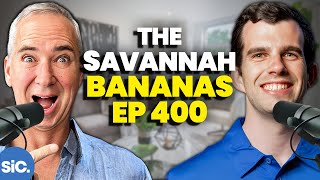
Podcast interview (Episode #400) with Jared Orton, president of the Savannah Bananas. Jared explains how the organization moved from a local college-summer team to an entertainment-first, touring brand by inventing "banana ball" — a condensed, fan-centric variant of baseball — and by prioritizing culture, value (e.g., low-cost/all-you-can-eat tickets early on), and experiential marketing. The episode covers operational lessons (hiring for cultural fit, recognition rituals, move-fast vs rigorous decision-making), the COVID-era pivot that accelerated touring and rule changes, and leadership dynamics between founders as they scaled.
Chapters
We had to make a decision. Which way are you going to go? You're going to do the safe thing. The league that guaranteed games, guaranteed opponents, guaranteed, you know, you'll sell it out. Easy, comfortable, safe. Or do we go all in on, on this banana ball thing? Because we realize very quickly we cannot do both. That is not the future.
All right, we've got an amazing 400th episode of the Second In Command podcast for you today. We have Jared Orton, who is the president of the Savannah Bananas baseball team and traveling club, also the creator of banana ball, which is this new sport taking over the United States and probably soon the world. You're going to love this episode. It's an amazing organization where they're really grounded and focused around culture, around fun, around challenging the status quo, around having to deal with massive, massive growth in an organization, taking a baseball team from basically no one showing up to filling 20,000 person stadiums over and over again, getting to the point where they had no more seats and no more games they could sell out because they were sellouts all year, that they had to recreate the entire business and recreate the entire team. Jared shares with us some incredible ideas and systems around that kind of growth. Dealing with marketing, dealing with operations, and dealing with a crazy dynamic CEO who is always pressing play on coming up with more new ideas. You're going to love this episode. We'll see you on the inside. So, Jared, welcome to the Second In Command podcast.
Yeah, this is going to be great. Excited to talk.
Super excited for this for a few reasons. Number one, I have been enamored with what you and Jesse have done with Savannah Bananas over the last 12 years for a long time. I met Jesse at a Mastermind talks MMT event around eight or nine years ago and was really in kind of the early days watching what you're doing and was very intrigued. And I. I've always been obsessed with culture and you guys certainly got it. Secondly, this is episode number 400 over the last seven years. This is our 400th episode. So this is going to be a big one that we'll be able to push out. And then third, my assistant, SL head of operations, who's been with me for eight years, is an absolute Savannah Bananas junkie. One of your raving fans, and she mentioned your team to me about six weeks ago and she said we should get them on the podcast. I'm like, oh, I don't even know why. I never even thought about it before. So I'm super excited for all those reasons. So thank you for joining us.
Absolutely. My pleasure. Glad to do it.
You've been involved with the Savannah Bananas since very early days. Can you walk us through first off? Because I don't know, there's a few people living under rocks that have never heard of them. But I liken you as to almost the Harlem globetrotters of baseball.
Yeah. The best way to describe it is, you know, we exist to make baseball fun. Savannahs exists to make baseball fun. We want to be the most fun team in sports, the greatest show in sports. And so, yeah, the early days, we were in a. The Savannah bananas played in a traditional league. Right. We were in a college summer wooden bat league, which, you know, is so sexy and, you know, marketable. Right. And we came into Savannah where professional baseball had been here for so long, almost 100 years actually. And you know, that we come in, we're not professional baseball anymore. But you know, the early days we still had the tricks, the gimmicks, the fun, the dancing players, the dancing, you know, first base coach, we had the banana nana. We had all these kind of fun, fun, really just like groundbreaking entertainment experiential things that also complemented what was a really good baseball team. But now what you see on the Internet is not traditional baseball in any aspect. And it's what we call banana ball, which is what we felt like was able to rip all the frustrating, slow, boring, not fun, fun things out of a baseball game and compact it into this almost frictionless experience where it's just non stop entertainment for two hours. The rules have changed. The fans can catch foul balls for outs. There's no bunting, you can't step out of the box. There's no mound visits. You know, there's no walks, it's a sprint. There's no extra innings. We turn into a showdown. And so we've ripped it all apart and put it back together and then added our layer of entertainment on top of it. And that's what we call banana ball. The difference from bananas versus Harlem globetrotters and we're super inspired by the Globetrotters because of what they did for the game of basketball globally, is that it's all scripted in a sense of the show, the fun, the entertainment, the games, the bits, the skits, all that stuff. But the game is awesome. The game is not scripted. You know, the bananas lose regularly, almost probably too much. The party animals who are the alter ego, you know, the villain, if you will, they win. They're really good. Our firefighters who are our third team now, they win. The bananas was at home, the bananas lose, you know, at different points. And so that's what makes it. Hopefully people can care about it on a regular basis because they don't know what's going to happen tonight. If you saw us, you know, in Boston, Massachusetts, but then come again and see us in Philadelphia, ideally you see a completely different thing where the players are going to do something different, the show's going to do something different.
All right, so let's go back to some of the early days, genesis of the Savannah Bananas. And I want to just talk about what it was like kind of building a team and building this kind of crazy culture inside of a very traditional sport. I mean, not as traditional as Wimbledon playing tennis and you're all whites, but still pretty darn traditional. There was a. A system and a, you know, the rules, and you guys kind of broke a lot of those. What was that like in the early days? Were you ostracized as a team? Were you? And you were also a small team. You know, you'd have a couple thousand people showing up at a game.
That's right. We realized pretty early on that, you know, because of the league that we were in, and this is no slap on the league, but we were, again, we were a college summer and bat league organization, which meant, you know, we're playing with 18, 19, 20 year olds. They're fresh out of college, they're in college, and they're playing with us during the summer for like 10 weeks. And so at that junction, you know, we come into Savannah, Georgia, which had had professional baseball for, like I said, Almost 100 years. We are no longer professional. And so that was certainly seen as way less than what people had thought of the prestige of being in affiliated minor league baseball. And so we had that against us from the jump. They're not professional, they're not going to be as good, they're not going to be as talented, all these things. And then we came in and said, yeah, we're going to make it about fun. And they really thought, oh, these guys are just idiots. That's what a joke this is going to be. But we realized early on fun and the experience was really the only thing that we could compete in and make a sizable impact where no one else was really competing. You know, we're not going to win the World Series. We're not going to have the most talented professional players. We're not going to have a mega TV contract, you know, where we have guaranteed money written to us. We don't have a nice stadium. We don't have luxury suites. We're not going to have the biggest sponsors in the world. And so how and why should we try to compete on all those things when we know we're like, you know, maybe 200th best in the world at that, maybe 400 best in the world at that. And so the question that we've always asked ourselves, and Jesse and I work on this a lot, is like, what can we actually compete in and be the best at? At first it was just in our market, right. In Savannah, local, hyper local, regional. What can we truly be the best at and provide the market that nobody else, we believe nobody else actually providing to them. Now, we certainly compete against other things we complete really. We really compete for people's time. Right. Like we compete for people getting off the couch and coming to see us. But ideally, we were going to create an immersive, entertainment driven experience. Fans First Medic Baseball fun. And the language that we wanted our fans to use and leave with this was kind of our guiding light in the beginning, and it still is today. We wanted a fan to leave the game and say verbally or on a, you know, message or something, but, you know, this was our ideal. They would say, that's the most fun I've ever had at a baseball game before. And we would use that as kind of the start with the end in mind.
Yeah.
And then that was an easy driver to say, okay, if we want them to say that, we must create the actions along the way to allow that to foster. And so we use that lens of make baseball fun. We use that phrase of, you know, someone leaving the game for the first time and saying, that was the most fun I've ever had a game. And then it's up to us to say, okay, if we wanted them to say that, what are we actually going to do to make that happen?
All right, so you're starting with the whole beginning with the end in mind that Stephen Covey talks about in 7 Habits of Highly Effective People. But you're also working with what Jim Collins talked about, that hedgehog concept of what can you be the best in the world at? And you're kind of bridging the delta in between the two. So what were some of the things along the way that you then were able to focus on? Because you really did execute beautifully as an organization.
Yeah. So. So from the beginning, we made the whole thing focus on, let's build fun into every aspect of. Of the experience. And of course, we started limited from the beginning, but we tried to rip apart you know, we have kind of a phrase or a principle for our team that's. And Jesse, you know, said it's early on. Whatever's nor normal do the exact opposite. And so we felt like, you know, when you come to a normal baseball game, there's a set of expectations. You know, you go to a major league baseball game or a, you know, a movie or whatever, and, you know, we felt like when people come to these experiences and these events, generally they're underwhelmed. They come late, maybe they leave early, they get ripped off, they pay exorbitant prices for, you know, food and drink. And generally, someone leaves a game or a sporting event or a movie or whatever, or a theme park, and they say, man, that was cool. But, oh, my gosh, you know, the. The bottle of water was $8 and the. The hot dog was $15 and the beer was 12. You know, they just rant and rave about, like, how much they felt like they got punished for coming to the games. And we felt like, well, we need to do the opposite of that. We. If we're going to take ourselves seriously, we got to make sure we deliver immense value. So we. We introduced all you can eat tickets for 15, which was psychotic to think about it today. But, like, we were like, okay, come to the game. It's 15 bucks, and we'll give you all the food and drink. Now we charge for beer and ice cream and things like that. But, you know, we said we're going to. We're going to take that approach. When we renamed, when we originally named the team, you know, Savannah Bananas, that was a little outlandish for a traditional, you know, Savannah operation. They had been, you know, Indians and Senators and Braves, and they got a little crazy and became the Sand Nats before we were there. But, like, Savannah Bananas just shocked the world and people lost their minds. We committed to. We committed to what we call a sellout mentality, which was pick a handful of games that we could focus on and truly sell them out and then tell people the game has sold out, which shocked their system. And we literally told them, you can't buy a ticket to this game. It's sold out. You can't come. That built a fervor in people's minds. Like, what do you mean I can't come? This thing can't be that awesome, right? I must need to go check it out. And that then all of a sudden started snowballing itself to another game selling out, another game selling another game selling out. But we told people from the Beginning don't judge us just off of a logo or a price marketing spiel or you know, a one off type of, you know, PR stunt. Judge us on the experience and judge us on are we taking care of people from start to finish. And you know, our players bought into that, our coach bought into that, our team bought into that. And you know it was, it was, we were all in. I mean we, it was just a handful of us in those early days trying to make it all happen and sell tickets, you know, hire people, cook the hot dogs, buy the merchant dice, you know, the, the whole nine yards. And it just took all those things from beginning to end solely focused on make baseball fun. So. And that was what we felt like set up such part.
Yeah, I want to ask a little bit about the fun as it relates to kind of the day to day operations and running of a company. My sister Christy Harold wrote a book called It Pays to Play and her whole adage is around and she runs these, these sports leagues with 250,000 people playing co ed intramural sports in her leagues and her whole world is around play. And that if companies can bring play and bring fun into the day to day environment, it turns the energy into a more positive vibe and people get more done because they're feeling that positive vibe. That part of how you were able to build the Savannah bananas. Because people were having a good time, they pushed harder in the meetings, they worked harder on their day to day. Like the grunt work day to day of actually running a business did that get easier because people were having fun at the same time.
The fun inside the office certainly matters not in a sense of like parties and jumping on bean bags and trampolines and we're wearing tie dye T shirts to work and things like that because the details matter and we have to get things right. And like, you know, there is obligations, there are obligations to ourselves and our team and our vendors and like we're running a stadium and like we have to be locked into these things and sometimes you can be a little flippant in those if it's just all about the fun inside the office. But what we really keyed in on was these key core principles and these key core fundamentals that we would recognize in our team when they did things well. And specifically they would be recognizing the fantastic things that people were doing in our organization that made an impact on either ourselves internally or our fans. And so we do this again to this day. This is probably one of the things that we, I hope we never lose but we would get everyone together before the game and say, guys, here's the plan tonight. Here's what we're going to do, here's who's coming to the game, here's the new things. We're doing all the, all the, you know, pre, pre event stuff. And then after the game we would bring our whole team together, food, drinks, etc and we would stand people up and we would recognize them for the things they had done for our fans and we would tell stories and then that would turn into, you know, myself, Jesse, Emily, we would lead it off and say, hey guys, great night tonight. By the way, I want to talk about something I saw Joe Smith do, Susie Smith do and want to tell this story. Or it'd be, hey guys, we got this email from this fan about they called in and they talked to this person and here's how you treated them. And that was amazing. This is exactly what we're talking about. That's legitimately fun for people to do and stand up and be recognized but also recognize their peers because now there's 150 of us at a single game sometimes. And it's hard to know like what all happens in a given night. But these fans first moments are absolutely crucial. And that is what I think has been the catalyst from day one to keep people energized and motivated. Like, hey, this game is important. Tonight's important. You know, yes, it's game one of 93 or whatever we're gonna play this year, but it's game one of one for somebody in our audience tonight. And so that's what's important.
I heard that from someone who is. I've done paid speaking events now in 29 countries. I've been paid to speak all over the world on growing amazing company cultures. And I had someone watch me speak about 10 years ago and he said, cameron, your content's amazing, but your delivery was flat. He said, you're bored of your content, but what you need to remember is the people sitting in the audience. It's opening night for them and you either need to change your content or bring an opening night performance every day. And I was like, holy, I never thought of it that way. And he was so right. And that that's kind of the approach you guys take too. I'm curious around the fun side of things for a second as it pertains and I want to get into some of the operations in a sec too. But culture is so strong. Did the fun and the crazy and the silly ever impact the actual baseball players? On your team in a negative way, or did they kind of start to wrap their heads around it and get it and how did you, how did you help them to get it when they were showing up as traditionalists?
Yeah, you know, it all started with our, with our coaching staff. You know, I think again, you talk about people, you know, leading, leading different people. We had to get the right coaches on board because, you know, if Jesse goes into the locker room and says, guys, we're gonna do dances and, you know, we're gonna wear all yellow uniforms and we're gonna, you know, do all these things for fans and we're going to p each other. If Jesse goes in there and says that and then the door closes and the coach comes in and says, no, all right, you know, he's the owner. Just listen to him. Make him happy when he's around. But here's what we're really going to talk about. You know, this as good as I do. Yeah, Is out of the room, game over, doesn't matter what Jesse says the rest of the year. And so that coach coming in and really believing in this thing. And we always felt like the team would play better if they had more fun anyways. And we, you know, we felt like we would perform better as an organization. We're just going to have fun. Like, we're going to take our job seriously. What we do is serious. It matters. It's important, more important to a lot of people. But we don't take ourselves too seriously in these things. And so we really encourage these guys, let loose, have fun. And there were guys who said, that's not for me, that. And doesn't make you a bad person. Doesn't mean you're wrong, doesn't mean you're, you know, unethical, doesn't mean any of that. Just means you might not fit here. This just can be a little difficult for you because we, we explained to them early on, yes, you are a baseball player. You know, in those days, now it's, yes, you're a banana ball player, but you're a performer. You're a hero. Like, these people coming to this game, they look up to you, they see something in you that they aspire to be. And like, you now have that obligation to perform for them and to them. And you know that that holds a lot of weight. And so we share that stuff early on. They, they. They have to know what they're getting into early on, because if not, it's not going to be a pleasurable, desirable, fun experience for them. They are going to burn out and get out of here very quickly.
And so you. You were okay as an organization with losing some of those early stage players. If they didn't align with what you knew at your core, this essence of play and fun. If they weren't going to align with that, it was easier for them to go play somewhere else and bring in the right players. So that's amazing. It is. Again, the Jim Collins part of getting the right people on the bus, the wrong people off the bus. Right. And everybody in the right seats. But you also really got the whole. The management team, the coaches needed to be aligned with the vision of the owners so that. That kind of culture permeated through the organization. So right around 2019, you guys were, you know, I'm going to guess, around five years in business, six years in business at the time. And you're really hitting the pinnacle where you're selling out your stadium in Savannah all the time. And then Covid hits.
Yeah.
So you're running a business where people are coming to a stadium to sit in beside each other and hug and cheer and, and yell and scream and. And. And pass beer to each other. And were you shut down during COVID What happened?
Yeah, it was so bad. We. You're right.
In spring, it was like spring baseball was just starting.
Yeah, it was terrible. It was absolutely terrible. We had. We had. Yeah, we were really successful. Like, the games were selling out. Now, we only played about 30 games in Savannah, but sold out every night. 4, 000 people. We wanted. We had won a championship the first year. We were always in the playoffs. Like, we had. It was awesome. It was. It was a lot of fun. We began to flatline because we only had, you know, a certain amount of games and a certain amount of seats. We lit. We played an old stadium, so it's not like we have luxury suites. It's not like we can, you know, add a bunch of seats to the stadium. Like, we just can't. We just couldn't do that. We just weren't, you know, we weren't able to, you know, fund that type of capital improvement and things like that. So anyways, you know, we were selling 4,000 tickets 30 times a year, and like, that was it. And so it's really hard to go to people year after year and say, all right, what are you going to do next year? The exact same thing. Like, aren't you excited, you know, to do the exact same thing? And so, yeah, 2020 happens. We had taken our staff on a celebration trip down to Walt Disney World in February of 2020. And we hear these news stories coming out, like, there's this, you know, people are getting sick. There's this virus that's going on. We were like, yeah, cool. We're in Disney World. This is awesome. And we get back to Savannah, and if you, any of your listeners know anything about Savannah, the, the St. Patrick's Day parade is like the thing. You know, half a million people show up, sometimes a million if it, you know, depending on which day of the week it falls on. And there's this press conference that they're going to cancel the St. Patrick's Day parade, which is like, you might as well cancel Christmas. And we were like, what is going. And then all of a sudden, you know, March Madness. And like, all these things start falling. And we were in a fortunate spot that our season doesn't, at that time, didn't start till June. And so of course we were like, all right, we'll be fine. Like, you know, three months from now, no big deal. This thing is going to pass. You know, we'll. We'll work remotely for a little bit. As you know, February turns to March, March turns to April, April turns to May, and it's like, this ain't gonna work. And so we had to push back to like late July. We reduced capacity 50 some odd percent. You know, half the teams in our league couldn't play because they were in different states. You know, that got all weird. We're calling vendors begging for mercy, you know, like, please, you know, help us out. We obviously, you know, doing the, the loan stuff. And so it was just true. Scramble. Scramble. Scramble. Scramble. Scramble. We did, because we had so much time on our hands, we got to read Vision Driven Leader by Michael Hyatt and started getting a framework and asking ourselves the question of, like, is this all, like, is it just sell out 30 games every year for now until we all pass away or something? Or is there a future vision? Is there a different vision? Is there somewhere else that the Savannah Bananas need to go? And we began asking ourselves questions, like, what will it take for the Savannah Bananas to be a 24 7, 365 brand? Like, what will it take for us to reach the next fan? One more fan, 100 more fans, 100,000 more fans, a million. What will it take? And at that time, there was an empty stadium in Mobile, Alabama, just like Grayson Stadium, in a way. And we said, what if we went on a one city world tour to Mobile, Alabama and play this game with two different teams by these Weird rules that we had been, you know, percolating in our head. The two hour time of the fan catching foul ball for all that stuff. And sure enough, we get connected to folks in Mobile, Alabama and we go on a one city world tour to Mobile and 7,000 people show up to watch this new game of the bananas and the party animals. And it's banana ball and there's a two hour time limit and fans catch foul balls for out. There's no swimming out the whole nine yards or showdowns, all that stuff. And at that point we were like, whoa, is this something that we should keep doing? Like what? Is there a future here now? We were still in the traditional leagues. We had to go back and play our traditional league in 2021. And then in 2022, we went on a seven city world tour, you know, really crisscrossing the globe from West Palm Beach, Florida to Kansas City, Kansas. We went back in the league and played more league games. And that confused the crap out of people. We had folks coming to these league games with their posters of the rules saying, am I going to see the guy on stilts tonight? And we said, no, this is regular baseball tonight. And we had people going to watch our team play on the road in Florence, South Carolina or Macon, Georgia. And they said, I've got Bananas tickets tonight to see the team on the road. And they would send these nasty emails calling us criminals, saying false advertising. We can't believe you guys are doing this. We thought we bought tickets to see banana ball. Wow. And we think, oh, we have totally confused everybody. And it gave us a chance to say we had to make a decision. Which way are you going to go? You're going to do the safe thing. The league that guaranteed games, guaranteed opponents, guaranteed, you know, you'll sell it out easy, comfortable, safe. Or do we go all in on, on this banana ball thing? Because we realize very quickly we cannot do both. That is not the future.
So did you sell the Savannah Bananas traditional baseball team? League team. Then what happened?
We, the, the, the league itself, the league entity sold to a different entity.
Okay.
And they gave everyone an opt out for like a week. And they said, new, new owners, new league. If anyone just wants out, let us know. And if everyone else wants in, just let us know. And we say, right, we'd like to be actually thank you, that would be awesome. And they let us out in 20, end of 2022 by just stroke of crazy, stroke of good fortune. And we got out of the league as the Savannah Bananas. We abandoned the Thing that got us here and, and not that they were doing anything wrong. Like, no, no, there was nothing wrong with it. There was nothing. Again, no. No ill will towards those people. But we felt like this thing, this is where our future fan is at. And as we started striking through, you know, Vision Driven Leader and describing this is where we want to go aspirationally, not currently where we're at today, but, like, we're going to take some risk. As in part of the Vision Driven Leader is like, it's risky, but it's not stupid. You know, it's not where you are, it's where you're going. It's all these, you know, you're writing a narrative about where you want the company to go and where you want the team to go and the people and the marketing the product, all that stuff. And we wrote it out. This is where we want to go. And when that opportunity presented itself, it then became very clear and easy to discern this is the direction.
Crazy. That's a massive shift. Not a lot of organizations are faced with the capacity where they just can't grow anymore because as you said, there's only a certain number of games. The stadium is only as big as it is. Did you look at other options in addition to this crazy banana ball thing? Like, did you look at buying a major league team or buying a second team or what were some of the other options that you considered that you threw out?
We thought we were experts at selling tickets to anything. We thought, well, we've got, we can sell these baseball games. Why can't we sell concerts and pet expos and festivals and beer festivals and haunted houses and kickball leagues? And we just thought, we're the geniuses at all this stuff. Obviously, if we sell anything, people will buy it. And they didn't. They did not. It was. And it burnt people out, it burnt our staff out, it burnt our fans that we were sending emails, you know, new event, new this, new that. Buy tickets coming soon. You know, boom, boom, boom, boom. And they didn't. They didn't all dramatically fail, which I kind of wish they would have because we would have learned much quicker, like, stop doing that. They were all average, which is probably the worst, because you're like, all right, they can be a little bit better next year. You know, if we just put a little bit more effort into it, they'll be a little bit better. And I remember a lady coming to one of the average events that we hosted, and she. Her comment was, so when's the season start? When's the banana? When are the bananas back? And it clicked in my mind, like, oh, yeah, the thing that we're the best at, the thing that we're supposed to be doing for these people. Like, we have to get. We need to get back to that. That's our thing. And. And so we just, we. We killed all the events in 2019. Obviously, they got killed in 2020. We wouldn't have had anything to stand on. And so, you know, we tried a bunch of that in 17, 18, 19, because that's the thing you're supposed to do. You're just. You have a venue, you're supposed to create more events. And we just realized that was. That was not what we were supposed to be doing. So we abandoned that. We had talked about, yeah, adding teams, buying a second team, a third team, creating more teams in the league, but we still always felt like if we do that, the bananas are always going to kind of be number one. Jesse. Jesse had also had some. Some history in doing that. Like, we. When I first met Jesse and Emily, we had the Gastonia team in North Carolina, but he also operated with a partner, a team like, actually two other teams in North Carolina and Virginia. And those teams never got the love that they were supposed to have and was always kind of a favorite and all that stuff. We just felt like we've been down that path and that just kind of leads to tier 2, tier 3, tier 4. And so we were experimenting with all of that and then felt like, okay, how do we bring the bananas? The Savannah Bananas? That's our thing. How do we bring that to more people? And that's when the Mobile Alabama games opened up. That was a test. And then we said, okay, this kind of worked. We can tweak this. You know, a sellout is successful to us. If we sell out two games, we're like, okay, that's, you know, going back to that Jim Collins. Like, there's the rifle. Rifle shot, single shot, focus, Fine tune it. And then when you know you've got it tuned in, there's the Cannibal. And so that CannonBall happened in 2023. When we ripped the band aid off and said, 2023, 33 city world tour Bananas are going to play in front of half a million people. Like, we're going all in on this.
I'm curious how you did the whole rationalization around the fact that the team will lose once in a while. I would think that most or many people, if they were going to do this, you know, the Harlem Globetrotter Style ideas was kind of what's in my mind. And hopefully that analogy is okay, even though you guys are doing it different and better and less scripted. But the fans want to see the harm go. Trotters win. Like, that's the year they don't expect to go and see them lose. And, but you guys are okay with that is. But you're not even playing normal baseball. You're creating this new thing. So you've, you've kind of created this fun, crazy game and you're still okay with losing the game even though you guys are the star. How is that. How do you rationalize that?
We realize that humans are smart and they, they want to believe that something is real. And I remember hearing some people describe, like, the Pixar creative strategy and, you know, the, the, the question was way back in the day, talking about Toy Story and, you know, the, the plastic soldiers, right, or Mr. Potato Head or, you know, the slinky dog or whatever. And we all know that a slinky dog can't talk, and we all know that the army men can't actually march. But what if they did? How would it work? What would they talk like? And what jokes would they say? And what would they not understand? What would. What's the human element versus the toy element? And like, we believe it now as humans, we're like, yeah, that makes sense. Obviously, if Mr. Potato Head, you know, talked like that, that, that totally makes sense to me. And then that would be his personality and that would be his feelings. And, you know, there's the, the dinosaur that has anxiety. Like, we begin to believe these things in the story works itself into us saying, that's real. That makes sense to me. I now laugh. I see the storyline come to fruition in sports. We've been conditioned to say there's a winner and a loser and, and it matters. And every moment that I see in this performance matters. And if we break that, we break that trust and break that story, all of a sudden it doesn't matter. And all of a sudden it's, oh, I get it now. Now the veil has been pulled away and it's just a gimmick and it's just a performance. And we all know what's going to happen at that the end. We don't want people to know what's going to. We don't even know what we want to happen at the end. We want people to keep following the story because that becomes real. And we want the party animals players to feel the weight of, like, we could win and we want people to know it could come down to the last minute, the literally the last minute of the game, and it's real to them. And when that guy does or. Or girl does a backflip catch, we want people to understand he or she made that decision on their own to perform that for you tonight. And we had nothing to do with it. And so the human mind, an element of, like, working with people to know that you should care, it should matter, you should cheer, you should be invested in this thing. And it also gives us the opportunity to not just rely on the Savannah Bananas forever and ever and ever and ever.
That's interesting, too, right? There's a long game involved. So it's interesting, though, when I went to the Harlem Globetrotters as a child, like, you know, six, seven years old, I didn't care that it was scripted because I didn't know anything of it other than that. But when I. Once I became a teenager and an adult, I didn't want to go anymore because I already knew what was going to happen. It was so obvious. I get it now, what you're doing. It makes a lot of. I'd rather go see you guys. Because there's still the intrigue of it playing. How the heck do you explain all the rules to the fans when, like, it's literally like explaining hockey to somebody who lives in, you know, Tennessee?
We try to. We try to keep it pretty simple. You know, our. Our team gets out there and they announce the rules to everybody, and it's. It's fun to. You know, I enjoy walking around the stadium and have my ears kind of turned on extra high frequency. And, you know, sometimes if I'm just standing there looking like I'm, you know, doing nothing, really, I'm just trying to, you know, turn this year to this conversation. Turn this year to this conversation. Just listen a little bit. And it's fun hearing people explain it to someone else who has not been there for the first time or who. Who is there for the first time and explain, like, okay, you know, they can't step out and, you know, if there's a walk, they're going to throw it around and run around the bases. I got to get it to all the players and. And. But most of the rules are generally simple. You know, there's a time limit there. You know, if a fan catches foul ball. For now, there's no bunting. There's no business. There's none of that. The scoring is a little intricate for people. You know, basically every inning counts. So you know, whoever scores the most runs in that particular inning, they win one point. And so it's just one, one, one, kind of like match play golf.
So it's easy enough to explain it.
It is, it is. And it all works to, you know, hopefully there's walk offs and there's celebrations every single inning, and then ultimately it works to hopefully a final game that or a final inning that's really close and a true walk off could happen. And we, we, we didn't get the game theory to nerd out with you for a minute. We didn't get the game theory right. I mean, it took us a few years. Like, we would get to a certain scenario in the game. Just like you build a board game or a video game or something like that, and like the computer would break, right? It's like we can't move further. You know, the scoring would be messed up or we encounter a scenario that we had not encountered before. And so we had to work the game theory through a little bit to make sure that the fans. Again, it's got to be believable. It's got to be real, it's got to matter. The stakes have to be there, and that's what we're trying to create for people.
Awesome. I love it. All right, so at the end of the day, there's a business to run and, you know, you're deep in the operations running this company. Does it ever get stressful or frustrating that, you know, we're talking about fun, but like, we got to get this X out, we got to get these projects done. And how do you work around that internally in the, in the day, to.
Day with it all, every day? I mean, that, that's my personality is it's got to be done right, it's got to be done well. And anything less than that, I feel like is a personal attack on, on my, you know, entire psyche. Right. And so we, we still want to move fast, right? We still want to make quick decisions. You know, we're not beholden to investors or, or, you know, a bank or outside capital. Like, we just, we own the whole thing outright inside and outside. And so we don't have a board, you know, we don't have red tape, we don't have a corporate office. And so we've always prided ourselves on like, move fast, move fast, move fast, move fast. You know, speed. Bubba. Now that this thing has gotten so large and sometimes the decisions have so much impact, it can be frustrating in a sense of like, yeah, we just want to move Fast. We just want to go like, make the decision. But sometimes and, and you guys know this as good as, as I do, it's like we can make one decision here, but like the ramp up to get that thing done is going to cause a lot of hurt and pain and, and issues if it's the wrong decision decision. And so we have to be meticulous about it and we've got to research and we got to understand where we're going in 12 months and you know, we got to understand like what the current situation is now and potentially if we, if we have to walk this thing back, what it's going to cost us. And so we made, we've made plenty of costly mistakes and we, we try not to let them hold us back from future decision making, but we have had to slow down in the thinking and planning and analysis phase to ensure that like this decision that we're about to make, here's what it means, here's the impact that it's going to cause. Are we sure this is the right way to go? And, and that's not fun for, for people sometimes because it's like, yeah, we used to just see something and buy it or, you know, we used to just say, hey, fun idea, let's go take it on, or hey, new idea, let's go chase after that thing. And we still have the spirit of that, but we have to have the real methodical analysis of it to ensure that like, okay, this is going to be the right thing for us, for our business, for our people, for our fans, and we won't have to walk it back.
Have you found any markets at all that culturally it doesn't work for? Like, are there any parts in the US where it's just like, yeah, they don't embrace this or are people people and the markets are big enough that you can still pull off a 30,000.
We haven't gone, we haven't gone international yet. We're a little scared right now because we haven't, we haven't gotten the demand. You know, it's not, it's not like, like we haven't launched, you know, media out there and marketing and language barrier and things like that. And so we're very curious about how that might play. You know, if we were go, if we were to go to Mexico or the Dominican or Venezuela. We have not gone to Canada yet. And we don't know if Canada will make sense. But not yet. Not, not yet. We, we generally think that the, the language of fun transcends most barriers so far. But no, we haven't found anything yet that's been like, okay. They just don't get this. We are bringing new brands to different markets, which is a learning curve. You know, the bananas are one brand. We've got the party animals, we've got the firefighters. And so as we introduce new experiences to our fans, they are taking. It is taking time for them to learn, like, okay, what are the traditions and tricks and bits and script and skits and who are the players and, you know, what am I supposed to do here and am I a fan and should I wear the merchandise? Things like that are taking time.
And I love this. This is really cool. How about you and Jesse? I mean, I'm sure that in 12 years, it's just been smooth sailing, easy. Every day has been fun and no fights, no arguments. How do you get. How do you get through the inevitable tough stuff where the CEO and COO are, you know, visionary and integrator? How do you work through those tough discussions and tough decisions and things that have to happen when there is a clash?
Yep. The visionary integrator has been super helpful for us. And, you know, early on we were all doing it together, right? It was like we're all in the same room talking about the same things, making the same decisions, you know, experiencing the same things. Work on the games together. And as it's grown and as we've hired more people and the businesses has grown and we've got to be more specialized and focused on certain things. What we've realized is he thrives on the creativity and the show and the entertainment and where this thing is going and how we entertain more fans and reach more fans and go to new markets and, like, really put so much effort and energy into, like, how do we entertain our fans? I need to make sure I align with him on that. Doesn't always work. And then have to go into our different business units and say, okay, this is how we pull it all together to ensure that what we're actually chasing after is the right thing and it's the only thing, and it's the main thing and teaching our team that we have to say no to a bunch of good ideas that probably don't fit into what we are actually chasing after. And so I get to be the person that says no to everybody and no to him sometimes and. And. And really be the person that says, jesse, you just. You said this yesterday. Now you're saying this other thing today. Which one do you want? Because I'll go after either of them. But I got to know what you want because, you know, yesterday that was number one priority. Today you're telling me the next number one priority. And I can't have 54 number one priorities. And I can't communicate, you know, 54 number one priorities to our entire team. So which one are we actually going to be working on and reminding him that, you know, hey, we made a promise to our fans or we, hey, we made a promise to our team about this thing. Are we going to go through with it? And as, as we've grown, you know, he and I have both realized that our word has a lot of weight. And it's. It used to have a lot of weight as well, but now it has a lot of weight to a lot more people. And so saying things with conviction is fantastic. Remembering that sometimes they come across as gospel can be potentially detrimental to people because they hang on to it and they say, okay, they said this two weeks ago. This must be the end all, be all. This is what we're doing. This is where we're going. And reminding people sometimes that, and reminding ourselves to maybe speak with the same conviction, but reminding people that this is something we're working on, we're working towards something. We were exploring it. We haven't gotten to the actual decision yet. We're on a path to get there and that has helped people a little bit as well. But we certainly have come out hot and heavy very many times and we've said, this is what we're doing, this is where we're going, we believe in it. And then we have to change because everything changes. And that can be rocky for people.
Well, I love the communication around it. I spent a lot of time in my newest book, the Second in Command, where I talked about the role of the COO being the brakes to the entrepreneur's gas or we're the leash to their dragon. And it's always staying on that same page. You guys are doing a great job with it. Final question. I want to go Back to the 21 or 22 year old Jared Orton and give him some advice. What advice would you give to the younger you that you know to be true today, but you wish you'd know when you're just starting out in your career.
Oh, man, it's the people and leading the people and leading them humbly and with intentionality and with character that people just don't tell you. They don't tell you these things that you're going to have to have hard conversations with folks. And, you know, here's how we're supposed to communicate, you know, as you go from 2 to 4 to 10 to 20 to 50, whatever, you know, to, to not be so serious and specific about these, these things that only go wrong. You know, celebrate people and recognize people and have fun with them and remind them they're doing a great job. And, you know, the, the people leadership is, you know, everyone wants to be a leader, right? Cool role, cool title. You got people looking up to you, all this stuff, but it's, it's not the title, it's not the role, it's not the position. It's. It's being. Being humble in front of the entire team and certainly saying, this is where we're going, like, come on. But hopefully looking behind you and seeing a team of smiling folks who are like, we believe in this. I tell our, some of our leaders from time to time. The, the role for me is to get the biggest machete out as I possibly can and make sure you don't cut people's limbs off. We're out there cutting through the Amazon rainforest, though. You gotta blaze the trail, clear the path and get all the wild animals out of the way, get all the traps out of the way, get all the bomb and you gotta clear the whole thing. Then you gotta look behind you and say, come on, team, it's safe. We're ready to go. I've. I've eliminated everything that could possibly, you know, potentially go wrong. There are things that are going to come at us from different sides. We got to be ready for that. You know, they all want to do it, but we got to get out there and clear the mess because the things that we're doing are, you know, they're brand new. You know, there's things that we, none of us have ever done before and we're figuring it out along the way and being with a team of people who believe in that and want to be alongside of you. If people can learn that early on, man, it'll make such a dramatic impact on the, on the people they work with.
Well, Jared Orton, as the president of the Savannah Bananas, you and Jesse, the founder, I guess, CEO, are doing an amazing job with scaling the organization, creating some raving fans, changing sport in the US bringing fun back into the business world. So thank you so much for sharing with us. This has been an amazing 400th episode of the Second Command podcast. In the same week, we just signed our 500th member for the CO Alliance. So it's going to be a great one. We're going to get to share with everybody. Thanks for sharing with us. Really appreciate your time.
Absolutely. Glad to do it.
I've done a lot of like young entrepreneur type podcasts and they're like, what can you do to like get in the circle? And it kind of ties into the networking thing and it's so I think I would say like network, but add for some friggin value. Don't ask to be part of the group. Like if you can even scratch your way near a successful group of people, find a way to add value to them. Like ask them.
More from Cameron





Flutterwave Former Global Head of Operations Awa Kone | When Growth Outruns Operations (Podcast 611)





