How to Turn Happy Customers into Referral Machines | Ryan Casey (Podcast 462)
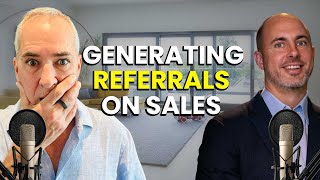
Ryan Casey spent 22 years at Cutco generating $40M in sales, then became COO of Lifestyle Investor. He uses a 'Sherlock Holmes' referral technique: identify about 10 referral prospects during rapport-building conversations, then systematize the ask to turn customers into sources of new business.
Questions this video answers
22 years
Over $40 million in sales
Bought franchises in 2015; first studio opened in 2016
Bothell studio (Washington) — named top performing studio in 2023
January 2020
Chapters
I love that you said that. You know, really what you should have done was, was learn the content. Because for me, the shortest path to the A. I had a brief affair with one of my teaching assistants and she, she gave me the copy of the law final. That was definitely the shortcut to the. But you can't systemize that.
I was not as dedicated to the A as you are.
The only A I ever got. All right, we got a great episode right now. This is actually the CEO of a friend of mine, Justin Donald, from Lifestyle Investor. Our guest today is his COO R. Casey Ryan's a really solid entrepreneur and a sales expert with a background in leadership and business growth. After earning his Bach or his business management degree from the University of Washington, he spent 22 years at Vector Marketing, which is Cutco. He kind of blew that organization away, leading high performance teams and generating over $40 million in sales, which is pretty crazy because when he was 17 years old, his dad laughed at him for even taking a job with Cutco. He then entered the fitness industry, launching two Orange Theory Fitness franchises, ranking in the top 10% of over a thousand locations. His Bothel studio in Washington was named the top performing studio in 2023. He has been the COO for lifestyle investor, which is a financial education company helping entrepreneurs achieve financial freedom through passive income. And under his leadership, the company expanded to three masterminds and growing a free community. He also lives in Seattle with his partner Casey and their three children. He's also a member of John Vroman's Front Row Dads. You're going to love this episode. You can also share this episode and you can watch it on our in Command podcast YouTube channel. We'll see you on the inside. Ryan, welcome to the Second in Command podcast.
Thanks for having me.
It's great to be here. Looking forward to this for. For a bunch of reasons. One, you work with a friend of mine, Justin Donald, who is the. The CEO and the founder of the organization that you guys built, which we'll talk about Lifestyle Investor. Secondly, because you came out of the Cutco world and I have got way too many ties into the Cutco investor marketing world with clearly friends like Justin. I was very, very close friends with, with John Rulin. And then Brad Wymart was at my wedding. Hal Elrod and I co authored the book the Miracle Morning for Entrepreneurs together. I've been bumping into you guys all over the place.
We're everywhere.
Yeah. So I want, I want to actually start with that. I want to go back and talk to you a little bit about your experience with vector marketing Cutco, and I want you to talk to us about what you learn with them because I've been exceedingly impressed with them and the organization and the people that I've met. So I'm either meeting all the amazing people and they've somehow sheltered me from all the losers, or they just didn't work with any losers. Like, can you talk to me about that company?
Yeah. I think two things that really I learned with Cutco is I was a shy kid. So much to the point that when I came home and told my dad that, hey, I'm going to go sell knives, still to this day Now, I was 17 when that happened. To this day, I've never seen him laugh so hard because like on the floor laughing that this shy kid was going to go in people's houses and sell knives.
No.
But so playing off that, the two things I really learned was one was the personal growth. That was the first time where they really encouraged it. And I saw how there was a direct correlation with the more I grew, the more I made, the more I advanced. And that was motivating to me. And so that really got me down that personal growth track. And the other thing was really how to start systematizing things is I'm not the person who walks into a room and I can just chat with everybody and super charismatic. But you had to learn how to build rapport to. To do your job. So what I learned how to build rapport is, okay, how do I make this a system? I ask questions. What questions do I ask? I can ask them about the person that recommended. And that's how my brain normally works. I'm good with puzzles, I'm good with patterns and doing those types of things. So I was able to take something where a skill that might come naturally to somebody. How do I break that down to somebody who doesn't have that natural skill set and then. And then teach it. So those are two of the big things I took away.
I really love that. I love the whole systemizing. But then I even love that you systemized rapport. I remember when I was doing college pro painters that I was taught to build rapport as well. Right when you get to the front door of the person's home and they taught us to look for a painting or a picture, anything that would grab your attention and whatever that grabbed your attention, talk about it. It was like a sailboat. Oh, I have a friend who's a sailor or a dog. It's like, oh, My mom has a dog. Whatever it was that you felt you could make that connection about, it was enough. Was that kind of the same idea of what you would look for?
We actually had the five Ps, you know, pictures, plants, paintings, people, pets. That was the same stuff. But where can you find commonality? And to me, I always try to find out, how can I do this? We were talking about school and grades earlier, a little bit of, you know, what's good grades? And to me, it was that what's the shortest path to an A? And that was always kind of how I attracted I. In retrospect, that's not the best way to do. I should. How do I learn the content the best? Right. But for me, it's like, what's the quickest path to rapport? And how can I replicate that? So for me, my question was always, oh, how do you know, Susie? Because every single person had that in common. They were recommended by somebody. So that was one single question that I could start. And once I knew if I asked one thing, I could easily start following up on those. So finding what's the lowest common denominator. What's the easiest path that makes something happen over and over again for me.
So I want to talk to you about the lowest common denominator in a second. I love that you said that. Really, what you should have done was, was learn the content. Because for me, the shortest path to the A. I had a brief affair with one of my teaching assistants, and she. She gave me the copy of the Law final that was definitely the shortcut to the. But you can systemize that.
I was not as dedicated to the A as you are, but I was.
The only A I ever got. Talk to me about the. The. The. The lowest common denominator. What does that mean to you in looking for. Is it kind of like the basic easy?
Yeah. And I. I don't know if that's the best phrasing, but, you know, going back to Cutco, we primarily worked with young adults, and they were 1099. They're not paid to show up. And most of them didn't come wanting sales. They might have been intimidated by sales. So in order for you to teach a group of people simultaneously and have them be successful, you had to teach. Okay, what can I teach? Where every. It's going to be applicable to everybody. I don't want to lose half my audience because I'm teaching. Here's the absolute best way. And then you're losing half of the group. I can teach just because Something's good doesn't mean I need to teach it right now. And so what do, what does the whole group need at the moment? What's something I can say that will apply to everybody to get them to the next step and then keep looking at it that way?
Yeah, I used to say that to, to write a great system, you have to be able to put it on a post it note. If you can write it down in a post it note, you're thinking clearly. And then I also used to say that we had, we used to call it Bob Proofing. We had a franchisee in Buffalo whose name was Bob. He was our very first franchisee. And much later on he never would have been awarded a franchise. He didn't have the skills that we then started to require. And he was in a tough market. He was in a blue collar Buffalo where you got a little bit of snow in your background right now. But Buffalo, they'd have eight feet of snow in February. I'm like, what kind of a system would work for Bob in Buffalo with 8ft of snow in February? Because if Bob can do it, then, you know, somebody in the best market can crush this thing. So I like that you think that way. Cutco also is really famous for referral based sales and they didn't do real door to door marketing. You weren't out knocking on doors as much as you were generating referrals from each person you were talking to. Can you give us a couple of the takeaways there? Because I think you guys are probably the best in the world at generating referrals.
Yeah, I mean one, it's we from day one, you know, you depend on it and you know, because then the, the alternative is going back to your initial list, which most of our, our representatives, they, they appreciate that. Okay, I get to practice with some people I know, but eventually I want to move on and feel like I'm, you know, growing my lead base and not have to find another aunt to go find it, you know, to show and so that you knew that if I didn't get referrals, that was it. So that was a skill set that was harped on. That was, you know, one of the key pieces that they needed to memorize and get down before they go out. That was the one thing we'd have them memorized before they leave initial training. Everything else, you know, they're looking out of the manual and stuff. But that thing, I'm like, hey, can you memorize this today? Because it wasn't that long. And then Also, I think it just set up the sale that we wanted. Like, it all is cohesive. Like, you know, if you're getting recommended, that means they enjoyed your service and they enjoyed the process of it. And, and that's one of the things. I don't know if we'll get into the orange theory stuff, but like now we've kind of reversed that to where how can we have a sales process to where we're generating referrals? Where before it's like, we know we need to get referrals. I like to think of it both ways. You know, where I want the sales process to not only sell, but if we do it in a way referrals should be easy and should be happening organically. And then also, hey, if I know I'm depending on referrals, how am I going to plug that throughout the sales process? So you're looking at it both ways there.
Okay, So I like that they actually kind of socialized it with you and explained why it's important. And it gave, kind of gave you the fear that if you don't figure this stuff out, you're going to kind of be struggling. But teach us what, like give us the. What did you memorize what was. Because I'm sure you still remember it today. What was this? The little. What were the lines. Lines that you said in the first phone call? What were the lines you said at the front door? What were the lines that you said when you were sitting with them? What were the lines you said at the end of this, of the sales cycle? Like, can you kind of give us like a couple of little step by step takeaways out of the manual from back then that people can use or learn from?
So the first was just on the initial phone call. It's. You don't know me, but you know so and so. Oh, yeah, they. I was just over talking with them the other day and they thought you might be able help me out with something I'm doing or it's nothing scary. You were making a little fun. But also, just from the first point of interaction, it's, you were recommended to me. This is planting the seed. And then throughout the presentation, I'd always, you know, looking for those commonalities. Oh, do you know so and so down the street too? Yeah, I was, I was also recommended to go see her. I was recommended. How many times can I say recommended throughout the thing? So by the time I get to the end, I'm going to ask you for recommendations you already know. Big one. I used to teach our reps is during the rapport building part. You want to be Sherlock Holmes where you don't start the presentation until you can already list at least 10 people that you know they can recommend to you. You're looking at Billy's pictures and you're like, oh, so your son plays baseball. How long has he been doing that? Do you guys have like the snacks and the parents all get together afterwards? How long has he been on the same baseball team? I'm like, okay, there's parents there, you know, how long have you lived in the neighborhood? You guys have a big parties, you do it. And so we, I would teach my reps where you're not starting the demo. So when you get to asking for referrals and they're like, I don't know anybody. You're like, what about the seven people on Billy's baseball team that he's played with for eight years? What about the five neighbors who are always over here? What about the ladies you play pickleball with every Thursday? You know, specifically thought builders there.
Wow.
And it. Because half of it is just laziness. I'm like, I told them, I'm like, the main reason you're not getting, you know what the biggest reason why you're not getting a lot of referrals is because the amount of work it takes to pick up the pen and move it back and forth and as opposed to not doing anything. That's really it.
Well, no, you just odg shucked over the key, which is the Sherlock Holmes component of you were doing the digging to find out the five or ten you were going to talk about later before you started pitching the product, I think so often salespeople go in with the sole mind of I'm selling the product. Then at the end they try to do some networking for referrals and they don't have anywhere to start. That's really genius, by the way. Like, I actually wrote it down on a post it note to talk to my sales team about Sherlock Holmes first. That's the nugget that I haven't heard from anybody inside of Cutco yet. I mean, I've spent too many hours with too many of you guys. You're the one that gets it right there. So that, that was a huge nugget. Funny you asked me about, about Orange Theory. I had breakfast two days in a row two weeks ago in Dubai with the former COO of Orange Theory, Griff Long. I don't know if you ever. Did you ever know Griff when He was there back in the day.
No, not.
He might have been. He might have been before you or I don't know. But. But he. Anyway, we were having breakfast over in Dubai. He's really, really smart guy. He was on the podcast about five years ago with me, so I'll have to get you his episode. But you were a franchisee for Orange Theory for a couple years. One of their.
Yeah, currently.
Oh, you still are. Okay, so walk me through some of those lessons because I think there's going to be some stuff there around systems as well.
Yeah. That, you know, we. We bought our franchises in 2015. My parents were my partners. And 2016, we opened our first one. And at that point, Orange Theory had a lot of things dialed in. Their sales process, though, was here's a spiral notebook. That's how you track who's coming in and how you keep track of your sales. And I'm like, oh my God, there's no sales training on there. So that was. Which I didn't care. I'm like, this is great. I. I have that Cutco background to put things in. It was a little shock getting used to the. The W2 stuff at a point. Sometimes it was nice because I can just go higher for positions. Like I can hire a manager where when you're a Cutco, you have to start at a bottom rep and you've got to develop them into manager. So there was some differences there. That was just overall good experience doing the pre sales. The hard part of the marketing, you know, getting out, doing the door knocking and other ways to drive business. When you're not 100. The nice thing about referrals is. Or the tough part about referrals is you only work on referrals. Right. The business, it's like, wow, I have all these different ways that we can go try to generate leads. So that was, you know, learning curve and getting creative and getting out of the comfort zone. I was still back in the day where they'd put the orange suit on.
You know, and have you lost the art and the. The kind of skill of generating referrals, or do you still incorporate those in Orange Theory? Have you gotten lazy and just relied on marketing now? I'm curious where your head is around that stuff.
You know, that is. That is. I'm more passive in my Orange Theories where I'm not in there more than a couple times a month. And it's not something we're executing. And I feel like we probably do probably a better job than most, but it's still not something that we're executing at the highest level where there's not that same dependency from the sales team where I have to ask for these, I have to. And it's that point of comfort. But we try to implement the same types of things of can you get the Sherlock Holmes and get a couple people recommended, usually more around accountability partners and things like that of who could be people that are doing and mentioning recommendations at the beginning, asking on the phone, who do you want to bring in for a guest? And then at point of sale, you know, what's in it for them? That's a big point in getting referrals. It's not just, hey, I need referrals, it's why. How does it benefit you to give me a referral? Right. That's how you want to frame it. So it's a, hey, people come here to hit goals. One of the easiest ways to hit goals is have an accountability partner who should be in here working out with you. Write down a couple, we'll give them a free workout so they can try it out. But for that to get executed consistently, it doesn't happen as much as as we'd like. There's not the same motivators as Cutco. It's, it's all on me, my income, my. You know how easy it is going to be for that. Those phone calls, like, I don't want to sit for five hours calling the same small list over and over. I want to call for 15 minutes because I, I can, you know, cherry pick my very best leads and be done. So I'm very motivated as a, you know, independent contractor for Cutco to get the very best leads. And as many of them where you front desk person at Orange Theory. If I don't get any old leads. Yeah, it's not as big a deal for me on there. So that's a tougher nut to crack for us.
We're working. That's interesting for sure. I'm going to ask you one more question about your kind of Cutco experience before we dive into lifestyle investor and talking about your working relationship with Jason, the CEO who's also out of the Cutco world, or Justin. Sorry, not Jason. So when your dad laughed at you when you were 17 and you kind of describe it, you laughed as you were saying it, but it must have really hurt. How did you get over that? Or did you use that? Or did you just know that he was laughing but loved you and was going to be there? Like, can you walk us through the mindset? And then the growth from that. And do you still. Do you still leverage any of that today? You know, when customers or suppliers or banks, you know, say, no, it can never happen. Do you still dig deep?
Yeah. My parents have always been extremely supportive, and I knew they would do what they can to help. And they're also great devil's advocates, where, you know, I might be hyped on something and say, I don't think this is a good idea. They were fine, but they're like, go for it. But I'm the weird type of person where I'm much more motivated by a naysayer than encouragement. So I was pissed when he was laughing. Mike, you've been telling me for two weeks to go get a job. I finally go get a job, and you're laughing at me. I'm like, all right. And then they didn't think I was going to do well. And like, that's the best thing you can do to motivate me is. Is challenge me. And don't, you know, don't believe that I'm going to end. It wasn't in my parents believe in me. All guys, the limit. But they just didn't think that was the right fit. They're like, well, you do your best, but I don't know if that's, you know, that's the right thing for you. It was funny after a week. It was back when it was this late 90s where you could call zip code or area code, area code to charge long distance. And so I'd always have to check in with my manager. And I'm like, this is going to cost a fortune. Like, dad, how about you buy me a cell phone? How about I get a cell phone and that way I can, you know, call? And he's like, hey, I'll tell you what. Let me see that promotion list. And it was like, you know, three promotions up with 6,000. He's like, if you hit that, I'll buy you the cell phone. You still have to pay all the charges. And it didn't take me very long, and I knocked that thing out, and it was kind of like, all right, here we go.
I love.
Was great.
There is. I love that you. You kind of recognize some of that internal driver when people say it'll never happen or I can't do it, that. That becomes kind of. You're driving fire. So now, all of a sudden, you've got a transition going. You're operating the two franchises still, but now you're also the COO for lifestyle investor and working With Justin, how did you find out about the opportunity? What was it about the opportunity that intrigued you? And why do you think he said yes to bringing you on board to being a coo?
Well, I'll try to go quick, but the backstory is that I left Cutco in January of 2020 because the fitness studios were going good. I have young family. I had young kids. At the moment, I'm like, you know, what, am I making more money from Orange Theory than I am with Cutco? I'm spending more time in Cutco, though. What am I doing that for? So I have kids I want to spend time with. I leave two months later. Covid hit gyms are shut down for a year. So now I don't have a job. My businesses are shut. Justin calls me up and says, hey, I'm doing an investor happy hour. There's five of us. We're talking about deals every Friday. So I started on there, and that group, from five to 10 to 15 to 30 people, launched the Mastermind. And he said, hey, I could use some help. Can you help me a little? I'm like, I'll help you a little bit, but I don't want to. Don't want to do a lot. So I helped him a little bit as a member, and I was basically just a member who would help with some of the backend stuff. It just blows up. It gets to the point where it's almost 100 people in the mastermind. He's managing it with an EA and a thousand Google Docs. He brings in an EOS implementer. They say, you need an implementer. They all said, ryan should be the implementer. And I said, no, I don't want to do it. Like, I can get it. I just. I don't want to be working. I left the job. My orange theaters are back up and actually running now. I have income. I don't want to do it. And they also happen to be fractional CEO roles. So they came in and within two weeks realized that for what we wanted to do is probably to have better. It was probably better to have somebody internally that knew the lifestyle investor ecosystem versus the outside. So I flew down and told Justin, I'm like, okay, I don't want. I want. I love what we're doing. Two years the Mastermind had been operating. I love what we do. I don't want it to be messed up. Here's the deal. Like, we're both in front row dads as well. So I said, my kids are in school nine to three. That's when I'll work. I still have to go do my orange theory stuff during that time, you know, a couple times a month here. What do you say? And he said immediately? Yes. And that's when I was like, shit, I should ask for more money. But he, he was on board. And you know, him being front row dads, we totally value family and none of us want to grind. That's, that wasn't, this was a project that got out of hand. So that was the start. That's how I got the position.
Love that. I just had a call last week with, just, with John Roman from Front Row Dads, the founder of Front Row Dads. Great, great guy. So he and I met at a crazy little festival a couple years ago. So lifestyle investor you kind of mentioned to me earlier didn't start as a business. It started more as a passion project as a way to kind of educate some people. Justin, had he written his book just coming out, right?
Yeah. So he started the Mastermind before the book came out. And so he started the happy hour calls in March of 2020 while he's in the process of the book. The Mastermind launched in September of 2020. The book came out in January of 21.
Okay. And, and so when did it turn from the passion project into the business then, do you think?
More when I came in. And so, and that's what the job was. You know, he, he wanted to have more structure around it. He was, he, this was supposed to be fun for him. And then he built this job for himself because the Mastermind grew. And, and so that's, that's when we say, okay, well how can we, I mean, when I came in it was still justindonald.com I'm like, well, let's make it lifestyleinvestor.com and that's one of the first of many small changes we're going to do to build this out as a brand that's not totally dependent on you, although it still really leans on him just because people love him and love his insight. But that's kind of the mission is to slowly remove the company's dependence on him to, for the company to flourish.
Can you speak to that a little bit about the benefits of having kind of the founder led company, the iconic founder and then when you need to move them out to build either a business that is sellable or a business that is more valuable or a business that can just scale without them. Can you speak a little bit around that?
Yeah, I mean when it's, it's Small. It's fun. You know, you get. You get that. Obviously it takes a special person to build something out of scratch like that. I mean, many people would wish, hey, I wish my passion project got out of hand and grew into a $6 million business or whatever it is, right? So it's fun to be along the ride. And he's doing things that he really enjoys. And it's fun to be working with people who are doing what they love to do. Right. They're in their zone of genius. They're getting to do those things. But as we start growing and getting detached, then it's. It becomes challenging that, that transition period of like, okay, I want you. You know, he's instructing his team to run with this, and then all of a sudden we run. We're like, wait, wait, wait, why don't we do this one? Like, well, because he told us to run with it, and he didn't tell me to do that at the beginning. That's not how I would have done it. So you get some of that going in. Justin has particular tastes about different things, and especially, like, we'll do an event in Austin. Only half the team lives in Austin, so he's like, wait, we should do it at this restaurant or whatever. And so it's, it's tougher to, to know exactly what they want when they start stepping out. Like, they, they. And especially coo, they're CEO. They're not the COO of systems person. No, they're like, they go off their ideas and stuff. So that's hard to communicate all of that to your team.
How have you and Justin decided who's got what roles and responsibilities? How have you kind of delineated where he. What sandbox he's going to play in and which ones you're going to play in?
Yeah, it's changed over time. When we first started, I was thinking, you know, well, I'll never be the one who's betting the guest to come onto the. The mastermind of speakers, because I just don't have that financial knowledge that you do. And here I am. That's what I do. I've been doing that for over a year now. And so it started with anything that is in his, like the deals, the financial topics he's bringing in, the speakers, they still come from his network. Like, that is great of an investor. Justin is. The thing is, he's the absolute best at. Enjoys the most, is connecting with people. And so such a great connector. So he still will give everybody. But now they kind of. We have more of a system like okay, here's the queue of people we want on. And he always has veto power of like, hey, I want them on now versus the two or three month wait that we, you know, we're usually scheduling two or three months out, but he's still very involved in the deals. We basically try to put people in the position where that person's the only person that can do that in the organization to the level of expertise that we want. I'm not going to be able to pick the deals we want to the level he can. But I'm at a point now where I can select a better guest because I'm more in tune with the members and what they really want than what he is. So although he can give me the types of guests we want, the people, I'm going to be the one that's selecting them because I know what chatter is going on within the group and what topic will be more appreciated at the moment.
Okay, makes. That makes a lot of sense too. So then your day to day right now or let me just go back a bit. Tell us a little bit about the clients that you look for for lifestyle investor. What's that client look like? What was your kind of avatar be for a client? And then can you speak to who your competition might be in this space?
Yeah, we, for the main mastermind, we have three types of people we really work with. We have the higher ending W2s who don't necessarily want to do their career for another 20 years. Want to have an optionality of maybe after 5 or 6 years I want to change paths and have my income taken care of. We have active business owners who want to exit that business maybe from selling it or maybe from just putting an operator in place and being able to be more passive. And then we have people who have exited a business and they're really wanting to allocate capital with the same level of expertise that they ran their company at, but they haven't allocated capital for 20 years like they had run their company. And so that's where they come to learn. And so you know, we have net worth range from 3 million to 300 million in the, in the group. So that that's who we generally are working with. What was the second part to that competition?
Would it be the tiger 21s of the world? Is that kind of. Or is that different?
Yeah, you get some tiger 21s that's more localized. So and that's generally 10. I think they might even bumped it up to 20 million so we have a little lower barrier to entry on some of those than a tiger 21. But you know, we get, you know, go abundance. You have tiger 21, there's a few of them. The thing is, is when you get to that high price point, it might not be a direct competitor, it might just be how much that person's allocating for their personal growth or the groups they're going to be a part of that ends up being competition. So it might not even be topic related.
And Yours isn't necessarily CEOs, is it? You could have a CEO, you could have a high net worth individual that's a physician or something, is that right?
We do get a lot in the medical community. So yeah, there's no specific type of career. No, it's a specific type of entrepreneur. That's, it's more. The tying factor is everybody wants to buy back their time and they see passive income as a vehicle where, hey, if I had all my lifestyle expenses covered, how would that change my life? How would I look? How would I now interact with my business? How would I make decisions differently for my business? How long would I continue to work in my W2 or what time could I allocate to my family or my passion projects versus the requirements I have.
For my career right now and buy back your time. A great book title from Dan Martello is another friend of ours. When you mentioned passive income is the core of lifestyle investor around real estate investing, is any of it related to crypto? Is any related to stocks? Any related to tax vehicles? Like what's the kind of core of it all?
Yeah, we don't have one specific asset class. So initially it started with I, I read Justin's book I want to invest in the deals and Justin's investing with. But then people came in and that was their investing criteria. If Justin's investing and I want to, that's a terrible investment criteria. So really when I got in, we shifted that away of it's not just investing. With Justin, the goal of the mastermind are connections, education, tax strategy. That's where our fastest ROI comes from for our members. And then deal flow and deal flow not in, hey, I want to invest what Justin's investing in deal flow is and we spend $300,000 a year on vetting the deals that we even put in front of the group. So most of our investors aren't going to spend that. So they've already had to jump through some hurdles before they even start their due diligence. But then we're going to teach you how to do due diligence. We're going to teach you how to look at your goals and from your goals, build out your investment criteria and then from your investment criteria, figure out what asset allocation makes sense for you. So when you mentioned which investments we do, all right, you know, we have private equity, we have credit funds, we have real estate, we have different subsets of real estate. We. There's a lot of chatter and, and we'll have some guests every once in all come on about active. Like maybe I want to buy my own mobile home park like Justin did, or maybe I just want to take the total passive route and invest in a fund and just be totally passive. So we kind of COVID all of that, but we look at the well rounded. How do you build it within a, an asset allocation that's going to protect.
You and grow and okay, so I like that. It's everything. I'm curious on how your fee structure works. Is it just the annual fee that you're getting? Are you putting deals in front of people and you're getting a percentage of the carry, or are you taking equity in deals and then having these people come in with additional money? What's the different revenue streams that you have?
So the revenue stream for the mastermind is one fee and that's it. So we have some courses and other stuff that we get revenue from, but from the Mastermind. We don't make a dollar on anybody's investments and that's really important to us. Justin's been asked many times to create a fund because we eventually we put so many deals forward that most investors are going to be investing every deal. So they'd say, Justin, can you just do a fund? And then you. We can just invest in the Justin Donald fund. And he's never wanted to get close to that because in order to do that you're going to have to have some compensation to make it make sense. And then all of a sudden we're biased in what deals we're putting forward. So we don't do that at all. And even on our sponsorship program we have, you know, sponsors that'll help pay for retreats and things. Nobody can buy their way in to pitch a deal. So the sponsors we work with are people who have already previously come into our ecosystem that we really liked and worked with and have passed vetting, will offer sponsorship to those specific people versus go chasing dollars for sponsors.
Interesting. Yeah, it seems like there's been a big trend around communities putting together these rolling funds and having their kind of members put money into the deal and it feels to me like there is a conflict of interest. Is that kind of your thoughts around it as well?
Yeah, I don't want to bash anything but it's just the structure is faulty because it leads to different motivations. Like you have Evergreen Fun, you have more people that want to join it. Well, you've already allocated to the certain deal. So now I have this new money that I have to find deals for. So now I might have to open up my buy box of things that I necessarily might not necessarily would have put in the fund originally but now it's grown so much that I have to allocate for that and I. It's just we don't want to have to deal with any of that. They'll leave that to the professionals of.
You know, I'm doing some deals on Angellist right now. I've done about 12 in the last 12 months on, you know, open AI and SpaceX et cetera. But I noticed that the, the groups that are putting these deals forward are putting in sometimes fairly small amounts into the deal because they're making all their money on the carry the percentage of money that they raise. So you guys really are just there more advisory and networks and the connections for people instead of. And is it because of a fiduciary issue or is it just. It's just an easier model to stay clean on?
Yeah, it's just. That's the. The goal is just to help people with that. Like we're again, Justin didn't start this company to make a ton of money. I mean the company does well but we, we don't. We want to. The, the main point of Justin doing this was the connections and the people and if we want to keep that community and those connections right. We have to do right by those people and set it up in a way that's going to benefit them first and that also going back to referrals and things like that, that makes it easier for all of those things.
Do you think it makes it easier for you to find clients because you're not putting the deals in front of them that you're going to make money on. They actually really feel like you have their best interest at heart.
Oh, and the group category right now, there's always a level of skepticism to begin with. So when you start putting a carry on thing then that. Yeah, I feel like that would make it a lot harder and that's not something we want to deal with. I think our members appreciate that they not going to be making money off deals we don't like. The money doesn't go through us. We say we give the connections to the vendors and they connect directly with them there. So on one end it makes it a little tough to track stuff. It's, you know, kind of self reporting when we try to see how much invested in different funds. But yeah, we feel it's a lot cleaner that way.
I know you said early on that, you know, you became a real self driven learner, that that was something that Cutco kind of reinforced for you. Can you speak to some of your growth now over the last few years and what are you focusing on growing currently?
Yeah, I mean One thing with 2020, it was, it was a rough spot. I'm in Washington. So Covid was different in Washington than it was in a lot of other places across the country. Especially you see 900 orange theories open in July of 2020. Ours didn't open up till February 21st. So I just kept telling myself, you know, I want to be able to look back and say, you know what, I wouldn't be here if it wasn't for that Covid year and have here be way better than what it would have been without Covid. And I was thinking initially that's probably going to take like five or 10 years. But here I am a couple years later and I feel like I'm in a great spot. And some of the things that I joined Ryan Levesque's coaching program, I'm not an online marketer, I don't know any of that stuff. But you know what, all of those things I learned before I went into the CEO role and now I look back and I'm like, wow, that was so valuable because I know what to do when I'm, I'm vetting different marketing vendors and I can have really in depth conversation with our marketing and direct because all these things I learned from that group. So we've always just been staying involved. Justin was so kind with, we were coaching with Michael Hyatt so I would get to sit in on those calls. And Michael's just brilliant man there. So getting to learn from him. We coach with him for a couple years. I just recently joined Stu McLaren's mastermind impact mastermind and so all about seven to eight figure membership groups and most of them are a little different than us. They're, you know, our price point's 55 grand. We have over 100 members and most of their were more like 70,000, $70 a month price point. But they have 6,000 members. But I love those differences because that's where some of the. The ideas where you never would have thought of come out and you can mix and mingle them there.
I almost call it ideas having sex. You take an idea from Stu's group, an idea from Ryan's group, an idea from Michael Hyatt's group, and those three ideas have a little idea, baby, and it's exactly what you're looking for. So something, something you touched on, you know, when you did. And by the way, The Orange Theory Coo, his name was Griff Long. He was episode 92 on our Second Command podcast. And I'll actually link it in the show notes. I'll send you a copy of the link in the chat here because you can listen to it later. You might want to listen to his. The learning that you were doing back when you were doing the Ryan Levesque stuff around marketing was probably because you were running Orange Theory. You wanted more marketing expertise. Is that right? Or was it more? Or was it just more random growth? It was like, hey, I just want to go learn this stuff.
Random growth. It was. What could I start? I was looking at face how to do Facebook ads, and then I got a call with Eric Van Horn and he's in the franchise world. And he was like, well, hey, tell me about your range theories. And I told him where we're at and he's like, how'd you get so many members? I'm like, I just teach our people to sell. So he's like, other franchisees need to hear that. So we did a sales little boot camp and that went well. So I didn't have anything going. I started doing a franchise sales training course during COVID and so then I would. But I had actually started to Ryan Levesque stuff before that. So I'm like, oh, here's something I can now apply it to of, you know, I'm learning the skills first and then saying, okay, now where can I go apply this? And that Sales training came up.
Interesting. I've been on Eric's podcast as a guest, I think three times now. He runs a really good, good podcast on the franchising space. So what you're talking about, I call just in case learning. I'm going to learn a bunch of stuff just in case I need it in the future. And then I also think about as something kind of just in time learning. It's like, I'm working on this thing. I need to learn this to get better at what I'm working on. Is there anything that you're working on learning right now that is tied to something that you're, you know, a project or something you're working on this month or this quarter?
I think for us the learning how to do the mike, the marketing launches. So we've never done it, you know, that big build up like Amy Porterfield a launch. So something we're going to be doing this, we're going to revamp our passive income masterclass. Currently it's, it's $5,000 product but it's a, it's, it's a four year old repurposed zoom meeting no production value. But the content is really good. Yeah, well the people that are willing to drop five grand on it and it's also one of the reasons why we keep the price. What it is is because if you're paying $100 for it, you might not be the type of person where you're really going to ROI for it. If you're the type of person you're like, oh this sounds great and put you're going to ROI multiple times from it. But we're going to revamp that this year, do a big production value at some of our live events and then move the old topic as bonus content. But we've never done like a big launch thing. So that's one thing. Now the other stuff for me is just, just constant learning from the financial aspect. Like I've learned more in the last five years investing than my whole life. And I was one of the division managers in Cutco, would give the financial talk at the conferences and things but just crazy. And I always tell our members that you should try to keep your financial education at least four or five years ahead of your success rate. So many people when they get money they're like okay now I exited my company, now what do I do with this?
Too late.
Yeah, you got to be way ahead of your, you know, if you're on a high growth trajectory, you got to keep your financial education even ahead of that. I'm sure that applies with all sorts of education. You know I joined front row dads when I had 12 year old. You know, it was nice to see around the corners as much as possible.
Well, I love that you're expanding with doing, you know, Amy Porterfield's courses on, on the product launch is great. Jeff Walker's stuff around the product launch formula is great. So you're doing stuff around like content courses, you're doing stuff out of masterminds and then you're learning from within this organization, if you were going to go back and give the, let's not go to the 17 year old, let's go to the 21 or 22 year old. Ryan Casey, some advice. What advice would you give the younger you that you know to be true today but you wish you'd known when you were 21 or 22?
You know, I, I've been the type of person where I don't, I have good friends that I've had for a long time, but I, I like to stay within my social circle, so never been the one like, hey, I want to go make new friends, I want to. And I did the same thing kind of with networking where within my Cutco circle As a young 20 year old, I knew all the top performers. I roomed with Hal Elrod when we go to conferences. We did. I knew all those guys, right. But I never looked outside of the Cutco circle, right. And you know, when I joined Cutco, my dad was an elementary school teacher, my mom was a state worker. And when I saw that a division manager in Cutco could make $250,000 a year, if I could ever get to that point, that would be all the money in the world. And when I get to my 30s and you start bumping shoulders with all these other people of like, man, they were just in a, they had a higher ceiling opportunity. And I often look back and say, what would have happened if my mid-20s, I'd have gone to something that would, had a higher ceiling, what would have happened? And you know, there's a lot of what ifs. But I'm really happy with the skill sets that I developed, the relationships I've built. So, you know, I wouldn't change anything. But that is one thing that I guess about. So I think to answer your question, it would be to look outside those easy communities and the easy environment of how can I grow my network and learn from people that aren't doing the same thing I'm doing?
I love it. Ryan Casey, the COO for Lifestyle Investor, thanks very much for sharing with us on the Second Command podcast.
Thanks for having me, Cameron.
It's a great time, really appreciate it.
More from Cameron





Flutterwave Former Global Head of Operations Awa Kone | When Growth Outruns Operations (Podcast 611)





