How We Succeeded Dressing Celebrities | LGFG Fashion COO, Mamikon Rothberg (Podcast 348)
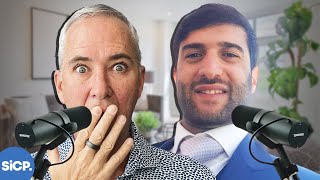
Podcast interview (Dec 27, 2023) with Mamikon Rothberg (COO) about LGFG Fashion House, a luxury custom menswear brand operating in ~16–17 countries with ~60 employees (about half in sales). The company provides in-home/office fittings for custom suits, shirts, jackets and casual wear, serves high-net-worth professionals and celebrities, and relies heavily on direct sales and referrals. Key operational features: company-owned manufacturing, proprietary pattern-generating software, a custom CRM built over 3–4 years (includes client avatars and QR-linked wardrobes), and a recruiting bonus program ($25,000 paid as $5k/year over five years). Price points: average suit ~$2,000; high-end bespoke up to $25k–50k. The firm emphasizes culture, transparent expectations, sales training, and combined salesperson/tailor roles.
Chapters
Save a couple of hours not driving to the mall and not spending time in the, in the traffic, spending time in the, in the shop and have a guy who is experienced, who has the knowledge and idea how to dress and help you to dress up and make the whole shopping experience very easy. That the convenience makes the difference.
We've got Mamik Rothberg, who is the COO for LGFG House, which is a luxury designer clothing company. They make custom suits and shirts and they even do shoes and jackets for men all over the world. They're operating in probably about 20 or 30 countries. I know they're actually going to be coming over to meet with me in Dubai to make me a custom suit. Really looking forward to sharing all the information and the wisdom that Mamik has just shared with me. Pretty interesting with the culture that they have, the direct sales approach that they have and the ability to actually deliver this high end of a product to some of the celebrities that are doing worldwide. You'll love the episode we we'll see you on the inside. So Mamec, welcome to the Second in Command podcast.
It's a pleasure to be here.
Yeah, really looking forward to this. I've had a couple of calls over the last three or four months with your CEO Dmitri, who's a part of my group coaching program. And then I've heard of your brand over the years as well because you're partially based in Vancouver where I used to live for 25 years, but you're also partially based in Estonia. So before we dive in, and I don't normally start with this, but why don't you just tell us a little bit about the business and it's LGFG House, which is a fashion company. Why don't you tell us a little bit about the business, the brand itself and who your ideal customers are and then we'll dive in from there.
LG FG Fashion House is a luxury custom clothing brand. We work in the way that we come directly to our clients. We cater our clients directly at their home or office. We provide a very personalized approach towards your clothing. We basically make everything starting from suits, shirts and finishing with some bomber jackets and casual clothing like jeans and sneakers. So we basically cover all the segment. Our ideal clients are successful men who don't like shopping and spend time in the malls and who want to stand out a bit and have something more unique than common store can offer.
Is that generally the value that you're providing the clients is that I guess first that it's unique and that it's kind of a one of a kind. But secondly, that you are coming to them and that saves them all the time. Is that really the value? That they don't have to bother getting in their car and driving to the mall and parking and going up an escalator and dealing with waiting with somebody like is their time so valuable that they're willing to pay for that service? Is that why the value is there?
100%. And I think it's vice versa. First it's the time and then it's that they can get something unique because we work with the CEOs, with the presidents, with the partners of the companies and one hour of their time is extremely valuable. So they can save a couple of hours not driving to the mall and not spending time in the traffic, spending time in the shop and have a guy who is, is experienced, who has the knowledge and idea how to dress and help you to dress up and make the whole shopping experience very easy, that the convenience makes the difference.
So convenience for sure is one. Secondly, as a brand, you've been around for a long time, so you're established, you have the credibility. I haven't looked on Google to see what your Google reviews are like or see if you have trustpilot, but do you have online reviews about the business as well?
I believe so, yeah.
But you don't look at those, you don't look at those or measure those.
At all to be honest. Not because you know our business, it's not built on online views. It's mostly referral business or we are like a direct selling company. We reach out to our clients. We rarely get like inquiries from the web. Recently we started as we started to work with the more celebrities and they start to present our brand. So people start to check, check them out and reach out to us before it almost never happened. So we reach out, we find the clients, we knock on the doors and we reach out to our clientele. Basically.
Why is it set up that way? Are your clients not, I guess your clients are not online looking for this service because they don't even know that it exists. And if they're not into shopping, they're not into online shopping either. Is that why the direct outreach works better?
It's not even that. As we are in a luxury segment, our garments are quite expensive and I think no one would just spend this amount of money buying something online. When you're spending couple of grand for a suit or a couple of hundreds for a shirt, you probably want some experience coming with this. Instead of just checking on the picture online and buying it. This is one of the biggest difference, I think. So if we would be selling like everyday suits for 300 bucks, that probably would make sense. But we are not in that business. It's the same as you probably would know, not buy a 20,000 watch, just online, checking on it. Right. So you would want to go to the shop to see it, to put it on your, on your wrist and check it out.
What is the price point of a suit? I know that's kind of like saying how high is up? But like it's like asking, you know, how much does dinner cost at a restaurant? So what does a typical suit cost?
The average price that we sell suits for is around $2,000.
That's very normal and very standard for what a man would pay for a nice suit at like a Nordstrom or a Harry Rosen or. I remember when I landed the royal family of Qatar as a client and I was going over to meet with them, I spent about $3,500 on each of the two suits that I purchased just to have meetings in Qatar. So $2,000 for a suit when it's custom made. And then I'm sure you go up from there. Like, what are you. What are the most expensive suits you sell?
The most expensive ones would be around on the 25,000, 30,000. Okay. There are like very unique. If we go to the more unique segment, then they go. Can go up to like 50,000.
Yeah. And that's probably why you're attracting some of the clients that you're attracting as well, because you're doing some work for some pretty big name celebrities. Can you give us. Are you allowed to talk about who you create some suits for?
We work with Lennox Lewis, the heavyweight champion, some of the biggest names, and we work with Jordan Peterson, Russell Peters, Michael Franches, Zach Wilde, Eddie Hall. The list just goes on.
How did you get in those doors and have you done much with athletes? Like have you gotten into the football teams and the basketball teams and the baseball teams? Have you gotten into with, with the, you know, the hockey teams? Have you done much there at all?
We are just stepping into that door right now, but not much yet. We've been working with a lot of heavyweight athletes and with some fighters. Right now we start to approach some pro athletes in the sports of, you know, football, basketball, in the more team player.
And you're operating in multiple countries as well, so I get that. Would the core of your business just be the successful businessmen that are, you know, entrepreneurs or you Know commodities traders, financial brokers. Is that kind of your, your bread and butter?
Correct. Bankers, financial advisors, investment bankers, top accountants, lawyers, company owners, partners. These are, these are our main clientele.
And is it referral based sales that generate most of your revenue with the sales? Is it direct cold calling one on one or your. Are your salespeople really good at generating referrals once they've got one client?
100%. So most, most of the business is generated through referrals. But we also have a social marketing team that supports our sales and we do cold calling as well. We are sales company that happened to be to sell high end suits. We knock on the doors, we float, we cold call, we ask for referrals and we try to get any opportunity that we can, we can get to reach out to our prospects. So I know we called email in the countries where it is possible to do that still. But mostly it's referrals. If we say that really growing your business, it's referral game. This is where we put a lot of accent in training our sales reps to ask for referrals because that makes a huge difference.
Yeah, and I would think your close rate on referrals would be significantly higher than a close rate on a cold call.
100%. It's not even close. So, so even the booking rate, like if you're calling referrals, you would book probably half of the guys that you will reach and the calls would be much more pleasant. As you know yourself, I'm sure you've been doing the call calling as well. So. And when you cold call, you're, you're just, you just knock cold in the door and you get a lot of no's.
Now you guys have got a very strong company culture. I went on your glass door and your glassdoor rating is a 4.7 rating and you've got 38 ratings which is very high. Like to have a 4.7 with already, you know, 3840 ratings. How do you get a strong company culture when you're a sales organization which tend to be, you know, firing the bottom performers and getting rid of the low performers. Sales organizations tend to get hurt a little bit on their glassdoor ratings because people don't like that competitive environment. How have you been able to do both to have that competitive sales environment and yet maintain a good culture?
I think it's managing the expectations. So we are very blunt and we tell upfront what are the expectations of the salespeople to hit the targets and how to perform what it will bring to them as well. People see the performance and the results, deal to some the execution, deal to some results. If person don't execute, then it's hard to blame the company because we provide all the tools, tools and the trainings. We really want people to succeed because we are the people's company. We build the people, people build the company. So I think that's a part of it. But you know, there's always someone who will get sad from the reality. But yeah, I think that's the big part of it as we are very transparent in terms of what are the expectations from the people and from the company.
Where do you find your salespeople? You guys are a pretty strong sales organ. First off, how many employees do you have globally and how many salespeople do you have approximately?
So globally I think we are around 60 and half of them are salespeople. Recruiting salespeople, it's a hard nut to crack. We started to get celebrities with only one purpose, is to hire more people. That was the only purpose. I mean, it also builds the brand. But the biggest struggle that we had is how to hire and attract salespeople that would be highly interested to work with us. Having big names as a brand ambassadors help a lot, so people get excited about working with us. So we started to get much better pool of the candidates and the hiring of new reps became a bit more easier than just finding the guys out from the street.
Love that. Okay, so you actually recognize that having premier clients would help you with your recruiting. And it's not like that your recruiting would help you get the better clients. So where did you get your initial, you know, a list clients? How did you go out and find those ones?
It's all started with Lennox Lewis and it was complete pure sales. Just cold knocking on the doors, trying to get from, you know, different approaches through social media, through emailing, through calling, and just trying to open these doors. And once we got Lennox Lewis, it gave us a bit of credibility that we already worked with some celebrity. Then it became a bit easier. But everything changed when we got Alice Cooper as a brand ambassador and he loved working with us. So after that it kind of opened the door into that sense.
How did you get Dallas Cooper?
The same thing. We messaged him. We showed the opportunity to work with us, we asked for the opportunity to work with us and we, we showed what we can do for him. The main approach is we tried to make the whole experience very easy and fun. He kind of decided why not? He gave us a chance and how.
Do you systemize something that seems so complicated? I mean, it seems to me that custom made suits would be complicated. Is it that you only have a limited number of styles or a limited number of fabrics? Or have you figured out the way to have multiple styles and multiple fabrics with multiple sizes in multiple countries? Do you at least manufacture from the same place or are you manufacturing from different manufacturers based on the look and feel? How does that all work?
We own our manufacturer and we manufacture all in one place. It works in the sense that we have incredible software, generates a unique pattern based on your measurements and the styles that you want to get. It generates like a unique pattern for you especially. And we add to that pattern the fabric that you choose and the linings, and then we send all the pieces to the production and the fabric is being cut and sewn together.
Is it so simple that the tailor who's going out to take measurements, all they need is the same 12 measurements and a suit can be produced? Or are the tailors also salespeople in a way? Or do you have two people going out? Do you have like the salesperson and the tailor?
No, it's one person. So if you are a salesperson, you're also a tailor. And we say that if you learn sales, you will definitely learn the tailoring. So sales tend to be much, much more complex and harder.
Yeah, I guess at the end of the day, all they're really doing is taking measurements anyway. They're not actually doing the work. So you can teach somebody how to take 12 measurements. So you're teaching great salespeople how to take the measurements correct?
That's absolutely correct.
Are the salespeople that are coming to my home to do my measurements the same person that's doing the cold calling, or do you have like cold callers and, you know, the. The in home salespeople working together?
It's the same person. We tried to split that. We actually had multiple call centers. We had call center in Philippines, we had call center in Bulgaria, Ukraine. We tried to divide this role into the guys who are calling and the guys who are visiting the client and measuring them. And it just doesn't work. You want to grow this. The person who is calling and going to take the measurements has to be the same person because it gives a lot of feeling of ownership. Cold calling and booking the guys, you can't teach that in terms of conversion rate of just cold calling from the office. For some guys that never went out and seen the clients would be much lower than the client. The guy who really sees and is in the environment and much sharper as a person. So he would better understand what he's talking about on the phone. So, and, and you would feel that you would feel the difference.
Yeah, you totally would. Is now do they do the cold caller or do the salespeople do all their cold calling in the morning and all their appointments in the afternoon or is there a better time of day for cold calling? Have you found?
Each person works in their own schedule, but they definitely have the calling time and the meeting times. So usually you go to the meetings in the morning and then after you come, you call. There is a certain purpose for that. You can generate some warm leads like referrals and floats in the morning that you will be able to come and call in the evening. So you wouldn't be cold calling the whole day or in the morning cold calling and then going to the meetings.
I know that I'm going to get to experience at least the on site salesperson because I've got a shirt, somebody coming to measure me for a shirt when I'm over in Dubai. How many different markets are you operating in?
We're in us, in Canada, in Dubai, in Hong Kong, basically in the whole Europe right now. We were in Russia as well, but not anymore. We were in Australia, but we lost that market. Right now it's still operating but on a low scale.
So when you say that you're in the United States, how many cities would you have people operating in in the United States? Like kind of the la, New York.
Chicago, we have Nashville and we have a rep in Tampa. Who's going to New York?
Okay, and Canada, Would it be like Vancouver, Montreal, Toronto or candidate would be.
Toronto, Calgary and Vancouver, Edmonton as well.
Is it all just based on having a salesperson that you open and close a market or do you strategically decide, you know, Toronto is a market, we want to have people and we're going to grow there. How do you operate that way in that sense?
Yes, of course. First we look at the team because you can't just put random person into the market to operate. So it has to be someone experienced. It has to be someone that you can trust as well. Because otherwise you will have market that no one is there and it's very hard to operate. We take it slowly. So until we grow the office up to like 5 reps, 3 reps in one market, we are not moving forward.
Okay, that makes sense. So you really are trying to targeting getting multiple reps into a market, fully committing into that market. How many Total countries are you operating in now? Oh, you said most of Europe.
Yeah, so I think we're 16 or 17 countries that we operate right now.
How do you operationally deal with the complexity of that where you have multiple markets, multiple currencies, multiple languages, multiple cultures. You know, the culture of dealing with France and Canada and you know, the United Arab Emirates with Dubai are completely different. And then time zones like you're operating 24 hours a day. Can you walk us through some of the systems that you use to manage some of those different areas of complexity?
We developed an internal CRM system basically designed for us. We designed it for us and we built it from the scratch. Not only a database for the leads where and the pipeline for the salespeople to call and operate from. It also tracks all the orders, contains all the customer support, the chats, like everything is there and it's quite complex. It took us like three, four years to build it and we still add some new features to the system. For example, recently we created avatars for our clients. Present you with your head and some styles that would be fitting you. And this is something unique that each of our clients now has. Each suit comes with a QR code that you can scan and it will drive you into your avatar. You will see all the garments that you bought with us before and also a section of, you know, some seasonal collections that you know, garments that might fit you and you might like that you can buy as well. There are multiple complex systems that, that you know, are, are gluing all these operational things together.
How about in terms of the, the communications of your team and the meeting rhythms, that kind of stuff. What's your tech stack look like? What tools do you use to operate and run the business?
Aside of our, our, our CRM system, we don't use anything specific. It's the, the same zoom that everybody uses. It just happened that we, we use Skype sharing and daily chat chats. We tried to go to Slack, but it's a bit too IT oriented chat and we just stayed with, with, with Skype. So Skype and what's WhatsApp? I would say that we used just to chat with each other, with the reps and with the team. But in terms of hours we have multiple calls and we record our company calls and share it with the team that are in other sides of the world so they can, you know, be with the company and know all the news and what is happening. And also we schedule separate calls with, with them in as well in another time zone.
What does Your onboarding look like when you're bringing on a new person and they're remote because you don't have, you know, management in all of these cities and countries you're in. How are you working through the onboarding of a new employee? You know, from a systems perspective, their day to day job and culturally, how do you onboard them?
The onboarding is a very important part and we've been failing some time with that, to be honest. I'll be blunt here. But right now we schedule it in the way that the rookie should always be with a leader. So we always assign a leader to a rookie and we kind of pair them together. A leader of the office is responsible for the rookie. Then if you know, as we have a lot of moving parts, like guys go to the turfs and they visit the clients from time to time. We bring rookies for the month to our head office so he can grasp the culture, the knowledge that we can share here with him. And then once we set him up a bit, then he goes under the leader and goes, you know, to the meetings. Ask him. Referrals.
Now you've done such a good job with generating referrals for clients. Do you also have a good referral program for salespeople to introduce their friends to become salespeople or people they know? Is that something systemized?
Yes. We have a recruiting bonus and our CEO Dmitry is very generous with us with it because we really want, we really want to grow and to double within the next year. And for that we need recruits.
What's the recruiting bonus? How does it work?
Recruiting bonus is actually $25,000 that is paid within each year that the for five years. It's paid within each year that the recruit stays with the company. So if I refer you and you stay for the first year with the company, I will get a bonus of $5,000. If you stay for the next year, I will get another 5,000 bonus. Another year, another 5,000 bonus. So it's quite good incentive to refer your friends and bring them on board.
Yeah, it's a great bonus. I like it for sure. What about your growth? You've been with the company for six years, you've certainly seen some growth. Can you talk about how you have had to continue to work on your skills for this period of time where you had to work on growing 100%?
I started as a salesperson as well when I sold in Oslo, in Moscow, and then I kind of grew into the CEO position and then within the timeline, my responsibilities were changing a lot as Much as the company was changing a lot. So every time there was a new challenge that I had to find and overcome. In the beginning, I was training in the call centers, so I was organizing their work, their payroll schedule, recruiting and training as well. So there was a quite big operational part happening. At some point, the COVID hit, we had to restructure the whole company. And it was a basically killing the company because we couldn't meet our clients face to face. And we are a direct selling business, so we had to find the ways. We dropped all the call centers. We started to think how to restructure the company, how to make it more profitable, how to cut the fat, make it operationally better performing company. So my role changed from that to reorganizing the company and to finding new ways to provide the products to. To our clients. Because we had a very supportive. We have a very supportive clientele who supported us throughout the whole Covid especially first year. That was really hard. But another challenge was, even if the clients are buying the products, is that how you gonna deliver the products and make the products? Because, you know, at one point everything got shut down, so the factory fired almost all wraps. And then the logistics just didn't work. I mean, you know that. You heard about that a lot, I'm sure. So my role was to find the new supply chains and finding the ways how to deliver products to the clients. And at the same time, the Brexit happened. That was another hit.
Huge hits.
Yeah, yeah, you had to. Our main operational office is in uk, so all the suits are shipped from UK had to deal with basically every country that we were shipping in Europe to set up all the processes, fighting with the customs.
And what specifically did you do during COVID to sell suits when you were a direct go to the consumer's home or business just to measure and to deliver. How did you get around that? Did you just go anyway? Did you sell more online?
No. We started to do Zoom meetings. As you know, we were not able to generate the new business. Almost. It was almost impossible because we couldn't see the people and measure them. But we could work with our clientele because we had their measurements. So we can decide what you want to buy and we can make it and ship it to you. And that was our main focus. So we were making Zoom calls with the clients. We were retraining ourselves how to sell over the Zoom and how to present fabrics and the styles in a more sexy way, virtually that you would want to buy it without touching them and feeling them. And that was tough times, but it also was a huge upgrade for the sales team. It led the team to look much wider in terms of sales, how to generate them. So it expanded their understanding of how they can sell. They can also sell through zoom and their presentation became better and everything had to become better for us to survive. And Covid was a very tough time, but it was quite good for the company as well. Now looking at that, once you have.
A customer's measurements, are they able to order suits online from you basing like picking fabric and just saying use my same measurements, this fabric go. And do you drive revenue that way or are you 100% ordering on site?
No, they can do it. Absolutely. Some clients just WhatsApp us and say hi, I need more white shirts, please make me six more shirts. And we say okay and we charge their card and make them another six pack of shirts and we delivered. It can go as easy as it is. So once we have the measurements you can buy all the picture. And some clients, they send the pictures that they want. You know, they find something in the Internet or online, the picture and they, they just send the picture and say like hey, I actually want something similar to that and we can make it.
It's pretty incredible that, that you're doing and building your business in this kind of cold calling way when you know Tesla is selling cars online and you can just go. I know it's different where you don't have to go and measure yourself, but I'm curious if you're working towards that kind of a model where when your brand is big enough and well known and trusted enough, are you going to be moving more to being able to purchase online or are you going to be staying with this much more customer centric and on site with the customer?
No, 100%. We've been talking about this with Mitry that at some point we have to go to the stores and we have to go to the retail business in terms of ready made garments to sell as a brand. And I think it's just natural evolution. It will be another avenue that we will be driving. We already talked about it and at some point it will definitely happen.
I want you to go back to the 2122 year old self and give yourself some advice. What advice do you wish you'd known when you were just starting out in your business career that you know to be true? Today you guys have been successful. What advice would you give the younger you?
Stick to one thing. Whenever you feel down, it's, it's all.
Shall pass it all shall pass for sure. At the end of the day, none of this shit actually matters. This is just what we're doing to make money as well. So. So I agree. It will all pass. Mamik, thank you so much for sharing with us. We've got Mamik Rothberg, the COO for LGFG Fashion House, tuning in today from Estonia. I really appreciate the time and the ideas that you shared with us today.
Thank you. Cameron was a pleasure.
We have a team of full time people that are all former senior executive level people. They have been VP of Marketing or VP of Sales or higher in operating companies. Meaning we're not typical consultants. Our people have been there, done that, seasoned leaders, responsible in getting growth in the company.
More from Cameron





Flutterwave Former Global Head of Operations Awa Kone | When Growth Outruns Operations (Podcast 611)





