I Left My Fortune 500 Career to Join a Startup | Dan Alia, COO Speaker Lab (Podcast 382)
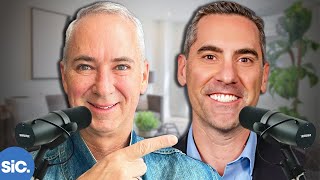
Dan Alia left a 15-year Fortune 500 job to join Speaker Lab, a company that trains professionals to build speaking businesses. He walks through the Speak framework, how to scale a remote team, and what he learned moving from corporate to startup.
Chapters
If you come to work and you're a rock star, but you're not a good husband or a dad or a son or a husband, wife, whatever, then what are you doing? Right? Like, because the balance of life and work, you have to be happy at home to be happy and productive at work. I just took a big trip with my family. I took slack and deleted it from my phone for a week and never opened it. Not one time.
Our guest today is COO alliance member and the Speaker Lab COO Dan Alia. The Speaker Lab provides training programs that teach and coach individuals how to build and scale a professional speaking business. Dan loves the position and truly enjoys the challenge of learning every day working with a wide variety of people and projects. He is also a COO alliance member. After spending 15 years in a Fortune 500 company in a variety of sales, marketing and training positions, Dan joined the SPEECO lab in 2022 as an enrollment advisor. He strapped on his sales shoes and proved that he could hang with the pros.
He.
He did a commission sales job for a year and then was lucky enough to be in the right place with the right skills at the right time. Was awarded the first COO position in 2023. Dennelly has never met a chocolate chip cookie he didn't love. He's a dedicated husband, a dad and a son. Loves traveling and any of all types of boating, reading, and spending time with his family. You're going to love this episode. We'll see you on the inside. You can also watch this episode on our Second in Command podcast YouTube channel. So, Dan, welcome to the Second In Command podcast.
Thanks so much, Cameron. Glad to be here.
Yeah, nice to see you again. I mean, we just saw each other a few weeks ago in Vancouver, Canada. You were in town for our twice a year COO Alliance Connect event, which was great to have you there. I'll ask about that in a second. But before we dive into talking about what your big takeaways were from that event and you've been to a couple now, what it is the Speaker Lab does and can you walk us through what your business does just so that everybody listening or watching on our YouTube channel, they get a little bit more of a glimpse into the back end of what the Speaker Lab is.
What we do is we sell training programs for individuals who want to build and scale a professional speaking business. There's a lot of individuals out there who have tons of experience. They're doing talks for free. They're either on panels or they have industry experience and they didn't they don't necessarily know that you can make a good living as a professional speaker and sharing your knowledge in solving a specific problem for a specific audience. Our training programs are set up so that we can do the business side of it. We touch upon the platform skills, how to deliver a good talk. But it's more about how do you build a business, what do you need from the contracts, what do you need from your marketing assets such as a website and a demo video? How do you niche down with an expert positioning statement and understand this is the problem that I solve for one specific audience? And then how do you market yourself to that audience? So we do training programs for all of that.
And who are your ideal clients? Is it the kind of one off authors that are looking to build a speaking platform? Is it the business leaders? Is it CEOs of companies or kind of all of the above?
Yeah, it's a little bit of all of the above. It's individuals who want to share a message and have an expertise in that message and they don't know how to monetize it. So there's plenty of individuals out there who are 10, 15, 20 years, sometimes professors, sometimes doctors, sometimes upper level executives in a bigger company. And they've been developing their own expertise for a number of years and now they want to give back. And they say, you know what, I have a lot of knowledge in HR and I'm being asked to sit on panels at Sherm, right, for a big conference, but I'm not getting paid for it. So how do I turn that into another revenue stream? And, and that's really where we come in.
I heard a thing years ago that all speakers die broke. And I've now been paid to speak in 28 countries on every single continent I've been paid to speak, including Antarctica. And I think the reason that all speakers die broke is they don't figure out how to monetize their back end. They go and they do a speaking event. They get paid for speaking and they leave. They kind of spend all that money. They do another speaking event, you're on that treadmill and all of a sudden you're this old guy who's speaking or this old woman who's speaking on a stage. What are the other components that a speaker can build into their back end? And can you give us some of the tips or secrets that you might work with these businesses on and helping them to monetize their backend? Because I've left millions on the table in the early days.
Yeah. And it's such a good point. And what we call it is a lot of times individuals always like the keynote and then they chase keynotes. And chasing keynotes is like a really high paying manual job, manual lift job. Because you still have to get on a plane, you still have to travel, you still have to prepare, you deliver the keynote, and then you have to chase another one. So what we say is the business is more around the multiple revenue streams that you can get from your message of solving one problem, solving for one specific audience. And your message can be, we found that a lot of times it's better to start niche and then go broad, right? And become the big fish in a little pond first. And then we're going to help you jump to a bigger pond later. But we have a framework that we go by. It's called the Speak framework. S P, E A K. S stands for selecting a problem to solve. So you're going to really start off with what is the problem that you solve for one particular audience. P is about preparing your talk. How do you condense all of your information into a very digestible and intelligent way that teaches them to take action on whatever you want them to do? E is about establishing your expertise. This is where your marketing assets come in, which is all about, you know, you have to have a landing page or a demo video. So someone who's going to hire a speaker needs to go and look and understand, okay, this person has the chops, they've been out, they've been doing things. And then A is about acquiring speaking gigs. This is all about the pipeline. This is where everybody makes the mistake. And it's just chasing keynote after keynote without thinking of around, how do I build processes and systems into place where I can spend one gig off of every gig that I go to? And really the speaking business is just the relationship business. You have to be able to build relationships with those individuals who hire speakers, deliver on stage, connect with your audience and continue the conversation afterwards. And then finally K is knowing when to scale and ultimately that's what you're talking around. Okay, now let's talk about do I have a podcast? Do I have a book, Do I have a course? Do I change my keynote into a workshop and look at a workshop where instead of just doing one keynote, let's do a keynote that overviews my five key points and then have five lunch and learns over the course of the the next three months that go into each one of those five key points and then send a book with it. Right? And now you're expanding. Instead of charging five to seven grand for a keynote, you can send 25 grand for five individual events that are all tied together.
Well, and that's what I've learned learned over the years too. I mean, my keynote speaking fee got up as high as 40,000 plus business class travel. And then I started to realize that I was also being able to make money from my course. I have this invest in your leaders course that people buy multiple seats from. They're purchasing a copy of my book for all of the attendees in their group. They're paying a little bit extra to have me stay and do a book signing or have me meet with their leadership team or their board the night before for a dinner or they're building that into like a consulting or some follow on or just like some kind of a masterclass that I offer to their group. It's weird. Here's a really weird one, and this is one that I'm surprised more speakers don't do. This is a friend of mine, Jack Daly, who taught me this back in the early days. He said, every time you do a speaking event, get someone to video your event and sell a copy of that video from that event to everybody who is there so they can take your speaking event and share it with all their employees. I'm like, holy, that is so amazing. Like, that's so simple to just have somebody in the audience pay them a couple grand to sit and film you and then literally take that raw video footage and just ship it out the door with your slides and just say there it is. For a thousand bucks you can have me and send it home. You could probably sell that to every single person that's sitting in that room because they want to watch it again, they want to share it with the audience. And you know, Maybe you give 20% to the group that booked you or maybe you don't. Almost every single group will allow you to do it. Because most people never say that they're bringing someone in to do it in the first place. Right? But there's a lot of money that's being left on the table. When you guys are looking for clients right now, where are you finding them?
We do a lot of social media advertising, right? So we're going to Facebook and Instagram and Google and all of the advertising. Our director of marketing hit social pretty hard. And then it's referrals from existing customers and then niching down into those areas such as knowing who professors right is is a key avatar for us or consultants. As a key avatar but we spend a lot on advertising.
Which platforms are you finding working, which ones aren't? And are you doing it in house? Are you outsourcing?
A little bit of both. So we have some in house that is directing it and then we do use agencies. Meta is by far the biggest, but we're seeing different channels and avenues, whether it's through Instagram and TikTok. I mean that's a hot topic right now, but with going on. But still, Meta and then Google Ads are still the two primary drivers, honestly. We have a podcast. We're coming up on 500 episodes of our podcast, which is amazing. We have the highest conversion rate from individuals who listen to our podcast, which is how I found you. And Second in command. Right. So it does work.
Yeah. The second in command podcast has been probably the largest lead source of all of our COO alliance members. Probably been the largest lead source for my invest in your leaders course. Second now only to the book the second in command that came out I guess a year ago now. What was the purpose of starting the podcast? And who does that? Is it just your CEO that's kind of hosting or do you have a host? Do you share hosts?
Yeah, so. So Grant Baldwin is the CEO and owner of the Speaker Lab and he's the host of the Speaker Lab podcast. Now we do have our director of student success, Mary Alice, who who comes in regularly and does kind of a coach's corner. She's the head of our coaches and she'll do student highlights. She'll pull other coaches on to do more tactical suggestions around. What are the key elements of creating a demo video? Right. Or how do you add humor into your speech? Right. Just this little more specific topics. But a lot of times it's grand having good speakers. And his network is expansive. He was a professional speaker himself from I think it was like 05 through 15 for 10 years now. People asked him, grant, how are you doing this? You're traveling the country, you're getting on stage, people hand you checks and then you move on. Right. Like what's the playbook? And that was the start of the Speaker Lab. He put it together and won. The first training course just expanded over the last seven to eight years. So we have a variety of different hosts and topics. Some of our facilitators, we really believe promote within. Right. So we've had students who have gone through our program have become really fantastic speakers, built multi six figure businesses. We bring them back in as our facilitators of our training programs. So proof is in the pudding. Just follow what I did. I'm six steps ahead of you. Just follow along. We just see that process really, really working. And we're growing a bigger and bigger alumni network of really qualified speakers who we then can pull back in, teach more folks, and just continues to spread.
So it's a little bit of a train the trainer model, or almost like growing like a virus. Right. The more that you can kind of spread and you kind of duplicate yourself. What did you call it?
Duplicate yourself.
Yeah, it makes a lot of sense. All right, I want to talk about the business as. As it is. You joined the company two and a half years ago. What was it that got you to join the speaker lab, and what do you think that they saw in you?
So my story is kind of funny because I've been working for 15 years in a Fortune 500 company and a variety of sales, marketing, and training. I ended up in as the director of training globally for big, big company. And I've been listening to this speaker lab podcast for years and years. I'm a DISC certified instructor, so I was always the back of my mind thinking, how can I make some money on the side utilizing DISC and trying to go and get some speaking engagements? I did a Google search. Grant's first, you know, training course popped up, and I bought the program in 2016, 2017. I was one of the first students to go through the program or early on, students had a great experience, booked a few gigs after I learned what to do, got a full return on my investment, and thought, man, this company's pretty awesome. I was progressing through my career as company, and then I got tired of the quarter in, quarter out, out, big company swings. And I thought, you know what? I want to work for Grant. And I sent an email to him directly. I was listening to a podcast, driving down the road, pulled off on the side and wrote him an email immediately and said, hey, I want to work for you. That opened up a conversation, and I came in as an enrollment advisor. So I strapped my sales boots back on, and I did sales for a year, enrolling students into our program.
And.
And then right place, right time, they were looking to create a CEO position. Grant asked the leadership team, hey, is there anybody on our team who you might suggest? And I think five out of five members mentioned my name. So I was lucky enough with the right skills at the right place at the right time.
Now, you've got the right personality, kind of that good charm. You kind of. You can kind of walk into a room and you can own the room a little bit. But the difference between working with Fortune 500s and working in an entrepreneurial firm are completely different. Was it culturally a shock for you at all, or did it culturally somehow just work out?
So it worked out. But I. I tr. I contribute that because my role in the big company was I was leading an entire department, and my department was all of training, and I ran a. I was more of an intrapreneur. Right. I was a. I had 25 individuals under me, and we carved out, had a full pll, had a building that I was running. It was the training university. I felt a small sense that I was an entrepreneur in a big cog, in a wheel. And then when I came here, I found that the people and what we really strive for is we're 100% virtual company. So we go overboard on communication and culture because we don't bump into each other in the halls. So it really is important for us to walk the walk and communicate effectively. And that was where I really was drawn to the company. And it has been fantastic since that coming on totally different. You know, 40,000 employees to 40 employees is a big swing. But I don't plan on leaving ever. So this is where I'll retire.
You said something that was really interesting there, that you go overboard on culture because you don't bump into each other in the hallways. How do you build culture with a fully remote company and with a, you know, an organization that is scaling and remote?
Yeah. There's one word. Intentional. You have to be intentional about everything you do around culture or in the event. A few weeks ago, there was a definition of culture. How your employees feel on Sunday nights, night about Monday, in their hearts and in their stomachs. Right? That was the definition. That was. That was. And I thought it was a great explanation of culture, because the more you try to massage culture down a path, the more you squeeze it, the more it's not your culture. So you have to let it unfold on itself. And we have found the best way to do that is to walk the walk. Grant sets the strategy at the top, and we truly believe in who you are is more important than what you do. If you come to work and you're a rock star, but you're not a good husband or a dad or a son or a husband, wife, whatever, then what are you doing? Right. Like, because the balance of life and work, you have to be happy at home to be happy and productive at work. So we really do push. And Grant is amazing at this, where he walks the walk where if he goes on vacation, we don't hear from him for a week. He took a sabbatical. He was gone for a month. I just took a big trip with my family. I took slack and deleted it from my phone for a week and never opened it. Not one. And that was the expectation. He's texted me when he sees me online and says, get offline. Right. But the good thing about that, not only from the mental side of me and spending time, quality time with my family, the people in our company see that and they say that it's okay for them to do it. And now when you're remote in North Dakota and nobody's looking over your shoulder and the expectations are high because we hire quad accountable, very qualified people. But they know that when they're off, they're off. When they're on, we need them to be on. And then it's just a lot of communication.
So one of the frustrations of people, and I'm never sure how to kind of answer on this one, is they are frustrated when their boss or a leader is sending emails or messages at all hours and they feel like they need to get back to them. How do you answer to them? It's not about responding to me right away. If I choose to be working at night, that doesn't mean you have to. If you choose to be working in the morning, it doesn't mean I have to. We're supposed to be working and cranking hard when we are inspired and when we feel like doing it and we're supposed to be off work when we're not off work. How do you help them with that guilt of not feeling like they're responding fast enough or feeling like their boss is burying them with requests when they're supposed to be off work.
I go back to communication. Right? That that has to be a, an honest conversation between those two individuals, the leader and the employee. And not only the leader saying, hey, if I send you something at night, my expect is not that you respond at night. My expectation is also for you not to feel guilty because I know you probably are going to feel guilty about that. The expectation should also be said that when I send a message at night, I should put very clear expectations around when I expect to hear back from that, hey, this is something that came across my mind. I wanted to make sure I didn't forget about it. Let's talk about this in our one on one tomorrow at 11am and now all of a sudden you're giving them permission to say, okay, I don't have to worry about that at 10am 10pm when see it roll across my phone. I can think about it in the morning and then prepare for it before our talk. So I think there's certain expectations that the leader is responsible for if you have an individual who naturally feels guilty about these types of things. I'm also a big believer in disc and if you run a disc assessment and you understand disc, you can start communicating to your people in the way they want to be communicated to. So a lot of us communicate in the manner in which we want to be communicated to, not in which the way the person wants to be communicated to. Adjusting your communication style like situation leadership, right. Same type of thing for the person is really critical in just that open and honest conversation.
You've made a comment a couple times now about this CO Alliance Connect event that happened a couple weeks ago in Vancouver. What were your big takeaways from that event? We had a group of COOs from all over North America. We had a couple of international members in town. We have our next event coming up in September at MIT's Endicott House in Boston. What were your big takeaways from that event and what do you think helped you with getting that group of CEOs together?
There was a few things that really kind of hit home in the rearview mirror once I got back and I was able to distill my thoughts a little bit. Number one, having individual time. That's meals, that's walking down the hall, that's sneaking away at a break and spending 15 minutes talking about acquisitions with somebody who went through 15 acquisitions in the last three years. Those private times, one on one with other CEOs who are dealing with exactly the same problems that I was dealing with. Absolutely priceless and worth the entire trip right there. Right? It's the moments between the moments that matter. The second thing was I think you guys did a really nice job of bringing in a diverse group of speakers. Whether it's Eric Church, who's your buddy and was amazing as the CEO of 1-800-got- Junk $650 million business that was really eye opening because the stuff he worries about, same stuff I worry about. And it was interesting to see doesn't matter your size, focusing on your people were really key. And then just traveling to a new city, getting away from the business, carving out three to four days where the flight and in the hotel by myself to actually sit and about things and kind of work on the business, not in the business, just escaping. I think that's one of those positive attributes that we don't give enough credit to in the event itself. It's just being gone by myself sometimes is really, really rewarding and gives me space and time to think.
Yeah, it's interesting. I don't think executives do that cognizantly enough. I think we, we find value when we do it almost by accident, but we don't put it in our calendar intentionally. And I think that any event that anyone goes to, whether it's a CEO alliance event or a Genius network or ypo or whatever event you're going to as a leader, where you're going to learn. I think one of the things you want to do at the end of the event is to quantify, maybe shorten the amount of take home you've got and take all your pages and pages and pages of notes and summarize it to 10 big takeaways. And then what's the dollar value for each of those big takeaways? If I was to put each of these ideas in place, how much would it make my company or save my company? We call it the big idea calculator. Did you have a number at the. That you came up with on yours?
I went through and there was a handful of things and I got to 50 grand pretty quickly just from. And there was, there's. And quantifying, hey, if I were to let go of one individual that I know that probably isn't a culture fit or isn't a skills fit and we can't coach them up, that's one thing that's just directly quantifiable. That's pretty easy. But there was others just from like the conversation around acquisitions. I felt like I sped up my learning process because we haven't done acquisitions in my company. And I probably through those multiple conversations at dinner and with one of those other COOs, I could probably say I easily got 10 to 20 grand worth of value from that just by itself.
Talk about the big lessons that you had in working in the Fortune 500s. What kind of lessons do you think you pulled from there that you still use in your business today?
I learned a lot. I really had a great experience. There was some bumpy times. As always, the problems are the same, the scales are different, that's all. So it's just much bigger scale. The biggest lesson I think is that, that and it goes to the culture piece. I felt like I fostered a pretty solid culture amongst my own group and yet the culture of the overall company was not as great as what we did. So you can start locally and just be effective. And then if other businesses or my entire job was to promote the people underneath me, move them along so that they take what we did well and spread it to other teams wherever they end up going. I had a tremendous opportunity to do a wide variety of roles and I was constantly. That's the beauty of a big company. I could do a role for two to three years, feel like I was really making headway. And then if I felt like I was getting bored or not challenged, there was always another position for me to jump into. If you were an A player and you could deliver, there was an endless Runway of learning to be had in the company. So that was one of the things that it goes to progression plans. Right. Like I think we owe it to all of our employees to build. What is the Runway for you? People stay when they can see a future. It's a retain if you have an opportunity to show what the Runway looks like, people are more likely to stay and grow in the skills and get better and better and keep on moving up and up and around.
You mentioned that this is where you're going to retire. So what do you think you're going to do inside the company over the next five years? If you were to lean out over the next five years, what are you focusing on as the COO in terms of scaling the organization and then. And secondly is what do you have to do as a COO to scale up and you know your skills.
We know that we are approaching a point in time in our business where our single revenue stream, which is going paid ads, bringing individuals in, training them, releasing them. Right. And graduating them. I don't know if there's going to be a cap, but being reliant on one individual stream of income is not the best way to grow the business and scale. So through acquisitions, through expanding our opportunities to deliver. Deliver more value to the speaker. So we talk around the speakers, building out workshops. We're just adding workshop training. We talk about them writing books. We're looking at potential acquisitions of publishing companies and different ideas, course creation. Right. What are all the other things that the speakers are using and doing on a regular basis that we're not providing them that we can continue to provide them. A CRM. Right. Is a perfect example. You have to be organized as a speaker. You have to keep track of the relationships and the conversations you're having having, whether that's an Excel spreadsheet or you go with HubSpot. You need to have something and could. Is there potential for us to have a CRM someday. Right? Just the speaker lab CRM. So those are the things that we're really evaluating, trying to figure out what's the best lean that can produce the most revenue with the least amount of effort and energy. And we have enough of a skill set to dip our toes in the water.
How about your skills as a leader today? What do you think you focused on over the last couple of years that you're. You've had to work on growing your skills sets?
I thought about this question because this is one that's evolving. As I was the first COO in the speaker lab, my CEO and I, Grant and I just, like, we sat down and I was like, so what do I do? Right? And. And he was like, I don't know. Let's figure it out. And so we started by building it out, and then it's evolved over the last year and a half. So defining what the role is has been really good in that I had no skills with legal. Legal. Right. And over the course of this last year, I was forced to learn more about legal and TCPA compliance and the right things for text messaging and ftc. Right. So that was one skill that I never once thought that I would need. But in this current role, I need it very much so to protect the company and help protect the company. So it's been more reactive for this past year as I've gotten on my feet and started to define a role a little bit. Where I want to go more proactively is more of the strategic ideas and. And then really buttoning up our processes and empowering our leaders to empower their people. Just taking that step up. Like the training. I would love to do a training for the entire company on situational leadership, but I think it would be better for me to train our leaders on how to deliver that training to their people so that I can continually move up and we can continually pull them up as well. There's an aspect of removing myself from the day to day so I can concentrate on the bigger skills needed for me to get proficient in it so I can train those leaders to get proficient in IT as well.
You know, you've mentioned situational leadership a couple of times since we started the pod, and I'm curious what your big takeaways were, because that was actually one of the modules in my invest in your leaders course. It was also the session that I ran at our event. What were your big takeaways around situational leadership? What did you pull from that?
Yeah, the one thing that it just clicked. I've gone through tons of situational leadership training over the 15 years of big and a handful of times, you know, every few years they used to bring it back and say, hey, can we implement this? You really did a phenomenal job of simplifying it down to very simple points. And it does not need to be complicated in the way that it was just micromanage, which is directing, then it's coaching, then it's supporting, then it's delegating. S1, S2, S3, S4. Every situation can be a different person and a lot of times we want to hire a level players and we expect that, okay, that a level player, I can just ask for them all day long, long. And the click in my brain was, and this really from our marketing team, I see this a lot, is that our director of marketing has individuals where he might have to situationally lead his people four different ways in the same day. And so just depending on the projects that come across their, their desks, whether it's SEO or podcast planning or something on the back end of the technical issue, it all of a sudden clicked in my mind that you can have an a player who doesn't have a high skill level but is super committed. And now you might have to coach them along the way just a little bit to get them going. And that doesn't mean that you can't delegate to them later on in a different situation because they're really competent. But in this particular situation, you rank it. I rank it. Let's meet in the middle and then let me show you what my expectations are and how to do it. It just clicks. I don't know. There was something about it that was really, really good.
With a business with 45 people, you can start to get sucked into the day to day a little bit. You can get sucked in because you're not running a team of leaders. You're still actively growing people, you're still actively leading and helping people grow. What do you think you do so that you don't or what do you have to do so they don't get sucked into the day to day?
I think it's where we're at this really critical point and this is one of the things that I tried to do over the last year, I hope I'm successful with it or I have been successful, is we built a solid foundation. We're getting the key pieces in place now for bigger growth where we can step back. So untangling the back end of our, our technology and limiting the amount of processes and systems to make it easy for our people to do the work they do. Religiously simplifying process. Right. Constantly asking do we need this? And just something out of the COO alliance was as you grow, the default is we need to hire more people. And that's not always the case. You got hire the right people at the right time for the right jobs we've found or we're going through this process now where we've needed to shift from everybody's a generalist when you're really small, right. And everybody wears a bunch of different hats to now we, we're hiring more specialists. Where I need a CRM HubSpot specialist to handle that. Now if I get that person on, I can start to scale that and put people under them so that team grows. But getting that key first hire that you're looking vision down the road, this is going to be a critical hire for that department. I think we've done a really nice job of placing key people in the right spots where now the company can grow organically and only add people as we really do scale and just the business demands.
So you're starting to bring in some of these experts, you're starting to bring in some of the more senior people. In the early days when we're building companies, we hire jack of all trades, master of none, right. We hire good people, they work hard, we can give them lots of stuff to do. When you start hiring experts, you tend to hire people above the current team and the current team usually wants that job, but then they realize they can't do the job and it becomes a bit of a almost three dimensional chess game where you have to bring the senior person in but not lose everybody that's underneath them. How do you work through that? What are the kind of communications that you need to have and the meetings you need to have and what kind of trust building do you need to do so that you can make that happen?
We're right in the midst of it and I don't know that I've cracked the code. Right. There are certain things that I think are important, which is open dialogue and being proactive with your existing staff, letting them know what the bigger vision and the outcome that you're trying to get to. Right. So you can't just hire someone and don't tell anybody that they're coming in and say, oh, this person's above you now and they're going to take over everything that you've done. You have to be proactive in saying, saying we recognize that you as an individual are overwhelmed or it feels like this. And the business is growing so fast. We've got to bring other folks in, the other folks who we're going to bring in. From a team perspective, we expect both of you to level up our entire organization so trying to position that people who we're bringing in who very well could be above the existing team members are there for the greater good of the company. So we all grow, grow and if we all grow, that means more opportunity for you as an individual for a longer pathway. So that's one theory. That's what I'm hoping for and that's what we're trying for. But it's a challenge. I, I don't know that we really, we're in the midst of, you know, so I'll report back if I have a good success story and I'm fully open to anybody who wants to comment on that or your thoughts on it as well.
The skill set that I think leaders need to develop in the small, emerging to emerging or moving to mid sized companies. Companies, it's very easy at the senior company, like at more corporate because it happens all the time, structures are already in place. But it's harder when you're, when you're now starting to really build that first leadership team. And it's almost like every single new hire will be in from the outside for the most part. One of the problems that every kind of first time leader bumps their head into is that their answer to every question tends to be hire more people. It's rarely the solution, right? Hiring more people. It's usually more about optimization, automation, saying no, getting more focused. Maybe it's not now, maybe it's finding a better way, but it's often not finding more people or hiring more people. How do you work around that with managers that come into your office and say, hey, I need to hire, you know, X.
We've struggled with this as well and gone down the path of hiring people too fast and then saying, oh, we don't. Was this the right thing to do? One thing that was a game changer for us was our cfo. And our CFO has been a crucial element of helping me, me and us as a leadership team just ask the right questions and push back. Where is necessary of saying, all right, let's truly define the role that you're trying to hire for. Let's look at the marketplace and see what the cost impact of that hire would be and then let's look at the revenue that that person might Generate. That's a simple way to look at it. And it's really easy. If you're hiring salespeople, one for one, okay, that person's going to come in and bring in more revenue. Revenue for an indirect someone in finance or someone on the operations team or an HR person. It's much harder to quantify. We still go through that process and we still also really look at and try to evaluate what is going to be the indirect impact of this individual from a soft skills, from a culture, from a freeing up the leaders time which we try to do as well. I was doing all of HR for a year and a half and building out handbooks and doing things when I went to the CEO and I, I said it's time. Like I did a six month, I got a consultant in for, from an HR consultant who was fantastic and she kind of whipped us in shape. But then the day to day stuff, we have enough people where we still need somebody to help us with recruiting and interviewing and handbooks and benefits and all of that. There's critical roles where you might underestimate. You don't need to hire a whole team and then you're going to have one specialized person. That person's going to do a lot for you, you. And we're going to hold on to that one person for a long time and we're going to stretch their legs as much as we can. It's a hard balance. It's a really hard balance.
All right, I want to go back to 21 year old Dan and give yourself some advice. What advice would you give the younger you that you know to be true today, but you wish you'd known when you were only 21?
I've always been taught. My dad was an entrepreneur. He owned his own CPA firm for many, many years. And he would say, what are you looking in the rear view for, right? Like just, just grow, just go that way, right? I've always learned. And then when you're in training, you either, you know, you either succeed or you learn something new. There's no failure, right? And even in failures you have an opportunity to learn something new. So there isn't much that I regret or I wish I had known. I mean if I wish I had known, 21 suck more way into the 401k earlier for compound interest, right? Like that would be just a, a small thing because you can just see how much it grows and grows and grows. But from a skill I'm a big believer in, your path is your path and sometimes you got to go and do things to figure out what you don't want to do. I've done a wide variety of roles in my entire life and there haven't been too many that I said, well, that was a waste of time. Right?
Like, right.
You know, whether I was cutting grass on a golf course, working in restaurants, working for a Fortune 500 company, doing medical device sales, I've done a lot of different things. And you just extract what's good, get rid of the rest and then move on and keep on building and growing and learning. Learning.
I love it. We got Dan Alia, the COO of Speaker Lab and the CEO alliance member. Thanks very much for sharing with us on the Second Command podcast.
Thanks so much for having me, Cameron. Appreciate it.
Another reason is really the complexity from starting from scratch. It's not for everyone to join a team and do not get full instructions, what you need to do, how you need to do, when. Because sometimes you have to build the process. The process is not there yet. So when Covid ended, we had to.
More from Cameron





Flutterwave Former Global Head of Operations Awa Kone | When Growth Outruns Operations (Podcast 611)





