Marketing For Midsize Businesses | Chief Outsiders COO, Clay Spitz (Podcast 340)
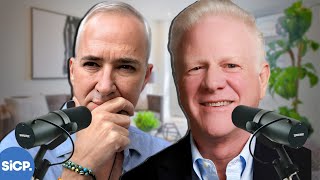
This is a podcast interview (Podcast #340, recorded Dec 20, 2023) where Cameron Herold interviews Clay Spitz, COO of Chief Outsiders. Chief Outsiders provides fractional CMOs and CSOs—seasoned, former senior executives—primarily serving companies roughly $1M–hundreds of millions in revenue (most clients around $5–$10M). Pricing ranges: advisory from $5,000/month, typical engagements ~$15–18k/month, and larger/heavier engagements $25–50k+/month. Clay outlines the "Growth Gears" framework (insight → strategy → execution), common failures (random acts of marketing, weak customer insight, poor segmentation, pricing mistakes), how to manage creatives (iterate against strategy), measuring marketing by customer acquisition, revenue, profit (not vanity metrics), views on offshore talent (hire like onshore, watch cultural fit), sales leadership traits, CRO role (often sales-first), and Chief Outsiders' culture and COO role (enable senior practitioners, create process, chief learning officer).
Chapters
We have a team of full time people that are all former senior executive level people. They have been VP of Marketing or VP of Sales or higher in operating companies, meaning we're not typical consultants. Our people have been there, done that. Seasoned leaders responsible in their companies, reporting to the CEO and responsible for getting growth in the company.
Hi, we've got Clay Spitz on the call today. Clay is the Chief Operating officer for a company called Chief Outsiders. They provide fractional channel chief marketing officer services for companies all over North America. Fantastic company with over 100 CMOs on their team. He gets into lots of stuff around marketing, around positioning around pricing, around managing creatives, managing offshore talent, working with entrepreneurial organizations, how they bridge the gap between these very seasoned CMOs and bring them into the companies that are typically the 10 to $50 million size companies. You're really going to enjoy this episode. You're going to learn a lot about marketing. You'll also see it from an operational perspective because he's a ops person wrapped up in a marketer's body and he's leading this massive organization of marketers as well. We'll see you on the inside. So, Clay, welcome to the Second In Command podcast.
Thank you, Cameron. I'm so pleased to be here. I appreciate you having.
Of course, I've been looking forward to this for a long time for a bunch of reasons. One, you're a COO alliance member and I think you're joining us for your second year now as a CO alliance member, which is great. Secondly, the Chief Outsiders, the brand that you're the COO for, has been a partner of the COO alliance and of mine for years, where I've always sent some of our higher level marketing clients to you and it's time to start sending you guys some more as well. And then third, I've just really kind of been enamored with the business of what Chief Outsiders has done in really pulling all of these fantastic chief marketing officers and heads of marketing together and delivering your services. So I think it makes sense to, to start with that. What is Chief Outsiders? What are the core services that you offer today? Because there's a lot of people that don't even know this exists and they should.
Well, you're right, there's still a lot of people who are unaware of fractional executives altogether. There's a whole industry been built around this. But specifically Chief Outsiders, we started as fractional chief marketing officers and we've expanded it to include chief sales officers and what that really means. And this is very different From a lot of fractional companies. We have a team of full time people that are all former senior executive level people. They have been VP of marketing or VP of sales or higher in operating companies, meaning we're not typical consultants. Our people have been there, done that. Seasoned leaders, responsible in their companies, reporting to the CEO and responsible for getting growth in the company. And those people are, let's call it, mature in their careers. They've been there, done that a number of times and they've chosen to join us because they want to do something different. They love being a practitioner of their craft. We love working for smaller companies because a lot of our executives come out of much larger companies. And no matter what you do in a giant company, it's hard to move the needle managing people and you're managing budgets. And as our CEO likes to say, going to a meeting about a meeting about the plan. And what our people love is getting into companies and really making big things happen.
Yeah. Now when you mentioned that you like going into the smaller companies, how small is small? Because it's not the home based entrepreneur, the wantrepreneur, the five person company. Is it a company with a half a million dollar marketing budget is small or is it smaller than that? What does small look like?
So it depends on the industry. But let's think about revenue. Most of our clients are on the lower side. 5 or 10 million in revenue below 5 million. I mean, you know, to be quite transparent, our fees are not cheap. You know, very experienced people that are coming in to make big things Happen. So sometimes $1 million company that wants to be 10 million in the next couple of years would be a good client for us. But most of our clients are 5 or 10 million, up to a few hundred million in revenue.
I remember years ago when I was talking to a client and they had a million dollar marketing budget and they had an $80,000 director of marketing overseeing it. And I was like, wow, it is irresponsible of you not to get chief outsiders to come in and oversee that $80,000 person and maybe pay Chief Outsiders 150,000 a year to be a fractional CMO to spend 850,000 instead of having an $80,000 person spending a million because you're going to, you're going to spend it more effectively. Is that kind of part of what the value that you bring is as well is that they get more bang for the people time and money because it's being directed by someone who knows what they're doing?
Absolutely. I mean, you And I have talked about a phrase that we have used from the beginning of the company. What most companies do in the lower middle market we call random acts of marketing. Time. I say that to a CEO, random acts of marketing. I'll get this nod. And yeah, that's what we do. And a lot of companies spend a lot of money on marketing and not knowing why they're spending it or what they're getting for it. And so that turns into random acts of marketing. We've got to post on social media. Oh yeah. We've got to do some Google search. Oh yeah, we've got to advertise here, there or elsewhere. Sometimes the random acts of marketing are the messaging. Sometimes it's where you're spending the money and how you're spending it. Sometimes it's not being really clear on who your target client is and think that everybody's a good client.
Well, the other thing that happens with the random acts of marketing, not only are you wasting money, but you're wasting the other commodity of time. You can go out and waste six months or a year or 18 months, all of a sudden to find out you really haven't moved the needle and you've wasted some money and you've wasted the people's time that could have been working on other things. And you can't get that 18 months back. You know that it's almost like we need to rewind that to get the success that we need. What's the process that you use and how expensive is expensive? I know that's a moving kind of bar based on how much you're doing, but what's the average ticket that someone is going to incur for the couple of different types of services that you most often do with chief outsiders?
So we have services as low as $5,000 a month, which would be advisory service. That's not terribly hands on, but you're getting a very experienced person advising you on the direction you should go up to. You know, probably our average client is 15 to $18,000 a month. And we have some clients that are 25 and 35 and even 50,000amonth, depending on the size of the company, the sense of urgency they have, how quickly things have to get done, let's call it the heaviness of the lift. How much has to get done in that amount of time. Typically we're working with companies that are 5 or 10 million, up to a few hundred million dollars in revenue that want to grow a company that just, you know, was a lifestyle business that wants to Grow a few percent a year. And the owner wants to have a nice life and make a lot of money, but not worry about the business. That's not our client, nor do they need you, nor that, nor do they need us. We really have fun with clients that want exponential growth in their business.
Okay, so you mentioned that chief outsider is made up of these seasoned executives that have done it two or three or four times before for bigger companies and they're dropping down to work with the smaller or mid sized organizations. How do you make that cultural leap from corporate to these entrepreneurial firms? How does a $10 million company know that the person from chief outsiders that's going to be guiding them?
Number one, our hiring process is very detailed and very intentional. And we hire for a few things. We like people who have been in big companies but also have smaller company experience. Somebody who spent their entire career at Coca Cola or some other big brand. They have limited budgets, but you know, from our view, they're seemingly unlimited budgets, those people. Sometimes it's hard to make the leap. But with that kind of background, but also working with smaller companies that understands how you get a lot done with a little and how you have to manage smaller teams and smaller budgets to get the most out of them. Those are the kind of people we look for. And B2B is very different than B2C. So with B2B, it's often there's no need for a big marketing budget. It's more about your strategy, we're targeting your messaging and where your limited budget goes to get to the right, very targeted, limited group of prospects that you might have.
So one of the things I noticed was that one of your chief outsiders, one of the CMOs that works for you, is a woman named Karen Hayward. And she and I met years ago at a Vistage event. And then we've actually gone to a couple of very entrepreneurial mastermind events. She went to an event called Baby Bathwater and she absolutely fit in with all these entrepreneurs in that she actually won the award for Rookie of the year because she fit in just like she was an entrepreneur. So is that kind of the norm that the chief outsiders just are, if they do fit that entrepreneurial DNA or they're not a part of your program?
Yeah, they have to have that entrepreneurial bent to them because they need to understand the mind of the entrepreneur. Almost all of the CEOs that we work for are entrepreneur CEOs. They are either company founders or perhaps second generation. Often they're private equity backed, but it's the owner who sold his or her company and stayed on. So you have to understand how that person thinks about their business. And often that entrepreneur, as you know, is a visionary. And we're having to take the vision of that person and implement their growth vision. So it's a very common part of what we deal with and what we do. We're not dealing with giant company executives as our clients.
Now, I know that this would be. This is a complicated question because I want you to synthesize what's your kind of first 30 days with a company look like? You know, how do you give us the 30 days in two minutes?
So the first 30 days is really a combination of a lot of things. You know, we have a process that we call the growth gears. And the growth gears sounds very linear, but in practice it's not. The three gears in the growth years model are insight leading to strategy that leads to effective and efficient execution. So the random acts of marketing is execution without strategy and often without insight. So during that first 30 days, we're learning everything we can about the company and what they bring to the table and what makes them a good company and why other people should buy from them. We're learning about their clients or customers, we're learning about their competition to help build their the strategy. But at the same time, we know that as an outsider, we have to add value fast. Our honeymoon period is maybe 30 days when the CEO has to sign the second check for our service. They want to know, what did I get in my first 30 days to tell me I'm going to get something more in the next 30 days?
What do you think you observe with the insights from the typical company? What are the kind of top three or four things that most companies are just absolutely doing wrong or missing out on other than the obvious that they don't have a strategy, they don't have the right team. Like, where are they wasting their money, where are they wasting their effort? Where are they missing? What opportunities are they missing? Have you got a couple of like, big, big insights that you commonly see?
Surprisingly, one of them is a lot of companies don't understand their customer as well as they think they do. And this happens a lot since COVID because as we all know, companies, people buying process, how companies do business has changed dramatically since COVID And if you haven't really done some good insight work, talking to your customers, really kind of getting into how's your business changed, how are your needs changing to serve your marketplace, you may be missing some really important things. About your customers and what they need from you and why they buy from you, and maybe why they're buying from your competitors. So understanding the market you're in and the dynamics and how it's changed is not static. And what you do three or five years ago is probably not true today and needs to be refreshed. So companies are missing that. Companies think, and you mentioned digital marketing earlier, companies think that today it's all about digital marketing. And in some businesses it is. If you're an online seller, you're selling on E commerce, something like that, it is all about digital marketing. And even that's an exaggeration because you see a lot of TV advertising for E commerce companies. People forget that all consumers, whether they're a business to business, consumer, or, you know, your typical customer buying something at a store or online, have different ways that they get messages, different filters, different ways that they want to be communicated with. And if you're trying to communicate with your audience in one single monolithic way, you're probably missing a lot of potential customers who don't interact that way and want to be messaged or, or found differently.
And they want to be understood.
And they want to be understood. Yes, absolutely. And so even something like, you know, it's a marketing term, but generally understood customer segmentation lies saying that not all your customers are the same. You know, it's not a homogeneous market and depending on what you sell and who you're selling to, you have to understand the different segments of the market and they may need different messages or different approaches to messaging or different channels for messaging. So all of those pieces are often missing because, you know, you Talked about the $80,000 marketing manager or director who's all about the execution. And depending on who you hire, they may be all about digital, or they may all be all about branding or whatever background they come from until you understand the strategy and can deploy your resources. Because everybody's resources are precious. The time, the money, the people. And if you're not deploying them efficiently, then you're not going to get a good result and you're not going to get the growth that you want.
So one of the only lessons I remember from marketing in university was the four P's of marketing. I think it was in the first 12 minutes of marketing click, the course that I took, and then for some reason my add kicked in for the rest of the quarter. So do you work with companies around their pricing? Is that part of what you look at in the insight stage or in the strategy stage? And how do you look at pricing? How do companies. Where are they missing on that?
Yeah, so, you know, pricing is really part of your value proposition. A lot of companies think, well, here's my cost, and I can add a certain margin that I need to get profit, and that's how I should price without regard to how the competition is pricing, what the customer thinks they're buying, and how the customer values what they're buying. Sometimes you can sell. Let's just make it simple. A product, a customer needs that product, but sometimes they need service around the product. So how do you price the service that needs to go with it? Or are you just selling them a product that they got to figure out what to do with? It gets even more complicated with service and how you're bundling service and what are your value adds? So we think about all of those elements and ultimately, what's the value to the customer and what are they willing to pay for that value?
It's interesting. When we were building 1-800-got junk, about the second week that I was at the company as their COO, I raised our prices by 40%, which put us 40% over all the competition. Even 40% more than the most expensive competition, probably more like 60% over the average. But the reality was we couldn't deliver the service that our customers wanted, nor the service we wanted to deliver, deliver, or the brand experience. So we charged more and then left them with a premium experience. The fact is, we were actually not even leaving them with anything. We were taking it all away. So they were left with nothing. We just had to sweep up and make it look nice. But we realized that if we sent fraternity boys dressed in nice outfits with nice shiny trucks and we showed up on time and we wowed them, that was a premium that they were willing to pay for because the trust was we were sending nice people to their property. So we actually didn't even look to price on what it needed to be. It was like, what would we like it to be? And then we just somehow matched that and delivered. I like the way that you think about that. You talk about one of the things that gets tossed around in the entrepreneurial cycle is how hard it is to manage creatives. Can you speak to what creatives are like and how to manage them and lead them? If you were giving on your $5,000 a month, you're probably coaching a director of marketing or head of marketing, and you're giving them advice and guidance, how would you tell them to manage the creatives that are North America Based or even globally freelance based. How do you manage creatives?
Creatives are a really interesting bunch. I'll tell you a really quick story that I think says it all. There's an advertising guy that I worked with for 30 years. He's brilliant, he's got amazing ideas. And he told me one day, clay, you get my best work. I said, mark, come on, why do I get your best work? You work with all these great clients. He says, well, by the way, I have a whole file cabinet with your name on it with all of my ideas that you've rejected. I said, oh, well, tell me more about that. So I come to you with a great idea, but you look at it and you say, mark, that's good, but it's not on my strategy. It needs to go this direction. Here's my strategy. Let me tell you again. Go back and fix it and come back with a better idea. And so we'd iterate on that sometimes three or four times. By the time we had iterated a few times, I had a brilliant creative idea that was right on my strategy. But I had to force him to keep going back because he thinks all his ideas are great ideas.
Sure, but you were leading him based on your strategy and inspiring him based on your strategy to come up with something better. Come up with something or not even saying it needed to be better, but aligning it more, it just ended up being better.
If you don't know your strategy, then you can't direct somebody to execute on your strategy.
So recently I saw someone and they're in an EOS self managed companies group on Facebook and they were talking about, you know, in the EOS world, they like to put a measurement in place for every role and they're struggling with what kind of measurements to put in place for people that are creatives, designers, et cetera. How do you measure creatives? Or do you like. Does, does the whole Dan Pink the Science of motivation come in where if you try to measure a creative, it demotivates them and it ends up backfiring? Any thoughts around that?
Yeah, I don't know that you could put measurements on the person themselves as a creative, but you can measure the effectiveness of their ideas. You can test them in the marketplace. There are lots of ways, and it's even easier with digital communication today to do some quick market research and compare some ideas, compare some advertising concepts, whatever it might be, and see how the customer reacts to them and which one they like the best. And so I, I think that's how to get measured Those, and ultimately, even in digital marketing, I keep coming back to this. There's so many vanity metrics. How many clicks did we get, how many impressions, what's our click through rate, what's our cost per click? In the end, the only thing that matters is how many customers did we get, how much revenue did we get in the bank and how much profit did we make on that revenue. And so you have to track all of these things to measure what really matters to the company.
Yeah, you've got to look at your cost of acquisition, your return on ad spend and your lifetime value of the customer. And then the cash conversion cycle is a component of that. Right. One of the things that is often tossed around in the business world is that Companies should spend 8 to 10% of revenue on marketing. And they did a survey, I don't know when this was 15 years ago, they surveyed all the big marketing and advertising agencies to find out what they spent on marketing. It was like 2%, like Costat and Palmer and whoever were all spending 2% of revenue on marketing and they were telling their clients to spend 8 to 10. Have we been sold on spending more than we should be? If you were, you were advising your mom who is running a business, would you tell her to spend 8 to 10% on marketing or would you guide her in a slightly different way?
I'd guide her in a very different way. And this is the last section, one of the last sections in our book, the Growth Gears, that talks about the process that I mentioned earlier. Every business is different. And so what you have to think about is let's start with what's the lifetime value of a customer and what's your profit on that lifetime value of a customer? And start to back up to how much can I afford to invest to get a customer that's going to produce the profit that I need? And it may be 1 or 2% or it may be 15% or somewhere in between. And how fast do I want to grow and how many customers do I need in order to reach my growth goals? It's, you know, I talk about it as building a growth engine. And the fuel in the engine is the marketing budget that you put in and how efficient are you using that fuel and how fast do you want to rev up the engine? You may have to put a lot of fuel in the engine if you want to grow 20, 30% a year and less. So if you want to grow 15.
These numbers, like this kind of cash conversion cycle and marketing, you know, the lifetime value, et cetera, Are these something that a good CMO is going to be able to put in place or are they relying on a finance person to build those models as well? Or is it potentially both?
You know, a good marketer is always going to work with finance to understand the financial aspects of the business. A marketer may not, without digging in with the cfo, really understand what's the profitability on a lifetime value of a particular customer.
The other part of the lifetime value is how quickly you get that money in. That's kind of the cash conversion. Because if I said if I spend $500 to earn 1,000, that sounds great, but if I spend 500 now and I don't get the thousand until three years from now, how do I finance that? Three years until I get there, right? Then all of a sudden it's bad. So there is that modeling component and I know that most companies out there don't even think about that at all. How about offshore talent? How about any lessons on Again, we'll hear things like, oh, it's really hard to hire someone based in the Philippines. But I'm like, did you interview them? Did you top grade them? Did you talk to references? Did you onboard them for more than 15 minutes? Like you would never interview a full time employee the way that you interviewed them. You would never hire an onboard a full time. So are we mismanaging offshore talent? Do we struggle with offshore talent? Any thoughts around that? And where do you find the best offshore talent in terms of like media buyers and creatives and etc.
Well, let me first say that offshore talent's not a key area of my expertise, but I'll give you my opinion. You have to hire offshore talent the same way you'd hire onshore talent. You need to know what you want them to do and are they capable of doing what you need. I mean, they're amazing, highly talented people all over the world. So to say you can't hire offshore I think is wrong. But you can't just assume that somebody from another country is going to understand the culture of what you're trying to do and fit in. If it's a routine task job, that's pretty easy. You're trying to hire a creative marketing person that's in another culture and you're selling in the US or you're selling in another country, then you have to be really careful that they are able to translate culturally.
I even saw that on the sales side with a North American where we had someone in our call center at 1-800-got junk who was, you know, making $30,000 a year. And, you know, they were a starving student. And I mean, gosh, they were probably only making $20,000 a year because they were probably working part time in the call center. But they were, you know, the normal starving student, right? Paying for rent and paying for entertainment and paying for school. And they were aghast that our customers were being charged, like $800 for two trucks of junk. And I was like, I'm a homeowner. I write checks for $800 every day. Like you're not. We needed to get them to think like our homeowner. And I guess that would get even harder if you're. If you're then offshore and you don't understand the culture of what people are buying. And you also mentioned that you bring in chief sales officers as well. So what does that person do? What do they look like? And. And what's the DNA of a good head of sales?
What we do. And I'll. I'll combine these two. A good head of sales is often not the person who's the highest producer on the sales team that gets promoted to be the sales manager. One of the biggest mistakes companies make in sales, smaller companies, is take the best producer and make them the head of sales. A good sales manager understands the company, understands the customer, knows that sale is a process and makes sales a process. This is not, you know, understands how customers buy and can direct and train their sales team in a process that works, in a process that is measurable and accountable. Any good sales process, you should be able to measure conversion from one stage of the sale to the next until you get to a closed sale. And keeping records on that, knowing how to track it, knowing how to manage people and hold them accountable to those kinds of metrics is really important. Understanding the mind of the salesperson, the highest performing salespeople I've ever met, are also the most difficult to manage.
Are we overpaying salespeople? When, you know, are we believing this whole adage that the salespeople are the highest paid employees in the company, Are we overpaying them? Or is that a norm? And we do need to learn how to communicate that to the rest of the company.
In general, I don't think salespeople are overpaid. I think good salespeople are one of the most valuable assets companies have, because this adage goes way back to even before my father's time. Nothing happens until there's a sale. If you look at the universe of salespeople, there's A, you know, some rarefied error at the top of that level of who are really great effective salespeople. Company needs to compensate them well for producing well.
Yeah, it's interesting. It feels like we spend a lot of money on building, engineering and building it and building out the tech stack and investing in infrastructure and systems and we forget that revenue pays for all of that if we actually. Because there's not a single problem that exists that writing a check can't solve. Right. If we focused on sales and marketing, we'd be able to have all the money to then pay for the whole back end. What the heck is a Chief Revenue Officer? This seems like a new title that's been invented in the last 10 years. Is that the head of sales and marketing? Is it the head of sales? Is it just a C level title for a VP of sales? What is a Chief Revenue Officer?
Yeah, that and Chief Commercial Officer and Chief Growth Officer. There are all kinds of titles. What I find in most companies is a Chief Revenue officer is a sales executive, sales manager who has marketing reporting to them. They're often not well skilled in marketing because they came up through sales. It's a rare Chief Revenue officer who has kind of the sales and marketing piece in their, in their background equally well. Sales is usually what gets, what gets valued there. And marketing is the assistant down the hall who supports sales.
How do you operate in your role as the, as the COO of all of these marketing executives? Because everybody in your company is a very seasoned executive, so you can't tell them what to do. They've been doing it for years. So how, what, what does a CEO of a company like this do day to day? And how do you lead? How do you lead senior people as well?
Yeah. So first of all, you know, I'll share with you my personal mission statement as the CEO, because in our kind of company, you're right, these are senior executives that don't want to be managed. They kind of work at their own pace and provide value to clients. But as we've grown, you know, we were a very small entrepreneurial company with no process. And you know, frankly, our CEO was a brilliant visionary that kind of hates the process side of things. My job at this point is to create process where we didn't have it and smooth it out. My mission is to enable our fractional executives to do the best work of their careers with minimal operational friction.
I wanted to speak about process or process and how do you get the entrepreneurial CEO? Because they typically want process for the company, but not for themselves. It's like, I want everyone to use Asana, but I don't want to do it. I want everyone to use Slack, but I'm going to text you at all hours. How do you get the CEO to adopt the systems and processes? Or do you just let them orbit it all in their CEO way? That's number one. And then secondly, can you speak to the culture of chief outsiders and how do you leverage culture, embrace culture? What is culture like of chief outsiders, and how do you build that out?
So the first question, you know, how do you wrangle an entrepreneurial CEO to conform with the rest of the company? I don't think you can. I think you have to isolate them a little bit. Let them do their thing, but give them the support that they need to do their job. Get them to allow the rest of the company to do their jobs. So I think that's part of my role, is to isolate our CEO so that he can be the visionary, not weighed down by the process, think about where the company's going to go in the future and help drive us and direct us there and cast that vision, get the organization organized in a way that it can really produce and execute on the vision. And like I said, with our fractional executives, with minimal friction, a lot of this goes to our culture. Our culture. From my point of view, Cameron is one of the most unique I've ever seen. This is the most unusual company that I've ever worked for and the best job, frankly, that I've had in my career. And I've had a number. When we think about culture, first of all, a lot of companies talk about their culture. What are you doing to promote culture? Oh, well, you know, every couple of weeks we have an event where we all get together and we play a sport or we go to a movie or we have pizza in the break room and we're all getting together socially, that's okay. But culture, to me and in our context, is what drives our company and what makes everybody a team and what we call a tribe and supports everybody else to do what we do for our clients. So I'm going to give you our mission statement for the company and break it down, because every piece builds on the one before it. So our mission statement that drives us is we're here to make big things happen for our clients. That's number one. We're here to serve our clients and not to do stuff for them, but to really make a difference and make big things happen that drives who we want to hire we want people who are driven to make big things happen. And somebody who's complacent and who just, you know, wants to do pretty good work and rest on their laurels is not going to be a good fit for us. So making big things happen for our clients is, is number one by building a company and a culture that attracts the world's best marketing and sales executives. So we're building a culture that makes people want to join us. We want to be the place that very experienced CMOs and CSOs aspire to go to. At the end of their traditional career, they're not ready to retire. They still want to work, but they're kind of done with corporate jobs. We want to be the place that attracts the world's best. That kind of sets the standard. So building a company culture that reflect that attracts the world's greatest marketers and sales executives. And this is the most important part. Who help each other do the best work of our careers and to help each other is a really critical part. Sure. It's a collaborative culture where everybody wants to help everybody else because it knows, they know we make each other better. And they want to do this surrounded by people that they love to learn from. And so this is a learning culture. It's a culture where the smartest guy in the room, and we've all met the smartest guy in the room who has nothing to learn from anybody. He or she knows everything. They want to tell you how much they know, but when you ask them questions, they've got nothing to learn. Our people are the opposite. They're so smart that they know they don't know everything. They love learning from their colleague. They're willing to put themselves out in front of their colleagues and say, hey, there's something I don't know that you know, I need help. Come help me with this client. Which makes the work we do for our clients better. So all of this builds on itself, the challenge. When we were 10 people, 20 people, even 50 people, we knew who to go to. Who was the expert in an area that I need some help on at 100 plus people and as we scale, we need more process and systems. So one of the things we did is we promoted one of our CMOs to be our chief learning officer. Her job is not to teach. Her job is to help facilitate systems, to allow facilitate learning from each other.
You know, you joined the COO alliance, which is this online community of second in commands from all over the world. I'm curious why someone who is as seasoned as you and is, you know, the stage of your career as you are and have been in great leadership roles. What was it that you saw in the CEO alliance that got you to join? And then secondly, if you were to give yourself some advice as a 21 year old clay Spitz, what advice would you give the younger you?
Number one. A lot of people don't know this about me because the last 25 years of my career have been in marketing. But I kind of started business and grew up as an operations guy, was pulled into marketing. It's a whole other story, but not by accident, but because I didn't realize that I had skills for marketing that somebody else realized and brought me into a marketing role. But as our company is maturing and we need more of the operations, I brought back some of my operational skills and organizational skills to bring that to our company. And you know, I like being part of mastermind groups. I've been part of Vistage before and you know, maybe part of Vistage again in the future. But I saw in COO Alliance a lot of like minded people who know things about operations that I don't know who are helping companies grow in the operation part of the business and in ways I may not have thought of. It's not unlike the culture of our own company where we're learning from each other.
Sure.
I love the ability to go to other people who are doing things differently and learn from them. And so COO alliance offers that to me and it's, it's a terrific resource.
Love it. And then what about the advice to your younger, you 21 year old clay Spitz, what advice would you tell yourself back then?
I think I would say don't put any limits on yourself. Set direction for your career. Allow yourself to move from one thing to the next because you don't even know what you're good at and to have mentors and to listen to what other people say about you and what kind of advice they might give you. One of the big turning points in my career was, you know, when I was running operations for a pretty good sized company and the senior VP of marketing asked me to be head of marketing and I said, what are you talking about? I'm not a marketing guy, I'm an operations guy. Now you're a marketing guy, you just don't realize. And I think at that point if I had said no Paul, you're wrong, I'm an operations guy, I would have missed a whole really important part of my career. So, you know, being open to what other people see in you I think is really critical.
I love it. Clay Spitz, chief operating Officer for Chief Outsiders and also SEAL alliance member, thanks so much for sharing with us on the Second Command podcast.
Thank you, Cameron. Always a pleasure to talk with you.
Looked around and said, look, this is clearly a growing trend across the world. This will not stop at the borders of the uae and we need to move quickly, move ahead and create something that's homegrown that will also lead the way and challenge the existing players in the landscape here.
More from Cameron





Flutterwave Former Global Head of Operations Awa Kone | When Growth Outruns Operations (Podcast 611)





