Nurturing Growth | MCI Group President and COO Jurriaen Sleijster (Podcast 214)
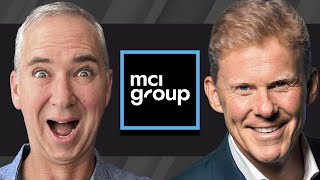
Transcript of Podcast 214 (host Cameron Herold interviewing Jurriaen Sleijster, President & COO of MCI Group). Covers MCI's evolution from meeting logistics to a global engagement and marketing platform (MCI Group: ~60 offices in 31 countries; ~5,500 campaigns/activations annually), timeline highlights (founded ~35 years ago; internationalization ~20 years ago), acquisition strategy (began ~2002–2003; recent deals target new skills like technology, marketing, consultative services), COVID impact (pre-COVID ~2/3 revenue from live events; shifted to digital/marketing channels during pandemic), integration practices (100-day integration plan, shared technology/cloud/GDPR standards, hub model for services), leadership philosophy (people-first, listen-and-learn, goal-setting with KPIs, "get them the tools, get them the vision and get out of the way").
Questions this video answers
Geneva, Switzerland.
About 60 offices in 31 countries.
About 5,500 campaigns and activations annually.
About 35 years since founding.
About 20 years ago.
Chapters
Get them the tools, get them the vision and get out of the way. You know, leadership is about making people grow and sometimes they go wrong and that is okay. If nobody kills themselves, that's just a lesson learned and we'll do it again. This is a great way of learning what your limits are. I had to learn it myself and I've learned how to give a little bit more space to people to get on with that, Give them some space.
Our guest today is MCI Group's President and coo, Jurjan Slicester, jointly responsible for the management and strategic direction of the global next gen platform for marketing, innovation and breakthrough communication in the digital age. MCI Group's platform combines the talent, technology and creative power of their global agency network to transform brands and organizations. MCI Group is an independently owned company headquartered in Geneva, Switzerland, with a global presence in 60 offices in 31 countries, managing some 5,500 campaigns and activations annually. Day to day, Jurian works on strategic direction of the group, oversees execution of their business plans, leads operational teams, works with their leadership to ensure smooth running of their company, and manages the integration of new MCI offices. Jorian, welcome to the second Command podcast.
Good to be here. Thank you, Cameron. Thanks for.
I'm really excited for this because you and I have known each other for probably about 10 years now. I did some work with MCI years ago where I would come out to your annual meetings all over the world. I came to Berlin once and came to Montreal and to Singapore and I was able to watch you guys. At the time you were a meeting, mostly a meeting and planning company running large events and large meetings and conferences around the world. Has that changed and what is the platform now that you're working and building?
Yeah, it has changed, I guess. MCI was born 35 years ago and it started really as meeting logistics. But over time we grew, we acquired companies, we grew further, we became international. I think our Internationalization started about 20 years ago. We are now in 30 countries, 60 offices around the world and. And we've moved on from logistics to content to marketing to what we call engagement strategies. We help our customers to engage with their target groups, be they internal or external, and live events are still part of the mix. But it's not the only thing we do. We have marketing strategies, consulting, social media, all kinds of communication channels that we use to help our clients to be successful and communicate with their targets.
It's amazing. Okay, I get it. When did you add in all of that? When did you kind of add. Add in the marketing and the engagement and social side for clients, because that's gotta be huge.
Well, I've been doing this for. Funny if you think about the pandemic, the COVID period, and all of a sudden a lot of meetings go digital. We've been doing digital meetings for many years before that. It's just that the uptake was not that big. People like to meet live and they do so again. So we're seeing this picking up again in the current situation. But marketing, social media strategies, communication plans, management of associations, we've been doing that for 10, 15 years, easily.
Interesting. Okay, so you've had more to the business than has. Just. Do you operate as different divisions or you operate as separate companies, separate countries? How do you operate?
What we have is we got mci, the agency, and it's part of the MCI Group. You know, it's. It's a bit like the. The agency is the. The big brother in the group has given its name to the group. The MCI group contains several brands that are working together or extensions of each other. They're like special. Some of them are audio, visual and production. Others are in measurement. Some of them are in marketing techniques. Some of them are in lobbying and helping organizations with their political agendas. So different organizations doing different things, but they're like extensions of each other in the MCI Group. So like one plus one is three, that sort of idea. So that's how we work together. And as part of my role in the MCI Group, I'm trying to focus on how I can help each of these brands and all of them together to work as effectively as possible. Now in mci, the big brother within the group of brands, we work typically in, well, you could say in two divisions. We got the corporate clients on one side and the more institutional and governmental clients on the other side. They buy different, they behave different, but they have a lot of similarities as well. And that's where the overlap in the skill sets between the two divisions play a big role.
Interesting. And when you were doing all the acquisitions that you've done over the last, you know, decade or 15 years, when did the acquisitions change to being companies that were more, I guess, integrated kind of acquisitions, like acquiring. Were you acquiring marketing agencies, communication agencies, were you creating anything on the political side, or were you just buying more businesses that were very similar to what you've always bought, that just had more line extensions or products?
Our acquisitions started in 2002, 2003. In the beginning, there was the. A lot of the drive was growing More territory. Geographical expansion, you know, wanted to cover more territory. So we acquired companies that were more in our own line of working similar, similar skills, but in new markets. More recently, it's been focused on new skills, skills that we need in a new normal. There's more technology, there's more consultative, there's more creative, there's more marketing. These are the things that we want to add to the group of skills that we have. And that's also where the market is going. You know, we're a service company. Services go through life cycles. And what was expert yesterday could be experienced today and will be efficiency tomorrow. Services become commodities. You have to innovate, you have to invent new things. And that's the beauty also of the group. You know, it allows us, we have a structure in place that allows us to refresh, bring new skills on board and integrate them with the other skills that we already have. And it's like moving forward in time this way.
With what happened with COVID and the industry that you mostly serviced, did it create a big hit for the company and how did you navigate through that? Because you're too big of an organization to completely pivot. So what did you do to get through it? And my guess is you're actually come out of it probably stronger, knowing you and the team.
Pivot is a popular word. Yes. I think before COVID hit us, about two thirds of our revenues were from live events and engagements, live event engagements. So at some point you, you know, you have to sit down and say, if that doesn't work anymore, what are you going to do? Our clients still need to engage with their target group, so we needed to help them with that. And other channels were given priority. And as I said earlier, it's not something we hadn't done before. It's just that we had to shift a lot of our attention and time material to those channels that were becoming very, very popular during COVID I think the statistics are correct. About 2/3 of our revenue, up to 70%, came from strategy, creative solutions, other engagement techniques, marketing solutions, anything that wasn't an event, live or digital, and that's now balancing out. So, yes, how do we come out? We come out well because we've really built muscle. Where there was lean muscle before, we now built muscle. And we were good at certain services that we had in smaller proportions in the past. But at the same time, life is coming back, engagement is coming back. Digital events are still popular.
Hybrid.
The mixture of live and digital is coming up. And if that grows back to previous Sizes or even further than mci will be bigger than ever before.
Yeah, that was my gut as well. Is understanding what you'd actually built into the business and the timing of it, it probably as hard as it was to go through, it's probably paid off well because it's built, as you said, it's built that really strong muscle now that you can then share across all the different countries. Did you have those services deployed across all countries before, or are you accelerating that now because of COVID The purpose.
Is not to make a perfect copy of every MCI or MCI Group office in every country. The beauty of the model that we're employing is also that you can hub certain things. You can have offices that are better at certain services than others and therefore provide that service for multiple offices. Our Geneva office, for instance, is very good at large international conferences. And so another office, say the UK office, wins an international conference. The logistics planning of that part is given out to the uk, whereas to Geneva, whereas the UK might hold on to the community management or certain parts of the content, or engaging with sponsors. So you can distribute and you can play on the strengths of the different offices. Sometimes it's working account management through an office, but the operations are done elsewhere. And that's, I think, something that's pretty unique to MCI compared to many of our competitors. They tend to group all the skills in an office or maybe if they're in a country, in two or three offices. And we're truly doing this global. And that makes it interesting, really interesting.
Can you talk about with the acquisitions that you've done? I mean, you've done so many over the years. You've led. Can you talk about what you've learned in the acquisition side? What makes a good acquisition? What makes a good acquisition process? And then third is the integration. I mean, there's a lot there.
I guess the first thing that you want in an acquisition is a cultural alignment. You need to know what is the dream of the entrepreneur that you're talking to? Are you talking about an acquisition or will you use the word merger? You know, that's. That's probably important. It's a lot of respect that we have for the people that we start doing this business with. We don't tell them. You are now part of us do as we tell you to. We tell them. And especially this is part of the integration program is we have merged. This is great. Now let me show you our kitchen. You can open every cupboard you want. You can take out the stuff and start cooking. Oh, and by the way, we'd like to learn from you how you've been doing it, because we are interested in you, because you are good at this stuff, you know, that's why we're talking to you, so we can learn from you too. And this is really where the formula works well, because pretty much every acquisition we've done, we've picked up something that we didn't know before, where they did it better than we did it. And that means you can copy it and roll it out in the entire group. And so you can build on strengths. You know, it's sharing best practice, continuously improving your company because you learn from the best. And every, every office has a trick, a way of working, a way of measuring, a way of engaging clients, a way of measuring mastering profitability that you say, hmm, I wish I could use that in more offices. And that's what you try to roll out. And that's constant work. You know, the cultural alignment is the first thing you want to get right. You want to make sure that the dreams are aligned with the people who join you. Why is a company interested in joining mci? Is it because they're hitting a glass ceiling in their region and they can't break through? Is it because they want to get to clients that they couldn't get to before? What's their interest and what does the entrepreneur want to do? We wouldn't be interested in an acquisition. If the people who own the company want to get out, they need to continue. That's, that's part and parcel of the deal. We're into the relationship economy. You know, it's, it's services. You deal with people, so you need these people to stay on board, at least for a while, so that you can integrate them properly. And then the integration process, that's something that I work a lot on myself. It's fascinating. Integrating is like building bridges between two companies. And then you have to get the people to go over the bridge on both sides and get interested. On the other side of the story, when you bring a new company on board, the rest of your company is already busy. They have clients, they have services. They want to get on with what they're doing. So you really have to make the new company interesting to them. And one of the plans we have is we have this 100 day plan. You know, we say that in the first 100 days of the, of the acquisition becoming formal, we have to have a win of some sort that is the result of the two companies working together, the one or the other alone. Would probably not have pulled this up. But if you can work together and win something, service a client better, win a big project, then tell everybody you've done it. And everybody will say that was a good idea. That integration, that merger of companies, that worked well, here's the win. And then people get on with their business and things are fine.
This is amazing durian, the humility that you have in what you've built. And I say you cognizantly because I know that you and Seb Robin, I guess, is still there, but you've been such a strategic operational focus on the business. I'm really at a loss for words. On the humility that you carry with these integrations and acquisitions. And I love what you said about. About that we can learn from you too. And going into every acquisition wanting to learn stuff that they're doing well, how have you kept that as a cultural norm for mci? But I don't think an American company would do that. I think would come in with the ego. Is it a Swiss thing? Is it a Dutch thing? Is it a Urian thing?
What is it? No, it's the culture of our company, I guess. It's all about people first, people first and strategy. We believe in our values. We were really driven by our values. And there's no reason to be bragging in our industry. It's hard enough as it is. We have to good competitors in different fields. You have to respect them. You work for clients, you try to work in partnership. So human relations are really, really important. And that means that you have to work together. As my favorite management guru, David Meister, always says, you have two ears and one mouth. Use them in proportion. And I learned from the integration programs that you cannot walk in and start telling people what to do. You first have to listen. People don't listen to you until they have been listened too. It's a psychological thing. It's a human thing, and it's. It's important you want to work together. I'm a Dutch national. I live in Switzerland. I've lived and worked in five different countries. I'm fascinated by the diversity of the human species, the cultures that. The way people interact with each other, what they bring to the table when you work with people. I love traveling. I love meeting clients. I love meeting my colleagues in the offices. And if you have that mindset of just wanting to listen and learn and discover, then I think you can build a lot of bridges and then you can merge a lot of organizations and. And journey together.
Are you guys still as A leadership team on the road, traveling the 200 days a year. Has that subsided a little bit?
A little bit, yeah. When the airplane stopped flying, we stopped traveling a little bit. So now it's less. So it makes you think. I mean, we're coming, coming out of COVID here. I'm based in Europe and Europe is doing a lot better, it seems, than Asia at the moment. The US has opened its borders, Middle East. We can do pretty much what we want. So it's coming back. Actually. We're one week away from big meeting where we get 200 of our leaders, managing directors and their leadership teams all together in Spain. We're going to Madrid and this is a meeting we've all been looking forward to, where we will see each other again. Live. Live is important part of our mix and we're doing it as well. So we're meeting 200 people. We have several days of coming together. The executive team, then the global management team, the managing directors, then all the leadership team. So it's a week long of meetings, listening to each other, working workshops, exchanging knowledge and having a lot of fun. Because the evenings, they are fun filled, I can promise you that.
Oh, I've seen them. I believe you. I want to go back into a question from. I think it was 10 years ago. It might be longer now. The transition from when the founder Roger Tunder passed on the business to his son Sebastian to let Seb take over as president or CEO, was that like around 2007? 8, 9, 2009, 2009. What was that like for the company to go through that transition? It's a rare one to talk about. Do you remember what that was like and how you navigated that?
Yeah, I think it was. Per Sebit was always in the cards. He wanted to do this and he used his first years in the company to really get to know the business and different aspects of the business. He focused very much also on the corporate division of the MCI Agency. He was very good at that and his approach to the job quite different from his father. And I think it was good, it was a very good transition. Roger, the father, is still active in the company. He's the chairman of our advisory board. But Seb is really running the place on a day to day basis. He's the CEO and he has a very strong vision, a very clear vision of where he wants to take the company. And he's brought very different skills to the table. And I think it was at exactly the right moment because we were getting bigger, the machine was getting Bigger we were more international, more and more offices. You know, you need to start focusing on certain processes. You need to start thinking hard about being consistent about your image and about your positioning in the market. Seb is very good at marketing, he's very good at finances. He's got a very good strategic vision for the company. So that became the predominant approach, rather than what we used in the beginning a lot was the network. Who do we know? Who can we build a future with? Who can we merge with? I think Seb really brought the MBA management, very reflective approach to the company and that was really good. It was a blessing and it's proven to be a success. I mean, we must have tripled in size. Just off the top of my head, since Sev has taken over, he's been very successful.
A lot of companies struggle with cross selling or if they have a division or a country that's really strong in one product or service, they struggle with selling that product across the rest of their business lines or the businesses. How have you guys been able to do that? How have you been able to sell the products that are maybe great from one new acquisition you brought in and start selling it across the rest?
So it's not always easy and it doesn't always work. When you learn something from an acquisition, it might be a product, it might be a way of managing the company. So these management techniques are usually easier to copy when it comes to a product. We buy a company that's very specialized in measurement, for instance, to make that successful in other offices, you have to explain what it is, what it does, where the synergies are, and you have to teach the people. And then if people see an opportunity, they will come to that new acquisition and they will make them make it work. And that's not for every office. Again, as I said earlier, not every office is a perfect copy of the other. So you don't aim to copy every service into every other office. What we're particularly, I think, strong at, and I'm pretty proud of what we've built there, is what we call our MCI Institute. We have a, a learning and development approach that is, I haven't seen this in any other company. In our industry, we have people who run really our institute. We organize academies, training programs, we have live and online training all the time. There's development going on, lifelong learning, it is really like that. And there are courses about technical skills that, I mean, how do you run your computer, how do you manage team, what is entrepreneurship? But also a lot of training programs. About what we do and with the services we provide and how it works and the effect on clients and how you can upsell things so you can learn all day long, all the time about what we do. And that's been a very good element in spreading services and spreading knowledge amongst people. We have these learning weeks that turn into learning months where people give courses about all kinds of topics and anybody can sign up and they run them in different time zones so that people from different offices can participate. And it's very interactive and we have follow up sessions on it, we have networking teams that are being built on it. You use technology to connect people in groups and work further on topics. That is, I guess, the strength of what we use to share knowledge between officers.
That's amazing. Where are you struggling as an organization? Where does MCI struggle? What are you working on?
I would say when you are perceived as you start as a certain type of company and you evolve over time, you need to constantly work at communicating this new positioning, the new skill set, the new capabilities that you have. Maybe they're not new, maybe they're just growing. They're more prevalent than before. Some of our customers that we've worked with for a long time, they see us as excellent logisticians. You know, we're good at logistics, but we wouldn't be the first person they would call for a design problem or a creative concept. Whereas other companies that we've been working for with only last two, three years, they think that creative and design is exactly what we do or we need. You know, for some of them we have organized congresses forever. So would you ask for advice about how to manage my association, whereas others only know it as association management and because that's where they come on board and so they will buy us for that service and that's to consistently manage the perception that your clients have of your brand is an ongoing piece of work. That's the challenge.
It's almost like a GE, you know, like you had the General Electric of 40 years ago that had their power.
Power and they're building their, you know, industrial medical appliances. It's the example I use exactly. GE when I train my people, I tell them about how, you know, in the 80s under Jack Welsh, things have changed. And one moment just cleaning products, then it's medical appliances. You're selling insurances, you move with what your clients need. You try to anticipate their needs and maybe provide it based on either because your channels are there, because you have the right context, because of the skills in house and so we need to evolve. Innovation is part of life. Things cannot be the same. That's very strong in mci.
I want to go on a strange tactical question, but on the integration of any of these companies, when you're merging and bringing them on board, are you forcing them into changing over their software and their systems? And when, if you do that, is that part of the integration?
Certain things we do, what I do have is I have a very simple and old fashioned processes in the integration. I have a number of checklists for every department, be their front office or back office or even middle office. I have checklists of things that we think we should talk about and then I give them priorities 1, 2 and 3. The ones are where we really need to align. And if our system is best, then they align to our system. If they have a better system, then we align to their system. We innovate with us but typically on finance financial reporting they follow our model. We have dashboards and details and breakdowns and ratios. Incredible. So that's really a strength of our company. We can really, really measure and forefront, forecast based on past behavior. So that's what we do. Also the technology, we've invested a lot in technology because our biggest clients expect from us that we are at the safest possible way of working, GDPR, respected, etc. So we've invested a lot in this and we find that a lot of companies are not at that level. So we bring them into our setup and our cloud. It also makes collaboration much easier because we have our own Internet, we have our software for people to talk to each other night and day. You know, every colleague is only two clicks away. So that's where we typically set standards and the use of the brand. That that's also a very important alignment issue. People need to talk about the brand, the services, the company in a certain way. And we do teach them that and we want them. If you join MCI and you become an MCI company, you're not another brand, but you're mci. You need to learn how to talk about mci.
I can't even imagine the, the differences on, in the countries and the cultural differences and operational differences. Just in merging together companies in 30 plus countries, have you noticed any like starkly differences? Like where it's just so different?
Yeah, yeah, people are different. But you know, that's not the main challenge what you're providing. For instance, we're an international company, global company. We like to do business with companies who have global interests or large regional interests because they usually look For a solution that can be rolled out in multiple countries in similar ways. But there is no point talking to Chinese customers the way you talk to German customers. They are different. So we do need the differences. We need differences in our Australian team. They need to act differently and talk to the clients differently than the people in Germany or in Sweden, because that's what our client expects. You need to be able to help your client to bring their message to the market in the way that the market is expected. So while we have maybe accounting principles that are the same and technology that is integrated and we teach our people in the same way, they do need to bring the local touch because that's the most efficient way of rolling out a strategy in a certain market.
Where is like the 9 to 5 business, is it. Do you base all the time zones and meetings around Geneva or how the hell do you do that?
Geneva is what we call the headquarters office. But not everybody who works for headquarters is based in Geneva. The number of people that sit in other offices, they just have a headquarters role. So don't take it too strictly. We're really a global organization. It's quite integrated. But typically if SEB would, a CEO would do a town hall meeting for the company, he would run one from Geneva, one at 10 o' clock in the morning and one at 4 o' clock in the afternoon. And it's the same session, he does it twice. And so people can connect live and they can ask questions online while he's presenting and you can interact with them. So a typical solution is to try and match time zones all the way from Vancouver to whatever point you can find on the other side of the planet. These times, these are sort of the extremes where you have to manage it. But early up for us, it's in Europe, we're up, the Americans wake up a bit later. But Asia has already gone to bed. And we manage. We have typical two time slots where people know that's where you can talk to everybody.
Which time zones or which countries are dealing with most of the inconvenience for the management meetings or the business meetings, Is it Asia that's working in the middle of the night all the time?
Or in fairness, you know, Vancouver I mentioned, because it's. It's pretty far away. That's. These are the ones that are lost. And our Asian friends, Australia, there they go to bed first, you know, so they are dealing with most of the inconveniences. But for Asia and for America and Europe, Middle east, we get it at reasonable times. Early in the day or late in the day, but it's still reasonable.
Yeah. I was living over in Italy last year for about six weeks and working from over there. And it was simple because I would just work from 1 until 7pm and then no one in Europe goes for dinner until after 7:30 anyway. So it was easy to work later. Yeah, it was. Then I tried to do a call with Hong Kong. I'm like, forget about it. It's like four in the morning for them. It doesn't even make sense. How have you worked on your skills as a leader?
Me personally?
Yeah. Or have you had to substantially in the last maybe five years? It's probably all been the same, hasn't it? This guy's.
No, no, no. I'm very much a believer in lifelong learning. I eat management articles and books, et cetera, for breakfast, for lunch, for dinner. I just love that stuff. I mean, I'm really in love with my job in the sense that I love organizing the company. My biggest passion is in we have a vision, we have an idea, we have a goal. How do you translate that into action on Monday morning? What are the people going to do on Monday morning? That's something that just gets me going. So I love to read about service companies. I do the courses, I go to the business schools. Every now and then it's time for a refresher. You pick up a business school, whether it's in the us, in the uk, France, Switzerland. I've done a lot of those courses and I read my books, I get my Harvard Business Review. I'm online on blogs all the time. My job is not a 9 to 5 job anymore. You know, 95% of my emails come from inside the company.
It's interesting.
It's not so much with clients anymore. It's inside the company trying to help people to move forward and align and get ready. I have a management system that I firmly believe in, which is about goal setting and measurement and holding people accountable for measurable KPIs. And so all the head office departments, but also the regional responsibles, I meet with them on a regular basis, monthly or bimonthly, and we go through there. What are your goals? What are the issues you're working on? What are the actions you're taking to address the issues? And what are the KPIs by which you measure the actions? It's a bit what John Doe does with his okrs. I read that book, thought it was fantastic. It's very similar to what I've always been doing, but I learned A few things from him. So I fine tune my system and I run my departments and my colleagues with that. This sergeant major approach on keeping people focused on the task. SEB sets a vision for the company. We break it down per department, we break it down in operational areas and then I ask them to write their own priorities based on how will they help the company to move forward.
I love it. You've been with the company for 21 years. You look like you're 35 years old still.
Yeah.
How do you keep yourself happy and balanced? And you have the same demeanor as when I first met you. The happy, just almost like the little, the young boy who's like intrigued with everything. How do you keep that young, fresh life during all this stress of business?
I mentioned it earlier, curiosity. I love meeting people. I love discovering how things work. So I'm always, always marveled by the world and how it goes on. I mean this is my natural hair color, blonde. Right. So this. Things move a bit fast for me. I, I like to take my time. But seriously, no, I just guess it's been total interesting people and fascinated about what goes on around me. And for the rest, I have a life discipline. You know, I. It's not work life balance, it's work life integration, as Roger always likes to say when he taught us. This is work life integration. I believe in that. I don't have working hours. I work when I can and when I must. But I also do my daily sports. I eat healthy. It's a discipline I've picked up from when I was in the army, you know, and I keep on applying that in my life. It's. And it makes quality of life very easy.
It's amazing. It's beautiful. This has been really intriguing for me. I've seen a side of you that I don't think I saw. And I guess I was showing up not as curious as I should have been over the years. But I'm blown away by the depth of your talents and strengths as a leader. It's really strong. If you were to give yourself some Advice As a 22 year old, you know, you're just starting off in your career, maybe just coming out of the army. What advice would you give yourself that you know to be true today, but you wish you'd known at 21, 22.
It's a piece of advice that Roger once gave me when I just joined MCI. He said, Irion, try doing things at 95% instead of 100%. You know, and it's this old saying, you Know, perfection is the enemy of good. I have the energy, I have the drive. I want to do things perfect. And sometimes it's. It's okay to just do it right for 95%, give the people some space. I can be a bit of a hard driver. Probably fits with the role of coo, being a bit of a sergeant major type of person with the discipline and the recurring business. And how does an idea translate into action? Because otherwise it's just a dream. Right? That part, I would say I could have picked up on that earlier today. I enjoy that part of letting people say they have a great plan, they have the energy. I said, let them run. You know, my personal motto is, get them the tools, get them the vision, and get out of the way. You know, leadership is about making people grow, and sometimes they go wrong, and that is okay. You know, if nobody kills themselves, that's just a lesson learned, and we'll do it again. This is a great way of learning what your limits are. I had to learn it myself, and I've learned how to give a little bit more space to people to get on with that. Give them some space.
I love that. I was excited that you'd said yes to be on this podcast. This is genuinely one of the strongest episodes we've done out of, like, 215 episodes. So, Erie and Slicer, thank you so much for sharing with us. President and COO of the MCI Group. Really, really appreciate the time.
Thanks very much, Cameron. It was a real pleasure.
It's really powerful to be willing to do the work and to get comfortable being uncomfortable, because that's where the growth zone is going to be. Final piece. When it feels like the world's shitting on you, ask why is this happening for me? And keep asking it, because it always reveals itself in time.
More from Cameron





Flutterwave Former Global Head of Operations Awa Kone | When Growth Outruns Operations (Podcast 611)





