Robert F. Kennedy's Race For U.S President 2024| Amaryllis Fox Kennedy, Campaign Manager
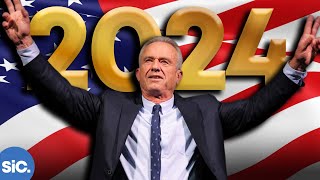
Amaryllis Fox Kennedy, campaign manager for Robert F. Kennedy Jr., discusses running an independent presidential campaign. She covers ballot access challenges, digital organizing tools like referral codes and QR codes, twice-weekly grassroots Zooms, and a focus on policy over polls, with priorities including ending forever wars and restoring trust in government.
Chapters
We ended up with a number of people who had worked in establishment politics long enough that they had seen all of the traps of life and corruption inside of the Beltway and wanted to use their experience to do something different. And then others who haven't worked in campaigns before and haven't actually felt the motivation to leave whatever life they were excelling in and get involved in politics at all until the issues that they were most concerned about, whether those are, you know, the environment, unraveling, the war machine, the economy, constitutional freedoms reached, reached enough of a fever pitch that they felt like it was now or never. It's a unique campaign that I'm running and I think it reflects the uniqueness of the millions of people in Bobby's movement.
Today we have the fascinating Amaryllis Fox Kennedy on the show. She's the wicked smart campaign manager for the RFK Jr. Presidential campaign. She's an American writer, television host and public speaker, and former CIA officer. After leaving the CIA, where she was once one of the youngest female officers. At only 22, Amaryllis led the Netflix documentary series the Business of drugs in 2020, delving into a global drug supply chains. She's a sought after speaker on global issues and dialogue. And Apple is developing a TV series based on her memoir. In this episode, she walks us through her insights around strategy, planning, hiring and leading talented experts, meeting rhythms and budgeting in running a political campaign. You'll love this episode. We'll see you on the inside. Your background in journalism and in the CIA, does much of that play out in your role today or what parts you bring with you, do you think?
Well, I think a lot of my kind of lifelong commitment to unraveling our military imperialism overseas, I was gifted, I guess you could say, by seeing firsthand the abuses and the overstep that are just commonplace in our security services and in our political judgments about how we should be funding the war machine and what regime change wars can or cannot do to solve diplomatic problems overseas. And the number of people that I think go through the process that I did as a young person and sign up either for the military or the intelligence community or on the other side, you know, whatever militia or non state actor, terror organization they sign up for, there's a lot of commonality there. It's young people who see grievances in the world, feel grievances have themselves been, been hurt or lost loved ones, lost family members and feel like that's a way that they can make a difference in the world. And the reality is, is often very different. Not because those organizations are not, at least in terms of the US Military and the intelligence community at lower levels filled with incredibly smart, righteous, creative, moral people, but because it's very difficult to let the sunshine and the daylight that really acts as the best disinfectant in when you're barricaded in the basement. And those on the seventh floor are not out for the protection of the Constitution, but instead for, for cementing their grip on power. And I think, unfortunately, when, when I left, I was really determined to bring light to the drone program in particular, to me, the fact that even today, you know, we use taxpayer money to kill civilians with remote control sky robots all over the world is something that should be unsettling to say the least to every American taxpayer. That and the Enhanced Interrogation Program and our, our prosecution of these wars with absolutely zero accountability. I mean, you know that Brown University estimates that the Iraq and Afghanistan wars cost us $8 trillion and 900,000 lives around the world. And for what? And so that was when I left. It was very much with a view to drawing attention to that and bringing an end to those forever wars. Unfortunately, in the 15 years since, those abuses have expanded beyond our behavior overseas and really kind of like an autoimmune disease turned inward. And a lot of what drives me in this, in this political moment is ensuring that those security services are not turning the same tactics on American citizens. And we see that increasingly. You know, obviously Ed Snowden was bringing light to it even back then, but it's, it's only become more pervasive. And I'm sure, you know, you have a, you have a YouTube show, you're probably as aware as anybody else that there, there are an increasing number of tripwires that even as an American citizen, you know, just that just this last week, there was a story where the White House was openly admitting to, to working with TikTok to censor accounts that said that their cheesebur were too expensive because, you know, it reflected poorly on the economy. And so for me, in answer to your question, I think I feel a particularly heavy responsibility, having witnessed those things firsthand in my youth, to play a role in dismantling the abusive arms of that apparatus and make sure that the Constitution is upheld in difficult times as well as in easy times. And right now, that is unfortunately not the slippery slope that we're sliding down.
So, like, the core purpose of why you're involved in politics is pretty super clear. I'm curious, what do you think it was within you as, like, this 2122 year old young woman starting off in her career that had the CIA say, yes, we'll bring you in. What the hell did they see in it? You were a kid. We're all kids at 22 years old. I mean, we're all kids trapped in adult bodies now. But what did they see in you as this 21 or 22 year old? Because I think that plays into who you are today.
Yeah, well, I mean, I had done my undergrad at Oxford, and while I was there, I'd actually been approached by some kind of, I guess, flavor of British intelligence, though they did not identify themselves, so I'm not really sure which kind. But Oxford is a big recruiting ground. And at that time for me it was, you know, no, thank you. I would like to uncover abuses and put them on the front page of the newspaper, not whisper about them, you know, outside of public view. My last year at Oxford, 911 happened and I was actually back home still in the States because British universities start late, and was in D.C. sitting on my front steps in Georgetown. My mom was across the street. My mom is English, if you can't tell. She was walking the dog. And our neighbor, you know, pulled up and said, go inside and turn on the tv. And I turned it on and, you know, just in time to see the second plane hit the towers. And that for me was a real turning point. I mean, my little sisters were at the cathedral. School went and picked them up. And it brought back a lot of childhood stuff for me because I'd had a dear friend that I lost in third grade on the, the Lockerbie bombing. I was at school, the American School in London. And so I think, you know, the idea of how, like, how can you believe in a righteous universe and in the goodness of people and still exist in a world where people wake up on a Tuesday morning and fly an aircraft into a building full of innocent people. And that was something I really wanted to get at an answer to just for my own spiritual understanding of the world. And so while I was at Georgetown, I went to do my master's there to kind of look at the root human causes of terrorism and try to understand the very relatable grievances. It's always really sat badly with me, these, these ideas of kind of, they hate us because we're free, these oversimplifications that especially back in those days, we were fed constantly by the news media. I'd grown up all over the world. I mean, I moved every year of my childhood. I lived in, in, you know, four Continents. And it just didn't fit with anything that I knew of the world. Everywhere I'd gone, there were people who, you know, had had grievances against US Policy in their country, perhaps, but there was a real love of America, of rock and roll and American cars and American music, American culture. It didn't sound true to me, this idea that they. They just hate us because we wear miniskirts in Times Square. You know, I really wanted to understand what was driving the decision to spread such violence, engage in that kind of conflict. And I had a pretty strong sense that there were. That this, this was not an attack that came out of the blue, that there were grievances that had been voiced in the lead up to it. But I didn't have the human connection with anybody who had been affected by those grievances. And so when they said to me and the Georgetown campus, well, what if you could get out of the library and actually go and sit and have a cup of tea with somebody who told you why they feel like it's a justifiable and righteous thing to do to launch one of these attacks? You know, would you be interested in hearing that? That was interesting to me. You know, it was the. The idea that there's really no other way that you can sit down with somebody involved in acts of terrorism and hear from them one on one, in a very human context why they personally are making this decision for themselves, for their life, for their community. And it struck me even then that until you understand that, you just don't have a hope of making it stop.
Do you think these are some of the causes and reasons why people get involved in working on campaigns? I'm curious what it is that drives people to pour themselves into a job and into a passion project like working on a public company, not, not you as a campaign manager, but somebody who's like part of the team that you're rallying to kind of work towards this goal of getting Bobby elected. I'm curious what it is that drives them because they know it's also, you know, there's a cliff at the end. Like, it's a. It's not a career that they're going to be in for the next five years at some company. Not that anybody in Gen Y wants to be in that long of a career anymore. But is that why they get involved, because of these causes that they believe in, or is it something different?
I think, I mean, I think it depends on the campaign. Right? I mean, one of the things that really strikes me about our campaign is we have people who've worked on almost every major campaign for the last 20 years across the aisle, you know, from Bernie over to McCain. What, what I understand from, from their past experience is that in many of those campaigns, there is kind of a progression. Even though it's every four years or if you're working on a midterm campaign every two years, there is the kind of intentional progression where, you know, you work in this role for this campaign, and then the next cycle you're going to aim for, you know, the, the, the kind of the next step up in the next campaign. What is unique, I think, about the RFK campaign is that at least at the outset, it was pretty clear that both establishment parties were, were putting the word out that if you worked for this campaign, you would never work in establishment politics again. So we ended up with a number of people who had worked in establishment politics long enough that they had seen all of the traps of life and corruption inside of the Beltway and wanted to use their experience to do something different. And then others who haven't worked in campaigns before and haven't actually felt the motivation to, you know, leave whatever life they were excelling in and get involved in politics at all until the issues that they were most concerned about, whether those are, you know, the environment, unraveling, the war machine, the economy, constitutional freedoms, reached enough of a fever pitch that they felt like it was now or never. So it's a unique campaign that I'm running, and I think it reflects the uniqueness of the millions of people in Bobby's movement. There's this kind of like, panic online about not being able to put the following of this campaign into a box. You know, does Bobby's candidacy draw more from the left or from the right? And the answer, statistically speaking, is almost exactly split.
Yes.
Good. The answer is yes to both and, and enough to win. And I think the prospect of a leader who has a 1/3, 1/3, 1/3 mandate between Democrats, independents and Republicans is something that we've never seen in our lifetime. And it's shifted a lot of the coverage as people kind of scramble to understand what that means for electoral map and what that means for media that are used to kind of driving wedge issues and fear narratives. And it's been really exhilarating to see. So I'm not sure that the answer that I would give you is the same as you would hear from one of the, one of the more establishment party managers. But I do think that that uniqueness is, is part of what drives the amazing resonance that we're seeing Bobby have across the country right now, how many.
People are working on the campaign, not just out in the field like the main organization. And then what's the org chart of a political campaign look like?
Well, you know, there's a, within the actual staff, there's a distinction between, you know, national or headquarters, which is quite distributed in the post Covid era. But the national staff who are working on things that go out to all states or online, and that is everything from our media and videos and narratives, both organic and paid, our strategy and policy team, you know, fundraising events, all of the advanced work that goes into Bobby's travel around the country. And then we have a very robust state organization that are still staff members, but lead each of the states. And for us that's particularly crucial because it's not only an incredibly strong grassroots movement, but as an independent candidate we have the challenge of ballot access, which the two party candidates don't. So in some states it's reasonably easy to get on the ballot. In many states it's tens of thousands. In some states, hundreds of thousands of signatures that need to be collected in very short windows, each with their own kind of arcane set of rules and regulations that differ state to state. And so that state operation is really crucial to us early on in a way that many of the other campaigns don't focus on until quite late in the cycle where they're working on, you know, voter registration and get out the vote after the conventions, you know, at the end of next summer or into the fall. It's a big organizational lift and a lot of what I focus on, but I actually think will be a tremendous advantage because by being forced to put together an incredibly efficient and intricate 50 state operation early on to valid access, you know, we then come out of that process in the summer of next year with a well oiled machine in all 50 states at the time where the Republican and Democratic candidates are just emerging from their convention and starting to focus on the general election for the first time. So I think that front loading of the field lift will pay off. But at the moment it's a large part of my time and commitment is standing that up and building all of the digital tools that enable us to do that more efficiently than maybe Ross Perot was able to back in the 90s.
How do you manage all the moving parts? I imagine there's a ton of strategic thinking and a ton of planning that have to kind of intersect and you don't have like years to do this like you've got a timeline that's like hypergrowth if there ever was it. So how do you organize all this stuff?
There are a lot of synchronicities in this campaign in terms of people's backgrounds preparing them for exactly what they're doing in ways that they don't expect. And one of them for me is that after leaving government work, I had a six year period of working in tech and in Silicon Valley. And that involved starting a company in a literal garage in Mountain View. And it was a natural language processing company that searched for commerce mentions on, on the page and made them automatically shoppable for charity. And this was, this was the early days, it was like 2011. So you didn't see all of the, the tools that are now available. And so Hearst and Conde Nast and a number of the big publishers used our widget on their pages so that they didn't have to go through and manually add shoppable links to every product they mentioned. And we took venture funding and that was a tremendous learning experience. And how to grow, grow a team from you know, 2 to 70 plus over the course of a couple of years. And from there I went and managed the consumer commerce product for Twitter and did a number of their integrations, led those negotiations with Amazon and with Postmates and Uber and OpenTable and Yelp and had a, a large team there of engineers and product managers and you know, business managers and so on that we were managing in order to stand up these commerce integrations. And those two experiences together have been phenomenally valuable to me in this. And it's a funny thing because you never know what's going to come around in life. You know, when I my shares bested and I left Twitter really committed to never working in Silicon Valley, never working in tech again. It was just at the moment where a lot of the idealism and the kind of we're saving the world began to be laid bare as quite short sighted and in a little bit of an echo chamber and self serving in ways that maybe even the people who believed it and were seeing it did not yet realize. And I wanted to get back out in the world and begin telling stories again and get back to my roots as a, as a baby journalist back in, in my pre Oxford years and start talking about the forever wars and start talking about these issues that really mattered to me and did that after, after leaving Twitter for seven years before the campaign and never thought I would go back to those tech days. And the only reason that that I did at the Outset of the campaign was when you first start running for president or considering a run, you go through a phase that they call the testing the waters phase, which from an FEC perspective, you know, there are a lot of thresholds that you can't pass without having actually acknowledged that you really are officially running. And one of those is hiring people in any kind of robust sense. And so when Bobby started getting kind of drafted into this by a lot of people who really felt that this was a moment that he had been called to, he wanted to do what it says on the tin, you know, and test the waters. And to do so, felt he needed a website and some social media presence at a time where a lot of his social media had been censored and turned off. And so he asked me if I would build a really simple website based on my experience in Silicon Valley, because he couldn't hire anyone to do it. And I built that for him at the beginning of this year, I think he asked me that. November, almost exactly a year ago, November of 22. And we launched that in February and started looking at the data there. And I remember texting him after putting my kids to bed toward the end of February and saying, I think you're going to win. And it was looking at that data on a day to day basis and seeing that engagement and that growth even in the earliest, earliest periods and being able to model out the trajectories there, that made that clear to me and I haven't been able to unsee it since. And certainly it's becoming clearer to others as they watch, watch his climb in the polls. But that was really the beginning of re engaging with my tech roots. And your question that this was a very long answer to is how do you stand something up quickly that is at this point speaking to millions of people and will only continue to exponentially escalate over the next year. And the answer is, I think with great authenticity and very diligent organizational and digital tools. And sometimes those two things are at odds. And it's really crucial to us that we choose authenticity every time. You know, we'll get on Twitter spaces and Bobby's answering questions and you know, there's an echo on the line or, you know, the, the spaces crashes or whatever it is. And for us, we would, we would rather go through some of those technical hiccups with our movement and have them experience Bobby in a, in a completely unvarnished, accessible way where they can ask real questions, they're not screened in advance. They can see what it is to have a leader that doesn't have to be handed an index card with every question in advance and his own answer written on it. And sometimes that means that, you know, there are bugs and hiccups. But it also demonstrates that this is not a stage managed leader, you know, this is. Yes, from his heart.
I'm glad you told me about the Bay Area and the Silicon Valley experience, because it does feel like a tech startup. It does feel like a very successful tech startup. So one of the things I thought about from the tech sector was the whole idea of the minimum viable product. And I've always said minimum viable everything that you got to get it done and out the door. Momentum creates momentum. Do you have that kind of a mantra or an ethos in building out this campaign, that it's just better to go hard and go fast with smart people and we're going to figure it out as we go? Is that because it feels like perfection would cripple the campaign?
Well, that's certainly true. I mean, there's just not enough time to iterate endlessly internally. And it also doesn't really sync up with our ethos of allowing the movement to drive itself all the way to the White House. We don't want to cook up plans that, that are, you know, designed in some back room somewhere and then present them finished six months later to, to a community that hasn't had any involvement. So we have grassroots zooms twice a week that we introduce any new big ideas and concepts for, for how to support them better and how to offer tools that they could use in the field, whether that's for canvassing or for fundraising or answering people's questions and get their feedback as part of that MVP iteration process. Early in the summer, we realized that the establishment parties have, you know, what they call bundlers that do a lot of their, their fundraising. And those are people who, you know, go out and get all of their friends and networks to donate the maximum amount allowable. And ultimately, you know, over the last few four or five presidencies, the ambassadorships to places like Austria are handed to those who have raised a lot of that. And much of what this campaign is about is detangling that kind of kickback and corruption and corporate capture of government. So we really wanted to democratize that process. And we launched referral codes we call Kennedy Links early in the summer to allow our grassroots movement to take the place of those kinds of corporate inside the Beltway fundraisers and go out and print their own hats or host block parties or host car Washes set up their tables outside Trader Joe's and answer people's questions. We've had kids making ornaments to sell over the holidays. All kinds of different ways to fuel the movement. But underneath all of that amazing grassroots real world work, there is a very robust digital infrastructure that allows people to go on. You can create your profile and then you get your own Kennedy link, but also your own QR code. All of the the literature and flyers and printable stickers and iron on designs for T shirts and so forth on your profile page, pull in your unique QR code, your unique referral code so that anybody can print these things from home and they'll be able to take pride in all of the new supporters and new donors that they bring in. You can see those on your profile page. And they move you through these kind of levels of pioneer and lamplighter, Lamplighter, being a burning mantor all the way through different levels of recognition so that the most active and supported members of the grassroots then can be invited to policy zooms and roundtables and participate at a higher level.
You've totally gamified this and I love that you're taking the affiliate idea and as well, how do you personally manage all of the polls on your time? Like there's got to be a million different directions and communications. You can be involved with meetings. How do you decide as a leader to say yes and what to say no to in terms of your time?
Well, you know what, I will say that the best preparation for that is being a mom. I was going to say kids. Yeah, I mean, I have a, as I said before, a 2 year old, a 4 year old and a 15 year old. And I have worked on things that I believe in throughout my time being being a mom. In fact, I made a Netflix series about the the militarization of the developing world under the guise of the war on drugs. And we filmed all through Colombia and Kenya and northern Myanmar and in conflict zones and embedded with the Colombian military and helicopters and so on. And I filmed all six episodes of that in the third trimester of my second pregnancy. So my kids have grown up seeing the balance between a parent who is there to read them a bedtime story and a parent who is devoted to making sure that the world they inherit when they grow up is a better place than it is now. And I think that's a really important thing to model as a parent. It is not always easy, you know, that trade off may not always make sense to them in the moment, but the one drives the other, you know, and I find the same thing with managing the campaign where I would love, for example, to be on every one of our twice weekly grassroots zooms that I mentioned earlier because they feed me enormously. It's incredibly exhilarating to see, you know, people in every one of the 50 states all sharing videos and photos of what they've been up to that week and, you know, asking for new tools to support them in new ways. And those things are very nourishing to be. For me to be a part of and also to share with them our commitment to them by showing up. And so that is one element. And then there's, on the other hand, being heads down, modeling out the path to 270 and making sure that that incorporates all of the new data signals we're getting. You know, there's a lot of reliance on polls, but for me, while we incorporate those things, I feel that looking at data signals in our organic and paid messaging across the country is even richer as a source of listening and a source of understanding our voters in our coalition, because you're able to ab. Test abcdefg test with each and every cohort, each and every group of. Of Americans that Bobby speaking to. And it's a really uniquely diverse group of people. I mean, you know, young voters, union members, veterans, immigrants, you know, parents with kids under the age of 17, the Latino community, the black community, the organic farming community, on and on and on. And each has issues that are especially important to them. And then there are many aspects of having a trustworthy government and a leader who, who commits to, to being truthful in office that appeal across the board. And so a lot of what we look at in modeling comes from the real interactions of people during their busy days. I think one of the challenges with polling is that, you know, there are just inherent biases in the process. There. There are people who have time to pick up the phone and answer 56 questions, and then there are a lot of people who don't. And when I look at the, you know, the single parents who are struggling to pay for child care, young voters who are trying to balance a job to pay for community college and class and in their resume building for, for the job they eventually want, you know, these are people who resonate deeply with Bobby, and they just do not have the time to sit and do a telephone poll or even an online survey. And so a lot of calls on my time are also in the quiet of pulling together those data signals and working on our strategy and our messaging and our Policy. So I feel it's sort of similar as a parent. There's a balance between engaging with our amazing grassroots movement and then doing the work that I owe them in order to get Bobby to the White House.
It actually led into a question I had around that as well, is how do you. How much of your time do you think is involved in strategy and how much of it is involved in, like, planning or. Or leading people?
It's cyclical, I guess, or at least variable. We're in the third quarter for us now, I mean, fourth quarter of the. Of the calendar, but Bobby announced in April, so our. And that towards the end of our third quarter of the campaign. And, you know, there are cyclical patterns where there are different focuses at the beginning and the end of the quarter. Fundraising tends in campaigns to be more of a focus in the third month of the quarter, as it does in, you know, many companies because of reporting and media coverage of those things. We also had a transition from running in the Democratic race to running as an independent for president as of October. And so the horizon shifted enormously because the Democratic primaries, you know, begin very early next year, whereas running as an independent, your time horizon is next November. And the. Of course, the electoral math shifts from primary math to. To the path to 270. And so as we made the decision to follow Bobby's profound reflection on leaving the party of his family, and that was a difficult decision for him, but he ultimately felt that the party had so departed from the ideals that he came up with in terms of peace and commitment to free speech and constitutional freedoms and economic protection of the working and middle class, that he had no choice but to run as an independent, where he would be free of party orthodoxies and the requirement to kind of adhere to these 20 positions or these 20 positions, or you're out of the club, you know, and to actually be able to go back to first principles and advocate for the voters that he will eventually work for in office. And so when he made that decision, which was very personal and very grounded in his own principles and his own reflection, that then kicked off, of course, a heightened focus on. On strategy and adjustment from the primary path to the general. So it depends on the month, really.
Yeah, I'm curious around that as well. When we think about, like, building a company, you kind of have to be cognizant of your competitors, but really focused on your own strategy and plan. Now you're running against a couple of competitors, but they're on a different timeline than you're on. So do you worry about the competition. Are you just kind of cognizant, but you're on your own plan and strategy. What comes in. In that in running a campaign for.
Us, one of the great dangers that we see the. The country grappling right now is be the vote for the lesser of two evils. Never offer voters any reason to believe in a candidate, but rather to oppose his adversary or her adversary and, you know, to focus so much on the opponent that the need to outline your own vision for the country is lost in the. The rage machine. So for us, I think more than most campaigns, we focus entirely on the north star of what Kennedy administration will do in office. And in some cases, that aligns with the policies of an adversary. And when it does, Bobby's the first person to acknowledge that and to give. To give either the incumbent president or the former president credit for areas where they have made progress. And I think the offering of a positive vision for, you know, here's what I want to accomplish to end the forever wars and to take that peace dividend and invest it here at home in. In our small businesses and our infrastructure, our energy grid, our utility prices, our gas prices, our grocery prices, and actually make life affordable in America for people who work hard and do all the right things and for a long time now have not been able to make ends meet. That kind of vision doesn't require us to focus on the campaigns of our adversaries, because what we're offering is not vote for us so the other guy doesn't win. I think that's very liberating because it means, you know, our opponents can run whatever races they want to. And, you know, we. We hope that whatever races they run will contribute to the conversation. And one of the things that we've really tried to model is the now very unusual idea that Americans can disagree with one another and still love and respect one another, and that we can actually have productive political discourse in this country. And that's something that is really awakening people who are tired of being told to hate their neighbors and fear their friends. So our focus is very much on what we will achieve in government and listening to communities all across this country and incorporating what they have to say about their needs and their challenges and their dreams. And it's something that's really refreshing to see in a leader. I mean, the border is a great example where we put a lot of time and energy organizationally into making a week's worth of space for Bobby to go to Yuma and spend time at the border. Not Just to do a press conference. In fact, he didn't do any press conference while he was there, but to actually go at midnight and one in the morning and talk to people as they came across the border to visit the pediatric gynecological exam rooms where kids are taken because of being raped on the way there, to talk with immigrants about their dreams and why they made the decision to come and to talk to asylum judges and immigration officers. We made a documentary about it and released it after the fact so that we weren't bringing press and putting media in the face of people who were in some of the hardest moments of their life. But one of the things I love about that documentary is that it, it witnesses a leader who is going back to first principles with zero ego invested in the outcome, and actually asking the people on the ground who are affected on all sides of an issue the questions that are important in understanding how to solve it. And he came away in many regards with a different opinion from. From when he went there and from things that he said in the past and has been really candid about what that evolution of views was and why. So a lot of my job is ensuring that along with all of the daily organizational work that goes into running a campaign, we also make space for our candidate, who is so committed to being out in the world and listening to real voters talking about their actual needs, making space for him to do that and to do it safely. You know, Bobby doesn't have Secret Service. He's so far been denied Secret Service by, By the administration. And so there are a lot of moving pieces from a security point of view and making sure that when he does go and spend a week on the ground learning about a situation that, you know, his. His presence there isn't telegraphed in advance. And he can have those conversations safely but completely authentically. People who don't have an agenda and don't even know he's coming before he comes to ask them. So there are a lot of organizational moving pieces, but I see that as a really sacred role for me is making sure that all of the operational work is off of his plate so that he can go and listen and learn and then come back and advocate for the people whose needs have for so long been ignored because they're not politically expedient.
Totally. I've got three wrapping kind of questions. One is just related to you and learning the industry. Like, did you have any political experience prior to coming into this as a campaign manager? And how did you learn the industry of politics? How did you learn all this so quickly?
Well, I'd worked in government and so I knew a lot of what was wrong and what we didn't want to do and what we are running to fix once in office. And that's really important because a lot of what resonates with people across the political spectrum is this pervasive sense of untrustworthy government for decades now. And so being able to speak to that firsthand, not have the ability to set aside the manifold and accurate concerns that Bobby expresses as the impressions of somebody who has never served in government, but to actually be able to reinforce them from firsthand experience has been useful. And we are deeply aligned on the abhorrent overstep of power in terms of encroaching on constitutional freedom. So that part of it has been very useful to have almost a decade of insight into the way that our government broken in terms of the day to day political industry, as you put it. And I think part of what's wrong with it is that it is indeed an industry. I think what has made our campaign so far so successful is being a disruptor to that industry. And in the same way, you know that you hear innovators dilemma stories all through Silicon Valley, Silicon Valley history, I think we're really running a campaign that doesn't draw on the received wisdom of what works and what doesn't work in political campaigns, starting with telling the truth and answering people without knowing what the question is in advance and putting ourselves. And Bobby certainly leads by example here in vulnerable positions by not always stage managing and not always knowing how things are going to turn out, but following a moral true north and acknowledging the spiritual aspect of what we're doing and the synchronicities that have brought everybody to this campaign and have so far proven incredibly valuable in putting together a complimentary set of superpowers that I think the, the establishment campaigns don't know what they don't know and are missing the ability to speak authentically with people about their actual lives. I mean, it should go without saying that if you are asking the American people to elect you their leader, in other words, for the American people to be your boss for the next four or eight years, that you should have to go out and interview with them. They are not going to hire you without talking to you and asking you questions and grilling you and informing you about what they need and what they expect of you in office and seeing some demonstration that you are actually going to deliver it based on, In Bobby's case, 30 years of prosecuting regulatory agencies on behalf of, of these kinds of voiceless voters. And so if the political experience of other campaign leaders and managers tells them to keep their candidate locked in the basement so as few people as possible can hear what they have to say, for us, that's not applicable. Received wisdom. And we have the great privilege of a candidate who, you know, our only challenge, and it is a challenge, is making sure that every American hears Bobby in his own words. But that is a great privilege because I think our two, two main adversaries have in some sense the opposite challenge.
Tactical question. You mentioned the grassroots zoom calls. And by the way, I would love to be able to just eavesdrop in on one of those one day to sit.
Oh, come join. All you have to do is go, go to Kennedy24. If you go to the take Action tab and spread the word or volunteer, you'll see the links there. And you can join us Tuesday at 2.
I will, I will absolutely be on 1. So I want to just watch how that works. It sounds really super intriguing. I'm curious, in running a company, scaling company, we need to have a number of different meeting rhythms and curious what meeting rhythms you have to run a political campaign? What are the different types of meetings you have on a quarterly, monthly, weekly, daily basis?
Yeah, well, we have a lot of asynchronous communication, as you can imagine, because whatever cadence you have, you know, real world events is not notified of your Google Calendar preferences. And so events tend to unfold when as they will. But we do have a core team meeting once, once a week with the leaders of each of the towers. And then the leaders of each of those towers have tower meetings at the top of every day. And then we have slack channels for each and all hands across the entire national core team. And our field leads every second week. And then grassroots zooms with our volunteers and larger movement twice weekly. But within that, you know, there are a lot of, there are a lot of meetings that are either one offs or a tight sequence of meetings to prepare for a particular event. And then of course, external meetings with, you know, surrogates. We get flooded with, you know, amazing creatives and artists and influencers and politicians and studio heads and leaders in arts and culture who want to help and want to support. And so, you know, we take those meetings externally and then have very regular meetings with unions and the labor movement and others that we want to make sure that we're advocating on behalf of. And then each of our kind of key coalitions, we have an engagement team that makes sure that We're Bobby spending time in community doing listening and town hall engagements, policy workshops with leaders in the homelessness movement, with the chronic disease epidemic, researchers with anti recidivism movement, combating the privatized prisons and looking at how we can reform criminal justice in this country, on and on. And so each of those have their own unique cadences in the lead up to one of those events. And we try to make as many of those public and accessible just by registering and watching on Zoom as possible. And then, you know, others are, are conducted in person. So each of those has, has their own unique rhythm. It's a constant battle. I will say, you know, we all face the death by zoom, the, the, the fight against death by zoom. And there is a lot of scheduling Tetris involved in our day to days. You know, we all work 25 hours a day, even on the weekends. But for me, the weekends are quite sacred because I tend to only have two to three hours of meetings spread out over the weekend days. And so that those days for me are much more focused on strategic deep dives, data modeling, building out the sort of launch sequencing for new tools for our, for our grassroots movement. We have a mobile app in the works that we're going to release early next year, Kennedy tv, separate Kennedy TV app, that is a full compilation of hundreds of hours of interviews. So all of those require big picture thinking that, that I tend to have a little bit more time to do on Saturday and Sunday, but they're all full to the gills.
Amazing. All right, wrapping question. If you were to go back to the 2122 year old Amaryllis and give her some advice, what advice would you give the younger you that maybe you know to be true today, but you wish you'd known back then?
It's all for a reason, you know, I mean, all of the curriculum that you go through in life, or certainly that I have gone through in life has prepared me for this moment and for this very unique skill set and combination of arrows in my quiver for this peaceful revolution. And I imagine that 10 or 20 years from now I'll say the same thing again. I think life truly is a curriculum and all of the heartbreak and disappointment of seeing that our government did not, in my years of service, live up to. You know, I came up in the 90s, I watched the West Wing. You know, there was, I really had an incredibly idealistic view of government as a teenager. And it was a hard awakening throughout the 2000s, early 2000s for me, and then by 2009, I was completely disillusioned with our military abuses, our security service abuses, had raised my hand over and over and over to flag activity that felt amoral and probably illegal and for not. And ultimately the idea that I had come to this project with, which was, you know, if all the good people leave, then it's only the bad people and you've got to reform things from the inside out, I had pretty much given up on that by the time in 2009 that the reality of the Enhanced Interrogation Program was beginning to emerge. And I was just completely heartbroken and horrified. And all of that pain I've metabolized into a commitment to our country and to a determination that my children, when they're my age, are not going to be working on the same problems. I mean, I'm sure there will be new ones, but it's my job to leave them with a better world than I inherited. And so I think experiencing that profound disappointment in how far we have to go as a country and the trustworthiness of our government and all we need to reform it hurt. It hurt like hell. But it left me with this deep commitment to the work I'm doing now. So, in answer to your question, it's all for a reason.
Well, Amarillis Kennedy, the campaign manager for Bobby Kennedy Jr. S presidential campaign. Thank you so much for sharing with us on the Second Command podcast.
What I found, and I think this is really an interesting point, is if you're the founder of a consumer goods company, your skillset is likely not in the finance operations side. You can't expect the CEO or the founder to be all things for all the functions that are necessary for building a company. You also can't expect them to be able to afford to bring all that expertise on hand, and that's where we want to help step in.
More from Cameron





Flutterwave Former Global Head of Operations Awa Kone | When Growth Outruns Operations (Podcast 611)





