The Cost of Burnout: A COO’s Guide to Systems and Sanity
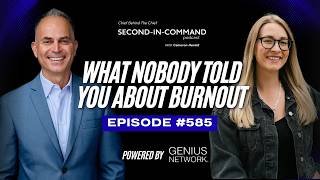
In this episode of the Second in Command podcast, Dr. Alan Voskanian, Vice President and COO of Cedars‑Sinai Medical Network, shares his unconventional journey from physician to senior operations leader and his insights on burnout, systems thinking, and personal resilience. He explains how taking unofficial leadership roles early in his career (“doing the job before the job”) built a foundation for his COO role. Voskanian outlines his learning strategy—continuous self‑education, a physician‑focused MBA, and mentorship—to acquire business, lean, and performance‑improvement skills. He discusses current passions: exploring AI, leveraging LinkedIn for knowledge exchange, and cultivating creativity through stand‑up comedy as a buffer against burnout. The conversation defines burnout in healthcare, distinguishes real symptoms from stigma, and describes how hospice and palliative‑care experiences reshaped his leadership priorities toward meaning, family, and joy. Voskanian details operational tactics: applying lean principles, identifying waste (e.g., inefficient printing, unstructured meetings), and using time‑tracking to surface hidden inefficiencies. He highlights change‑management challenges, financial constraints, and the loneliness of leadership, emphasizing transparent communication and supporting teams. Personal routines—early‑morning workouts, reading a page a day, adequate sleep—are presented as essential for sustained performance. Finally, he shares upcoming goals: personal health targets, team development, family milestones, mission trips, and continued creative pursuits.
Chapters
Very early in my career, someone had told me that you need to do the job before you get the job. That is very true for me as a physician stepping into operations. I started doing more operational roles before even I had my title. Most people don't realize, at least those who are physicians or nurses, there are a lot of leadership roles that don't have an official title. It might be running a committee. It might be overseeing a project. I consider all of those as stepping stones and leadership opportunities that should not be ignored. I took many leadership roles like that. I feel like that has been a very effective approach for me in my leadership career.
Today on Second in Command, I'm joined by Dr. Alan Voskanian, the Vice President and CEO of Cedars-Sinai Medical Network, and someone who brings a really rare perspective to operational leadership. Alan isn't just a healthcare executive, he is a board-certified physician in family medicine and hospice and palliative care, an innovation advisor to Medicare and Medicaid, and a nationally recognized leader in end-of-life care. His career sits at the intersection of high-stakes operations. Human experience and system-level transformation. In this conversation, we go deeper than your typical COO playbook. We talk about burnout, what it actually is, what it isn't, and how it shows up in both ourselves and our teams. We explore what hospice work has taught him about leadership, decision-making, what really matters when the stakes are high. And we get into something that doesn't get talked about enough in operations, which is the role of art, creativity, and filling up our cups. In becoming a more effective operator as a result. This is one of those conversations that will challenge the how you think about performance, leadership, and the human side of running organizations. Let's get into it.
All right, if you're an entrepreneur, you've got to go check out the Genius Network. The Genius Network is for ambitious, giving entrepreneurs who want to be part of the highest level connection group, and it's not just another mastermind. In fact, I have been a Genius Network member for 8 years. Genius Network helps build a better entrepreneur by focusing on health, wealth and making your business and life more ELF, which stands for easy, lucrative, and fun. Don't apply if you're just a taker, but do apply if you're a giving entrepreneur and you earn at least $1 million or more in revenue. And to see if you qualify, go check out geniusnetwork.com/apply. Again, that's geniusnetwork.com/apply.
We are live with Alan. Welcome to the Second in Command podcast.
Thank you so much for having me.
Of course. Well, I'm excited for this chat. We've already been talking a little bit about the things that you're interested in. You've got a book out, uh, on wellness and, and burnout, which is something that I've, uh, personally experienced in my life as a COO and building and growing something really fast. And I know that that is also prevalent in the space that you're in. So there's gonna be a lot of fun conversations around leadership, uh, burnout, I'm sure we'll talk about that. And so before we get into the, the kind of nitty-gritty of those, why don't you give us high-level overview? Tell me a little bit about the company that you work with. What do you do and who do you serve?
Great. Uh, really pleased to be part of this podcast. Thank you so much for inviting me. Uh, I currently serve as the chief operating officer for a large healthcare system, uh, on the ambulatory side, which is the outpatient side of the practice. I am a physician by training. I trained in primary care and also hospice and palliative care, which is end-of-life care. And very early in my career, I was tapped to take on leadership roles. And in healthcare, often when that happens, physicians find themselves taking on, let's say, medical director positions without having a lot of training in leadership. However, I really enjoy that part of leadership and look for opportunities to grow my leadership skills in terms of business side of healthcare and operational side of healthcare and realize I really enjoyed operations. And in my current role, I was initially a medical director for a large medical group within my healthcare system. But I realized what an important role operational leaders play in making sure that our patients are getting the best care and making sure that our physicians have everything to be successful in delivering the best care. Operations plays a pivotal role in that and started taking on more operational roles. And eventually became the chief operating officer and currently oversee all of our outpatient practices. And it's really an exciting opportunity. I really enjoy working with the operational team and working with our physicians to make sure our patients are getting the best care.
If you were to zoom out How many different positions or like titles or roles did you have before you found yourself in a COO position?
You know, it's so interesting. It's such an interesting question. I think in, from a, from in healthcare, there's very clear operational roles that people take who are purely operational, like let's say a supervisor, then a manager. Then a director, vice president. And so that's like the typical roles that people take. But I think most people don't realize, at least those who are physicians or nurses or like, let's say, NPs or PAs, there are a lot of leadership roles that don't have an official title. It might be running a committee. It might be overseeing a project. I consider all of those as stepping stones and leadership opportunities that should not be ignored. So I took many leadership roles like that, that maybe it did not have a title per se. However, it gave me opportunity to learn a lot about leadership, to contribute, And very early in my career, someone had told me that you need to do the job before you get the job. And I think that is very true for me as a physician stepping into operations. I started doing more operational roles before even I had my title. And I feel like that has been very effective approach for me in my leadership career.
How did you maximize your learning when you found yourself in those kind of stepping stone positions? And maybe there, you're like, oh, I'm in kind of a new territory. Yeah. You're, what was your approach to learning?
I took a couple of different approaches. I love learning. I think there's some of those like online surveys you can do. I think Viya is one of them that identifies what motivates you. And for me, learning is one of those things that always shows up. Like, I love learning. I'm always signed up for an online class or a community college class. My kids always make fun of me for the amount of books I have everywhere. So I love learning. And anytime I take on a new leadership role, I've always very quickly What are the things that I'm missing that I can learn and improve on? For example, very early in my career, this is 20 years ago, I realized the importance of crucial conversations. And I didn't even know at that time that there's like a whole science and so much literature and opportunities to learn about that. But I started by reading books. So that one approach is either reading books, like self-educating, or taking a formal class. And there are so many formal classes that people can take. Some of them are free, like things like Coursera, or a lot of really great universities offer some of their courses for free. So I did some self-education, but very early in my career, I realized that I wanted to get an MBA. And when the time was right, I pursued— I applied and got into a business school, Indiana University. They had a physician MBA track, and that really helped me improve in improving my business skills, my financial acumen. But also one thing I really loved in business school was focus on operations, things like lean, 6 Sigma, continuous performance improvement. So part of the way I kind of grew my skills were through self-education, formal education, and then the third one was through mentorship and coaching. And I always look for people that are doing what I'm hoping to do and trying to reach out to them and asking for some guidance and mentorship. It's not something I was very comfortable with early on in my career, but as I have gotten older and more experienced, I just feel like it's so valuable to have guides, coaches, mentors that can show you your kind of blind spots to help guide you. It really accelerates your growth.
I totally agree. I mean, that's That's actually how I found myself in Cameron's circle. I was telling you before we hopped on, like, yeah, I found myself in a CEO position and I had no idea what I was doing. And there was no one really around me that was a CEO for me to ask. And somehow I had been following Cameron and yeah, we had a program where he offered coaching to new CEOs, uh, CEOs that have already been operating for a while. And then like some very high level people and being able to be in that environment was so supportive for me. I love that you took that approach throughout your entire career, and even still it sounds like you have a lot of books around and you're always enrolled in something. What is— what's one thing that in today's age when there's so much happening, so many shifts, uh, especially with AI, uh, I don't know how far you've gone into that, but that has been like my recent obsession and it's crazy. What are the— what are the like top 2 or 3 things that you're really passionate about learning right now?
Well, AI would be one of those things. I mean, I'm just like blown away by what things AI can do. It's just really like moments of awe where I'm like, oh my God, like how did this, how could this be? I think it's becoming more and more real in terms of the power that AI has. So I try to educate myself and learn. And sometimes my kids, I have teenagers, so they're like, I learned so much from them about some of the technology and social media. I really have seen the power of LinkedIn and in terms of not only continuing to contribute to this ecosystem of healthcare and leadership, being able to engage with various thought leaders, being able to just have very important discussions around some of the challenges we all face in operations and challenges we face in healthcare. So I think one thing I'm passionate about is learning about this tool, the social platform. For me, it's LinkedIn. How does it work? How can I contribute to that environment? And how can I stay positive in that environment? I think sometimes you hear about the negative aspects of social media, especially like TikTok and LinkedIn and things like that. So I have zero interest in negativity in that aspect of LinkedIn. but I like the positive aspect, the learning aspect, the contributing to that environment. Years ago when I was in business school, I decided to write a blog about what I was learning in business school, and some of it was like things in finance or things in accounting or things in operations. But the reach of a blog was very minimal, and often it felt like a monologue. That I would get very little interaction. LinkedIn is very different. As soon as you kind of— I'm thinking about something, I'm curious about something. If I post, I start getting a lot of input and feedback. So I really enjoy that, and I'm passionate about kind of using that platform better. So that's one thing. The second part is a little bit— might come as a surprise, but most of my life and career has been focused on healthcare and business of healthcare. And I realized that I maybe neglected the parts that I really enjoy that are a little bit more creative and artistic. And so things that I'm really passionate about right now and I enjoy intensely, one of them is stand-up comedy. And yeah, I got into it initially because I was giving a lot of public presentations. And the way my brain works, which is probably very counterintuitive, is that, okay, if I want to improve my public speaking, what can I do? And it was like, do stand-up comedy.
Love that.
So I, yeah, I got into it. But then I really enjoyed it, enjoy the camaraderie, just a way to find peace and kind of deal with some of the challenging things in life through comedy. And it's very creative. So I'm really enjoying that and learning stand-up comedy. And then I always like to grow as a leader and as a person. And so setting my own challenges in terms of if it's really focusing on change management or focusing on improving my communication, like set targets for myself. And that process, I bring in almost the operational, like performance improvement lens. To self-growth, and that makes it more fun for me. It's every obstacle that could lead to burnout and frustration, I treat it as an opportunity to get better and improve myself.
Hey, it's Cameron Herold, founder of the Second in Command podcast. Are you a COO who's struggling to level up? Every COO or second in command should join the COO Alliance. Go check out cooalliance.com. And for just the cost of a few coffees a month, you can get world-class training, 12 monthly masterminds, and attend 2 live events a year with top COOs from around the world. The last 10 years we've been building and growing the CEO Alliance to put the tools, peer support, and strategies in place to help COOs grow themselves and their companies. Backed by rave reviews from hundreds of COOs and their CEOs who have seen insane growth We also have a 10x guarantee. It's your tribe. Go check out cooalliance.com. Sign up for a quick call to learn more.
Welcome home.
There's a couple pieces there that I'd love to go down. When you mentioned the creative and the artistic piece, I don't think this is something we talk about very much when we're talking about operations and, you know, executing projects. But why, why have you found that to be important? Why do you think COOs should focus on having an outlet for creativity and the arts?
Yeah, I'm thinking about why others should and, uh, versus why it's important to me. And I think, I think there's something there that others can, um, kind of benefit from. So for me, when I look at just joy in life and being fulfilled as a COO, as just a professional in general, I feel that having like our work is so much as COOs, it's never ending. It's like it starts very early in the morning and if something goes wrong in the clinics and, you know, our operations, uh, the it's never ending. Like, there's not an ending job. And just when you think like, okay, you're done with your last meeting, that's like beginning of your time to dive into your email and in basket. And so as a human being, like, we all need to get joy somewhere. And yes, there's so many moments of joy at my job that I really enjoy, but as kind of being a well-balanced human being. Like, we need to find all the other aspects of our humanity, family being one of them. Like, spending time with my family is a very high priority, but also it's things that uniquely are unique to me and bring me joy. And one of them is this creative component. And if I ignore that, I think that is going to backfire. I won't even show up as the best leader, best COO, if I'm not paying attention to the creative side. For me, for another COO, it might be something like golfing. They really want to improve their golfing skill, carve out the time to do that. For another person, might be volunteering at their kids' school or volunteering for a at a shelter for unhoused people. I think once we start ignoring those pieces that are truly authentically a kind of source of passion and joy for us, that's not good. That leads to burnout.
Let's talk about the burnout piece. I at one point thought burnout was BS. I thought that it was just an excuse for like lazy people who didn't wanna keep working and they're like, I'm burnt out, I need a vacation. And I had also been in environments that, that was very much taught to me. Um, cuz I was in sales and there was just a lot of this like, burnout isn't real, it's just an excuse. And like, where you can, you know, create more energy constantly if you, choose to, and you want to make that your state, uh, you know, whatever, XYZ. And then I found myself going through this very long, uh, healing journey through a bunch of different things. And I just read a book on burnout after a 3-year— pretty much a 3-year sabbatical. And it took me about 2 and a half years to feel like some sparks and creativity and desire to work. Like, I couldn't even go to a networking event, business events, like even supporting my friends at their— anything related to business, I, yeah, could not even like have a conversation about it. Um, so it was actually until I got the sparks coming back where I'm like, why did it take 2 and a half years? And I somehow like got a refer— or like a recommended book on Kindle for burnout, and let me just like check it out. And it was mind-blowing to me, the accuracy of what I had experienced. And that, I guess, like severe burnout can take 1 to 3 years to get over. It's not just like, oh, I need a vacation for a week. So could you tell us about, from your perspective, is burnout real? What even is it? And why is it important that we have that conversation?
Yeah. I mean, I think you brought up so many things that are so true about how people feel about burnout. And I think also it brings in a little bit of this shame or stigma or this sense of like it's not real. And also different people use it, use the term, and sometimes maybe they use it inaccurately, which really takes away from the severity of it for people who truly are experiencing it. But in healthcare, there's definitely, especially when you talk about clinicians, when you talk about physicians, there's a lot of stigma about being weak or burnout being something that happens because the clinician is not strong enough to deal with the challenges. And I hate it when people use it, use that type of connotation because burnout usually happens when the conditions at work are so challenging, often related, at least in healthcare, to bureaucracy, to tasks that are not fulfilling, that over time lead to burnout. And I sometimes call them like pebbles in the shoes of a doctor or a nurse, like little things that day in, day out, like overcoming those things lead to long-term leads to burnout. There are bigger boulders also that are bigger problems that lead to burnout. However, burnout is real and it is, there's more criteria around it, which is this sense of just feeling that the work you do is not, you're not contributing or you're not good at it, or that what you're doing is not meaningful. And this sense of lack of fulfillment your job. Of course, there is this sense of just frustration of being at work and feeling tired of it and not having any joy in the work we do. And I didn't even realize that I was burnt out very early in my career. Even this term burnout was not prevalent at that time. However, I felt all those signs and symptoms, I felt like I wasn't doing a good job and my job, job was not fulfilling. And this is after like so many years of struggle to become a physician. You know, it's, it's not easy to go through, get into medical school, go through residency. Like it's, I, I went through so much hardship to become a physician, but very early in my career, when I was working in a nonprofit HIV clinic, I just felt like I wasn't doing a good job at my place of work and had to take a step back like you did and kind of figure out where did I get joy in healthcare. And for me, I realized it was when I felt like I was really making an impact, contributing to someone's life, to my team. And that's when I did a pivot, uh, changed my clinical focus into hospice and palliative care, which is end-of-life care, and really found that passion, that enthusiasm, even though the work was very serious and heavy, working with patients at the end of life. One could think that that's really maybe a sad, uh, profession, but it's not that profession that creates burnout. It's just that all the other things that I mentioned, those bureaucracies, like not being able to spend enough time with my patients, that was a source of frustration for me. But when I was in hospice and palliative care, I felt like I could sit down, really pay attention to my patients, be there for them, and really got joy from that. And then I, the reason why I pursued leadership was that I thought I saw so many of my fellow friends and colleagues were experiencing burnout. I thought if I get involved in leader leadership, get involved in operations, I can help address some of those systematic problems to make things better for other clinicians. And partially that's the reason why I decided to write a book on burnout, which is titled Reclaiming the Joy of Medicine. It's really focused on finding purpose and fulfillment in healthcare. And the reason why I wrote the book was because I wanted to find the answers for myself. And there aren't like magic bullets or magic solutions that are gonna solve it. You know, of course it's the systematic problems, But on an individual basis, I'm kind of going full circle about the role of creativity. I realize that for me to avoid burnout, I have to find fulfillment in all aspects of my human being, of what, for me, authentically, passionately brings me joy. And one of them at this moment is stand-up comedy. The other one is being fully present for my kids. So that's really the way I address it. There's many other things. For me, it's like being healthy is really important, and that comes down to making sure I get enough sleep and I am exercising. I get up at 4:30 AM every morning, and there's a reason for that. It's like, I love sleeping, but I know if I get up at 4:30, I can be at the gym by 5. I can be done with my workout by like 6:30 and then the day begins. But if I don't get up at 4:30 and then work all day and I don't get a chance to work out, I become resentful of my job. And also my body physically is not feeling good.
That's very timely that you bring this up because I have resisted waking up mega early. I would call that mega early. 4:30 is mega early. Uh, I have resisted that for a long time, but I'm in a season of my life right now where I'm working on— it's the first time I've had my hands in multiple buckets at the same time. Yeah, we have been in like one thing all in, and now I'm learning how do I manage different things. One of those, since I still work with clients, means that once the Slack starts— I don't know if you guys use Slack, but, uh, Slack is pretty much anywhere that I'm working with my clients, just the bing ding, the ding ding dings, like the notifications all day long. And I have been doing this for 2 weeks, waking up between 5 and 6 AM, 6:30 sometimes. It has been a game changer for me. It's just, it's so nice. There's just like peace, quiet, spaciousness. Yep. Think, have time with myself and kind of like What I'm hearing overall, what you are saying is it's not even about like doing something creative. It's about what's the thing that brings you joy. And that could be so different for, for everybody, but having that space somewhere in the day and sounds like for you, and I think it's gonna become for me, early mornings is a way to really protect that time. Yeah.
Yeah. You know, I, I wasn't a morning person. Like my, I remember my dad used to wake up at 4:30, go to work. He would work all day and he would come home late and And I was always wondering, how can he do this? And I was like, ah, I'm never doing that. And now I'm doing that. But I think the reason why I do it is that's like the only time that is really my time. And I work out and I told you I have so many books, but one of the ways, like, I have this one book that I'm reading right now. It's just one page day. It's by Ryan Holiday. It's The Daily Dad. It's easy thing. It's a little bit of philosophy. It's about parenting. But that takes me less than 2 minutes to read one page. If I set this unrealistic goal that I'm going to read one book a week and things like that, that's never going to happen. But reading one page in that time between 4:30 till 6:30, that's I feel like it's my time, makes me feel good. Now, it's not always realistic, and I can't do it all the time. There's times where I might not sleep well, and yes, I'll wake up late. It's just having more grace. But realizing that if I have the system in place where waking up early allows me to work out, allows me to read a little bit, I feel like I show up as as a more, as a better leader and better doctor for my patients. So it's important to me. It works. Yeah.
I love that.
So yeah.
Thanks. Thanks for sharing the details on that. And, and to go a little bit into that, but in more of the systems, yeah. Angle, you said that you are working, it's one of the things you're passionate about is bringing in some systemic change. Yeah. Into your field. I'm curious, like, from a day-to-day standpoint of being a COO, how are you trying to reorganize or change things so that we can avoid that for our team members?
Yeah, you know, I think organizationally, I think for most COOs, as a COO, one of, you know, every COO's roles and responsibilities is different than another COO's. There's certain roles that it's like very clear if you have that title, you do very similar jobs, but at a high level, I think for me, uh, as a COO, one of the key roles I have is to make sure that the vision of the organization set by the CEO, by the board, is fully implemented. And, but also make sure that operations is running smoothly, like making sure the trains are running on time. And often in healthcare, but also in other places, there's a lot of firefighting that happens. There's a lot of daily things that don't go as planned. And then you spend, like, you have this full agenda, you start your day, but then the fires start happening and then you're in firefighting mode. So for me, To answer your question, one of the key things that I've focused on is setting up a system that prevents firefighting and organizes the way operation runs for my team members. And the way we do that is based on this concept of lean principles, which originally came from Toyota Manufacturing, which is kind setting up this system that's really focused on reducing waste in operations and improving efficiency and making sure that unnecessary variations are removed. Now, these concepts are coming from engineering field. There's a lot of data and science behind it, but bringing those concepts to healthcare is very interesting to me. But it requires subtlety because those concepts that are coming from the field of engineering do not translate directly to this heavily human caring business of healthcare. Healthcare is really just needs to be personalized. It needs to have humanity, it needs to have kindness. There's just so many components. That are not trans— like, you cannot translate it. However, there are a lot of really great examples that can translate well. So, that's what I find, like, one of my biggest contributions to my health, to my organization to be.
For a CEO that's listening and they're hearing that and they're wondering how they would apply that to whatever they're building or working on, when you say waste, How would a COO know what is waste versus what is actually necessary, or however you would define that?
Yeah, and this is where I, I hate to use lingo, or, uh, so I'm gonna try to avoid using it, but I think the way, like, officially waste is defined in, uh, performance improvement or lean management is really looking at the value chain of how value is created. For your organization and where are unnecessary steps. There's different steps or different ways you could categorize waste. Like, for example, let's say if you have a system that leads to a lot of reprocessing or doing things that are unnecessary, or there is, for example, something simple that, let's say, if an employee needs to print something, but the printer is located 2 floors up, and now every time they need to go up there, print. But in more kind of an actual example, a lot of our doctors sometimes need to print a prescription or need to print like a referral. Often in the doctor's exam room, there's no printer, so they type they print it, there's a central printer, and then that requires that doctor or the nurse to go print that, take that paper, go give it to the patient. So a few years ago, we decided that why can't we put a printer in the exam room? So at the same time that the note is typed, then that whatever document needs to be printed is printed and handed to the patient. That's an example of a waste, that could be easily addressed. But there are so many other examples. Like, one, I think something we all struggle with is meetings. If you go into a meeting without an agenda and you bring in executives into that meeting, bring in leaders and employees, time is so precious. That, to me, is a wasted meeting. So could we shorten meetings from an hour to 45? From 45 to 30 minutes. But also then there are times where you really need people to brainstorm and talk, and maybe then for that, a 1-hour meeting is appropriate. So, when I talk about waste, those are the type of things I'm talking about.
Yeah, that makes a lot of sense, and it, it kind of reminds me, I would've never categorized it as, as that at the time, but one of the tools that I really love to roll out in teams is every quarter I have my team members do a 15-minute time tracker for a week. One, they will hate it when you give it to them. They're gonna hate it. They're gonna be like, why am I doing this? But then they're gonna be like, wow, I just had the most productive week I've ever had because something about knowing you're gonna be putting in what you're doing. But every single time that I've ever reviewed back on what someone's, someone's time tracker is, I'm shocked at where some of their time is going. Or I'll be like, why are we doing that? I didn't even know you were doing that. That's very outdated. Oh, my old manager gave me that. And there's just all this waste in their time throughout the day that unless we get visibility on it and actually spend the time, we don't even know we're losing so much output to some of these, these things. What would be— what would be some of the— we've talked about some of the hard parts for our team members in burnout from the lens of a COO. Burnout aside, just generally, what are some of the hardest parts about the role for you?
Some of the hardest parts are the managing change when the team feels already that they're so busy and overburdened by so many different responsibilities and I bring forward some new change or new initiative. And sometimes the pace of change could be very overwhelming. And kind of being able to manage, understanding, kind of hearing the team, making the— kind of explaining the why for why change is needed, helping support the team, but also gently nudge the team in the direction of the change that's needed for the organization. I feel like that's, that's a big challenge that COOs face, change management. Another one is, you know, there's, there are very few organizations that don't have to worry about financial constraints. I think a lot of us, especially in healthcare, there's so many changes happening where kind of costs are increasing at significantly higher rate than the revenue is. So we need to figure out a way to gain efficiencies. And sometimes you cannot share all the nuances or challenges that are happening. So I think being able to really explain, motivate the team, help them guide through the change, that's challenging. And I always wondered why people said leadership is like a lonely sport, or sometimes it feels that you're alone. But that's also challenging because sometimes you feel like you cannot really communicate or share concerns. You don't want to worry the team. There's so much happening that sometimes you need to absorb things and minimize the impact on the team as a leader, not only COO, but I think most leaders face this. So how do you balance all those kind of all those issues that require your attention? It's, it's still an honor to serve as a leader. I just don't take it for granted any moment. But those are some of the things that keeps you up at night.
Yeah, I appreciate your vulnerability because that is one of the things that I've heard from pretty much every COO, uh, that I've really gotten to talk deeply with, is that feeling of— can be isolating at times, and you're holding a lot of responsibility, a lot of info. I mean, I think that's one of the main things that COO does is you're responsible for grabbing context from all of these areas and then knowing what context is then helpful for, yep, each person and being able to channel it in the right way. One of the last things I wanted to ask you about was I, I did read one of your LinkedIn posts recently that I thought was so well written and kind of is focused on the hospice aspect that you mentioned that you're involved with. I'm curious for anyone that's listening, your experience of being with people at the end of their life, how has that changed how you think about business and leadership?
Yeah, I think, um, it makes me be a better leader because I, I realize like what's important in life, um, to people that I had the honor of being at their bedside when they died. And it's often not the things that sometimes we talk about in healthcare. Like no one ever says like, oh, I wish I had answered 50 more emails, or I wish I'd spend more time at work. Like all those things that people remember are related to whether, like who they loved do they spend enough time with their loved one? Also, a lot of time, people at the end of life regret not doing the things that they thought they were meant to do. And it, again, full circle into this whole concept of creativity and the reason why I make time to do stand-up comedy or read, because people regret that at the end of their life. They're like, I always was interested in gardening. But I never gardened. So I feel like knowing all of that, I hope that I allow my team to focus on those things when possible. If one of my leaders, I know that he needs to attend their kind of kindergartner's music recital, I hope they know that my answer is going to be, of course. You got to go to that. And if I need to cover or someone else on our team needs to cover, we're going to cover that. And I think it's a fine balance because there are significant business needs and clinics need to run. But I think if we all build a team that prioritize that components that people are going to regret at the end of their life, I try to keep that in mind in my leadership. And I think that's something I've learned from working in hospice and palliative care.
Thanks for sharing that. Yeah. Yeah. That, um, this episode probably won't get put out before this happens, so I think we'll be okay. But, uh, I'm really excited next, next week. I've just been feeling this, this overwhelming. I've been so focused on what I'm building and trying to figure out, yeah, the, where do, where am I focusing next in my career? And it can become been so consuming looking at just BBM. And, uh, my parents bought their first business, um, which is like an estate sale company. So I'm flying to Florida. It's my mom's birthday of their first big estate sale, this company that they bought. I'm gonna show up undercover and surprise them like I'm a shopper. And I'm so excited. Like, I'm so— it's probably the thing I'm most excited about in the last few weeks. Um, and just finding those moments, like you said, to do the things that really matter to us. Yeah. And no one, no one at the end of their life, I think maybe you wrote this, uh, said something about their, no one, no one regrets not checking their email more.
Yeah.
Yeah. Yeah. So true. Yeah. Well, just to wrap us up here, this has been so amazing. Thank you, Alan. What are you, what are you most excited about in the next 6 months?
You know, I'm really excited about this. Always excited about setting goals, achieving them, both for my team, but also for me personally. Like, how can I get better in certain things I do? Some of it is, how can I be better in my kind of exercise routine? How can I do better with sleeping, with the way I eat, or the way I show up as a leader? So I am excited in that those create excitement for me. I'm very goal-driven, set goals, but also some of it is our team's goals. Like, how can I help my team be better? I know certain people are working on certain aspects of their leadership. Like, seeing them grow, seeing them achieve those goals brings me joy. I think what I'm looking for is my kids are also growing and going to college. So I think being part of that journey, adjusting to this new phase of life is something I'm really very much looking forward to. And summer is around the corner, like, hopefully traveling. I've been going to Guatemala on a mission trip, and I'm considering going again. So that's really an exciting opportunity.
Amazing. I love that you're involved with that. Very cool. Well, thank you so much for your time sharing your wisdom, your stories, and wishing you the best with everything you're working towards.
Thank you so much and have a great time in Florida.
Thank you.
I will.
Yeah.
Great.
More from Cameron





Flutterwave Former Global Head of Operations Awa Kone | When Growth Outruns Operations (Podcast 611)





