The Future of Business Automation | Jeff Macpherson, COO of XnGen AI (Podcast 450)
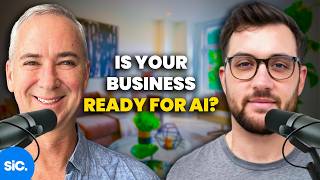
A podcast interview (Cameron Herold with Jeff Macpherson, cofounder & COO of X Engine AI) about applying AI to business operations. Jeff emphasizes building data infrastructure, SOPs, and playbooks before deploying AI agents; warns of ‘shiny object’ churn from third‑party tools; and describes X Engine AI’s approach (platform-first, customer-owned databases, done‑for‑you agent setup, subscription model). He also covers team composition, hiring (onshore/offshore), ideal client profile (mid‑market, ~$5M+ revenue), and personal lessons about resilience from past platform failures.
Chapters
I'm here because of going down that software route, but I mean, software is extremely tough to get into because once you start, you can't stop or it stops. That's unfortunate. And a lot of people who want to get into it don't understand that yet. So again, me preaching that to people is like, be careful if you're going down that route.
Our guest today is X Engine AI's co founder and COO Jeff McPherson. Jeff is a pioneer in conversational marketing technology with 10 years of experience behind two successful business exits, including one with a global e commerce brand. Jeff developed the first Instagram DM chatbot, connecting 500 million followers and enabling nearly a billion messages to be sent. He also specializes in leveraging automation and technology to unlock untapped revenue and deliver personalized customer experiences. Jeff is also a CEO alliance member and looking forward to having him share with us today on our second Command podcast. You can also watch this episode inside our second second in command podcast YouTube channel. So, Jeff, welcome to the second command podcast.
Thanks for having me. No, Excited to be here.
Yeah, very much looking forward to this for a couple reasons. One, I mean, well, for a few reasons, AI is absolutely top of mind right now. I just presented last week at Mind Valley Future Human event in Dubai, 2500 people, and I said that AI is not going to take you out of a job. It's going to be a person like you that leverages AI that's going to take you out of your job. So I'm really kind of pretty maniacal and focused around how companies can leverage AI. Secondly, you are a COO alliance member, so I'm excited to have you on and learn a little bit. And then third, we're bringing you into our company, the CEO alliance, to help us implement some AI tools. And we are woefully behind the scene on this one. I don't think we're Luddites. We're not using a, you know, a typewriter, but we're certainly not. I think we're working too hard when we could be working smarter. So I'm going to, going to try to get some ideas from you on this podcast and then also excited to have you come in. So welcome.
Yeah, no, thank you. I mean, you're, you're ahead of the curve already. If, if you're looking to implement it and you have been messing around with it. I mean, like, you're saying it's like the people who are scared to implement it or don't implement it, they're going to be the Ones that are replaced, not the ones that at least do something with it.
Yeah, I'm curious about that. Like I just today downloaded Grok to my phone. Don't even know what the hell GROK is, but I downloaded Grok. I've downloaded Claude last week. I've got Perplexity on my phone now, so I want to start playing with those. I don't know if I should. One of my favorite dashboards that I tell people about is There is an AI for that and it's got like 12,000 different AI tools that exist. And then I've been certainly using, you know, chatgpt a ton. Chatgpt four. My EA and I are actually launching a book about grandmother's advice on business and we're leveraging AI and mid journey to help us write 95% of the book. But I still feel like we're way behind the curve. Are most companies not leveraging AI? What do you think the kind of, I guess the Jeffrey Moore crossing the chasm. Where are we with adoption?
I mean where, where we see it, especially over the last years, there's a lot of shiny object syndrome. What do you use, how to use it, where to go? That's kind of the big thing that we're seeing. And because there's hundreds of new AI tools being released every day and my business partner Matt Farmer, he reviews AI tools on social media. Like that's his thing. He's an AI influencer. So it's like he uses AI to keep up with AI. We notice when like a new tool comes out, people are coming to us. It's like, well what about this tool? What about this tool? And the problem with that is when you start using a lot of these third party tools, the problem with them is in six months you're going to have to redo them. Like there's going to be the next thing. It's going to be the next thing. It's going to be the next thing because when we're, when we work with the client it's. People think there's like a problem up here, but there's underlying problems that actually are going to solve it and keep things continuing, moving past like the three to six month mark.
So I talked to somebody recently and I said before you put an AI tool in place, you should actually ask yourself, do I even need to do this task or project? Like can I stop it? And then secondly is can I optimize it? And then third can we leverage is AI, what's your approach with, with your.
Business with that pain points is a big one. What's, what's your true pain points? We're really good at extracting what they like what the true growth potential can be, whether it's inefficiencies or on the generating revenue side. For us it's like okay, this is what you want to solve with that. Do you have automations in place? And that could just be like have your CRM systems have like your support systems in place, your typical automations that most businesses would have. Then from there it's like do you have playbooks and processes in place? No. Okay, well that's a problem. Do you have SOPs in place? No. Okay, well that's also a problem. So you have to actually start at the bottom and work your way up to be able. Because without the AI, without the knowledge base or the information and without the processes and playbook, the AI is just not that good. And that's where it's like continuously having to feedback loops, providing more information. Is there gaps in my SOPs? That's when as AI progresses and so do the technologies, that's when it's going to be more and more autonomous as our, I mean as the industry grows and that's the big thing. Do you have the SOPs, do you have the playbooks and processes? Do you have the automations? Okay, now I have all that. Perfect. Now you can set up an AI agent.
Makes sense. Okay, first off, before I even dive in here, how do you pronounce your company name? Is it X Engine? AI?
Correct. X Engine. AI.
X Engine. Oh, X Engine. Like is it like engine?
Correct.
Engine. Okay, so X Engine. Why do companies come to you and how do you approach working with an organization? And then I guess third would be what's the ideal company that you work with? I can't imagine you want to walk into enterprise level clients.
We're more in the mid market for sure. There's a lot of experts, agencies and automation specialists that sets things up with tools that are out there and I mean they do a good job. We, we work with a lot of agencies. A lot of people are dealing with inefficiencies and operational nightmares. Again great thing to be a part of COO alliance as well. The leadership aspect is like bringing coming in and being your leadership to really show them what's next in AI. What actually is AI underneath the team, the data we kind of follow like an EOS model. So not only are you getting the integration team, the data management team and the leadership team, it's like you're getting what the future is going to be as well. And then for us on the integration side, we present in a way it was like we help your customers spend more money with you while saving you a cost on the back end with inefficiencies using AI and is that a.
Starting point for you? I've always said that, you know, there's not a single problem that exists that writing a check can't solve. So is finding revenue opportunities a core starting point? And then you kind of mentioned, I guess, is it slashing overhead?
The second part, It, I mean it truly depends on who we're talking to. It really does. Some people are just like, no, I understand it. We need to really help with our inefficiencies because there's two sides of a business. There's demand and there's fulfillment. It's easier to sell demand. I'm going to bring you more business because like to your point, then you can take that money and solve with the inefficiencies. The problem with AI and again, going back to kind of that EOS model is if your foundation is broken and your data infrastructure is broken, it's just like building a home or building an apartment. The further you go up, the more it's going to sway. So it's like you really have to start with that data infrastructure and that foundation first. And that's where it separates all us from other people in the industry. Because AI is not overly complicated when you do that part right.
Okay, I'm going to ask you about agents in a few minutes, but I want to then ask you what is the starting point? So a company comes to you and let's even start there. I just did a post on Facebook a couple days ago and then was very quickly reminded that you were a member of ours. I posted on Facebook like, hey, who, who can I turn to to get some AI help? Your name actually came up a bunch of times and a bunch of others did too. And then I remembered you were a co alliance member, so that was easy. Let's talk to you before we speak to anybody else. How does a company go about deciding who can help them? It seems like everybody's become an expert. You know, they used to be the crypto expert and before that they were the selling, you know, high ticket courses to whatever. Right? But you guys have been doing this for a while. This is kind of your niche. How do, how does a company like mine or a mid market company make a decision on who to turn to?
I think a lot of it right now is trust. I think everything's just built on trust. Unless you've got some really killer case studies through marketing, which some do. It's like a lot of the inefficiencies, some, again, everybody looks at it differently, but other than that, like what we've seen, it's just like being in communities, jumping on podcasts, going to events, building those relationships. It's the work. Like we've built everything so far just on word of mouth. We haven't even, we haven't even tapped into paid.
Right, so you're building on word of mouth and is that really then is it just easy for clients to make a decision to work with you because they're just coming off word of mouth? Let's say that there is no word of mouth. You don't know where to go and you're being pitched by three different people. How should you know Fred, who's running a 50 person company, decide what should he look at? Is it just who I trust? Do they, what questions should they ask?
It's the gut instinct for again for us and from our perspective, it's like you really need to understand the leadership team, like who you're going to be working with. It's like we've got a long resume across multiple different sectors. So it's like there's that, it's like the technologies that they're working on, it's like are they building me a data infrastructure first and then plugging in the tools or are they just setting me, setting up one time things that in I'm going to have to manage, it's not going to be able to keep up with. We're going to have to replace in six months. So it's like those are a lot of questions for us. Again, I mentioned it a little earlier, data, I mean AIs only as good as the data and the information you give it. And if your company doesn't set that up first, then it doesn't matter. AI is going to, you're going to have to continue to replace it over and over and over. Literally would just ask, do you set me up a data infrastructure and do we plug in tools to it?
When a client is, is bringing you on board, is it like an initial consulting agreement that they bring you in for? Is it a, a monthly retainer they're putting you on? Is it, is it based on a kind of opportunity by opportunity that you see? How does, how do you approach that?
So we, we have a, we go through a discovery for them to really understand their business. We, we, we basically need to know their business just as good as them, if not better because we need to be able to pull out those pain points, show them kind of what it would, what it would cost if they did it on their own. The technologies that are going to need to be required, how we're going to build their databases, all that fun stuff that comes with it because that's the custom piece to it. And then from there it's like so we in our own ip so we're actually turning it more into a done for you solution. And then we will have a software company or AI as a service company is kind of what we're calling it where people are going to be able to leverage our technologies to do it themselves. So it's like we're just a subscription. So it's like we, we have people commit to 90 days and then we do quarterly reviews but it's just a monthly subscription for us. That's what we charge.
What do you mean the done for you? Walk me through what that means.
So obviously right now, just like an agency, we set everything up for you. Where we set up all, we build all your agents, we do all the integrations, we connect them to your pre existing tech stack. So it's like you guys use Slack. I know that we're going to be plugging in the AI directly into your Slack because we don't want businesses to have another button clicker tool because agents don't need the platforms, they need the data. And then where the output's going to and everything in between is essentially relevant.
So you're helping the company set this stuff up, find more opportunities to keep setting up and automate and then making sure it doesn't break correct is one of the reasons why it's good to work on the operations side and helping the employees to automate processes. Does that relieve the fear of the employees that they're not going to get replaced by AI versus if you come in and all you're doing is automating sales and marketing, they're worried about when they're going to get replaced.
On the upside again like the ICP that we work with, they, we haven't had a lot of pushback on, it's going to replace our team because they're, once they, they're explained it and they see it, it's like okay, yeah it makes sense. It's, it's, it's growth. We prefer starting with people on the operation side, then the growth side again back to like we really want to build that foundation first because the marketing side's not quite there yet. Especially on like video creation, content creation, paid advertising, the spot that we all are. But there's opportunities in there. It's like for example, on the customer support aspect you can, there's not a lot of people who analyze all your customer support tickets and turn it into marketing materials. You can write better ad copy, you can update your SOPS, you can put FAQs, you can do topple funnel stuff. You can change your the copy on your funnel. All that stuff can be analyzed through customer support tickets. And nobody does it at scale.
How do you not get overwhelmed with all of this stuff?
Amazing team.
Is it the methodical approach that you have towards thinking about this?
Yes, I would say so. I mean I've been through some, some pretty overwhelming things. My so I built the first Instagram chat bot years ago. It was about five years ago was the many chat of Instagram. We had just shy of a billion messages sent and over about 500 million followers on the platform. We were working with like the Tony Robbins, the Nelk boys, Dean Gracios. We worked with some high profile people and ended up getting shut down by Facebook in the blink of an eye. So it had all the developers at all the people that were using the platform. We were just in the process of closing around and it was gone overnight. So it's like I've been in conversational marketing for a long time, but it was an eight months legal back and forth with Facebook which was super overwhelming at 26 years old. So I mean like I've kind of built the resilience on that aspect where I understand what we're building, I trust my team dearly and I just, we just get where the market's going and I've just kind of always been on that forefront where it's just like the time will come, that wave will come. For the rest of us it's just like build an amazing team and just the, and just trust the process.
How are you funding this business?
And we're bootstrapping. I bootstrap every software company.
Okay, so you're bootstrapping this and that lesson from, you know, the Facebook kind of shutting you down when you're not the first entrepreneur that I've heard that kind of a story from. I've heard tax laws getting changed. It is kind of putting all your eggs in one basket in a way. But it also doesn't feel like it's ever going to get stripped away from you. How did you get through that? Like how did you emotionally get through that?
I mean, truthfully. And I spoke at an event in Utah called Failed Fest where they bring in entrepreneurs to talk about these traumatic situations and how they got through them and how they're doing. That was. It was a really vulnerable, amazing event. I just ended up breaking down personally because like you just try and keep up. It was just truthfully, it's like dropping your ego. It's just asking and truly asking for help. It was like the first time that I really did and it put me in a position. It's like nobody really cared that I went home, lived with my parents again and restarted. Like it just. No, it didn't cross anybody's mind. And then opportunities started presenting themselves again. So it's like I dropped my ego, I built some resilience and I asked for some help and things just started presenting themselves again. Because as entrepreneurs we're all going to go through something traumatic at some point. It's just a matter of if you stop, that's when you essentially fail.
Yeah. Oh no, we all go through it for sure. I mean, I remember either you're on the website. Jeff McPherson from HeyGen I. Yeah, we almost bankrupted 1-800-got junk. We were $100 million in revenue. We didn't have enough money to meet payroll and we just made $5 million in profit the year before. And some somehow we just spent it all and yeah, it can be scary. All right, so you, Matt, started up X and gen AI. Am I saying that right?
X engine.
X engine. I don't know why I can't do this. X engine AI. So you guys started this up. You co founded the organization together. You're operating currently as the coo. How did you guys divide and conquer on those roles and responsibilities? He's kind of like the AI whiz and you're. Or that is he the tech whiz and you're more on the offside. Is that what it was?
Yeah, like we've got data scientists, we've got machine learning engineers. Like we've got a full development team underneath of us. Again, because we're building out a platform. We're not just setting up agents for businesses. The agencies are essentially built on top of our platform and we can talk about that a little bit. So again, Matt uses AI to keep up with AI. So we had to get him out of basically all of operations in terms of he just needs to stay on top of the biggest tools, the biggest releases and stuff all the time. Because to the point in the beginning Is like, what do I use? How do I use it? What's next? Shiny object syndrome? So he's worked with companies like Google and Amazon. He's actually worked with bytedance. He's worked with a lot of big technology companies, and he's worked with a lot of amazing tools, which gives us early access to be able to test them out, to be able to bring them to the customer base that we work with. Again, plugging them into your data instead of just setting them up, that's kind of like an. Like an AI operating system. So you've got an iPhone. It's like it runs on an operating system. And then the AI tools and agents, they're essentially the apps that you download. They can be deleted, they can be plugged in, but the data that you build is your operating system. And that's what we help businesses build.
But why are you plugging people into a platform that you guys then own and operate? I mean, I understand from the SaaS model that it makes sense for recurring revenue for you. You guys. Is that the core reason, or is it also better for the customer in some way?
It's better for the customer. So it's like, yes, we have that platform, but you as the company, own your database. So for some reason you wanted to leave us. You could take that and you can go. And you can go on to the next thing and run it yourself. Because with that Facebook situation, I never wanted to be vulnerable to another platform, and I don't want customers to be vulnerable to us as well. So if somebody cancels, you can take the agents with you because they're really not complicated. But your IP is your data. That's yours.
Yeah, and what. What do you mean the agency yours? So the stuff that you guys are building, they can port that over to something else, or do they have to just extract their data and bring it into some other platform later?
Yeah, because platform, it is a really sticky platform. Also, there's not a lot of people who are doing it to our sophisticated level, which is. But we're providing true value. It's like we continue to bring in more agents. We continue to help them manage their data, we continue to help them analyze their data, and then as the technologies progress, we help maintain it. Because there's also the aspect of you mentioned before, we started using OpenAI ChatGPT a lot, and then there's Grok and then there's anthropic and stuff like this. What happens if, for some reason, OpenAI goes down? ChatGPT, everybody has to start new on a new LLM. It's like we can unplug it through API and plug in the next one. So we can we. We make you platform agnostic.
But the tool and the tools are still there. What would the. Can you walk me through what the equivalent would be? Is this like a cloud? Is this like using Microsoft's suite of tools? Is that kind of what this is like then?
Similar mid size obviously. Like Microsoft wants to keep everything in house and using their own technologies. It's again, it's similar but we plug into HubSpot on the customer support side so we can plug it, we can pull in that data on your customer support and then we can analyze it and then it can be pushed to it an AI tool again, creating ad copy scripts. Because the problem with the industry and like a lot of these different tech stacks is we have 15, 20, 25 different tech stacks and they're siloed data. So it's like you have to pull it into one spot and then from there there's a whole bunch of technical mumbo jumbo that comes in for AI to be able to you use it at scale.
Do some of the technology tools that you guys bump into, are they good enough on a standalone that you don't try to integrate them with anything as just like, oh, we're using descript for editing your podcast. Like we're just going to teach you how to use that or are they all being brought into your platform in.
Some way in time? We want to have it to have like one encompassing platform so people don't have to worry about like what's that next tool? What's that next technology? We're going to have a pretty good playbook on how to work. But no, there's some aspects for like the descript, like here's how you use it. Put this stuff in and onto the next. So it's like they that at least that overwhelming feeling of what tool should I use? Like descript is like just use descript and we teach them that as well.
What's the difference between, you know, you and a zapier if somebody's going to be taking or make. I think you mentioned to me earlier, what's the difference between something like that that automates things versus what you guys are setting up?
Zapier doesn't work at at scale. Like it does work for certain size businesses. It absolutely does cost efficient. It can work as businesses grow or companies have a lot of data. It's like going into a library with books. But all the Books pages are like individual, like they're not in a book and they're all over the place. With librarians that don't know where anything is, that's kind of how we look at it. So it's like you could have a million books or 10,000 books or even 10 books and then you need 10 different librarians to be able to search through all the papers to find out what the relevant information is to then essentially do the task. That's, that's kind of like a zapier make. What we're building is we build the full library where it's categorized, tagged and we give. We basically build a super intelligent librarian that knows where all of your information is all the time. Because again, at scale, like if a company puts like two SOPs in and there's similar stuff on the in each SOP, a Zapier doesn't know which one to use. So this is where it can start messing up at scale. Now there's three, now there's four. So it's like what we do is like as a company data grows, we optimize it. So if there's multiples of it, we optimize it and put it together so it's reading off the same information. So we're cleaning the data as well.
It's confusing enough to understand the concept, but then all of your companies, all of your clients, businesses are so vastly different. Is it similar from the way you guys see them? But I just see them as different.
It is, yeah. Because like every business is custom on their data, but the tools we use are exactly the same. They really are. So it's like we've, we're building that and that's where that our platform's so important to building this infrastructure. Like again your database because like we're, we're making the connections where we can again connect to your CRM system, pull the relevant information in. Because we also, you also don't need all the information. Like we don't need all the information, just needs the right information. It's like to your support tickets, plugging that stuff in, your notion, pulling all your sops in. It's like let's say it's an E commerce store. It's like your shopify, your customer, your product, service information, pulling that information in.
How do you know if the company, the prospect that you're going to be working with is just the wrong fit for you?
Usually it's just based on some simple questions that, that they'll ask us. I mean typically we're Working with businesses that are north of $5 million a year revenue. It's just because like we need companies with data who are looking to grow and who understand like the foundational importance of like growing a business. So it's like eos. People who have been through EOS are like perfect.
Interesting. Why is that? I'd say about 40% of our CEO alliance members use EOS.
To me, it's like, because we went through it. We went through it. It's like you're willing to invest in like the core, the core business, which is your team and your structure and your foundation, to be able to continue to grow to that next, that next ceiling. So they're just, they're just like built that way is what we've found.
Yeah, that makes sense. So if you're willing to invest in that, then you're likely to be willing to invest in these kinds of systems as well, then that makes sense.
Correct. Because like, just like this conversation, it can be overwhelming and we're doing everything in our power to educate as best as possible. It's just, it's. People are problem aware, they're just not solution aware yet. It's like in a lot of the times, the problems that they believe are not the problems that are actually their problems.
Makes sense. How did you and Matt decide what to delegate? How did you examine those roles and responsibilities, metrics, reporting structures? How did you guys decide to split this stuff up?
So we were fortunate. I've known Matt for a handful of years. He used to run all my paid advertising on that first software company that got shut down. So it's like I understood him as like a super genius marketer when we came together. Like because he sold his, he sold his agency a couple years ago. I was building something like this and then Matt was diving really into AI and growing his social following and wanted to do something similar. So we just knew that we could do it together. So we knew each other's expertise in zone of genius before we actually came together. And because he was on the social side, we knew that if he could just focus on keeping up with the AI, I had enough expertise to get us to the, the point of where we are now, with enough operational expertise working with you guys at CEO alliance, that again, we could get ourselves to that next tier that we can bring in somebody to take you from X amount of revenue to this amount of revenue because there's levels to it.
Where are your employees based now?
We've half, half are overseas and half are in North America and we've got about six people in North America and nine in like offshore.
The ones that are offshore, what's your decision making that you decide to grab people that are offshore and where do you find them? How do you find them?
Again, that first software company I built, I had a whole dev team out there. So again, it was a little bit easier to transition. I have. I get that question all the time. We've had really good luck in Ukraine. Like you're. We have really good luck there. Brazil is another really good group of people to work with. We actually have somebody from South Africa who's amazing. I think the big thing is like, what is that role and responsibility you're going to fill? And having even hiring a consultant to be like, what should I ask this person? If you don't know, like, what type of test that we should go through? And we built a hiring agent where based on your company's missions, values, product offering, like your whole business overview, what the role and responsibility is. It's like when you have people come through and submit their application, you take them through a process and then you have them upload the resume. You can have AI analyze all that information to your business and AI will know if they're a better fit. We had a list of 15 people. We had a huge list of people fill it out. But AI picked 15 in a list, the top three people that they put in the list. And this is based on like salary, location, like how they like their communication, their expertise, all this stuff. We ended up picking the top two and they're now two of our lead engineers. So AI can pick out things that you just may never.
That's crazy. Yeah, it's very true. So are you, are you working with any search firms that are helping you find these people offshore? Are you just doing. Posting on your own? You're going through your own network?
I mean, we. Earlier last year we had some pain points with some. Some of the developers overseas. So again, we just cut them, just rip the band aid off and you just have to figure it out. I think that's kind of the. Some of the best creation times for businesses is when you have no choice. We just like sat back, was like, okay, where are these people going to be? It's like, let's go to the technologies that we're building on. There's got to be groups, there's got to be Discord groups, Facebook groups and stuff like this. There was a very, very active Discord. Discord group. We just put in a job offering in there and it blew up. I don't know if there's. Maybe because of the space that we're in, we were very fortunate that way. But it's like again, what's the roles and responsibilities you're trying to fill? Find where those people are going to be and then just go ask, which.
People are you hiring in North America and why are you hiring in North America versus offshoring everyone when the talent is there and the talent is, is often more affordable.
What we've found is like you're, you're strategists and because we work with a lot more North American, not a lot more North American companies, it's just we've had better luck. We just had your A level people. That doesn't mean they're not over there. But for us, what we've found is the A level people that are offshore, they're likely doing their own thing, they're likely building their own company, they're likely already a part of another company. Like they're, it's, it's extremely hard to find those people. So it's like your offshore type people. It's. You find your season, your B's and then have them join the team with really good management to bring them up into those B's and A's.
Is it not true though that the, the A's in North America are probably doing their own thing or working with a good company? Is it not equally as true?
Could, could. I think I, I mean, again, this is just my perspective. I think a lot of A's do like to find what's the next big thing. It's like they, they will jump ship as much as they can. Be very loyal to businesses. I think just there, there's a lot of amazing talent or there's a lot of a talent that people think are bees because they just haven't found their zone of genius yet.
So back in like, you know, 2000 through 2000 and maybe as long as 2010, there were a lot of people that were in digital marketing. Now that's just called marketing. You know, I was doing, I was doing paid search and SEO and affiliate marketing in 1999, 1998. You know, way back before there were websites that you wouldn't like altavista and Lycos, like doing paid search on those. Everybody they were. But Internet marketers were hard to find. Now if you're a marketer, you know, Internet marketing, it seems like you guys are on the cusp of that happening now as well, where there's not that many AI Experts. But AI experts will be, in five years, as ubiquitous as everybody in marketing. Are you thinking about that in terms of your business at all?
So it's always staying two steps ahead in AI, it really is. Because there's, there's a lot of people who say they're AI experts.
Well, it's only been, it's only been a thing for 18 months.
I mean, it's hard and, and that's where it's going to be extremely difficult is even as we grow, because AI is going to be able to do a lot of these things on its own. You're not going to really need the expert. There's going to be a. There's going to be a handful of platforms that are going to be where you're going to go. They're going to end up collaborating with a lot of the tech stacks that are already out there, like the slacks, the hubspots, like these large CRM systems. And it's going to be extremely hard to get into the market in the next three to five years. In terms of that AI expert, you're going to be somebody who is specialized in reselling AI.
Or, or I guess it is going to be, you know, like most people had websites, but there's still websites being built every day. You know, there's. Yeah, so I guess there's. There's going to be a long shelf life with this stuff. Do you visualize it being hard? Do you think about it being hard to keep your team at all, you keep your employees at all when you're building out this group of people that are AI experts, and then you get some great company that comes along and says, hey, AI expert, come and work for my big tech company. I'll pay you 2x of what X Engine's paying.
We really focus on the culture because we are technically still a startup. It's like, focus on the culture. We've got an amazing team, like, where we all got that friendship to an extent, although some of us have never met each other before and we just build to that. It's like, to me, if somebody comes and offers somebody on our team 2x and they need to take that, great. But what I do with everybody is I check in on them personally. It's like, are you happy building what you're building? It's like, is there anything going on in your personal life? Because money doesn't solve anything. Everything. It's like, so we just really stay close, stay to them on a personal level as best as we can. And if somebody makes that Decision. It's like you deal with that when the time comes. It's just something that never doesn't cross my mind.
Yeah, I mean, it is the same, I guess, as a digital marketer.
Right.
People that became experts in digital marketing were all of a sudden getting poached by all companies. But that, that playing field just kind of figured itself out. So it isn't a threat that you have to lose sleep over, which kind of makes sense.
Yeah. And again, like you were saying, there's not a ton of people doing what we're doing. So for somebody to poach them, it's like even the company needs to know what they're doing that's poaching them. It's like, okay, I want an AI expert and then what can you tell me?
This is a little bit of a technical term, but what is an agent?
Yeah, my business partner is really good at explaining these because to him, there's six levels of agents. There's like your basic automation, then there's the ones that can do like, multitask. Then where it gets into, like what we're doing is where we use agents to upload data, agents to optimize.
Like, go back. What is it? What is it?
It's like, it's, it's simple. It's like it's a. Just a digital human at scale. Like, it's. To me, an agent is just a human, like a, A digital human task that it can just do. It just understands how to do it at lightning speed.
Who's it some, like, why I had somebody on social media said, just go build an agent. I'm like, I don't know what an agent is. To even start to build it.
It's like, I don't know what an agent just does. It just does a task. An agent is just like, is like me in digital form. It's like Cameron asked me to do a task. I'm now a digital human. I go and do that task for you. That's essentially an agent.
So.
But there's.
So is it. Like I just keep pressing a button and it keeps doing the task for me. Like, if I need a task done, I, I call on agent, sweep the floor, and it goes and sweeps the floor.
He's. In really simple terms, yes. And that's like, again, there's different levels to agents because there's like that one. You keep telling it to do one specific thing and it'll continue to do that one specific thing, but as you continue to do it, it's gonna, it's Gonna be like, okay, well, there's more stuff going on, but then there's the agents. Where.
Okay, so let me, let me ask. So if, if I wanted an age, let's say I wanted AI to review a resume and give me the questions to ask and give me the, the, you know, missing pieces to talk about and summarize and rate that. Rate it. And like, I wanted to give me all these outputs. I would basically create a list of all these prompts so that the next time I just upload a resume, I wouldn't have to redo all the prompts. Is that what an agent is?
Correct? Correct. Yeah. Because like what you mentioned there, it's like up, upload, upload a resume, review a resume, summarize. Like all those are essentially different tasks.
Yeah.
It's like if you don't set it up properly, then that's where, that's where it really gets confusing for agents. So again, there's different levels. Levels to it. We explain it a way where it's like, let's say an agent needs to book your trip to like, I mean, I'm in Vancouver, you know this. Book it Toronto. Okay, good. It could do that. But what, what deep level agents do in the. Again, these are the digital humans. It's like, okay, they don't think about if there's flight delays. I'm getting, are you getting picked up by an Uber or a cab? What if they're late? Oh, shoot, I forgot my, my glasses. I don't have my passport on me. They don't know how to like, understand how to flip that. And that's where like the human aspect comes in. So you need to be able to train it on different levels of if it messes up what to do next, if it doesn't understand that information, what to do next. So like, there's a.
How does a company that's hiring you know how to keep the work focused enough so this doesn't become a rabbit hole that keeps getting deeper and deeper.
That's where we come in. Because we were, we. Our goal is for you not to do more work with us. It's just to go back to working and not have to worry about AI anymore.
Is it to try to put yourself out of a job in a way, but then you've got the recurring revenue afterwards anyway. That's. Is that okay then?
Does that us? Yeah, I mean, we're, we're, we're going. We're essentially automating ourselves out of the business as I get. And that's just like simple terms, but it's like we're always going to be a part of the business. AI will get you to like 80, 90% right now, depending on how good your training and stuff is. But it's like there's always going to be that touch. And we talked about it before. It's like, what do the businesses who are setting up I want to do? Do they just want to do, have like a cash flow business? Do they actually want to grow? Are they ingesting more data? Like, are they building more departments? Like, there's so many different nuances that come in. Because like a marketing agency could be the best at like meta ads. Okay, great. We can help you set up the efficiencies. To be able to run more meta ads for more clients was like, do you want to expand into writing newsletters now? Do you want to expand into blog writing? Do you want to like, it allows you to expand too.
Yeah. So I guess for you guys, it's really understanding the goals of the client. Like one would be make my employees more efficient, find me more revenue, find me more margin, make everybody's life easier, make my clients happy.
Yeah. And we typically work with like your, your CEOs, your CMOs, or like your high tech, high level team leads because they're the ones in the weeds feeling the pain.
Right. You are looking at moving out of the COO role now and hiring someone to really take over most of operations for you now. What are you looking for? How are you finding that person and how are you deciding, you know, what to offload to them?
To me, we look at the COO coming in as basically being our boss. It's just like making sure the ship runs to that next level. Again, there's the, I was able to get it to this point. It's just there's different levels to it, how we found her. And I think a lot of us missed like something that's standing right in front of us. She was the long, she was the CEO for the longest standing client that we had. She was in transition. She just didn't want to be in that space anymore. She came from the, she came from a software background originally and she wanted to get into AI and I heard, I heard it through our csm. So I reached out to her, jumped on a call, and we essentially brought her in as a coo. That's what she used to do. And it took us a month of back and forth and now she's our coo.
Interesting. All right, so you knew she was already client she understood the business. They were already implementing some of this stuff. How did then you decide what to pass off to her and what to keep for yourself?
We just like, because going through eos, we just understood, okay, here's my zone of genius. Here's Matt's zone of genius. We already had our roles and responsibility, roles and responsibilities built out. It's like she's coming in team management, product management, like the stuff that I mean she's really good at. I mean she's going to be taking on a lot more because she just said that she can do it and we've seen her do it being one of our clients. So it's like we had that trust already built. Basically where Matt and I are going is as like two of the co founders is we're doing content, events, speaking engagements, workshops. If him and I can both do that on the technical side and like the business application side, we'll be able to do, educate a lot of people across, across the world.
What's your plan on onboarding her, getting her like up to speed?
So I mean we had a date for starting. She trusts us and it was through the holiday she wasn't, she was already offloaded through her, her past job. So we've been back and forth. So it's like getting her the information that she needs. It's like we've, because we have our SOPs and everything in our own platform, it's like she can easily ask, well at this situation what am I supposed to do? And then the SOP will explain to her. So it's more of like conversational SOPs so she doesn't have to necessarily read every document. She just can ask the, ask the interface what she's supposed to do next and then she can, so we can hiring people is easier for us and then onboarding people is easier for us because it's conversational like even on like our customer success managers that we bring in, it's like we can onboard somebody if, if they don't know what's really going on and they're not super technical, fine. A client can ask them a question in Slack. They can copy and paste that message over into the platform and it will spit out the response for them so they don't have to learn it as fast.
All right, I want you to go back to the 21 year old self. What would you give the advice to your younger you, you know to be true today but you wish, you know, when you were younger.
I decided to get into software first which was I think I wish to me, I wish I went down like a different route, like doing the typical agency building a little bit more cash flow that way, like really understanding that. I mean I hear what I'm here because of going down that software route, but I mean software is extremely tough to get into because once you start you can't stop or it stops. That's unfortunate. And a lot of people who want to get into it don't understand that yet. So again, me preaching that to people, it's like, be careful if you're going down that route. It's just resilience. It really just is like it. Drop your ego, be resilient if you truly want to make it. It's like there's no timeline to it. Could be 2 years, 5 years, 10 years, 20 years. It's just, it's. And again, what defi looking back is like what I would rather look at, like what defines my success.
I want to ask a follow up to this then. I'm curious what advice you would give to others who hit a kind of brick wall where the rug is pulled by the Facebook or Instagram or the government changed the rules. Like when, when literally the black swan comes in and everything is just gone or changed. How do you, how would you advise them to get through that or what experience share would you help them with?
As tough as it is and as hard as it was to go through, for me there is a light at the end of the tunnel. It's just a matter of just getting up every single day. It's like there's no rush to it. It's just like to me it's like take it on your own time. But if you truly want to make it in this entrepreneur world, you're not the only one. It's just day to day, ask for help. It's like admit failure, be vulnerable. It's like that was the best stuff for me and it was also super healing.
I love it. Jeff McPherson, the co founder of X Engine AI, thank you so much for sharing with us on the Second In Command podcast.
Absolutely. Thank you.
Cameron, the director, sort of in there drafting, doing attent, executing. Whereas a CEO is much more leadership and vision and you know, responsible for the implementation, but not actually doing the implementation. And I think that's another area around which I did not have a lot of clarity.
More from Cameron





Flutterwave Former Global Head of Operations Awa Kone | When Growth Outruns Operations (Podcast 611)





