The Secret to Global Expansion | Sean Seamer, Global COO Brainlabs (Podcast 452)
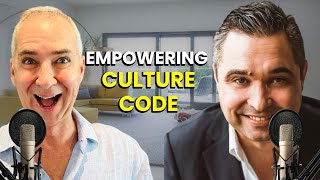
Podcast (YouTube) interview with Cameron Herold and Sean Seamer (recorded Feb 25, 2025). Seamer — Brainlabs' Global COO — describes his global career path, why Brainlabs is widely known (people + technology), the company's expansion priorities (client-driven growth into Latin America, Western Europe, then North Asia/Middle East), talent strategy (academy in Argentina to scale and train graduates; ~160 people there by year-end), scale (~1,100 employees globally), engineering capability (nearly 100 engineers/developers), and views on AI (AI raises the baseline but human talent and culture are required to reach high performance).
Chapters
AI helps you raise the floor. Like it gets you a good baseline, but it's not at the point now where it's making you great. And we're focused on high performance. What AI does help with is it certainly gets you to an average position more quickly, but we still need our people, smart people, good culture to get to that next step.
Our guest today is Brainlab Digital's global COO, Sean Seymour. Sean has over 20 years of global media experience and we just had an amazingly fun conversation. Originally from New Zealand, he's held digital and growth positions in the us, uk, Asia and in Australia and New Zealand. As a digital native, he's rounded his global experience with CEO roles in market leading media agencies, sport and broadcasting organizations. And he's got a unique experience that he's tasked with ensuring that the high performance philosophy and the culture at Brain Labs is being delivered on around the globe. He's also got some really unique insights around growing people and, and their talent acquisition and also their talent development. He's going to talk a little bit about that on the episode. He is also leading global operations at Brain Labs and is responsible for expanding their footprint on both organic and acquisitions. Again, great conversation, great insights. We'll see you on the inside. So, Sean, welcome to the Second In Command podcast.
Thanks for having me.
Yeah, I'm looking forward to this. First off, I'm over in Australia right now, so I'm about as close to New Zealand as I'm going to get talking to a Kiwi who's in London. Um, but I was just, just saying to someone the other day, people always mistake me for American and I'm sure you always get mistaken for an Aussie and I'm that proud Canadian. I really love New Zealand. It's just one of those real magical countries. And so I kind of fanboy on anybody that I ever meet who's from New Zealand and just say that you guys have crushed it. So it's an amazing country, amazing people. But you escaped or when did you leave? Why'd you leave?
Yeah, I think a lot of Kiwis have a predisposition for getting out and seeing the big, big, bad, wide world because we are a long way away from many places other than Australia. Yeah, it's a cultural thing really. That said, you know, a lot of people love staying there and build amazing lives. In New Zealand, I just had the itch to hit the road, I guess.
So you're based in the UK now, you've also worked in the US as well. Can you give us a Little bit of your kind of growth trajectory to get to where you are today?
Yeah, I'm actually in the US Now.
Okay.
Growth trajectory. It's a very long story. I'm not sure you're going to have time for it. But the long story short is I left New Zealand, went to San Francisco, did a couple of years in San Francisco, then went to London, five years in London, then went to Singapore, seven years in Singapore, went back to New Zealand for a year, then over to Australia, did six, almost seven years in Australia, and then moved back to the US about three years ago. So essentially completing a. A lap of the planet.
That's a pretty amazing lap. My, My youngest son is on an exchange right now in Singapore from Montreal and loving it over there. What do you think you pull from some of that global experience that is. Is helping? And we'll talk about Brain Labs in a second. But a leadership perspective and from, you know, running a more global business perspective, what have you pulled from living and working these different countries that, that you kind of leverage today?
Yeah, I think there's a couple of things. Obviously, I've had to rebuild or build networks quite quickly. You know, I've looked at it as a disadvantage in so many ways in that I've got to a market, spent a number of years there, built a network, and then I've moved on. But actually, the further I've got along in life and the more that people move around, it's nice to have a global network. If someone needs something in China or someone needs something in Australia or us, it's nice to be able to pick up the phone.
Do you have a preference for where you're going to end up?
No, I think my wife and I are starting to slow down a little bit now. Two kids definitely slow you down. The US Is a good place to be right now. I mean, economically, no point getting into politics, but economically it's a great place to be, be the time zone, the eastern time zone is great for working in a global role. So we're happy here. We're settled here and enjoying it.
Nice. Yeah, I've been. I've been a nomad for the last 54 months. My wife and I have been traveling full time, sold everything in North America and we're, we're speeding up our travel. So my kids are a little older than yours. So talk us about Brain Labs. What's your organization do? Why is the buzz so strong right now? I was just speaking to a. A big SEO agency in California this morning, and of course they knew of you. I talked to another entrepreneur in Sydney about two days ago in the marketing space. He knew of you. Why does everybody know of Brain Labs? What's going on?
Well, look, I think it's the foundation, two foundations that you would want from a media agency such as us is, you know, we've got great people and great technology. And, you know, Dan, the founder's done a fantastic job of bringing together the right people globally to work with him to help fulfill his vision, to expand on that vision. And because of the people and because of the work that we're doing for our clients, the news is traveling. So that's great to hear from you. Actually.
Yeah, it was pretty interesting because I just kind of floated it out there for fun and both of them knew. And it was a very visceral reaction too. It was very positive. Almost like your brand and your logo and your marketing. It's carrying over to the messaging or to what people are saying was when Dan started the organization, was it originally going to be a platform play? Was it going to be a rollup, or was it just more of a digital marketing agency? And then he started to grow into that. Can you walk us through what you know from that early days?
Yeah, look, I think, you know, I don't hate speaking for founders in particular, but, you know, if you ask that question to Dan, I think it's evolved for him over time. I think the sense of identity, what's important to him, the importance of independence, the importance of him being able to drive his vision through, retaining control, has been really important to him as any person that founds a business in this industry, whether it's a SaaS play or pure marketing services options for acquisition, partnership, mergers, they come to you in many different, various forms. And Dan, I think, has made the right decision to stay independent, to stay along with his management team as the masters of our own destiny in many ways.
And you're doing some acquisitions and rolling up this industry too, aren't you?
Yeah, look, we've got global ambitions and we're certainly not shy about it. And that's probably why you're hearing about us in different markets. Look, I think we are looking to expand globally. We will always look to expand the capability that we have in the markets in which we exist. But global expansion is key for being able to service global clients. Where and when we go, we're having to be opportunistic about it, to be honest with you. Cameron, we've got some ideas in terms of what we would like do in Western Europe expanding in Latin America, but it's about finding the right opportunity. We're not going to force something. So yeah, we're looking, looking primarily Latin America, Western Europe at the moment, looking to flesh out the capability that we have and build on the North American presence. I don't think you can ever be big enough in North America. So there's always a new capability you're looking for or expanding your footprint. And then after we've got that done, we'll start to look a little bit more at North Asia.
Yeah, there's a lot of areas and opportunities for expansion. I'm going to ask about that in a second. I coached a couple of companies years ago and they were two of the founding members of our CEO alliance. We have this global network of CEOs and the actual founding member is now the CEO of a company called Tinuity, which I'm sure you know, Tenuity, big digital firm. I coached them from 30 people up to 300 before they sold. And I was coaching Ben Kirchner, their original CEO and Zach Morrison, who's their current CEO but was coo, coached four of their team. And then also another group called Acceleration Partners which are the big performance agency, digital marketing agency. Matt Wool, their CEO was a CEO for, for their company. They were the two guys who helped me start the CEO alliance eight years ago. And I've watched them do a bit of a roll up in the space, but very much focused on North America for the most part. A little bit in Asia, little tiny bit in Europe. It's interesting and I love that you guys are focusing on Europe and Latin America. Why are you doing that so strategically? Is it because no one else is really rolling up that is everybody so myopic that they're focusing on the US and they forget that there's a lot of money and opportunity in the rest of the world and you guys see that or is it because you're European as your kind of genesis and it's more grow where you're planted?
Look, I think there's two things I would never regard a business by the way, that focuses on the us. There's endless opportunity here. So that's the first point that I'd make. Respect those two businesses that you mentioned and those individuals very much. But for us it's simply our clients are demanding it of us. And there is and I'm sure if you speak to some other owners and entrepreneurs of agencies that only operate in one market, it does start to limit your growth capabilities and ambitions to a certain extent. So you Like I say, you can have a great business just working in North America, don't get me wrong. But you know that. And then the experience that Dan's brought into the business, we've. We've got people like Steve Allen, our chairman, obviously, I've been around the planet as well. There's a few of us here that have done it before and we feel confident that working with Dan, the rest of the management team and our clients, that we can make it happen. The reality is there isn't a. We see an opportunity for a genuine alternative to the other global agencies that are typically tied into holdcos. So we see and believe we've got a competitive advantage if we're able to achieve that. And of course we will.
You will for sure. I'm curious. There's a market that you didn't mention I'm now a resident of and set up my company in the uae. I'm now. I got my golden visa in Dubai recently, but I've been a resident there for two years. That market is absolutely on fire. I'm in Australia where everybody is surfing and it feels like the biggest wave on the planet right now is in the Middle East. What's your expansion plans into the Middle East? You've got to have some.
Yeah, absolutely. I think it's just a sequence of priorities. The beauty of this business is that there's absolutely so much opportunity. But you know, it's that. That old saying, you can't boil the ocean. So we're just having to prioritize. It'll come down to, again, client demand and where we see we're able to build a competitive advantage. So nothing's off the table. So just because, I mean, didn't mention something doesn't mean we won't look at it. But like I say, it's getting down to priorities to make things happen.
Well, you've said something twice now that's intriguing. My dad's old rule in building his company was the answer is yes, what are you buying? And you've said it all comes down to client demand a couple of times, which makes me realize that you are just following the demand from the buzz and the brand that you're building. Is that true? When the clients are asking you to come, you're there?
Yeah. I think it's a balanced thing. There will be times where we look at a market or we look at a capability that we feel like we have to invest in it. Sure. But we know that we can't give up opportunities because we don't have geographic Presence. And that's not something that we want to do.
Yeah, so you'll grow into it. How do you say no? You talk about all these opportunities. You can't boil the ocean. I agree, it's got to be. It's really hard. But I mean, a leader has to say no more often than you say yes. How do you guys say no? How do you choose what the priorities are going to be? And. And then how do you kind of socialize that with the team when you're saying no to something that they might have been excited about?
To be honest with you, it's one of the things that attracted me the most. Well, a lot attracted me to the role and working with Dan. But there's two things I'd say. The first is the business values or has a value that focuses power. And we know and we live and breathe that. The other thing is we're really clear about where we want to be, how we're going to get there. We've got a plan, a global plan that rolls down to the markets, that rolls down to leadership, that rolls down to people. So everybody understands where we're going and why we're doing what we're doing as much as the what. That's not to say that we don't add things to that list, but for something to make that list to come on that list, it gets scrutinized a lot. Shifting priorities, making changes, still opportunistic. We're agile, we're a founder led business. But by the same token, saying no, as you said, is probably a lot harder, but also more important than saying yes.
Yeah, it was funny. I was just laughing and smiling. I remember back in the early days when I was the COO for 1, 800, got junk and we had a woman call us from Virginia beach and she wanted us to haul junk and she gave us the address and our calls and said, ma', am, we don't service that zip code. She goes, no, you're across the street. And we went, what's the address there? And she gave us the address. Yeah, that's a different zip code. She goes, that's crazy. Like you're literally across. We're like, yes, sorry, we're not opening the zip code yet. And we knew that if we did that street, we'd have to do 10 streets over, we'd have to do one city over. So it was just like, it was a hard no until it became a yes. And she thought we were nuts. But, you know, focus, faith and effort, right? It keeps you there. You just said something about one of the things, why you were excited for joining the company. What was it about Brain Labs that attracted you and then what was it about you that attracted Dan to bring you in as coo?
Yes, I think that the first question is certainly easier to answer than the second question, of course. But for me it was interesting in that I'd spent a significant amount of my career working in agencies, media agencies. I'd worked around the world. I then left, worked under different investment structures with private equity, got some great experience in sport in Australia, then worked in a broadcasting business here in the US and worked with a friend of mine, but someone that had founded that business as well, and then enjoyed the, enjoyed the pressure, but also the privilege of working with a founder. So that was key for me. The ability to bring my global experience and see this as somewhat of the culmination of everything that I'd done prior was obviously a big draw card for me. The rest of the people that I met and that I discussed the business understood the values, the value alignment that I had both personally with Dan and the rest of the business as well. So you do your dd, but the reality is life comes down to value alignment really for me, and success, particularly in a fast paced, stressful environment where you're trying to grow and you've got big ambitions, getting value alignment's key. And it doesn't really matter if we were making biscuits or whatever. If I can find those types of people that energize me, then I'm attracted to it. It was just fortunate that it happened to be in a business where I had a fair amount of experience.
Okay.
You know, maybe that's why Dan hired me too. I dunno.
But yeah, when you just rattled off some of what you've touched on and where you've been able to work and it was kind of a bit of an odg shucks bio. I understand why he brought you in for sure, but you also mentioned, and you said it about six or seven times about core values and values alignment. So what are the core values of the organization for Brain Labs and, and what was it about them that most attracted you?
Look, I think that, you know, we can. I don't want to rattle off all of the values and talk about the value, but I, I want to talk about it in the context of why I think they're important and, and what I think makes the culture code here different to other places that I've been. And it goes back to this concept of a founder led business versus I always say to Dan, anyone can be a CEO, but there is the burden of the founder that makes life both interesting and difficult. But he had a really clear idea about how he wanted the culture of this business to be. It's the business that he founded. He has a culture co, he recruits for it, you know, so interestingly enough, prior, well, going through the recruitment process and the interviews and chatting to Dan and getting to know him, it became clear to me that once I'd seen the culture code further down the process, that's why he was asking those questions, you know, so it's not just something, you know, there's no stickers slapped on the wall and it's not something that has to be formulaic or cheesy. It just is what it is. And there is, sure, a code, there are specific values, but it's a tangible culture. And for me, and the experience that I've had, tangible cultures, when you can feel it, that's when you know you're onto something pretty special.
I remember one of the days we had someone walk into our head office in Vancouver at 1-800-got junk and they stopped at the front door as they walked in and they, they went, oh my God, you can feel it like. And there was just this palpable buzz feeling that was just like it was. And we were a garbage company. We weren't like some high tech cool that was, it was just junk removal. Right. But yeah, it was the. And that, that was the year we ranked number two in Canada to work for. You could feel that culture. So what is the culture code then? A brain labs? Do you, can you kind of describe it or talk about it or, or what are the things that you look for when you're hiring people that, that have you say, yes, we know that they're the right fit.
Yeah, it's the way that I would describe it is there is still a real strong startup energy in this business, despite the scale that we're starting to accumulate. And we're very cognizant of the fact that we have to. And this is the delicate balance, right, between scale and being true to who you are or who you were and how it all started. Right. And that's one of the challenges that I have is making sure that we stay true as a business to what Dan had envisaged. But for us, really, I mean, fundamentally, I boil it down to high performance. Right. So we spend a lot of time studying what makes great sport teams great and then making sure that we're looking for recruiting for and Instilling a range of different values and behaviors underneath that. And for someone that came from New Zealand, someone that played rugby, someone that rode there is very much. It was something that really resonated with me. Understanding what makes a team great, how you recruit the right people, how you're recruiting for the team, not just the individual. It's not necessarily about having the best person in every different role. Well, it is having the best, but it's also the combination of those people and getting that cheesy old one plus one equals three. But it is true. And then it gets back to that very tangible sense of culture and actually being involved in something special.
It's funny, I started laughing when you talked about being a Kiwi in culture. And the reason I started laughing was I remembered my son Connor, who's now 21, when he was 5, was obsessed with the All Blacks. And I have a video. I'm going to send it to you later when we're done. I have a video of him at 5 years old doing the haka in front of all these. And it's. It's ridiculous to watch it. Like, he's got the intensity of these guys. I'm like, dude, you are five years old. Like, where is this coming from? Yeah, that culture code is really powerful. Jim Collins, when he wrote Good to Great, talked about getting the right people on the bus, the wrong people off the bus, and everybody in the right seats. How does brain labs work at getting people, you know, off the bus and getting people out of the organization? It's tough to do it and to do it in a way that it doesn't hurt culture, but it has to be done. Do you have systems around that?
Look, I think ultimately that people are going to self select that. Right. The priority really is about getting the right people in the business for us. So we're focused, I guess, on the positive of that. We've got an amazing academy that we've built down in Argentina. We've got great people that are moving down there. I think we're going to be up to about 160 people by the end of this year. So we're really focused on the positive end of talent development, bringing in great graduates. Particularly what we're focused on right now is from the UK and the US we're giving them a really positive experience, giving them a city to live in that would give them an urban experience that they simply couldn't afford if they were living in London or New York on a graduate salary. We're building a strong sense of Culture, we're training them. So we've got a great pipeline coming through the business. And I think the way that we look at it is that if we can do the right thing by people early in their careers, that will build loyalty. They will at that time decide whether we are for them or not. But that's our focus at the moment, bringing on great young people. And we could do a whole separate podcast, I think, around the academy in Argentina. But it's a unique approach to talent development. We're investing in it and we're starting to see the benefits. The graduate quality is unbelievable. And the quality of work that's coming out of there for people with just one or two years experience is mind blowing.
Okay, you just said something and I've never actually heard this before, but not only are you getting the right people on the bus, but you're deciding where to park the bus. You're cognizantly saying, let's get all these early stage junior people and push them down into Buenos Aires or into Argentina where the cost of living is lower, where they can have a better experience instead of trying to do that in the other more expensive cities. I don't think I've ever heard of a company doing that. I've heard of people trying to hire offshore and hire in different markets, but not to cognizantly move their pipeline of talent there.
Yes. So if you think about it, the premise is a, it's hard to attract and retain graduates. Point one, because they have so much opportunity. Right. Second thing is even going to some of the best blue chip Fortune 100, let alone 500 businesses. Pretty difficult to afford living in Manhattan or London. Totally. So these really talented young people with bright futures get to go to Buenos Aires, they can eat at a Michelin star restaurant, they can live in the best part of town, they're not having to work remotely, they've got a sense of camaraderie, they've got team, they got culture, and they're getting trained by our best people from around the world. It's literally the best start you could get in this industry.
That's amazing. Yeah, my, my full stack marketing manager is actually based in Buenos Aires. I get it. Like it's, it's a smart, it's a really smart move. You talked, you've mentioned a couple times, you know, founder led company. When a founder brings in someone from the outside, that changes the culture or can change the culture. What do you think that brain labs did well with bringing you into the organization when you are, you know, how many employees now? About 900, 800?
No, we're knocking on 1100 now.
So 1100 employees. You know, you come into the organization in the last year, there were a lot of people already there and you're coming in at the most, you know, the most or one of the most senior roles in the organization. How did they do that? Well. How did you do that? Well, to not upset people, to not frustrate them, to, to, you know, get them to be a part of the decision making, to bring you. Can you walk us through some of that?
Yeah, look, I think I've had a fair bit of experience coming into new roles in different cultures. You asked me about what have I learned from working in all those different, different countries around the world. I think there's an element of cultural sensitivity that I've picked up along the way. But Dan and I made a really conscious decision that we weren't going to write a job description, we weren't going to write a 90 day plan. It was about me getting in, me just listening. It's that old saying, you've got two ears and one mouth. And I really focused trying to build relationships with, with the people that were in the business already, trying to understand what made them tick, figuring out how I could help them. Working with Dan to bridge any gaps that he felt like he had with different teams. I mean we operate in all the time zones whilst we have global ambitions and we will continue to expand. It's already a relatively complex day following the sun. So it was really about coming with no preconceived notions, no set job description. Let's just get in and see how this goes. Listen, build relationships and then find areas to add value instead of wading in with the size 12 boots or whatever that saying is.
Yeah, I've always said that, you know, in the first 30 days the, the leader coming in should actually make zero decisions. It just meet everybody, really learn the business. Month two, it's kind of test a lot of your hypotheses on stuff you want to do in month three, put some of the easy ones in place like the low hanging fr. Low pain in the ass factor decisions. Did you approach it in a similar way that you waited some time before you did some stuff or were there some big decisions that had to be made early?
No, look, there were a couple of times with Dan and the chairman had said to me, Sean, what's your point of view on this? But you know, businesses take a while to reveal themselves to you. I remember years ago when I first Moved to Singapore. My boss at the time said to me, just take your time. It's going to take you a year to figure this out. You know, this is a complex region. And I said, no, 30 days. 30 days. Well, he was bang on. I got there quicker than a year. But it. But it does take time. The other thing I would say is that Dan's built such a good culture that it was not like people weren't welcoming anyway. Right. They're such nice people here. And they were just, it seemed, and it still seems that they were just happy to have me. So they were welcoming. I tried to listen and understand and have empathy for where they were and just took my time to formulate a thesis about where to add value.
Okay, so now that you're there, you're onboarded, you're clearly kind of getting up to speed or right up to speed. Now, what's the expansion plans for Brain Labs? Where are you taking the organization from here?
We've talked about the talent development, we've talked a little bit about our geographic ambitions. Latin America, Western Europe, and then as we go further into Asia, Middle East. I won't forget it next time. But really, for us, it's product evolution. We have a vibrant industry. We realize that our services, our products, what clients want, what they need changes and evolves over time. So we're constantly investing and refreshing. And to be honest with you, that was one of the things that attracted me to this business over any other. I mean, I didn't ever think I'd necessarily come back into the industry. After I'd left to go into sport, after I'd gone into broadcasting, I thought, well, keep doing something adjacent, keep doing something different. But what's really great about this business is We've got nearly 100 engineers and developers that are building and developing what our people need and what our clients need. And if we're all honest with ourselves, well, I can be honest on behalf of everybody. Not every agency in this planet or in the US Is the same. A lot of it is vaporware. Right. But it's tangible here. And I think that sets us up to be brave and do some great things in the future. We'll be rolling out and currently working on an updated proposition that has a really strong point of view on data, on trading, and we're excited to get that out. I don't want to. Don't want to come out too early, but I think, as you said at the start, people are talking about us. I think a lot more people will be talking about Us, once we start to come out with some of these new things that Dan's been working on. And to be honest with you, my being here has allowed Dan to get back and focus on that stuff that he's so passionate about and that he has such a clear vision about that that he hasn't been able to do because he's had so much on his plate, then I'll consider my short time here a success already.
I've got a question about just the industry itself, about the marketing. AI is clearly disrupting the entire world. The entire way that we do business. It's got to be super exciting and also super terrifying for a marketing agency because AI is literally the spear. The tip of the spear is really, it seems like that's where it's going. What's the thoughts for Brain Labs around leveraging AI for clients? Does it make it better? Does it make it easier? Does it make it more profitable? Does it give you more products? Are there threats? Can you talk to us about kind of the swat around AI?
Yeah, look, I think, I hate to oversimplify things, but maybe it's my kiwi nature. I think AI helps you raise the floor. Like, it gets you a good baseline, but it's not at the point now where it's making you great and we're focused on high performance. So, you know, you mentioned good to great, but really I think what AI does help with is it certainly gets you to an average position more quickly, but we still need our people, smart people, good culture to get to that next step. And there will always be clients and businesses that need people or have a desire for great. Not just the average, not just good. Now, AI may get there in certain areas of the business, but I think where we are, we're uniquely positioned in that we're quite agnostic as it relates to artificial intelligence. We're not putting all of our eggs in one basket. We're not foolish enough to think that we can compete with the likes of a Google. So we'll remain agnostic. We will make sure that we're leveraging whatever intelligence best suits our clients. The right combination between human intelligence and artificial intelligence for given the situation, I love that.
What are your thoughts around the people development? I mean, clearly the idea of building this kind of like university kind of environment in Argentina and developing people there is massive. What about the direct reports that you work with day to day, like your direct reports, and maybe their team, like the two layers below you? I've always believed that a leader's core job is to grow people. Do you have any thoughts around how you're growing your people?
Yeah, look, I see that they like I'm fortunate enough now. Maybe I'm starting to sound a little bit old, but I feel like I've accumulated some experience to be able to add different things in different ways for people. I mean, our leaders and the regions are all amazing, brilliant people with different skill sets. And they are. They're amazing. So, you know what I'm trying to help them with is that last 10%. Have you thought about this? Have you looked at this way? I don't micromanage people. I make sure that they understand that I'm in here of service to them, not the other way around. I don't like them having to prepare documents for me. Adam, who runs our name of business, will tell you that. But I'm here to help them because the success of our business is based on the success of our markets. And that's been my approach. And I hope that they see value in my approach and I am. An extra set of hands or extra set of eyes is for those folks.
All right, I want you to go back and give the 21 year old Sean some advice. If you were going back to, you know, my son Connor's age, you're kind of getting started in your career. What advice would you give the younger you that you know to be true today, but you wish you'd known when you were 21 or 22?
Look, I have absolutely no regrets. There are times where I felt like I wish I'd slowed down a little bit. And my chairman, who or our chairman that knows me, Steve Allen, knows me very well, would probably have said the same thing because I was always bugging him for what next? What next? I want to move there. I want to do this. I feel like there are a couple of times where I probably could have stopped and smelled the roses for a little bit longer, but, man, that's really been quite picky. I've had a pretty good run at it.
It's still really good advice. Again, I referenced my son Connor on that to wrap with this, but he said that he's got to let European Conor out to play a little bit more often because he can tend to be very serious and very focused. So he bought, he and I, hello Kitty wallets to carry for 12 months to remind ourselves to not take ourselves so seriously and have a good time. And he goes, I know it's ridiculous. I know we're going to get teased. But he goes, if you and I have to pull out a hello Kitty wallet every day for 12 months. We'll have a little bit of fun along the journey. I'm like, dude, that's pretty wise advice from a 21 year old kid.
Well, it's some of the best advice I ever got was take the job seriously, but don't take yourself seriously.
Right? Yeah, Grandma. Grandma was right. Sean, thank you so much for sharing with us on the Second In Command podcast. Really appreciate the time today.
Thanks for having me.
That was great.
More from Cameron





Flutterwave Former Global Head of Operations Awa Kone | When Growth Outruns Operations (Podcast 611)





