Unlock Joy: Enrich Your Life Beyond Business
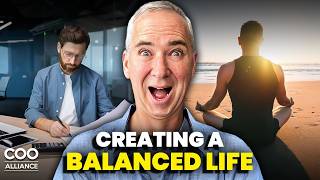
Cameron Herold, who scaled 1-800-GOT-JUNK and coached hundreds of CEOs, argues that entrepreneurs need hobbies, travel, and family alongside business. His core lesson: hire a strong second-in-command to handle operations while you lead vision, measure employee satisfaction above customer satisfaction, and treat your ADD or dyslexia as a strength, not a flaw.
Questions this video answers
78 houses in four months.
~9,000 hires per year, ~800 franchisees, ~8,000 painters annually, and $64 million in house painting in the summer months.
From 7 locations to 65 locations.
Grew from $2 million to $106 million in six years; later cited as a $750 million top-line revenue company.
Every employee receives five weeks paid vacation (in addition to statutory holidays).
Chapters
If when I ever sold a company, I'm fine because I got 75 other hobbies I want to be spending time with. And I think more entrepreneurs need to remember that they need to have a better rounded life. The whole like, this is my hobby. Well then I don't want to hear about your hobby. Nobody wants to hear a lawyer talk about being a lawyer or a dentist talk about being a dentist or an accountant talk about being an accountant. So even if they love their industry, that's not your hobby. And I think entrepreneurs need to remember to reconnect with our hobbies, find new hobbies, do our own dream manager for ourselves, create our own bucket list. Share your bucket list. And then you can build your company, sell your company and you've got 75 other things that you're going to fill your time with. Because at the end of the day, we're going to all end up as kebabs. We're just going to end up dead as meat on a stick. I was actually raised to be an entrepreneur. My dad and grandparents were both entrepreneurs, both sets of grandparents. And they groomed my brother, my sister and myself to be entrepreneurs. When I was 20 years old, I owned my first real business. I had 12 full time employees and I was in the home services space. I was painting houses. And that first summer in four months, I painted 78 houses with my 12 employees. And I thought, well, I guess I have a house painting business. And I got to be a part of a group called College Pro Painters which went on to become the largest residential house painting company on the planet. It was a franchisor. I became part of the head office of the franchisor and was in charge of recruiting and hiring and training franchisees in my early 20s. So I was doing that at a young age in the home services space. Helped open up the west coast of the United States for College Pro. And when I left we were doing 9,000 hires a year, 800 franchisees and 8,000 painters every year. And then we do 64 million in house painting in the summer months. So I really cut my teeth in that space. Then I went on and did a auto body chain. I was a minority partner in what became Gerber Auto Collision in the US Is Boyd Auto Body in Canada. It's the largest collision repair chain in the world. We took that from seven locations to when I joined to 65 and then took the company public. I exited and was hired as president of a private currency company that we built and sold. Then I joined my best friend back in the Home services space. My parents were disappointed in me. I was going from building a technology company that we'd sold to becoming a junk man. And I joined my best friend Brian to take a company called the Rubbish Boys and professionalize the brand and turn them into what is now known as 1-800-got junk. We went from 2 million to 106 million in revenue in six years. 3,000 employees, system wide, 330 cities. It's now a 750 million dollar top line revenue company. I left there 17 years ago, so I'd done those things before I turned 45. And now for the last 17 or 42. Last 17 years I've been traveling all over the world and coaching CEOs of companies in 28 countries. A little bit of both. I started with the CEO and what we identified was the CEO needs to know what has to happen. The CEO has to know how to make it happen. It's almost like if you're building a home, the homeowner has to know what we want to build, the general contractor has to know how to build it. And I think for the longest time I was teaching the wrong people. I was teaching the CEO how, how to grow their company and often they would get it, but then they needed me to teach somebody else or they were frustrated with the implementation or the execution. Gino Wickman came out with that idea, the visionary and integrator. And it really illustrated or kind of highlighted the point that entrepreneurs have to know what has to happen and then the second in command and their leadership team have to be able to execute. So I started working closer with the coo. You and I are both friends with Joe Polish from the Genius Network. I was a member of that for eight years and I was sitting at one of his events one day and it dawned on me that there was really no connection network for second in command. There was lots of groups for entrepreneurs with Vistage and EO and franchisors and all kinds of places for entrepreneurs to share with each other. And then there were groups for finance people and marketers and everybody else. But there was no network for that second in command. So we started the COO alliance and we now have a global network of COOs from 17 countries that share resources and connections and competence with each other. I think people often put a title on something too early instead of identifying what do you need to get done, what are you willing to pay for that stuff to get done? And then what other kind of value do you want from the person who's doing that? Work. Do you want strategic insight? Do you want P and L responsibility? Do you want somebody with so much autonomy that they already know what to do? Or do you want to delegate to them and have them doing it? And based on those things, you can kind of put a title on it. I was sitting with the CEO of Sprint who I was coaching for 18 months, Marcelo Claret and his second command, Jamie Jones, sitting in Marcelo's office, the 82nd largest company in the United States. And he was asking me about people stuff, issues in the people side of the business. When CEOs of Sprint are still struggling with people issues. Well, of course a COO of a mid sized, couple hundred million dollar company is going to be struggling with areas too, right? So our job is to always grow people. The COO's job is to grow people too. And I always try to let them know that their to do list does not have their name on it. It's stuff that needs to get done. And their job is to delegate everything on their list to other people and spend their time growing those people skills and confidence and connections. But anytime a COO or a leader is physically doing work, whether it's replying to emails, prepping for a meeting, doing physical phone calls, any work that we're doing is delaying us from growing our team. And the mental block we often get stuck in is, well, I don't have anybody to delegate it to. No, you just don't have the skills around delegation yet. You probably don't have good coaching skills, you're probably not skilled up on situational leadership, you're probably not great at running one on one meetings, but if we could give you the competence in those and the confidence to delegate more and grow people, you would. Entrepreneurs tend to be better at that. They already know that they suck at something, it's their company, so they can write the rules as long as they have the cash to cover it. They make that decision. COOs often get blocked in that space and it's our job as the CEO to help them unblock, right? To help free them up to do that stuff and let them know that the more you delegate and the more you grow people, the more indispensable you're becoming. It's not like you're going to be out of a job. We'll find more to delegate to you. We'll buy three more companies. The leader can't be the only one learning. When we built one, 800 got junk, I made sure that everyone on our leadership team had a formal mentor. And I made sure. Everyone on our leadership team was a part of an industry or a group growing their skills. I joined strategic coach in 2002, 23 years ago. I got into Strategic Coach for my first three years with them and I had the second in command at Starbucks mentoring me on a monthly basis and quarterly in person. So when you can get that kind of a focus around leadership now, not because someone's broken, but because we're going to continue to grow and we need to keep getting better. Like every year, this company is the biggest thing we've ever built and if we double next year, your skills have got to be double. So it's like the high performance athletes. But what happens in so many entrepreneurial companies is the entrepreneur learns, the entrepreneur reads books, the entrepreneur listens to podcasts, the entrepreneur has a coach and they forget about growing all their people. Any midsize or senior manager can only go through two doubles in the organization before the organization has outgrown their skills. So if you're a five million dollar company and you go to 10, that head of whatever can still be the head of whatever. When you get to 20, they can still be the head of whatever. When you get to 40, it's eight times bigger than when they started. They're probably out of a job unless they can continue to grow their skills and their confidence and their connections. But as leadership team members, we're often in the mid sized companies, we don't have that kind of track towards it or the culture internally feels like, oh, if I'm getting coached, I'm broken. No, every best athlete in the world has got a coach. Like they're still getting coached because everyone at the Olympics today has got a coach. Why do we have such a negative mentality around growth? Right. And I think you also dovetailed into one other really key point, which was hire people that are already self driven learners. Right. It's too hard to take somebody who doesn't like to learn and make them learn. So we need to actually front load that stuff and put it into our normal hiring and interviewing process and already look to hire people who learn. My 21 year old son right now is reading Think and Grow Rich for the third time and he's underlining it. He goes, I'm studying it. That's a self driven learner. So you got to look for all those people at any age and bring those people into the organization and then plug them into our learning track and then they'll devour the content we put in front of them. Often marketers or Entrepreneurs that aren't strong in marketing think that they need to get more of the clients they already have because our marketing is bringing us those people. Often our marketing is bringing us the wrong people. But we're marketing in a place where those people tend to be and if we would move our marketing or move our messaging to where our target market is. So it's all about understanding who is our target client. Our target client doesn't necessarily have to be who we have today. One of my big frustration points with Sprint was they kept saying that every year we kept getting lower and lower demographic people coming into our locations. And every year we kept getting all these people that are getting denied for loans. I'm like, it's because you're advertising on television. Anybody middle class and upper class left TV 20 years ago. It's like you're hitting people with the digital yellow pages. But they didn't realize that they were spending so much of their marketing on television ads. And all of their clients had moved to digital. So if they would start spending their marketing. Another example for you in the home services space, you probably know this because you're an entrepreneur and you're marketing and you're savvy. But if you're a, I don't know, like a landscaping company or a house painting company or, you know, even a roofing company. Who's making the decision? Every guy thinks he's making the decision, but the housewife is saying, who's coming onto my property? The housewife is saying, I don't care how strong their skills are, I don't want those people coming onto my property. Which means your branding, your website, your marketing, your messaging should all be done by female copywriters, female marketers, female branding. Why is our marketing dedicated to a male? Written by guys copy from guys, when guys aren't our audience? Men are not hairy versions of women. So when I walked into 1-800-got-JUNK, I'd learned this at college. Pro Painters. Our job is to connect with the wife because she's making the decision, but let the husband pretend he's making the decision. At 1-800-got-JUNK, we would go and flirt with the housewife. We'd make a big deal about how it's so easy to get rid of all the junk your lazy husband can't get rid of. And she'd laugh about it. Meanwhile, the guy's like, yeah, I got the house cleaned. You did all. We came in and cleaned your house. You just pointed at it. We did all the work, but we made sure that we taught our. So the guys that we hired to do junk removal weren't garbage men. We hired fraternity boys and we put them in a golf shirt and we trained them how to build a connection with a housewife and talk about our kids and her garden and the first picture you see in the hallway, we would train them around that stuff. And if you go to our websites today, like 1-800-GOT Junk or Shack Shine or like it's so clearly focused on the female demographic. Oh, and here's the last point on that. Not only is she making her decision at her house, she's making her parents decision on their home and she's making his parents decision on their home because she's taking care of all the seniors in the family. She's making 5, 6 of all of the adult buying decisions over 40 years old are being made by women. My number one metric for every company I've ever built is my employee net promoter score. The second most important metric is my customer net promoter score. My third is my profit in dollars. My fourth is revenue. And I can predict how fast a company can scale by how fast I can grow their employee net promoter score. If you can get an employee NPS over positive 90%, it's game over, you win. But most people are so focused on the customer or profit or growth that our employees feel not loved and they feel burned out. What most entrepreneurs don't get is that if we care about our employees, if we care about their personal lives, if we about care, care about their dreams, if we care about their insecurities, if we care so much about them as humans, more than anyone in their life cares about them as humans, they'll care about our company way more than anything else. But as soon as we focus on the company, they just don't feel as loved. The second part of that is an entrepreneur like you who drives, drives, drives. There's only two of you. You either drive, drive, drive, and you burn everybody out, or you drive, drive, drive, and you say thank you and you praise people and you celebrate the wins and you celebrate the course values. And you saw eight projects getting completed. And that's the key is to always be grateful and celebrate and thanks and do shout outs. Very similar to what we do with our spouse. You can't get through one fight with your spouse unless you've got months of I love you's and praise and thank you and cuddle time. And it's all that, the little things that add up that allow us to get through that next big fight with our Employees, the fight is another goal, another project. Fix this, move that, go faster. But if we build off of thank you and great job and you did an awesome job living this and celebrating the wins in front of everybody. If entrepreneurs would spend more time on that, they'd win. There's only been four, maybe now five CEOs of Starbucks in 45 years, 50 years. One of the days. Howard Behar was the CEO at the time. And Howard would spend two hours every single Friday handwriting thank you notes to people in stores inside the 13,000 stores at Star Starbucks. My mentor is being groomed as the COO at Starbucks, and he showed me their system. Every Friday, Howard's desk would have a stack of thank you notes, a stack of envelopes, and a spreadsheet. And the spreadsheet would say, store number 207, Frappuccino Record, Kansas City. He'd be like, hey, store number 207, congrats on setting the Frappuccino record in Kansas City. Looking forward to seeing you when I'm there this August. Howard. Boom. Kelly, congrats on your seventh year. So he didn't know who to send anything to, but the system showed him. But this is the CEO of one of the biggest companies in the world spending two hours every Friday handwriting thank you notes. Entrepreneurs that say thank you to somebody once a quarter are missing the point, as our COOs, right, COOs have to over praise and over show. It's the whole one minute Manager by Ken Blanchard. We need to build the systems in place to ensure that so that we don't forget when we're busy and when we're growing. So if an assistant can help get a bunch of stuff off your plate, that's minimum wage job stuff, stuff you're not good at, stuff that drains you of energy to free you up as a leader to go spend time with people and say thank you and praise them. Your job just got super easy and you're growing the confidence and skills of your people. That's the stuff that really moves the business forward. Not all the busy work that we're doing. Jim Collins talks about working on the critical few things versus the important many. The critical few things are praising people, growing people, showing gratitude, communicating the vision and the culture, and then letting them do their job. So that's a confidence thing and an imposter syndrome thing that we can work with our leadership team on to help them feel good about that. But the second part of that is often what happens is they build a permissive culture by accident that they're not anticipating. And they create this environment where people feel like they have to come to them for opinions or for ideas. Give an example. I was talking to our coaching CEO the other day and he said, you know, my leadership team, this one woman keeps coming to me every week saying, do you know how to do this? I keep trying to have an open door policy for her and help her. I'm like, well, what do you say? I walk her through stuff. I'm like, stop. What she needs is help on thinking. She doesn't need the answer that you're going to give her what she needs from you the next time she comes and says, hey, do you have two minutes? I have a question. You go, actually I have open hours, like an hour at 3 o' clock and another hour tomorrow at 2. Why don't you come back during that time? When she comes back at three in your office hours, you say, so what do you want to think about? Well, I'm thinking about this. What do you think? Well, what do you think? I haven't thought about it. Go away and think about it. Come back and tell me what you thought. And then when she comes back and says what you thought, just say, well then go do it. Or just say, as long as it lives within the core values, it lives within your job description. You're willing to live by the sword and die with the sword and you've got budgetary approval for it. Go do it. But don't ask me, but our job as the leaders is to grow their skills and confidence to do that and stop giving them the answers, stop even giving them the time and stop doing their thinking for them. The other danger part is when the CEO or the leader speaks first. I always like the leader to speak last. The most senior person in the room should always speak last because we sway their opinions and ideas. Our job is to get them to share their ideas and so that we can go. That's amazing. Which raises their confidence. Getting them to share ideas gives them the ability to be strategic and to think gives them the confidence. And then when we are ready to speak, we go, actually, you know what? I have three things to share. Kelly got one, Mark got one. The other one's kind of stupid based on what I hear. I got nothing. By the way, every early stage manager or mid level manager, like new managers or director level, their solution to every problem tends to be hire more people. Parkinson's law says that work expands to fill the space that we give it. No budget, they'll spend more. And if the ability to hire People, they won't think critically or think differently or say no. So the key is to train managers on how to say no or how to say not now, or how to optimize the work or how to automate the work. But the budget is no for hiring. And if you're going to hire somebody for like 80 grand a year or 100 grand a year, no. 1, you for sure would never go and spend 80 grand on a marketing decision with a one minute decision. Why would anybody allow us to make an $80,000 hiring decision with a one minute decision? I want you better pitch me for 30 minutes on the upside, on the cost, on what the results are going to be, on how much gross margin this person is going to generate, on how much autonomy, where you're going to get them. Like you better sell me for 30 minutes on making an $80,000 decision. And if you haven't done your prep on that, the answer is no. Most managers won't even try to pitch me on hiring somebody until they absolutely need it and they can prove the case. But that's a skill set that we need to build. Inside of our company is the ability to say no, the ability to prove roi. It's kind of like Dan Sullivan's impact filter, but I add a layer to that which is what's the roi? What are the three inputs in terms of people, cost and money? And how does it grow? Our employee net promoter score, customer net promoter score, profit or revenue. Because otherwise every idea sounds like a good idea. People don't fail. Systems fail. So when we have a problem, go. Great, thanks for showing me of the problem. Thanks for having the confidence to come in and say we have a problem and know you're not going to get for it. What's the missing system or broken system that we can fix or put in place to ensure this never happens again? We're good to go, right? And sometimes it could be a hiring system. You could all go all the way back first principles. And yeah, maybe we hired the wrong person because they just didn't follow the systems that were clearly documented and amazing. Most good COOs presidents aren't good visionary culture people. They can execute on that plan. The one I've seen do it best though is Morten Lund, who is one of the founders of Skype and the original investor in Skype. He's got 86 companies up and running and all he does is start the company, put the team in plan and money in place and then he walks away with whatever equity he's got at that point, but he's literally kind of walking away from the business completely. I, I think if you care about it at all, I would hire a president COO versus appointing a CEO because as soon as you appoint CEO, you really gotta stay as chairman and board role and stay out of the day to day, stay out of the vision. You can't get involved and most aren't willing to do that. Too many North American entrepreneurs don't have any hobbies and connection with their spouse and activities with their kids and bucket lists. And they've lost sight of the stuff that matters. I got news for everybody. None of this sh t matters. Like, we just lost a good friend of ours, John Rulin, and he's got four young girls under 15 years old and a wife and he's got hobbies and passions and friends. John was building a great company, but it wasn't his reason for being. I don't know what Gino's hobbies were. I know what Gino's obsession was, eos. But. And I'm not speaking to exactly what it was, but I can tell you for sure. In the last three years, my wife and I have been to 54 countries. We sold our home in Scottsdale, in Arcadia, sold our home in Canada, sold our cars, sold all of our furniture. We've been chasing down bucket list after bucket list. And if when I ever sold a company, I'm fine because I got 75 other hobbies I want to be spending time with. And I think more entrepreneurs need to remember that they need to have a better rounded life. The whole like, this is my hobby. Well then I don't want to hear about your hobby. Nobody wants to hear a lawyer talk about being a lawyer or a dentist talk about being a dentist or an accountant talk about being an accountant. So even if they love their industry, that's not your hobby. And I think entrepreneurs need to remember to reconnect with our hobbies, find new hobbies, do our own dream manager for ourselves, create our own bucket list. Share your bucket list and then you can build your company, sell your company and you've got 75 other things that you're going to fill your time with. Because at the end of the day, we're going to all end up as kebabs. We're just going to end up dead as meat on a stick. I've spent 54 countries over three years spending time with billionaires. In other countries, I sat with Richard Branson's son for two and a half days sitting on a boat just us Sitting with his wife, sitting, chatting about kids. Sam Branson never spoke about business at all. I'm sitting with the guys that build the Six Senses resorts in Europe. They don't talk about business, they talk about their hobbies. There's so much more rounded and stuff. I'm obsessed with business too. I listen to business podcasts all the time. When I'm in the gym, when I'm going for walks, when I'm hiking, I'm listening to my first million or the all in Summit. I'm always learning, but I'm also taking courses around sexuality, around polarity, around spirituality, around, you know, self growth, on psychedelics. Like, I'm like Joe Polish. I love all these other interests and I want to grow great companies. And I think we'll build better companies if we have hobbies and other interests because then we can get our employees to have hobbies and other interests. We can have this better, well rounded culture of people that have hobbies and interests and we can still drive hard on goals. But to think that this like the only people that this is the most important thing for is the entrepreneur. It's not the other thousands or hundreds or dozens of employees that work for us. It never will be. There's something pretty cool about being able to build a great company and have hobbies. And I think if we can do that, we'll build better teams and better people and better culture. I think we can get both, I guess is where I'm going. We can still be obsessed with business and want to talk about it, but there is, there's a whole more rounded side of how we're going to impact our people and our teams if we do it, you know, like the dream manager talks about, right. It's a superpower for entrepreneurs. I'm clinically diagnosed as 17 of the 18. And clinically I needed to be diagnosed. I was, I was also 11 for 11 on bipolar disorder. And then I have a dyslexia issue called dyscalculia where I flip all my numbers around. And I was given an award by the International Dyslexia association as an executor, a leader who has severe learning disabilities. Even talking about it, I struggle with it all again. And they gave it to one person a year. Bruce Jenner got it one year. Barbara Corcoran got it one year. I got it in 2017. So I've overcome these disabilities and disorders and one of the ways I overcame them was realizing they're a superpower, they're not a disorder. My ADD as an Entrepreneur would prevent me from being a good lawyer or engineer or a doctor or a teacher. But I didn't want to do that. As an entrepreneur, I see what's happening with the market, the economy, the time, my customers, the website, the data points. Stuff jumps off the spreadsheet and it's overwhelming because it's everywhere that I need to delegate it and pass it to other people. But I don't want to not see all that stuff. The key is how can I organize the stuff, how can I say no to the non critical stuff, how can I say no to the busy work that I notice all the time? Right, so it's learning systems, but it's also don't medicate yourself to get rid of your superpowers. Just actually getting eight hours of sleep between 10 o' clock at night and eight in the morning, like nine hours in bed, eight hours of proper sleep and actually getting some exercise, like not even going to the gym and cranking for. But like those two little things will actually massively counter the bad or negative sides of ADD or adhd. You know what else they do in Italy and Spain and Portugal and Europe? They don't work all night long. They finish work and they go spend time with friends, they have lunch with friends, they don't eat lunch at their desk, they have dinner with friends, they hang out on weekends with friends. They have hobbies, they have activities. You ask anyone in Europe, what do you do? And they'll be like, oh, I like hiking or I'm surfing. You'll be like, oh no, I meant to make money. They're like, oh, they don't have the what do you do Question. It doesn't even exist over in Europe because they don't give what we do. Let's do 1-800-got junk as an example. North American company, Vancouver based, 750 million in revenue this year. We give every single employee five weeks paid vacation. That includes their sick time, plus all the government statutory holidays, which are like the 12 holidays you normally get, like Christmas and Easter and whatever, Memorial Day and all that crap. So, so they get five weeks paid vacation. Brian sent me a note at the beginning of this summer, the CEO and he goes, oh, I'm giving them all Friday afternoons off. I'm like, are you out of your mind? He goes, nobody wants to work Friday afternoon anyway. So all summer we're giving them Friday afternoon. I'm like, that's 13 Fridays half days. That's six and a half more days on top of the five weeks. He goes, yeah, they Love us. I'm like, you're right. And no one wants to do work at that time anyway. So he has a super happy employee base. They're all raving fans. Nobody quits. They're all super happy. They get their done so they can get out of the office or they figure out how to delegate. They set better expectations with customers. Why is that a bad thing? And now you're hiring all the best employees away from your competitors because they're only given two weeks vacation. You win. The government doesn't prevent us from running a better place and attracting better employees. And as soon as we flip that model, we win. I rarely use them as part of the interviewing process unless the interviewing process is really dialed around behavioral and strengths. I use the top grading system from Brad and Jeff Smart out of the book, who are top grading. So it's a really tightly dialed interviewing system. So if you follow those systems, then you can bring in some kind of predictive personality profile into the interview late stage. But don't use it as your reason for making a decision. Learn it for understanding more and for being able to interview deeper. Most companies think that it's like, oh, the profile said this so we'll hire them. I can show you lots of data points. When it's wrong, use the profile as a way to dig deeper and interview harder and ask better questions and do tighter reference checks around the personnel profile. Then it's good. The second time that I use personality profiles and I do one different one a year is with the leadership team. So as an example for you and your leadership team, this year I'd have everybody do Colby. Next year we'd have everyone do love languages like you. Just do a different personality profile every year of everyone on the leadership team to learn about each other more, to learn how to work with each other more, to learn about ourselves more. It's all about learning and building as leadership teams. We go through this forming, storming, norming, performing model. Another personality profile every year helps you go through to the next forming stage, the next performing stage. It's interesting, I had that discussion with Clayton Mask, who's also from Arizona, the founder of infusionsoft. We were sitting at a lunch together one day and I asked him about his growth around people and he agreed his was double. He said they can only go through two doubles. And then Ben Horowitz, who wrote the hard thing about hard things, that a mid level manager can only go through one triple, they can't do the next triple. So you can go from 3 million to 9 million. But you can't go from 9 million to 81 million. Right. It's too substantially different. So that's about the same, though. It's about three doubles. What you have to do is have prediction around growth and then you have to think about the new skills that people are going to need to manage that level of growth. So if we're hiring more, so it's looking at what's your org chart look like in three years, what your org chart look like in two years, what's it look like in 12 months. Reverse engineering it all, Even your project plans, like you guys are going into planning September, October for next year. By the end of October, you should know what your plan is for the year, what your budget is, what your staffing plan is for the next 12 months. And then you can sit down and do a skill assessment and say, does our team have the skills and the confidence to do all those projects? Do they need a mentor to plug in? Do they need some consultants to help them? Do they need a course to go through? And then for us at the leadership team level, it's looking at what's on our plate every quarter and are we always getting up leveled around that? The danger about reading a new book or two books every week is we're often reading stuff that is different from what we're focusing on and if we can focus our learning around what we're working on now. So if you've got like a leadership team retreat in a month, you should be reading everything you can about leadership retreats. If you're getting ready to launch your marketing plan for the year, you should be reading everything you can about marketing plans. And then don't read about marketing for another three or four months. I think leaders do a bad job with applying their learning to what they're focusing on right now. There's so much distraction and so much stuff coming at us. Even if it's not noise, let's say it's all really good quality stuff coming at us. It's not necessarily relevant to the critical few things we need to be working on right now. And it's almost like if we were building a home. If you're building your dream home and you keep coming in, talking to the contractor about putting in the cabinets and putting in the beautiful wolf stove and where the. He's like, dude, we're pouring the foundation. You're like, hey, I don't want to talk about the counters. No, we're just putting up the framing. Yeah, I want to talk about the counters. We haven't even put in the electrical and the plumbing yet. So there's a whole order of operations around what we need to focus on to build great companies, whether you're small, medium sized, or even enterprise level. And if you don't focus on those critical few things, the rest becomes noise and a distraction and frustration to our team. He was smart in giving you a system to keep all of your ideas. What drives most entrepreneurs crazy is. No, don't tell me your idea. They have to, because their hard drive's fault, their brain's like a hard drive. I there's no space to keep all those ideas. So we have to go, I love your idea. Let me put it here. Or even before I put it here, let me ask you five or six questions so I understand your idea even more and I love your idea. After those five questions, I'll put it here and we'll revisit it in a quarter. But it's, I get it, I like it, it's safe. And I even understand it more because you let me ask you five questions. For every entrepreneur, that system would be game changing. And then every quarter, go back and look at all the ideas and decide which ones to green light, which ones to continue on yellow and which ones to red light going. Yeah, it was a good idea last quarter, now we can kill it.
More from Cameron





Flutterwave Former Global Head of Operations Awa Kone | When Growth Outruns Operations (Podcast 611)





