What Billionaires Do To Stay Wealthy | Bryce Keffeler, Dew Wealth Management (Podcast 332)
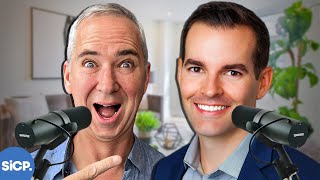
Podcast interview (Second in Command) with Bryce Keffler, Do Wealth Management senior advisor and COO-in-practice. Keffler explains family-office-style wealth management adapted for first-generation entrepreneurs (virtual family office), Do Wealth’s client profile and acquisition channels, its revenue model (fixed monthly consulting fees plus optional asset management), the company’s transition to an ESOP, and his COO role and operating approach (root-problem thinking, three-solution menus, culture fit). The conversation also covers personal background, Colby behavioral profile, and growth/marketing plans for 2024.
Questions this video answers
First-generation business owners with over $1,000,000 a year of take-home pay (profit or W2).
Approximately 85–90% of revenue.
Approximately 10–15% of revenue.
They charge about 30–40% of the market price (to cover costs).
Roughly 40% via organic acquisition through masterminds and ~60% via referrals from existing clients (with plans to add paid/warm outreach in 2024).
Chapters
This is how we like to approach with clients is come back with three potential solutions to every problem and then let the business owner make a decision because they make business decisions all day, every day. So every single decision should be framed up and here's the problem statement, here's solution one, solution to solution three. Here's the pros, the cons, and the projected ROI of every single solution. Now you're the business owner. You can make a decision from one of these three choices because you're used to making business decisions all day, every day and, and then once you make that decision, we will go drive that through implementation.
Our guest today is COO alliance member and Do Wealth Management senior advisor, Bryce Keffler. Bryce is leading the build out and scaling of both the advisory and investment consulting arms of Do Wealth. He dives in deep today on how they use root problem thinking to organize all the ideas of their very entrepreneurial CEO Jim do, who is a longtime member of the Genius Network and strategic coach. Bryce dives into how they turned the company into an esop. And we also talked about his strong culture fit, having come from an entrepreneurial family where they did book reports over dinner, and his corporate background and how that has really helped him get in sync with the team at Do Wealth. You'll love this episode. We'll see you on the inside and make sure you check this one out on our YouTube channel for the Second Command podcast as well. So, Bryce, welcome to the Second in Command podcast.
Thank you. Happy to be here, Cameron.
Yeah, I've been looking forward to this one for a while actually, and for a couple reasons. One, you're a COO alliance member and it's always great to have members of ours on the Second Command podcast. We've interviewed about 310 COOs now and we're also sharing all of our episodes on our Second Command podcast YouTube channel. So it's going to be great to learn from you and to have you on the show. And then secondly, you are the second in command of the company that runs my, I guess, family office. So you're helping to handle all of my, you know, know, wealth and investments and insurance and all that stuff for me. And you've also worked really hard to help me with my transition from the US Into Barbados and you're now going to be getting ready to help me with the final transition, hopefully into Dubai as well. So why don't we start with you explaining what a family office is and what the business of do wealth is all about.
Yeah, great question. So a family Office is really the billionaire's approach to managing their wealth. And there's debate amongst the billionaires of who started the first family office. But we're kind of thinking back to the dates of Jay Pierpont Morgan, you know the guy behind J.P. morgan, the Rockefellers. And what these billionaire families discovered is that instead of having these professionals not working together that are not all a players, they realize that they can effectively manage their wealth to the most. They're kind of the optimal approach is to bring all these people in house and working solely for the family, on payroll for the family. So think of having your attorney, your cpa, you're an investment advisor, your insurance agent, banker, all of these professionals are literally on the payroll of the family. So they're all working together, they're all a players and they're all working solely for your family and future generations. So that's the billionaires approach to wealth management. That's the family office. And at do wealth management we take that same structure that that's the big idea. But how do we take that billionaire approach to wealth management and take it down to lower middle market business owners? So we define our target demographic as first generation business owners doing over $1 million a year of take home pay. So whether that's profit to the business or W2, that is what our demographic, our client base looks like. And then we build a virtual family office. So we will help run the team of professionals around that entrepreneur. We'll supplement as necessary, hire fire as necessary, but we act as the CEO of the virtual family office for our entrepreneur clients.
Okay, I'm glad you clarified that you know what a family office was in the billionaire market. And then you took a few zeros off the end and explained why you could beat my family office and for others as well. You mentioned first generation entrepreneurs. Why is that? Because that was a very specific description of the kind of client that you work for. Why is that?
Yeah, we found over time that the first generation entrepreneur is the creator of the wealth. And because they are the creator of the wealth, their view on money and on spending money as necessary to elevate their game is oftentimes a little bit different than the second or third generation. Generally in the second or third generation they're taught more of frugality and conserving resources. Instead of expanding resources to increase the revenue or the size of the operation, they're more in preservation mode because the first generation generally teaches, hey, they've built something already. Amazing. And G2 and G3 is about don't Blow this. And so we found that just from a personality perspective, we love growth minded entrepreneurs who are willing to reinvest in their business, their sales, their employees. And not saying that G2 and G3 entrepreneurs don't do that, but oftentimes they're like I said, a little bit more of preservation mode, not so much in kind of the creation mode. And it's just more of philosophically the types of personalities of entrepreneurs that we better align with. And that's how we like to think as business owners ourselves.
And is it mostly entrepreneurs that are your clients or do you also have, I guess, clients that are dentists and doctors and you know, lawyers and professionals as well, or is it more the entrepreneurs that is your niche?
Yeah, it's mostly entrepreneurs. So there are some doctors or dentists that are clients, but these are doctors or dentists that are not generally running a practice. Right. They are going to be more of they have, you know, multiple offices in multiple locations. They have special niches. So in order for them to kind of even hit that million dollar threshold of profit, right, not revenue, but profit, it's generally very hard to reach that threshold without having a little bit of an entrepreneurial spirit. Even if you are a lawyer or a doctor or a dentist, your industry.
Tends to be heavily regulated and kind of there's a lot of oversight, as I understand it, from the marketing that you're allowed to do. How do you market your business and your services within the guidelines of is it the FINRA regulations or who kind of regulates the marketing of the services that you do?
So we're an independent fiduciary or essentially what we are is a registered investment advisory ria. So we are regulated by the sec. If we were a broker, which essentially is somebody who takes commissions or sells anything that's commissionable, which we are not, then you would follow any finra. So we have fiduciary duty to all of our clients. We are regulated by the sec. So the good news is that the SEC has actually kind of come with the times a little bit in the past few years and they have new marketing and advertising regulations that allow us for the first time ever in the last two years to use client testimonials. So you are on our website, Cameron, as you're fortunate enough, we're fortunate enough to have you as a client. So we use testimonials to create social proof the type of entrepreneurs that we work with just because we are a high ticket item. Right. And we're working with people who are making a lot of money. But there's so much trust involved in what we do. And then a lot of our marketing is really done through two main channels right now. It's something that as a CEO, we're looking to improve upon, as we were just talking about as we scale into 2024 and beyond. But about 40% of all of our new clients come in through organic acquisition through Masterminds. So as you're very well aware of, like Joe Polish's Genius network, Wellspring, there's a few other masterminds my CEO and the co founders are involved with. And that's where about 40% of our new clients come in through. The other 60% come in through referrals from our existing entrepreneurs. And then as we look to 2024 and beyond, we're just now starting to build out more of kind of videos content and then drip content materials. And then we'll start doing more targeted ads, warm outreach, et cetera, starting in 2024. Now that this year has really been built on infrastructure, getting the people the right people in the right chair and building our backend system. So starting next year, we'll add a third tranche, which, like I said, will be paid media warm outreach. And that's just as we're looking to kind of, when I think of the pie chart of business acquisition, that 40% of organic acquisition through masterminds is really dependent on two individuals in this firm. And so from an enterprise value perspective, it's a risk. And so we want to get that kind of down below 25% over the next two or three years. Yet we don't want to shrink, we want to continue to grow. So therefore, we need new avenues to kind of diversify our pie chart, so to speak, when we're thinking about how we're acquiring new business owners by meaning.
That the 40% can be a risk when you're depending on those two individuals. It also doesn't really scale. Right. You can't triple the size of your company and rely on two people to be going to all these Masterminds. They'd have to go to three times as many masterminds to get three times as many members. So you're going to layer in marketing on top of that then?
Yep, 100%. And to your, to your point of, you know, they're in, I think, four or five masterminds, and it's tiring. They're on the jets, you know, all the time. It's a drag. And so like you said, it's not scalable and it Takes a special personality to be able to maneuver and a lot of social kind of network, you know, and equity is required in order to be successful in those types of masterminds.
How do you show up at a mastermind community and get clients? Can you walk us through what their approach might be?
You hit the nail on the head, it's going to be from positioning yourself as a subject matter expert. So it's all about giving. And so when Jim is presenting anytime at a mastermind, it's about giving free value by hey, here's things that we're working on within our business or things that he is doing specifically within his wealth strategies or more particular, hey, laws have changed, regulations have changed. Here's some tactics and strategies that you as a business owner, you know, participating this mastermind should be bringing to your team or you should be aware of. And then oftentimes what happens is the entrepreneur will realize a their existing team around them is not bringing them these ideas. And so maybe there's a better solution out there for them which potentially could be us or if not, there's value add still that they can take these ideas to their team and their team can implement on their behalf. So like you said, it's not a sales pitch. It's all about just adding value. But then through adding value and being a subject matter expert, you sound different. You add so much value. Then people are like, hey, this is different. No one else is bringing me ideas or saying the things they're saying. Maybe we should continue a conversation. And that's usually how it goes.
So I want to throw a potential restriction. It's kind of a hypothetical question, but if Jim and Mimi were the typical entrepreneurial couple running a business and they had kids that were, you know, 6, 10, 12, 14 years old, they wouldn't be able to be on the road going to all these mastermind events every month. They'd be more with their family and doing kids activities. What do you think would have changed or how would they have had to have adapted their business? And are you kind of considering that as part of your growth now or does that even come up in conversation? Because it's hypothetical.
It does because like you said, they are on the road all the time. And you know, after doing this for the last several years, it's tiring. It's tiring to go on the road all the time, to travel the world, to constantly have to be on your game Friday, Saturday, Sundays, right? And then obviously working during the week, it definitely takes its toll. And so that is why As I mentioned, we are looking into more scalable marketing strategies by creating more content, warm outreach, paid media and things that are scalable and also not dependent on them. And I think that if in your situation they had a family, I think the amount of masterminds they'd participating in would probably be one or two, not four or five. And to your point, we would have been forced into these other marketing channels sooner and quicker. But right now our client acquisition costs are quite low compared to our ltv just because we don't spend a whole lot of money on marketing outside of what we're doing right now at the Mastermind. So it's been able to help us grow and scale quite profitably and reinvest it a lot of our free cash flow into hiring the team and building an amazing foundation. But consciously, as we look at our P and L moving from this year to next year, we are going planning on doubling our kind of marketing and advertising budget, knowing that we need to start, you know, acquiring customers through a more scalable channel. So it's intentional. And because of that we want to make sure we're not having our margins erode. So then where within our current P and LS are we going to be able to save a little bit of money? So that way we can maintain our current margin levels.
How does do wealth make money? What are your different revenue streams?
Right now it's really simple. We've got two revenue streams. About 85 to 90% of our revenue is through fixed monthly fees. So our entrepreneur clients, just like you, Cameron, they pay us a simple fixed monthly fee through their business, so it's a consulting expense, so they can write it off for tax purposes as well. Again, our model is designed and optimized just for our entrepreneur client base. The other 10 to 15% of our revenue is going to be through managing the entrepreneur's assets. So that's an optional service. Most of our entrepreneurs maybe don't have assets for us to manage and they have an existing relationship with their advisor. Totally fine. But some of our entrepreneur clients like to consolidate. They want us to manage their assets. And if we do manage their assets, we charge about 30 to 40% of the market price because we really only want to cover our costs because we want to charge where we add value and where we add values in our planning and running the entrepreneurs virtual family office. So that's why the fixed monthly fee is going to be a disproportionate amount of our revenue base and it's better for our client because those AUM or assets under management fees are not deductible, whereas those consulting expenses are deductible to the entrepreneur. So we want to make sure it's optimized for how they're living their life and their business as well.
One thing I love about your business and your model and the service is that I don't have to figure out who to use for all the different areas of my assets, insurance and investments and tax and accounting. You already have a stable of all these people that you know and trust and that kind of already speak to each other and talk to each other and it's made life really simple for me. And highly appreciated. You got into the company with do wealth about five, six years ago, but you didn't start as their coo, but you're the COO now. So what was the journey from kind of when you started to where you are today?
Like you mentioned, there's a lot of fortuitous balances along the way of like you mentioned alluded to earlier, Jim and me not having kids, I grew up the son of an entrepreneur, a business owner. So I got lucky that when I grew up, you know, at the dinner table with me and my sisters, we were reading Rich Dad, Poor dad. Like these are the types of books and book reports that my dad and my mom made us present out to kind of the family. And I was learning how to read PNLs and balance sheets at a young age. And so I took that background. I went to traditional school, college, mba, corporate finance, M and A, that route. And then I wanted to pivot to making a bigger difference in individuals lives. I kind of had the little bit of a altruism of I didn't feel like I was making a big enough impact. When I was in corporate finance, my charter was to, to keep the company legal and then two, our second charter was maximizing earnings per share. So after several years there, I kind of didn't feel like I was connected to the mission statement and the charter of which I was driving towards. So I wanted to pivot into wealth management where I could work with individuals just like you who and I ended up syncing up with Jim and Mimi. And at that time Jim was just starting to double down and focus only on working with business owners. So I tell you my story because it was lucky that I grew up at a house of a business owner so I could speak the language, I understand how they think because I grew up in that environment. And so when we doubled down on business owners, Jim and Mimi were able to Go out and acquire new business because I was able to take on all of the operations and the servicing of our clients on the back end. And before me, Jim and Mimi never really had somebody who could do that. So now all of a sudden you have these two individuals who are the typical entrepreneur, very creative, very quick start, not maybe the greatest follow through. But then they are able to complement it with me, who can speak the language with the customers or our clients or business owners. I grew up in a corporate environment. I understand SOPs, processes, procedures, because I was in corporate America. So it was a great marriage where then I was able to free them up to focus more on fine tuning our story, our messaging, our marketing, and then also allow them to leave the business to go acquire customers. And then that created the flywheel where they would bring customers in. I would lead the servicing and then building out the processes, the procedures, hiring advisors, scaling the advisor team, you know, building the coaching programs. And then we just started getting on this flywheel. And so that was what was able to kind of really accelerate our growth. We've 5x in the last five years. So I think it's a typical good marriage when you think through the CEO, you know, and COO that you always preach in your program.
My newest book called the Second in Command, I talked a lot about looking for the right culture fit of that second in command. And I think culturally what they found in you, as you mentioned, was the fact that you had the corporate sops and the planning and process side, but also the DNA of the entrepreneurial family that you grew up in made you understand the entrepreneurial niche that you're walking into. Right. Because if you just came with the corporate experience, you may not have synced so well with this entrepreneurial group. But you also said something about kind of doing book reports in your family. So walk me through that. Did you say like your mom and dad made you read books, then you had to present it back to your family what you learned?
Yeah. So in high school, I saw from three sisters, and I remember being 14 years old and you know, rich dad, poor dad, Robert Kiyosaki, that book, and my dad made all of us read it. And then we all had to do a write up and a presentation on what our key learnings were from that. So literally we would do dinner, you know, and I grew up in the family where you had to ask to be excused from the dinner table. And so no one was leaving the table, you know, until you presented out your findings on the books. And so that was just Kind of the type of environment we were raised in. And, you know, I remember my dad teaching all of us, forcing all of us. He gave us, I think, maybe $10,000 each, and we bought stocks. You know, we would choose. And I remember at that time, like, Apple had just released maybe like the ipod, and I thought it was cool. So. So I was like, let's buy Apple. And then, you know, I ended up going to the moon. And so I thought I was great at investing in stocks, but it was just luck. But it's just that type of stuff that he wanted us all to get exposure and, you know, wanted us to get our feet wet. And I think I really appreciate that now, looking back in hindsight, that started creating the financial literacy that I was able to grow and compound on. I was just fortunate that I started that compounding process at 14 years old or so instead of at 24, 25. And so my curiosity in business and in finance started at such a young age that I think that gave me an advantage that I was able to compound quite a bit of knowledge over my early years because I was able to really find what I have passion for. And I think that was a competitive advantage that's helped me kind of grow my personal career relatively quickly at a young age.
You've obviously done your Colby profile. What are your four numbers from your Colby? And do you remember what gyms are?
Yeah, so I'm 8, 6 or 8, 8, 4, 2. And I do not know Jim's off the top of my head, but I do know he is an eight quick start. I think he's the kind of like a 4, 4, 8, 3 or something to that effect.
Yeah, so I'm 4, 3, 9, 3, which is very high. Quick start. So the four numbers. So anyone who's not familiar with the Colby A profile, the first number means you're high in, in fact, finding, which means you start projects by asking lots of questions. The second number means follow through. And I've actually talked to Kathy Colby and David Colby about this. I think it's misnamed because it has nothing to do with following through on a project. It has to do with putting a system in place or a playbook or an SOP in place to start the project. So you're very high in asking questions and putting processes in place to initiate a project. The third number is somebody who starts the projects and figures it out as they go. It's like I'm going to hang a picture and I won't measure until I need to measure. And Somehow it works itself out, but we're a little sloppy in the way we get going, but momentum creates momentum. And then the high fourth number is something called implementer. Again, I think it's mislabeled. It's the person that shows up with the tools or the implements to actually the models to then start the projects. Those tend to be like contractors or architects or engineers need to have physical models of the physical tools to start the project. So have you learned anything about your profile? And how do you mesh with somebody who doesn't start with asking lots of questions and doesn't start with putting SOPs in place? And how does he mesh with you when that's your style?
It's more of, for me, making sure that we're really framing the problem statement appropriately because there's constantly stuff thrown at me of like, what about this? What about that? Have you thought about this? Why aren't we doing this right? It's all of these different ideas. So each time it's more of, hey, let's frame up the problem statement. What are we actually trying to achieve here? Each time? And then usually. So that's kind of the first step. And he's kind of learn, okay, here's the problem. And then he lets me kind of dissect it and then kind of put a framework together of, here's some potential solutions, here's some of the pros and cons, what are your thoughts? And then I'll bounce it back over to him. So it's kind of like I like to create menus because I grew up in the world of, like I said, with entrepreneurs and when I was in corporate finance. I love the idea, and this is how we like to approach with clients, is come back with three potential solutions to every problem and then let the business owner make a decision. Because they make business decisions all day, every day. So every single decision should be framed up. And here's the problem statement, here's solution 1, solution 2, solution 3. Here's the pros, the cons, and the projected ROI of every single solution. Now you're the business owner. Just like if you're our client, you can make a decision from one of these three choices. Because you're used to making business decisions all day, every day. And then once you make that decision, we will go drive that through implementation. And I use the same structure with Jim, the CEO too, of, hey, here's the different solutions that I think can accomplish this problem that we've identified or that you've identified. Here's some solutions and kind of what I think are the pros and cons of each. Which do you like? And then based off of that, if I agree with it, and that's my recommendation, sure, we'll drive it. If it's something I disagree with, maybe I'll push back a little bit. But at the end of the day, you know, it's all about then agreeing, getting bought in together, and then I'll go drive it with the team. And there's so much trust between us, you know, I don't ever feel like there's any micromanaging. And it's also not in an, you know, an entrepreneur QuickStarts kind of DNA to micromanage. But then as long as I'm constantly delivering results, there's never any friction because we've gotten aligned on the front end. I'm bought in, and then I will go drive it with the team.
It's interesting. You're talking about what, you know, Elon Musk and Ray Dalio term, kind of first principles, right? Where you're going back to the root problem and then figuring out from there. Using an example with marketing, you can get 15 great marketing ideas from people, but if they don't understand the root problem that we're trying to solve, some of those ideas might be great, but not now. Or some of those ideas might be great, but not necessarily solving the root cause or the root problem that we're actually really trying to build off of, right? So I used to say to the entrepreneur when they had all their ideas, like, I love that idea. Can I ask you a few questions? Yours? I love that idea. What's the root problem? Is that where you go with it?
I think it's more of exactly that, of what are we trying to solve here? And usually, just so I'm clear, what exactly are we trying to solve so that way I can get aligned with you? That's usually what I do. Because sometimes maybe the request comes in as like, we should do this, but I'm a little bit confused on why. And I want to go back to, like you said, the first principles of, like, there was something triggered you to send this my way. What was that triggering event? And like, what was that pain point? So then that way, at least I'm now walking with you step by step, because otherwise, if I just pick it up from where you've handed it off, and if I go implement something, I may completely miss the boat of what the root problem is and what you're actually trying to solve. So if I can go back and then now I can see, like, okay, I see exactly what you see. Maybe I see things a little bit differently. And we need to discuss that because I see a different problem more, or at least that I can clearly articulate the problem. So as I'm driving the solution to the team, I need to make sure I can always pull it back to, here's the core theme we are trying to solve. So I can always reframe it with the team. So they're not just taking orders, but they're bought in on the success of whatever the problem is.
In the five and a half years you've been there, I'm sure it's been a really easy ride, right? Super easy. You and Jim just always get along with everything.
It has been a pretty smooth ride. Yes, I will say, but how do.
You get through the normal day to day conflicts that happen? And are there any kind of idiosyncrasies? Because Jim and Mimi, as spouses and partners running the business together, also live in the same household. Are there any kind of the family dynamics that come in?
No. They do an amazing job. I really respect their relationship. They've got an amazing relationship together. And I will say that, you know, sometimes they disagree. It's not like they're always on a unified front. We are three independent thinkers. And sometimes, you know, I will be aligned with one of the two and the other will not be aligned. The one thing that's been really great for our partnership is we have very clear transparency. We are willing to say the honest truth, the hard truth, right off the bat and just put our cards on the table. And there's been enough equity built up in our relationship that it's always like, we always take it for what it is. There's nothing nefarious, there's no politics, no backstabbing going on. And so we've been lucky to just build on a solid foundation and we always will come to each other. When there's issues or problems or any kind of confrontation, it's really more so just like, hey, here's how I feel. Let me just put this on the table. And then we always want to then just, you know, kind of build the other person up or like just circle the wagons together as a team. So there's been very few times when we've disagreed, I would say. And even when we have disagreed, we've always navigated a clear path forward of, okay, I'm a little bit uncertain about this. Right. It's usually more so me being the brakes than being the gas. Pedal. And so it's like, okay, hey, I hear you. I, you may see something I don't see, but you're also in a chair to see things I don't see. So I need to recognize that. And so instead of just going straight there right away, let's get on a path to getting there. And let's test drive this a little bit first before we go from 0 to 100. And so usually then they're receptacle or accepting of that. And that's usually like a framework that we've put in a few times because I would say the only times, like I said, we get into maybe a little bit of conflict is them trying to go straight to the finish line without me maybe being fully bought in on this. Necessary from an investment standpoint or a resource perspective.
You actually I talked about that in my book the second in command, where one of the core roles of the second in command or the COO is to save the entrepreneur from themselves. Right. We often have to be the brakes to their gas or as one of my clients said, they have to be the leash to the entrepreneurial dragon at times. So one of the things that you just mentioned, you mentioned equity and I wanted to ask you about something. This will be a unique segment. You and Jim turned the company into an esop. Can you explain what that was and what that process, how you went through that process and any lessons for people.
That are considering it's a very unique exit opportunity or liquidity opportunity for, for entrepreneurs. And so as you mentioned, Jim and Mimi are the co founders of the firm, husband and wife. And then I was the only other partner. So us three were the partners of the company. And Jim and Mimi do not have any children. And there was really no legacy play for them. Their legacy is this business that they've built and kind of pulling back on some of the things we talked about earlier. We are a fiduciary, which means that we're legally obligated to put our clients needs ahead of ourselves. We don't sell any products, we don't do any commissions, referral fees, kickbacks. And that's a differentiator unfortunately in my space of financial services. And so when we were examining the board of how can we create liquidity for Jim and Mimi as they look to maybe a new season of their life over the next five or 10 years, selling to private equity and maybe more of the traditional roll up models. There is so much money that we are leaving on the table because we can make a lot of money from Commissions, referral fees, kickbacks, like all of these different revenue streams that we are not intentionally not doing right now because we want to be that pure fiduciary to our clients. So one of our biggest goals was to not bastardize the model, and that took a lot of the exit options off the table. Another was that we wanted to create liquidity for Jim and Mimi as they enter a new season of their life over the next five to 10 years. And then the third thing we were looking to do is how can we help create enormous wealth for our employees who are loyal to us and have helped us build this amazing business. And so the esop, or essentially selling to an employee stock ownership plan. Check all of those boxes. And so mechanically, what we all did is we sold 100% of our shares to the employee stock ownership plan. We are on the board of directors, and the board of directors gets to hire and fire the managers. And so therefore, we still have control. We did have to introduce a few independent trustees and board members as well, just to make sure we play by all the rules. And. And then what has happened is that as the ESOP now in the United States here, they don't pay. It doesn't pay taxes anymore as a business. And so what happens is the business makes money, the esop, and then it takes the profit and it's paying down the notes or the debt that Jim, Mimi and I are carrying because we essentially sold for a piece of paper or an iou. So it's tax advantage to us too, because now we're paying a lower capital gain, taxes on the proceeds that are getting paid off towards us instead of ordinary income. And then, just as important as we discussed, now, all of our equity is owned by this employee stock ownership plan. So every year, a percentage of our shares are dumped into a pool and spread amongst all of our employees. So now all of our employees are owners in our business, and they don't have to pay for any of this. It's all included in being an employee, and it's based off of their W2 compensation. And it's a wonderful thing because now also we've been able to realign the entire business towards enterprise value, because that is what drives the value of the ESOP and our valuation. And that's also what drives the compensation that, you know, each employee gets with their shares. So now we focus on enterprise value. What drives enterprise value is our margins, our ebitda. Okay, what drives that revenue and expenses. So now everyone's a shared owner. And in every single quarterly off site that we do, I have a presentation that updates them on where we're at, how are we doing compared to budget or compared to target. So hopefully every employee feels bought in that they are a true owner and they're getting visibility into some of the operations and the financial metrics and that is directly impacting the value of the shares they own in their ESOP account.
Did you guys turn to any advisors or books to help you structure this or is this something that you just know intuitively as you're in that industry already?
Yeah, it's more of the latter. We just knew because we were in the industry, we've seen some creative transactions in the space and kind of given those three criteria we were looking for, this was the most logical approach for us. And it also, you know, we have a 5 to 10 year Runway in order to get the money off the table. And so it made sense that we didn't need to get the check up front. And we wanted to make sure, like I said, it would create something amazing for our employees.
All right, I want to go back to the 21, 22 year old Bryce. He's just kind of graduating his undergrad and getting ready to start off in his career. What advice would you give to the younger you that you know to be true today, but you wish you'd known when you were 21 or 22?
I think I would go back to relationships. I know that people always told me relationships and I was the type of person who's informational interviews trying to expand my network, but I think that I would have parlayed even more into relationships than I did. And at that age it's really hard to add value to anybody. But I would have tried to add as much value to as many people as I can just so I can create more luck. Because I think there's like you can increase your surface area for luck. The more you're proactively reach out to people or add value to people, doors just happen to open up. And there's, there's a study that I just recently read about kind of increasing your surface area for luck. And one of the big themes is working hard and networking and just going above and beyond instead of just, you know, staying at home and you know, when you're done with work, watching tv. And so I was always a huge proponent of compounding my, my knowledge. Curious, growing through podcasts, through books and, and I think that really helped me. But I would have doubled down also on the relationships and the networking. I think that would have opened up even more doors even quicker than it did. Whereas now in the role that I'm in, it's all about relationships, it's all about trust. And if it's something that I don't have a solution to, if I can go into my network and call in a favor to get somebody helped out, all of that goodwill comes back to me. And it helps just kind of grow and expand and compound the brand of our business. And also me as a fixer and as a doer. And so I would have started that compounding a little bit earlier if I could go back quite a while there.
Bryce Keffler, the senior advisor and second in command for do well, thanks so much for sharing with us on the Second man podcast.
Thank you, Cameron. Appreciate you. Be very frank in what it is you need. The job description, the geography, the experience, everything so that they're not spinning their wheels and wasting time giving you candidates that are not what you wanted or needed. Also, like, be open to their input because they're the experts. Right? If you've hired them to help you, let them help you.
More from Cameron





Flutterwave Former Global Head of Operations Awa Kone | When Growth Outruns Operations (Podcast 611)





