What Makes Fitness Franchise Boom | Suzanne Robb, COO Alloy Fitness (Podcast 378)
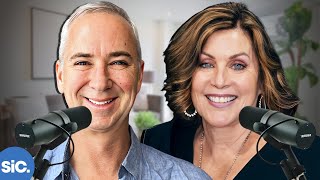
This is a recorded interview (Second in Command podcast) with Suzanne Robb (COO) and Rick Mayo (CEO) of Alloy Personal Training. They describe Alloy’s small-group personal training model (up to six clients/coaches) targeting older adults, explain their franchising journey (began franchising Sept 2019), growth metrics (248 awarded territories, ~45 open), COVID-era timing and effects, sales channels (brokers and franchise sales organizations with large commission splits), and the end-to-end franchise onboarding and support playbook (real estate/ construction support, a digital operations manual, one-week Roswell training, a 12-week presale requiring 75 signed members to open, then handoff to ops coaching). The conversation also covers founder/COO roles, culture, employee onboarding, and leadership practices (gratitude, network building).
Questions this video answers
September 2019.
248 awarded; about 45 open.
Within the contiguous United States (the lower 48).
75 signed membership agreements.
Broker takes 50% of the franchise fee; FSO sales team takes 40%.
Chapters
Most companies work really hard on the recruiting and the interviewing and we hire somebody and then we say, start your job. And the person, I don't know what to do. I don't know the culture of the. But in the franchising world, we're like, we sell them something, they give us a whole chunk of money and then we go, stop. You can't even start yet until you go through all of these hoops and stages. And then when we're ready and we say you're ready, then you can start. Our guest today is ALLOY Personal Training CEO Suzanne Robb. She's the mother of four children and a grandmother to 10. And she's a family oriented and dedicated fitness industry leader and innovator. She loves to get stuff done and believes it's better to give than to receive. Suzanne shines brightest when serving others, which is why she entered the fitness industry. And she's dedicated to helping people live better and healthier lives. She joined the team Alloy in 2011 and they're now franchising the personal training fitness model throughout North America. You're going to learn a lot about the belief systems and the focus that a franchisor has in and how to build this strong network, how to serve franchisees and you'll be able to take these systems and apply them into your business. Today we'll see you on the inside. You can also watch this episode on our Second in Command podcast YouTube channel. So, Suzanne, welcome to the Second in Command podcast.
Thanks Cameron. I'm so happy to be here.
Yeah, looking forward to this. I actually wish I had more franchisors on the podcast because my background in business started in the franchising industry. I was, I, I was a franchisee in 1986. I was 20 years old and I signed my first 65 page franchise agreement and I was terrified. And my dad, my dad said to me, there's never a better time in your life to go bankrupt, so give it a try and see what. And I was so scared of failing that I memorized the operations manual pretty much and I just, I did everything it told me. So I'm, I'm looking forward to learning from you today. So why don't you, why don't we start off and just tell us a little bit about, you know, what your company Alloy does, what niche you focus in and then we'll dive in from there.
We are a personal training company in the boutique fitness space. Our clientele are somewhere usually between the 45 and 65 year old group. This is people that have Dollars to spend who are concerned about fitness and wellness as they grow older might be a little dinged up from past injuries or sports, you know, injuries or whatnot. So they need a little bit of coaching. And we have designed a system. It's called small group personal training. So it's up to six people sharing a coach. We provide all of the programming following scientific principles from the best sports exercise scientists from the tip of the spear. And so we can apply the workout to people as individuals based on their injuries, how they move, their stability, their strengths, their weaknesses, that kind of thing. And so it really feels very much like a personal training experience, even though.
You are in this small community of people. So we started this probably in the early 2000s. My business partner and founder, CEO Rick Mayo started his personal training studio back in 1992.
We're actually, our headquarters is actually in.
The same space as the original was.
That's crazy. 32 years ago. Over the years, he used to just.
Do one on one training. But that model, while that's interesting, it's not scalable. You can't scale a one on one training business.
So over the years, just as happenstance, like, I started coming as a member.
Here back in 1994, right after my.
Youngest child was born. And so within a few months I.
Noticed that there were a couple of my friends from my neighborhood who were working out here too with trainers.
We were like, wouldn't it be more.
Fun if we worked out together instead of like each have our own separate trainers?
So I went to Rick and asked.
Him, you know, if we could do that.
There were a couple of us that.
Wanted to do it together. And then a third person joined us.
And he was like, sure, I want to see why not? Well, that was the beginning of this.
Thought of, I wonder if we could just make a wholesale change instead of doing one on one, just put everybody in small groups of more.
Eventually he did that, which was a.
Very scary thing because he was. He had a very, very successful business model and he kind of blew it up to convert it to this four to one thing, but took about a year. Some people were resistant because people I think don't like change just inherently.
Anyway, made the switch and it really.
Turned out to be a great thing because there's something to be said about.
The community aspect of it.
So like, most of us don't love to go to the gym and work.
Out, especially if we're by ourselves.
Right. It's not that fun. But with a small group of people and whether you knew the People to begin with or not, your group inherently.
Just organically become friends and you hang out, you go to coffee afterwards, you.
Know, you celebrate each other's wins and you kind of hold each other accountable. So if somebody's not there when they.
Normally, at the normally scheduled appointment time, you know, there's three people on their phone texting that person saying, where are you? Is everything okay? So that's how the whole idea started.
What's the size of the network now? How many locations do you have? How many cities or countries are you operating in?
So we're just focused on the lower 48.
Right.
And we started franchising in September of 2019. We have awarded 248 locations and we have about 45 open, have another 85.
In some stage of production in the restaurant development schedules.
Yeah. So the way, the way the franchisors typically work is they sell kind of an area development agreement. Somebody will buy five locations, they open one of the a time and as long as they stay on that path of opening, they can continue to own that territory. Is that similar to how your operating model works?
Yes, it is very similar. And most, I would say 65% of our franchisees are multi unit developers.
So they do sign an area development agreement.
And most of, I mean we've got some that own six and eight, but most of them are like three, three packs and the rest are just single unit operators.
They kind of want to put their.
Toe in the water before they are all in.
So your timing of starting to franchise in the of 2019 almost could not have been worse.
I know.
Because Covid all of a sudden slapped you in the side of the head six months later.
Yeah.
What happened at the franchisor level and at the franchisee level and how did you navigate that?
So we didn't have anybody open yet.
Because we just awarded our first one in December. We started selling in September, we awarded franchisee number one in December. We sold six more in February and then March, you know, the end of the world came.
So we opened our first franchisee, opened in June of 2020. Kind of, you know, we are still. And this was in North Carolina and North Carolina was pretty shut down. So they were very brave. But our model actually was conducive to social distancing. It's small, it's a 1500 square foot studio, it's very clean, it's personal training. So you didn't have to share any equipment.
You know, it, it lent itself to easily to some of the COVID precautions that were out There. Yeah, franchisee number one opened in June of 2020. They're doing great. I just talked to the franchisee over there yesterday. Have one of the highest retention numbers in the entire franchise organization maybe except for our corporate store. But I will tell you, it was very scary. We did not an award a single franchise for 13 months from March until the following April. April of 21, not a single one. Fitness was very, very affected by Covid and I think probably unfairly so. You know, it was like gyms weren't allowed to open or open back up even when other businesses were. And I'm not exactly sure why that was because there was no indication that you caught Covid by going to the gym. In fact, people that are fit people.
Were not as sick as people that were not fit.
So it really seemed like it didn't really make any sense to me why they were act why it was that way or the media was portraying it to be that way.
But having said that, brokers wouldn't put.
Fitness in front of any of their customers and they just weren't moving any fitness franchises at all. Our CEO said, well, darn it, I'll do it myself then. And we had continued marketing and continued moving the needle in that way. And so he was our sales team single handedly for a while and then eventually we partnered up with the franchise sales organization and then they took, they took over.
Okay. And the franchise sales organization, those, those people tend to take a commission for sales. What percentage are you paying that group and what do you think makes a good partnership between you and an organization like that?
The group that we have partnered with, their salespeople take a commission and then the broker takes a commission.
Right.
Because they operate in all of these broker networks. So it's kind of like the broker's the matchmaker and then hands them over.
To the sales guys at the FSO.
And then they take them through a very specific sales process.
Right.
Which ends with a CEO call and then us inviting them to Discovery day.
If they've made it that far and haven't washed out.
So the broker takes 50% of the franchise fee and the FSO sales team takes 40%.
So that doesn't leave a lot for us for sure.
It's interesting, when I was building 1,800got junk. I was the chief operating officer of 1,800got junk. And we tried to set up the company at the time so that we could operate without franchise fees that at some point it was almost like hitting, almost like getting a satellite up into orbit. You Know, it takes a lot of energy to get the satellite in orbit and once it's there, it goes around the earth forever for free. It was almost like the franchise fee if we could company or the location up and running and there was no money left from the franchise fees. We had to live off the royalty revenue and happy franchisees. Is that similar to your model when.
Yeah, yeah, pretty much. Obviously our goal is to get to royalty sufficient. We will be there by the end of this year. We never really counted on the franchise.
Fee to drive our revenue because we want it to go fast. And if you want to go fast, you have to use these FSOs and.
Play in the broker networks.
As a result, we, we knew the.
Franchise fee was kind of.
It's a wash. We did build a.
Ramp and there's a very, maybe we keep 10, 10 or 12%.
So.
Right. Which, which might pay for a couple months, but it's not you, you know, you're not going to make money off of it. You're not going to live off. I think that was actually, frankly, the downfall for Quiznos is they did a great job with bringing in and selling all these franchises. They made all this money off the franchise fees, but then they didn't have a good economic model to make money off the royalty side. So the franchise or franchisee structure, you're only as successful as your franchisees are 100%. So what do you, what does your corporate, what does your home office do to help the franchisees, to help them be successful? Can you walk us through kind of the lifetime of. Right. As soon as they buy the franchise?
Yeah.
What do you do to get them successful when they're open and what do you do to get them successful over time? What's your thoughts around that?
Yeah, a lot.
We do a lot for our franchisees.
The first thing we have is an onboarding team and real estate and construction.
Project management team, if you will. As we onboard them, we are introducing them to national real estate brokers if they need help with finding an appropriate site. We have built criteria. We know who our avatar is. We know what the house median household income needs to be. We know what type of facility or strip mall these alloys should go into.
We give them access to the Alloy Ops manual, which is a very robust.
Digital manual that's got everything you'd possibly.
Ever want to know.
And we have checklists and timelines of what needs to happen when. And so we've got a team of people that kind of walk lock step with them throughout this process.
Now you know, it is their business.
So we don't do all the work for them. They have to do it, they have to, you know, but, but we're there to keep them organized and we assist them with architects and design. We've got a very comprehensive design manual, what it all should look like, who to order the millwork from, what the brand specs are, all of those things.
So once we get to construction and construction is pretty simple, we have a very simple model, we have a lot of machines and not a ton of equipment.
It's really just kind of a rectangle with a rubber floor and some a front desk and a couple of bathrooms.
Right.
And then it's a racking system with equipment and we have tech that we built around it to support the franchisee and their coaches.
So once they are under construction we.
They come to training in Roswell for a week and we need the owner to come and the general manager. They've already hired a general manager if they're not going to stand in there and do it themselves and hopefully a coach, a head coach. So those people come to training and we teach them everything they need to.
Know from we go over marketing and all of the, the tech stack that.
We have put together for them and the software and the POS system and the lead management system and all of the programming, all the technical stuff. We teach them how to deliver a great client experience, sales, how to sell this thing, how to market it, organic marketing, digital marketing, all things. So once they leave training then they go home and they start their 12 week pre sale and we've got a very specific playbook for that as well.
They're in the 12 week presale, they.
Need to have 75 people to open that is with signed membership agreements. And our membership agreement is just a month to month thing. It's not some big hard sell where it's a multi year contract or anything like that. Month to month we'll earn your business. You're going to love this and you're going to get great results and you're going to let that renew month over month over month. So once they get to 75 we give them permission to open and start billing and we've got, and then they are kind of handed over to the ops team which is the team that is going to coach them up and coach them through the 20 mile march. Right monthly.
It's interesting, I think that franchisors and your proof in point of this do a much better job with onboarding franchisees than most companies do. In onboarding new employees?
Yeah.
Most companies work really hard on the recruiting and the interviewing and we hire somebody and then we say start your job right. And the person, I don't know what to do. I don't know the culture of the all like. But in the franchising world we're like, we sell them something, they give us a whole chunk of money and then we go stop. You can't even start yet until you go through all of these hoops and stages. And then when we're ready and we say you're ready, then you can start. It's something we need to do better, I think on the operational side of our company too. Do you guys do similar onboarding with your employees that you do with the franchisees?
We do.
Now we only have a staff of 10 at this point and believe it or not, like four. Four of our team have been here for less than a few months because we're really, we're scaling now, we're growing quickly. We've got a lot of people in the development pipeline who will need to be supported once they get open. Right. So we've made a full bore effort to recruit and hire four new people recently. We have specific onboarding protocols. One of the things that I do as CEO is I meet with all the new employees once a week for the first month just to touch in, touch base, see how their training is going, see where, see how they fit, how they feel within the culture. We have a very, we have a, our culture is extremely important to us here and we have been very careful to hire like minded people who I think will be a good cultural fit. And we want people who can own their job and just we train you.
And now you are off and running. Right.
We're here if you need resources, if you need help, if you need additional training, if you know, need whatever you need, we are here to provide that. So so far it's worked out very, very well. We have some tools in place with recruiting and kind of personality slash innate ability testing to see, see to make sure you're hardwired for the job that you're applying for.
And that's been a very helpful tool as well.
Do you own corporate locations as well as franchises?
Yes. So we just have one, we did have two and the second one was a pilot kind of prototype that we owned and partnered with one of the coaches that worked at corporate to pilot this 1500 square foot personal training, small.
Group kind of idea. And it was wildly successful.
So much so that the partner that was running it on our behalf, decided.
That they didn't want to brand it, rebranded as an alloy they want. He just wanted to buy it and do his own thing, so we sold that to him. But. And it's not an alloy, it's a women's only model. So it was a little bit different than what our model ended up shaking out to be. So, yeah, just the one. And it's super successful.
Any. Any plans to open any more corporate locations or is it plan.
We've. We've kicked it around. Rick and I have talked about it.
A little bit, and quite honestly, right now it's just a financial. There's a financial barrier to open additional corporate stores, but we have not ruled it out. Right now we're just focused on getting to. Getting enough open, which will be somewhere around the 70, 75 mark, to be royalty sufficient and to build our team so that we are equipped to support our franchisees.
There's a guy in Australia, Greg Nathan, who wrote an article called the Six Stages of Franchising, and he talked about stages that a franchisee goes through. How do you navigate when the franchisees go to kind of the me stage where they don't feel like the franchisor is giving them enough? They feel like the franchisor is just taxing them with all these royalties. It's kind of like the teenager who thinks their mom and dads are idiots. Right? We all go through that stage where we think our parents are idiots and then all of a sudden we move out of the house and we're like, hey, mom, can you give me some recipes? Because I don't know how to cook. How do you navigate through that stage? Or are you at that stage yet with any franchisees because you're still so new?
So it's interesting. We talk about this a lot and I'm a big fan of Greg Nathan's. We used to use the Nathan profiler when we were doing sales in house. So we talk about this a lot. And I think one of the things that we are trying to do with our franchisees is be very relational and not be transactional.
We.
These are our partners. It's truly a fractionalized partnership. Right? We talk about the stages that most franchisees go through. We talk about it at Discovery Day, we talk about it at training. And we've had a couple of franchisees kind of push back and say, you're not doing enough for us. We're paying you all this money. And, you know, all with that kind of thing, we collectively just say, well, let's talk about that. Nobody takes it personally and we never want it to be a them versus us kind of mentality because I think sometimes it could lean that way. We are on the same team. We are all rowing in the same direction. And there could not be two businesses aligned more than a franchisor and a franchisee. They're perfectly aligned. If the franchisee doesn't make money and isn't successful, then we don't make money.
And we're not successful. So remind franchisees of that.
We try to have honest conversations.
Sometimes they're hard and that usually falls.
On me as coo. I have. I have a lot of hard conversations with people, but it's one of our core values, sincere candor. And it's going to be hard conversations now or harder conversations later. We just stand behind our core beliefs and believe in being very candid, very transparent, very authentic and remind them that we. It's not us versus them.
We are on the same team.
All right, so you working with the CEO, the entrepreneur, how do you divide and conquer? How do you decide roles and responsibilities? You know, what are the swim lanes that you've developed there?
Rick and I have known each other for 32 years, so we know each other very, very well. When I came to work for him about 15 years ago and started a licensing business, basically the system that we were running at his brick and mortar gym, one of the first things we did is we did a personality test, and I can't remember which one it was because there's a million of them. We were so yin and yang, like the things that he loves to do, like be on a gazillion podcasts and go out on the speaking circuit and traveling all over the world to flatbacks and kiss babies and sell stuff. I wouldn't give you a plug nickel to do any of that. I like to be on the let's figure it out side of things. I like to be at my desk or at the office troubleshooting things and figuring out better ways of doing things and operationalizing the system, if you will. So we were really, really aligned with our different skill sets and the things that we enjoyed doing. And then the other thing is, since we had known each other for 16 years already, he came to all of my children's weddings and graduation parties. I knew him before he got married, before he had children. I thought we had been in each other's lives and in each other's family's.
Lives for so long.
And there's just a tremendous amount of respect and Trust there. Like for me, it was when I went to him to say, hey, I want equity, I want a seat at the table. I don't want to just be an employee anymore. If I'm going to put my blood, sweat and tears into this, let's grow this thing together. He kind of hesitated at first and. But I never had any doubt that.
It would be phenomenal. And it has been really great partnership.
How do you work through the situations when the CEO comes to you with their, their latest kind of greatest random idea, you know, the flavor of the month? What's your system for, you know, listening, filtering the idea and saying yes or no?
He's gotten a lot better at that.
Over the years and I think it's just by training.
So I literally. There have been some times where at first he would come to me with all of these ideas and I would get right on them.
Right?
I like, I never said no. Cameron. There was at one point I was so underwater with so many projects and so many different things that I'm trying to implement ideas that he had. And some of them were good and some of them were not good. I just kind of was on autopilot to just do whatever he asked. So I finally went to him and said, okay, I need you to leave town for like a month and go somewhere far, far away with no Internet, no phone, so I can catch up and catch my breath and get above water. Do not come to me with one more idea because the answer is no. The answer is absolutely no. So, you know, he kind of laughed and he did that. He, he literally did. He got on his motorcycle and, you know, went on a cross country ride and it was good for him because, you know, he needs some downtime too. But it was really great for me.
Because I got to catch my breath.
So when he comes to me now with, well, what do you think if.
We do X, Y, Z? Last year it was open corporate stores.
Let's open a bunch of corporate stores.
I'm like, are you great?
Like, maybe we should just focus on.
Corporate stores and not franchise. I'm like, well, it's too late for that.
We can't just not do that anymore.
So what you're suggesting is, is we.
Double our workload and we have like the corporate side and then we still.
Have to service these franchisees. I'm like, so no, we're not doing that. We're just going to keep, keep the.
Main thing, the main thing.
We're going to stay focused. We're not doing that. So maybe in Due time. We can strategically open more corporate stores one at a time, but that's not going to be at the expense of our franchise operation.
I've heard that the COO needs to be the brakes to the entrepreneurs gas and we need to be the leash to the entrepreneur's dragon. So it sounds like. How about you and your role? What do you have to do to continue to grow? How do you work on growing your skills and your confidence and your connections as a second in command?
Well, that's a great question.
And it's something that, like at the beginning of the year when we had our off site strategic planning session, that was on my list of things to do is to enlarge my network, get out a little bit more because I tend to just be in the office all the time, you know, attend some conferences, go to the ifa, you know, go to different summits and meet with other CEOs to learn to share, to just network a little bit and collaborate a little bit. You never know who you might meet or what you can learn from them.
That's definitely on my list. It's not natural for me.
I would rather just stay home and be in the office and work with my team and get a whole bunch of stuff done.
But I think for me to grow, I do listen to a bunch of.
Podcast years included and I read at least a business, if not two business.
Books a month and that's great and.
It'S, you know, certainly been helpful. But I think it's time that I need to venture out.
It's interesting, I call it Ideas having Sex. That when you take ideas from one industry and you get lots of that ideas, that's great. But then if you can take ideas from different industries, it's like one idea from here, one idea from here kind of cross percolates. We have an event starting actually tonight. We've got CEOs coming in from multiple countries into Vancouver just to collaborate over the next three days together from completely different industries. And it's amazing to see the ideas that come from, you know, healthcare and an online marketing industry in a law firm. And they those little ideas have an idea baby, and they percolate into something else. Plus it just grows and there's no entrepreneurs allowed in the room, which is great. So it's kind of like our peer group.
Yeah.
Spend time together. All right, I want you to go back and give the younger you some advice. If you were to go back and give the 22 year old Suzanne Rob some advice, what would you tell her? That you know, to be true today. But you wish you'd known when you were just getting started.
Well, first of all, and this is kind of from a fitness, it speaks to industry that we're in. But take good care of your body because you're going to need it. You're going to need it in 60 years. And I think sometimes, you know, when you're 20, you burn the candle at both ends. You're, you know, partying and you're in college and you're having a big time and you just think that that will always be the case. But so I would say, you know, take care of your, your body and yourself and develop good habits that will.
Last you a lifetime. So your body lasts you a lifetime.
The other thing I would have told my younger self is to practice gratitude every day. I started doing this about, oh, I don't know, five or six years ago where I keep a five minute journal. The first practice of every day is practicing gratitude and naming three things you're thankful for. And I think that has been absolutely life changing in the sense of reducing stress, just really annotating the many blessings. Even when things seem rough, you can always find something to be grateful for. Maybe it's a little thing, but it's still a thing. And I think it's very difficult, if not impossible, to be resentful or to be envious or to be arrogant when you're practicing gratitude.
So it's one of my favorite things.
And it's interesting you mentioned the Five Minute Journal. Next week, I will be spending a week with the founder of the Five Minute Journal, Alex Icahn, over in Ibiza. I'm going to his event called Intelligent Change and I'm going to be speaking on the Vivid vision concept. But Alex and I have been friends for almost a decade. The gratitude journal, the five Minute Journal is amazing. Everybody should try it. Suzanne Rob, the CEO for Alloy Training, thanks so much for sharing with us on the Second in Command podcast.
I've done a lot of like, young entrepreneur type podcasts and they're like, what can you do to like, get in the circle? It kind of ties into the networking thing. So I think I would say like, network, but add some frigging value. Don't ask to be part of the group. Like, if you can even scratch your way near a successful group of people, find a way to add value to them. Like ask them what you can do for them.
More from Cameron





Flutterwave Former Global Head of Operations Awa Kone | When Growth Outruns Operations (Podcast 611)





