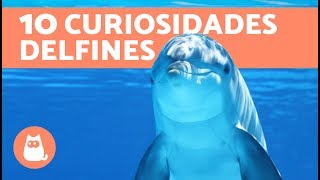
An animal expert shares ten verified facts about dolphins, covering their behavior, intelligence, communication, diet, and social lives. Learn how dolphins actually live and why conservation matters.
Dolphins are probably the most popular marine mammals in the world. You probably know that they are intelligent and sociable animals, but what else do you know about these animals? In this new video by an animal expert, we will show you 10 interesting facts about dolphins, all based on scientific studies. Some of them you probably already know, but we have other surprises that may leave you speechless. Before we start, don't forget to subscribe to our channel to stay up to date with everything we share and download our app. Dolphins are mammals that belong to the Delphinium family, which includes more than 30 different species. It is estimated that there are more than 2,000 dolphins in captivity that live in water parks, dolphinariums and even in commercial facilities. It is not possible to offer an exact figure regarding the population of dolphins in the wild, but it would be around 9 million individuals. Dolphins are gregarious animals, meaning they tend to congregate and can form groups of up to 1000 individuals which communicate and interact with each other. The habitat of dolphins and their migration can vary depending on several factors such as the abundance of food, the temperature, or the distance from the shore. They tend to prefer shallow waters close to the coast in tropical and temperate climates, thus avoiding colder waters. For this reason, dolphins can be found practically anywhere in the world. The forms of communication that dolphins emit when interacting with each other and with their surroundings is probably one of the aspects that has generated the greatest interest in the scientific community. Dolphins use a highly developed and sensitive method called echolocation to receive information about their surroundings, but they also perform high and low frequency vocal specializations to communicate with each other and even with other marine individuals. The wide variety of whistles produced by dolphins can vary according to the ambient noise, and the variety and complexity of these demonstrate their important cognitive abilities. Some of the functions of whistles are recognition of specific individuals, group cohesion and coordination of movements, hunting or surveillance, among others. A study carried out on a group of bottlenose dolphins in the wild revealed that some individuals, mostly females, used sponges as tools while foraging. After observing them for days, it was concluded that they used them to search for food. Although this hypothesis is the most widely supported, it is also believed that dolphins may use sponges for play related activities or that they take advantage of some of their components, for example, for medicinal purposes. In any case, carrying sponges is a common behavioral specialization in dolphins. Dolphins do not dream in the same way as other mammals. In fact, a study published in 1964 explained that bottlenose dolphins slept with one eye open and one closed, suggesting that this could be due to a state of alertness for potential predators. However, it could not be demonstrated that this type of behavior had a real surveillance function. Later, another study carried out on captive Pacific white dolphins showed that this particular group opened or closed their eyes depending on the position of other members of the group in the pool. Therefore, it is believed that they open and close their eyes during sleep to ensure visual contact with other members of their same social group. In the early stages of life, the dolphin feeds solely on breast milk until it begins to hunt for itself and feed on other resources. Dolphins are carnivores and their diet is based mainly on fish, octopus, mollusks and other invertebrates. Dolphins can devour surprisingly large prey, even those weighing over four or six kilograms. Since they swallow instead of chewing, this way of feeding prevents the spines or fins of their prey from getting stuck in them. Dolphins are rational animals. That is, they are capable of understanding and representing the environment in which they live, carrying out logical thoughts and drawing conclusions from them. They can also modify their behaviors intentionally, thus creating new models of interaction and seeking new perspectives or objectives. They are intelligent animals, both behaviorally, cognitively and socially. They are self aware. They are capable of carrying out different procedures or methods. They have social awareness and also show a complex command of language and the natural forms of communication of the species. While conducting a study on bottlenose dolphins in captivity, homosexual and heterosexual behaviors were observed in individuals as well as masturbation in males. Likewise, a documentary on homosexuality in the Animal Kingdom by National Geographic points out that dolphins are very affectionate creatures that engage in regular sexual practices, including sex with partners of the same and opposite sex or group sex. Cases of dolphin attacks on humans in the wild are extremely rare. In most cases, it involves dolphins mistaking people for prey and eventually releasing them. However, it can also happen if humans bother them or try to interact with them. On the other hand, cases of dolphin attacks on people in captivity are more common, and some dolphin protection organizations such as SOS dolphins point to the living conditions of these animals as the main cause. The living conditions of dolphins in captivity directly affect their physical and psychological well being, despite attempts to provide them with a spacious environment and provide them with mental stimulation. The truth is that space limitations and constant auditory and sound stimuli reduce the quality of life of dolphins in captivity. The lack of natural seawater or their diet of frozen fish also play a role. The life expectancy of dolphins in Captivity is around 20 years, while in their natural environment it is around 50 years. Aside from the aforementioned factors, special attention must also be paid to the socialization of dolphins, since most of them do not have a large enough group. Others have had dolphins from other families introduced into their pools. Or worse still, there are also dolphins that live alone. All these factors cause stress and anxiety in these highly intelligent cetaceans and can generate a state of chronic stress that directly acts on their immune system, predisposing them to serious diseases. For this reason, more and more organizations are fighting to move captive dolphins to specialized marine sanctuaries and refuges. What surprised you the most on this list? What do you think about keeping dolphins in captivity? Leave us your comments, make suggestions for future videos, and don't forget to give us a like and subscribe to our channel. Also, remember that you can download the Animal Expert app to stay in touch with the more than 50,000 members of our community. Until next time, experts.