This is a YouTube video titled "10 CURIOSIDADES SORPRENDENTES sobre los MAMÍFEROS 🐻 ¡Descúbrelas!" created on August 6, 2023. The content is an educational monologue explaining ten surprising facts about mammals, covering their unique biological features, diversity, habitats, reproduction types, communication systems, and conservation status. The video is presented by a single speaker providing detailed scientific information about mammals.
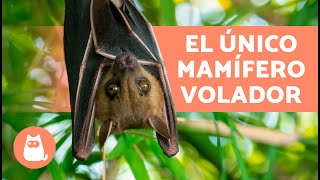
Today on Animal Expert, we are going to explain 10 surprising curiosities about mammals that you probably didn't know. Let's get started. First, they have unique features that distinguish them from other vertebrates. For example, females have mammary glands through which they produce milk to feed their young. Likewise, mammals have true hairs that even in whales, where they are lost, are present when they are in the fetal stage. The lower jaw articulates directly to the skull and not through a bone, as is the case with other vertebrate animals. On the other hand, they have a muscular diaphragm that separates the heart and lungs from the abdominal cavity. 2. There are more than 6,000 species. Between 5,500 and 6,027 species of mammals are reported distributed throughout the world, which are organized into between 125 and 161 families in around 30 orders. Three are the only living synapsids. A syncid is characterized by having a single temporal fenestra, that is, they have a single opening located at the level of the roof of the skull behind each eye socket. Most became extinct and currently only mammals form part of the group. 4. They can weigh from a few grams to 160 tons. We can find a great difference in the weight of the different species. For example, among bats, shrews or primates, there are species that barely weigh a few grams. However, on the other hand, we have that the heaviest animal in the world is a cetacean, that is a marine mammal, which is the blue whale and weighs about 160 tons. 5. There is only one type of flying mammal. Among the diversity of mammals that exist, we find the order of Chiroptera, where the commonly known as bats are located, which are the only mammals with true sustained flight capacity. Bats are the second most diverse group of mammals after rodents. So these flying mammals group together 20% of this class. Find out more about bats in the video we've included on the card. 6. They live in every habitat on the planet. Mammals inhabit every continent. They are present in all the planet's oceans and on many of the oceanic islands. Thus, mammals have evolved to inhabit all biomes. Some are exclusively aquatic, while others have specialized to have almost exclusively arboreal habits. And certain species live most of their time underground. 7. They are classified into three types according to their reproduction. The first type is monotremes, where we find platypuses and echidnas. They are obobiparous, that is they lay eggs. Next we find marsupials, which are mammals that give birth to artificial young so that they are not fully developed and complete this process inside a pouch known as a marsupium, where they attach themselves to the mammary glands to feed. A clear example is the kangaroo. Finally, we we find plancitarian mammals. The young spend their embryonic phase inside the mother, attached to her placenta by the umbilical cord, which is how they feed until the moment of birth. 8 the greatest diversity occurs in the continental tropics. Thanks to the geographical isolation they experienced, various mammals evolved to give rise to a significant display of diversity. A clear example was what occurred with the separation between north and South America, where species of mammal fauna in the region became extinct, while those in the south flourished and successfully radiated. 9 they have complex communication and perception systems. Depending on their needs, mammals can have a sense significantly more developed than others. The specific case of smell deserves special mention as it is one of the most evolved in many species of mammals because it is essential for locating food, identifying mates, or leaving territorial and defensive marks. Hearing is also usually well developed, so much so that some species have developed a complex echolocation system, such as bats, dolphins and whales. Tactile perception through fur and whiskers plays an important role for many mammal species. 10 Many species are seriously threatened. There are quite a few mammal species that are in danger of extinction. Some, in fact have been completely extirpated from their habitats due to human actions, including direct hunting for consumption, commercialization of species or destruction of ecosystems. The IUCN has stated that almost a quarter of mammals are in danger of extinction. If you want to continue learning about other wild animals, don't miss the playlist that we have left for you here on the side. Tell us which of these facts surprised you the most. Until next time, experts.