ARENAS PARA GATOS: ¡Y la mejor es…! ✨😼💩⏳ ¿Absorbente, aglomerante, sílice o ecológica?
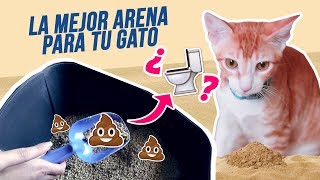
This is a YouTube video titled "ARENAS PARA GATOS: ¡Y la mejor es…! ✨😼💩⏳ ¿Absorbente, aglomerante, sílice o ecológica?" created in February 2020. The content features a detailed and informal presentation by Carlos, a clinical veterinarian, along with Jose and other speakers, discussing various types of cat litter including absorbent, clumping, silicate, and vegetable-based litters. The video includes explanations of pros, cons, maintenance tips, pricing, and user experiences, aimed at helping cat owners choose the best litter for their pets. The tone is educational yet conversational, with some light humor and interaction among the speakers, but it is primarily a single-host presentation with supporting voices rather than a multi-person conversation involving Javier Pariente.
I didn't think the subject of litter would be so much of a topic, but it has. That's why today I bring you the definitive guide to knowing which one to buy. Oh, no. Hi, I'm Carlos, a clinical veterinarian at Small Animals. Welcome to the Happy Pets and Families Channel. When we have to buy something for our animal companions, whether it's cat litter or feed, the same thing always happens to us. There's so much variety and we don't know which one to choose. A few months ago, in the Mercadona product haul video, I asked you if you wanted me to delve deeper into the subject of cat litter, which I had seen raised quite a few questions. Well, in the end, for one reason or another. Well, and because the subject is very, very complicated, very complex, and there are so many varieties, it took us a little while to do it. How many months, Jose? Almost a year. Well, a year. So today I'm going to tell you the main pros and cons of different types of cat litter. And I'm also going to tell you which one I usually recommend for your feline companion. Well, it depends on a lot of factors that you'll see have an influence on everything. We did a kind of survey among our friends on the channel who live with cats to see which one they like the most or the least. And the truth is that we didn't find a homogeneous opinion. That's why I tell you that it depends on the neighborhood. This is my exclusive opinion and don't kill me for it, please. Well, Carlos, stop.
Blah, blah, blah, blah.
Ok, fine. We infiltrated the homes of our feline followers to ask them where they feel most comfortable doing their business. Well, let's start with regular litter, the kind we always find in supermarkets. This litter is made of a type of clay called Scipiolite, which gives it a lot of absorption capacity. The main advantages are that it is very cheap and can be found practically anywhere. For example, in an emergency where we are away from home and do not have litter, we will be able to find it very easily. We do not need to go to a specialist store or anything like that.
This litter is not made from sand, it is always clay. Well, almost always it is very cheap because you will find it in the supermarket and therefore it is especially suitable for homes with more than one cat. Well, where there are usually four or five cats living together that go to the litter box a lot and therefore a lot of litter is used. There are a lot of litter gets dirty and then we need to reduce the cost a little bit. Unless you throw it away.
Well, people can throw it away, but not everyone is as wealthy as you. The main disadvantages are that it is quite dusty. It is really a very dusty litter. It is also a litter that is not clumping. It is only absorbent. And its absorption capacity is not the best either. So it's very common for cats that do their business in this litter, especially their pee, to end up seeping into the layers below the litter box and soaking up all the litter and having to throw it away almost every day. Well, if you take really, really good care of it, because it might last a couple of days or three.
Changing the whole thing or changing it. I mean, no, in this case you can only change part of it. But it's common with absorbent litter that you end up changing almost all of it after two or three days. If you're really, really careful, you can gradually remove the wet parts and only leave the drier part. That way it might last you a week. Like many others, you might be an expert at handling this type of litter and it might last a little longer, but it doesn't usually last more than a week. The price for 10L because the litter is sold by the leader, which is usually available in regular stores, is around €4.34, which makes it the most competitive litter of all, honestly, in terms of price. I personally only like this litter if you have an emergency and need to use it at a specific time, or if there are a lot of cats living in your home. If, for example, you are a cat person and you have 10 cats at home, then it might be a good option for you precisely because of the price, which is not very expensive, but. But as I said, it is a bit of a drag. The second type of litter is silicate litter. It has little white crystals that you don't really know what it is. Well, it is silicon dioxide, a material that is not toxic to cats or anything like that. The main advantage of this litter is that it is more absorbent than the previous one and also produces less dust than the previous one. It really does produce the least dust of all people who have cats whose respiratory tract is affected by dust. For example, when cats are asthmatic, this type of litter is usually the most recommended for them. In addition, it is an absorbent litter. Absorbent and non clumping. Well, I will talk to you about clumping litters later. And it is a litter that also tends to have less odor than the rest. It captures the odors of the things your cat does on it better. The main con is that it is not clumping. So you will see later what kind of advantages clumping litter will offer you that this one does not. It is also a litter that is less economical than traditional litter. So in a house with many cats, it may not be the best option. Okay, two questions that have been raised. One was that this type of litter was afraid that it would hurt the cat's paws. Hmm. This litter tends to catch people's attention a bit because, well, it has sharp edges and they're worried that it might hurt their cat's paws. Actually, according to the manufacturers, they say that this doesn't pose any problems and that it doesn't sting cats and that it's quite delicate, although there may be cats that don't like the texture and therefore aren't so keen on using it. Well, now we know a little bit about how finicky cats are and that perhaps they don't like going into it so much and that they decide to do things somewhere else in the house, because that's the main sign that your cat doesn't like the litter, that they start doing things outside the litter box when they used to do them inside. And I forgot about the second question, so never mind. Well, okay. It wouldn't be very important. The main maintenance that you'll have to do with this litter is to remove the solid part, your cat's poop. Well, this is the same as the previous one. In this case, you will produce less waste because you do not have to change as much flour. Regarding liquids, as I have said, it is an absorbent litter. The small crystals that you will find when you open the bag are more or less whitish or practically colorless. As they gradually absorb your cat's pee, they will turn yellowish. This is what will indicate whether the litter is very used or not used enough, and also which parts of the litter you will have to remove. A litter box filled with this type of litter will last you about a month, according to some manufacturers. In reality, in my experience, it will not last that long. Generally, it will last around three weeks, as long as you perform good maintenance of the litter box. And that means cleaning the solid parts every day. And, well, any areas that you see a little more yellowish if you want, also removing them from the litter box. And let's get to what you are interested in, that you are always looking at the litter. Hey, I get it. The price range for these litters is around €8 or €10 for 10L in the most Common stores you can find online. Hey, if you find it cheaper, great, right? That's what you get. It's true that some people are a bit put off when they see the price per liter because they think it's exactly the same as the absorbent litter they find in the supermarket. And there are quite a few differences because the maintenance is much easier than sand and you throw away much less litter. Okay, and what do I think about this litter? I think it's a very good option when your cat's pee smells a lot, for example, because it's a litter that absorbs the smell very, very well. It's true that although it hardly produces any dust, it does produce some dust. It's possible that your cat might get a bit stuck to the pad and take it out. But hey, it's not as important as with the first one, which is a disaster with dust. Cynthia, in fact, she didn't like it at all because of the dust, and she didn't like it. Yes, it's true that she sent us a video and there was Kimmy at the door of the litter box saying, I won't go in there even if you drive a tractor through it. Totoro seemed to like it more. Totoro liked it more. As you can see there, there are two cats, one of whom likes it more and the other less. In the end, we have to reach a balance because you're not going to be buying two different types of litter depending on the cat. And now let's move on to clumping litter. Clumping litter is like the queen of all litters because, well, it's made with a clay called suction cup, and its main advantage is that it traps liquid and forms little balls. That means it doesn't spread throughout the litter and the pee doesn't ruin the entire litter box or anything like that. Therefore, that's its main pro. But it also produces less dust than the first one, the absorbent litter that I mentioned first. There is none that produces absolutely no dust. Right? They all produce some dust. They are materials that are very, very fine, and if they have not moved or rubbed against each other, dust will come out. That is inevitable. But hey, the amount of dust that this litter produces is not outrageous. And it is still recommended for some animals that, for example, suffer from asthma and do not get along very well with dust compared to the first one, they produce much less dust. And it also has somewhat combined properties of silica sand. Because it also smells less, it seems as if it retains the smell a little more and that prevents it from spreading throughout your house. The main cons are that it is a little more expensive than normal absorbent litter. As you can see, the main cons of clumping litter are the same as those of silica sand. Mainly the price and that mainly the price is that in a house with many cats, it is not something that we can probably use because our budget does not allow it. Regarding the maintenance of this litter box, it is very simple. Perhaps it is the easiest to maintain. As I have said, the pee is made into a ball and trapped the poop, right? But hey, don't worry, because your cat will bury it and that's it. All you have to do is maintain it a couple of times a day or once a day, go over it with one of these shovels, with a grid, and do this a couple of times with the balls so that the clean sand falls back into the litter box and you take out the balls. You will have to throw these balls in a normal bag and you will have to throw them in the trash. Like with silica sand and absorbent sand, there is no change in this. What this does is give the litter a much longer useful life. And if we maintain it every day we remove the balls, we replace a little sand, the one we take out each day and so on, it can last us even up to a month easily. And according to the manufacturers, then a year, right? No, no, no, no. You're going to have to clean the litter box no matter what. I recommend that you take out all the litter once a month, clean it, scrub it well and put more litter in. Not too long. With litter that's a month old, right? If the litter can handle it, no, you won't have any problems. Now, to make the litter last, you can't just put a layer on it like that. To make the litter last, you have to put a good layer on it so that the cat can bury it properly. Because if the whole bottom part starts to get soaked, the pee, no matter how much it makes a ball, won't allow the litter to last. The price of this litter is approximately between €7 and €10. It's a bit similar to the price of silica litter. 10L. Yes, yes, 10L. I always refer to 10L. In fact, for those that are not sold in 10L format, I'll do a bit of the conversion for you so that we can keep it in mind, so that we can compare it many times. One marinara manufacturer sells you 8.75, another sells you 10, and it seems that the 8.75 is cheaper simply because it has less sand. Well, veterinarian and economist, it's not that you always have to be able to compare.
Just like you compare milk by the liter, the price per liter. Well, you have to Compare it per 10L, which is the most common format it has. And of course, if you buy larger formats, normally even 25L, it can be cheaper.
That's like potatoes that the greengrocer sells 25 kg for €10. €8, I think. €8,10. Look at this. Oh no. 25 cheaper than this. Your cat may be able to do their business in potatoes. That's true. Great. Buy it locally. And let's move on to the last type of litter I have to tell you about. It's vegetable litter. Well, I'm going to put some quotes on it. Jose, put some quotes on it, because it's not really litter. It's made with plant fibers that are formed into pellets in the shape of tiny kibbles so that your cat can do their business on them. Oh, are they going to eat them? No, no, they won't eat them. They're usually made from regular plant fibers.
Like wood, but there are also some that are made with leftover corn shavings. This assures us that the litter is also environmentally sustainable because they're not cutting down trees in the Amazon to make the substrate in which our cat will do their business, but instead they're using things that would normally be thrown away or thrown away. Circular economy. This is why many people refer to this litter as ecological litter. And the fact that it's made with plant based products will also bring you the main advantage that we're going to explain now. But first I'll tell you that there are two types of plant based litter. On the one hand, there are those that are non clumping.
I mean.
Wait, wait. But first I'll tell you to subscribe to the channel. Oh, okay, that's right. But first I'll tell you to subscribe to the Happy Pets and Families channel if you're enjoying this video. We usually release a video like this, more or less this fun, entertaining and enjoyable. Every week on Wednesdays, remember to hit the subscribe button and also hit the bell so that YouTube will notify you every time we upload new content.
And the secondary channel, Carlos, which you won't tell me about, and it's true, I never mentioned that we also have a secondary channel. The channel called Questions and Answers from a Veterinarian. Very, very easy to Watch, because the videos are very short. END OF INFOMERCIAL well, as I was telling you before, the advertising, self advertising of our channel assaulted us, there are two types of vegetable litters that we can take into account. On the one hand, those that are only absorbent. Those are that they capture your cat's pee and so on, and do not form balls or anything. And those that are also clumping in this type, we could perhaps also talk about those that are made with recycled newspapers. They are more polluting because they come from paper. Paper pollutes a lot when it is manufactured. Its main advantage is that it is a litter that we can consider ecological because it is also biodegradable. This type of litter allows you to dispose of it directly in the toilet at home. You can pick up your cat's things with a scoop and throw them directly in the toilet and flush, because they will dissolve little by little and are compostable. Therefore, you will not pollute or anything like that. And for those who say that they are a problem because they use a lot of water, well, I tell you that it is as if another member of your family lived in your house. In other words, you will only have to do it once a day or a couple of times a day. Another pro is that it produces very little dust, or practically none. In addition, they are also quite durable and are clumping, so you will not use as much. And the main cons of vegetable litter is the price, which is a little higher. But in addition to everything regarding this type of, we also have to consider that sometimes they smell a little more. It can hurt a little, like wet sawdust or wet sawdust when your cat has done its business on it. Although here we also have different opinions, because on the one hand we have Cynthia, who told us that it smells a lot there, and Ruocchio, who said that she does not smell it at all. Sure, because the cat's pee will also have a little bit of an influence what kind of composition it has. If the cat's pee smells a little more, or if you are also more sensitive to odors, well, you can try it if you are interested. But you should know that some people think it smells a little more. Buy a small bag, try it, and then that's it. And let's move on to maintenance. Well, basically what I told you about clumping litter, you will have to remove those parts it is clumping. Well, of course, if it is clumping, you will have to remove those parts that are wet and those parts that have formed a ball, you can throw them down the toilet. And be careful. This only if the manufacturer tells you to, because your vegetable litter may not say that you can throw it down the toilet. So you shouldn't, in case we create a traffic jam in your house and it will be my fault. And that will help. The litter you put in your cat's litter box last quite a long time, around a month, like clumping litter usually does. If they are, of course, you've already mentioned the price, right? I'll tell you the price now. The price, which Jose has already asked me about, since he's interested, is approximately the price of clumping litter, around €7 or €10 for 10L. You can find it a little cheaper, but it's going to be around there. Well, now it's my turn to tell you which one is my favorite. My favorite is this last one, because it has the characteristics of clumping litter. The that is, you're going to waste much less litter. You can throw it directly into the toilet. Therefore you don't have to put a plastic bag. Throw that plastic bag in the trash every day so that it doesn't smell in your house. And all those kinds of things and hassles that litter maintenance always brings you. Plus it's usually also environmentally friendly, therefore it has everything. For me, it's the best.
So for Toro, we use vegetable litter, right?
Yes, because it will also get him much less dirty than the washing machine, which is a mess. And for that your father has used it?
My mother uses clumping litter. And there's something that you might be missing in this video. What about street litter? If you take street litter and give it to your cat or that scented litter. Well, I didn't include it in the video because for me they're not even an option to consider. Street litter can bring parasites or even diseases to your cat. Because if there's been another cat, for example, a stray that's peed on it and that litter is wet, live viruses or eggs of live parasites can easily remain and affect your cat. And you think that your cat is perfectly protected in your little bubble in your house, and yet you're putting a time bomb in it. And regarding scented litters, as I always say, the scent is for you. Your cat doesn't care if it smells like talcum powder or a fresh mountain aroma. Those types of substances are chemicals. They don't need to be in a litter box. I'm not saying they can be harmful to cats, but if we can avoid them it's better to do so. Well, that's it. I don't want to leave without thanking our friends who live with cats and have shown us what their options are. Lolay with Baker and Pikachu, who used clumping litters. Rokio with Greta who used vegetable clumping litters. Therefore, since they're the ones I like the most, I. I give you a thumbs up. And Cynthia with Totoro. And Kimi, who practically did a market study for us because she was thinking of changing Kimmy and Totoro's litter. And while she was at it, she decided to try several types which we were going to talk about in the video, such as silica and clumping litters. Thank you very much to the three of you for always collaborating with us.
Hello. Hello. Hello.
And what litter do you use? What litter do you like? Let me know in the comments because I want to find out. Maybe your opinion can help other people choose the type of litter. And that's it for today's video. If you liked it, share it with your family and friends so they too know how to choose the best litter for their cats. And also give it a like, because as you know, that helps us a lot. Thank you very much for following the Happy Pets and Families channel. And I'll see you in the next video. I can't get used to this. Farewell. Okay, and we're going to end the video, as always, by getting to know your animal families, canine, feline or whatever. You introduce them to us through the Facebook group Komo Hacholola, who introduces us to her beloved artery Doe. Oh, I love it because he has his tongue like this. And Luzo Spina is introducing us to her beautiful mystic. Mystic. The pose she has. Look at her. She looks like a contortionist. I'll eat her. And Sanda del Tiempo introduced us to Han and bako. Han is 7 years old, and Baako is 3 months old. Look at that face. Baako is starting to get his vaccinations, so I don't know if you're doing it, but if you're not, you should. And if you want us to meet your animal family, what you have to do is introduce them to the Facebook group. We'll select the photos from there and greet them at the end of these videos, little by little, as always. See you next week.
If it takes you three hours to do that. Three hours that I've been recording. If the video doesn't finish, don't lower your hand.
Oh, okay.
Yes.
Hello.
Olivia. Olivia.
Hello. Hello. Hello. Hello. Hello. Hello. Hello. Hello. Hello. Hello. Hello. Hello. Hello. Hello. Hello. Hello. Hello. Hello. Hello. Hello. Hello. Hello.
This type of litter gets messy. Okay, I'll give you my opinion. I'll finish. Yes, all litters are the same. Pros, cons, maintenance, price.
Hello. Hello. Hello. Hello. Hello, Hello. Oh, oh, oh.
That crazy tail.
Oh, oh, oh, oh, oh.
You're going to lick me in the face, aren't you? What are you doing here? How happy. The solid parts of the feces that your cat leaves on top of me. I tell you to put the pee. This here acts as a reflector on me and keeps it like that. It lights up the bottom. The double chin and stuff.
Happy double chin.
What's wrong with you?
Hello.
They ignore me. Wait until I drink half mentally sustainable. You have to tell me these things before. If you liked it, give it a like. No, not anymore. I didn't say the like before.
Oh, okay.
You too. You too. That. I've seen you very happy with your ball. With your ball. What's wrong with you? Are you giving me your PA and everything? It seems so. If you have more than 500 followers, the industry can pay you. Because you can be a micro influencer. And I don't know how much and I don't know what. Here we go again. No, I don't have food. Supposedly the micro influencer is someone who shares the things they like with their friends.
More from Javier

Cuando nadie reconoce tu dolor por la pérdida de una mascota: así es el duelo desautorizado 💔




¿Tu perro hace suficiente ejercicio? Mantenerlo activo es clave para que viva mejor 🐶💪

GATIFICANDO UNA PARED PARA MI GATO 😻🧗♂️ Ideas para aprovechar el espacio vertical en casas pequeñas



Por qué duele tanto perder a un perro o un gato: el vínculo que explica nuestro duelo 💔🐾

