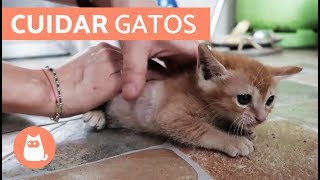
This is a YouTube video titled "Cómo cuidar un GATO CACHORRO" created on July 7, 2017, providing detailed guidance on how to care for a kitten. The content is an informative monologue or presentation by an animal expert covering topics such as feeding, socialization, grooming, health care including deworming and vaccination, and environmental enrichment for kittens to ensure their healthy development.
Adopting a kitten is a wonderful experience. Of course, we must remember that kittens are very sensitive and need special care to grow properly. In this new video from animal expert, we will explain how to care for a kitten. Take note, if it is the first time you adopt a kitten, you should take into account some basic details before its arrival. If you make the effort to prepare everything, it will probably adapt sooner and its relationships relationship with you will be much more positive. Cats are very finicky animals, so we recommend that you leave the food bowl, litter box and water bowl in separate areas. If you have other cats at home or are going to adopt several kittens at the same time, we recommend that you have a bowl for each one. This will avoid conflicts. In addition, you should clean all the utensils from time to time and change the water so that it does not reject it. It is also important to get a scratching post. This way you will prevent your cat from filing its nails on the furniture. Discover how to make a homemade scratching post in another animal expert. Finally, you will need to provide a bed in a quiet area of the house so that the kitten can rest without interruption. We also recommend that you make a nest for the kitten so that it can hide when it is scared. Of course, it should never be disturbed while it is there. If you have adopted a one month old kitten, it will be important to go to a veterinary center as soon as possible to obtain artificial formula milk which will be the basis of its diet. It is very important to note that a mother should never be separated from her kittens unless it is absolutely necessary. The kittens need breast milk, milk to receive colostrum and the care that only a mother can provide. From 2 months of age, we can introduce the kitten to solid food always gradually. We offer small portions of wet food or specific pates for kittens daily. Later, we will start to moisten its food with water and once it eats without problems, we can move on to completely dry food. The optimal age for adopting a cat is three months, at which point it is completely weaned, immunized and has learned the necessary behaviors from its mother, such as grooming habits, urinating in the litter box and learning feline language. At this stage, the kitten should already be eating solid food without any problems. There are several types of food that we can offer the kitten and each one has its advantages and disadvantages. It will be up to each owner to decide on one type of food or another. Although dry food provides all the necessary nutrients for the feline, it is not always easy to find A good quality one for kittens. On the other hand, homemade diets are cheaper and we can guarantee that they are made from natural products. Of course, they do need veterinary monitoring to rule out the appearance of parasites or nutritional deficiencies. If we have adopted a three month old kitten that has always been with its mother, we can practically guarantee that it will have socialized correctly with other cats, which will prevent fears or aggressive behaviors towards them. Socialization is also essential for acquiring other habits specific to the species. We must be aware that socializing an adult cat is very complicated, sometimes impossible. For this reason, it will be essential to continue socializing the kitten once it arrives at our home. We will introduce it to all kinds of people, objects, noises, environments and if possible, other animals. First, Brushing Regular brushing will strengthen our bond with the kitten and help us keep its coat clean. It is also indicated for detecting health problems or parasites as soon as possible. We can use a rubber brush for very short haired cats, a carter for medium haired cats and a rake type comb for long haired cats. Second, mental stimulation Offering our feline environmental enrichment is important for preventing behavioral problems. It also helps us stimulate its intelligence and avoid stress, anxiety and depression. We can enrich its daily life with intelligence, toys, food producing toys or catnip. In fact, we can stimulate our cat with practically anything, even a cardboard box. Physical Stimulation in addition to activities that help stimulate their minds, encouraging them to do physical activity is essential to keep their muscles developed. It also helps prevent overweight and obesity. We can buy them a cat tunnel, a climbing tree or place treats high up so they have to jump and reach them. Games A cat can start to despise their toys after just one play session. That's because they need someone by their side who encourages them to play and have fun. If they don't have another cat to have fun with, you should spend time playing with your kitty every day. Love and Affection in addition to all these activities, cats need something else. Love. They will never be completely happy if they don't have a family by their side who loves and cares for them, who lets them sleep on top of them, or who lets them lick and nibble. Leaving false myths aside, cats are very affectionate animals. If given the opportunity, they can become our best friend. Deworming your kitten will be essential for their health, especially if they have access to the outdoors or live with other animals. This routine will help prevent the appearance of internal and external parasites. Deworming should start when they are one and a half months old and it is essential that it is supervised by a veterinarian it is recommended to deworm your cat every 15 days until the kitten is three months old. After that, deworming should be done once a month until the cat is six months old and finally once every three months. It is important to remember that professional advice from a veterinarian is essential since both internal and external deworming should be done with specific products for kittens and using the right dose. We will also start your cat on the vaccination program when they are two months old. The first vaccines that will be applied are the triple feline or trivalent vaccine and the leukemia test. With this, our cat will be protected against the following halicopenia, infectious rhinitis, calcium and leukemia. Vaccines will need a booster dose annually and to keep our cat healthy, we must strictly follow the vaccination schedule if we want our kitten to grow up healthily. It will be essential to visit the vet regularly every 612 months. And that's it for today's video. If you enjoyed it, give it a like. Don't forget to visit the channel to watch other videos and if you want to download the new Animal Expert app. Until next time, experts.