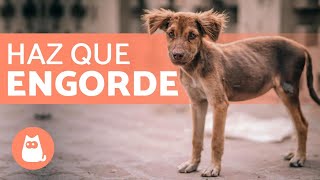
Five steps to help an underweight dog gain weight healthily. The video covers diet changes, exercise adjustments, and how to monitor your dog's progress to ensure it reaches a healthy weight.
Some types of dogs, such as greyhounds or pedencos, have a special constitution that makes them appear very thin despite being at the ideal weight. However, when we talk about other breeds and their mixed breeds, certain physical characteristics should alert us and make us, as owners, take urgent measures. But how do you know if a dog is too thin? What can you do about it? In this new video by an animal expert, we will explain everything. How do you know if a dog is underweight? According to the wsava, a dog should have easily palpable ribs with minimal fat coverage and a waist that we can easily perceive from above. However, when the ribs, lumbar vertebrae or pelvic bones become bony prominences, this is a warning sign. All this, coupled with the absence of body fat and an obvious loss of muscle mass, indicates that the dog is underweight. Why is a dog too thin? There are many reasons why a dog can be thin. A diet based on poor quality ingredients, in quantities lower than recommended or that is unpleasant for the dog will cause weight loss. Viral diseases or intestinal parasites can also cause loss of appetite and as a consequence, weight loss. But in addition, when we talk about puppies, sporting dogs or pregnant, we must know that these individuals will need a specific and higher caloric intake. Offering the same rations as those of an adult dog can then cause weight loss. Therefore, the only way to know the cause and therefore to effectively treat weight loss begins with a visit to the Veto. The specialist will help us vaccinate and deworm our best friend and offer us guidelines to make it gain weight gradually, positively and effectively. How to start? We explain it below, but before starting with this list, we are going to invite you to subscribe to our channel. First, keep a diary of your dog's weight. It is highly recommended to keep a diary of the amounts and ingredients of your dog's daily meals as well as the physical exercise performed or the weight that same day. This way, if the dog loses or gains weight, you will be able to detect it quickly and implement changes effectively. This is a basic point for improving the weight gain program. 2. Offer him quality food There are many ways to feed a dog. Whether we are talking about dry food or raw or cooked homemade diets. If you want some ideas for a recipe, do not miss the ones we have left for you in this card. Regardless of which one is your favorite, make sure that the food is always of quality. If you have any doubts in this regard, seek advice from a veterinarian. Remember that the dog's diet should be based on the consumption of animal protein and fat with a smaller proportion of vegetables and fruits. 3. Increase the calories in his diet One of the keys to helping your dog gain weight is to increase the calories in his diet. However, it is important to do it gradually because if we do it too quickly, we can encourage the onset of gastrointestinal problems. We will start by increasing the amount of food by 10% and if it does not increase the weight, we will increase it by 15, 20, or 50%. We will write down all these changes in the diary and discuss them with the specialist. 4. Offer small but frequent meals at the same time as we increase the amount of food, we must increase the number of feedings. Ideally, food should be distributed between three or four daily meals. This will allow the dog to digest the food more easily and metabolize it better. Ideally, no more than six hours should pass between two meals. The thinner the dog is, the more important it is for them to receive small but frequent meals. Keep in mind that increasing the amount of food the dog eats and their feeding times will also change their elimination needs. This may require a slight adjustment in daily walks. 5. Make the food more appetizing. If you usually offer your dog dry food and you have noticed that he does not like it very much, you can try putting hot water or broth without onion or salt on top of his food. Then wait for it to cool before offering it. Many dogs find soaked dry food more appetizing. If you see that he still does not like it very much, change to a wet gastrointestinal food or a homemade diet. In this way, you will be encouraging him to eat more, thus promoting weight gain. 6. Help him do physical exercise. At first glance, it may seem contradictory to recommend physical exercise for a dog that needs to gain weight. Physical exercise does burn calories. However, it is beneficial because it allows your dog to build muscle instead of just gaining weight by accumulating fat. In addition, physical activity will increase your dog's appetite. We recommend that you increase physical exercise very gradually and as the calories in his food increase. But remember that your dog has to eat more calories than he expends to gain weight. Remember that helping your dog gain weight is a process that can take time and requires patience and making small changes in your habits and those of your dog to help them reach a healthy weight. And that's it for today's video. I hope you enjoyed it and found it interesting. If so, give it a like and watch all the videos we have on our channel. Until next time, experts. Oh.