CONOCE mejor A TU GATO según SU RAZA | COMPORTAMIENTO de tu gato según su herencia #GATUNALIDAD
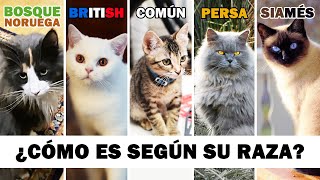
This is a YouTube video titled "CONOCE mejor A TU GATO según SU RAZA | COMPORTAMIENTO de tu gato según su herencia #GATUNALIDAD" created on July 13, 2022. The content features a veterinarian named Carlos discussing various cat breeds and their typical behavioral traits, emphasizing the importance of understanding feline nature based on breed and ancestry. The video also promotes adoption over buying pets and encourages viewers to engage with the channel and its social media. The tone is educational and informative, aimed at cat owners and enthusiasts.
Depending on the breed of your cat, we can learn a lot about it. And remember, all cats have a breed. So this video will also interest you for those of you who think your cat is just an ordinary cat. Hi, I'm Carlos and I'm a veterinarian. Welcome to the Happy Pets and Families channel. Okay, I know you like to learn things about your feline companion, especially if they're a bit curious. But today I can tell you that depending on your cat's breed, you can learn about its cat nature, how it will behave with you, how it will behave with other cats that live with it at home, or even how it will behave with visitors who come to see you. Does that interest you a lot more? Well, don't miss it because we're going to see all that in this video. According to this scientific article from 2019, which I'll leave below in the description box, our cats behaviors are inherited and have to do with both their breed and their external appearance. And we've already talked about the external appearance of their colors here on the channel in a video that you've probably seen, because half of YouTube who is interested in cats has. But anyway, today we're going to focus much more specifically on cat breeds in including the common breed. Because yes, our cats, the domestic ones, the ones that don't seem to have any type of breed, are obviously a mix of other cat breeds and therefore they're going to have behavioral characteristics that make them special and different from other breeds. But I'm also going to give you some facts and curiosities about each of them so that you understand them a little better. But let's get this out of the way in this video. I don't want to single out any. These cats are quite shy. They don't usually like it when you introduce new elements into their environment or when people they don't know come over. In fact, they prefer to observe everything from a distance. They are not very exploratory cats. They are not cats that are driven by their curiosity to see what new thing you have introduced into their environment or who that new person is who has come to visit you. This type of behavior leads them to be quite independent. But I also have another interesting fact to tell you. It has nothing to do with their behavior, but with their external appearance. Do you know why they look like pompoms? It looks like they have a lot of hair. The coat of hair that cats have is divided into an undercoat. A shorter hair that is closer to the skin and a longer hair that grows on top. In the case of Russian blue cats, the undercoat and the surface hair are the same length. That gives them that fluffy appearance that makes you want to pet them even though they don't like it very much. Persian cats, well, although they have that name, they don't actually come from Persia, but rather they were cats that were crossed with cats from that origin. They are cats that are generally not very aggressive, neither towards people who live in their environment, nor towards other cats, nor towards strangers. In other words, they are cats that are very well adapted to living in society. Previous studies have suggested that this breed is quite shy, although it is true that this characteristic of shyness was not observed in the study I am talking about today. But from my experience, I do think that Persian cats are quite shy. And if you live with a Persian cat, I would also like to know your opinion, not from you, because the cat probably gets along wonderfully with the human members of its family. But I would like to know how it behaves with people it does not know. European cat, European shorthair or European shorthair cat. This is a cat that is quite common here in the area where I live. When we talk about domestic cats, it really depends on which breeds already lived in that area. Obviously, a cat that crosses with other animals without the crossbreeding being carried out by any type of Breeder's association, etc. Is going to have much more ancestry from the cat breeds that already lived in that area. It is true that when we talk about common cats the first years of their lives, especially if they come from some type of shelter or if they have been rescued from the street, we cannot characterize them as well. It is possible that they have had experiences that make them behave differently right now than they would if they had always lived in a controlled environment. All of this has actually been taken into account during the study. The researchers say that animals that come from breeders may have been weaned later or have always lived in a closed environment in a house, and that may have subtly influenced the behavior they display. However, in the case of common cats, we may not take their origin into account as much because we do not know. In any case, they are feline companions that we may have to win over a little more. We have to gradually earn their trust so that they can feel that we will not let them down. They are very active animals that like to spend all day exploring the nooks and crannies of your home, hunting for any bugs they find, any insects, flies, moths or anything that might come in through your window. This hunting instinct is very typical of common cats. In any case, if you want to gain your cat's trust, I don't care what breed it is. We've talked about that here on the channel, and I'll leave you some videos here that will be very useful because of all this behavior that I'm telling you. These are cats that like challenges, they like to be tested. And that's why they're very good candidates for puzzles and feeding games, because that helps them stimulate their ingenuity. And since they're very, very active cats, you have to work hard by giving them a little more play. And let's not forget, these are cats that don't like changes in the home very much. So they may be a little shy with any new object that you introduce into their environment. Bengal cats, we just talked about a very active and exploratory breed, but Bengal cats are no exception. They also like to spend all day scheming and exploring around your home. In case you didn't know, this breed is very, very recent, dating back to 1963. And it was created from cats from Southeast Asia that weren't very docile. When they were mixed with common cats, they were given the characteristic leopard type coats, which are the typical coats of the Bengal cat to a common cat that could live with you at home. That's why the Bengal cat can have a somewhat untamed, somewhat wild character, especially those cats that come from very early gener. From the third generation of Bengal cats onwards, they are considered to be much more docile and more suitable for living inside a house. And it is precisely for all of these reasons that introducing Bengal cats requires a little more care, as they do not usually tolerate other cats in their environment very well. They tend to be a little more territorial than common cats, which already have a much more friendly nature. And that is why we have to take the steps very slowly. You can also find everything you need to know about introducing cats below in the description box. In addition, they tend to be a little more fearful than other cats precisely because they have not yet fully adapted to living in a human environment. Any noises or things that could upset them too much must be handled with great caution. And above all, please try not to overwhelm them and always give them their space. This is generally true for all cats, but always a little more so with these cats. Let me make a brief comment on breeds and common cats. There is a widespread idea that purebred cats are better than regular cats, or that purebred cats have a certain cachet that regular cats do not have. What should motivate you to live with a cat is precisely wanting to give them a home, wanting to give them a better future. I am not in favor of buying animals because there are many abandoned animals that do not have the opportunity to live in a home. And what I have told you about the characteristics of the different breeds are generalities because they depend a lot on the behavioral characteristics of each of the cats. Their cat nature, their individual feline personality. This video is a bit of an anecdote so that we can get to know our cats better and so that you who are interested in the world of cats know that well. Their behavioral characteristics also have to do with the breeds that have influenced how the cat that lives with you has been generated. Obviously, in other words, it depends on all of their ancestors. And that's why it's been a study that I thought was very interesting to share with you. But that's it. It's just a curiosity on this channel. I'll never get tired of telling you and I've already told you during the video that you should always adopt and not buy and above all that we should love all cats equally. And now tell me, did I get your feline companion right? Does it look like what I told you in the video? Well, leave it in the comments and if it doesn't, let me know too. And I'm 100% aware that I've left out some breeds and that for you it's probably the most important because it's the breed of the feline companion that lives with you. So also leave me a comment about the breeds that I've left out. And above all give it a like so that I know that you liked the video. If a lot of people watch it and you like it, maybe we'll do a second part where we talk about many other breeds in relation to their cat like traits. Also, if this is your first video about happy pets and families, you have to subscribe to this channel and click the bell so that YouTube will notify you when we upload a new video. If you don't want to miss any of our videos, what you have to do is go to Instagram and follow us there too. Because there we notify you every week when a video is going to be released. And we have a secondary channel here on YouTube called Questions and Answers from a Veterinarian. Stop by and take a look because we have questions and answers almost every day. And before we leave we meet the multi species family of Michaela Nina, the Dog and Oreo. It says that at first Oreo couldn't see Nina, but. But now they even sleep together. I'm so happy. And here we have Mahu and Nit who are joining us from so Paulo, Brazil, and greet us with their human companion, Erica, and we say goodbye. Celebrating a birthday. Well, a slightly belated birthday, because we get so many photos that we can't do them all in the same year. In fact, Tappan turned one in this photo, although we can already congratulate him on his second birthday. Greetings to you and Raquel, your human companion. Thank you very much for following the Happy Pets and Families channel and I'll see you in the next video. The hair, the hair, my dear, the hair. How I change my shirt. So, let's get to it. The slap may not look very good, but there is a small problem with this behavior knot. Because I'm only going to talk about being overweight. I've seen her twice about me. That's why she doesn't like human contact. Shut up. I'm not leaving that comment. No, no, no, don't leave it. How are you going to leave that? But I made a pre disclaimer and a disclaimer at the end, which I think is essential, by the way. No, I said insult. Yes, yes. Hey, Martin Sirio. But that's Argentinian, not Chilean. Yeah, but I mixed it up. But maybe it's better if you don't mix it up. I can do this with my neck. I can't have it like this. I can't breathe. If I turn blue during the video, let people tell me, because. Come on, they tell you if you do yoga because of the posture. Yes, yes, Yoga, Yogi, Yogi Bear. And they haven't even seen me do the lotus pose here, which I also do. That's the lotus pose. Yes. No, it's not this one. I mean, the lotus is with one leg on top of here and the other here crossed over. Oh, let's see. No lotus flower.
More from Javier

Cuando nadie reconoce tu dolor por la pérdida de una mascota: así es el duelo desautorizado 💔




¿Tu perro hace suficiente ejercicio? Mantenerlo activo es clave para que viva mejor 🐶💪

GATIFICANDO UNA PARED PARA MI GATO 😻🧗♂️ Ideas para aprovechar el espacio vertical en casas pequeñas



Por qué duele tanto perder a un perro o un gato: el vínculo que explica nuestro duelo 💔🐾

