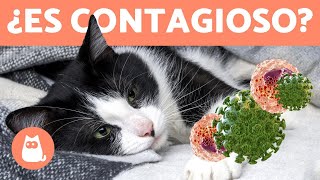
This is a YouTube video titled "𝗖𝗢𝗥𝗢𝗡𝗔𝗩𝗜𝗥𝗨𝗦 FELINO 😷 Síntomas y Tratamiento" created in February 2020, providing an informative explanation about feline coronavirus, its symptoms, transmission, prevention, and treatment. The content is presented by a single speaker offering veterinary advice and reassurance to cat owners regarding the disease and its differences from the human coronavirus.
The coronavirus epidemic has put many cat owners on alert. They can also suffer from this disease. Is it the same one that is affecting people in China and other countries? Can it be prevented or treated? In this new video from Animal Expert, we want to send a message of reassurance to all of them. Let's get started. Feline enteric coronavirus is a virus that has a predilection for the epithelial cells of the intestine of cats, causing mild and chronic gastroenteritis. It is expelled through the feces, the main vehicle of contagion. One of the main characteristics of this virus is its ability to mutate, giving rise to another disease known as feline infectious peritonitis. It affects kittens, elderly cats and immunosuppressed cats. In addition, it is not very resistant to the environment and can be easily destroyed with high temperatures and disinfectants. Below we explain whether this virus can be transmitted to humans, but first the forget to subscribe to our channel to stay up to date with the latest on domestic and wild animals and much more. Can it be transmitted to humans? There are several strains of coronavirus. Some only affect animals such as cats, dogs and pigs, while others are exclusive to humans. Thus, a cat with coronavirus cannot infect a human as it has a different strain than the one that can affect our bodies. The most common symptoms are diarrhea, vomiting, abdominal pain, lethargy and fever. Most cats that suffer from it are resistant to the disease, do not develop symptoms, become carriers and eliminate the virus through their feces. On the other hand, the mutation of the feline enteric coronavirus can manifest in two different the dry and wet forms. In the dry form, we can also observe weight loss, anemia, loss of appetite, depression, fluid accumulation or inflammation. In the wet form, we would notice a swollen abdomen, constipation, swollen nodules or inflamed kidneys. Vaccination is the only effective prevention method. Therefore, it is highly advisable to make regular veterinary visits and follow the vaccination schedule prescribed by the veterinarian. However, once a cat has been infected, there is no treatment. Instead, the symptoms of the disease are treated and it is hoped that the cat will have a good immune response. Cats can self infect or infect other felines. Therefore, if we have several cats, we will separate them when we suspect they have this disease and wait several months before adopting a second feline. If you want to know more about common diseases in cats, here above and in the text box, we have left you a video in which we talk about the ten most common ones. As you have seen, there is no risk that the coronavirus in cats can be transmitted to humans. Of course, since we are talking about a serious disease, it is highly advisable to vaccinate our best friend regularly. Consult your veterinarian if you have any questions or are worried. And don't forget to leave us a comment if you want us to make a video Also talking about canine coronavirus. Until next time, experts.