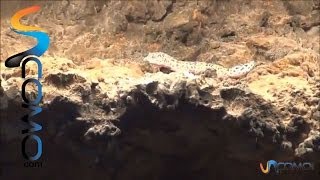
This is a YouTube video titled "El Gecko Leopardo - Consejos básicos" created on July 26, 2012, featuring Nuria presenting detailed care advice for the Eules Macularius (Jekyllpard) gecko, including habitat, temperature, humidity, and handling tips, aimed at beginners interested in keeping this exotic animal.
Hello, we are at the Desertee Habitate facilities. My name is Nuria and we are here to introduce you to the Eules Macularius, commonly known as the Jekyllpard. This is a very small distinctive animal that is almost invisible. Is highly recommended for beginners due to its characteristics. This animal is found from Iran to Pakistan in a semi desert environment. There are different phases and different colors. Many of them are created in the laboratory, which means that different colors have been crossed, which is very distinctive due to its shape, color and appearance. It is an animal that is very good for beginners. Temperatures are usually between 28 and 30 degrees, but you can raise them to between 30 and 32 degrees. At night you can lower them to between 26 and 27 degrees and they do not have any problems. Humidity is usually between 60 and 50 and 65%. We have to keep in mind that when their skin starts to turn white, we have to increase the humidity to about 75 or 85%. There is a class, species or variety of these animals. The Tokai gecko, which is completely nocturnal, is the only gecko that has vocal cords and can emit sound. The light bulb they need is a 2.0 as you can see here. This is the one that is usually used as long as they need it to metabolize their food, which they normally do. Yes, if they have to have it on, they need a 12 hour photo period. 12 hours on, 12 hours off. This animal is very easy to keep for beginners. The thing is that it is a little difficult to pick up given its size. Let's see if I can. As you can see here we have it. It is very distinctive because of its little tail. Their little tail is usually thick because it is where all the protein they eat is stored. Okay, thanks for watching these videos. I hope they have been helpful when it comes to keeping exotic animals in captivity. If you would like more information or would like to visit our terrariums, you can do so via the website www.dia.com.