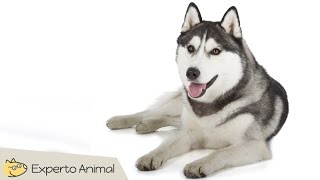
Sam explains what you need to know about Siberian Huskies: where they come from, how they look, their temperament, and what it takes to care for one. He covers their health issues and training tips for anyone thinking about getting this breed.
Foreign welcome to Animal Expert. In today's video, we'll be talking about the Siberian Husky. This breed originated from the Chucky tribe, the breed's main developers. For centuries, the Siberian Husky was used to hunt for food and transport it to the camp, as well as for trade with other villages. The Siberian Husky originated from the Chukchi tribe. The Chukchi cared for and respected the Siberian husky, living with it and feeding it carefully. The great trust they had in this noble animal also led them to sleep next to it, especially with children and women who enjoyed the heat emitted by its body and helped them withstand the freezing Siberian temperatures. Huskies are strong, muscular dogs of medium to large size that adapt to different climates, modifying their coat according to the environment in which they live. Their appearance clearly reminds us of wolves, and they are truly beautiful dogs. We find huskies in many colors other than the traditional gray, black and white. Different combinations with red, brown, blonde or black. There are also completely white specimens. The eyes are usually hazel, brown or sky blue, although the species occasionally presents heterochromia, the mutation that gives them one eye of each color. The Siberian Husky stands out for being a very outgoing and friendly dog. It is usually gentle and affectionate with those it lives with. It sometimes maintains an alert behavior at home, but it is not at all a guard dog that is aggressive with strangers. It is a very intelligent and docile dog with a disposition to be a loyal and hard working member of what it considers its pet. It loves to be mentally stimulated, so intelligence, games and active exercise will be very beneficial. Agility, for example, is a very good option for it. The Siberian Husky will need regular and almost daily brushing when it is shedding. Likewise, it will also benefit from a monthly or bi monthly bath to keep its coat clean. It is a dog that needs between two and three daily walks that add up to a total of 90 minutes. In addition, they will also need to exercise actively to release accumulated energy. For this reason, the husky is not a dog suitable for just anyone. They need an active family. Finally, we remind you that food is one of the most important things you should do and always make sure it is. Quality food not only affects their coat, but also their condition and health. Health problems in the husky usually arise when they mate with specimens that are direct relatives. This factor leads to the appearance of eye problems such as cataracts, corneal dystrophy or progressive retinal atrophy. On the other hand, they are also usually affected by dysplasia problems, whether in the elbows or hips, although less frequently than eye problems. The husky is a docile breed when it comes to training, although it will depend on each specific specimen, not all huskies are equally smart or curious. Each one has its own personality. To begin with, you will need to socialize the husky puppy with different people and pets to ensure that it is sociable and balanced in its adult stage. Don't forget that the husky responds wonderfully to positive reinforcement, with which we will achieve very good results. Avoid punishment at all costs. Finally, you should train your dog in basic training commands dedicating about five or 10 minutes. Thank you very much for watching this video. If you liked it, give it a like, share it with whoever you want and subscribe to our channel. See you soon. Sam.