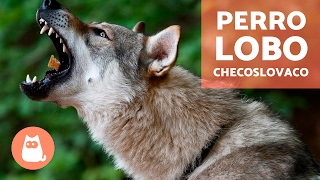
This is a YouTube video titled "El perro lobo checoslovaco - Pequeño documental" created on February 11, 2017. It features a single speaker providing an informative documentary-style presentation about the Czechoslovakian wolfdog breed, covering its origin, physical characteristics, temperament, training needs, care, and health. The content is educational and focused on animal expertise without any conversational elements.
Hello and welcome to this new animal expert video. Today we're going to talk about the Czechoslovakian wolfdog. The Czechoslovakian wolfdog originated in the former Czechoslovakia. Specifically, in 1955, it was decided to cross a Carpathian wolf, known as the Kapotung wolf, with a German shepherd, resulting in a fertile hybrid that could be bred. The breed continued to be developed by selecting specimens with favorable genetic characteristics such as docility or a predisposition to training. Finally, in 1982, breeders clubs recognized the Czechoslovakian Wolfdog as a national dog breed. The Czechoslovakian wolf dog is strong and large in size. It is very similar to the wolf both in its body structure and in its movements and coat. They are generally gray in color, but we can find specimens in different shapes. The minimum height at the withers for females is 60 cm, while for males it is 65. The minimum weight is around 26 kg for males and 20 kg for females. The Czechoslovakian wolf dog stands out for having a strong temperament. It is a reckless and quick reacting dog, but very brave and loyal at the same time. Always devoted to its owner. It is also a very active, curious dog with hunting instincts. The ideal owner for the Czechoslovakian wolf dog is one who has experience in positive training, dog handling and canine skills. As this is a breed that requires a lot of mental and physical stimulation, complying with these premises is essential to avoid future behavioral problems. The summer coat is relatively easy to care for as brushing twice a week is enough. However, the winter coat needs to be brushed more frequently. Ideally, daily bathing is only necessary occasionally when the dog gets dirty and should be done every two or three months. Czechoslovakian wolves need plenty of exercise and company, otherwise the first behavioral problems may arise. It may be advisable to work with a dog trainer on all types of exercises and varied activities. Despite their large size, they can adapt well to apartment life if they are given enough space and outdoor exercise, as they are moderately active indoors and tend to be very quiet. Czechoslovakian wolves can respond very well to dog training when it is carried out properly. As they are descendants of wolves. Many people think that the correct way to do this is to use traditional training methods based on the popular idea of dominance. However, this form of training is not recommended as it forces an unnecessary power struggle between humans and dogs. Both wolves and dogs respond better to positive training styles such as clicker training, with which excellent results can be achieved without creating conflict or falling into erroneous animal behavior patterns. During its puppy stage. We must work thoroughly on the dog's socialization and also teach it to inhibit bites. On the on the other hand, it will be essential to start basic training early as well as more advanced techniques and tricks during its youth. As we have mentioned, it will be very important to perform exercises to keep it entertained throughout its life, so the use of intelligence, toys and all kinds of canine commands and skills will be very appropriate. The truth is that this breed is healthier than the average dog, perhaps due to its genetic makeup. However, it has a certain predisposition to hip dysplasia, which is not surprising since its ancestors include the German shepherd dog. Therefore, if we offer our Czechoslovakian wolfdog all the care it needs, a quality diet and visit the vet regularly for the pertinent periodic checkups and keep the vaccination and deworming schedule up to date, our furry companion will enjoy impeccable health between 13 and 16 years of age. If you enjoyed the video, give us a like and subscribe to our channel to learn more about the different dog breeds and many other curiosities about the animal world. Until next time, experts Sam.