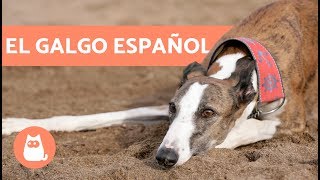
The Spanish Greyhound is a lean, athletic dog breed with a long history in Spain. The video covers their physical traits, temperament, common health problems, and what they need to stay healthy and happy.
The Spanish Greyhound, also known simply as the Galgo, is a tall, thin and strong dog that is very popular on the Iberian Peninsula. This dog is similar to the green hound or the greyhound, but there are several physical characteristics that differentiate the two dog breeds. The Spanish Greyhound is not a well known dog outside of Spain, but more and more enthusiasts are adopting these dogs in other countries due to the animal abuse they suffer in their country of origin. Their hunting skills, speed and predisposition make them a working dog. At the end of their service season, many end up abandoned or dead. That is why it is so important to consider adopting one. If you think this breed suits you, find out all about the Galpanyole below. This breed was known in ancient times by the Romans, although many theories point to a much more remote origin. It is believed to descend from ancient Asian sighthounds. The Spanish Greyhound is also the progenitor of other dog breeds such as the greyhound. It was widely used for hunting during the Middle Ages in Spain and caused fascination among the aristocracy. Proof of this is the work of Francisco de Goya, the hunting party. Currently, hunting with greyhounds is a very controversial activity in Spain and many animal protection societies ask that this activity be censured due to the cruelties to which the greyhounds are subjected. The Spanish Greyhound is a dog very similar to the greyhound but smaller in size. It has a stylized body, an elongated head and a very long tail. In addition to thin but powerful legs. It is a muscular but stylized dog. The skin is very close to the body with all its surface without presenting areas of loose skin. The coat of the Spanish Greyhound is stupid, fine, short and smooth. However, there is also a variety with hard and semi long hair in which beard, mustaches and fringes are formed on the face. Any coat color is acceptable for these dogs, but dark, brindle, tan, cinnamon yellow, red, white, pronghorn and piebald are preferred. Males reach a height at the withers of 62 to 70 centimeters while females reach a height at the withers of 60 to 68 centimeters. The breed standard does not indicate a weight range for these dogs, but they are light and agile dogs. The Spanish greyhound tends to have a somewhat shy and reserved nature, especially with strangers. For this reason it is recommended to socialize them in their puppy stage and continue doing so in their adult stage. They are gentle, kind and affectionate dogs, very tender with those they trust. The Spanish Greyhound is a sensitive and very sweet dog. Despite having a strong prey drive developed over generations. They are usually friendly with small breeds such as cats and dogs. This is why they are a good choice for those who want to enjoy greyhounds who also have other pets. This should also be worked on during their socialization stage when they are still puppies. On the other hand, they behave excellently with children, adults and all types of people. They enjoy a very relaxed environment indoors, but outside they become somewhat more active. They greatly enjoy going on excursions, long walks and visits to the beach. It is important that the Galgo Espanol be adopted by a proactive and loving family that takes into account the submissive and noble nature of this breed. Exercise, daily walks and affection should never be lacking in their daily life. The Galgo Espanole requires an active and positive family by their side that allows them to go on two or three walks a day. During each of these walks, it is advisable to let the dog enjoy at least five minutes of freedom without a leash. To do this, you can go to the countryside or use a fenced area such as a dog park. If this is not possible every day, it is advisable to dedicate at least two days a week to doing different activities with our Galgo Espanol. Fetching games such as playing fetch or Frisbee are extremely entertaining and appropriate for this breed. At home they are very calm dogs, but we can offer them different activities to stimulate their minds, such as using intelligence toys or food dispensing toys, thus promoting their well being. They require weekly brushing as their short, coarse hair does not suffer from tangles. However, brushing with a rubber brush will help remove dead hair and keep their coat shiny and glossy. They should be bathed occasionally every one or two months. Training the Spanish Greyhound should always be based on the use of positive reinforcement. They are very sensitive dogs as we have already mentioned, so the use of punishment or physical force can cause great sadness and stress in the dog. The Spanish greyhound is moderately intelligent but has a great predisposition to learn as long as we use treats and affectionate words as rewards. He loves to enjoy receiving attention, so it won't be very complicated to introduce him to basic canine obedience and dog socialization. Finally, we recommend that you support yourself with physical activities related to obedience, such as agility, canny cross or other dog sports. The greyhound greatly enjoys exercise, so it will be very appropriate to teach him these types of activities. To maintain good health in our greyhound, it is advisable to visit the vet regularly every 612 months to carry out a good follow up and detect any anomalies early. It is also essential to strictly follow the dog's vaccination schedule and the deworming schedule. This breed is relatively healthy, but care must be taken with diseases typical of sighthounds and large dogs. Some of the diseases that can affect the Spanish greyhound are gastric torsion, progressive retinal atrophy, baldness, deafness, hemophilia, megaesophagus and chronic superficial keratritis. The life expectancy of a Greyhound is between 12 and 15 years. And that's it for today's video. What do you think about dog breeds in Spain? We want to know your opinion, so don't forget to leave us a comment. Give us a like. Tell us what other breeds you would like us to cover and subscribe to our channel. Until next time, experts.