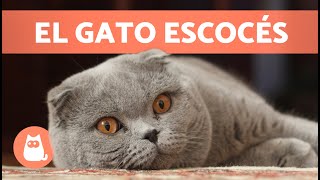
Scottish Fold cats have distinctive folded ears and round faces, but they're prone to ear and joint problems. The video covers their origins, personality, care needs, and health issues to help you decide if this breed is right for you.
Foreign the Scottish Fold is known for its adorable floppy ears and tender gaze. Discover everything you need to know about this popular feline breed, its origin, characteristics, character, care and health in this video by an animal expert. Don't miss it. The origin of the Scottish Fold dates back to the 1960s in Scotland. In 1961, some farmers decided to cross a cat named Sushi with British short hair cats. This resulted in several cats sharing their mother's distinctive folded ears. This is where the breed gets its name from, both for its nationality and fault, which means fold in English. However, however, Sushi's direct descendants had serious health problems. As a result, the breed was banned. However, geneticists and breeders later managed to eliminate these problems. The Scottish Fold breed was then officially recognized by the Cat fancy association in 1974. The Scottish fold stands out for its compact, robust and muscular body. This is a medium sized cat that usually weighs between 2 and 6 kg. Females measure between 15 and 20 cm while males can measure between 20 and 25 cm. Its face is wide and round with large rounded eyes and a short flat nose. It also has small ears that fold down which are the distinctive feature of this breed. On the other hand, the Scottish Fold cat's coat is dense and soft so it insulates it from the cold. Although it is a short haired breed, there is a semi long haired variety called the Highland Foal. All colors and color point varieties are allowed except the one that contains white. Regarding its personality, the Scottish Fold is sweet, friendly and outgoing. It is also very patient and attentive. For this reason, it is ideal for living with children and other animals. These cats need a lot of play and pampering as they are very affectionate. For this reason, they are not recommended for people who spend a lot of time away from home as they cannot stand being alone for long periods of time. They are also known for being calm cats which makes them ideal companions for the elderly or people with limited mobility. Furthermore, they do not require too much effort in their education as they do not usually get into mischief or cause damage to the home. In general, Scottish Fold cats do not need special attention beyond brushing their fur two to three times a week. Furthermore, if we combine brushing with products such as malt, we will prevent the formation of hairballs in their digestive tract. Regarding their diet, an excess of calcium could cause the cartilage in their ears to become stronger and they will lose the fold that characterizes them. Therefore, it is important to offer them a diet with a balanced amount of calcium and other nutrients. To do this, it is best to seek advice from a veterinarian specialized in nutrition. On the other hand, it is important to clean their ears at least once a week since the folds in their ears can promote the appearance of mites and ear infections. In addition, with age, dental cleanings may be necessary to keep their teeth in good condition. Likewise, on the one hand, it is recommended to pay attention to the condition of the mouth, eyes, nails, coat and general physical condition. On the other hand, it is important to follow the vaccination guidelines and carry out the pertinent deworming. The longevity of this breed is around 10 to 15 years of age. In addition, these are animals that, despite not being in poor health, need special attention due to their genetics. We should not be alarmed by this, but it is advisable to be vigilant and carry out frequent veterinary check ups to detect possible problems as soon as possible. One of the most frequent pathologies of this breed is otitis. Therefore, it is necessary to strictly follow the instructions of our veterinarian to keep their ears healthy and avoid problems associated with hearing. There is currently a ban on breeding two Scottish foal cats due to the health problems that inbreeding can cause in the offspring. Don't forget to check out the video above where we show you other popular cat breeds such as the Scottish foal. Tell us, have you adopted or are you thinking about adopting a Scottish foal cat? Until next time, experts.