Gestión de una colonia de gatos. ¿Puede existir una convivencia armónica entre vecinos y la colonia?
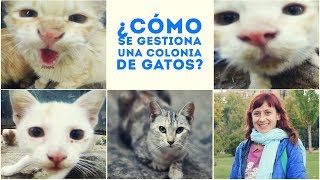
Carlos, a clinical veterinarian, and Maria Jose, who manages an urban cat colony, discuss how neighborhoods can coexist with feral cats. They cover sterilization programs, public health concerns, and practical strategies for reducing conflict between residents and colonies.
That's a mess. But, you know, the mess of it all. I think ours is the only plague here. Hello. Welcome to the Happy Pets and Families Channel. I'm Carlos. I'm a clinical veterinarian in small animals. Today we've come to my city, Placentia, to tell you this story.
Foreign.
I've been here on vacation for a few days to get away from work a little bit. Walking down the street in the center of Paencha, we came across a vacant lot where a cat colony had been established. And at the door of the lot, there was a sign recommending that the cats not be fed, because those cats were already being cared for by a volunteer who was in charge of managing the colony. That's how we met Maria Jose. We decided to get in touch with her so that she could tell us firsthand about the challenges and difficulties that a volunteer who manages urban cat colonies faces. A colony is a group of cats that live wild in an urban environment. They usually live in a private area, such as a garden or a plot of land, where these cats, who do not receive the same attention as a domestic cat, develop their lives. Well, as I mentioned before today, we had a very special guest. Because we learned that she was managing the colony of cats that we mentioned in the city center. We decided to bring her here so that she could tell us a little about her experience and how she began helping these animals that are very unprotected on the streets, and how she is helping them. She is Maria Jose. Hello. Good morning.
Hello. Good morning.
First of all, how did you start helping these animals? This is important.
Well, the help began quite a while ago in some inhabited houses in the city center, of which there are many, because there were some cats that started to show up with kittens and that. And simply by chance, out of curiosity, you feed them a little, you get to know us. Then I realized that there was an older woman who was constantly taking care of them. And this woman would bring them their containers of hot food. She would put 3, 4, 5. But anyway, super hardware containers, she had them all. And I was amazed by her. Also, she took care of other colonies. She dedicated herself to that. I mean, that was basically her life. Then the woman got sick and asked me, since she was a neighbor and we got along quite well, if I could do her a favor. During the day she was hospitalized when they were going to operate on her. And I told her that, indeed, without any problem, she would give me the containers because they had to be hers to put them in the microwave for. So Long. She told me everything. It had to be done. This person died. So I moved the colony because the neighbors were complaining about where it was, from this house to a lot over there. And that's where they started to multiply.
Oh, my goodness. Well, of course, with everyone's good intentions, they started to see all kinds of food there. Cats from other neighborhoods were coming and things were getting bigger. And of course, we found ourselves with the problem of a lot of cats and a lot of neighbors who were also upset, which is also very understandable.
That coexistence with the neighbors got to a point where you saw that the cat's presence there was beginning to be in danger. Well, look, there is a church nearby, and there was a neighbor who used a shotgun and shotgun pellets to scare away the cats, right? Then there was another neighbor who thought that was it because of the smell of urine. But anyway, other species that aren't cats.
Urinate there because it's an area where young people go out a lot and they go on weekends. I spent some time cleaning the street, mopping it and everything. Mopping it so that people wouldn't complain to me, starting to use these products so it wouldn't be so messy. And I said, well, this has to be fixed. And I have no idea. And I said, I have to talk to someone who knows about this and above all, go to the city council.
And from the administration, from the city council, from the. What kind of response did you get?
They were very patient with me. The council was staffed by a biologist and a veterinarian. We were talking about people who are also very knowledgeable about the subject. Well, more or less. What they told me was that the ideal thing would be for them to look for food as they have always done, and not be given food.
So, of course, it seemed to me that not giving them food also brought its drawbacks because they would go looking for it in the garbage. But that meant open bags, because I have seen that. I have seen that too. A lot of garbage in the streets. There is constant meowing, constant heat. They told me that in order to use the CES method, because I explained the subject to them and such, and they were very knowledgeable about it.
Well, so that everyone understands, let's explain for a moment what the CES method works. The CES method is based on capturing the animal in the colony environment. The animal is taken to the vet. At the vet, they are examined, sterilized, and the animal is not then sent to a shelter, but is instead returned directly to the colony. So that it can continue living in the colony surrounded by the other cats. But it is an animal that can no longer reproduce.
They were not very in favor of it because they said that in Barcelona, for example, which were the pioneers here in Spain, they were already seeing some problems in this regard. In any case, the only thing the city council itself could do is to establish an association that is to form. What is an association?
Yes, it must be established. Indeed, it is possible that the city council could provide money to invest in that. That is precisely why I have put up a sign on the lot where the cats of the colony are. I am giving them my email address so that they can contact me if they want or adopt. Because there are puppies that if you take them in when they are very small, there is no problem. There is no problem adapting or forming some type of association or organization to carry out this program, the CESS program. And in fact, they have managed to, let's call it, place cats there. Right. The solution is not to capture all the cats and remove them from that area. Right? Because these cats are animals that have become accustomed to living in freedom. They are cats that are called seralas, which are not wild, but they live in freedom. Adults are not going to adapt to a domestic environment so easily, however, the little ones do. It just so happens that one of the cats that we captured, and there is a woman who is in charge of doing all the interventions, because she has the money and the love for these animals. In order to do this, she fell in love with the cat that they intervened on and said, I'm taking him to my farm because he has a farm. And it was just yesterday that the cat appeared again on the lot. In other words, the cat has traveled kilometers looking for its colony. Even though I know that the farm was taking care of.
Of all its needs. Absolutely.
Did someone who was already in charge of other colonies advise you, or did you search online, or how did you find a way to manage it?
Either way, I found out online what was done in these cases. And I also knew a person who lived on a nearby street, and the same thing was happening on that street. And she wanted to know how we were doing it on the street where I live. Right. Well, we started communicating, and this woman was the one who told me about the issue of sterilization. And when you go online, you also see what legal requirements apply in these cases for colonies. Once you start managing the colony, what are the needs that you see in the animals that are in the colony?
From the perspective of my knowledge which is not much and is very limited. Well, it's not many, it's not very few. Aside from the diet. I see, of course, I find completely closed little eyes with the typical bald, red holes, mites. They must have their viruses, they must have their infections. So then medical attention, right, from the veterinarian would be ideal. Because in addition, that health is not only for them, it is for the neighborhood.
Of course, because many times infections can pass. Right. Whenever people also get scared, oh, it's my cat, I don't know what. Right. But it's true that there are some diseases that can affect humans. Most of those viruses. No, but hey, they're bad for them. In the end, it's a public health issue.
All I really do is feed them dry food, uh, the kind that I find in bulk, so to speak, in big places. And it's something that I pay for with my, let's say, personal money. So of course, all that would also be very useful in the case of this colony. You've had to go to the vet a lot.
Yes, yes, it's been taken. But precisely because of the castration issue, they did a series on it. They take advantage. Right, let's go see it and go to such and such. And so it's like that. They know perfectly well what you're up against and they let you do the operation for a much lower price.
It's the vet who directly helps them. It's not because they have any help from the college or a professional veterinary organization. They are doing a job without getting paid for it.
Hum. Raising awareness among people in society as a whole is very important. And veterinarians first and foremost, regarding the CES protocol regarding castration, most veterinarians are more or less clear on this. We understand that it is a way of controlling birth rates, colonies in that regard, what kind of approach is being taken? In the same way that later on you have reflections or in the act when you are capturing them and you say it's okay, it's for their own good. Let's see, it's for the good of the colony as a whole. Maybe it's for the good of the neighborhood, of the area of the neighborhood. Okay. It's for the good of the individual. In other words, it's as if someone came here and said, well, let's see, in this downtown area, we're going to see that there are too many people. We're going to sterilize you, you, you and you. Well, it's hard, isn't it? It's a bit Hard to get used to the idea and say what I'm doing is really good. I don't know, I think it's very difficult. We could also get used to them, adapt to them in the same way that they have adapted to us. If the way we want to help the colony is without intervening in the colony, perhaps the colony won't be able to be fed either, or it won't be possible. Regarding the issue of sterilization, it's true that I think that in the same way that they can't decide whether or not to sterilize them, if the colony is growing and if you're reaching a critical limit, logically those cats don't have the freedom to decide not to reproduce either. Yes, they pull and pull. Exactly. Sure, sure. They don't have that freedom either. I think that we could reach a kind of middle ground between not feeding them too much, but also not using the CESS method for everything. That's a hassle. But, you know, I mean, the hassle and everything. I think that the only plague here is ours and we have. Have been responsible for all this. Solutions will have to be found and of course they will never be optimal. And a solution can always be found that is the most appropriate, the most sustainable. I don't know what it is, okay, But a solution for me is to adapt to what there is. For example, no, the neighborhood itself complains about the grit of the cats meowing. And on the weekends we have people from the nightclubs for hours, but yelling. But of course, I mean, yes, you can adapt to this noise. Sure, there are some noises that. Yes, there are other noises.
And this noise of the kittens that I understand is annoying, right? But it can be much less annoying, the things that you find normal and you adapt to, because you know that you are living in an area that is central and that is the nightlife area. And it has happened to you. If you adapt to that, why should we complain about this? Right? How do you think society should respond to it? And what is the perspective that you see from here on in the future? Personally, I think that the people who are in charge should be the ones. And what is the perspective that you see from here on out? Personally, I think that the people who are in charge should be the ones in charge. And what is the perspective that you see from here on out?
They have to have acquired some knowledge first. Okay, my general idea I'm going to tell you about the world would be that if each of us dedicated ourselves to everything around us and to the Community, where we live and worried only about the things of our community. The world in general would be a.
Better place if each neighborhood, each area dedicated itself to its colony. What's more, first you would learn to love cats. To get to know this species and then, well, to see that it's good for them. It's good for us.
Seeking the common good, right?
Exactly. Seeking the common good of ourselves and others, which takes time until people start to understand how it works and such. In a year, this will be much more everything, much easier and much more controlled. So it's not a long time, right? A year. Look at what I'm telling you. And it's all very good today. It's formative and teaches you many things. You're not only helping, you're helping yourself. Because you're also educating. Educating yourself and seeing other points of view. It makes you reflect a good activity.
I hope that in a year, if we talk again, you tell me and.
Say, look, great, quote, smooth as silk. There are no more problems. I wish. And that's it for today's video. Today we've brought you the story of how a cat colony is managed by Maria Jose. And I really want to thank you for taking care of us so quickly and so well. The truth is that I have to.
Thank you really, because this is an opportunity for everyone to learn about these types of situations. And you've made it easy for me to help this colony in particular and all the colonies that may exist. In other words, thank you very much to both of you. Thank you very much.
Of course, all the ideas that you can take away from this video and that can help you manage a colony, well, you can apply them too, if you like the video, give it a like and share it with your family and friends, because it can help them. And if you have a colony near home and you want to tell us how it is managed and how you can help them, or you want to ask any questions or clarify, you can leave them in the comments. Thank you very much for following Mascota's Y Happy Families. Please subscribe if you haven't already, and I'll see you in the next video.
And walking around the center. Walking, of course. No, continue more directly. Yes, walking. Why couldn't they find it there? And very good. No one knew either. That's very badly said. Two gerunds, of course. Sorry. No, it's okay. It's okay. Going, walking. But walking is good.
More from Javier

Cuando nadie reconoce tu dolor por la pérdida de una mascota: así es el duelo desautorizado 💔




¿Tu perro hace suficiente ejercicio? Mantenerlo activo es clave para que viva mejor 🐶💪

GATIFICANDO UNA PARED PARA MI GATO 😻🧗♂️ Ideas para aprovechar el espacio vertical en casas pequeñas



Por qué duele tanto perder a un perro o un gato: el vínculo que explica nuestro duelo 💔🐾

