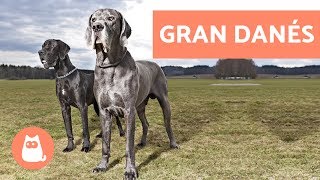
This is a YouTube video titled "Gran danés o dogo alemán - Perros GIGANTES" created on May 19, 2017, providing an informative monologue about the Great Dane dog breed. The content covers the breed's history, physical characteristics, temperament, care, training, health issues, and general advice for owners. The video is presented by a single speaker without any conversational exchange.
The Great Denis is one of the largest, most elegant and charismatic dogs. The breed standard accepted by the Federation Sinologique Internationale describes it as the Apollo of dog breeds. Find out more about it in this new video from Animal Expert. Although its name, the Great Denise, refers to Denmark, the breed was actually developed in Germany from German dogs. The oldest known ancestors of this breed are the Bullen Baser, an extinct German breed, and the German dogs used to hunt wild boar. Crosses between these dogs gave rise to different types of mastiffs from which the current Great Denise was created in 1878. The great Denise is a very large, powerful, elegant and aristocratic dog. Despite its large size and imposing figure, it is a well proportioned dog. We can highlight its eyes, which are generally dark but sometimes blue, and harlequin, and the typical colors of the breed are fawn, brindle, harlequin, black or blue. Their height at the withers is a minimum of 80 cm in males and 72 cm in females. The weight is around 55 to 90 kg in males and 45 to 60 kg in females. The enormous size of the Great Dane can give a wrong impression about its temperament and character. In general, these dogs are very friendly and affectionate with their own, although they can be reserved with strangers. They are not usually aggressive, but it is important to socialize them from puppies due to their tendency to be shy with new people. Correctly socialized, they are dogs that get along well with people, other dogs and even with other pets. In this case, they are particularly good friends with children, although while they are young dogs they can be clumsy with younger children. Caring for the Great Dane's coat is simple. Occasional brushing to remove dead hair is usually sufficient. We will use a rubber brush. Bathing is only necessary when the dog gets dirty and due to its size, it is always advisable to go to the dog groomer. These dogs need moderate exercise and are much more active outdoors than indoors where they should be provided with a soft bed so they can rest comfortably. Due to their relatively calm temperament, they can adapt to living in apartments, although their size can cause problems in excessively small flats. On the other hand, and also due to their size, before adopting a granddanny's, you should consider that feeding costs can be very high. A granddanny's puppy must learn the same things as other members of its species, such as how to litter outside, how to chew on toys and how to walk without pulling. However, as we have pointed out before, it is very important to socialize them correctly to avoid fearful or aggressive behavior in their adult stage. They should be introduced to people, dogs, other animals and environments of all kinds. Training can begin early, always, as if it were a game, with the basic commands sit, lie down or come here. Due to their large size, we recommend practicing obedience frequently. Finally, it is important to emphasize that these dogs need frequent company. They are not usually destructive, but they can become so if they spend long hours alone or are not stimulated as they need. It is essential to follow the dog's vaccination schedule as well as regular deworming. We will also provide them with quality food and appropriate care to ensure their good health. We recommend veterinary visits every six months which will help us identify any illnesses quickly. This is because this breed is prone to various canine pathologies. Among the most common diseases in the Great Dane are the gastric torsion, hip dysplasia, cardiomyopathies, Wolver syndrome, cataracts, elbow dysplasia and osteosarcoma. Their life expectancy is between seven and eight years. And that's it for today's video. I hope you enjoyed it. Don't forget to download our new app and see you in the next video. Until next time, experts Oho.