He visto A LOS GATOS NI TOCARLOS (DON'T F**K WITH CATS) y me siento identificado 📽️
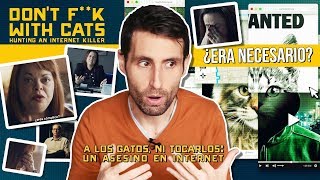
Carlos, a clinical veterinarian, reacts to the Netflix documentary Don't Fk With Cats and discusses the ethical problems with spreading disturbing animal content online. He draws from his experience managing animal rights groups on social media to explore how to handle sensitive material responsibly.
I'm still shocked because the other day we watched a documentary which is what we're going to talk about in today's video called no to Cats. Hi, I'm Carlos, a clinical veterinarian at Small Animals. Welcome to the Happy Pets and Families Channel. Netflix Edition. Yes, it's not sponsored or anything. The other day, after Netflix had been recommending it to me for a long time, we ended up watching the documentary Don't Touch Cats, which is called don't with Cats in Spanish or English. Don't with Cats. The thing is, well, you. You know how annoying Netflix can be sometimes, and even at Christmas, I was recommending that I watch the documentary because it had just come out and so on. I saw on Twitter that there were a lot of people talking about it. They had told me that it would have a big impact on me. They had told me that it was a documentary worth watching. Well, today I can tell you that I've seen it, and I don't know if I regret having seen it or not. But anyway, let's first talk a little bit about what the documentary is about. Well, as a veterinarian, I'm making this video because the documentary was developed by a group of animal rights activists who, well, watched some videos on the Internet and so on. So I saw myself reflected a little bit, not because I have anything to do with what the documentary is about, but because of what usually happens sometimes in our Facebook groups or on other social networks where posts about animals also appear. What happens in the documentary can happen to any of us. We are all connected to a window that looks out onto the outside world where there are people who also act simply to receive comments or likes or reactions. And those people can do anything to achieve their goal, which at the end of the day, is attention. So, like me with happy pets and families, we maintain an Instagram, a Twitter, a Facebook page, a Facebook group, and two YouTube channels where many people also share their opinions, especially on Facebook, where people post publications from other sites or publications they've seen out there that have caught their attention. I've also felt a bit obliged to think and reflect on whether our groups are doing a good job, whether we're exempt or whether we're free from suffering what happens in the documentary. And that's why I'm reacting to it a bit and telling you about it. Before continuing, I want to warn you that today's video may have some spoilers, not that it's possible you're going to see them. Spoiler alert. If you haven't seen the documentary, and want to see it first, then pause this video, watch the documentary, and then come and watch it to see if you agree with my opinion that I'm going to give you throughout the video. The thing is that the documentary is quite short. There are only three episodes of about an hour each. And it develops like a story that is truly intriguing and that grabs you from the beginning because you're always waiting for the steps to be taken so that the whole story can be unraveled. The documentary is called Don't Touch Cats because it begins in the first chapter with a person who uploads a very powerful video to the Internet. The truth is that you don't actually see the video in the documentary, but they narrate it to you in great detail. You don't really need to see it because you have it all in your head. What happens in the first video, A psychopath takes two small kittens. They look alive and puts them inside one of those vacuum bags to put blankets and things from the closets in. And he vacuums the live kittens inside the bag. Of course, you actually see the kittens. You start to hear the noise of the vacuum cleaner. You see the faces of the people watching the video, how they break down, how they start to cry. This video was uploaded to an animal rights group on Facebook with the sole intention of spreading the word, reporting it, and trying to prosecute the person who had done this to the cats in that group. They began to organize and move, and there were specifically two people who are the protagonists of the documentary who began to try to find out where that act had been committed and if that person could be legally prosecuted, or if it had been committed in the United States, because they were in the United States and could find the person who caused the suffering of those cats. It was a video that they had found on the Internet. It. It could have been anywhere in the world. It could have been in Russia, or it could have been here in Europe or wherever. The fact is that they began to do some research and began to analyze the images of the video. They began to spread it among. Well, among the rest of the people in the group. Everyone began to give their opinions and began to analyze everything seen in the video to see if they could locate him somewhere. In the end, it turns out that they were able to locate him somewhere in North America because of a pack of cigarettes that was on the bed where those things were being done to the cats. The documentary is evolving, and now we can talk about the second chapter, because in the second Episode, what they do is start the search, if they can locate that person, if they can recognize that person, because there is a part where you can see a bit of their face, you recognize something about them. And they set out to see if they can find them. Well, they find the person who is, as I'm telling you, it's a documentary that is real. The person existed. His name is Luca Rocco Moda, and he lived in North America, specifically in Canada. And so they start looking for more images of this person on the Internet, which suddenly was full of images, because there were a lot of groups and people talking about that person. Although they soon begin to discover or begin to see that perhaps they are fake profiles, profiles that could even be managed by the murderer himself. And now, well, if we think about a person who creates fake profiles, who could have done that online and who, well, maybe is a person who is simply looking for fame and recognition, is a bit of a sociopath who only wanted exposure on the Internet. But all this gets worse because as the plot progresses, he continued uploading videos to the Internet. In one, he took a kitten and submerged it in water tied to a stick. In another, he took two other kittens and introduced them to a python. And logically, the python did what these types of predatory animals do and recorded all that and uploaded it to the group where these people were investigating the cat killer. In short, all this makes the group start to gain more and more fame. Not only the videos within the group itself, but also in the rest of the Facebook community. More and more people want to join because they want to participate in the search. And that also makes the people who belong to the group suspect that the cat killer himself is part of the group. Because they suddenly receive more and more first hand information. They find out that another video was uploaded shortly after it was uploaded, and they were almost the first to see it. When they locate the individual, the first thing they do is contact the police, because they begin to suspect that this person also wants to harm other people and animals. But the police do not take them very seriously at first. The truth is that the case remained dormant for a while because it did not escalate further. And that was when Luca recorded himself doing the same thing to someone else. He ended the life of a person with whom there was also a sexual relationship. The third and final episode tells the story of the search for Lucas Rocco Manjoda and how the police get involved. Also, I think it was in this one and the previous one, the mother also appears. They interview the mother and they start to say if there was another person involved, who was the one who was handling Luca? Well, in the end, they managed to find him in Paris. It was in Paris, right? Yes. They deported him back to Canada and arrested him. You see the entire interrogation, and you also see images of him while he is being interrogated. And finally it comes out how he is sentenced. They sentence him to life in prison in Canada. Well, and I have already spoiled the entire documentary for you. I hope you have seen it. But anyway, regardless of whether you have seen it or not, the documentary, even though I have been telling you about it, can still be interesting, even if you already know the plot. Okay, but before you decide whether or not to watch it, wait, because at the end of the documentary, the protagonists of the documentary, from the group of people who had been looking for the cat killer, come out in front of the camera, reflecting, saying that if the documentary, or if we ourselves, by watching the documentary, are not doing precisely what the psychopath wanted, precisely giving him visibility, fame, recognition worldwide. There is a very, very specific phrase that the protagonist says at the very end, which tells us to reflect and see if we are not practically as guilty as Luke Rocco Magnotta himself. We are spreading the word, or even me telling you about this documentary right now. In this video, we are giving him the fame that he craved and that he wanted from the beginning on the Internet. And perhaps we are also contributing to strengthening his ego, regardless of whether he is already locked up in prison or not. And with all this about the documentary, some questions come to mind. First, is it necessary for the documentary to be so graphic? Is it necessary for the documentary to show us these types of images, to make us part of the situation that people experienced at that time? Although the images it shows are not explicit, it tells you about it in such great detail that I think it even becomes a little morbid. It makes you see people's reactions and how badly they feel watching those videos that Luca Monyoda posted on the Internet. Perhaps it is not necessary to take it to this extreme. And I felt quite bad, because anyone who has empathy for animals is told about that situation. They are made to feel it so closely with the sounds, even if it is not with the images, that it is truly very, very shocking. For me, at that moment, the line was crossed from what is informative to what is simply morbidity, for the sake of morbidity and continuing a bit with the reflection they make. In the end, I decided to talk to you about this documentary precisely because I don't know if it was a coincidence. But a couple of days after I finished watching it in our Facebook group, they uploaded a video of a person who apparently is from Chile, from what the rest of the people in the Facebook group later told me, who was clearly mistreating a cat, throwing it into a swimming pool and not letting it out. He threw it in the pool, got in, picked it up again, and threw it back out again. You could see the anguish on the poor cat's face. And of course, when people saw that video in our Facebook group, they quickly reported it and came out to us so that we could verify whether or not that publication was appropriate for the group. We deleted the video. And it's not that we don't want that person from Chile to not be prosecuted or not punished by law for having done that to a cat. We really want that person to stop wanting to do that to that cat or any other cat again. But maybe spreading it around on the Internet or in animal rights groups isn't the best way. When I saw that post, we. We deleted it and uploaded a post to the group explaining why we had deleted it. And I still stand by everything I said in that post. If we really want to help prosecute this group of individuals, we don't have to publicize them, we don't have to make them feel important. What we have to do is perhaps share the site where we first saw the video, not the video itself, but go directly to the source to report the video. And if that source can be used to investigate whether or not the person responsible is responsible or not, well, whatever, then only do it from that site, right? Spread the video all over the Internet. Because if you report it, for example, in our group, Happy Pets and Families, you are reporting that post, not the source from which it originated. And in fact, that source often can't even be discovered from what they've shared in the group, because what they've done is re upload the video. That is, they've downloaded it from another site and re uploaded it again to Facebook. So we're trying to help, but we're helping in a way that I think is wrong in this case. From what I'm telling you about the video that was uploaded to our group, at least the story had a happy ending. They told us that the person had been located in Chile and that they had taken away the custody of the cat that lived with them and that they had also been punished by law in the way that was contemplated in Chile. So this case, of course, has nothing to do with the Netflix documentary But it did remind me of everything I had experienced watching the documentary series. But it's true that going back to this whole issue of virality and spreading it online, there were people who wrote to me and said they didn't know why we had deleted the post, if that was precisely what was making people aware of what not to do with cats. And obviously at this point we can't say that there is a right or wrong answer. You may be thinking that the best way to react to that video was to leave it up so that the person who did that to the cats could be publicly mocked and prosecuted. But from my point of view, from my position, and from the responsibility that I assume having these types of groups open on Facebook or also on the Internet channels, I think that we shouldn't encourage these people and that the best option is to report it through the necessary channels, but not to spread it and let it go viral. And that's it. Well, this is a bit of my reflection. Obviously you don't have to share it. If you can, let me know in the comments below if you think we should act differently with these types of people. If we in the group can do something. Hey, because you may come up with an idea that I haven't and that I may be wrong in the end. And that's it. I just know that this video is not about caring for cats or dogs. But it is true that these types of reflections help raise awareness. And I think that these types of reflections have to be here on this channel too. Honestly, if I think about it, I don't know if we should make these types of documentaries or not, if this contributes to making these types of people great or helps raise awareness. But it's not up to me to tell you what's right or wrong. I simply wanted to make this video as a reflection. In fact, now that I think about it, making the video right now, I don't know if I should have made this video or not, because it could also be contributing to what I'm telling you shouldn't be done. But anyway, since it's something quite difficult, since it's something quite complex, I'm also interested in knowing what you think if these types of reflections, like the one I'm doing right now or the documentary, which I think its ultimate goal was to make you think, are they useful or not? Should they be done or not? I don't know what you think. And that's it for today's video. If you liked it, give it a like and share it with everyone. Remember to subscribe to our channel, if you haven't already. And also remember that we also have a secondary channel here on YouTube called Questions and Answers from a Veterinarian, where we upload videos almost every day. Also hit the bell, so that YouTube will notify you every time we upload new content. And today we meet Merlin, who is introduced to us by Jacqueline from Uruguay, and also Tequila, Abelardo and Cody, who live with Nicolas Bilbao. And finally we have here Jose de Jesus Pepechui to his friends, who is introduced to us by Zaida from Mexico. Thank you very much for following the channel. Mascotas wife, Amelias Felices, and we'll see you in the next video. It's just that I can only get something like that. We saw the documentary about don't mess with my cats. We saw the documentary about don't mess with my cats. We have a documentary. That's what we're going to talk about in today's video, right, that Jose de Jesus introduced to us. Please. Pepe Cuy for his friends. I don't know. I mean, it's not like that. In Spanish he says don't touch cats. I'll tell you in Spanish and I'll tell you in English. Don't mess with cats. Toddy. We saw the documentary about don't mess with cats. Hydrogen, lithium, sodium, potassium, rubidium, cesium and francium. They're called alkaline, Alkaline, earth, and then beryllium, magnesium, calcium, Trance, ovary, radium and cats radium. The ones in the middle are transition medals. And the ones on the other side also have names. Yes, but as you can see, there is no one. Correct answer. I mean, there is no one. That's why there is another documentary that Netflix is recommending to me called Tiger King, which I don't know whether to watch or not. The truth is that I fear the worst. You've left me with words or something like that. Yes. I don't know. I don't know. Yes. Let's do a parallel shot in case this doesn't make sense, which may be because my head does, and in reality it does.
More from Javier

Cuando nadie reconoce tu dolor por la pérdida de una mascota: así es el duelo desautorizado 💔




¿Tu perro hace suficiente ejercicio? Mantenerlo activo es clave para que viva mejor 🐶💪

GATIFICANDO UNA PARED PARA MI GATO 😻🧗♂️ Ideas para aprovechar el espacio vertical en casas pequeñas



Por qué duele tanto perder a un perro o un gato: el vínculo que explica nuestro duelo 💔🐾

