Inmunodeficiencia felina 😺🌡️| ¿Qué cuidados necesita tu gato con #VIF?
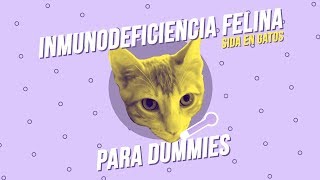
This is a YouTube video titled "Inmunodeficiencia felina 😺🌡️| ¿Qué cuidados necesita tu gato con #VIF?" created in November 2019. The content features a clinical veterinarian named Carlos explaining in detail the feline immunodeficiency virus (FIV), its transmission, symptoms, diagnosis, prevention, and care for infected cats. The video also includes a segment where Carlos interacts with viewers by showcasing pets introduced through a Facebook group. The tone is educational and aimed at cat owners to dispel myths and provide practical advice on managing FIV in cats.
After many of you insisted that I talk about feline immunodeficiency, today we are going to address that topic in the video. Hello, I'm Carlos, a clinical veterinarian at Small Animals. Welcome to the Happy Pets and Families Channel. The truth is that I really like to make myself unworthy. And it's been quite a while since we talked to you about another of the great and best known diseases of cats, feline leukemia. If you haven't seen the video in which I explain everything you need to know about feline leukemia, I'll leave it here so you can watch it after watching this one. And these diseases always go together as a package deal because we usually test them together at the clinic. Today it's time to talk about feline immunodeficiency. In this video, I'm going to tell you how you can prevent it and how you can help your cat if they already have it. And the truth is that I understand that you are concerned about the issue of feline immunodeficiency because it is the virus that can end up causing feline aids, a serious disease that can have serious consequences for your cat's health. Don't worry. Don't throw your hands up in horror, because there are many people who think that feline aids can be transmitted to people. And nothing could be further from the truth. What we know is human aids is a disease caused by a virus that only affects people. Feline aids, on the other hand, is a disease that only affects cats and that has its own virus, which is the one that causes it. I know that sometimes videos about diseases can be a little tedious, a little confusing. But don't worry, because I am going to explain everything to you very, very easily. Because since I have received many doubts and questions from you, well, I more or less know where to start, and I have prepared a script to make everything very clear. Well, let's get started. The most common question that many of you have when you write to me is, how is the feline immunodeficiency virus transmitted? It can be transmitted between cats that live together. What's the problem if a cat with the virus lives with other healthy cats, etc. Well, to begin with, the feline immunodeficienc deficiency virus is usually transmitted through aggression and bites between cats, because at that moment, the saliva of the infected cat, which has a high concentration of the virus, comes into contact with the blood of the healthy cat, and that is when the infection usually occurs. Other routes of infection are much rarer. Normally, cats that Live together, do not get infected. That is, cats that get along well and share a food bowl, water bowl, etc. So if you have an infected cat at home, but it is a peaceful cat that gets along well with the other cats, in principle, you should not have any problems. Furthermore, in the case of feline immunodeficiency, sexual transmission is practically anecdotal. Therefore, it does not usually occur. Another way that cats can transmit it to each other is, for example, when kittens are born, not really at the time of birth, but when they start drinking their mother's milk. There is a high concentration of the virus in the milk of cats, and that can be a source of infection for kittens. Furthermore, and as you can probably deduce because veterinarians insist so much that you have to test your cat for this virus, it is a virus that is quite common worldwide. According to studies, approximately 11% of cats suffer from it. But logically, it is more common to find it in stray cats, in cats that do not have much health control and that in addition can fight over food also because they are in heat and so on, than in cats that live with this at home, that have much stricter control and that normally, well, are taken to the vet, where a little more precaution is taken regarding their health. Feline immunodeficiency is a disease that is triggered very little by little, very slowly. In fact, it is. This type of virus is called lentivirus. I was going to use quotes, but it is not really called lentivirus. And why are they called that? Well, because when they encounter a cell in the cat's body, what they do is embed their genetic material within the genetic material of the cat's cell and stay there for many years until they reappear and produce the clinical disease. However, from now on, and we're going to dispel myth number two, I want you to know that cats infected with this virus can have a perfectly normal life. This virus doesn't necessarily mean a death sentence. And as I've been saying, the cat can be perfectly happy and be with you for many years before the disease shows its face, if that ever happens. Well, now let's move on to another of the big questions you may have. And one of the things that usually worries you. What are the symptoms of the feline immunodeficiency virus? The disease has three phases. The first of these is when the cat is infected with the virus. At that time, the symptoms your cat may have are a little lethargy, perhaps a little fever. A little general discomfort, perhaps a little loss of appetite. In any case, this phase is temporary and after a while, usually a few days, 15 days or so, it disappears and the cat goes on to have a completely normal life. When this first phase ends, which you may not even realize, the second phase begins. And what will you see? What will you see in your cat in this second phase? Not at all. Absolutely nothing. Because your cat can live with the virus for many years without showing any symptoms. In other words, you, you are creating a huge alarm right now, right? Because if you test it, you will realize it. Well, now let's move on to the diagnosis. Don't worry. After the time of this second phase, which is variable because it will depend on the cat's immune status, it will depend on whether or not the cat can eliminate the virus, which sometimes they do eliminate, the third phase can occur. But how long can this second phase last? It is very variable. In other words, it can be years. It can be years and at least months.
I mean, when I get a positive test for immunodeficiency, I don't throw my hands up in horror. If the cat is healthy, all we need to do is have a little control. I'll tell you about that later. But the third phase is the terminal phase, unfortunately, and it usually occurs when the cat's immune system has deteriorated a lot because the virus is, so to speak, consuming the cat's defenses, leaving it at the mercy of other infections, causing, for example, gingobitis, fever and even diarrhea. As you can see, these are fairly non specific symptoms. So if you are seeing these symptoms in your cat together, what you need to do is go to the vet to have them tested so that we can find out if they are affected by the virus or not. This test is also usually done together with the leukemia test and is usually included in the cat's first vaccinations. Normally, when they are a couple of months or two and a half months old, a drop of blood is taken and the test is done. It is usually practically painless, so don't worry. Take your cat to the vet and have them tested, if they haven't already. The advantage of this type of test is that the results are practically immediate. In about five minutes you will know whether or not your cat is infected with the leukemia virus and also with the human immunodeficiency virus, which is what we are talking about in this video. And the last of the big questions. How can we help a cat that already has the virus or how can we prevent it? From becoming infected. Unfortunately, the feline acquired immunodeficiency syndrome has no cure. Therefore, when a cat becomes infected, the only thing we can do is prevent its health from gradually deteriorating. To do this, the best thing we can do is give it a good quality diet, A feed that has a very good composition and is based on raw materials, perhaps giving it food supplements in its diet, so that the cat always has a much better body condition and its immune system is also stronger. Food supplements are usually sold in tubes of paste that are prepared directly so that the cat can eat them without any problems. They contain vitamins, minerals, substances that can stimulate the immune system, Fatty acids and so on. And when I talk about food and that it is based on quality raw materials, I know that many people think, well, I make a homemade diet, and that way I control what he eats. In addition, I also know that there are people who are thinking right now about the barf diet, which is giving him raw meat with bones and so on. But no, do not do this. Do not feed him raw meat. Because if we add to that the fact that the cat has lower defenses due to immunodeficiency, and on top of that, we are giving him raw food that can transmit parasites, can transmit bacteria, because they have not died during the cooking process. So we are creating a Molotov cocktail, and it is much more likely that he will become infected with diseases that can be transmitted by meat, such as toxoplasmosis. But you may also be wondering if there is a vaccine against feline immunodeficiency. This is another of the big differences it has with respect to leukemia. Feline leukemia does have a vaccine, and you can prevent it by vaccinating your cat, as we did with milu. However, there is no type of vaccine approved for feline immunodeficiency worldwide. I do know that in the United States, there is a vaccine which is. But there is still not much data on its effectiveness, that is, how much it can protect a cat against the feline immunodeficiency virus. But here in Europe, we do not have any approved vaccine against this type of virus. And the truth is that I do not know what the situation is with these vaccines in other countries. For example, in Latin America. Therefore, if we cannot prevent it with a vaccine or there is no effective treatment for the disease, what we have to do is try to prevent cats from getting infected. How can we do that? Well, by preventing cats from fighting, because, as I said, cats, it is the main root of infection. How easy, right? Stop cats from Fighting, it's much easier said than done, it's true. But there are things you can do to prevent them from having fights at home. The first thing is to be very clear that when more than one cat lives at home, they form a hierarchy, a pyramid, where there is one cat that dominates and the rest are dominated by that cat. So it's normal for that cat to be a little more wary of cats that it considers inferior, taking away its food, its resting areas, and so on. So, for example, make that cat eat earlier or eat separately from the rest so that other cats don't end up taking its food. Because normally these types of things tend to trigger fights at home that can end up leading to aggression. And in addition to preventing them from competing for resources, food, and resting areas, another way to prevent fights is castration, right? The wild card to avoid most of the problems in the feline world. Because normally most of the fights, most of the arguments are always motivated by jealousy, especially in male cats. But if they don't have feline immunodeficiency, it doesn't matter if they fight or not. Of course, obviously, in your home, if you don't have feline immunodeficiency, castration has other advantages that I already explained in another video. This is another reason why people who help feline colonies that live on the streets use the CESS method, which consists of capturing the cat, taking it to the veterinary clinic, castrating it, and then releasing it back into the colony. Because that way you're going to prevent, on the one hand, an overpopulation of cats, that is that they're reproducing without any type of control, and on the other hand, that diseases like this one spread. In addition to if your cat has already been diagnosed with the virus in its blood through a test, you will need to be a little more vigilant about its general health. I recommend that you visit your vet every six months for a thorough check up. Another very important thing is to continue vaccinating your cat because its immune system is weaker. And this will give it much more protection against diseases that may attack it. Another very important thing you need to do at home is to monitor your cat's weight. Normally, cats infected with the human immunodeficiency virus will simply stop eating a little when the disease starts to show itself. Therefore, if you monitor your cat's weight weekly, you will know exactly whether or not it is entering the clinical phase of the disease. I don't want to end the video without telling you that if you live with a cat that suffers from feline immunodeficiency and there are other cats in your home, you don't have to put it aside or throw it out like a plague. There are many people who, due to a lot of ignorance and the myths surrounding this disease, end up making hasty decisions such as euthanizing their cat, abandoning it, or throwing it out of their home for fear of infecting other cats. As I said, it is highly unlikely that this cat will transmit the disease to the rest. If it doesn't attack the others, it is very possible that all of them can live happily and harmoniously in your home. And that's it for today's video. If you liked it, give it a like and remember to subscribe to our channel if you haven't already. Also, remember to share this video with everyone to finally dispel myths about feline immunodeficiency and help many cats that right now might not have any chance of finding a home. Remember to also hit the bell so that YouTube will notify you every time we upload new content. Thank you very much for following the Happy Pets and Families Channel and we'll see you in the next video. And today to finish the video, we're going to continue getting to know your pets that many of you introduced to us through our Facebook group. Look how pretty this little girl is. Her name is Mi Casa. My house is no, no am I Casa. And she's Chris da Tejo's feline family and she's from Mexico. She's quite the actress, huh? Hey, I really like the scratching post with a box that she has. Does she go in there a lot? Does she like to be in there for a while by herself, away from the world or not? And Blanca, good morning. She introduced us to her kitty, Zelda, and I love Zelda, the video game, the characters and everything. And she tells us that she has a little problem with food, that she says that for some time now she has been getting a little hysterical with food and that as soon as, for example, she hears the alarm clock in the morning, she starts calling them, purring so that they can feed her and asks if anyone has experienced this. The question you asked us in your comment is answered on the parallel channel. Go over and take a look. And now here we have a little girl who is a pompom. Karina introduces us to her little Olivia, who she says arrived home just four days ago and is going to have her first appointment with the vet. The truth is that she is very pretty and well, with that giant teething pacifier. She is quite funny because the toy is bigger than she is. I hope Olivia grows up very well that you do her vaccination schedule right. Because right now is when it is most important that you have her protected against all dog diseases. Greetings to you, Karina, and also to Olivia, of course. And if you want us to meet your pet and introduce it to us, remember that you can do so through our Facebook group. So you can appear in this section at the end of the video. See you next week. Also, if your cat has already been diagnosed with the virus after a t. Oh, I have a hair here. Well, I hope I have helped you with all these tips to prevent immunodeficiency. Or two.
You have a baby face Light. It's because I have a baby face. Well, I hope I have helped you with all these tips to prevent feline immunodeficiency or also to better understand your cat if it suffers from it. The truth is that I understand that you are concerned about the issue of feline immunodeficiency. Today we are going to talk about this. Well, and I hope I have helped you understand. Right? Well, yes, I know that there are times when the subject of animal diseases and the videos we make about them. A trumpet. Yes. Yes. Okay, I hope I've helped you understand a little more about. But what's that guy doing there with a trumpet in the middle of the street? He must be buying it for wallop. Okay, I hope I've helped you understand a little more about feline immunodeficiency and also maybe helped you prevent it from happening. No, maybe not. Oh, watch out. The next one's on the list. I don't know how much. No, that wasn't just music. And they were like this down. And I don't know how much and I don't know what, they were changing for a long time. I really like the collar you have on Zelda, the one with the triforce. Although I don't know if you know what my position is on catcallers. At least I recommend that you go to the parallel channel where I have a video where I explain why I like or don't like catcallers. No, I don't like them. We have. Oh, the fly. Oh, the fly. Now, it's not just the fly that's coming at me.
More from Javier

Cuando nadie reconoce tu dolor por la pérdida de una mascota: así es el duelo desautorizado 💔




¿Tu perro hace suficiente ejercicio? Mantenerlo activo es clave para que viva mejor 🐶💪

GATIFICANDO UNA PARED PARA MI GATO 😻🧗♂️ Ideas para aprovechar el espacio vertical en casas pequeñas



Por qué duele tanto perder a un perro o un gato: el vínculo que explica nuestro duelo 💔🐾

