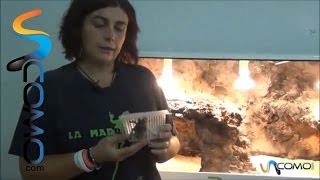
This is a YouTube video titled "Las tarántulas - Consejos básicos" created in July 2012, featuring Nuria presenting information about the pink grass tarantula, its habitat, care requirements, and behavior. The content is educational, focusing on how to keep these exotic spiders in captivity safely and comfortably.
Foreign we are at the deserty Habitate facilities. My name is Nuria and we are going to introduce you to the pink grass doula, also known as a tarantula. It is an arthropod. It is a spider or tarantula. This little animal can be found all over South America from Chile to Argentina. They are usually very docile with humans. It is usually difficult for them to bite or shed their stinging hairs to keep them in captivity. This little animal has a serious problem with temperature. In order for them to be comfortable, they need to be between 25 and 27 grams. The drop at night is usually about 3 or 4 grams at most. Humidity is 60 to 70% and the ultraviolet they need is 2.0. They always have to be inside the terrarium where they live. They have to be inside coconut substrate. These animals normally have to eat live food since they can sense vibrations through the itchy hairs on their feet, which is how they sense movement. If they are not given live food, these animals will not hunt. Above all, temperature must be taken into account. A very sudden drop in temperature can kill these animals. Where you see them here, it seems that they weigh a lot. They are very fragile animals. If they fall, they they jump. But when they jump, they release their own hairs. If they fall from your hand, they can break a leg. They are fragile in their natural habitat. If a leg breaks, they die quickly. They die quickly from predators in captivity? No, since they live in 30x30 or 40x40 cubes. So it is very difficult for the owner to harm them. Thank you for watching these videos. I hope this has been helpful when it comes to keeping exotic animals in captivity. If you would like more information or would like to visit our terrariums, you can do so via the website www.desertyehabitats.com.