Limpieza y Mantenimiento del Acuario Mbuna 🐟 | Cuidados Esenciales para Cíclidos Africanos | KIWOKO
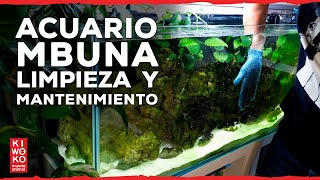
This is a YouTube video titled "Limpieza y Mantenimiento del Acuario Mbuna 🐟 | Cuidados Esenciales para Cíclidos Africanos | KIWOKO" created in April 2025. The content is a detailed monologue by a single speaker explaining the process of cleaning and maintaining a Mbuna aquarium, including equipment used, techniques for algae removal, water changes, and fish care tips. The speaker provides practical advice and personal insights throughout the maintenance routine. The video is instructional and focused on aquarium care for African cichlids.
Foreign. Today I need a lot of caffeine. As you can see, after the maintenance I gave to the aqua terrarium. It looks super nice, it's clean, the filter is clean. You can see the water perfectly. And above all I can see the animals. But now it's time to dedicate time and love to the Mabuna. I left it forgotten for a few days and this is the result. We are going to clean the algae, partially change the water, clean the maintenance pump and maintain the auxiliary waterfall filter. We are going to do all this today. Yes, for all those who pay close attention to the content we create on this channel. I have changed the lighting systems previously for the aquarium when I created it. Remember that it is a Mabuna aquarium that I am creating with different parts, different lamps, filters from other aquariums. In other words, I am basically making a recycling aquarium here. And what I have basically done is change the lighting system that I had in the Aquadirarium. Do you remember that? I had put some screens that were 30W LED. What I did was I took some lamps and screens that I had that were much smaller than 24. I put two in the ones that were here. Boom. I moved them over here. This helps me save significantly on energy because the bill was already quite high. What does this mean? The quell screens that I put in at the beginning, as you may recall, were screens that are developed from marine aquariums. And mind you, if they stay clean, they are tremendously effective if you are interested in coral growth. But this was not the case. So I was really wasting a lot of energy resources on this lighting. Now I have changed the screens and it is time to do some good maintenance. As I said, I'm trying to always use items for this aquarium that come from other aquariums and other setups that I have made. This advice is important and you must follow it without fail. Before starting to do maintenance on your aquarium, you must disconnect all the devices. You have to disconnect the filtration system, you have to disconnect the heater. If you have a CO2 system, etc, etc, etc, remember that you are going to be putting your hands inside the aquarium. And we don't want any shocks in my case so that you can see what I'm doing. I have to leave the lighting system on, but the rest will be completely off. And now let me show you some things that I have come across. Look, we have these algae cleaning gloves that I'm sure will come in handy. We have this sponge that is a soft sponge that will not Scratch the glass, I hope, and we are going to use it. These are items that you can buy in our stores there. Also, if you are a traditional person like I have always been using, Perlon can work great for cleaning almost any algae. It is interesting to have a net, to have a system. Look, I have two here. I have a desiccant or vacuum system because we are going to have to clean the gravel. The. Excuse me, we are going to have to clean the sand and these systems come in very handy. You will need a bucket, a towel, paper. Oh, I have this that they gave me from a wonder for really strong algae. Hey, this goes in great. Be careful though, when using it. You have to be very careful. Things I would recommend if you are going to do maintenance and your aquarium has a substrate that is like sand. Start from the top down and in a gentle way. You will see how I do it. This prevents you from picking up sand particles and then having them stay on the items you are using for cleaning and scratching the glass. Having said all that, I am going to have a shot of coffee and I am going to start cleaning the aquarium right now. Well, I have turned off the filtration system, heating, etc. Now I am moving the lighting system which I am seeing that with the lighting I have, I will probably leave only one because I think two is still too much. And I remind you that this is an aquarium that practically doesn't need lighting. I have some anubias for decoration, but these fish would really be fine with a bit of the rockery they have. Mind you, I'm going to evaluate this a bit later because we might even have surprises later on. Well, I've already moved the lighting system so that I can work without any problems. And now it's time. I'm going to take the feeder out of the corner so that I can clean it properly. Look, this system is wonderful. This comes out well. Now I'm going to remove the pump. Remember that it has a magnet that holds it in the back. And this is for maintenance and cleaning. Let's open it. As you can see, it's quite dirty. It's very basic maintenance. These pumps are really simple. You take the rotor out and clean it and then what we're going to do is put it back. Okay, let's rotate here. Let's take the rotor out. Now a little brush. Let's clean everything so that it's really clean. Well, cleaning the rotor. Let's remove it. As you can see, it's quite dirty. Come on. Perfect. Well, we're going to put this back and continue. Perfect. Let's clean it. Lets clean. What would be the protective grid? Notice how there's always some algae and dirt that gets stuck here. Very good. Great. Well, there we have it. Now let's put it back. Look, this goes like this. And that's it. Okay. Well, I'm going to start selectively pruning some of the leaves that aren't in very good shape. This doesn't mean that I'm going to cut them all off. And what I do want to do is remove those that are quite bruised so that the plant can start throwing out its new leaves. Okay? Okay. Okay, Perfect. I really wanted to do this. There were some that. Look, these were already very bruised and in the end it didn't look so nice. Let's remove some here. Perfect. I'm not going to keep pruning. I don't want to overdo it. The clouds grow very slowly. I might need to put in some new ones to replace some of the gaps that are open. I'm going to start scrubbing the glass right now so I can change the water later. Well, let's try the glove and see how it goes. Apparently, I can reach almost all the corners with this one. So there you have it. Oh, well. Very good, very good, very good. Well, as I told you, we're always going to start cleaning from top to bottom to obviously avoid getting any sand or gravel on us and scratching the glass. Hey, look, the glove really works. Come on, look, we can do it. That's the good thing about gloves. Do you see that you can reach these difficult places? Hey, look, I really like using the glove. Very good. It's true that of course, when using a glove, it's much easier to reach those strange places than in the end. Look at these corners. You see? Great. Hey, look. I like using the wand. A good gadget to have in your maintenance and care kit. Wow. What is this? The dead plant? Okay, now I'm going to use the sponge to see which one I feel more comfortable with when doing maintenance. And I've left this side to clean it with the sponge. It's also a sponge. Pay attention. It's a sponge specifically for cleaning aquarium glass. A sponge that doesn't scratch the aquarium glass. And this is very important. Look. Yes. Hey, I also quite like the sponge. It's true. Look, another good gadget that's good to have. Hey, well, I think I'll keep both because it's true that with the sponge and areas. Look, this is what I always Say that you have to be very careful when we have this here. Well, look. It's wonderful. Yes, it's cleaning quite well once I've cleaned the glass. Now, what I want to do is move the decoration a little, make it easier for myself so that when it's my turn, remember that today I have to vacuum. So I'm going to try to place the sand. I'm going to all these decorative pieces that there are. There are several. I want to try to place it in a way that makes it easy for me to clean. Look, see? I'm going to place this here so that I can easily access the entire aquarium. Very good, very good. I'm going to go over all this so that the aquarium is clean and tidy. As you can see. If you see anything. I took advantage of the time I was cleaning to also change the stones. I'll remind you that Mabunas, especially these cichlids, are very, very territorial. Every so often, it's good to stir up a bit of what they've already built in their territories so that in the coming days they can re establish new territories. That way, new fish can also enter the aquarium. But it also greatly alleviates the stress suffered by some of the fish that don't have their own territory. That way, we're going to give them an opportunity to build a new part of the aquarium as their territory. As I said, look how dirty the water is. I'm going to do a water change right now, including, including siphoning or vacuuming. I'm going to remove about 20% of the total volume of water. I'll take this water out and add new water. I'm going to add an important biological complex. And the fish will be completely fasting for the next 24 hours tomorrow. I also want to analyze the water to see how this major change we're making to the aquarium is progressing. I'm going to use the siphon. These types of siphons are ideal because they work with communicating vessels. What does this mean? Once the siphon is full of water, we move it, and as you can see, it starts working. What I mean by this is please avoid, as I sometimes see and have done, taking the siphon, sucking the hose and throwing the water here. Be careful. This can cause you problems. You could get a bad stomach ache. It's better to use a device like this, as you can see, which helps me clean the substrate. Here's a tip for the most novices. If you are working with sand or very fine substrates, and you see that the siphon is filling up a lot. Then by squeezing and closing the hose in a controlled manner, you can make better use of the siphon. As you can see, a little bit of sand will go in, but much more organic matter will also go in, which is what we are ultimately looking for. Just look. With all the siphoning and vacuuming of an aquarium, this is what we are looking for to get rid of all that organic matter, which in the end translates into nitrates, possible problems with algae, etc. Etc. Etc. Look, I am trying to remove all that crap from what would be the substrate. Note that the siphon is good for aquariums that are not planted. Because you cannot do this in a planted aquarium. It is very complicated there. You need to apply other types of techniques. For a normal tropical aquarium that is not very planted, this is the best thing you can do for the ecosystem. It's true that, as I've said in some videos, the ideal is to do this in a controlled manner and only vacuum, for example, half of the aquarium and 15 days or a month later the other half here. Since I have so much rock, I can really go all out because as you can see, I'll never be able to reach the back of the aquarium. And this basically helps me to control the substrate and the organic matter that's in front. Let me remind you, this aquarium has about 300L. And what I'm basically going to remove is 20%, which is about 60L. That means I have to use three of these buckets full of water to be able to generate this change. Well, I'd like you to see the water. It's really dirty. I've finished the fossware. I'm going to have to buy more. I remind you that this one needs to be rinsed. But I want to show you something. Look how dirty our auxiliary filter is. I remind you this is a title that I have as an auxiliary filter where I put carbon. Look how disgusting the Perlon is. So I'm going to rinse the phosphatidylcholine, place it here, and I'm going to change and throw away this. That's dirty. Rinse the jib and now clean the sponge. That's another thing. Let's set up our filtration system. Perfect. Very good. With what we have left, we'll start filling the aquarium. As always, I'm going to use water that I've previously dechlorinated. Note I've also adjusted the PH and the hhs. Remember that we're working with the Mabuna they need very high pHs and very, very hard water. I've already set the pump in motion. I. I've set the filter. It's true that I have to set the feeder auxiliary filter. I have it well adjusted, set up. I'm filling it with water. I'm not cleaning the main filter since it's making such a big change. I don't want to destroy the biological population that lives inside that filter. I'll do that later and we'll definitely make a video. Of course I need to stop by my local store to get phosphatidylcholine because I've cleaned it out. I don't have any left. I also need to get conditioner and biological complex. Finally, if you have any questions, leave me a comment. I'm here to help and I'll ask you this question. Which one did you like more? The sponge or the glove? To tell you the truth, I think they're both great. But I want to know which one you'd choose.
More from Javier

Cuando nadie reconoce tu dolor por la pérdida de una mascota: así es el duelo desautorizado 💔




¿Tu perro hace suficiente ejercicio? Mantenerlo activo es clave para que viva mejor 🐶💪

GATIFICANDO UNA PARED PARA MI GATO 😻🧗♂️ Ideas para aprovechar el espacio vertical en casas pequeñas



Por qué duele tanto perder a un perro o un gato: el vínculo que explica nuestro duelo 💔🐾

