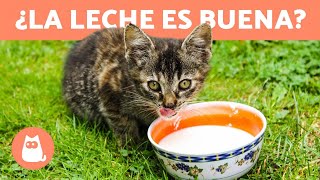
This is a YouTube video titled "¿Los GATOS pueden tomar LECHE? 🥛 ¡Descúbrelo!" created on October 16, 2019. The content is an informative monologue by an animal expert explaining whether cats can drink cow's milk, discussing lactase enzyme production in kittens and adult cats, lactose intolerance, allergies, and alternative dairy products like yogurt and kefir. The video aims to educate cat owners on proper feline nutrition and health risks related to milk consumption.
Can cats drink cow's milk? Is it good for them? Or is it harmful? These are undoubtedly some of the first questions that come to mind when we decide to adopt a cat, no matter how old they are. How many times have we seen kittens enjoying a nice bowl of milk on the big screen? Well, in this new video by an animal expert, we will resolve this doub. During the lactation period, kittens produce a large amount of an enzyme called lactase, which is responsible for digesting the lactose that makes up milk. As weaning progresses and milk intake decreases, the proportion of lactase in the kitten's digestive tract also decreases, leading in some cases to even developing lactose intolerance. This same process can also occur in humans, which is why the percentage of lactose intolerant people is so high. However, not all cats are affected so radically by the decrease in the production of the lactase enzyme, and therefore some of them are able to tolerate milk in their adult stage. In particular, those felines that after weaning continue to drink cow's milk tend to continue producing lactase. Likewise, dairy products such as cheese and yogurt, as they contain less lactose and can also be digested by the animal in moderate quantities. But before explaining more about milk consumption by cats, we encourage you to subscribe to our channel where you will find useful weekly content to care for your cats and understand them much better. So, can cats drink milk? If by kittens we mean newborns? Yes, the ideal is for kittens to feed on their mother's milk and in its absence, artificial formula milk sold in veterinary centers. But if, unfortunately, you are caring for an orphaned kitten, you should completely avoid cow's milk since its composition is different from cat's milk and the kitten could suffer from nutritional deficiencies or gastrointestinal disorders. Now, if the cat in question is still a kitten but has already been weaned, we can offer small amounts of milk to see if its body digests it correctly. However, it should never constitute the basis of its diet. And can adult cats drink cow's milk? As we have seen previously, most cats tend to progressively reduce the production of lactase after weaning. This means that due to the deficiency of the enzyme or its complete disappearance, many of them can develop lactose intolerance. When the enzyme cannot fulfill its function, the lactose passes into the large intestine without being digested and is fermented there by the bacterial flora, developing a whole series of digestive problems. Thus, the symptoms of lactose intolerance in cats are the nausea and vomiting, diarrhea, gas swelling of the abdominal area. On the other hand, there is lactose allergy, a completely different condition from the previous one. While intolerance affects the digestive system, allergy involves the immune system developing hypersensitivity and a severe allergic reaction. In this case, the allergen would be lactose and the allergy would produce the following symptoms in the itching accompanied by hives difficulty breathing, coughing, vomiting diarrhea low blood pressure stomach pain that can result in sudden meowing. If your feline has any of these symptoms, do not hesitate and go to the vet urgently. Finally, we want to point out that although not all cats will develop an allergy or intolerance, it is advisable not to add this food to your feline's diet. If you want to do so, it is best to always opt for lactose free milk or natural sugar free yogurt which due to the fermentation process has hardly any lactose. In fact, yogurt in particular is a beneficial food for cats due to its high probiotic content. In this regard, cats another recommended product for the same reason is kefir, which has an even higher percentage and helps the animal even more by regulating intestinal flora as well as the digestive system in general. Of course, we repeat, we do not recommend abusing these foods since the nutritional requirements of cats should be based on the consumption of protein and fat of animal origin. Now you know why cats should not drink milk in their adult stage, the health problems that can occur and other interesting facts related to feeding. Have you ever offered milk to your cat? Has it done them any good? Leave us your comments and don't forget to give us a like if you found this content interesting. Until next time, experts Core.